THIS OBJECT WAS SOLD
Reconciliation "bethune" Exhaust Clemence 1780
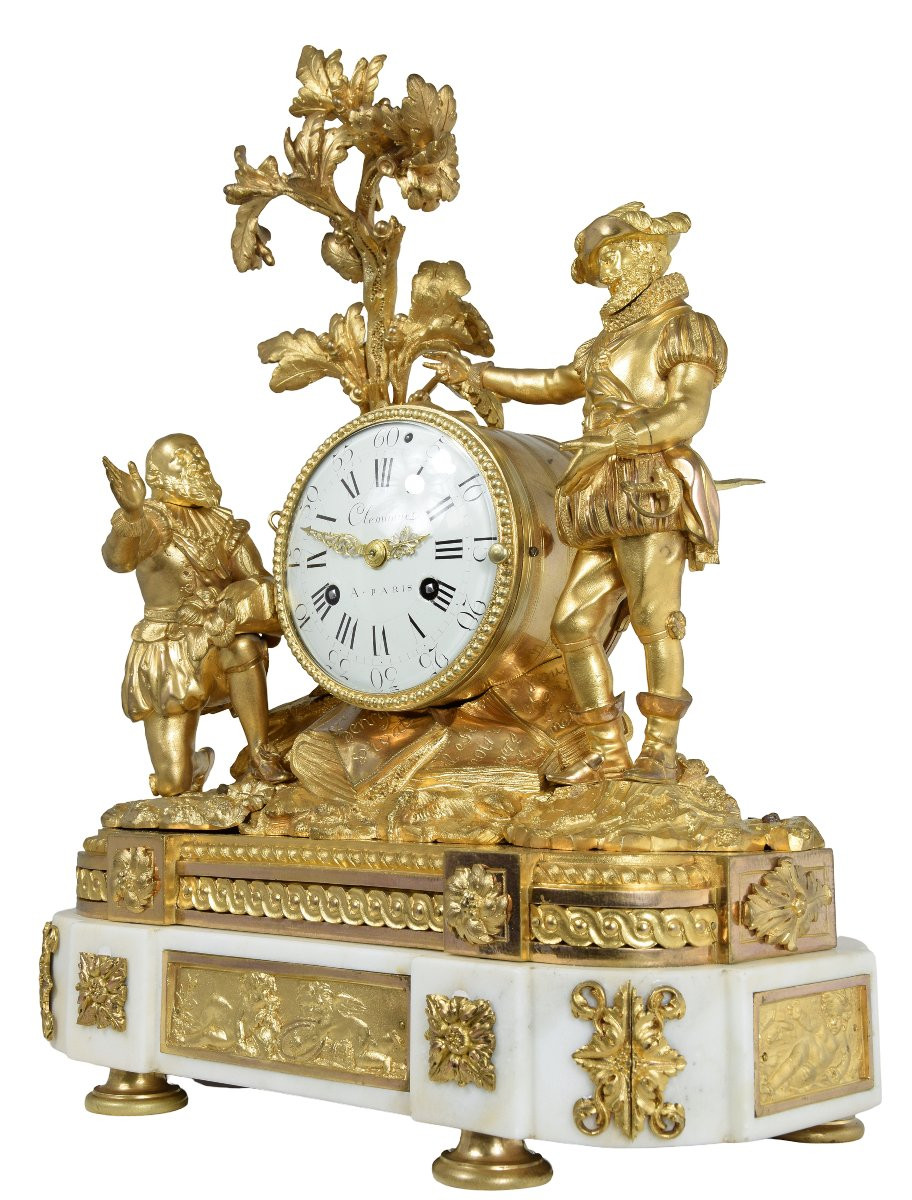
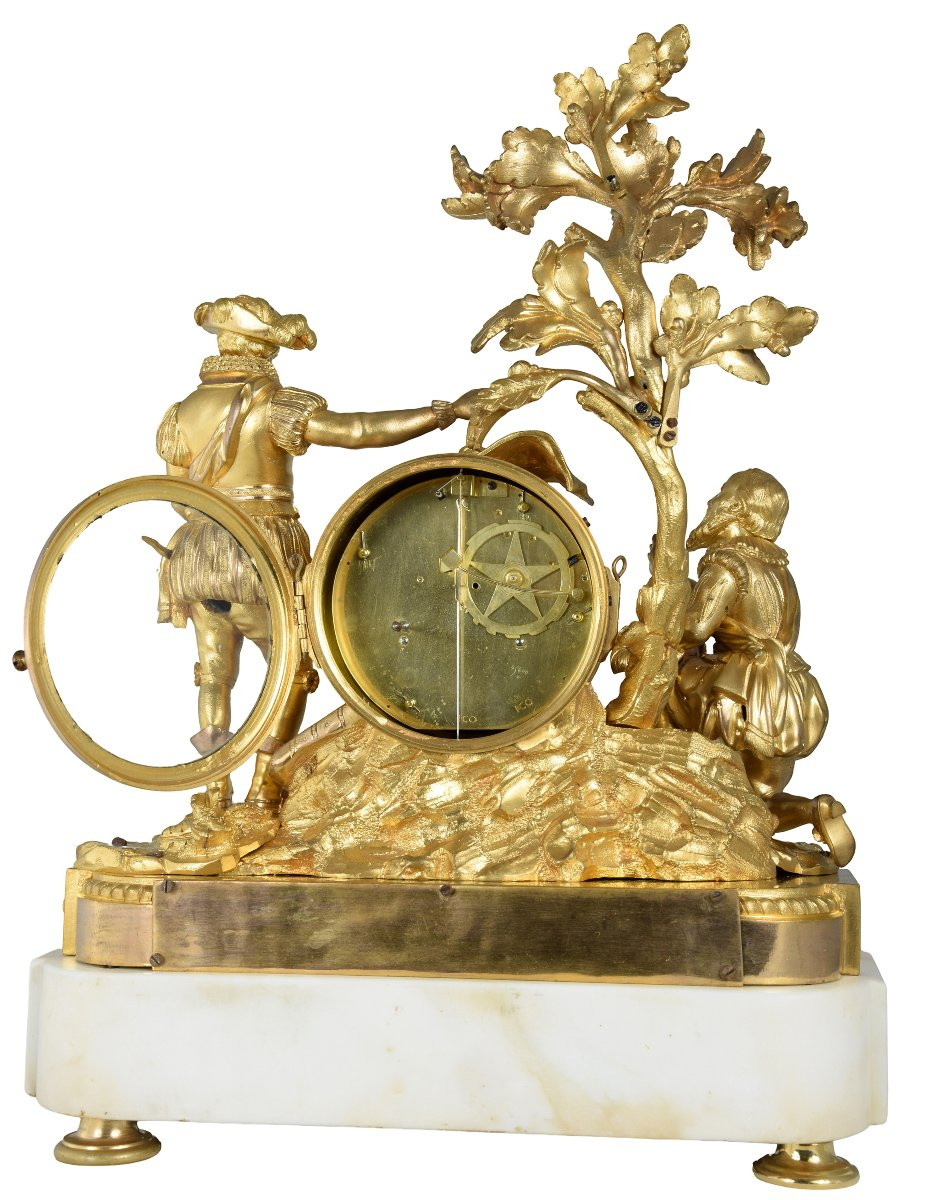
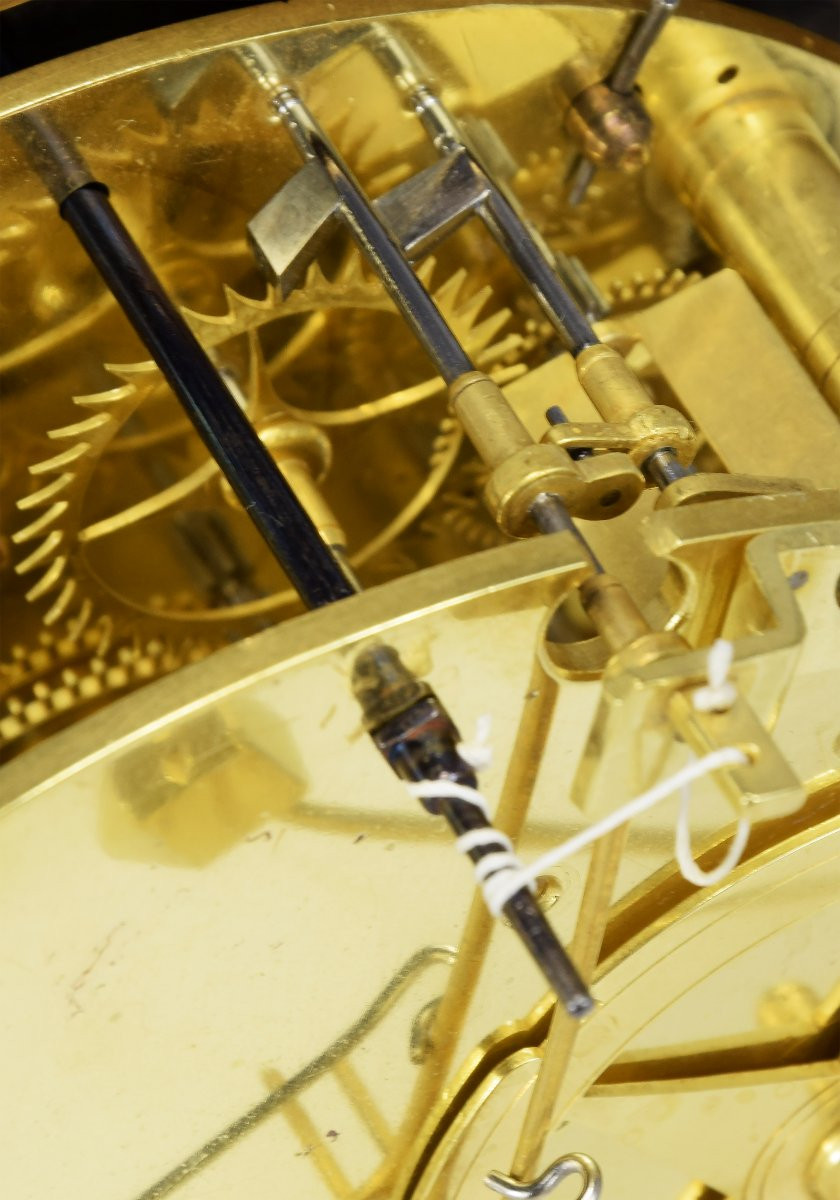
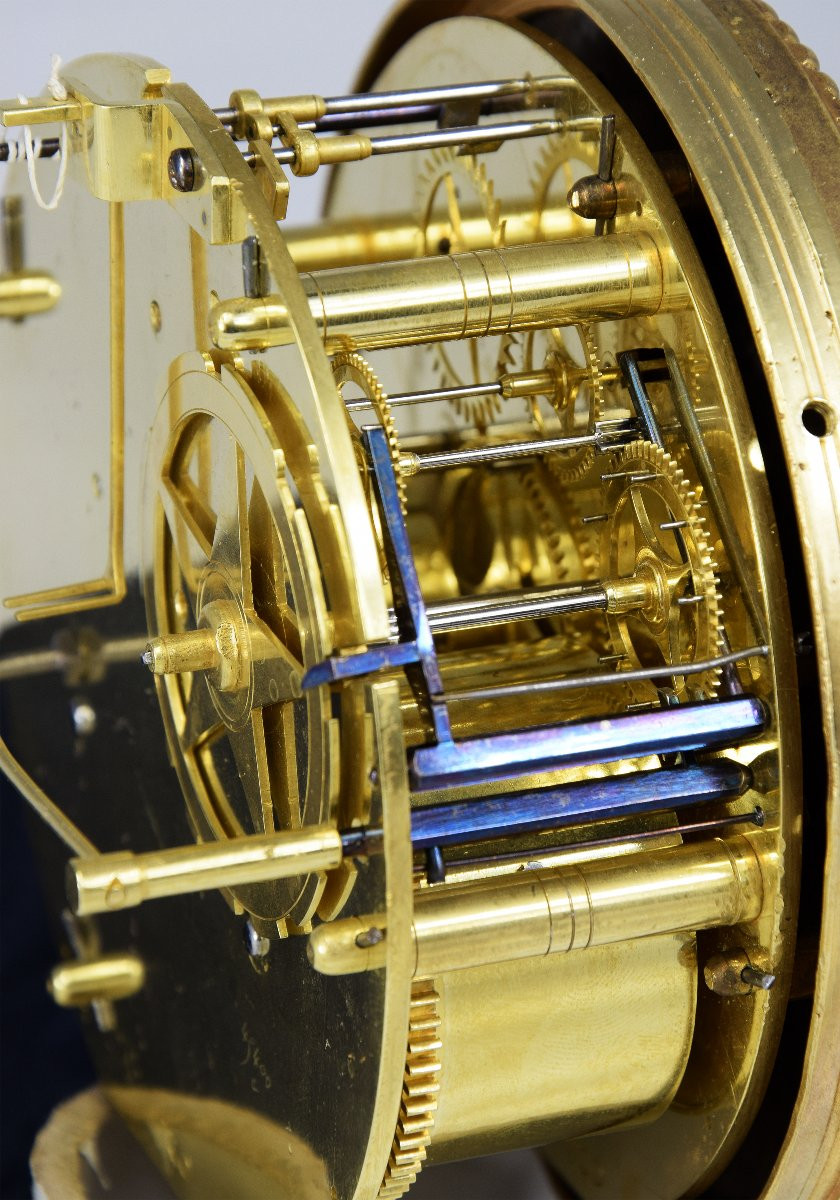
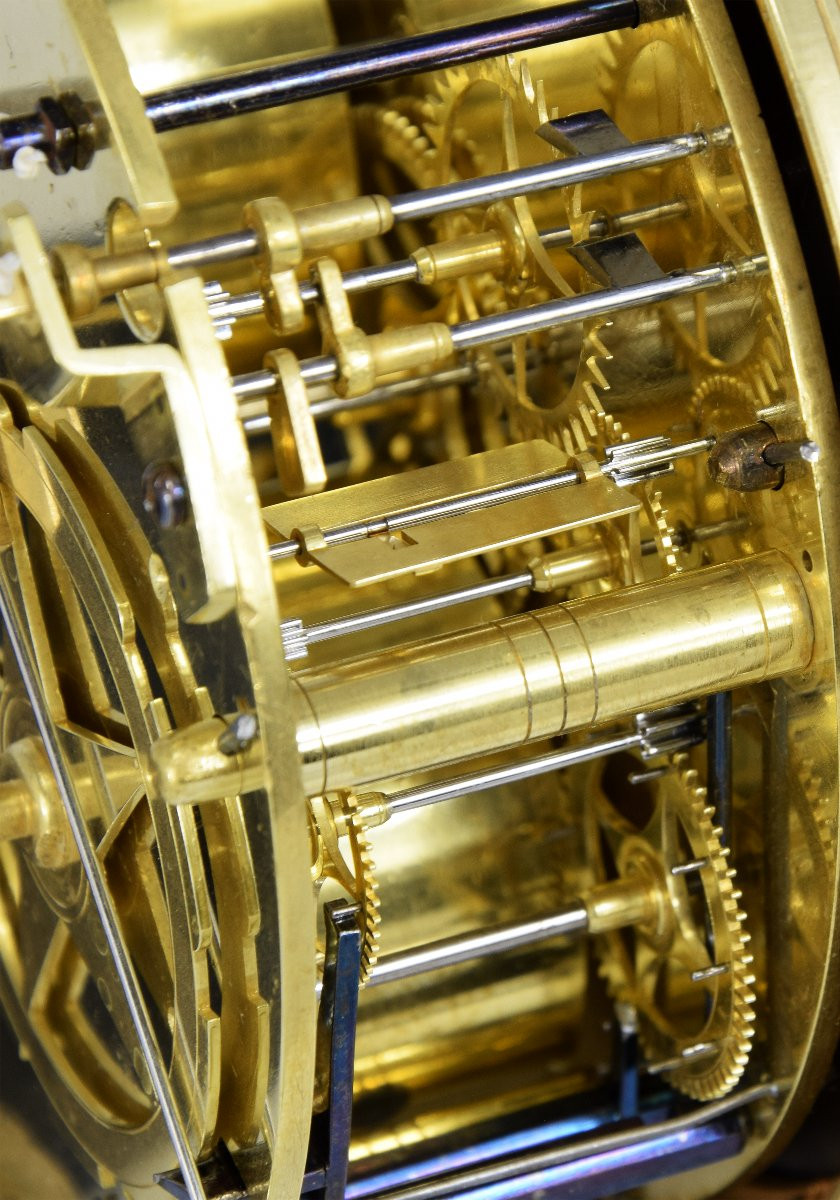


Dating from the Louis XVI period around 1780, this rare and spectacular
historical clock in mercury-gilt bronze and white marble is remarkably
authentic and preserved in exceptional condition. Its authenticity is
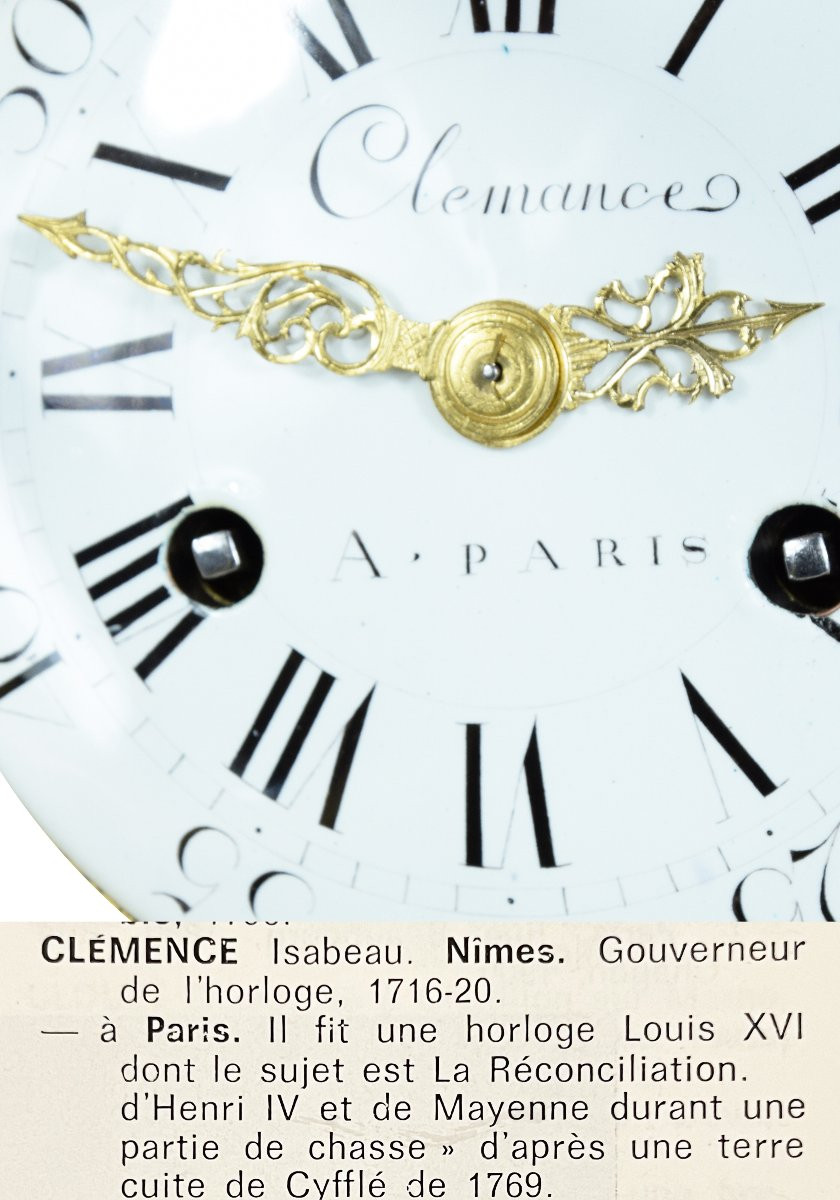
fully established: the clockmaker's name, listed in Tardy's catalogue,
clearly attests to the creation of this precise model. The mechanism,
of great horological interest, is further equipped with a particularly
rare escapement known as the Chevalier de Béthune escapement.
This major 18th-century mechanical innovation reflects a broader
horological quest to reduce friction, improve isochronism, and increase
the precision of timepieces. The Chevalier de Béthune was an
18th-century French clockmaker renowned for his watches and clocks of
exceptional mechanical and aesthetic refinement, which are highly
sought after by collectors and institutions today.
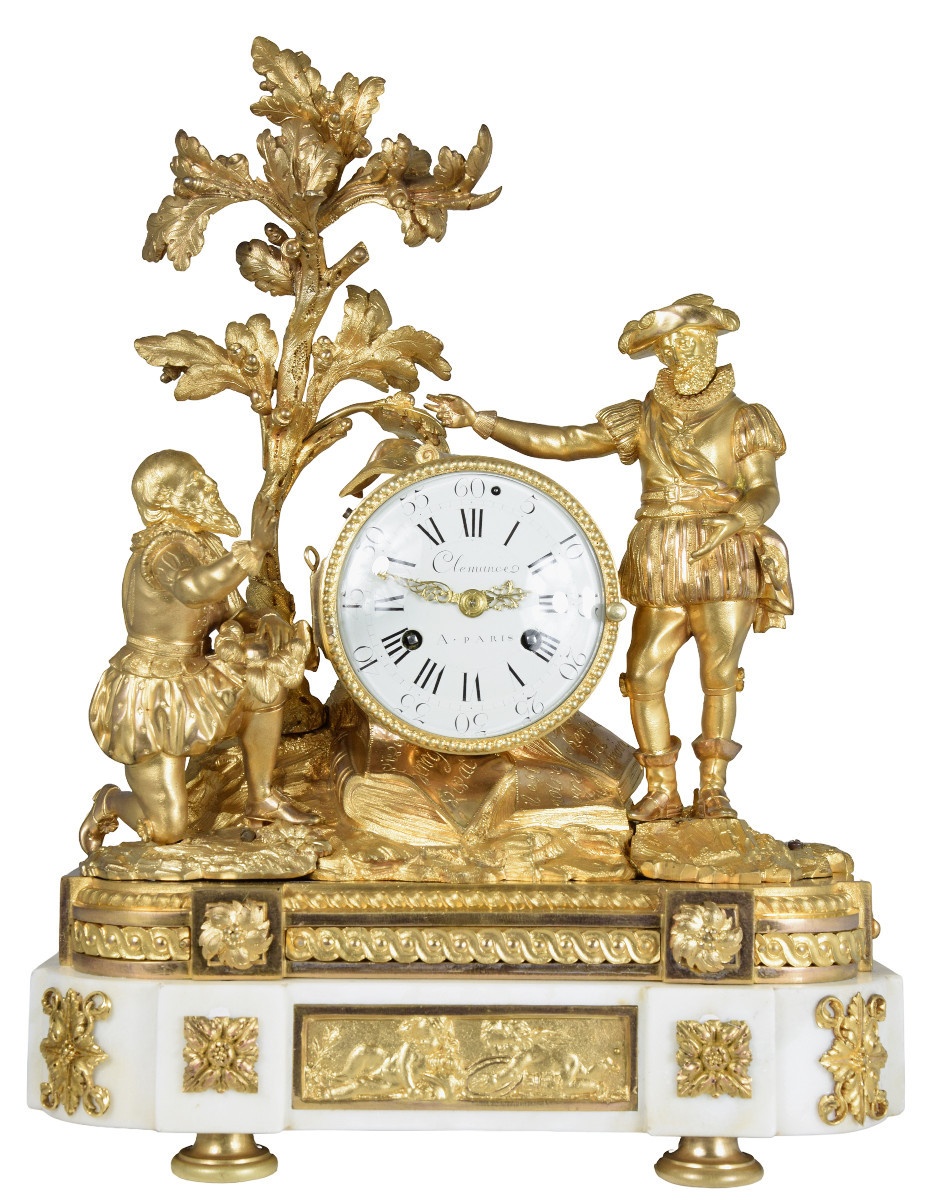
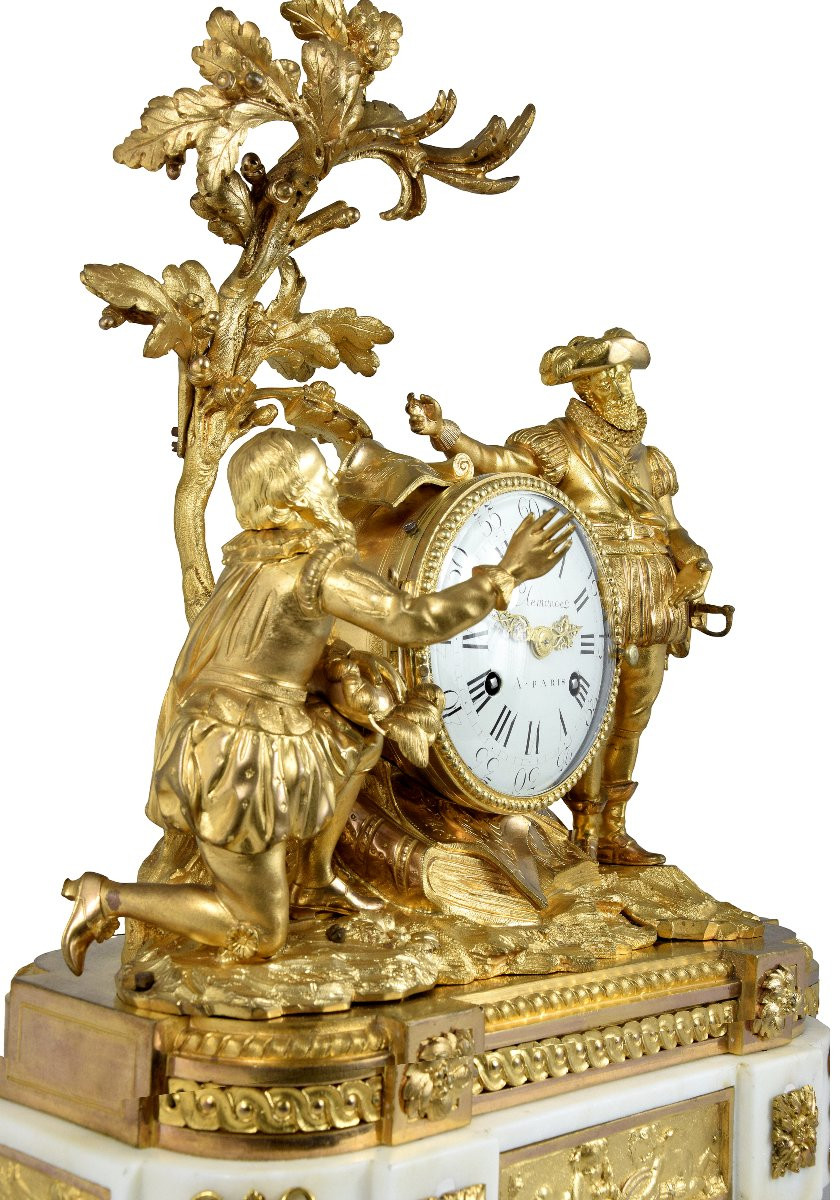
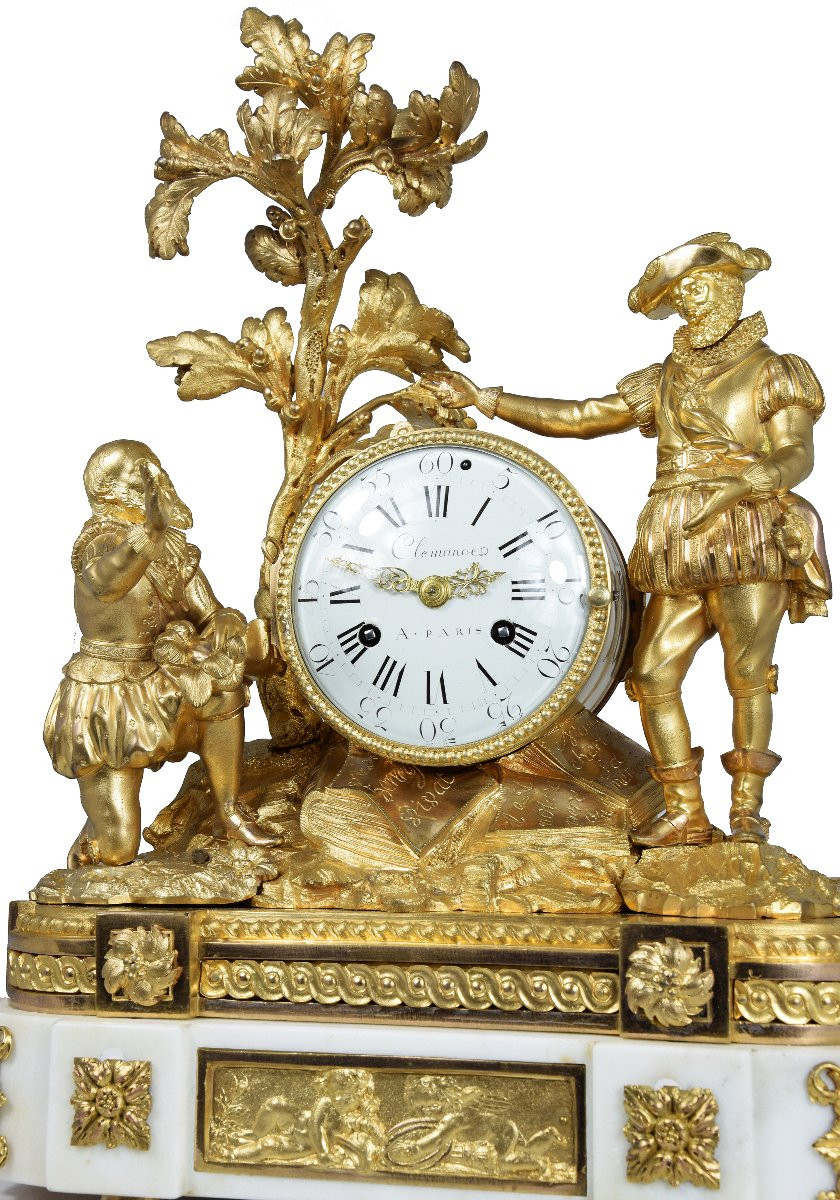
This scene depicts one of the most pivotal episodes in French political history: the reconciliation between Henry IV and Charles of Lorraine, Duke of Mayenne, sealing the end of the Wars of Religion and ushering in lasting civil peace under the Bourbon dynasty.
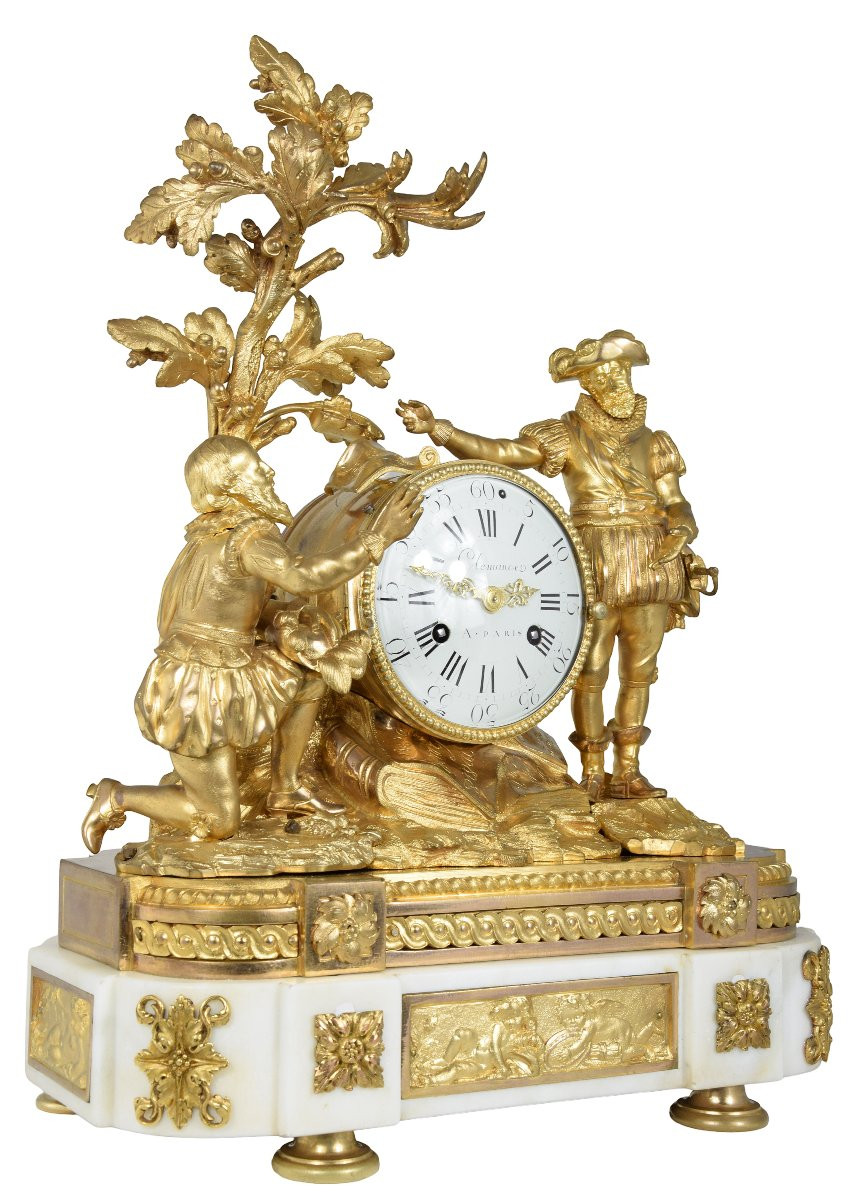
The scene, remarkable for its narrative power, presents the two protagonists in a composition that is both theatrical and deeply symbolic. Henry IV, shown standing, dressed as a military gentleman of the late 16th and early 17th centuries, wears the emblematic costume of his era: a doublet with puffed sleeves, a finely chiseled ruff, high boots, and a plumed hat. His demeanor is calm, confident, almost benevolent. With his arm outstretched in a gesture of appeasement, he embodies the magnanimous sovereign, victorious yet merciful, offering peace to his former adversary. Facing him, the Duke of Mayenne is depicted kneeling in a posture of solemn submission. Kneeling, his torso inclined, one arm raised towards the king, he expresses both the surrender of arms, the recognition of royal authority, and the acceptance of a new political order. The exquisitely rendered face conveys the gravity of the moment and the moral significance of this historic act. The contrast in postures—one standing, the other kneeling—structures the entire interpretation of the work and reinforces its symbolic power.
In the background, a vigorous tree, likely an oak, rises and envelops the scene with its abundant foliage. A tree of strength and longevity, it symbolizes the rebirth of the nation, the restored solidity of the state, and the enduring establishment of peace. The finely chiseled and richly gilded leaves offer a luminous contrast to the dial and bring vertical balance to the composition.
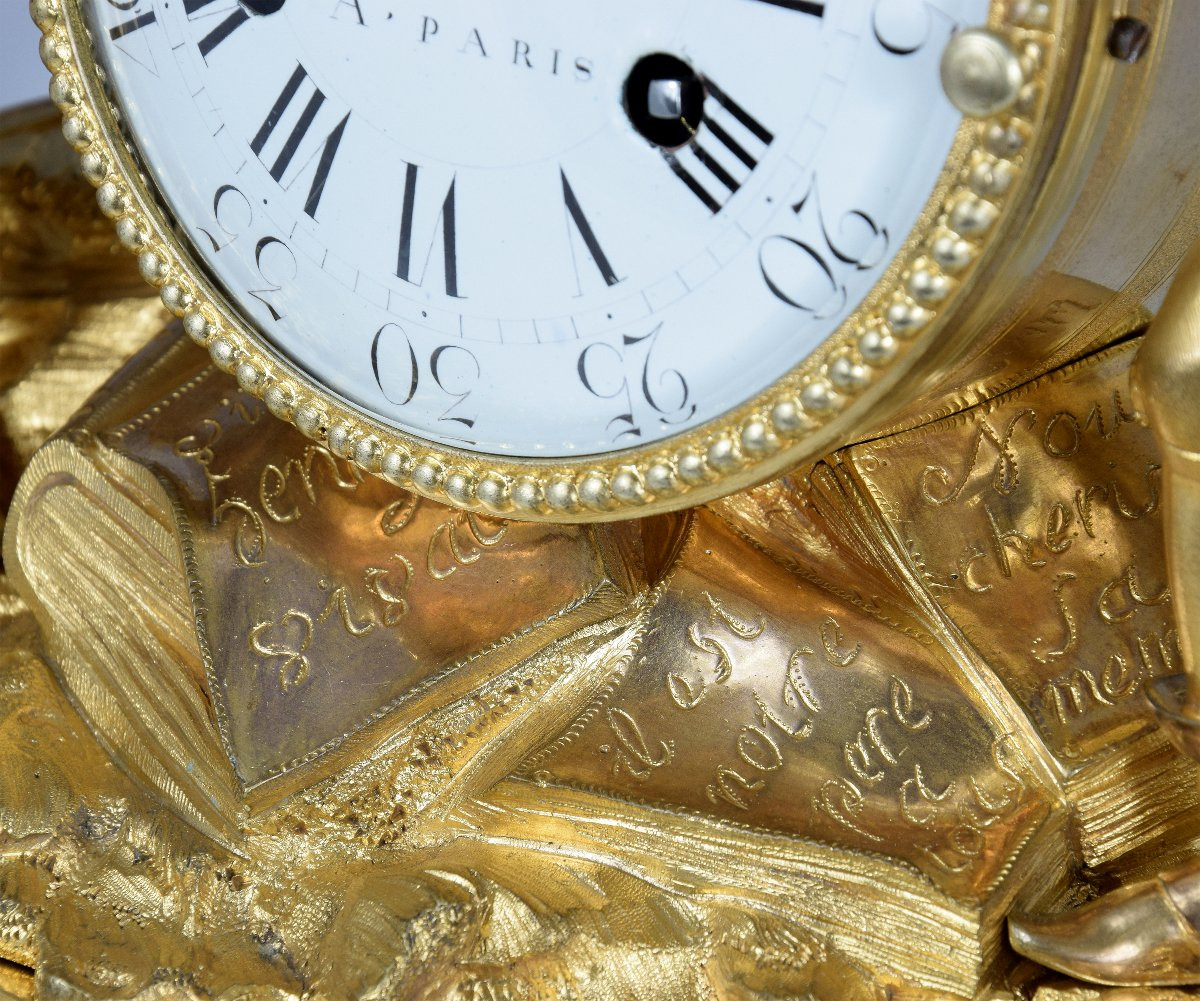
Large domed white enamel dial highlighted by a beaded bezel housing a domed crystal.
The clock rests on a white marble architectural base, punctuated by gilt bronze bas-reliefs depicting military trophies and allegorical motifs. These ornaments underscore the transition between war and concord, while lending the clock a monumental presence and great decorative elegance.
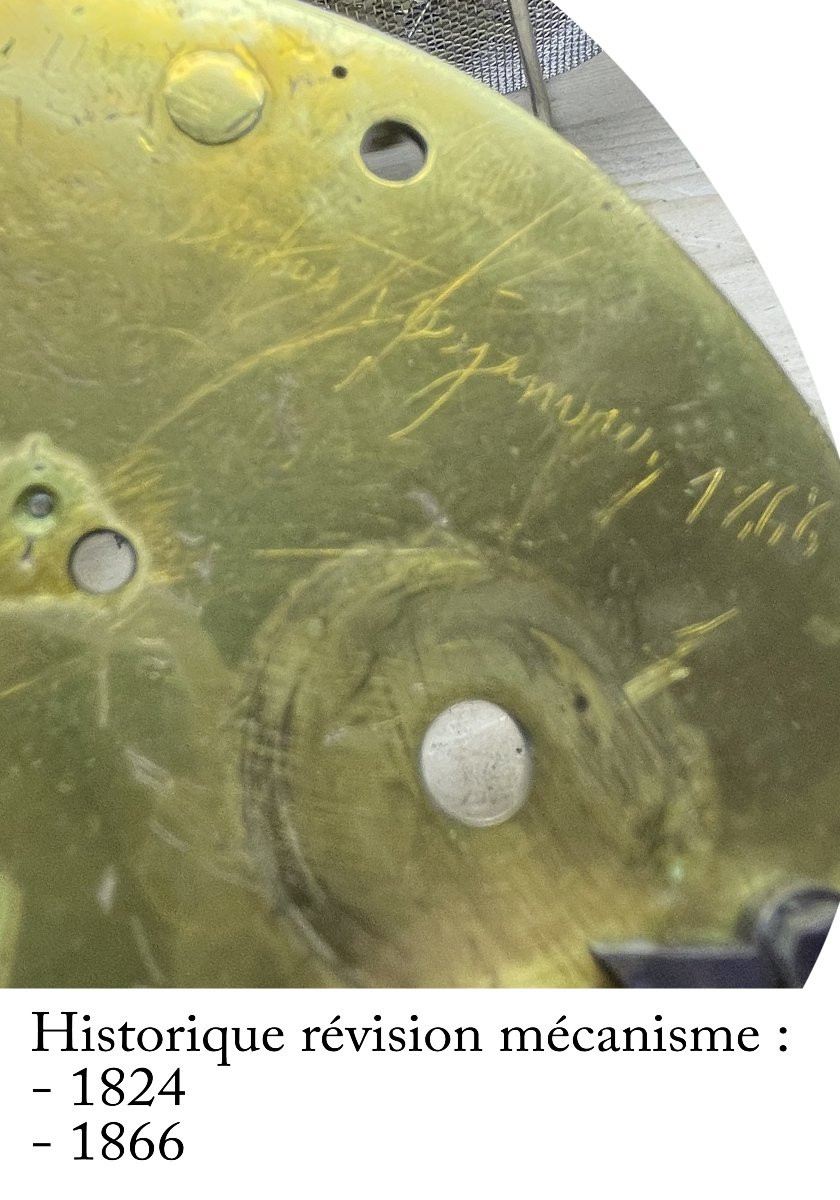
Original mechanism, unaltered. Wire suspension. Strikes the hours and half-hours on an antique bell.
ORDERING AND ADDITIONAL INFORMATION FROM OUR WEBSITE
This scene depicts one of the most pivotal episodes in French political history: the reconciliation between Henry IV and Charles of Lorraine, Duke of Mayenne, sealing the end of the Wars of Religion and ushering in lasting civil peace under the Bourbon dynasty.
The scene, remarkable for its narrative power, presents the two protagonists in a composition that is both theatrical and deeply symbolic. Henry IV, shown standing, dressed as a military gentleman of the late 16th and early 17th centuries, wears the emblematic costume of his era: a doublet with puffed sleeves, a finely chiseled ruff, high boots, and a plumed hat. His demeanor is calm, confident, almost benevolent. With his arm outstretched in a gesture of appeasement, he embodies the magnanimous sovereign, victorious yet merciful, offering peace to his former adversary. Facing him, the Duke of Mayenne is depicted kneeling in a posture of solemn submission. Kneeling, his torso inclined, one arm raised towards the king, he expresses both the surrender of arms, the recognition of royal authority, and the acceptance of a new political order. The exquisitely rendered face conveys the gravity of the moment and the moral significance of this historic act. The contrast in postures—one standing, the other kneeling—structures the entire interpretation of the work and reinforces its symbolic power.
In the background, a vigorous tree, likely an oak, rises and envelops the scene with its abundant foliage. A tree of strength and longevity, it symbolizes the rebirth of the nation, the restored solidity of the state, and the enduring establishment of peace. The finely chiseled and richly gilded leaves offer a luminous contrast to the dial and bring vertical balance to the composition.
Large domed white enamel dial highlighted by a beaded bezel housing a domed crystal.
The clock rests on a white marble architectural base, punctuated by gilt bronze bas-reliefs depicting military trophies and allegorical motifs. These ornaments underscore the transition between war and concord, while lending the clock a monumental presence and great decorative elegance.
Original mechanism, unaltered. Wire suspension. Strikes the hours and half-hours on an antique bell.
ORDERING AND ADDITIONAL INFORMATION FROM OUR WEBSITE
Explore similar pieces and discover your ideal find:
Mantel Clocks