THIS OBJECT WAS SOLD
Giuseppe Guidi - Interior Of The Basilica Of Santa Maria Del Popolo In Rome
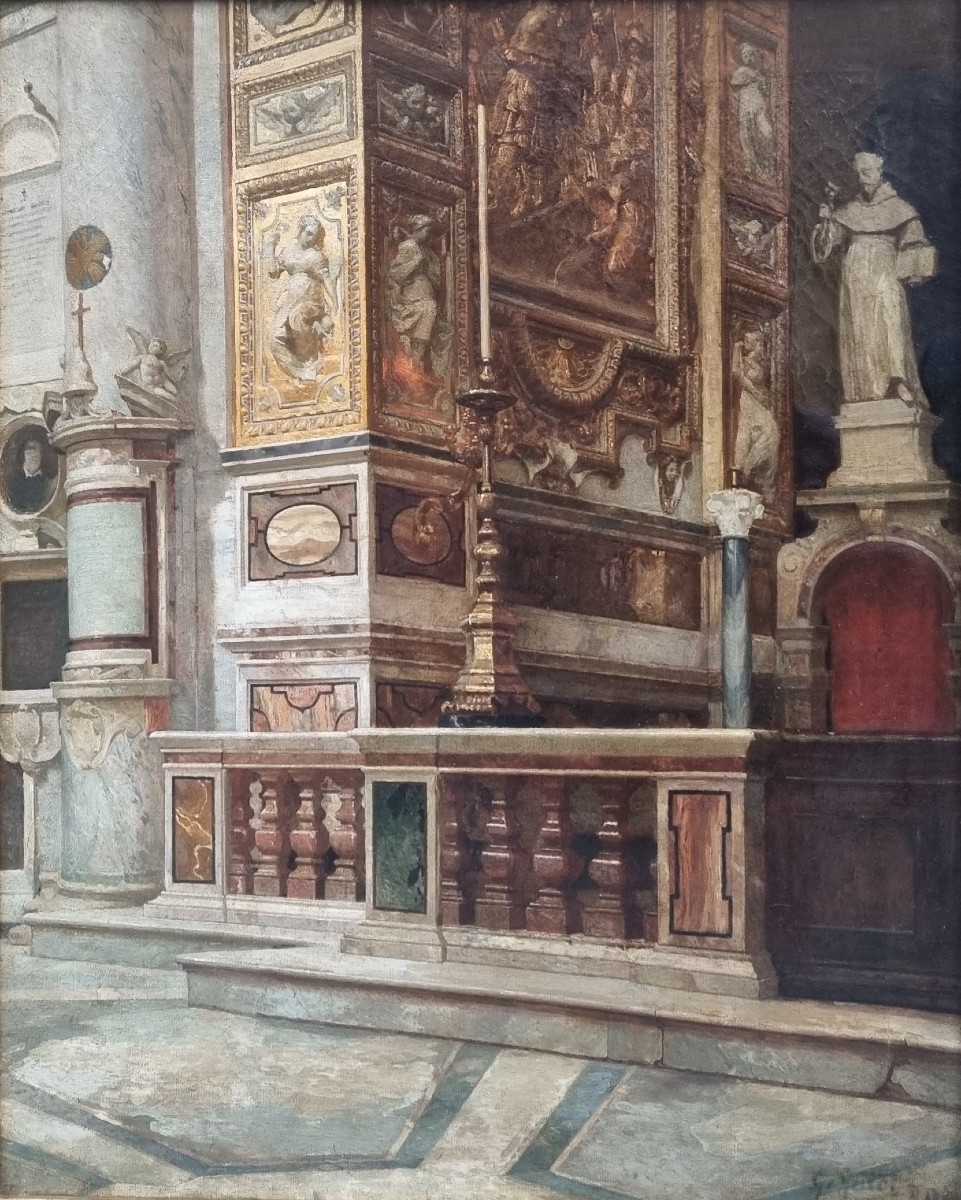
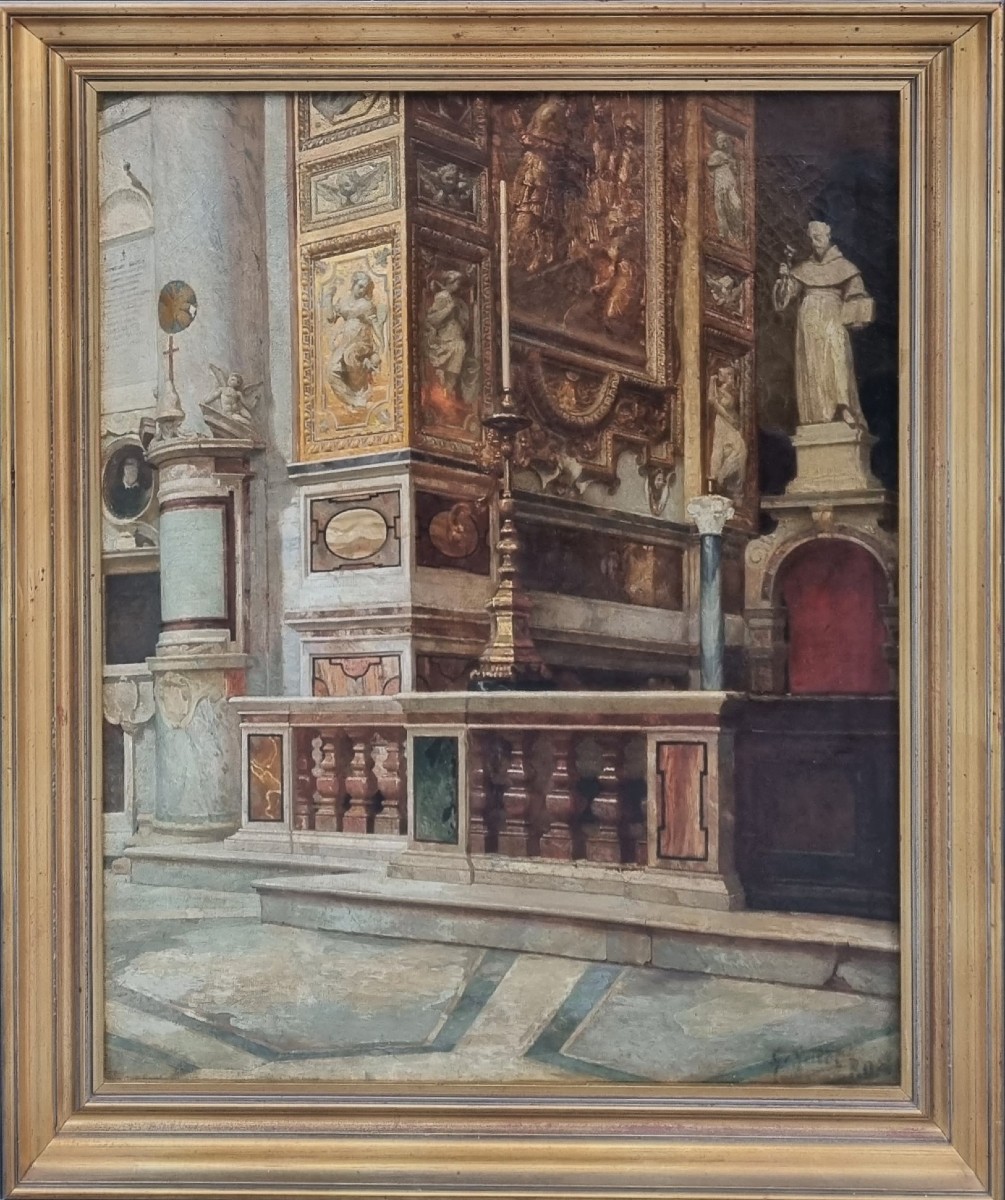
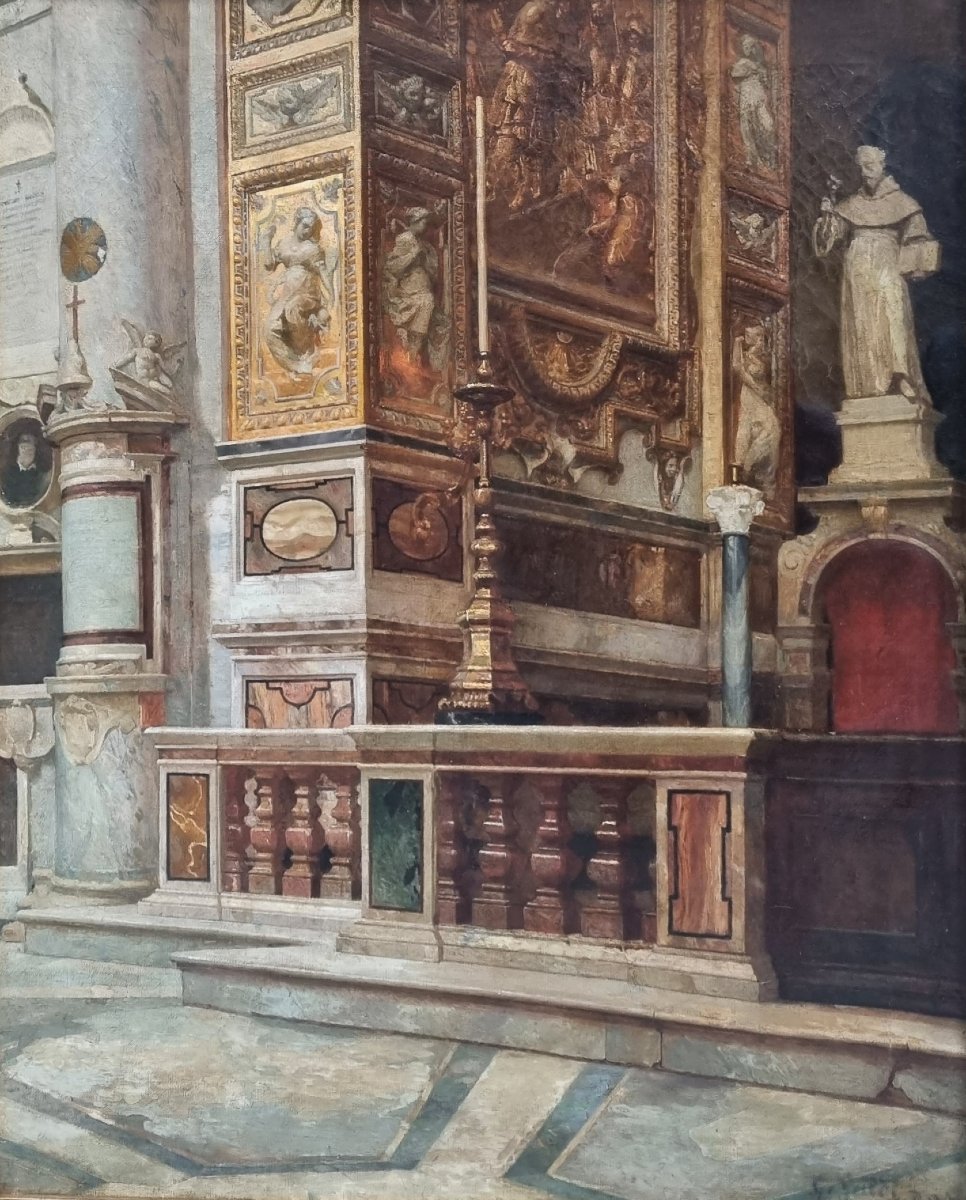
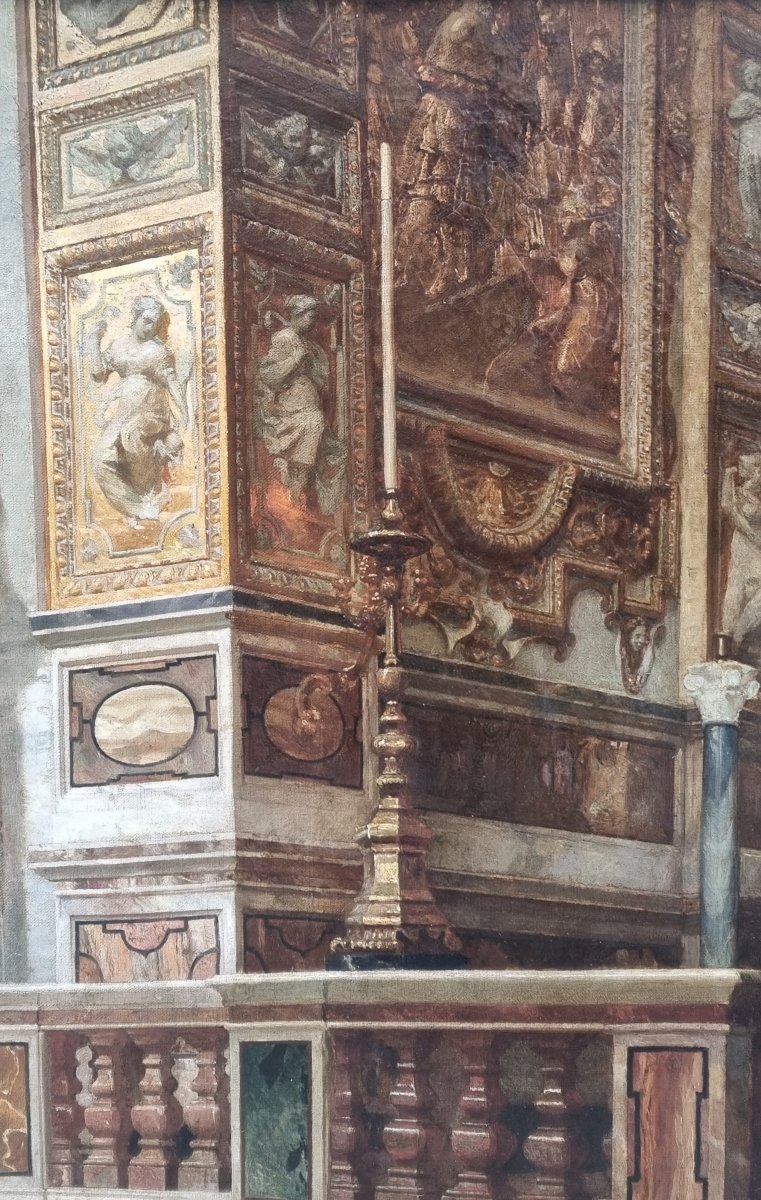
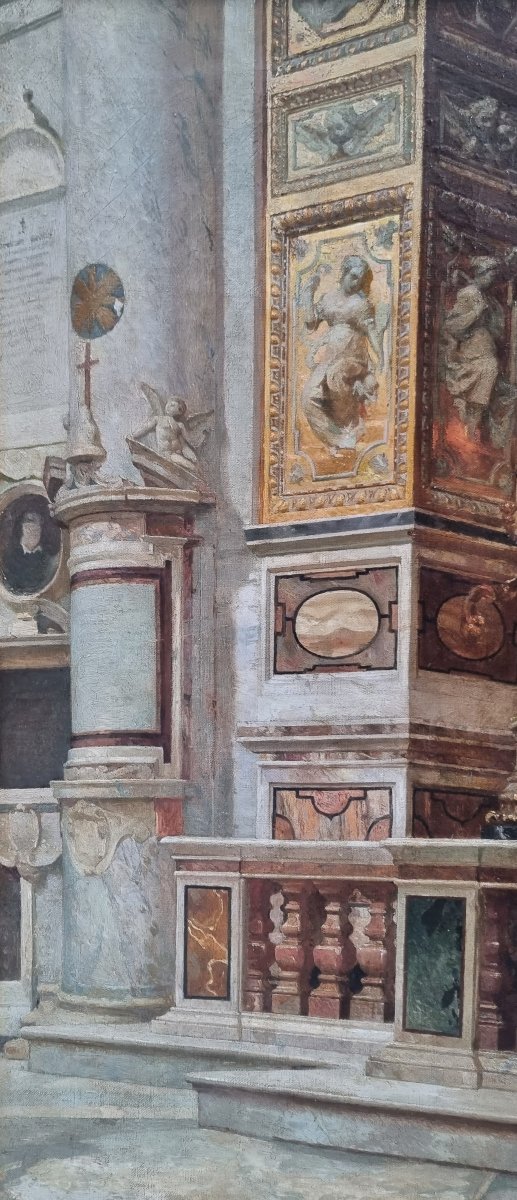
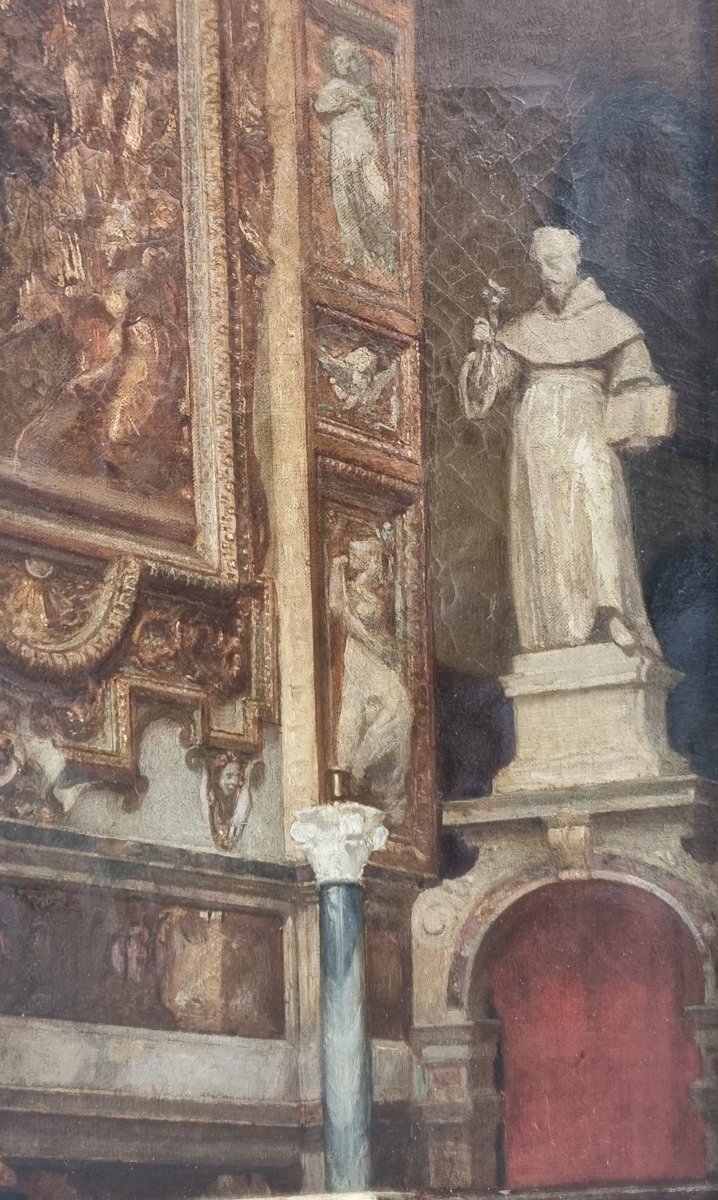
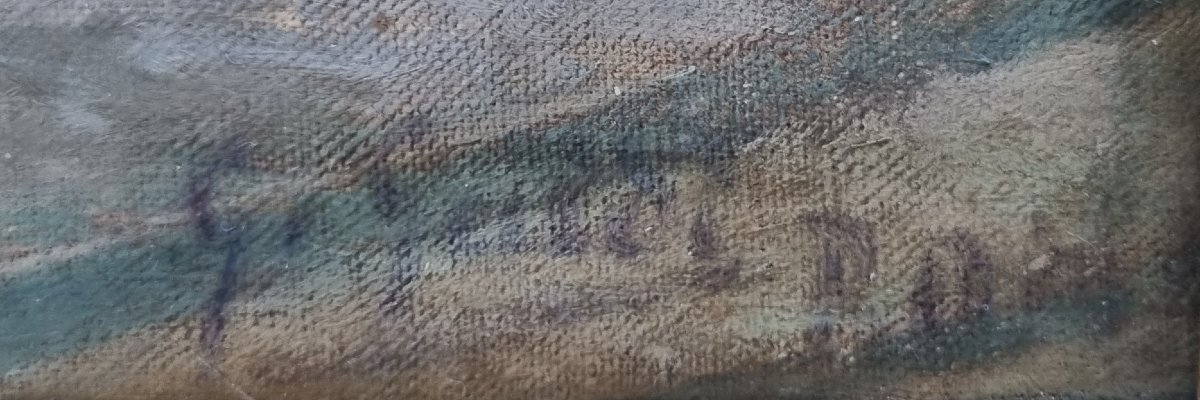
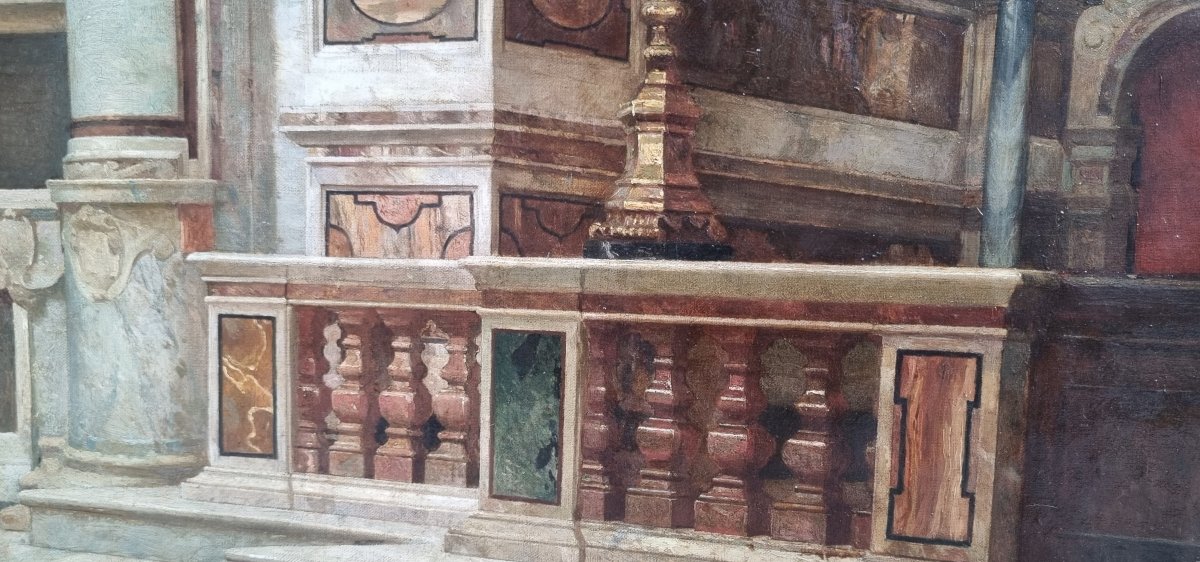
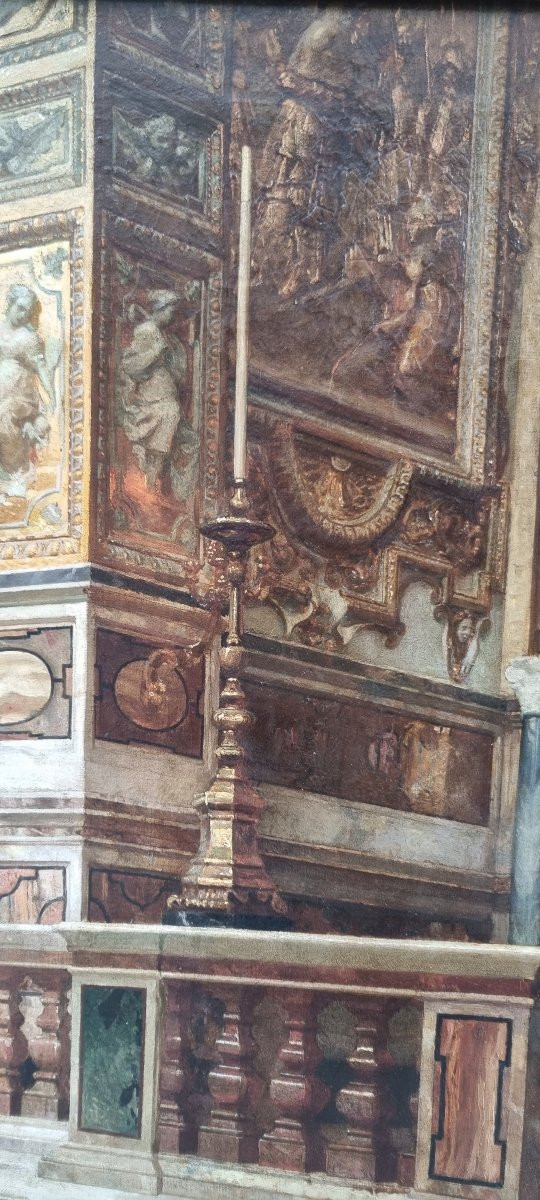


Giuseppe GUIDI Rome, 1870 – Rome, 1925 Interior of the Basilica of Santa Maria del Popolo in Rome Oil on canvas 62 x 50 cm (71 x 59 cm with frame) Signed and located lower right “G. Guidi / ROMA” Very good condition Visible at the gallery The high altar of the church of Santa Maria del Popolo was built in 1627, as was the decoration of the triumphal arch, where the stucco work depicts the legend of the church's founding. The altar features a 13th-century Byzantine-style icon called the Madonna del Popolo. The choir, remodeled by Bramante in the early 16th century, preserves two masterpieces by Andrea Sansovino: the funerary monuments of Cardinals Ascanio Sforza and Girolamo Basso Della Rovere. The vault is decorated with frescoes by Pinturicchio (1508-1510). Giuseppe Guidi was a Roman artist born in 1870. He studied at the Accademia di San Luca from 1896. He was active in Rome as well as in Paris, where he continued in a style close to that of his Roman predecessor. Several paintings signed "G. Guidi" with subjects similar to those of the Roman Giuseppe Guidi suggest that behind the signature G. Guidi on our painting lies Giuseppe Guidi of Rome, not to be confused with the better-known Giuseppe Guidi of Castel Bolognese (in Emilia-Romagna), an enamel painter who was active in Milan and Brescia, but not in Rome. Giuseppe Guidi of Rome painted high-ranking prelates and interior scenes inspired by the 18th century. A portrait of Pope Benedict XV signed and dated “Giuseppe Guidi Roma 1914” was also found. And on page 1166 of the Guida Monaci - Commercial Guide to Rome and its province, year XLV of 1915, under the heading “Painters of figures, history, landscapes, etc. », a certain Giuseppe Guidi appears, residing at 22, Via Margutta. While the Giuseppe Guidi linked to D'Annunzio was then living in Milan at that time. (Sources: Andrea Soglia, Giuseppe Guidi da Castel Bolognese and a pittor's friend: first contribution to the solution of a "caso" lungo econtroverso, in https://www.castelbolognese.org and tourist guide www.rome-roma.net))
Explore similar pieces and discover your ideal find:
Other Paintings