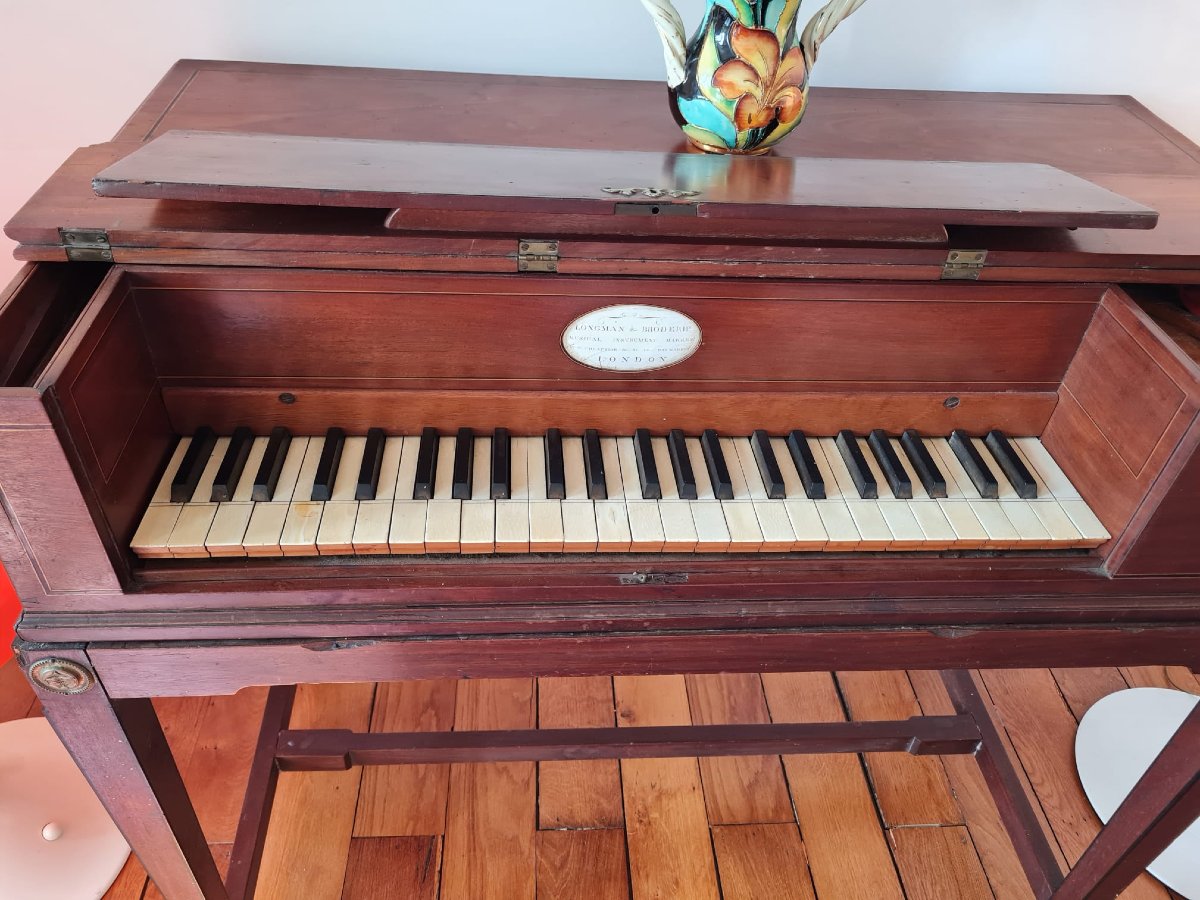

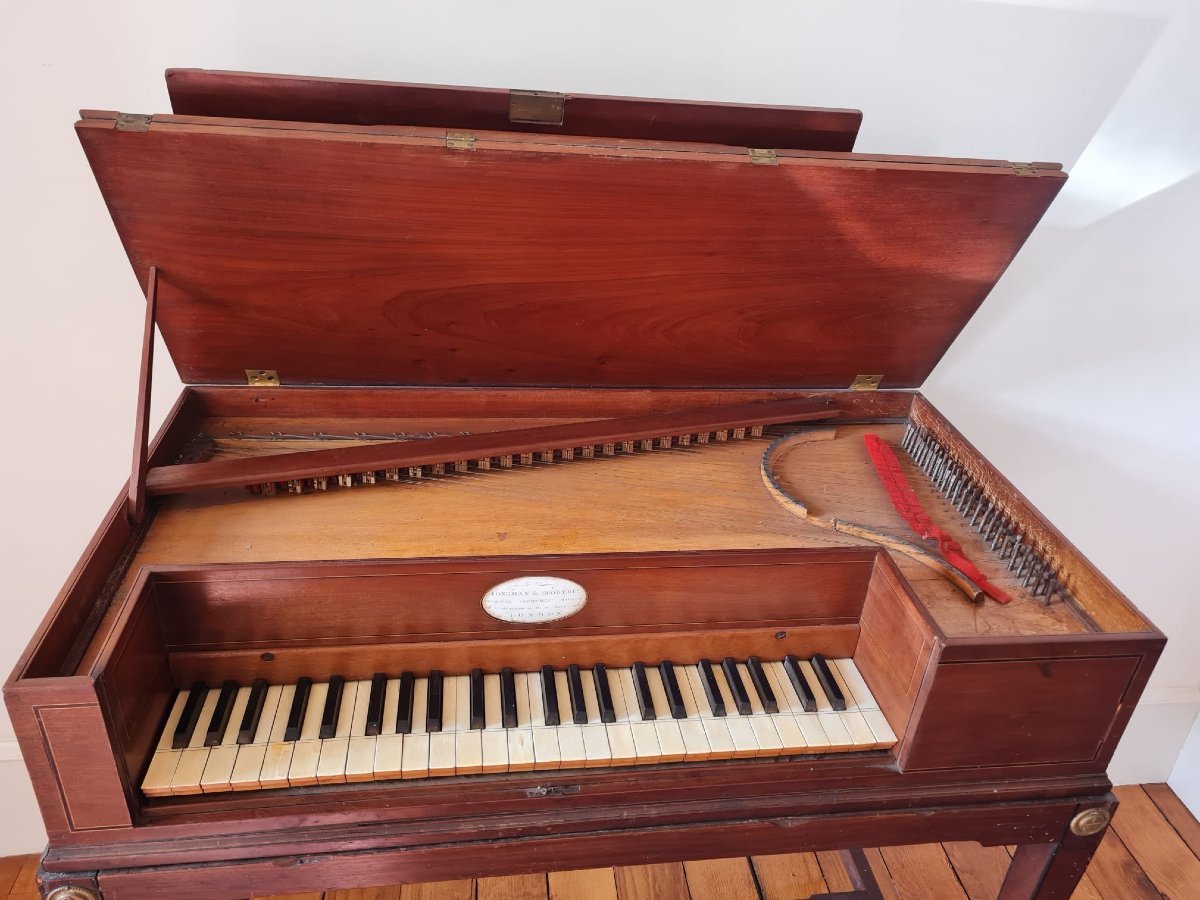

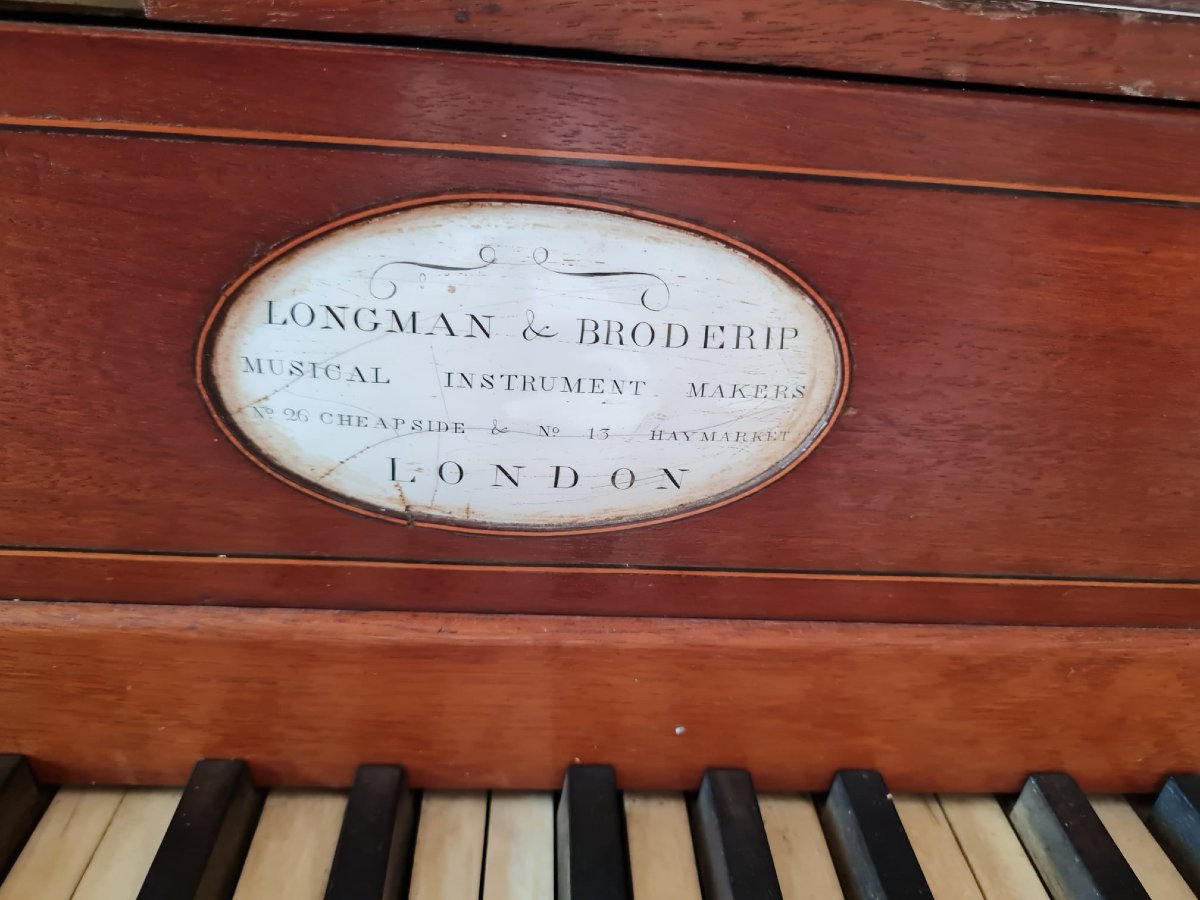

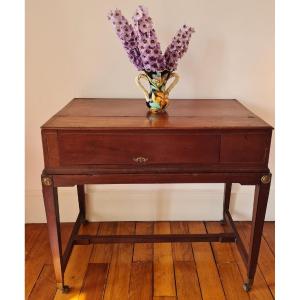


Longman & Broderip Traveling Piano, London, Circa 1790
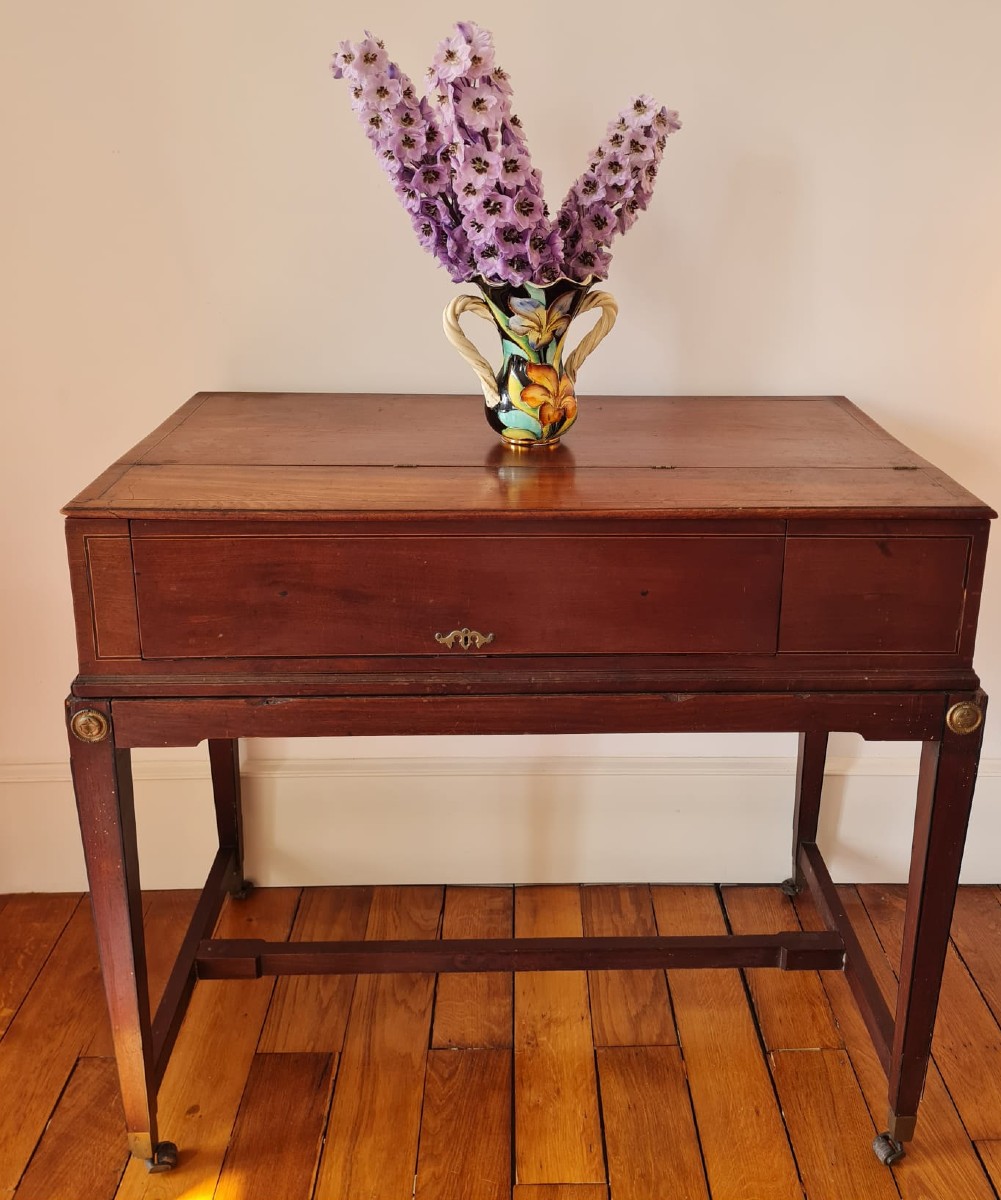
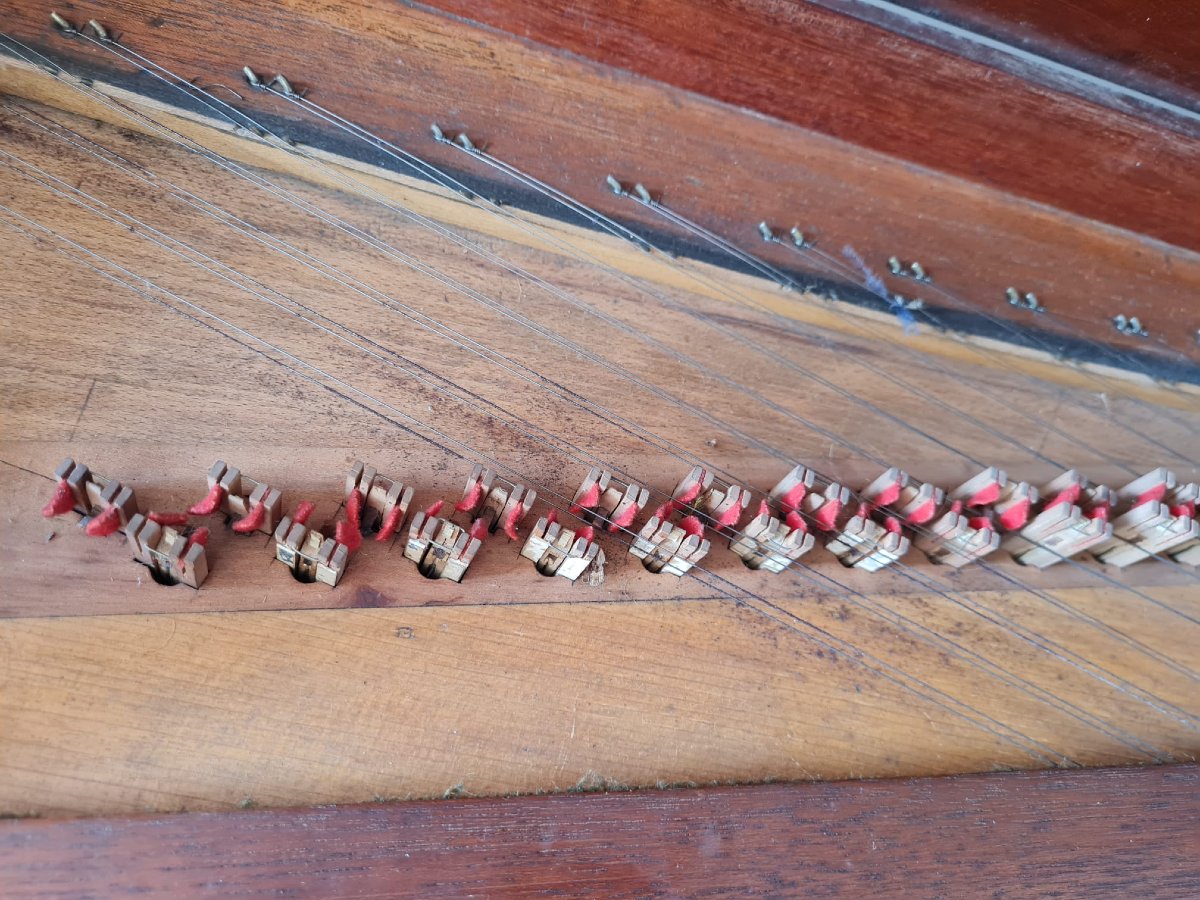
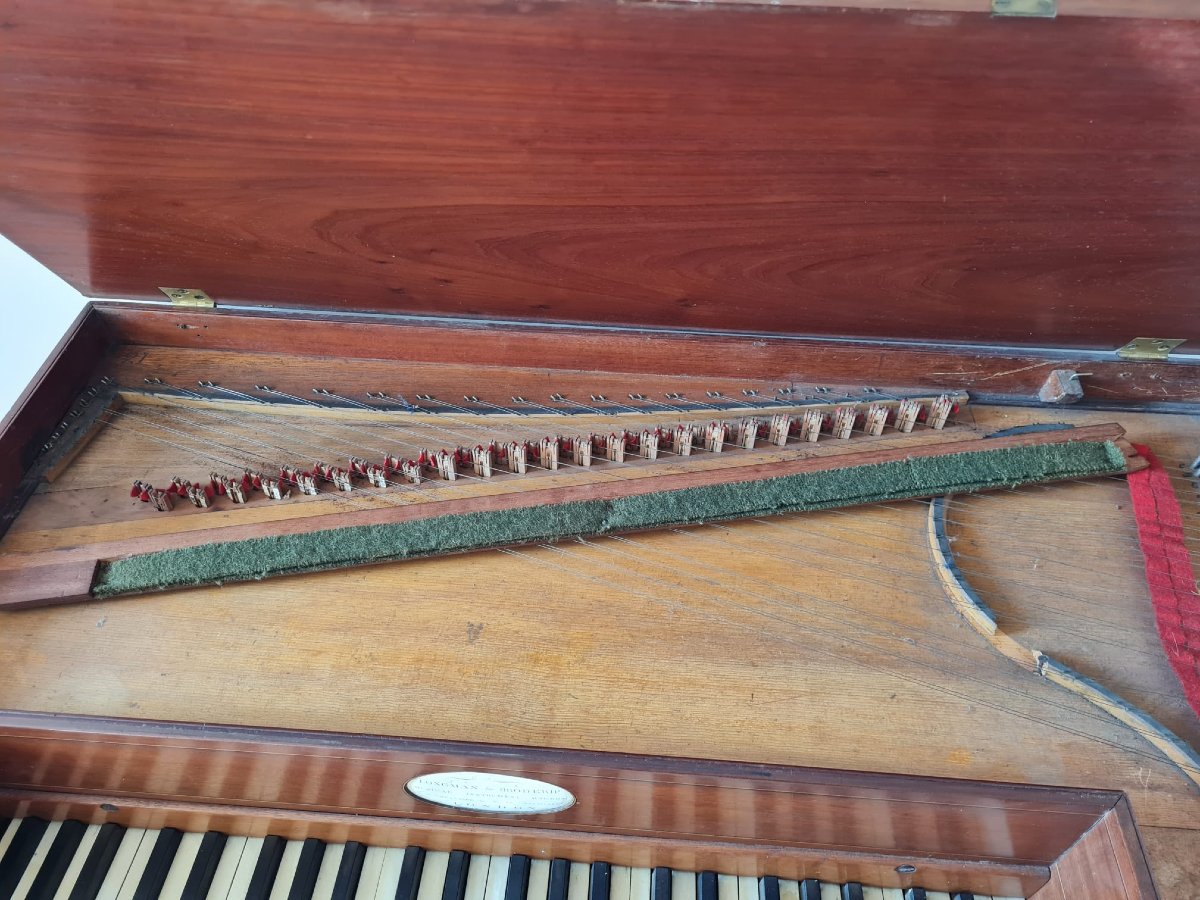
Longman & Broderip Travel Piano, London, circa 1790. Plucked string instrument. This travel piano, attributed to the renowned firm Longman & Broderip and dated around 1790, was designed to meet the portability requirements of late 18th-century travel instruments. Unlike contemporary travel pianos, which generally featured a struck string mechanism, this instrument is distinguished by its plucked string mechanism, an extremely rare technical solution in English piano making. This organological choice gives the instrument a delicate, clear, and highly articulate sound, reminiscent of a miniature harpsichord or a traveling spinet, while retaining a formal design associated with the piano. The whole instrument testifies to a quest for sonic and mechanical innovation, revealing the ingenuity of London piano makers at the end of the 18th century. Comparisons and Context: Instruments comparable in function, but based on a struck-string mechanism, are preserved in major institutional collections: A traveling piano from the same period is in the permanent collection of the Metropolitan Museum of Art (New York). Another slightly earlier example (circa 1782), also with struck strings, is in the Eric Feller Early Keyboard Instruments Collection https://www.ericfeller.de/en/instrumente/longman-and-broderip-1782-reiseklavier/ The instrument presented here stands out clearly from these models due to its plucked-string system, an extremely rare technology, which places it among the most unique known creations of the Longman & Broderip firm. Provenance: Private collection, William Petit. This instrument is comparable, in its typology and quality, to examples held in prestigious museum institutions. Importance and Heritage Value The exceptional value of this instrument rests on several converging factors: the extreme rarity of plucked-string traveling pianos, the originality of its hybrid mechanism, its dating to around 1790, contemporary with instruments held at the Metropolitan Museum of Art, and the sustained interest of collectors and institutions in traveling instruments and organological innovations of the late 18th century. This piano thus constitutes a unique testimony to technical and aesthetic innovation in English instrument making and is of major historical and museum importance.
10 000 €
Period: 18th century
Style: Other Style
Condition: Excellent condition
Material: Solid wood
Reference (ID): 1698512
Availability: In stock
Print