


The Crystal Staircase (attributed To), A Japanese-style Clock In Cloisonné Enamel And Gilt Bronze
Artist: L’escalier De Cristal (att. à)
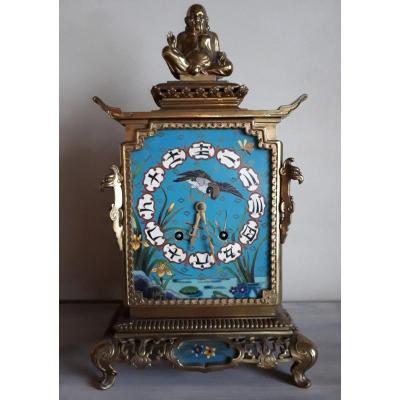
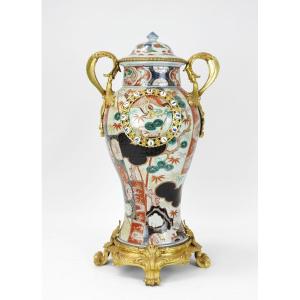
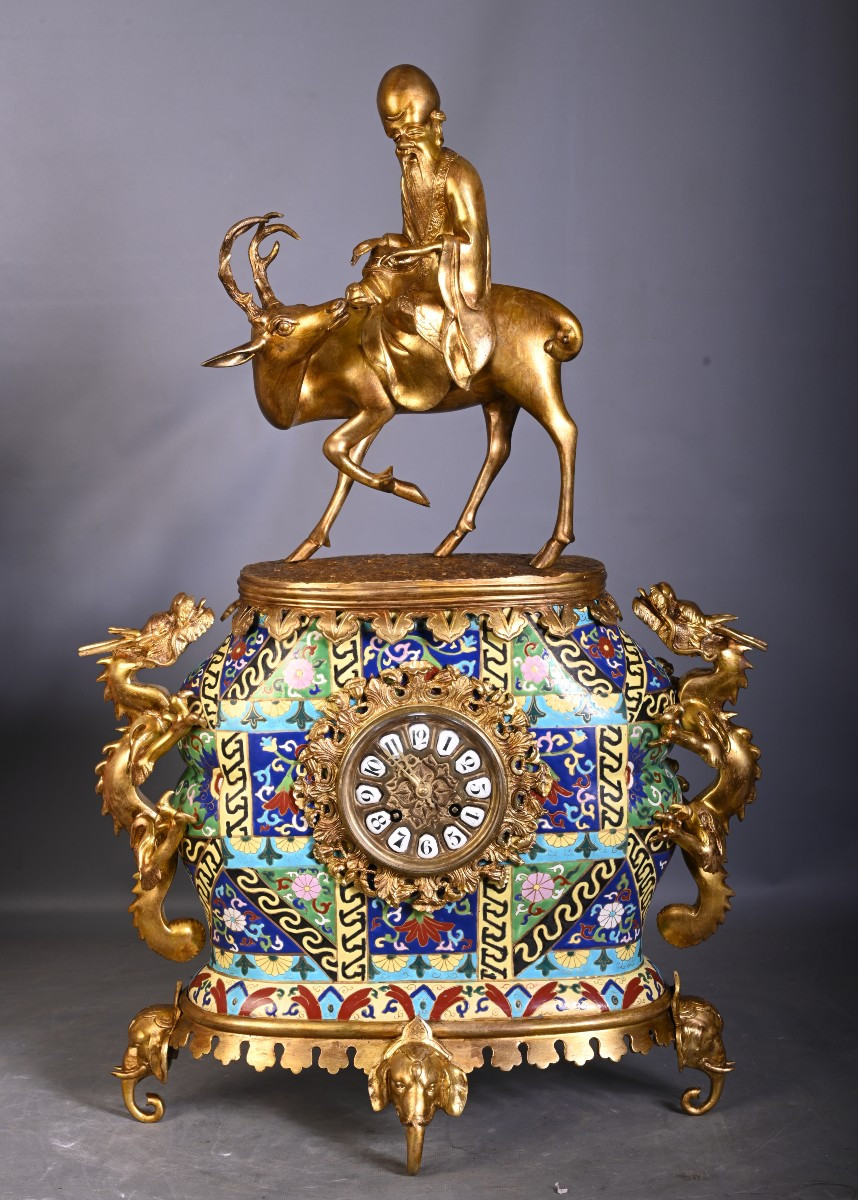
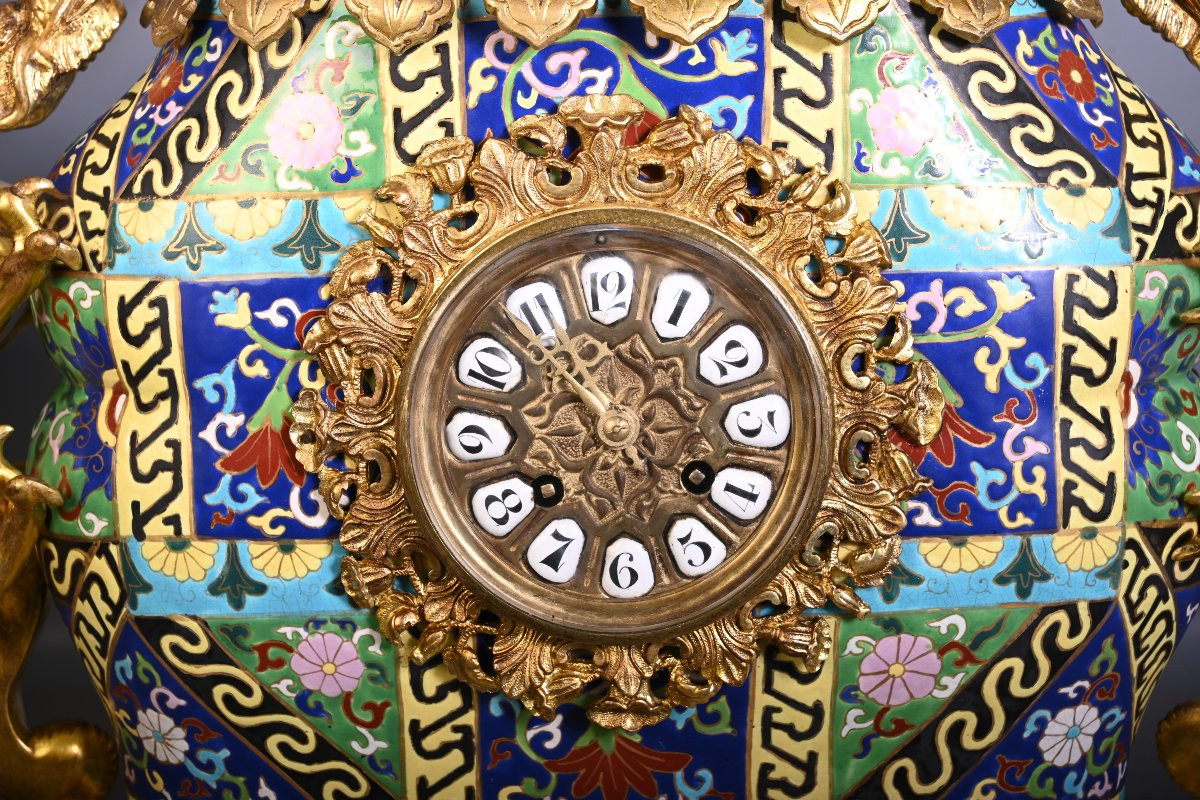
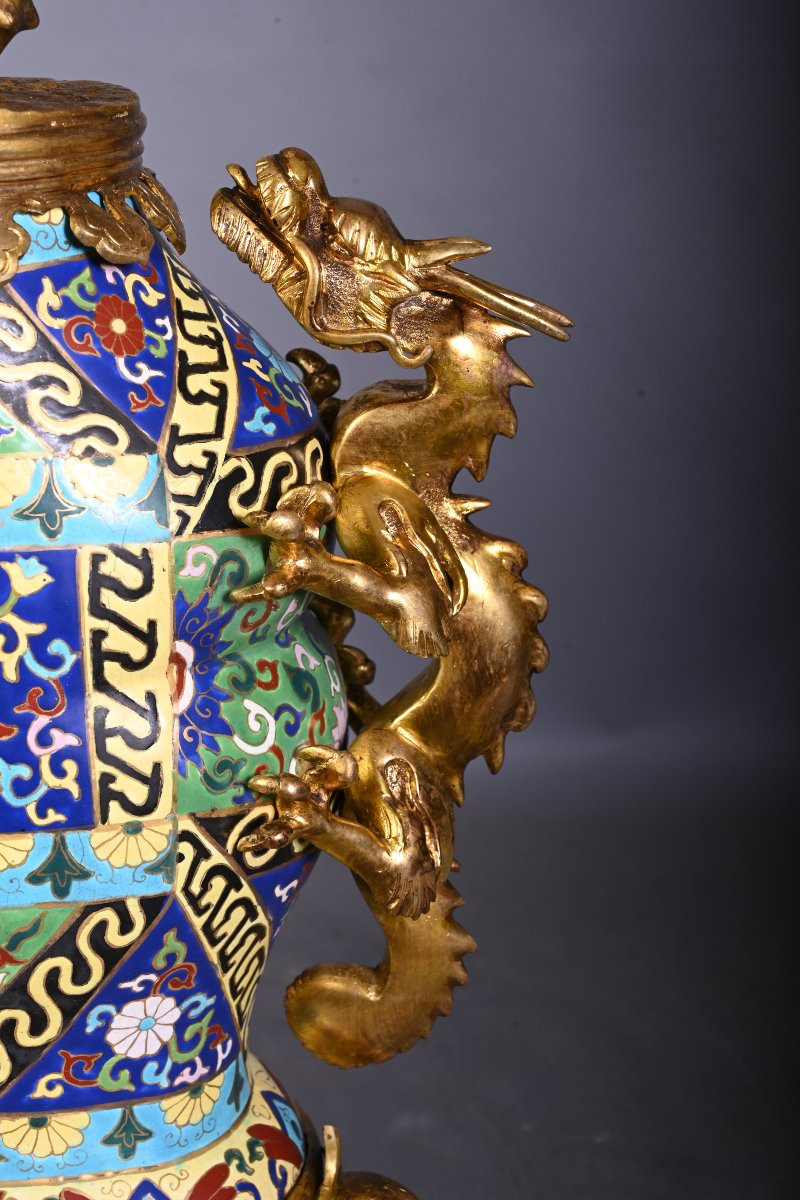
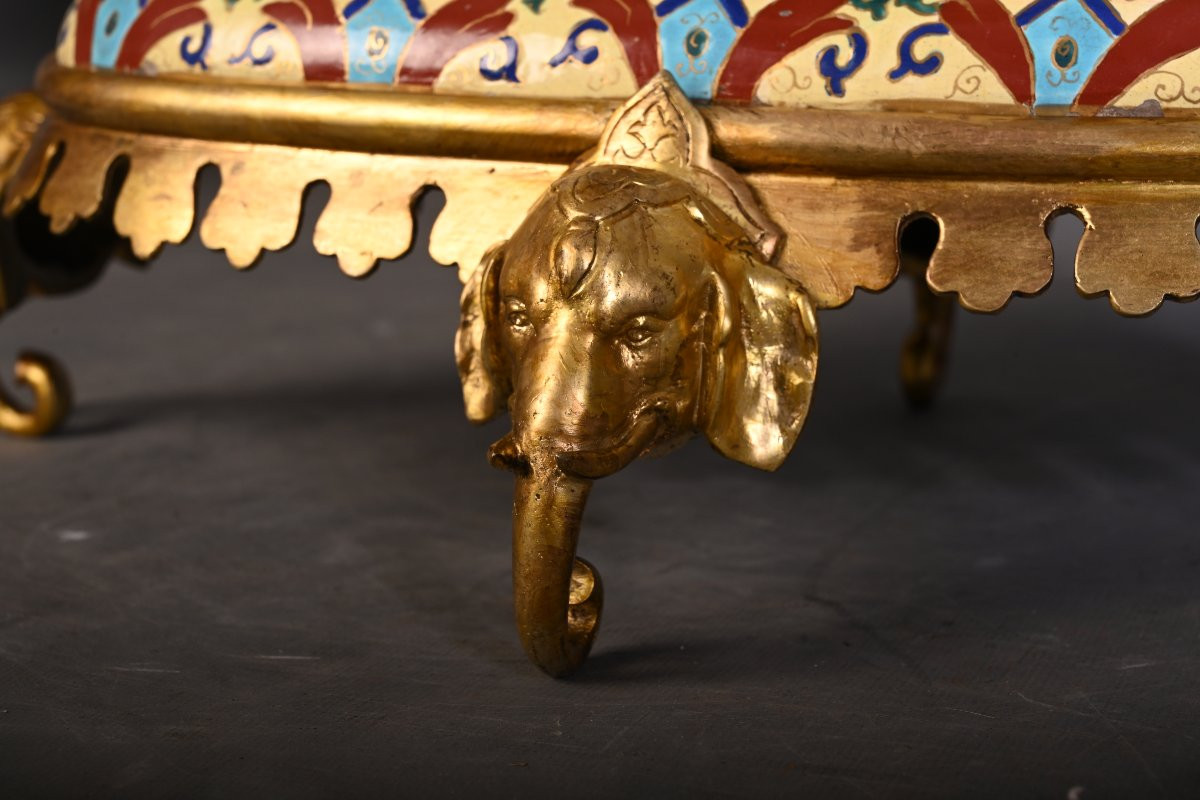
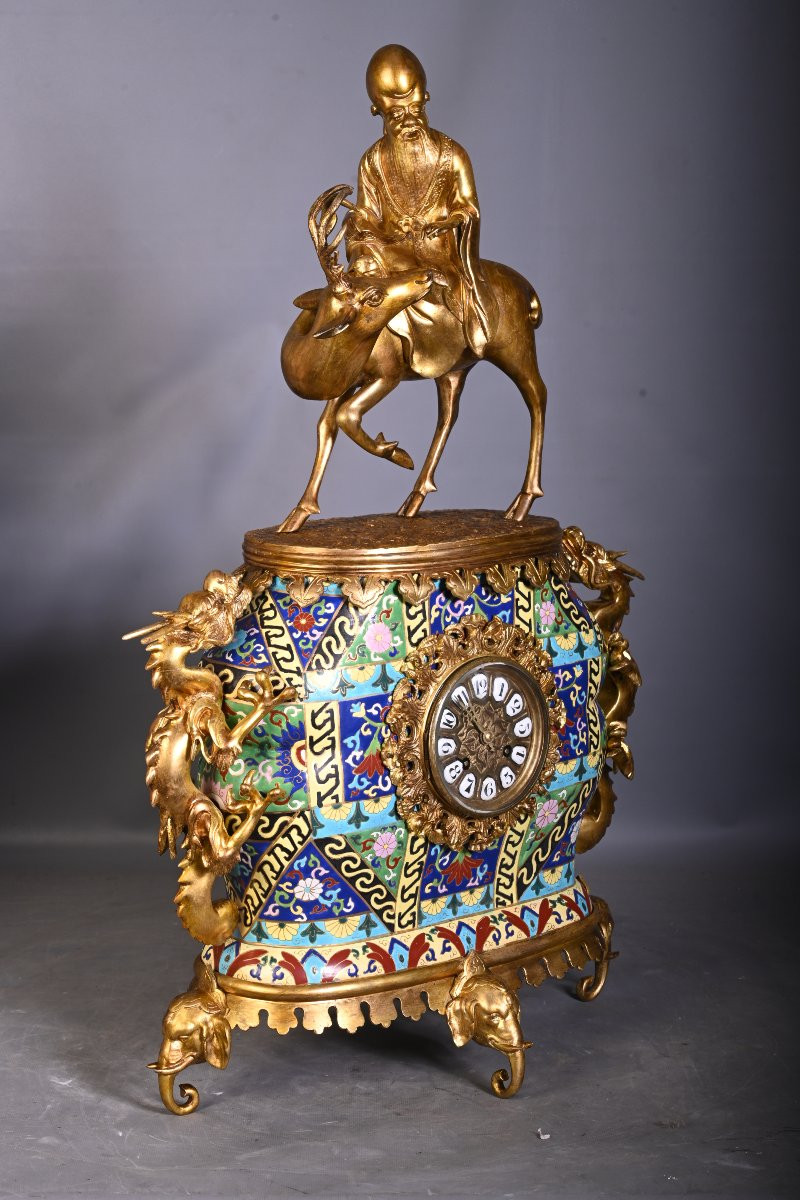
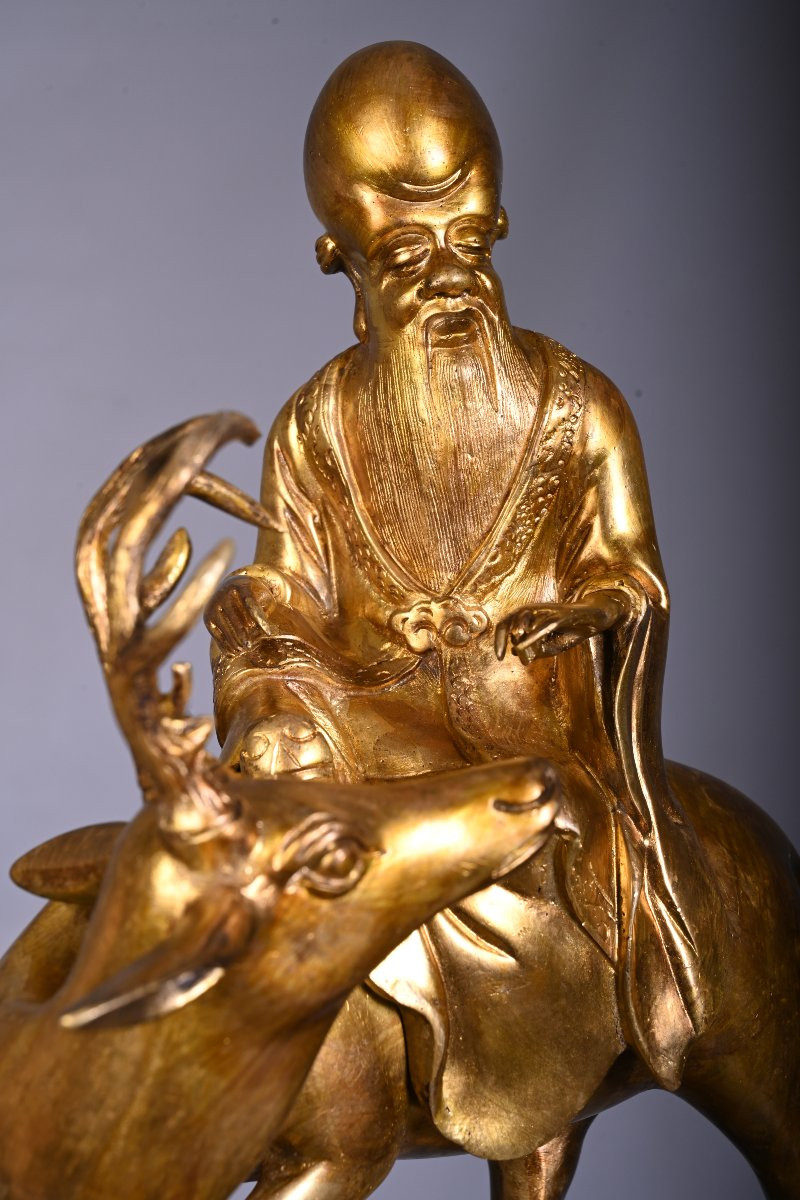
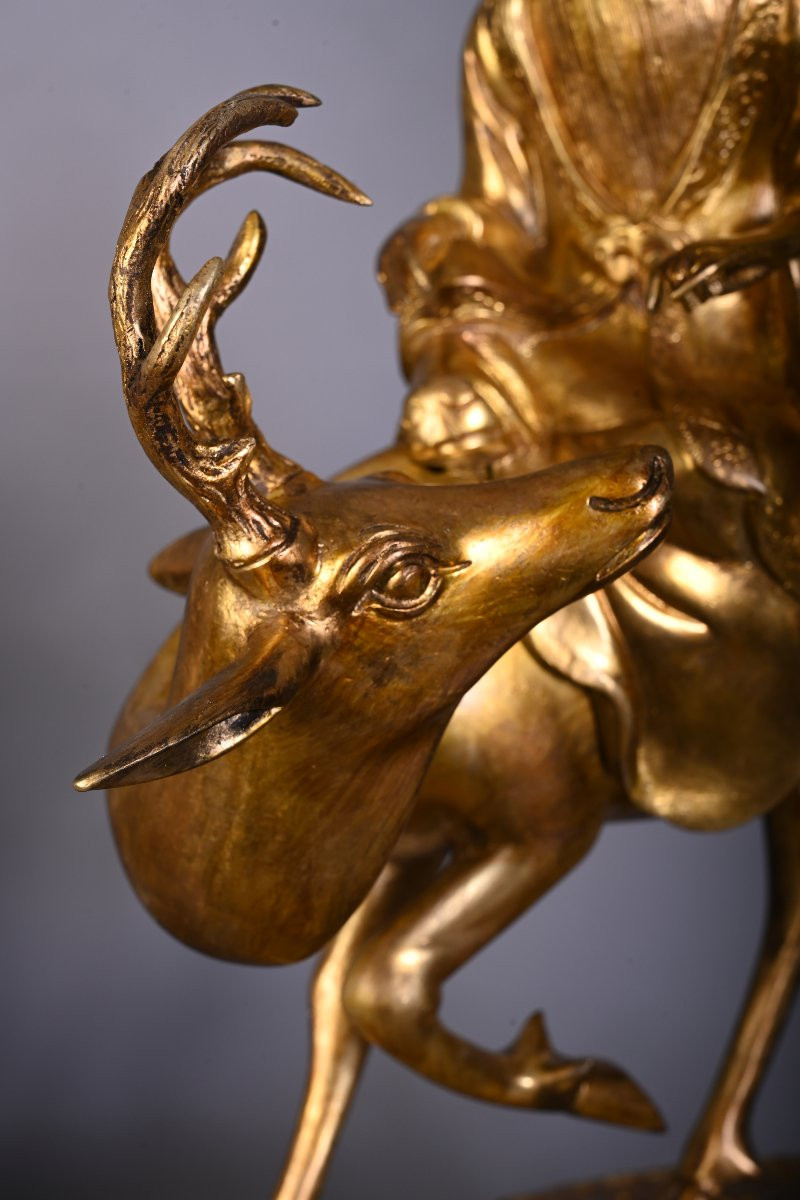
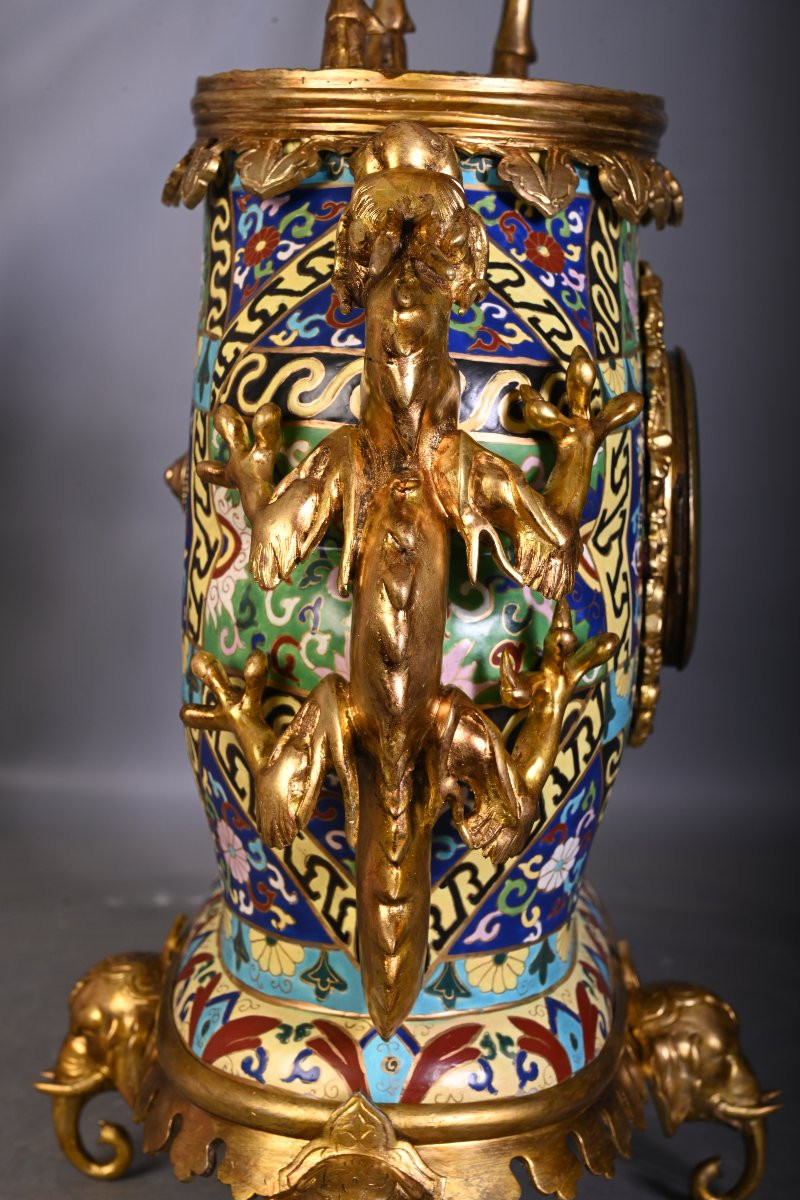
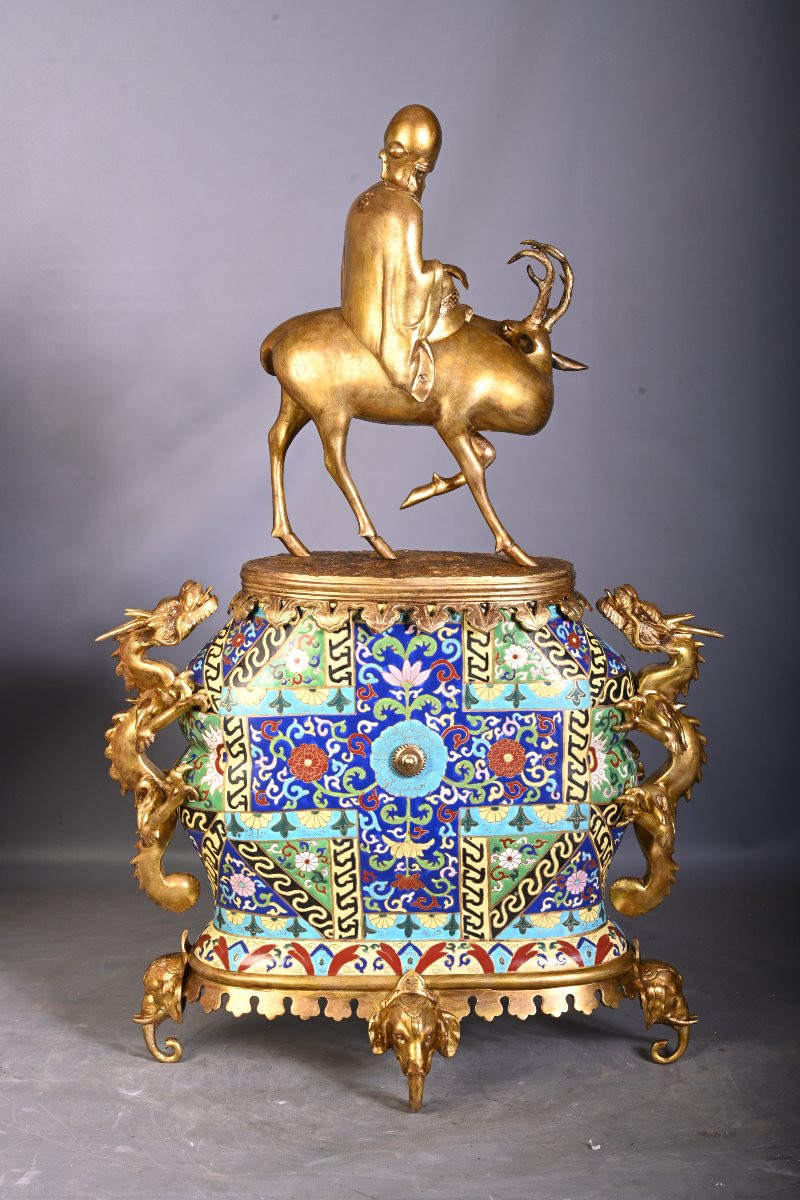
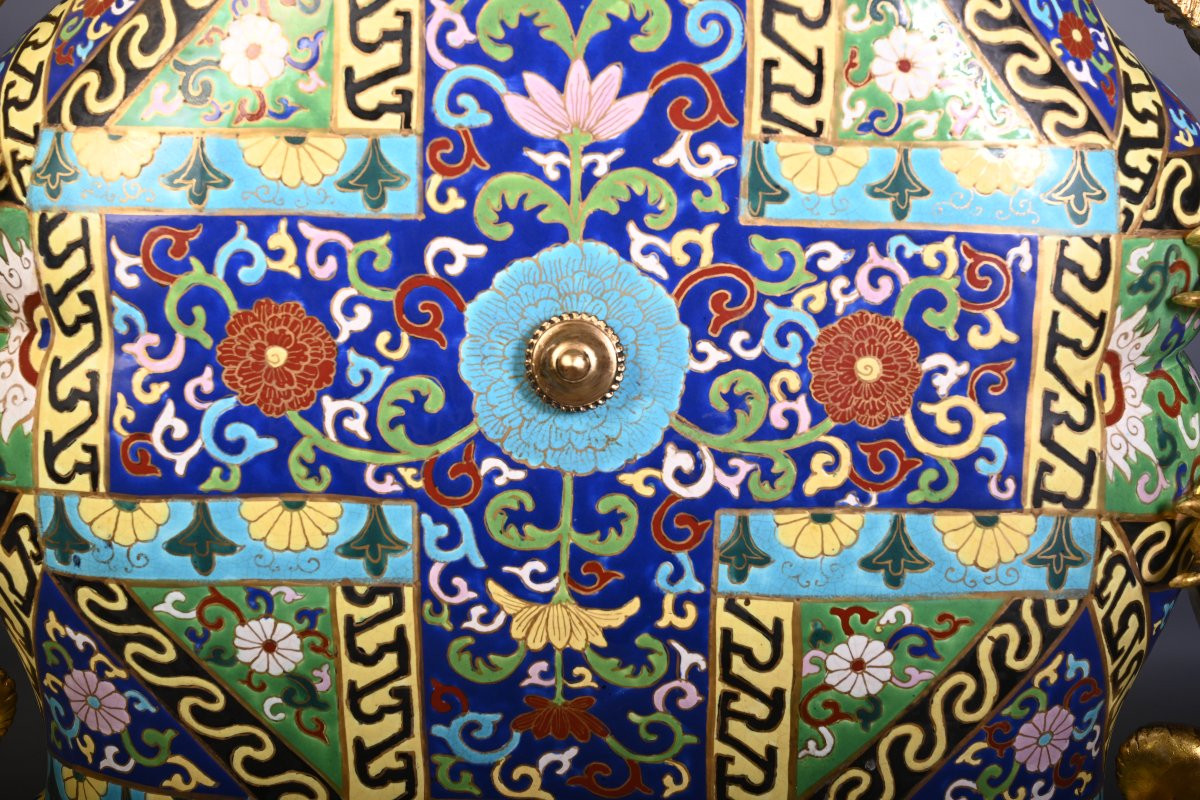
Our clock, attributed to the Crystal Staircase, features a rich Japanese-inspired decoration blending cloisonné enamels and gilt bronze elements. While the clock's body suggests a formal affinity with Japanese vases, the cloisonné enamels and bronze dragons complete the distinctly Far Eastern character of this French creation from the second half of the 19th century. The arrangement and design of the enamel motifs are particularly intricate and display great finesse. Set upon a gilt bronze mount composed of four elephant heads, our timepiece is surmounted by an effigy of Fukurokuju, one of the seven gods of good fortune in Shinto mythology. Venerated as Shoulao in China, this god of wealth, happiness, and longevity is recognizable by his long beard and elongated bald head. Our clock illustrates, if not a syncretism, at least a conflation of Fukurokuju and Jurōjin. Indeed, both belong to the group of deities associated with happiness, but the artist here combines Fukurokuju's physical type with Jurōjin's attribute: the deer. Furthermore, the cross-legged posture evokes the French taste for magots, small grotesque faience figures from China, popularized during the reign of Louis XV.
Founded in 1802, the Escalier de Cristal company received numerous awards throughout its history. Around 1870, the company capitalized on the vogue for Japonisme to expand its business to include the sale of furniture and objets d'art inspired by the Far East. It was with this aim that the Pannier brothers collaborated with Parisian artists and artisans specializing in various fields requiring advanced technical expertise and know-how. Among the most famous were Ferdinand Barbedienne, Gabriel Viardot, Emile Gallé, and Édouard Lièvre.
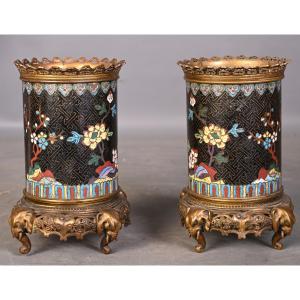
The stylistic similarities between our clock and other Japonisme-inspired objects stamped Escalier de Cristal allow for an attribution to the Parisian firm. The enamel tones and motifs, the gilt-bronze base with elephant protomes, are characteristic, as are the bronze rampant dragons (fig. 1). The taste for Japanese art developed in France following the Universal Exhibition of 1867. Under the direction of the Pannier brothers, Escalier de Cristal interpreted Far Eastern objects, adapting them to European tastes.
Founded in 1802, the Escalier de Cristal company received numerous awards throughout its history. Around 1870, the company capitalized on the vogue for Japonisme to expand its business to include the sale of furniture and objets d'art inspired by the Far East. It was with this aim that the Pannier brothers collaborated with Parisian artists and artisans specializing in various fields requiring advanced technical expertise and know-how. Among the most famous were Ferdinand Barbedienne, Gabriel Viardot, Emile Gallé, and Édouard Lièvre.
The stylistic similarities between our clock and other Japonisme-inspired objects stamped Escalier de Cristal allow for an attribution to the Parisian firm. The enamel tones and motifs, the gilt-bronze base with elephant protomes, are characteristic, as are the bronze rampant dragons (fig. 1). The taste for Japanese art developed in France following the Universal Exhibition of 1867. Under the direction of the Pannier brothers, Escalier de Cristal interpreted Far Eastern objects, adapting them to European tastes.
11 000 €
Period: 19th century
Style: Asian art
Condition: Perfect condition
Material: Enamel
Width: 40 cm
Height: 70 cm
Depth: 26 cm
Reference (ID): 1693772
Availability: In stock
Print