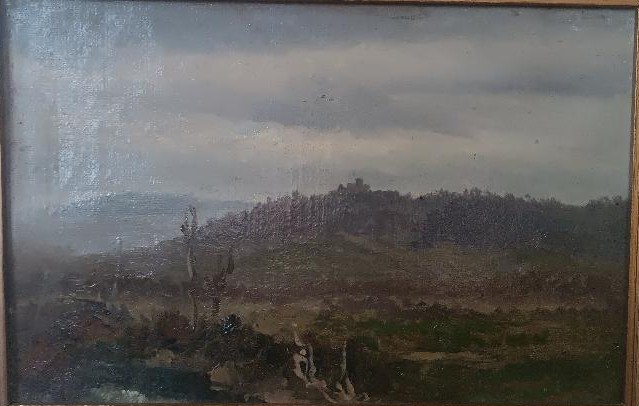
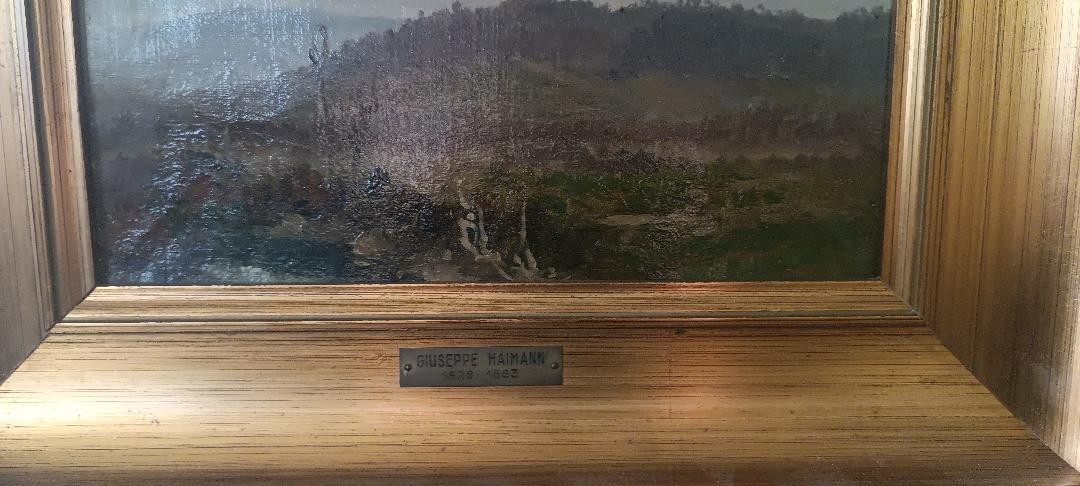


Oil Painting On Canvas, Giuseppe Hainmann (milan 1828-alexandria, Egypt
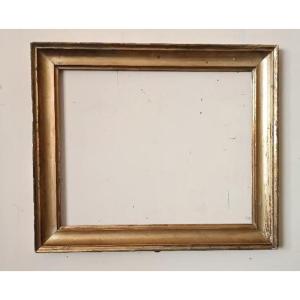
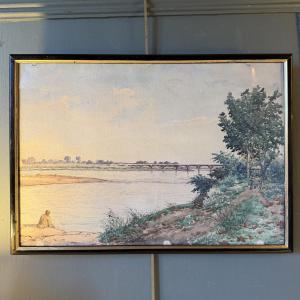
Oil on canvas depicting a glimpse of a landscape, with a later gilded frame and plaque - relined -
Author: Giuseppe Hainmann -
Frame size: 45 x 35 cm - Painting size: 30 cm x 20 cm
Giuseppe Haimann, the son of a Habsburg army officer of Bavarian origin, graduated in law from Pavia. During the 1848 uprisings, he participated in the Five Days of Milan, advocating, albeit moderately, independence. He subsequently held government positions in Vienna and Venice, before moving to the service of the Kingdom of Italy at the Ministry of Justice. Alongside his high-ranking official duties, he always cultivated a passion for painting, a common combination at the time. After studying at Brera, he went to Florence and then Rome, exhibiting regularly from the mid-1850s until the unification of Italy. His painting reflects the influences of the various regional schools he encountered during his travels: the Piedmontese painters' sense of nature (Chapel in the Countryside, lot 90) merges with the Tuscans' attention to color and realism (Aqueduct in the Roman Campagna, lot 88). These influences are found in the works he created during his 1869 trip to Greece, Asia Minor, and the Holy Land (such as The Acropolis in Athens, lot 82). This first trip was followed by a six-year sojourn in Egypt, at the court of the Khedive in Cairo, where he remained as a member of the International Reform Tribunal and as Division Head in the Egyptian administration. His works from these years (lots 83–87), not intended for exhibition, represent an important historical testimony with a clearly documentary intent. In short, they appear as true reportages in painting, made up of works not without lyrical accents and great happiness of image, immediate but rich in feeling and imbued with light.
Author: Giuseppe Hainmann -
Frame size: 45 x 35 cm - Painting size: 30 cm x 20 cm
Giuseppe Haimann, the son of a Habsburg army officer of Bavarian origin, graduated in law from Pavia. During the 1848 uprisings, he participated in the Five Days of Milan, advocating, albeit moderately, independence. He subsequently held government positions in Vienna and Venice, before moving to the service of the Kingdom of Italy at the Ministry of Justice. Alongside his high-ranking official duties, he always cultivated a passion for painting, a common combination at the time. After studying at Brera, he went to Florence and then Rome, exhibiting regularly from the mid-1850s until the unification of Italy. His painting reflects the influences of the various regional schools he encountered during his travels: the Piedmontese painters' sense of nature (Chapel in the Countryside, lot 90) merges with the Tuscans' attention to color and realism (Aqueduct in the Roman Campagna, lot 88). These influences are found in the works he created during his 1869 trip to Greece, Asia Minor, and the Holy Land (such as The Acropolis in Athens, lot 82). This first trip was followed by a six-year sojourn in Egypt, at the court of the Khedive in Cairo, where he remained as a member of the International Reform Tribunal and as Division Head in the Egyptian administration. His works from these years (lots 83–87), not intended for exhibition, represent an important historical testimony with a clearly documentary intent. In short, they appear as true reportages in painting, made up of works not without lyrical accents and great happiness of image, immediate but rich in feeling and imbued with light.
300 €
Period: 19th century
Style: Other Style
Condition: Excellent condition
Material: Oil painting
Reference (ID): 1692446
Availability: In stock
Print