THIS OBJECT WAS SOLD
Small Antique Roman Vase, Ribbed Blown Glass, Hemispherical, 2nd–3rd Century
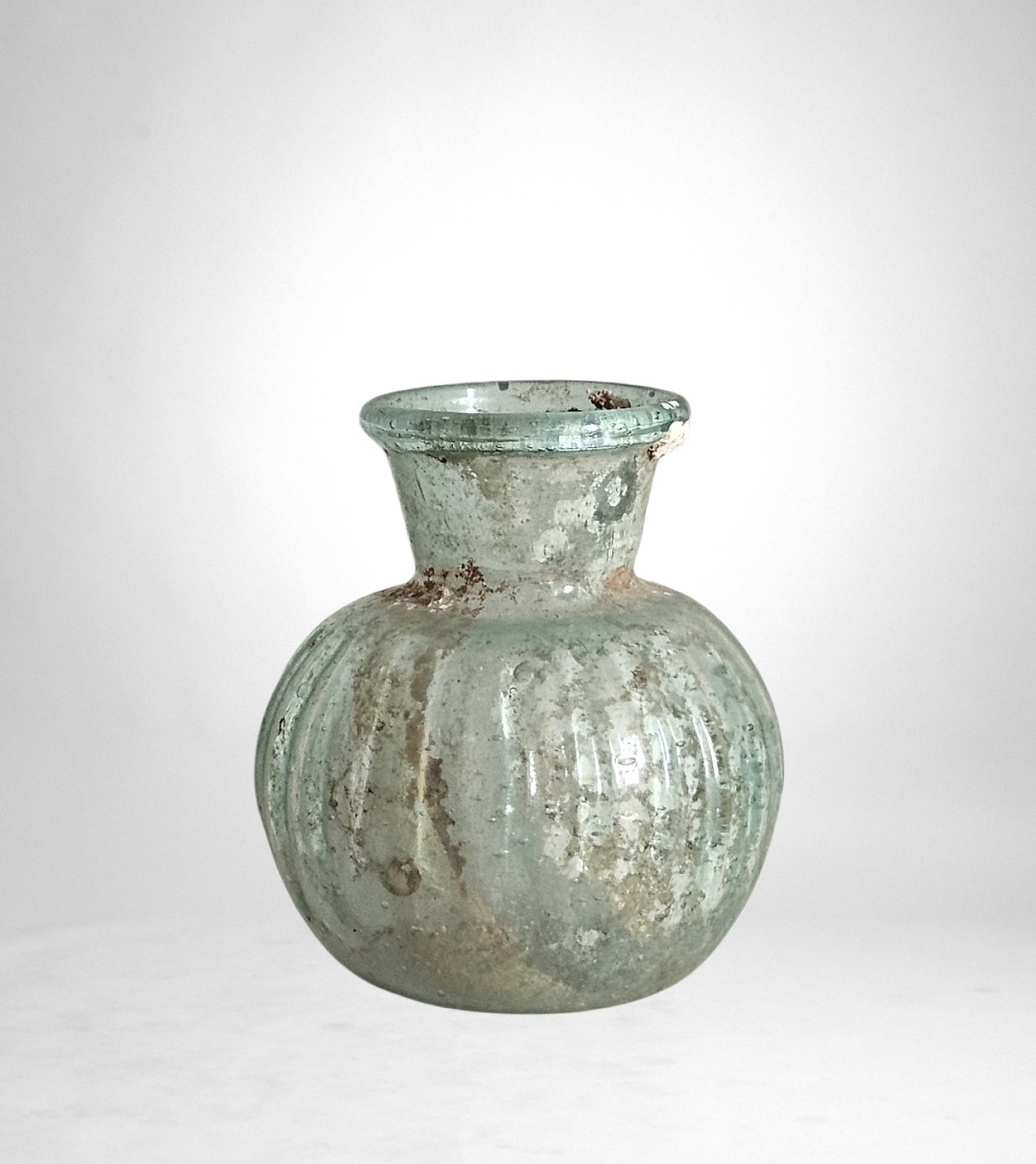
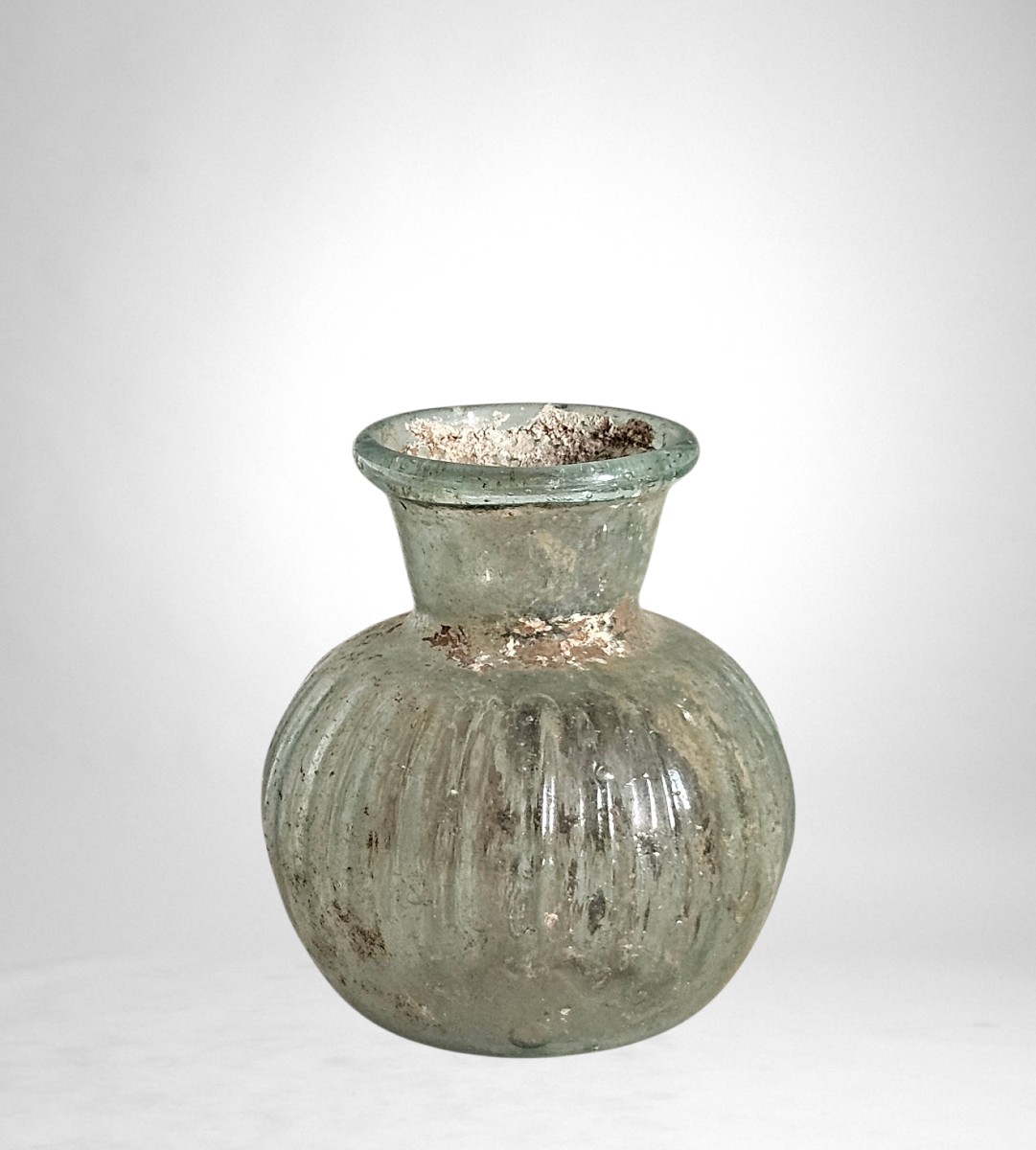
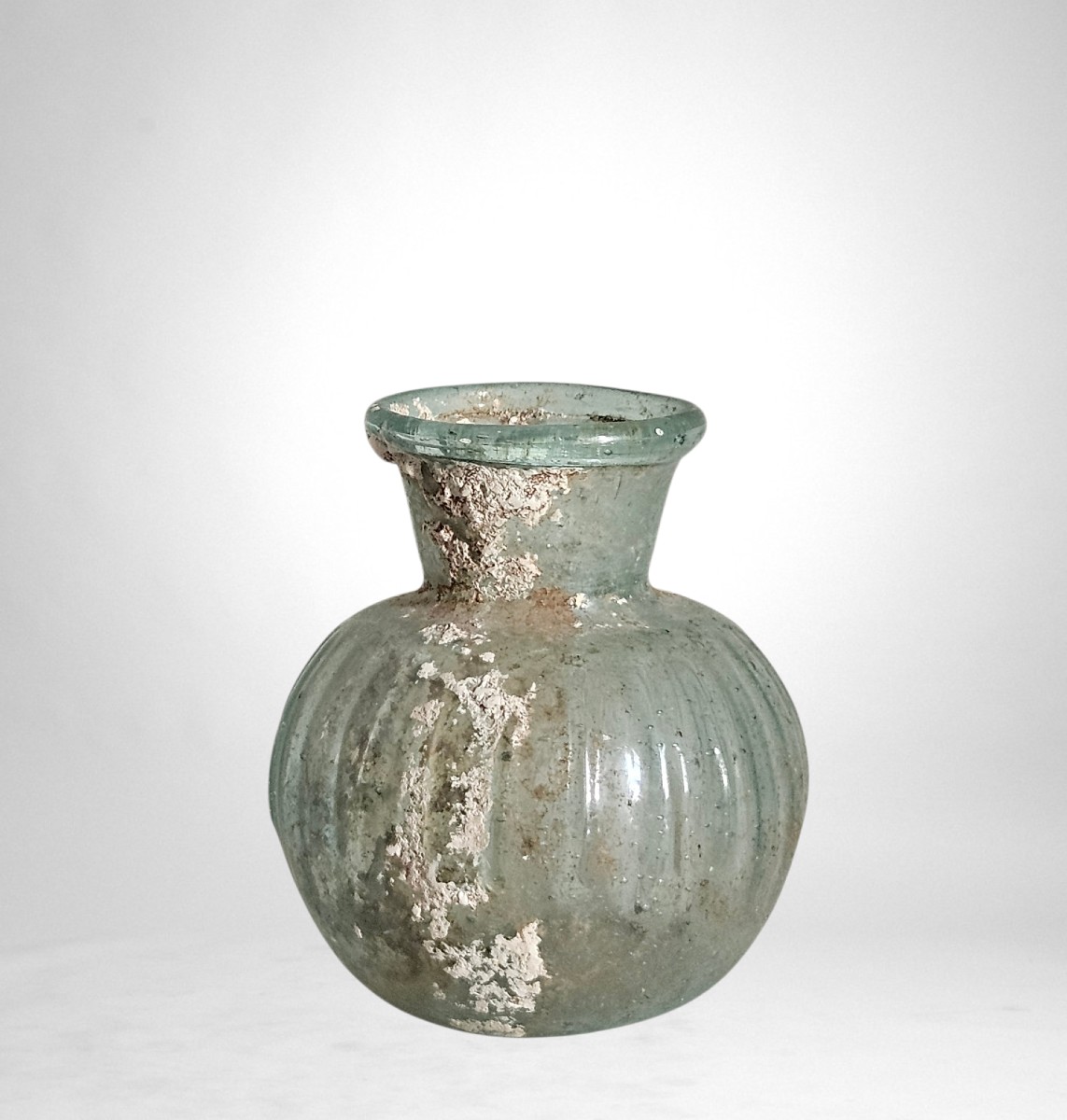


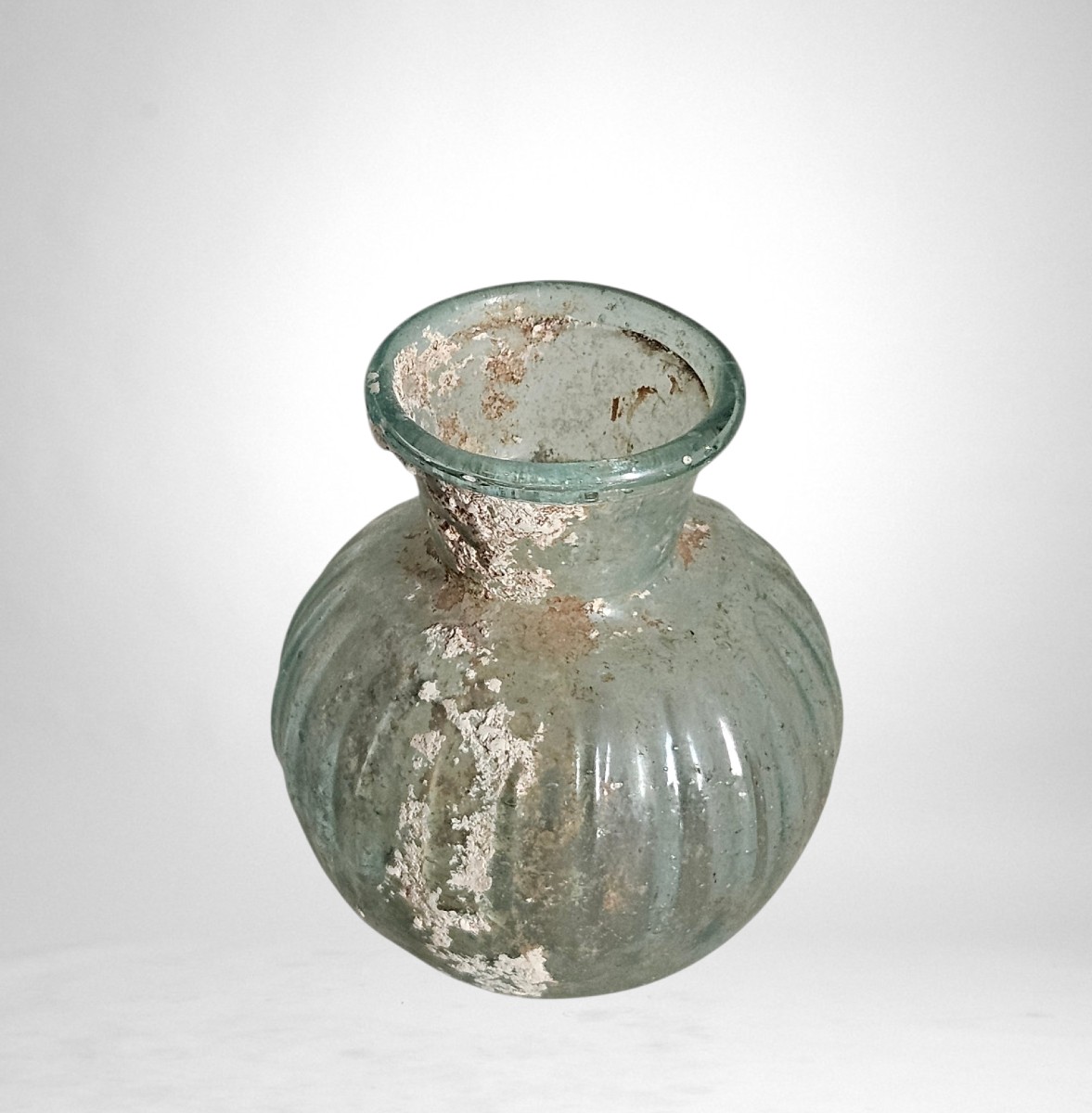
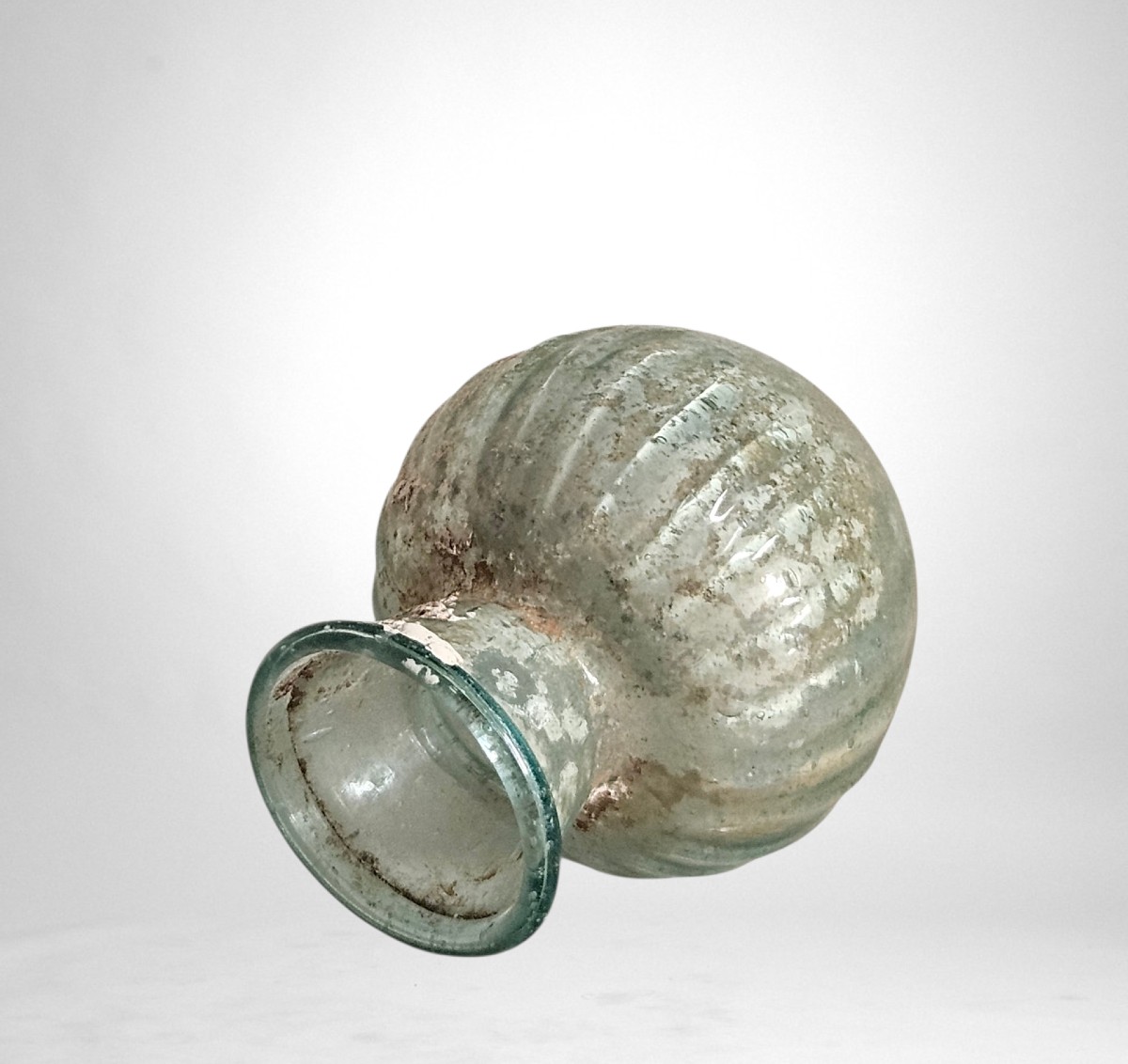




A small, translucent blown glass vase with a hemispherical body ribbed with carefully rhythmic, regular vertical fluting. The clean, well-defined raised lines give the piece a structured visual representation of volume and demonstrate the glassblower's great skill in shaping. The slightly bluish glass displays fine milky iridescence in places, as well as traces of ancient clay deposits. The wide, flared neck terminates in a rolled lip, ensuring a harmonious balance between the body and the opening. The overall silhouette is stable and elegant, characteristic of accomplished Roman glassmaking. Mediterranean Basin, Roman period, 2nd–3rd century AD. J.-C. Height: 6.5 cm Diameter: 5.5 cm Provenance: former Parisian collection after inheritance, Drouot sale, Thierry de Maigret auction house, Paris. Sold with a certificate of authenticity from expert S. Reynes and an invoice from the Ocarina Gallery. "During the 2nd and 3rd centuries AD, Roman glassmaking reached a high level of technical skill, allowing the production of more complex and decorated forms. Ribbed vases of this type were used in domestic settings, particularly for personal hygiene, storing cosmetics or small preparations, but also as serving vessels. The fluting, beyond its decorative aspect, contributes to the rigidity of the glass and reflects a strong appreciation for the interplay of light and texture on glass, emblematic of the Roman material culture of the High Empire."
Explore similar pieces and discover your ideal find:
archeology