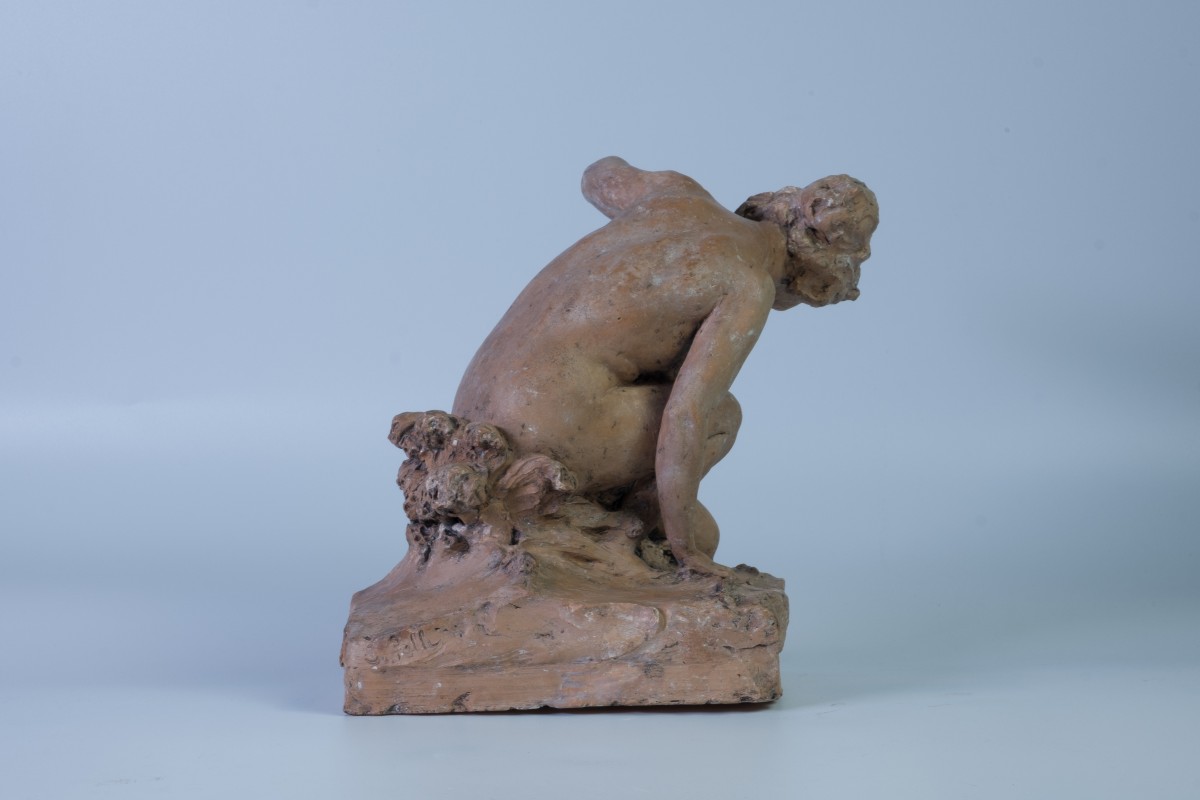



The Wave
Leopoldo Galli, though little known to scholarship, was a sculptor, restorer, and—most significantly—a founder. He was active in Florence from the 1840s throughout the remainder of the nineteenth century at the Regia Fonderia delle Statue (Royal Statue Foundry). Originally established as a workshop to support the cultural policies of Grand Duke Leopold II, the foundry continued its operations after the Unification of Italy, producing both bronze copies of major Florentine sculptures and casts for significant public monuments commissioned by the new Kingdom. It was there, for instance, that Leopoldo Galli worked on the bronze replica of Donatello’s Saint George, intended to replace the original in Orsanmichele.
Until the age of forty-two, Galli served first as an apprentice and later as a collaborator to Clemente Papi, the "foremost founder in Italy" and director of the laboratory. Upon Papi’s death, the management of the Royal Foundry was entrusted to Leopoldo and his brother Pietro, who had also long served as an assistant in the workshop. Over time, they were joined by Enrico and Francesco—the sons of Ludovico—as assistants. Other family members, such as Galileo and Eugenio Galli, were also active in the Florentine artistic milieu. The Galli administration was responsible for the casting of various public works, including Cesare Zocchi’s monument to Giuseppe Garibaldi, erected in 1890 on the Lungarno Amerigo Vespucci.
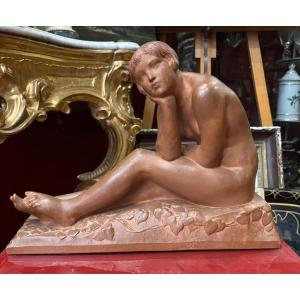
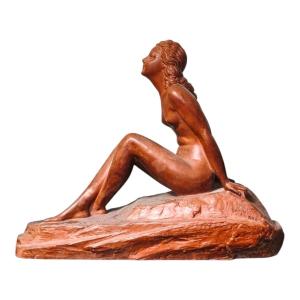
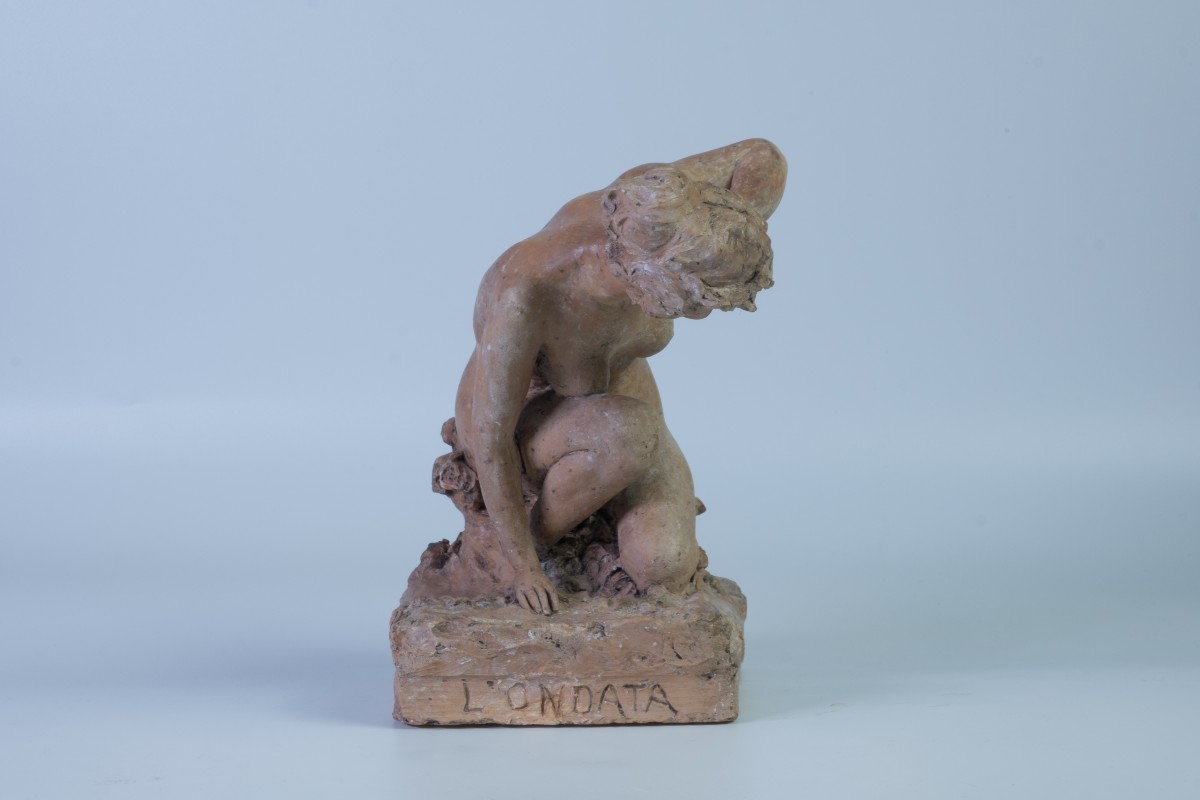
For these reasons, it is plausible that the small terracotta in question—bearing the title L’Ondata (The Wave) on its base along with the LG monogram, the mark of the Galli foundry—served as the model for a work to be reproduced in bronze. The piece, distinctly late-nineteenth-century in taste, exhibits a compositional fluidity and inherent dynamism that evokes the Art Nouveau (Liberty) style adopted by sculptors much younger than Galli but active during the same period. Notable parallels can be found in the work of Ercole Rosa (1846–1893), such as the terracotta America Liberating a Slave, or in the more sensual and kinetic output of Costantino Barbella (Ebrezza; Piccola dormiente).
Comparative BibliographyG. Rizzo, Clemente Papi, "Real Fonditore". Life and works of a virtuoso master of bronze in nineteenth-century Florence, in "Mitteilungen des Kunsthistorischen Institutes in Florenz", 54 (2010-2012), 2, 2012, pp. 295-318.
G. Rizzo, The “Risorgimento” of the casting industry in Florence: Clemente Papi’s Royal Bronze Statue Foundry before and after the Unification of Italy (1837–1875), in “Bollettino della Società di Studi Fiorentini”, 20 (2011), 2012, pp. 121-131.
Period: 19th century
Style: Art Deco
Condition: Excellent condition
Material: Terracotta
Width: 23
Height: 22,5
Depth: 15,5
Reference (ID): 1690721
Availability: In stock