

Walnut Veneered Center Table With Decorated Scagliola Top, Della Valle Manufacture
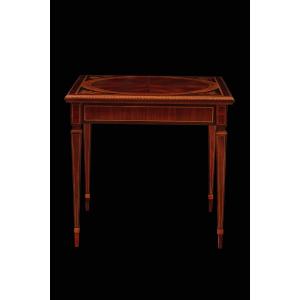
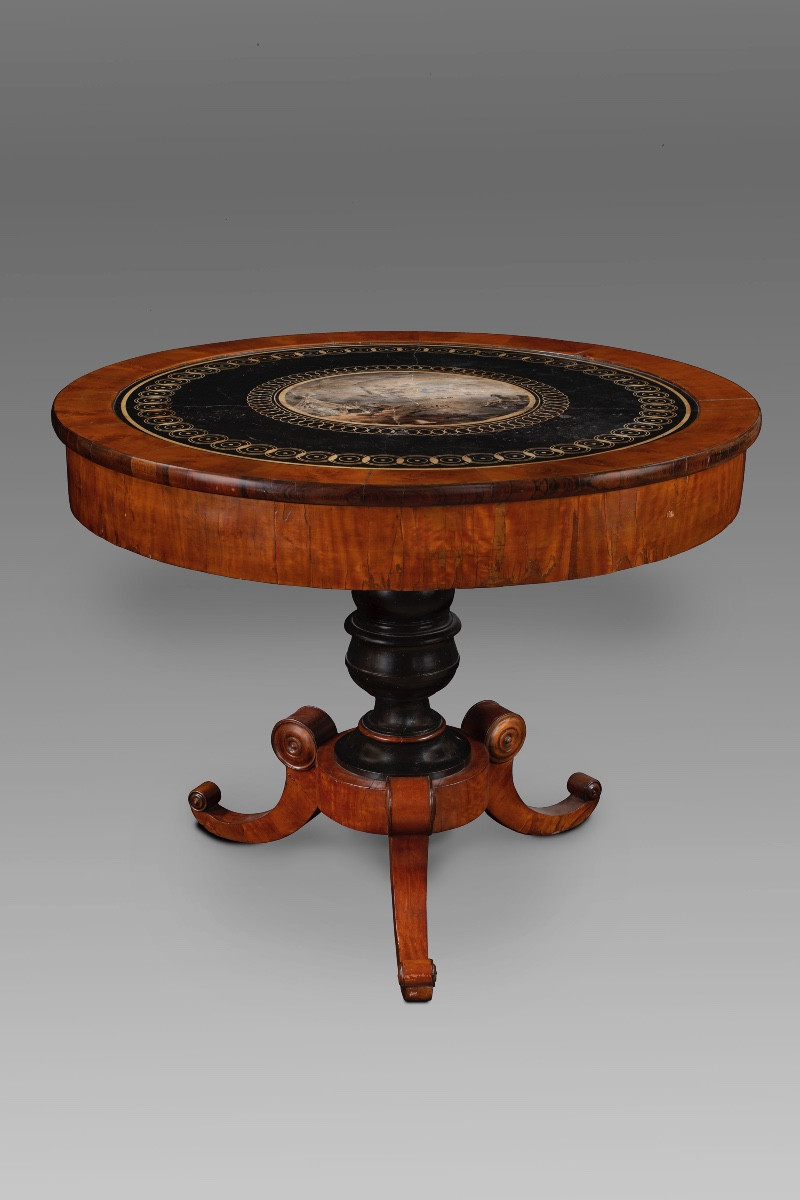
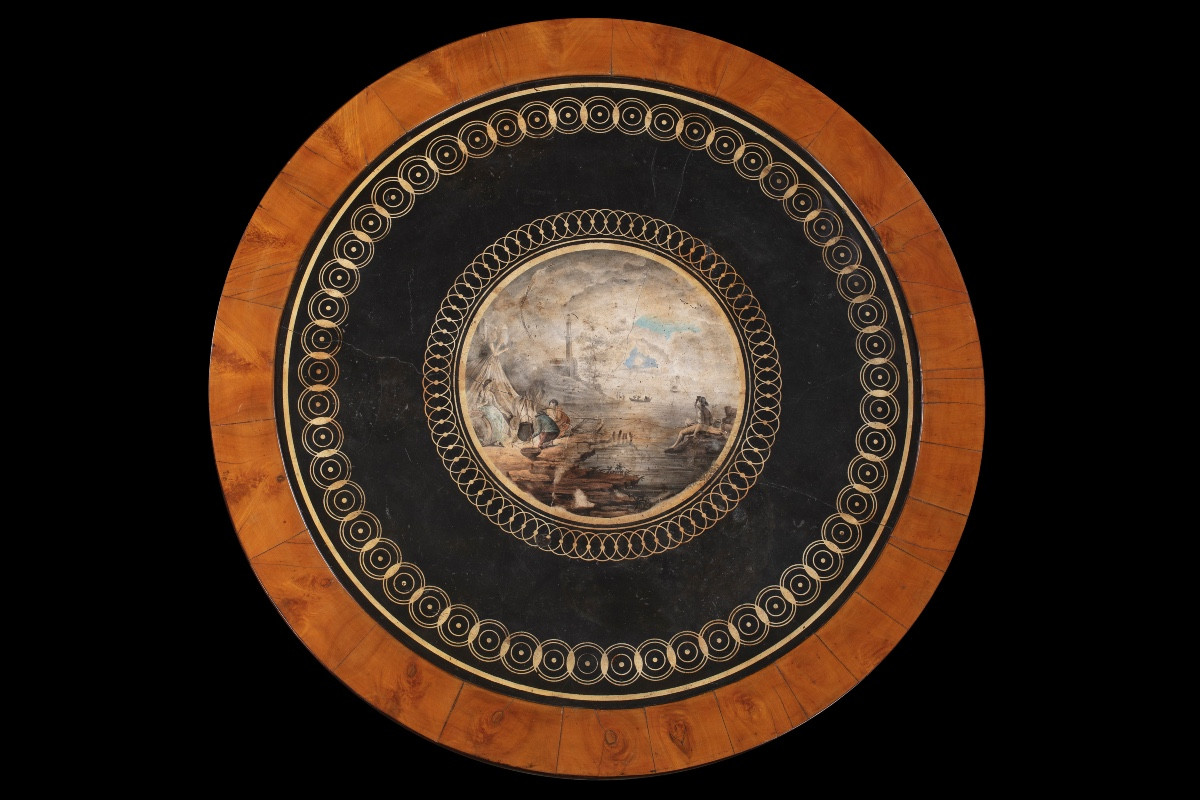
Walnut-veneered center table with a decorated scagliola top, manufactured by Della Valle, first half of the 19th century.
Measurements: h. 76 x d. 95
This splendid circular table features a fine walnut veneer, an ebonized baluster-shaped frame, and three volute legs.
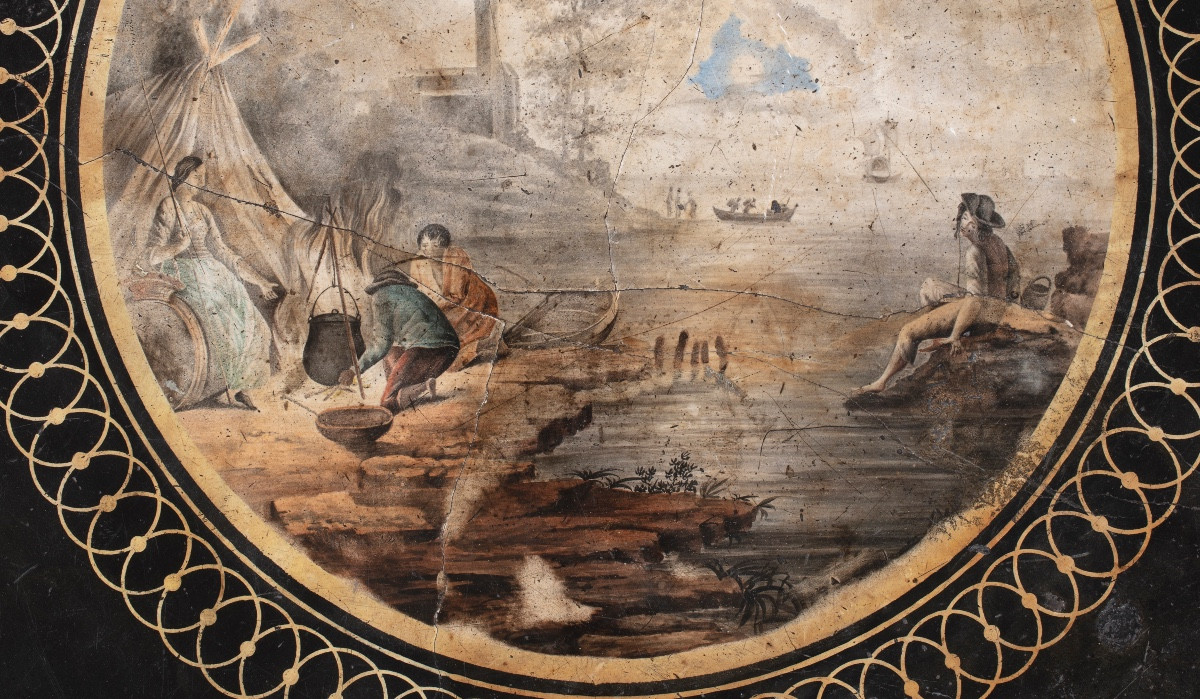
What catches the eye is the magnificent scagliola top, a technique in which Pietro della Valle excelled. The top, with a black background, is embellished with a decorative inlay of adjacent ivory-colored circles, while the center depicts a marine or river scene, surrounded by a frame of small interlocking circles. The scene depicts three figures seated on the shore around a fire, ready to heat up some food cooked on the stove, fueled by one of the three. A fourth figure is reclining on a rock not far from them; in the background, the coast can be seen with boats on the horizon. Della Valle frequently chose bucolic scenes for his scagliola tabletops, drawing inspiration from the Tuscan and Lazio countrysides, Ligurian views, and even those of Abruzzo. The landscape style is similar to that of Florentine landscape painters of the first half of the 19th century.
In addition to the expertly executed scagliola decorations that frame the tabletop, the quality of the central painting also demonstrates the mastery the Della Valle workshop had achieved in producing tables of this type.
A signature under the tabletop also identifies the table as being made by Della Valle.
BIBLIOGRAPHY: Scagliola: l’arte della pietra di luna, Anna Maria Massinelli, Rome, Editalia, 1997.
BIOGRAPHY
The Della Valle workshop, located in Livorno, enjoyed great success during the 19th century and received commissions from all over Europe, including from the royal courts. Pietro was a painter and decorator, while his brother Giuseppe was a painter and Angiolo was an architect. Pietro learned the scagliola technique from his father and, over the years, perfected it to the point of receiving commissions for his fine objects from Russia, England, Denmark, and Prussia.
Tabletops were the most sought-after: the space was generally divided geometrically between decorative inlays and a central painted scene, usually depicting landscapes, ancient ruins, or city views.
Period: 19th century
Style: Louis Philippe, Charles 10th
Condition: Excellent condition
Material: Wallnut
Diameter: 95
Height: 76
Reference (ID): 1689694
Availability: In stock