THIS OBJECT WAS SOLD
Neo-renaissance Fireplace, 19th Century
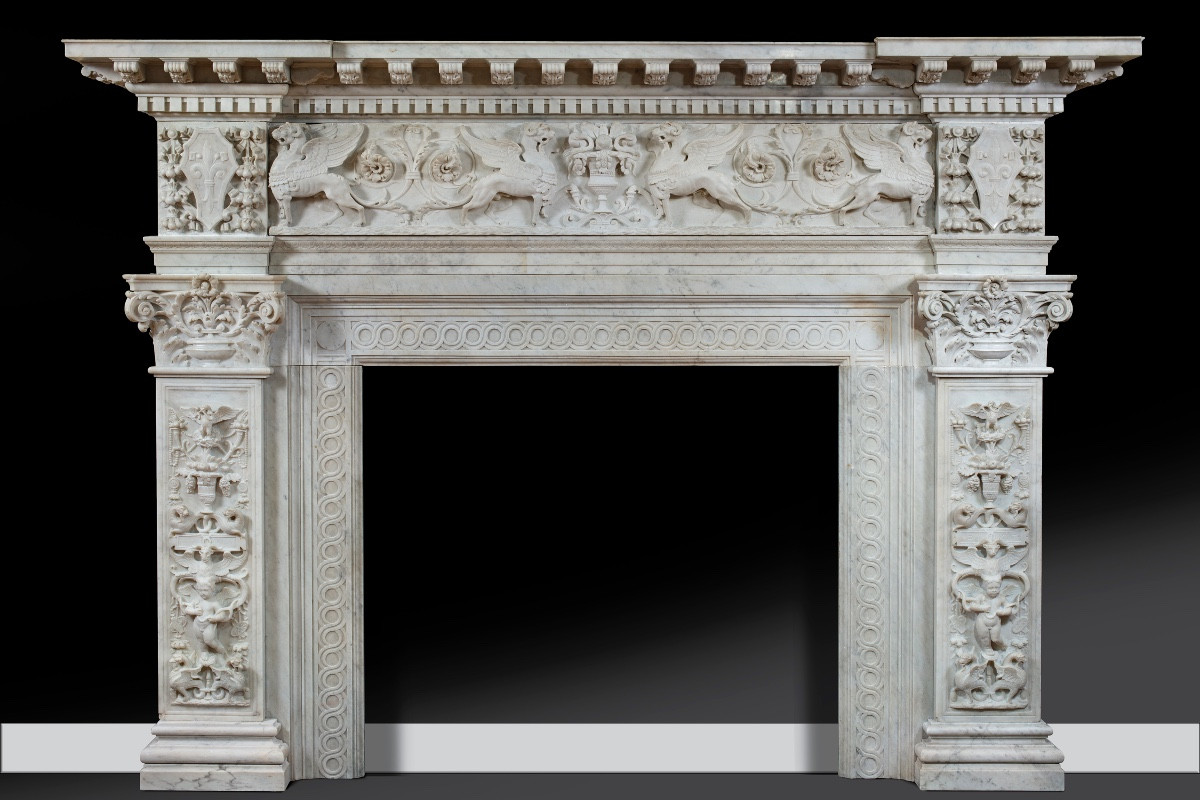
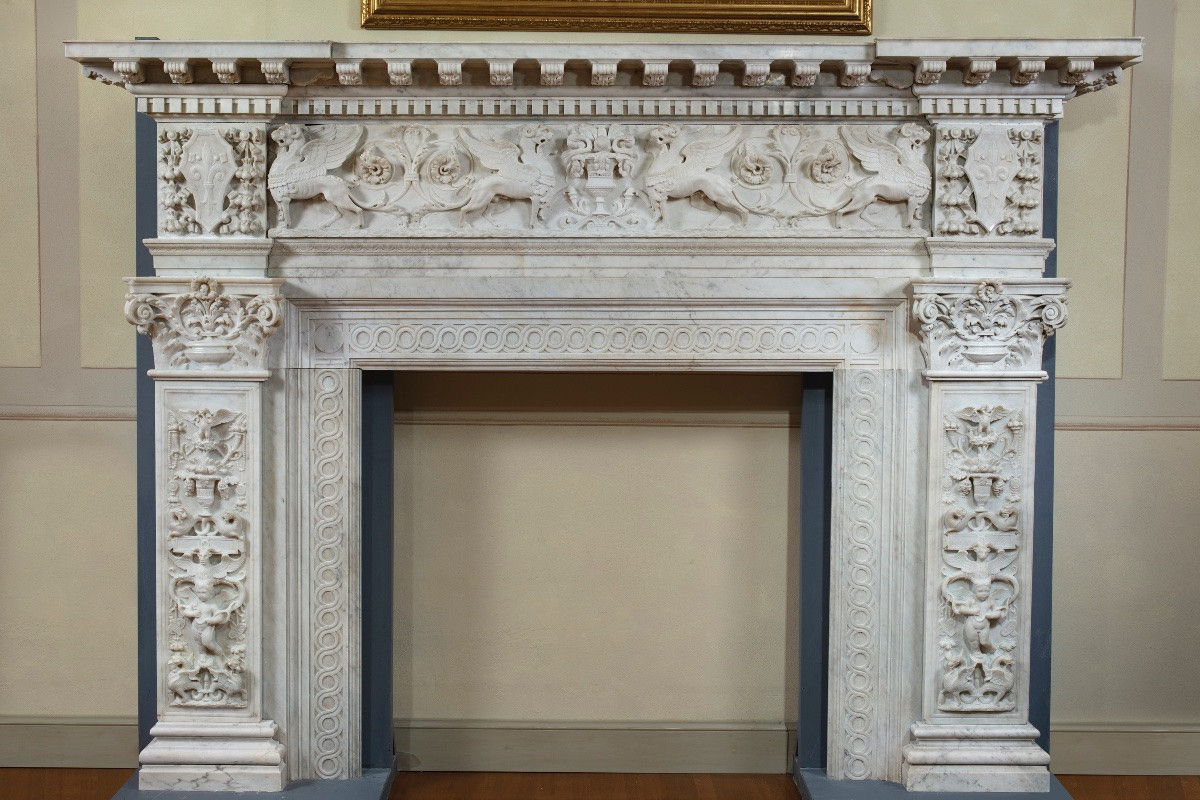

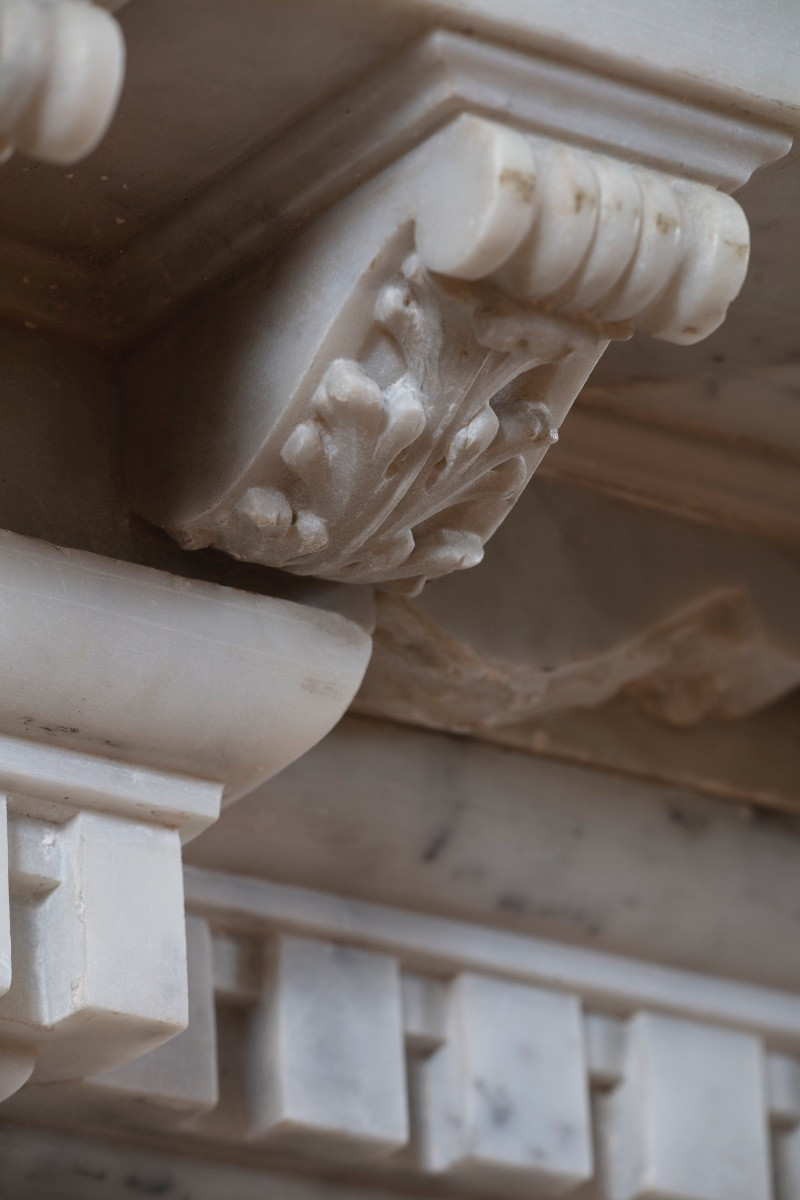
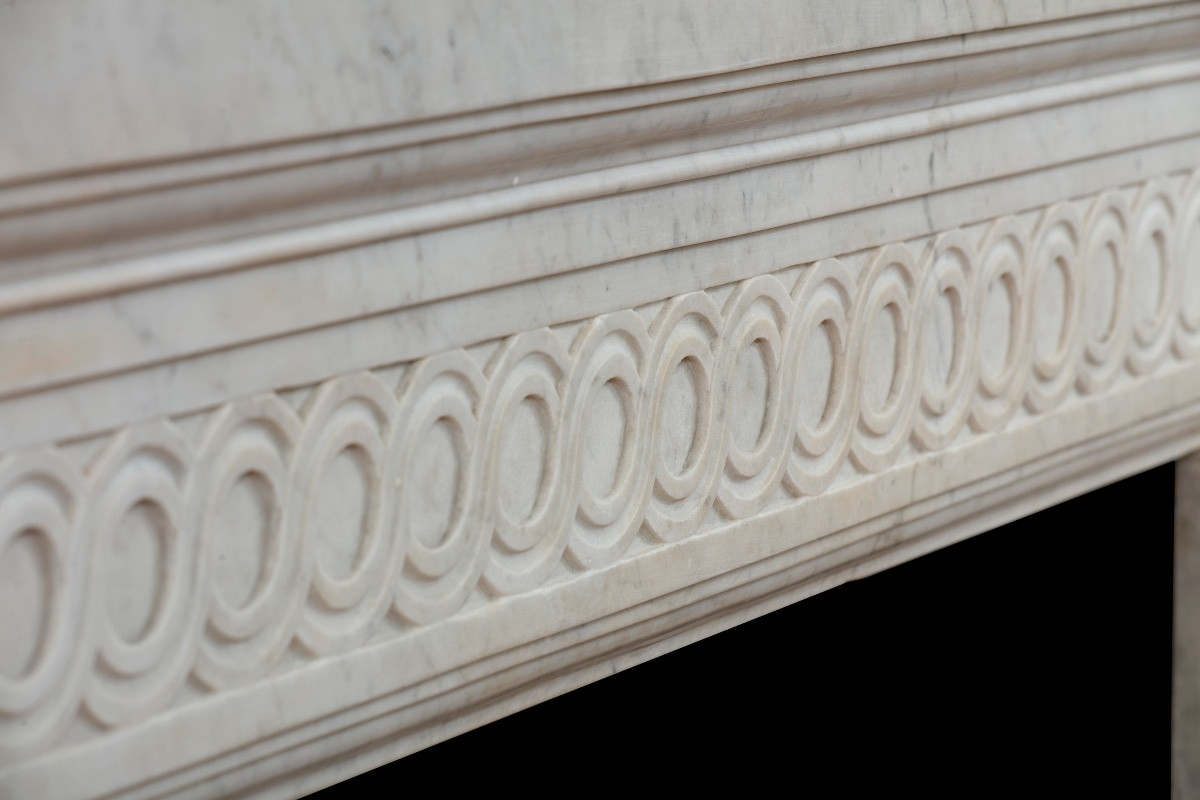
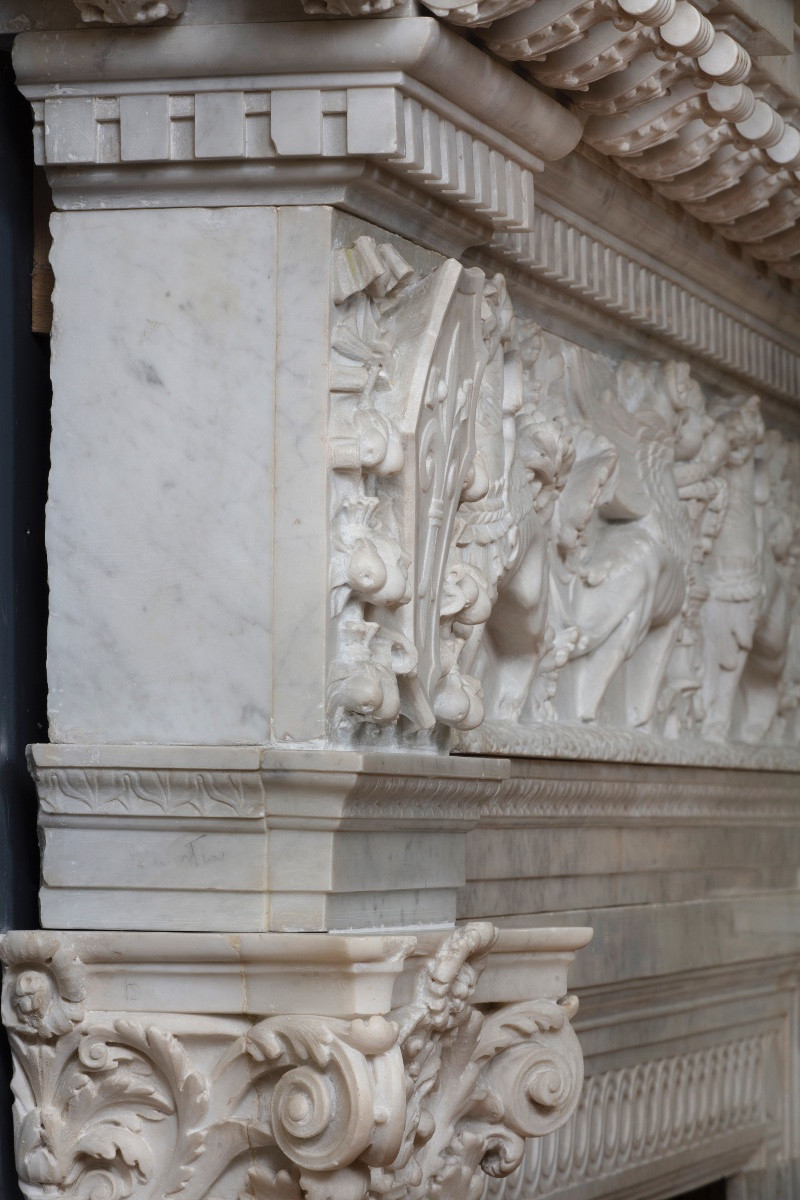
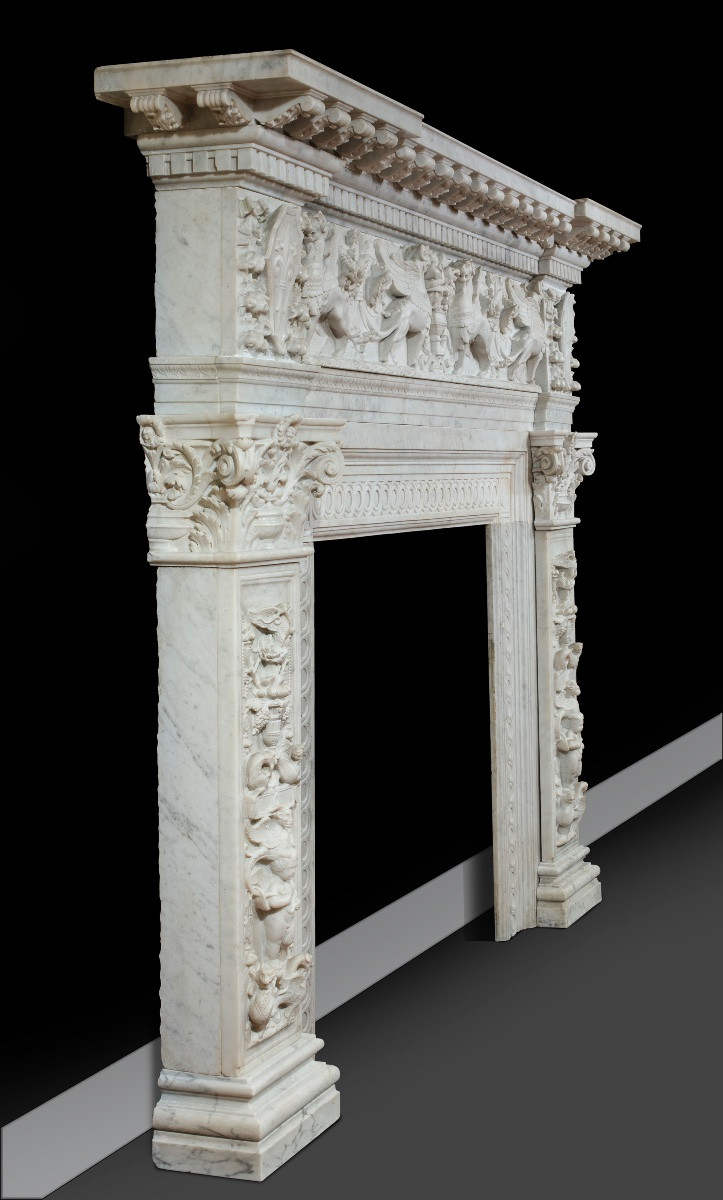


Neo-Renaissance fireplace, Florentine or Tuscan, 19th century and earlier;
Carrara marble, 200 x 280 cm
The imposing fireplace, crafted from Carrara marble, represents a refined example of the Renaissance revival sought after among European nobles.
The decoration is elegant and intricate.
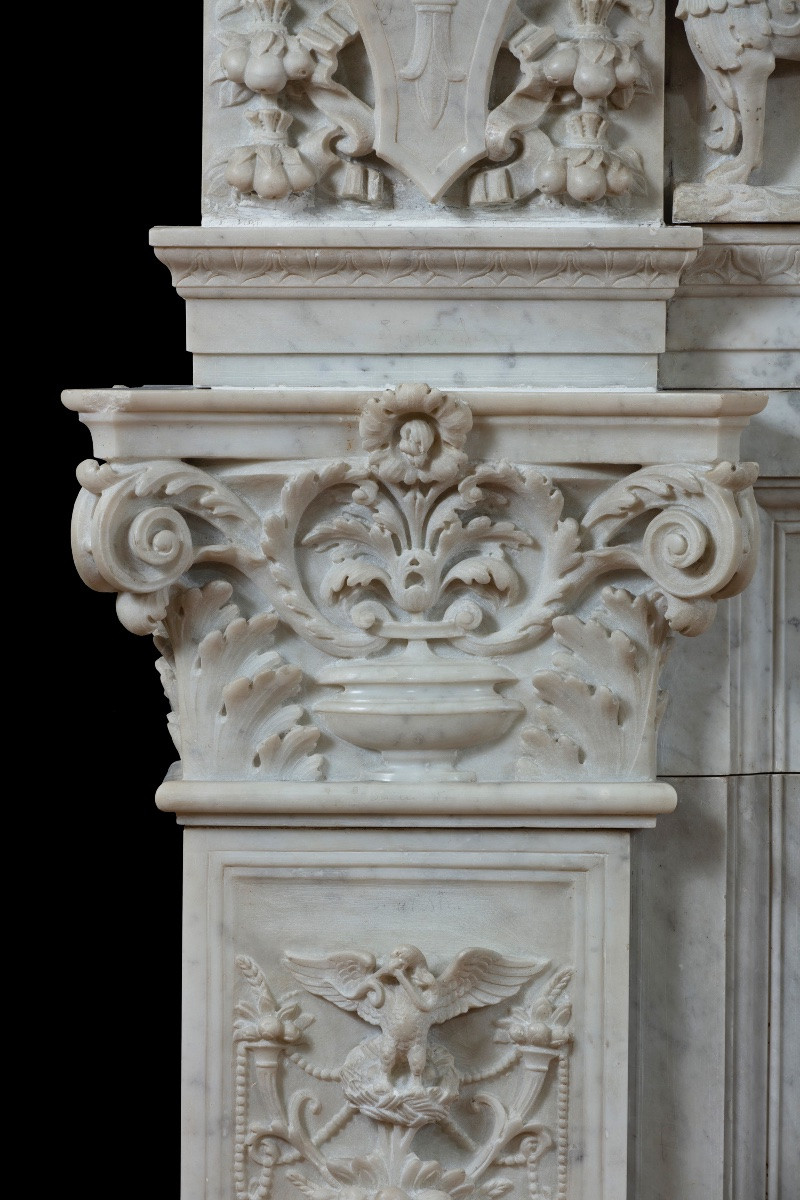
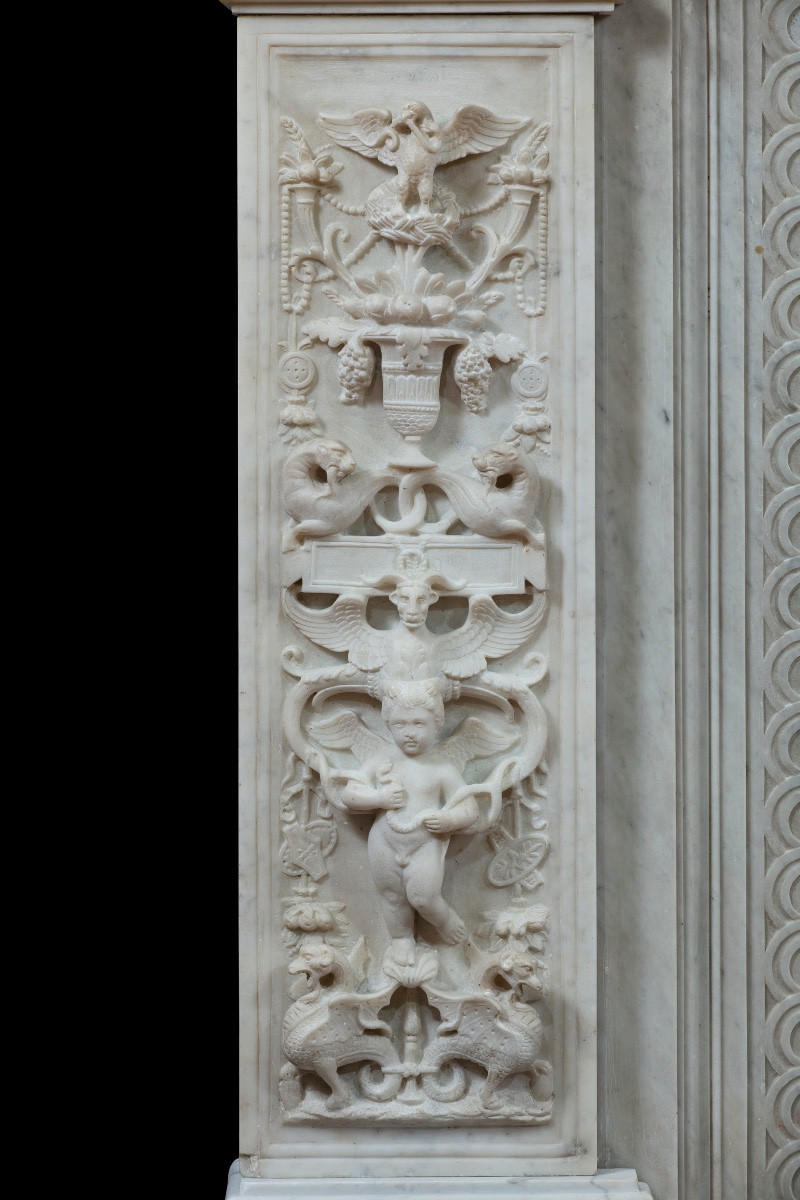
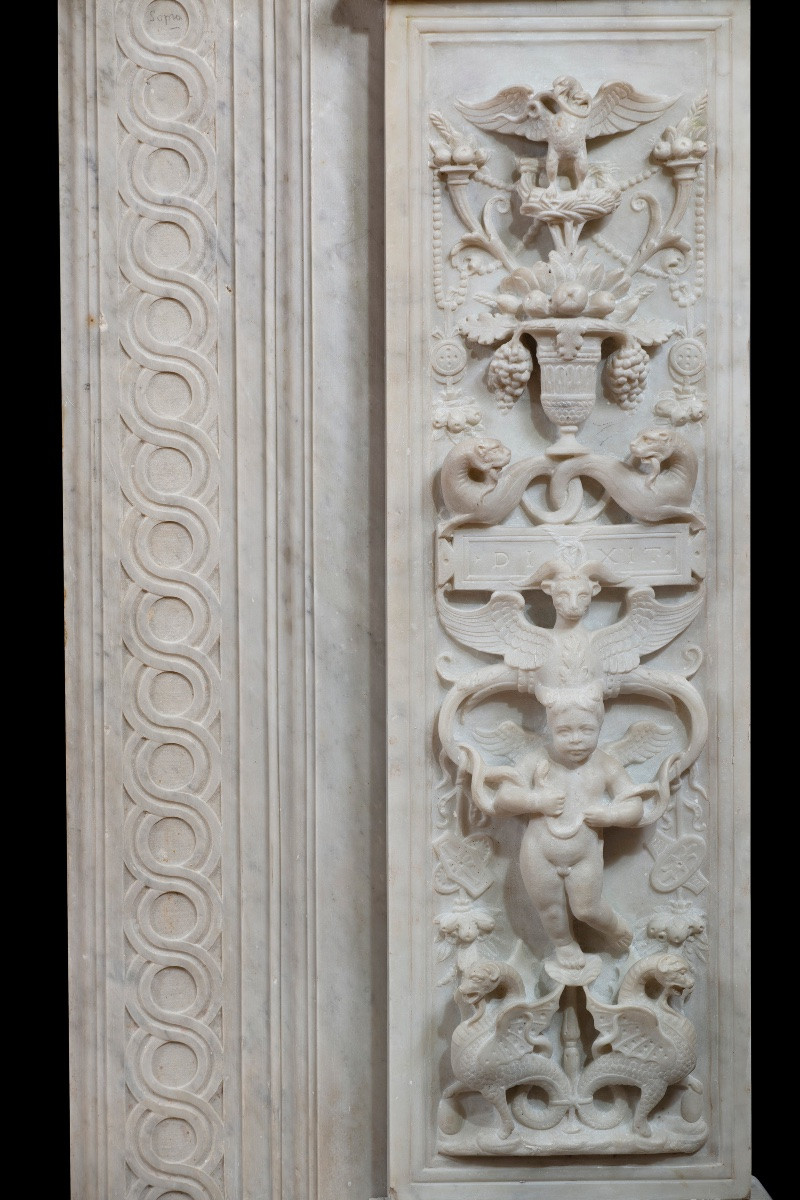
The two square-based pillars feature an ornamental motif reminiscent of grotesques. The term grotesque derives from the "grotte" (caves) of the Esquiline Hill, the underground remains of Nero's Domus Aurea discovered in 1480. They became highly prized among 16th-century patrons and painters, including Raphael, whose frescoes in the Loggetta del Cardinal Bibbiena in the Vatican are well-known. The grotesque-like sculpture, executed in bas-relief on multiple levels of depth (reminiscent of Donatello's schiacciato in some places), features a swirl of monstrous figures and fantastical winged animals, including a chimera and wild beasts, a putto imprisoned by snakes, cornucopias, festoons, and shields. Above an elaborate vase filled with grapes and fruit, an eagle stands triumphantly on its nest, clutching a writhing serpent in its beak that tries in vain to attack it. The top is topped with a mixed Corinthian capital.
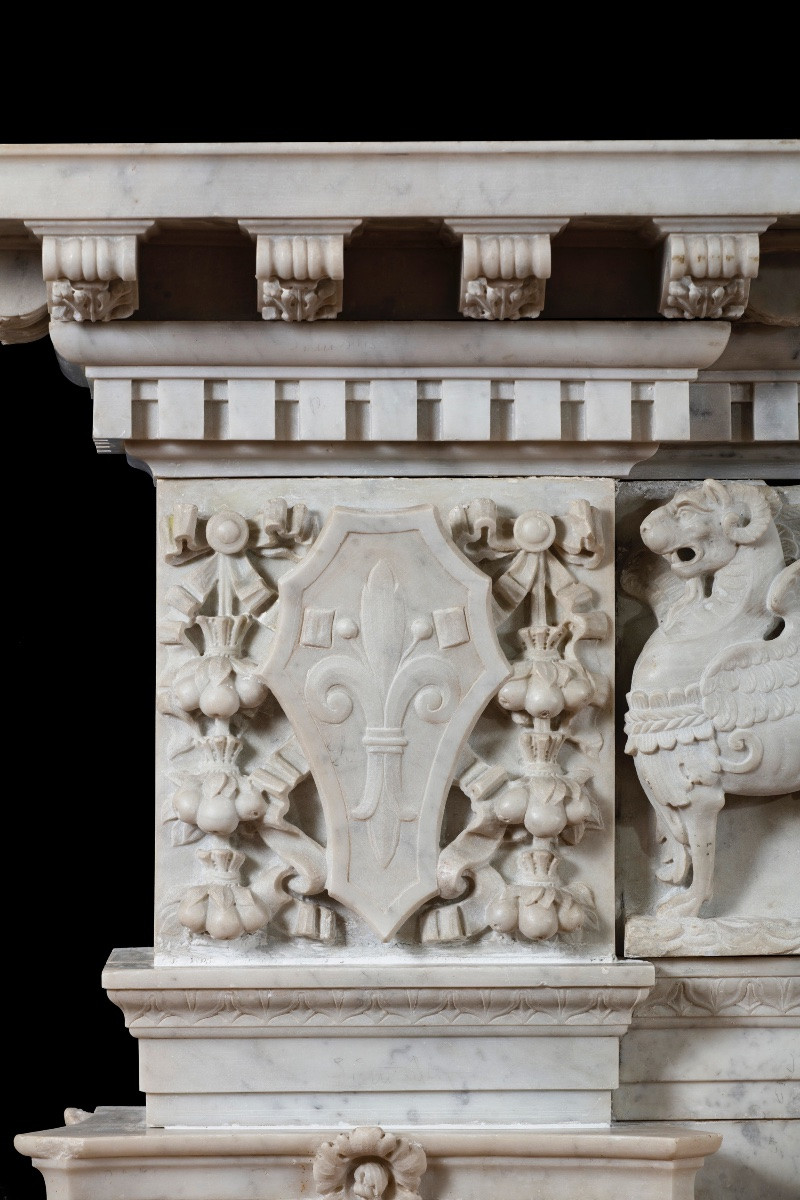
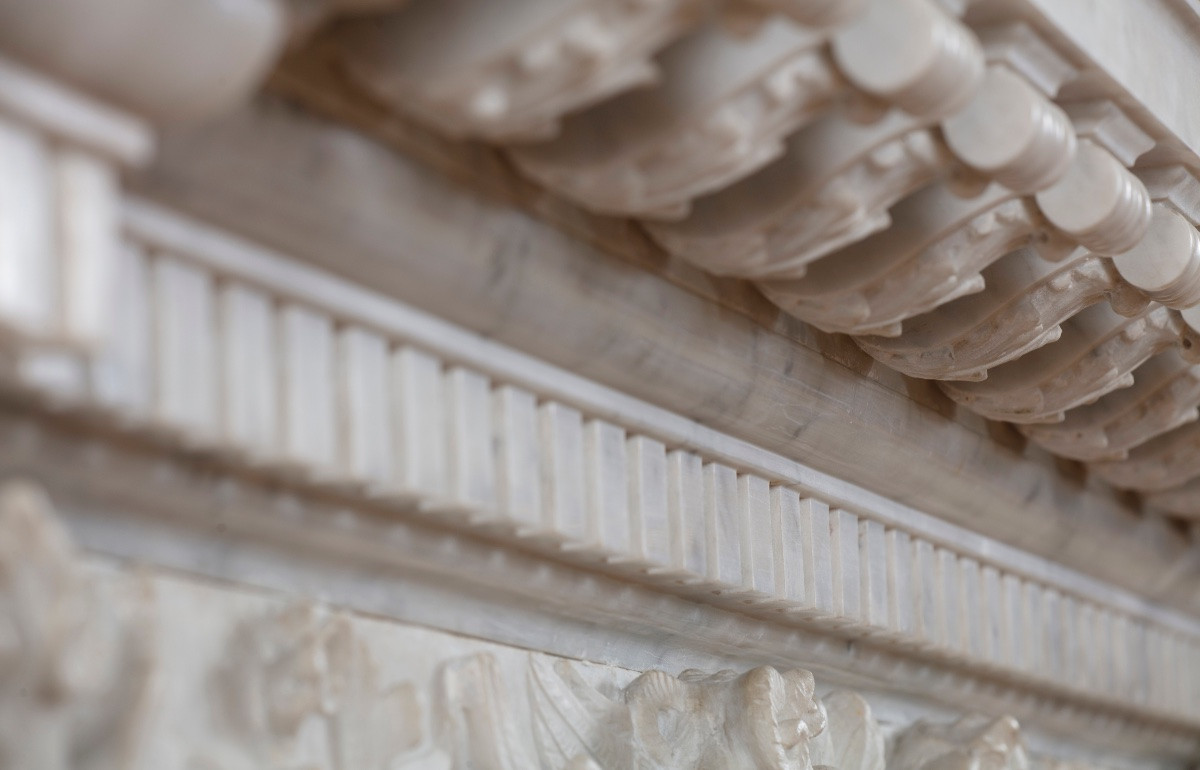
The upper register features a more fluid, neoclassical decoration, featuring alternating acanthus leaves and sphinxes portrayed in profile; on the sides, two shields surrounded by festoons depict the Florentine lily, suggesting a local commission.
Explore similar pieces and discover your ideal find:
Fireplaces