

Jean Baptiste Charles Claudot, Dit Claudot De Nancy (1733 – 1805) Animated Landscape
Artist: Jean Baptiste Charles Claudot, Dit Claudot De Nancy, (badonviller, 1733 – 1805, Nancy)
Oil on canvas
H. 102; W. 144.5 cm
Unframed
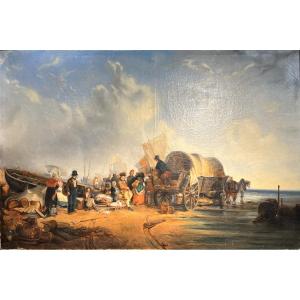
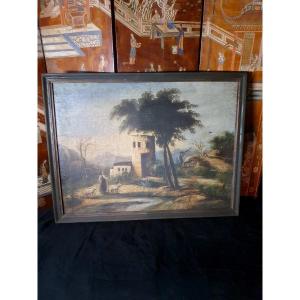
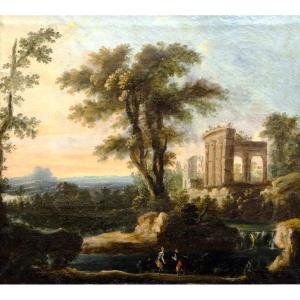
This large oil on canvas depicts a lively landscape, typical of the work of Jean Baptiste Claudot, known as Claudot de Nancy (1733-1805), one of the greatest Lorraine painters of the 18th century.
The artist portrays a seascape in which nature, which plays a prominent role, coexists with a variety of monuments and a few figures.
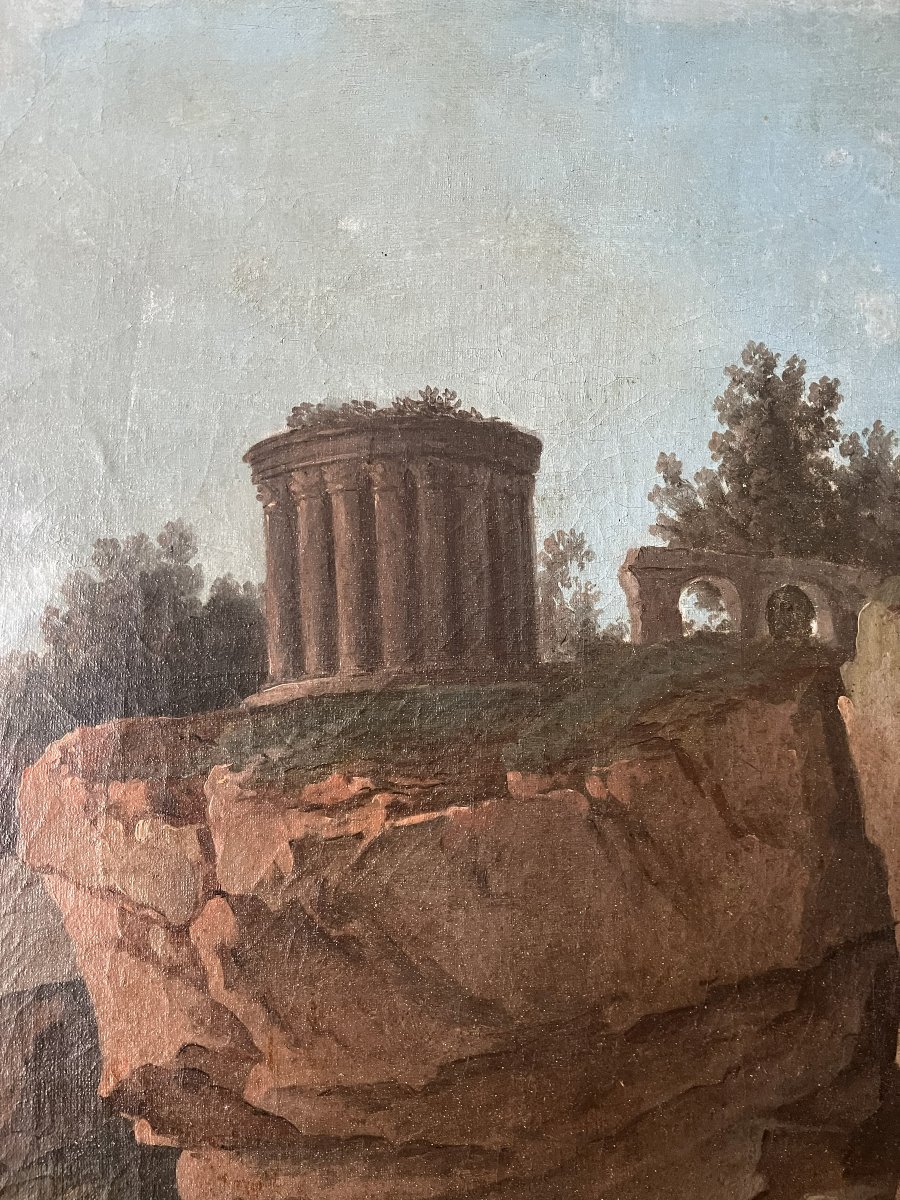
In the foreground, a peasant family accompanied by a dog walks away from the riverbank. The woman carries a basket under her arm that appears to contain fish, as well as a fishing rod. On some high rocks stands a small, circular, columned temple. The remains of an aqueduct are visible behind it. These two structures lend an antique feel to the work. Other buildings in various styles populate the scene, such as the small house on the riverbank, or the two crenellated towers visible in the background of the town.
This hybrid assemblage, in the spirit of 17th-century Italian veduta painters, makes this painting a true poetic capriccio.
About Claudot de Nancy:
Jean Baptiste Charles Claudot was a painter and veduta painter from Lorraine, born into the nobility of the robe. He was a student of Jean Girardet (1709-1778) and André Joly (1706-after 1781), both principal painters at the court of King Stanislas. A precocious artist, he painted church and theater decorations with his first master. Joly taught his student the art of perspective and veduta painting, one of the genres most appreciated by 18th-century patrons.
Claudot briefly visited Paris, where he befriended Joseph Vernet (1714-1789). Vernet, confident in his success, tried to persuade him to settle in the capital, but Claudot, too attached to his native Lorraine, chose to return. In Nancy and the surrounding region, the talents of this painter, who produced landscapes, still lifes, portraits, and views of Lorraine sites and castles, were in high demand.
He established a studio and counted among his pupils Jean Baptiste Isabey and Jean Antoine Laurent. A follower of Hubert Robert and Joseph Vernet, and an admirer and heir to Claude Gelée, his Italianate landscapes, like ours, contributed greatly to his renown.
H. 102; W. 144.5 cm
Unframed
This large oil on canvas depicts a lively landscape, typical of the work of Jean Baptiste Claudot, known as Claudot de Nancy (1733-1805), one of the greatest Lorraine painters of the 18th century.
The artist portrays a seascape in which nature, which plays a prominent role, coexists with a variety of monuments and a few figures.
In the foreground, a peasant family accompanied by a dog walks away from the riverbank. The woman carries a basket under her arm that appears to contain fish, as well as a fishing rod. On some high rocks stands a small, circular, columned temple. The remains of an aqueduct are visible behind it. These two structures lend an antique feel to the work. Other buildings in various styles populate the scene, such as the small house on the riverbank, or the two crenellated towers visible in the background of the town.
This hybrid assemblage, in the spirit of 17th-century Italian veduta painters, makes this painting a true poetic capriccio.
About Claudot de Nancy:
Jean Baptiste Charles Claudot was a painter and veduta painter from Lorraine, born into the nobility of the robe. He was a student of Jean Girardet (1709-1778) and André Joly (1706-after 1781), both principal painters at the court of King Stanislas. A precocious artist, he painted church and theater decorations with his first master. Joly taught his student the art of perspective and veduta painting, one of the genres most appreciated by 18th-century patrons.
Claudot briefly visited Paris, where he befriended Joseph Vernet (1714-1789). Vernet, confident in his success, tried to persuade him to settle in the capital, but Claudot, too attached to his native Lorraine, chose to return. In Nancy and the surrounding region, the talents of this painter, who produced landscapes, still lifes, portraits, and views of Lorraine sites and castles, were in high demand.
He established a studio and counted among his pupils Jean Baptiste Isabey and Jean Antoine Laurent. A follower of Hubert Robert and Joseph Vernet, and an admirer and heir to Claude Gelée, his Italianate landscapes, like ours, contributed greatly to his renown.
15 000 €
Period: 18th century
Style: Louis 16th, Directory
Condition: Good condition
Material: Oil painting
Width: 144,5 cm
Height: 102 cm
Reference (ID): 1677233
Availability: In stock
Print