

Silver Chalice And Paten, France, Empire Period, By Jc Cahier, Goldsmith
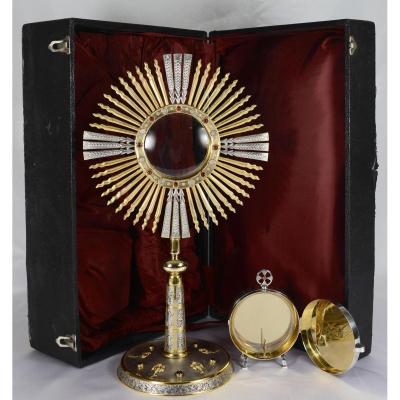
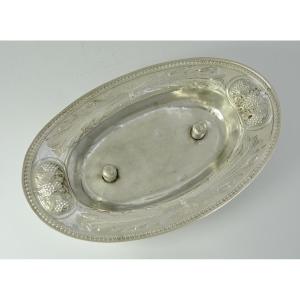
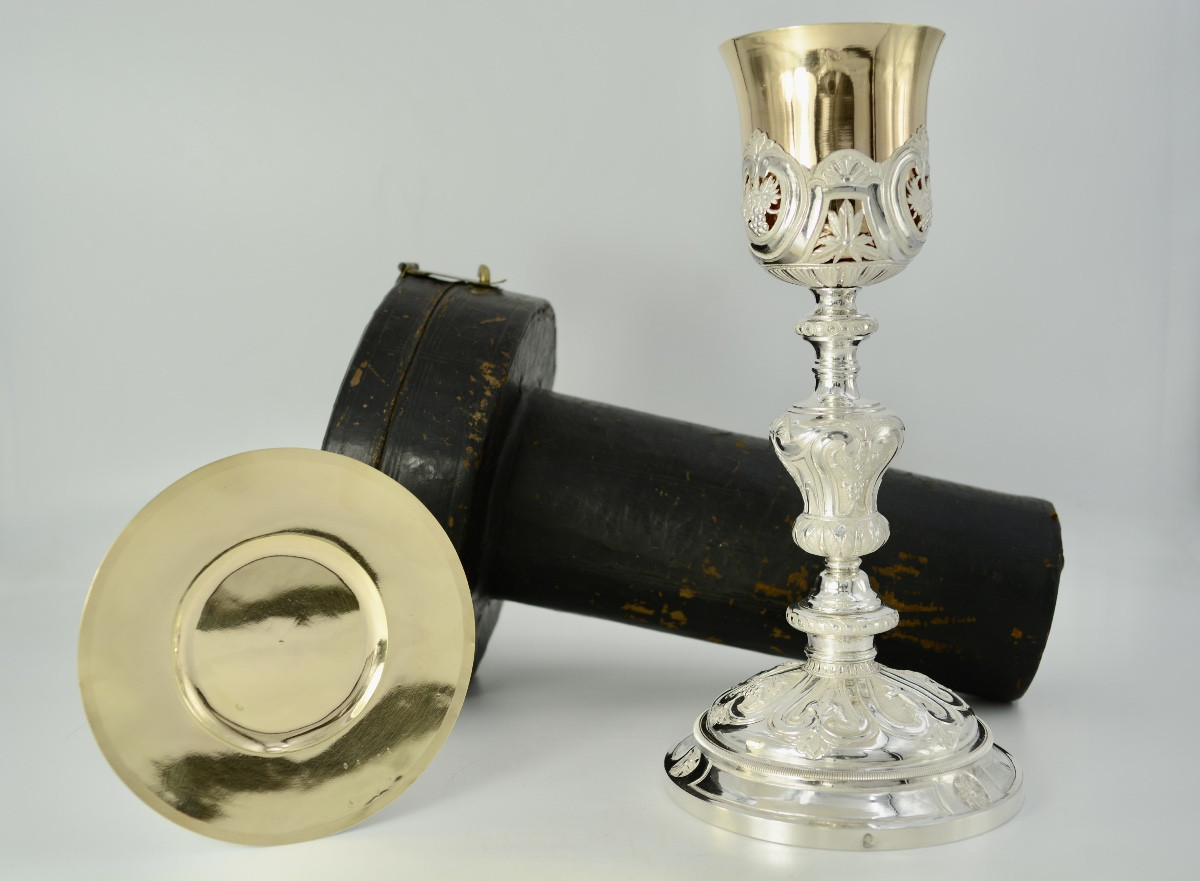
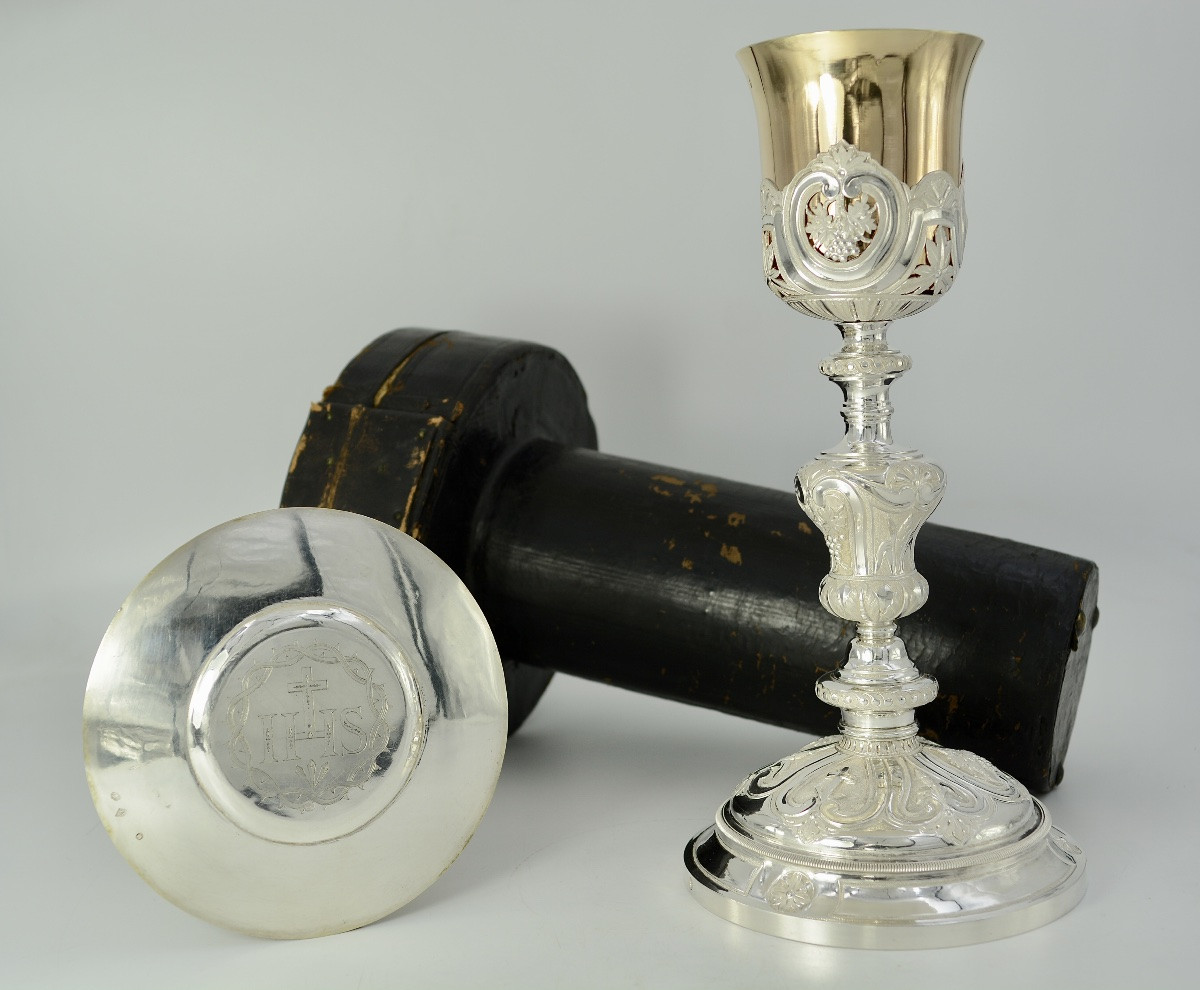
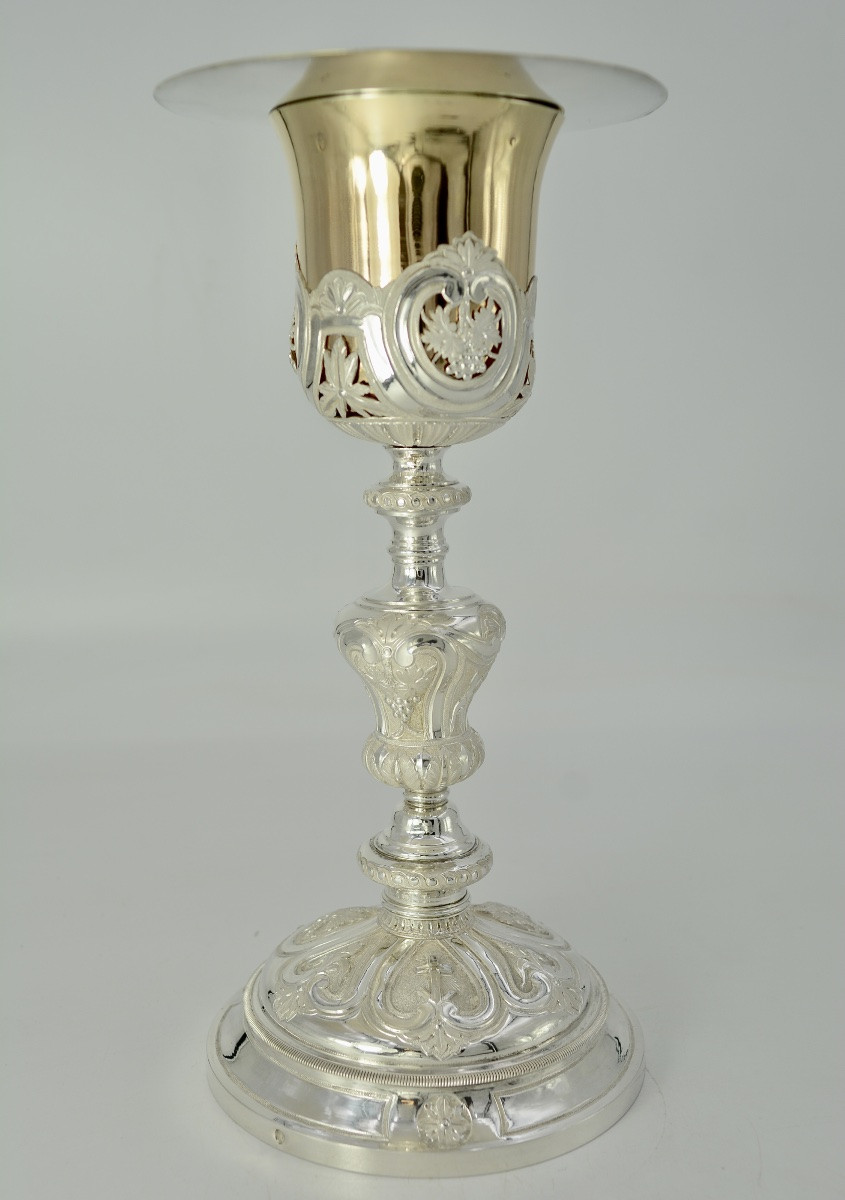
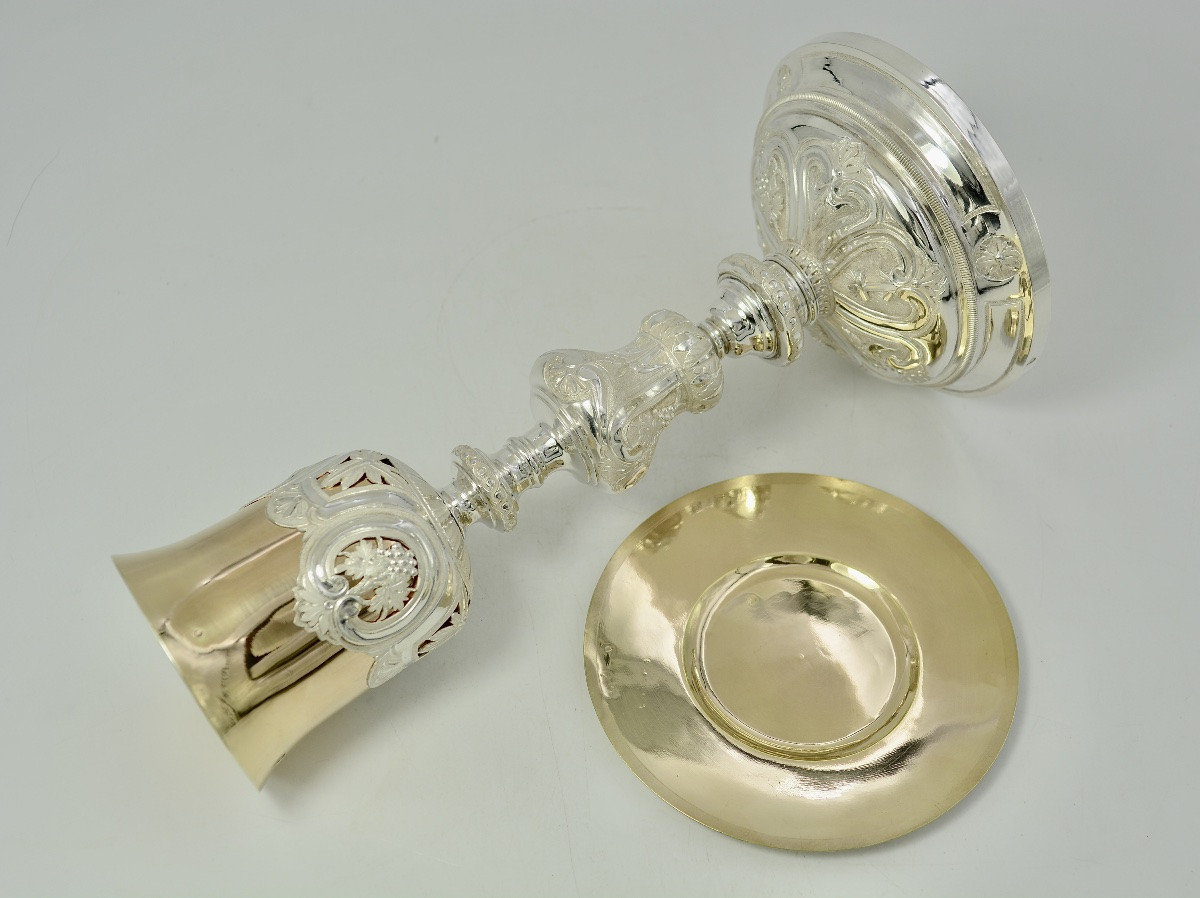
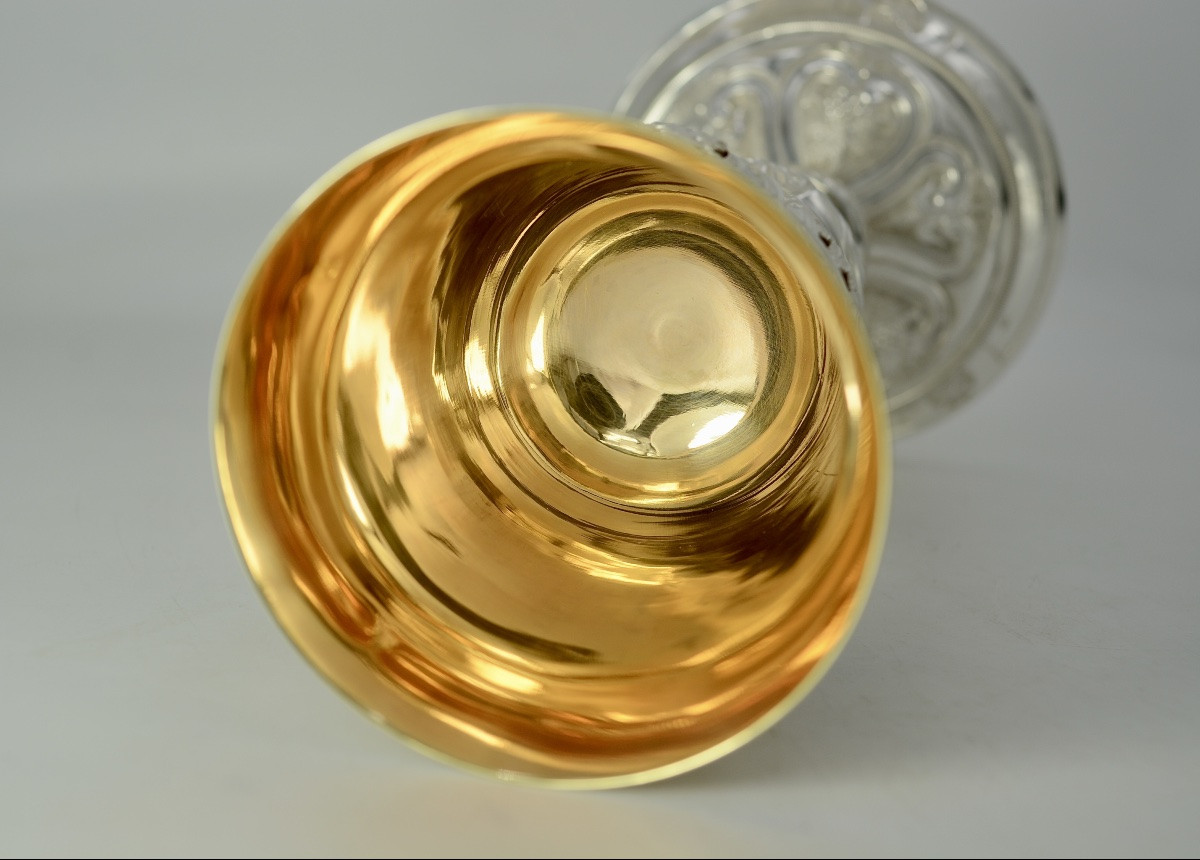
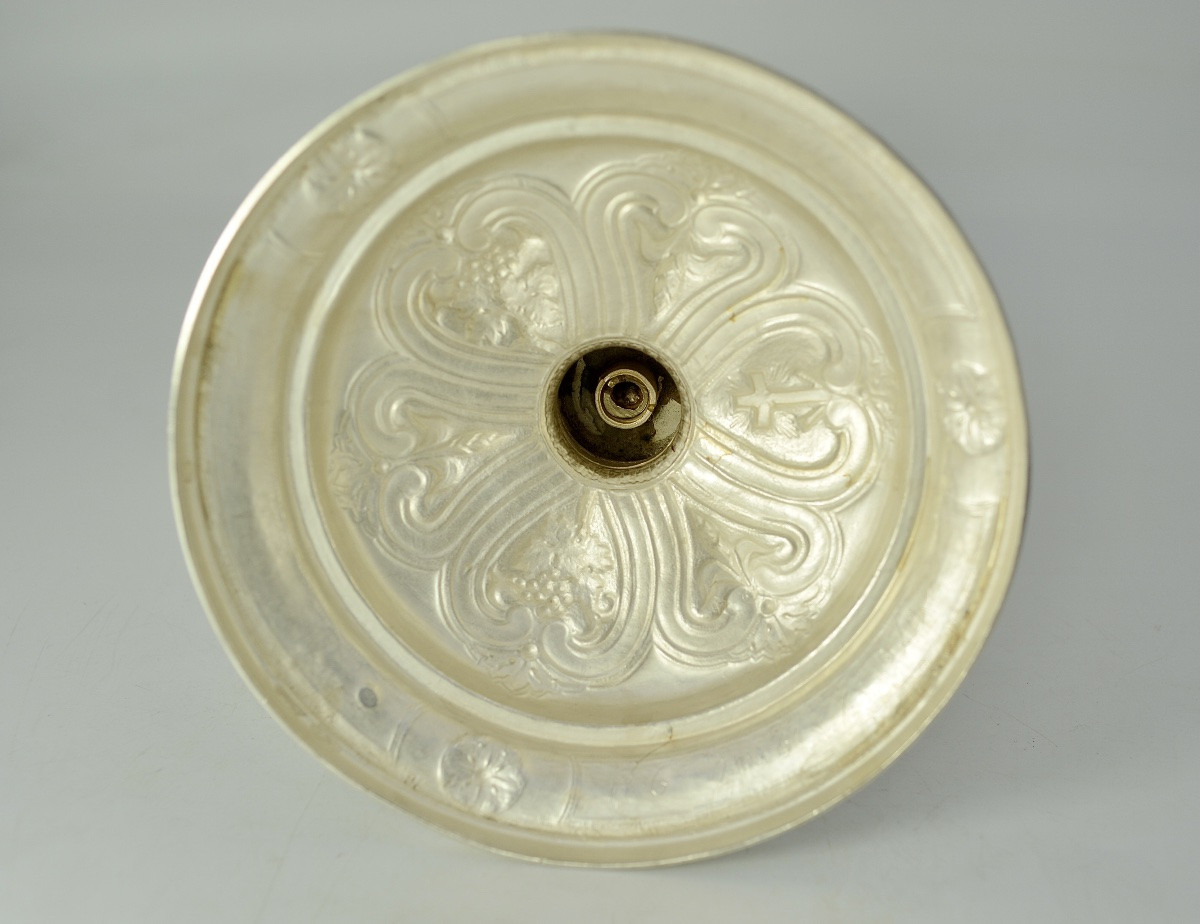
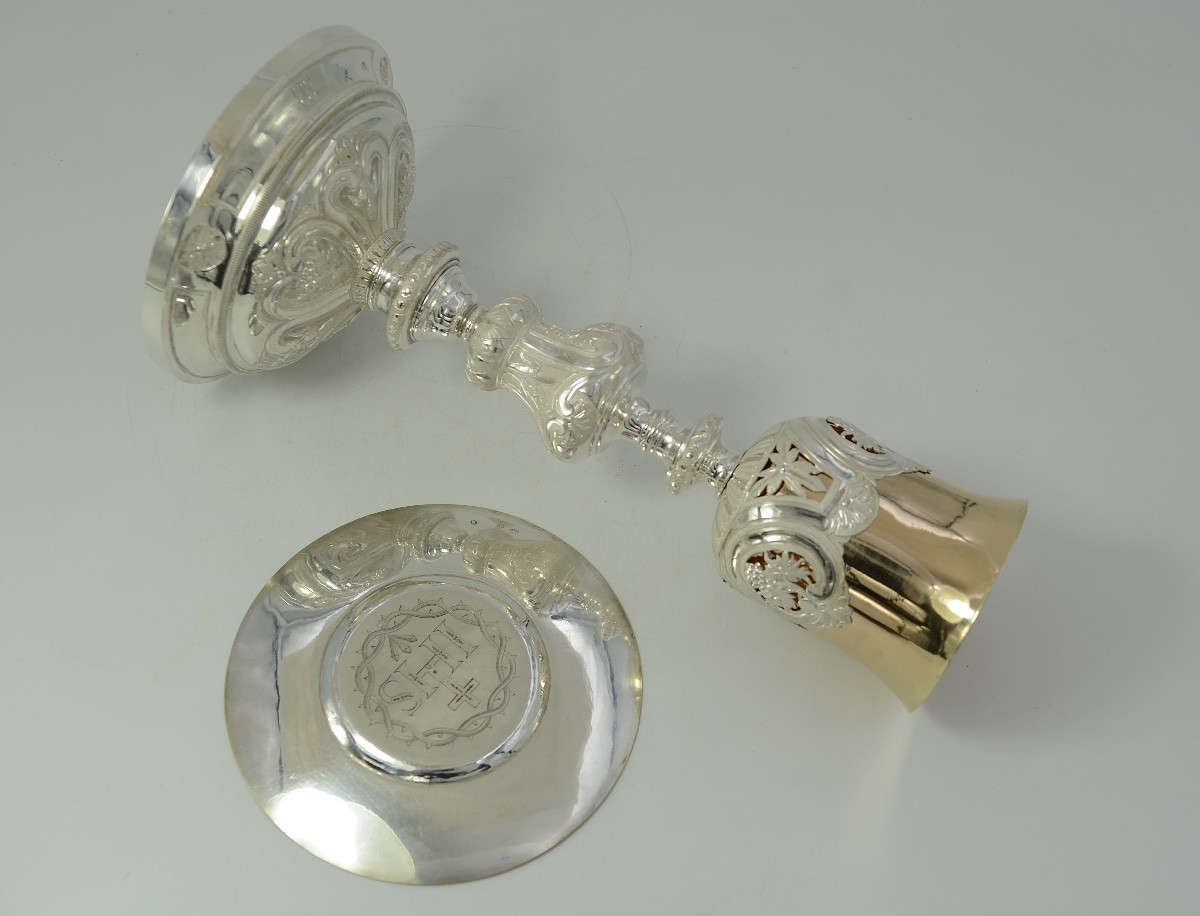
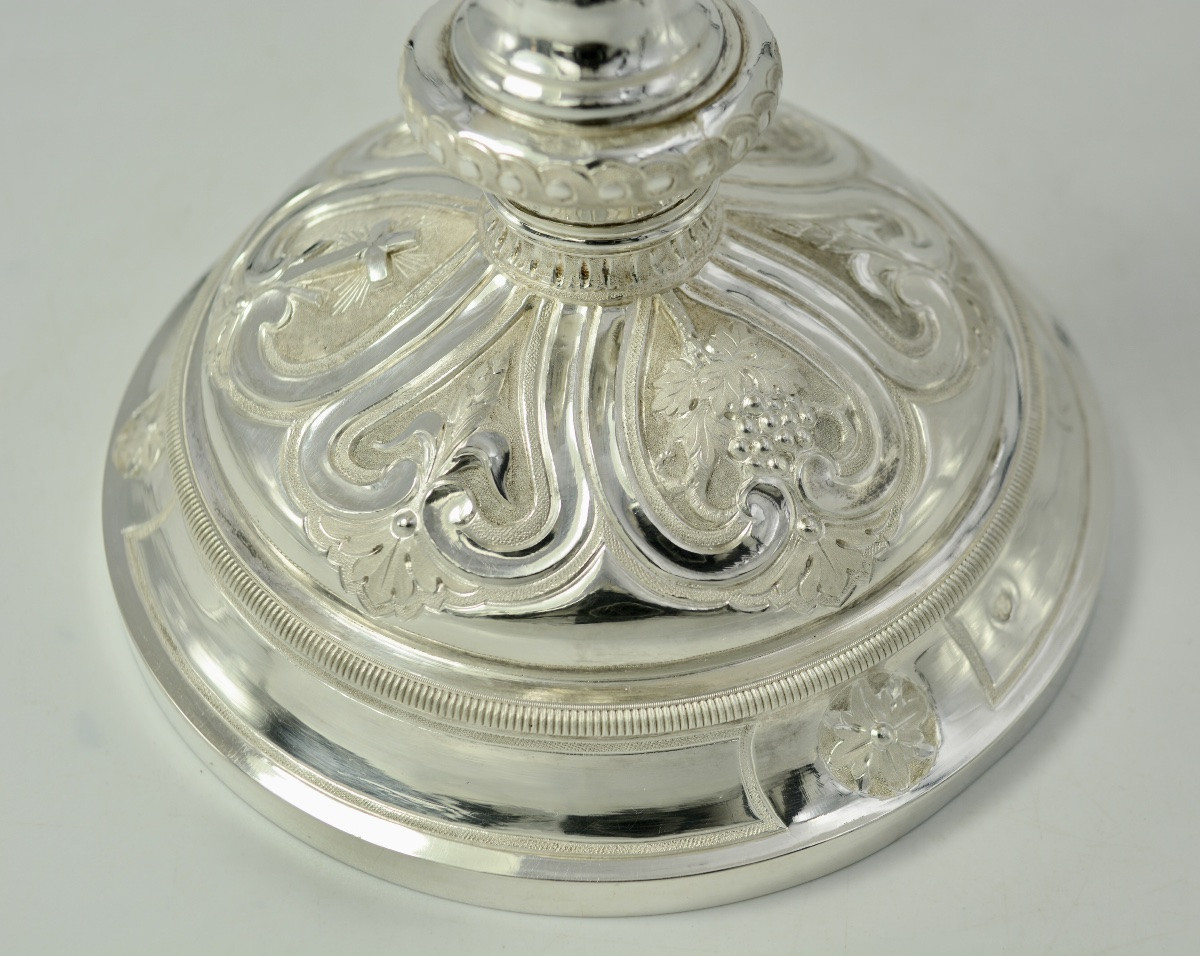
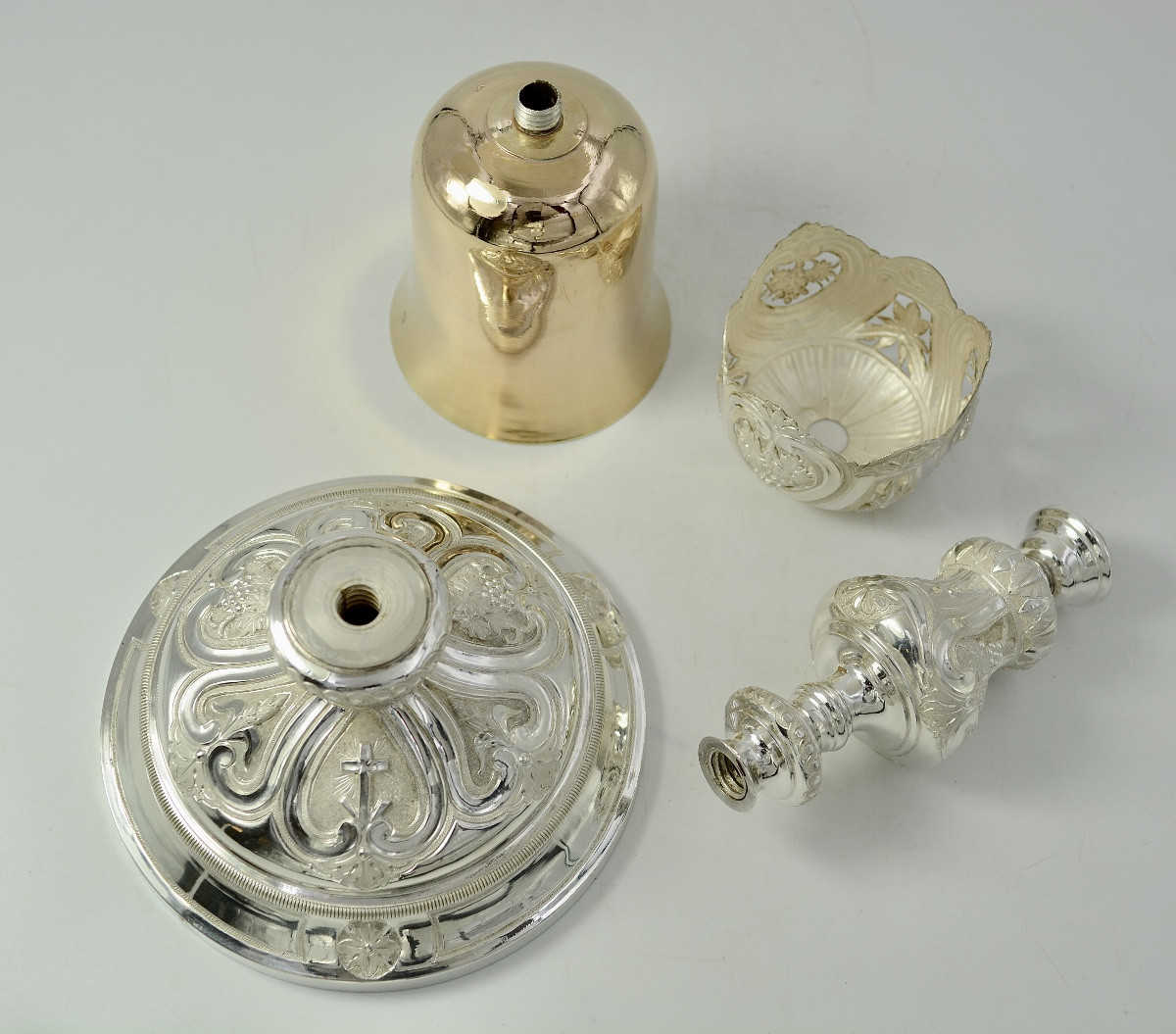
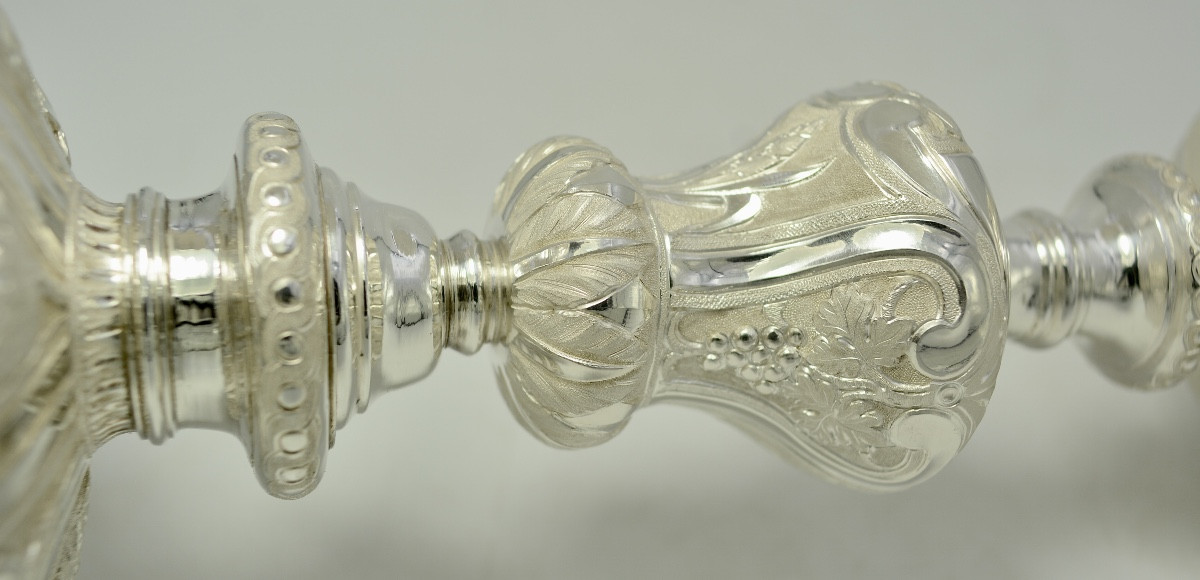
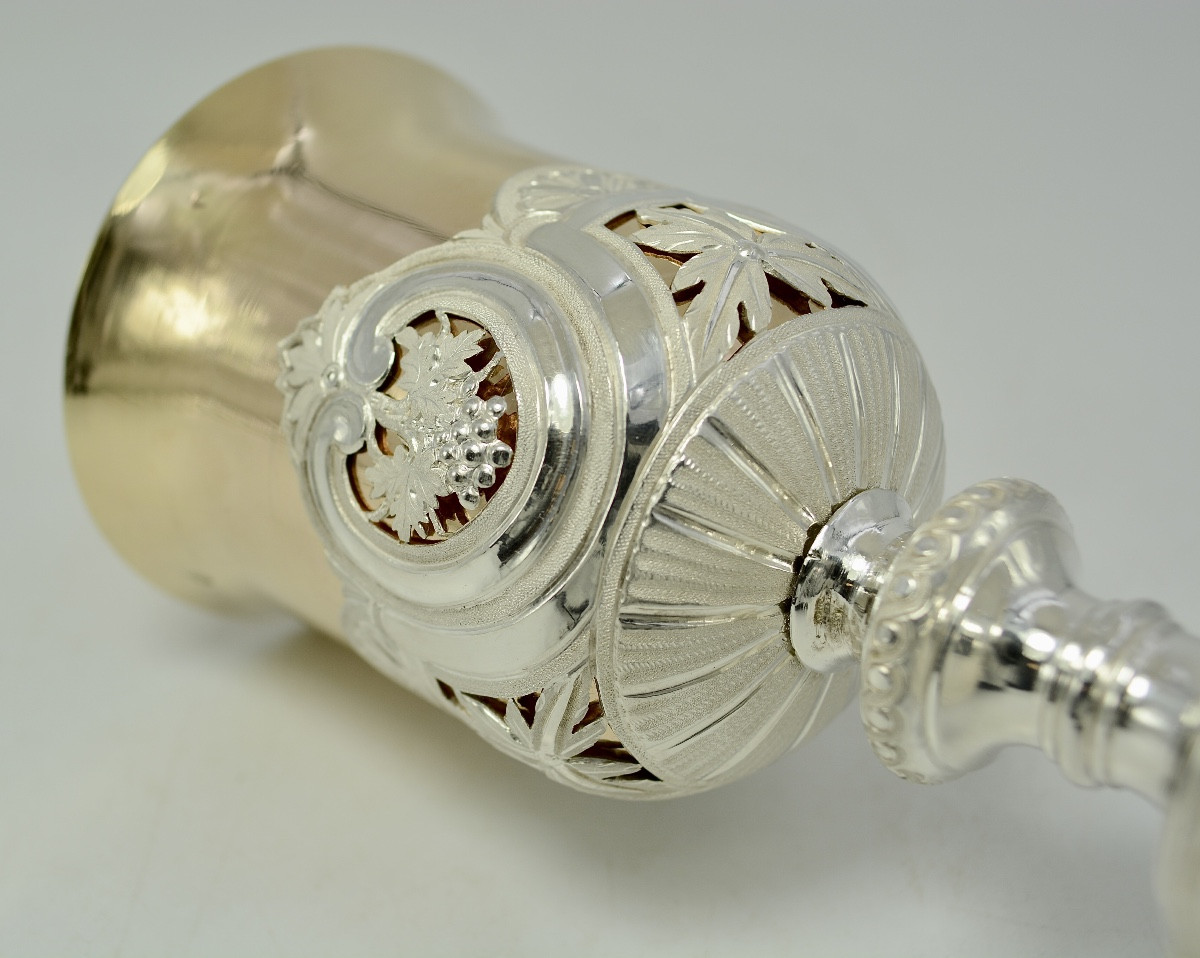
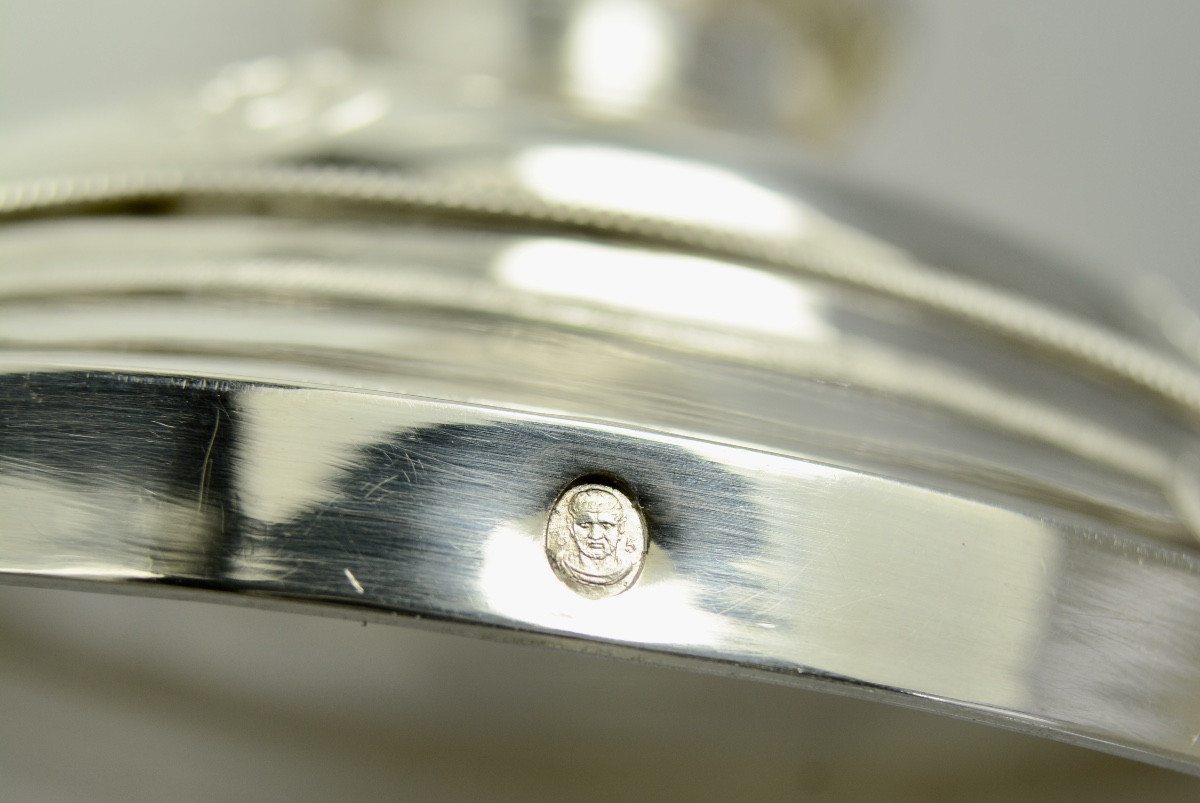
The chalice, made of silver, is composed of four interlocking or screwed elements: a circular foot with three stepped edges, a stem with rings and collars, and a baluster-shaped knop reminiscent of the Medici vase, and finally, a cup nested within a false, openwork cup. The object, with the exception of the cup, is entirely covered with embossed, chased, and guilloché decoration. The rim of the foot features a four-leaf motif and is bordered by a rope frieze. The top of the foot is adorned with six openwork medallions depicting a radiant cross and symbols of the Eucharist, combining alternating ears of wheat and bunches of grapes. The knop, at its base, is supported by a corolla of palm leaves and repeats the same decorative motifs as the base's terrace. It is framed by two rings decorated with interlacing patterns and multiple collars. The cup, entirely gilded, is set in an openwork saucer, its upper part cut out with a flowing motif, featuring three medallions adorned with alternating bunches of grapes and acanthus leaves. France, early 19th century. 950/1000 silver, Rooster hallmark (1798–1809), Paris guarantee hallmarks. Master silversmith: Jean-Charles Cahier, silversmith established at 34 Quai des Orfèvres in Paris. Its hallmark was registered in 1801 and cancelled in 1849. Height: 29.5 cm Diameter of the base: 14 cm Weight: 551 g This chalice has retained its 950/1000 silver paten, from the same period and by the same silversmith, bearing the Rooster hallmark. Diameter: 14.5 cm Weight: 91 g Condition of the chalice: excellent, probably unused or used for a very short time. Condition of the paten: perfect. Original transport case ** …A pupil of Biennais, known for his famous works, such as the reliquary of the Holy Crown of Thorns in the Sainte-Chapelle in Paris or that of the Holy Ampulla in Reims, he enjoyed great renown under the Empire and executed the liturgical vessels for the coronation of Napoleon Bonaparte, then under Louis XVIII and Charles X. He received numerous commissions for religious silverware in the provinces, and in particular in Languedoc for the most prestigious buildings, cathedrals or former cathedrals, Saint-Nazaire of Béziers, Saint-Pons of Thomières and Saint-Pierre of Montpellier, collegiate churches like Saint-Jean of Pézenas or parish churches like Saint-Paul of Clermont-l'Hérault...Page 144-145, Dictionary of Liturgical Arts 19th-20th Centuries / Bernard Berthod, Elisabeth Hardouin-Fugier.
4 230 €
Period: 19th century
Style: Other Style
Condition: Perfect condition
Material: Sterling silver
Height: 29,5 cm
Reference (ID): 1675216
Availability: In stock
Print