


71 Porcelain Perfume Burner Or Potpourri Burner, Samson Factory (1845-1969)
Samson Manufactory (1845-1969)
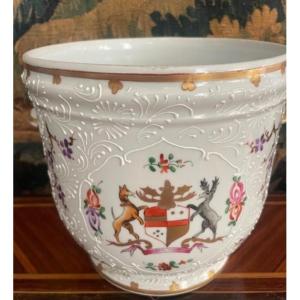
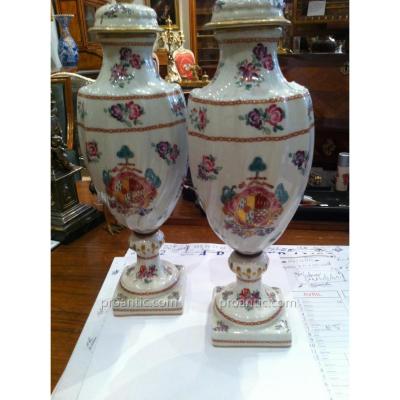
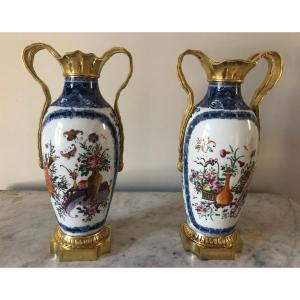
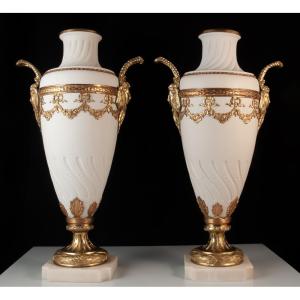
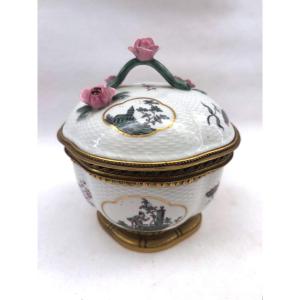
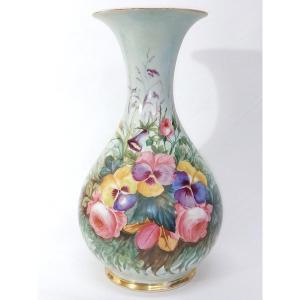
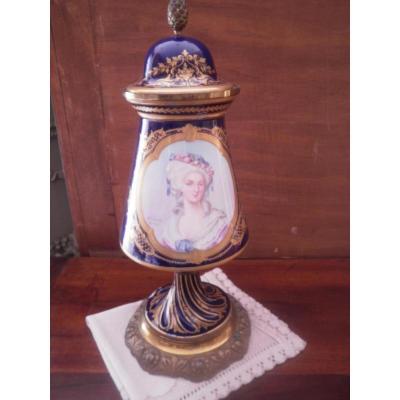
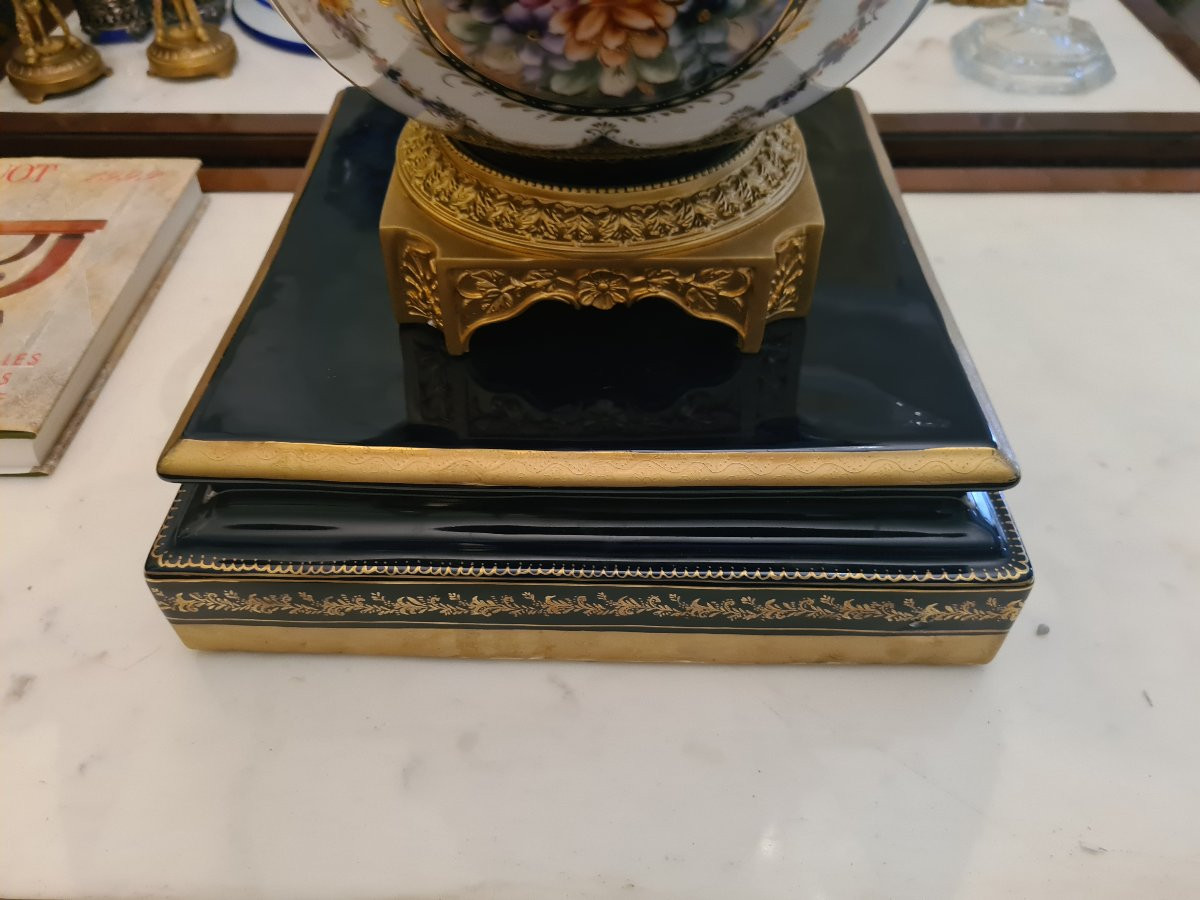
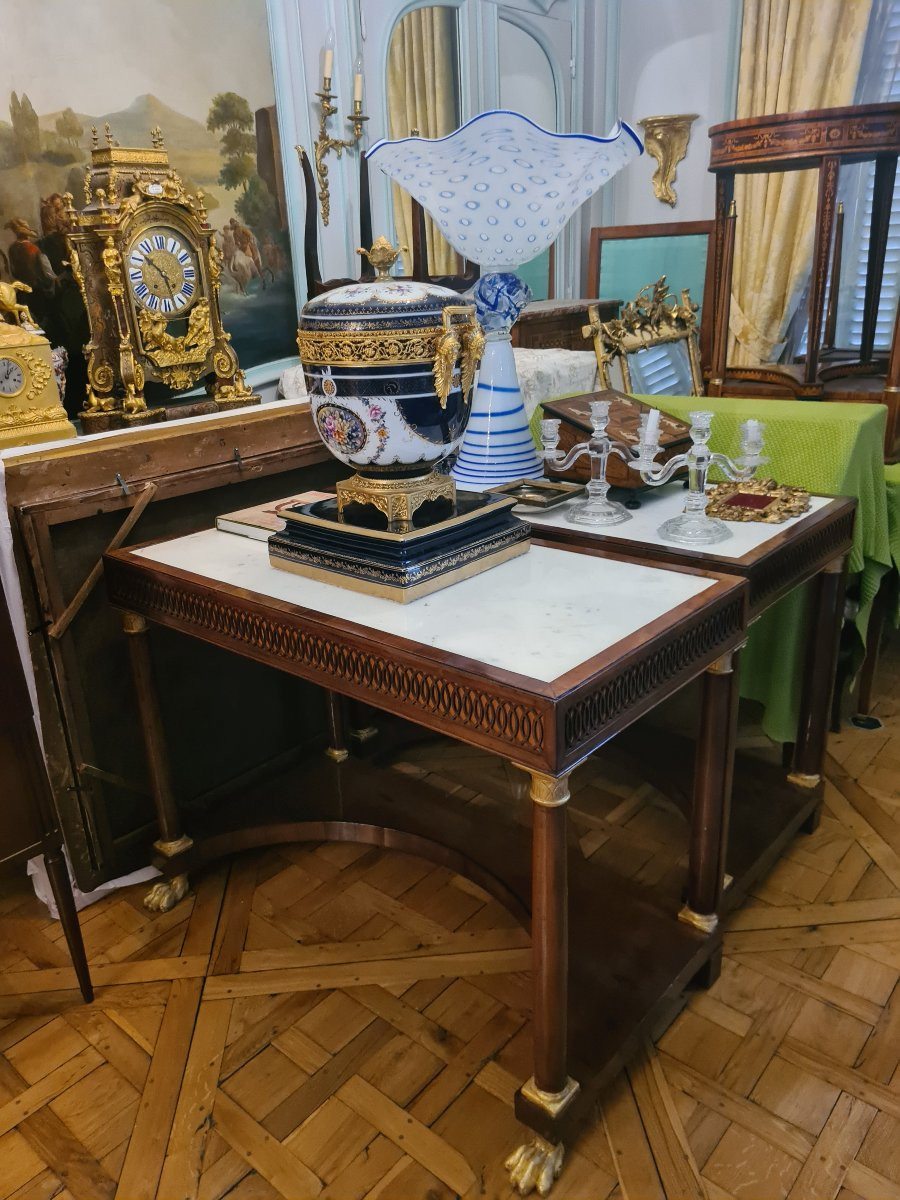
Polychrome porcelain potpourri or incense burner in the Sèvres style, decorated with flowers on a white background within midnight blue reserves. The mount is gilt bronze – with its base. Circa 1890.
Overall dimensions:
H x W x D = 62 x 37 x 37 cm
The history of the Samson Manufactory (1845-1969) began in the mid-19th century and ended in the mid-20th century. The company was run by the Samson family for five generations. Samson specialized in the ceramic arts, but more specifically in the reproduction of collectible pieces in porcelain, earthenware, terracotta, and bronze. The Samson Manufactory also worked on the restoration of authentic pieces. It is characterized by the richness, number, and diversity of its reproductions. These are of exceptional quality, which earned it worldwide renown. The Samsons are often called "geniuses of imitation."
The Samsons used every means at their disposal to perfectly reproduce original models. For example, they analyzed ceramic shards to determine the exact composition of each piece. They also acquired numerous authentic models in order to reproduce them. This is what they called the "Secret Museum," which housed 20,000 works of art, including antique earthenware. Clients had access to it to choose the piece they wished to order. Many collectors and art dealers opened their doors to the Samsons so they could observe and study the original pieces.
The Samsons used the same traditional know-how and firing methods as other manufacturers. However, it is known that the Samson factory only worked with hard-paste porcelain. Soft-paste models were purchased from the Sèvres factory. They were white, and the artisans at the Samson factory painted and decorated them by hand.
The reproduction technique involved creating molds. To make them, a plaster model was first created, larger than the original. Each piece was then stamped and cast into the molds. Over the years, the company amassed more than 60,000 molds. The Samson porcelain factory prospered, capitalizing on the years when the reproduction of authentic models was valued by bourgeois families, collectors, and museums. The Samsons never intended to produce counterfeit pieces. The collections are marked with registered trademarks.
Polychrome porcelain potpourri or incense burner in the Sèvres style, decorated with flowers on a white background within midnight blue reserves. The mount is gilt bronze – with its base. Circa 1890.
Overall dimensions:
H x W x D = 62 x 37 x 37 cm
The history of the Samson Manufactory (1845-1969) began in the mid-19th century and ended in the mid-20th century. The company was run by the Samson family for five generations. Samson specialized in the ceramic arts, but more specifically in the reproduction of collectible pieces in porcelain, earthenware, terracotta, and bronze. The Samson Manufactory also worked on the restoration of authentic pieces. It is characterized by the richness, number, and diversity of its reproductions. These are of exceptional quality, which earned it worldwide renown. The Samsons are often called "geniuses of imitation."
The Samsons used every means at their disposal to perfectly reproduce original models. For example, they analyzed ceramic shards to determine the exact composition of each piece. They also acquired numerous authentic models in order to reproduce them. This is what they called the "Secret Museum," which housed 20,000 works of art, including antique earthenware. Clients had access to it to choose the piece they wished to order. Many collectors and art dealers opened their doors to the Samsons so they could observe and study the original pieces.
The Samsons used the same traditional know-how and firing methods as other manufacturers. However, it is known that the Samson factory only worked with hard-paste porcelain. Soft-paste models were purchased from the Sèvres factory. They were white, and the artisans at the Samson factory painted and decorated them by hand.
The reproduction technique involved creating molds. To make them, a plaster model was first created, larger than the original. Each piece was then stamped and cast into the molds. Over the years, the company amassed more than 60,000 molds. The Samson porcelain factory prospered, capitalizing on the years when the reproduction of authentic models was valued by bourgeois families, collectors, and museums. The Samsons never intended to produce counterfeit pieces. The collections are marked with registered trademarks.
1 400 €
Period: 19th century
Style: Louis 16th, Directory
Condition: Perfect condition
Material: Porcelain
Width: 38
Height: 62
Depth: 38
Reference (ID): 1674143
Availability: In stock
Print