THIS OBJECT WAS SOLD
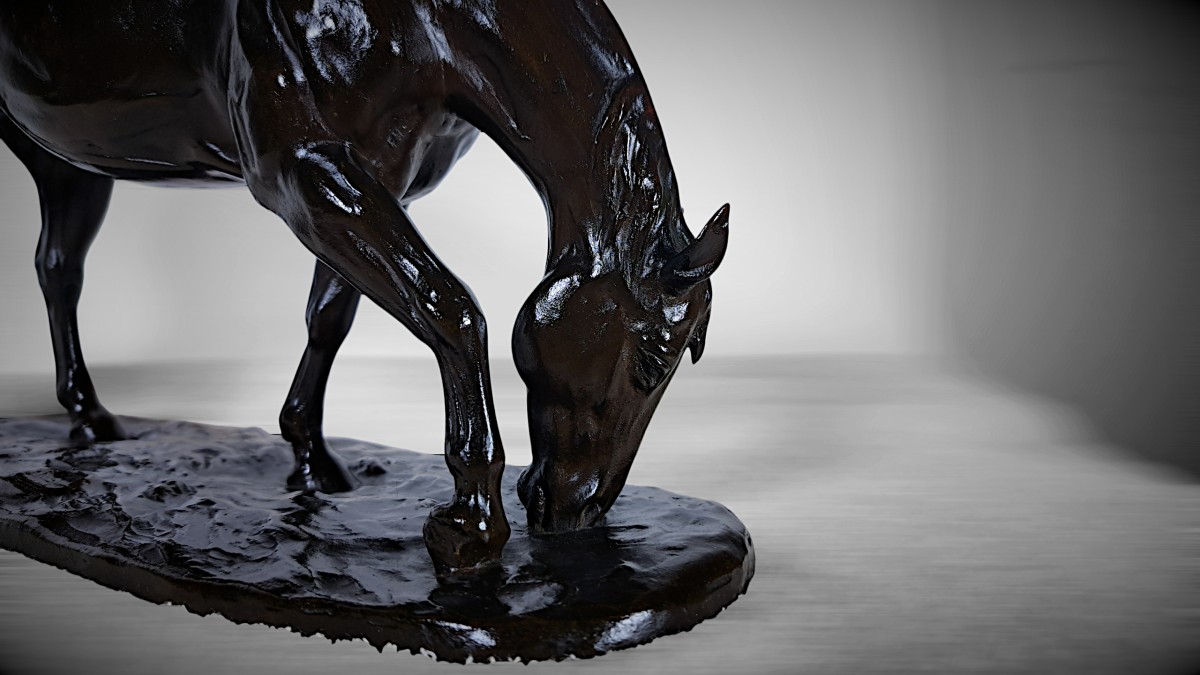
Japanese Bronze Sculpture By Itô Kunio - A Grazing Horse





Itō Kunio 伊藤国男 (1890–1970), a Japanese sculptor born in Iwate Prefecture, reached his peak in the early to mid-20th century. He is best known for his dynamic and naturalistic depictions of horses and animals in bronze, executed with great mastery of form and texture.
Kunio exhibited at major national art forums of his time, including exhibitions of the Imperial Bunten and the National Society of Arts, which established him as a respected figure in the modern Japanese tradition of figurative bronze sculpture. His works are featured in important institutional collections, such as the National Museum of Modern Art, Tokyo (Charging of a Cannon Chariot), as well as in public installations associated with the Imperial Household and university campuses. His legacy lives on through bronze sculptures that remain highly sought after by collectors and museums.
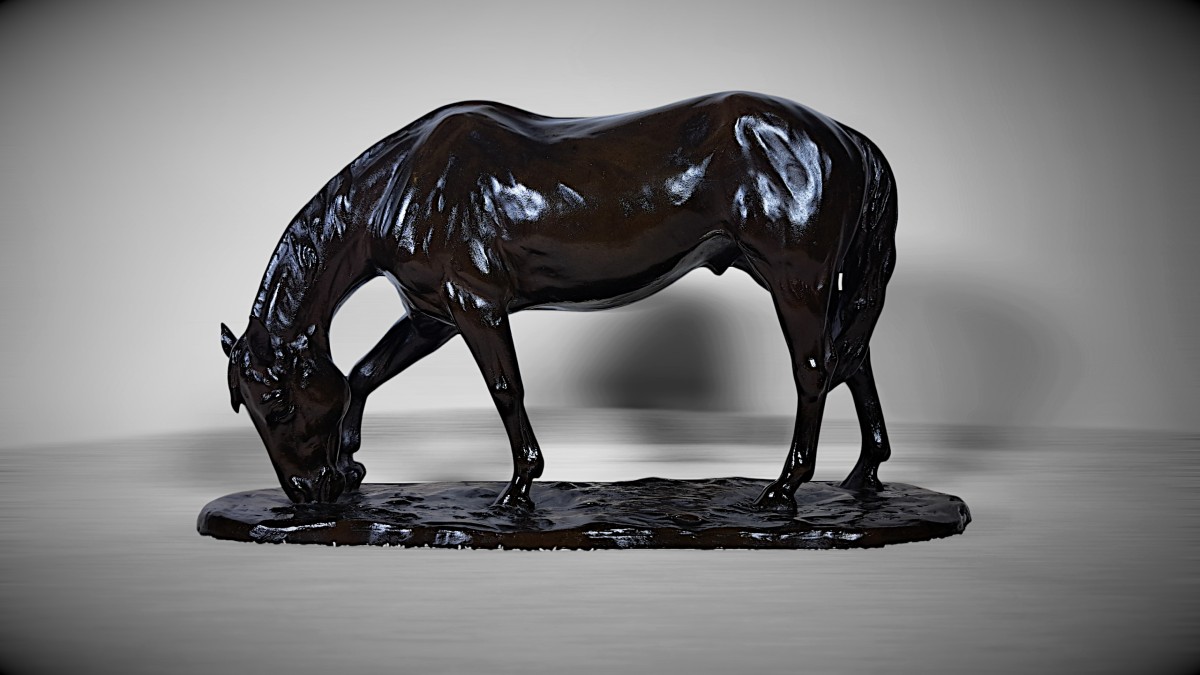
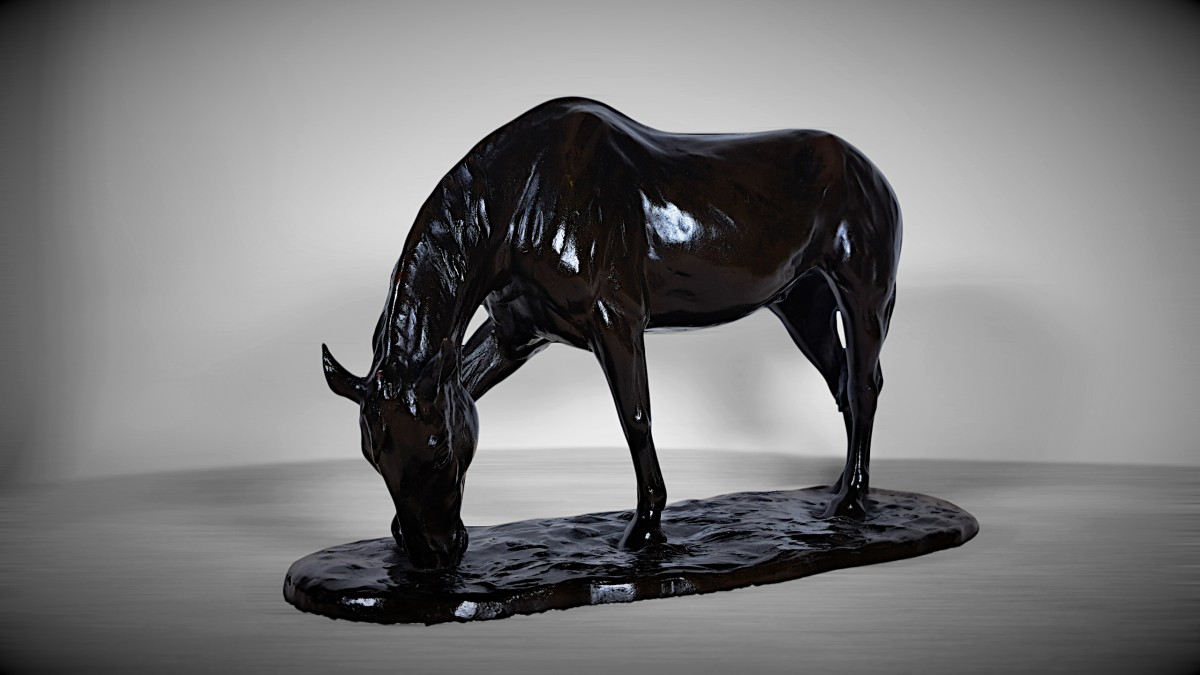
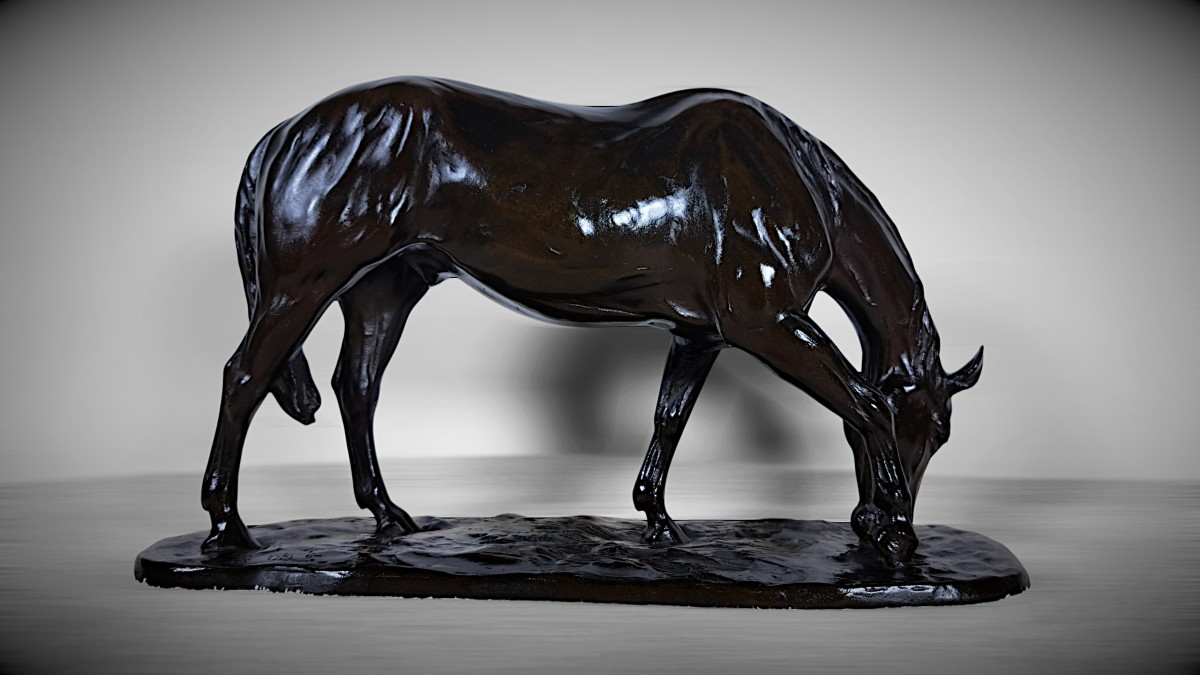
This bronze perfectly illustrates all the qualities that define Kunio's work. The horse is depicted grazing in a moment of serene naturalism, its head lowered in peaceful concentration, its musculature rendered with a keen sense of structure and rhythm. Every surface is modeled with deliberate care: the slightly taut neck, the delicately articulated shoulders, the subtle play of light on the flanks. The patina—a deep, warm, and slightly reflective brown—has been applied with consummate skill, enriching the sculpture's volumes and lending it an elegant and timeless presence. The irregularly shaped, organically textured base anchors the horse with understated authenticity while preserving the sculptural immediacy of Kunio's hand.
For further information, see the 1968 book: Uma, Itô Kunio no Chokoku (Sculptures by Itô Kunio), by Genjiro Kuribayashi.
Kunio exhibited at major national art forums of his time, including exhibitions of the Imperial Bunten and the National Society of Arts, which established him as a respected figure in the modern Japanese tradition of figurative bronze sculpture. His works are featured in important institutional collections, such as the National Museum of Modern Art, Tokyo (Charging of a Cannon Chariot), as well as in public installations associated with the Imperial Household and university campuses. His legacy lives on through bronze sculptures that remain highly sought after by collectors and museums.
This bronze perfectly illustrates all the qualities that define Kunio's work. The horse is depicted grazing in a moment of serene naturalism, its head lowered in peaceful concentration, its musculature rendered with a keen sense of structure and rhythm. Every surface is modeled with deliberate care: the slightly taut neck, the delicately articulated shoulders, the subtle play of light on the flanks. The patina—a deep, warm, and slightly reflective brown—has been applied with consummate skill, enriching the sculpture's volumes and lending it an elegant and timeless presence. The irregularly shaped, organically textured base anchors the horse with understated authenticity while preserving the sculptural immediacy of Kunio's hand.
For further information, see the 1968 book: Uma, Itô Kunio no Chokoku (Sculptures by Itô Kunio), by Genjiro Kuribayashi.
Explore similar pieces and discover your ideal find:
Asian Bronze Sculptures