THIS OBJECT WAS SOLD
Large Etruscan Bucchero Nero Oinochoe (29cm) – Certificate Of Authenticity
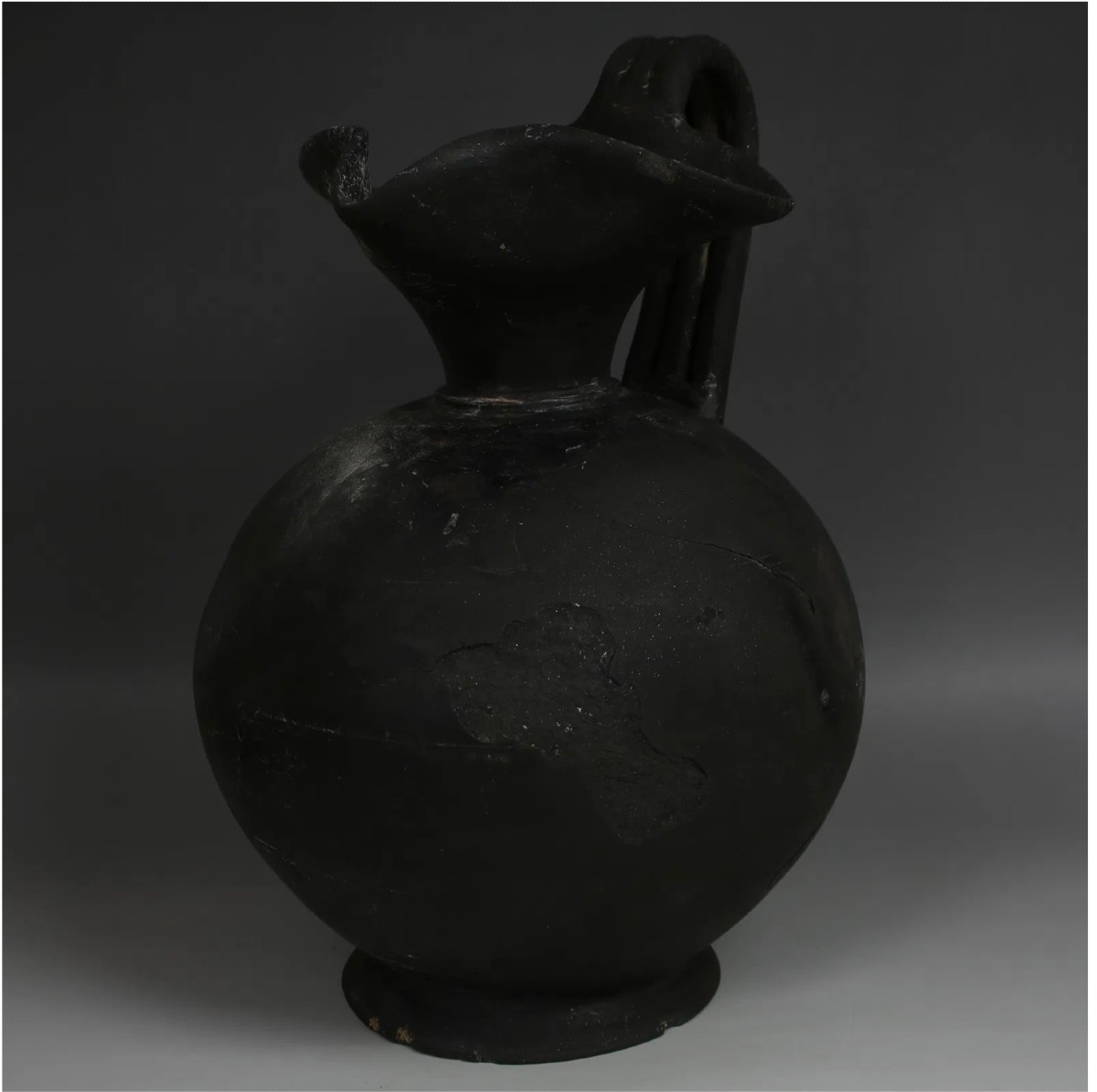
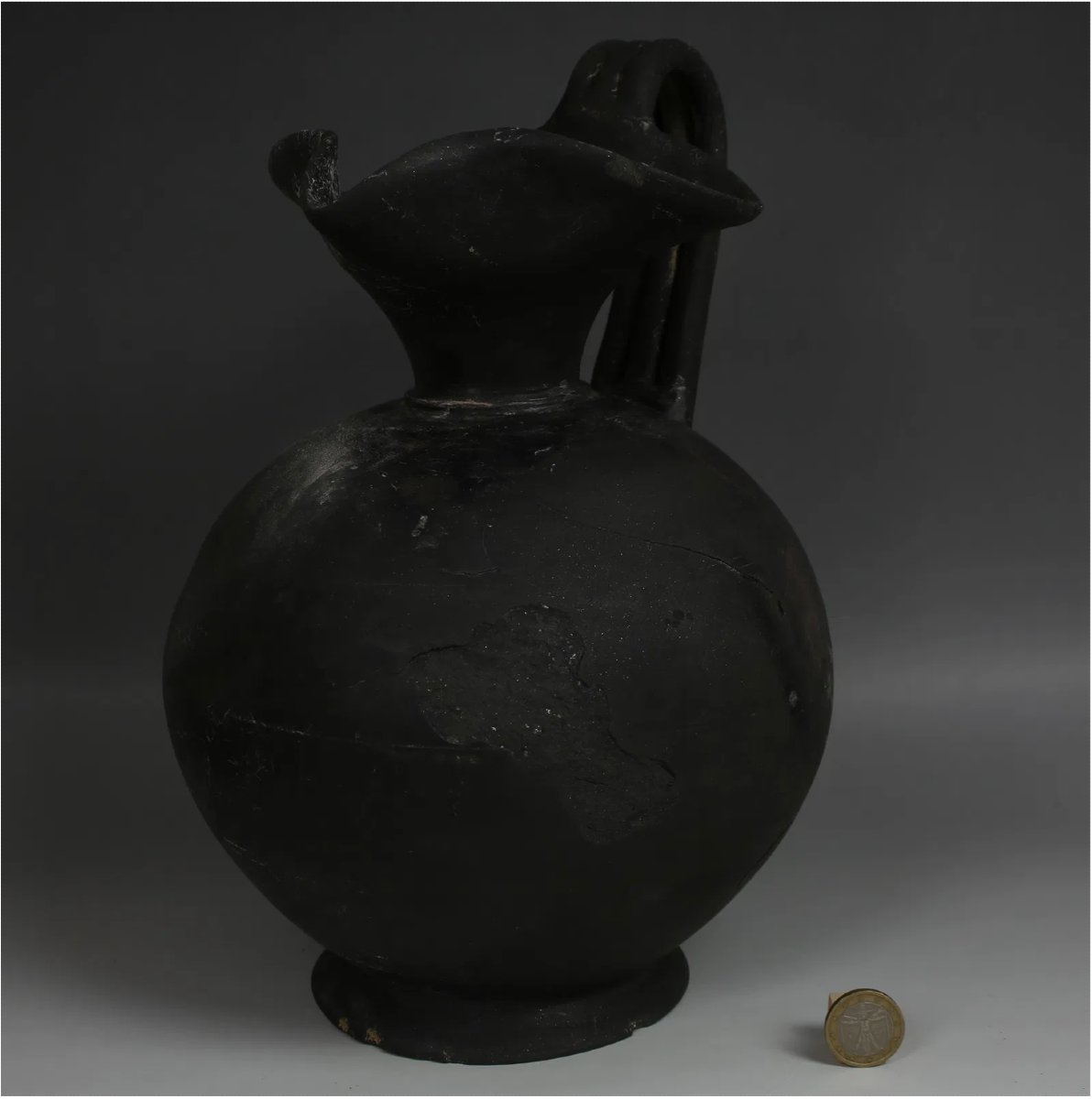
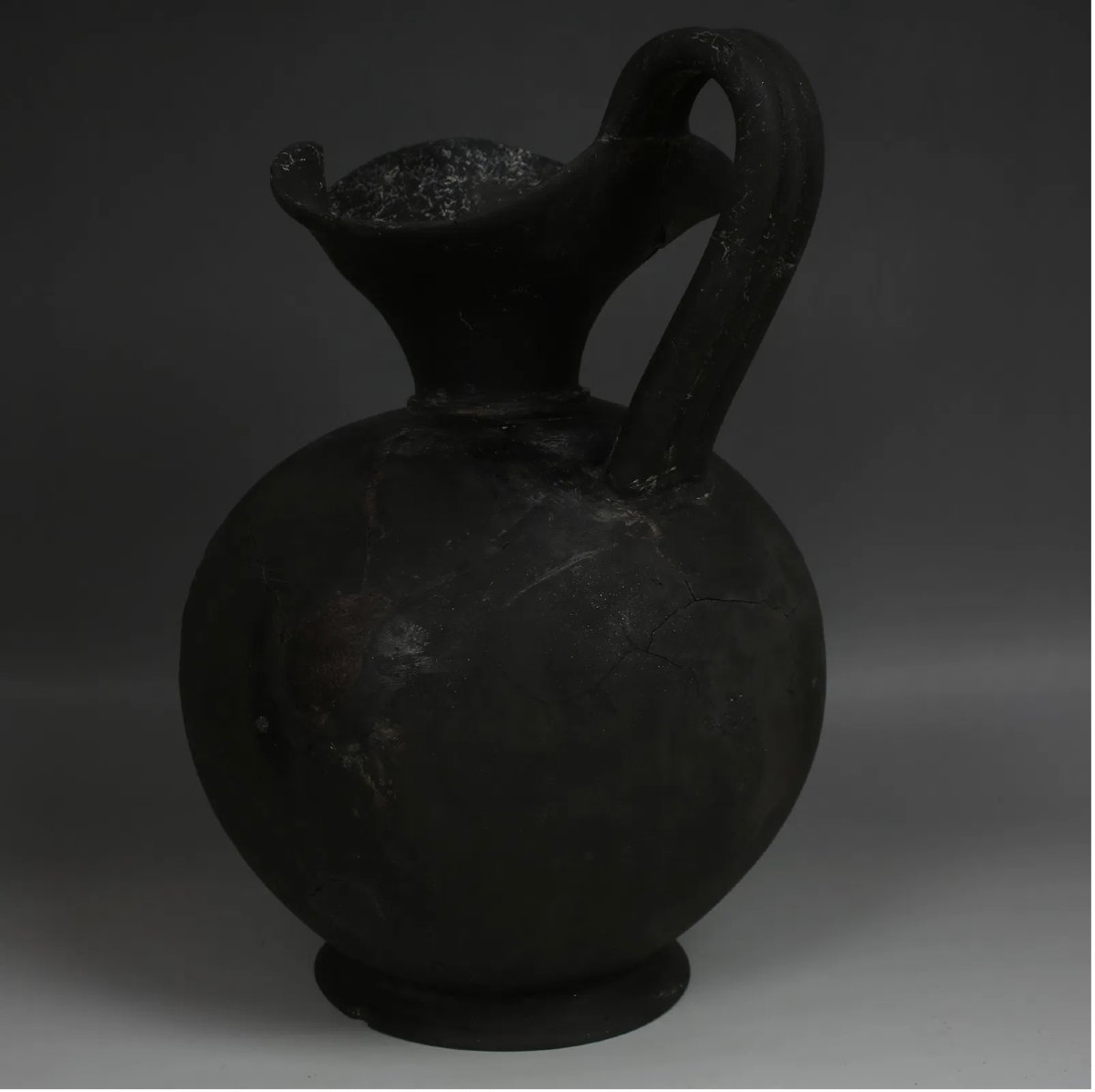
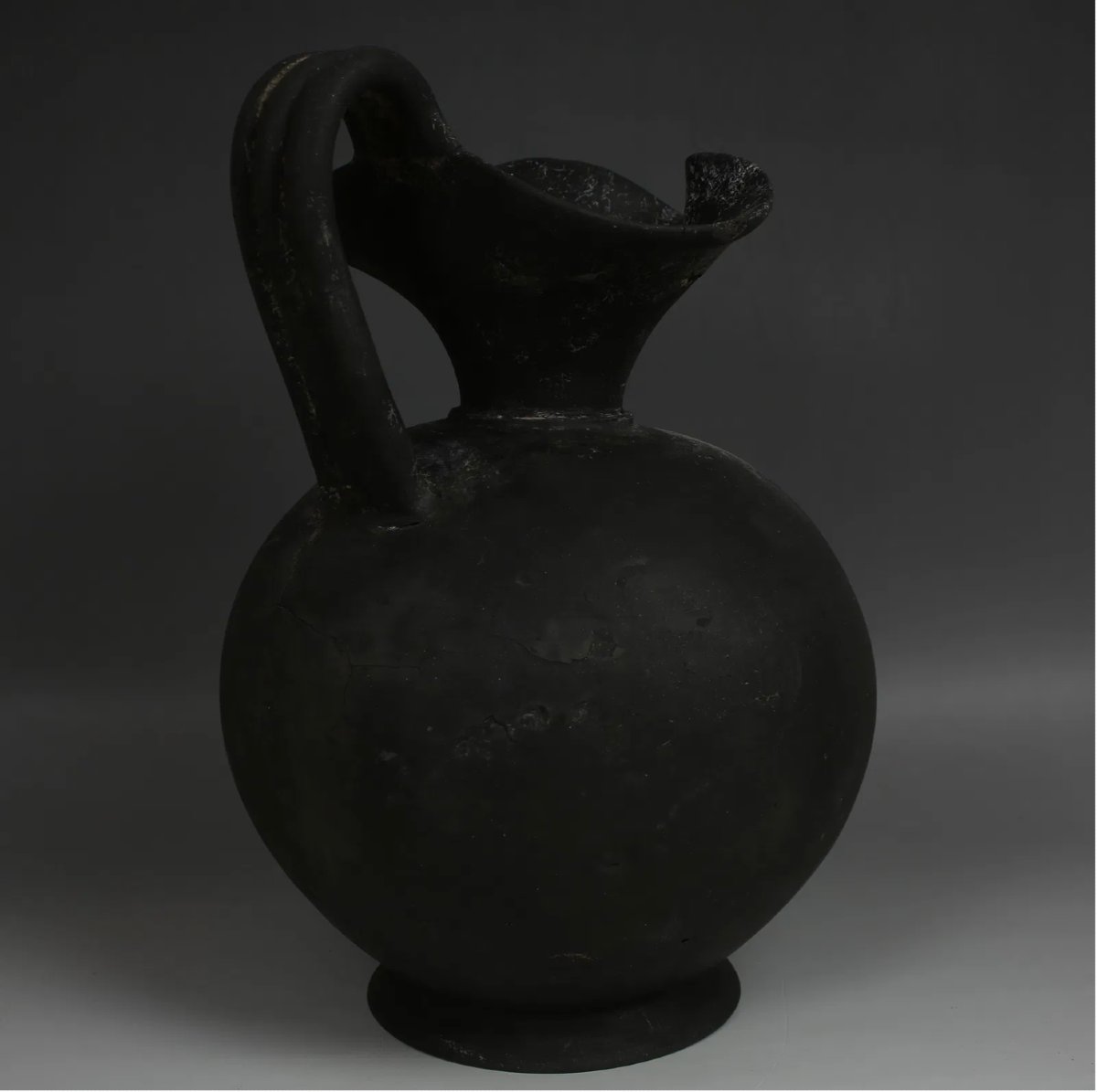
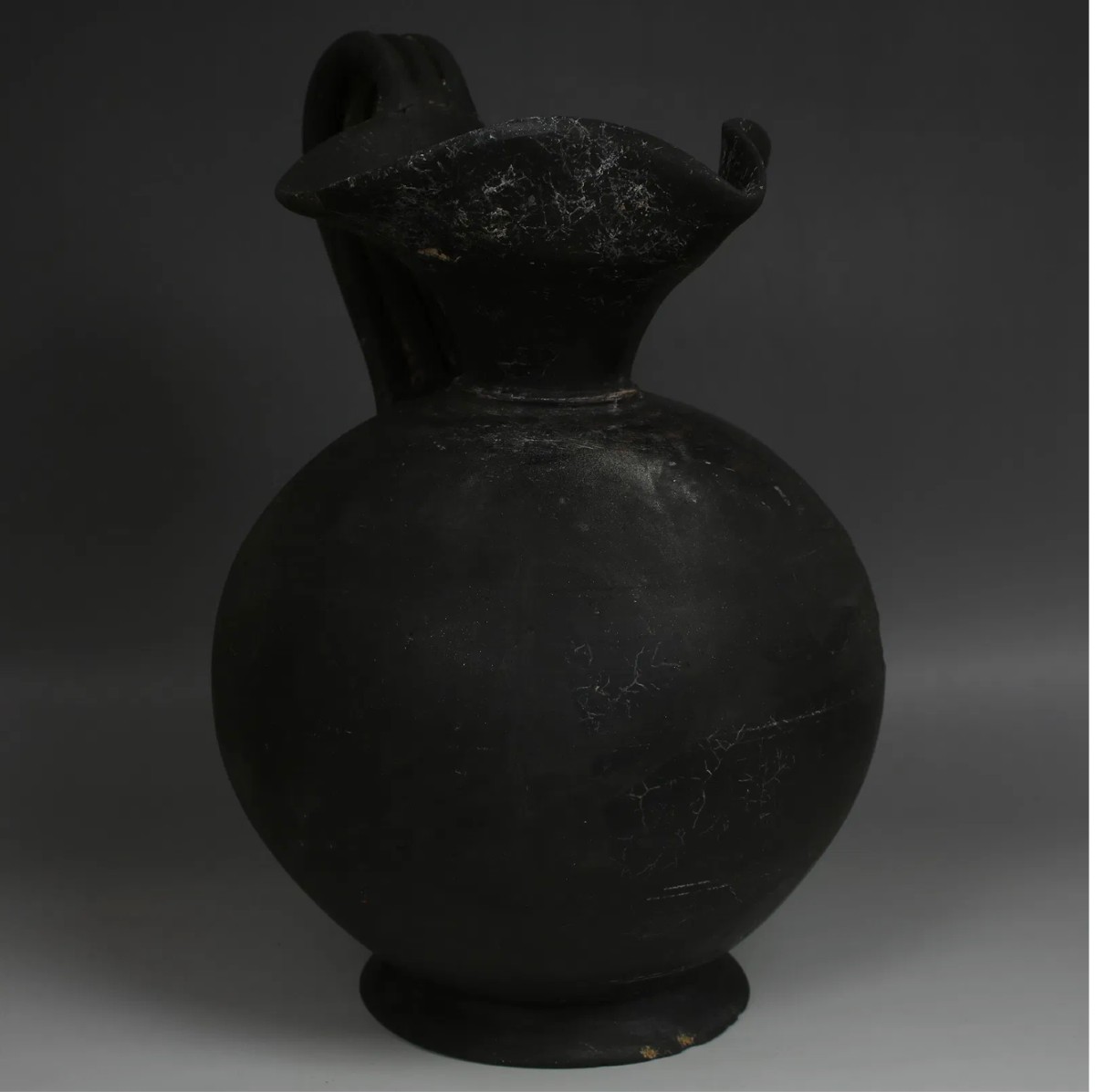
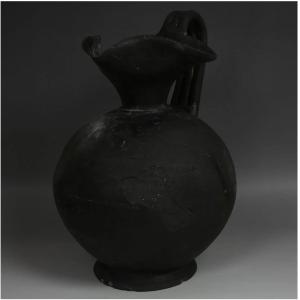


This monumental bucchero nero oinochoe constitutes a masterpiece of Etruscan banquet tableware from the 7th century BC. Through its imposing dimensions (nearly 30 cm in height) and rigorous architecture, it illustrates the ambition of Cerveteri or Tarquinia potters to rival prestige metalwork. Material expertise focuses on the ceramic's epidermis: the deep black, obtained by reduction firing, is magnified by a spectacular archaeological patina. Calcareous concretions and veils of white calcite partially cover the surface, creating a striking mineral contrast that indubitably attests to millennia of burial and protects the integrity of the original paste.
Characteristics
Object: Trefoil-mouthed Oinochoe (Wine Jug).
Culture: Etruscan.
Period: 7th century BC (Orientalizing Period).
Material: Bucchero nero ceramic (lustrous black fabric).
Dimensions: Height: 298 mm | Width: 215 mm | Depth: 205 mm.
Condition: Good state of presentation; object restored (stabilized fracture lines); significant excavation patina preserved.
Provenance: Ex-European private collection; ex-Lakythos SARL (1987); ex-Hydra Gallery, Geneva (1984).
Documentation: Sold with Certificate of Authenticity.
Historical Context Bucchero is the most accomplished expression of Etruscan ceramic genius. Appearing in the 7th century BC, this reduction firing technique (oxygen deprivation in the kiln) transformed red clay into a dense black material, visually imitating oxidized metal. This large oinochoe was intended for serving wine during the symposion (aristocratic banquet). Its form, borrowed from bronze or silver models, testifies to the opulence of Etruscan princes who used these vessels both for domestic display and as high-ranking funerary offerings.
Formal and Material Analysis
Architecture and Volumetrics: The piece is distinguished by powerful tectonics. The spherical body ensures large capacity and a stable base. It articulates clearly with a wide neck, underlined at its base by a relief ring (rib) evoking repoussé work on metal. The vertical ribbon handle rises high above the lip, energizing the silhouette.
Mouth: The pouring spout is pinched into three lobes (trefoil), a complex technical form designed to guide the liquid flow and retain wine sediments. This detail is treated here with remarkable plastic vigor.
Material and Patina: Surface analysis reveals a "geological" authenticity. The bucchero black, satin-like beneath the deposits, coexists with a massive presence of white calcareous concretions. These natural crystallizations, encrusted in the porosities, form a map of time and guarantee the absence of modern acid stripping.
Conservation: The mention of restoration indicates curative conservation work (re-gluing of fragments), a standard practice for ceramics of this size from old excavations, restoring legibility to the form.
Cultural and Decorative Value This work transcends simple utilitarian function to reach a sculptural dimension. Its exceptional size places it among the major productions of the era, embodying the synthesis between the art of fire and the aesthetic of metal. For the collector, the historical provenance (Hydra Gallery, 1984) associated with an uncleaned patina offers the double guarantee of clear traceability and absolute material integrity.
Expertise Report Authenticity is established by the convergence of the following criteria:
Typology: Monumental form characteristic of transitional Bucchero (7th c. BC).
Surface Condition: Calcareous concretions are structural and not superficial, validating the antiquity of the burial.
Traceability: Documented history dating back to 1984 (Switzerland) secures the piece's antecedence on the art market.
Explore similar pieces and discover your ideal find:
archeology