THIS OBJECT WAS SOLD
Tall Display Case, Decorated With A Mythological Scene In Bronze, Mahogany, Berlin, Circa 1800.
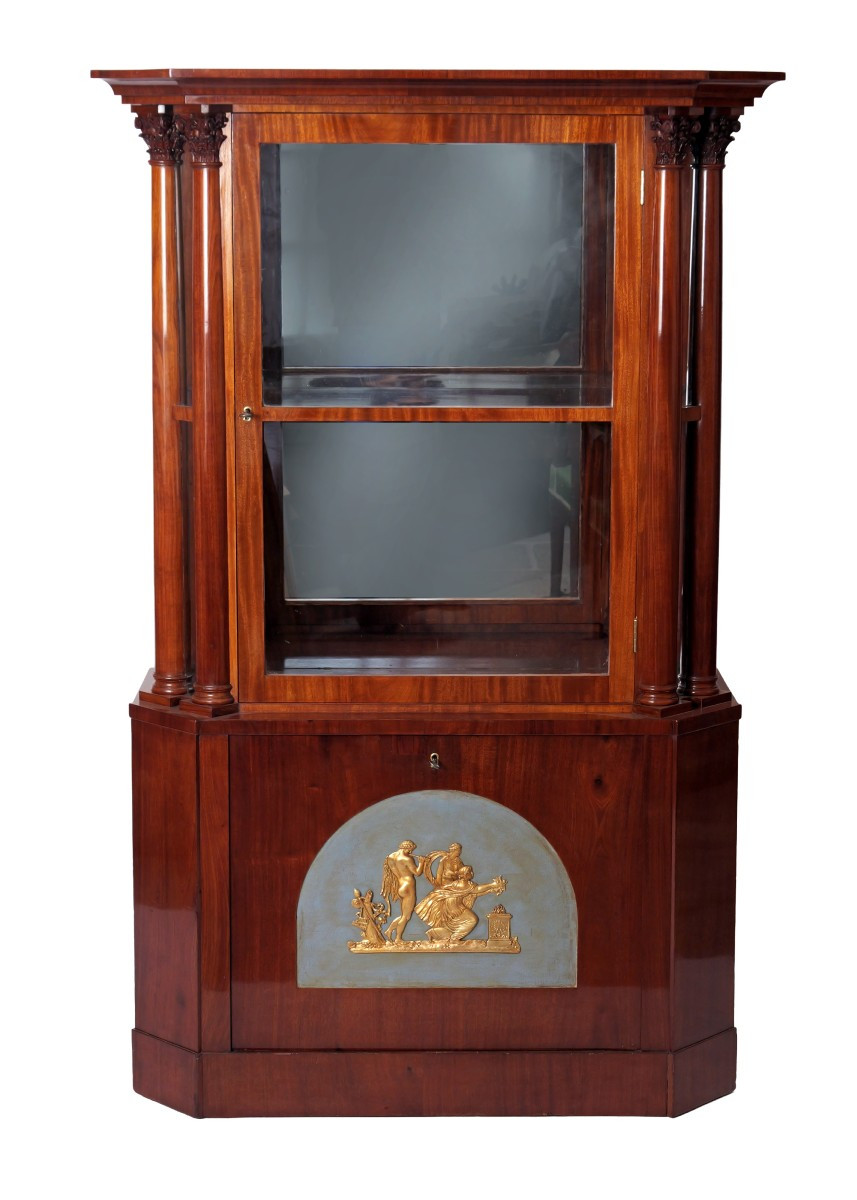
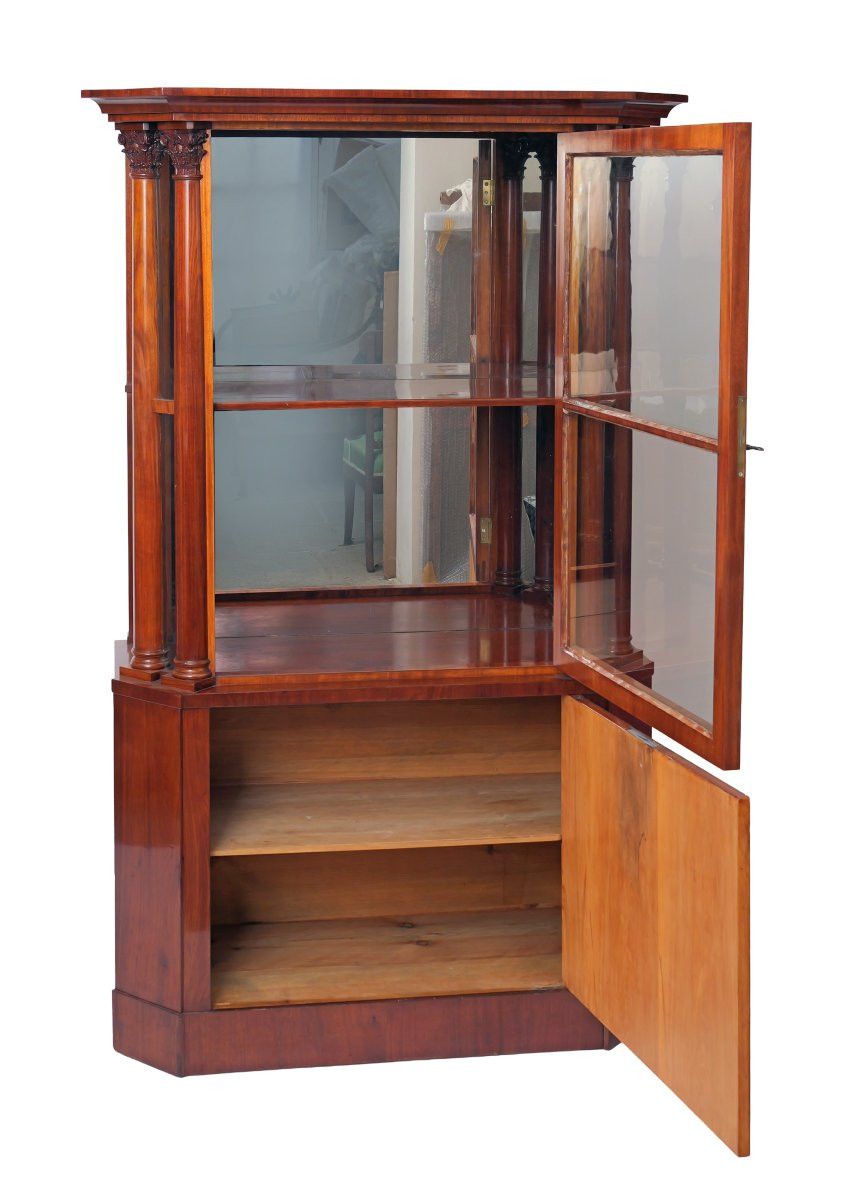
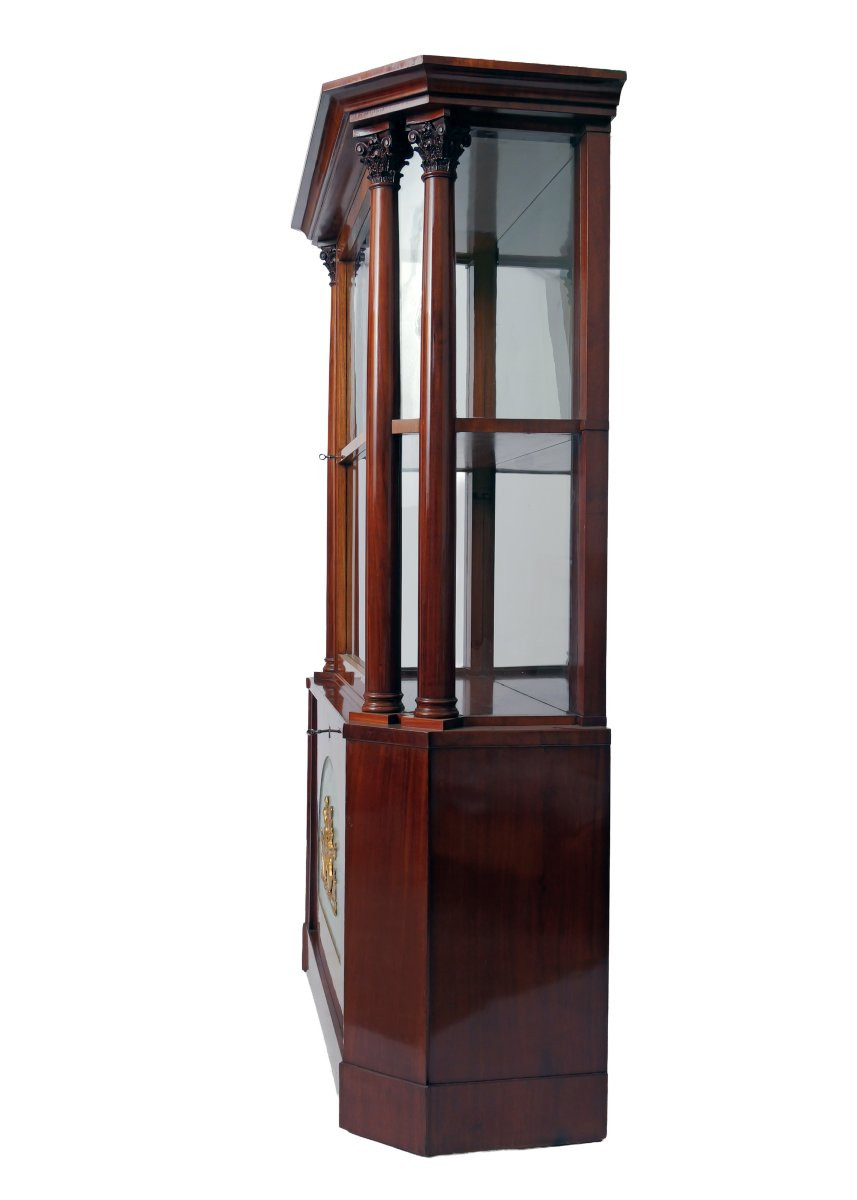
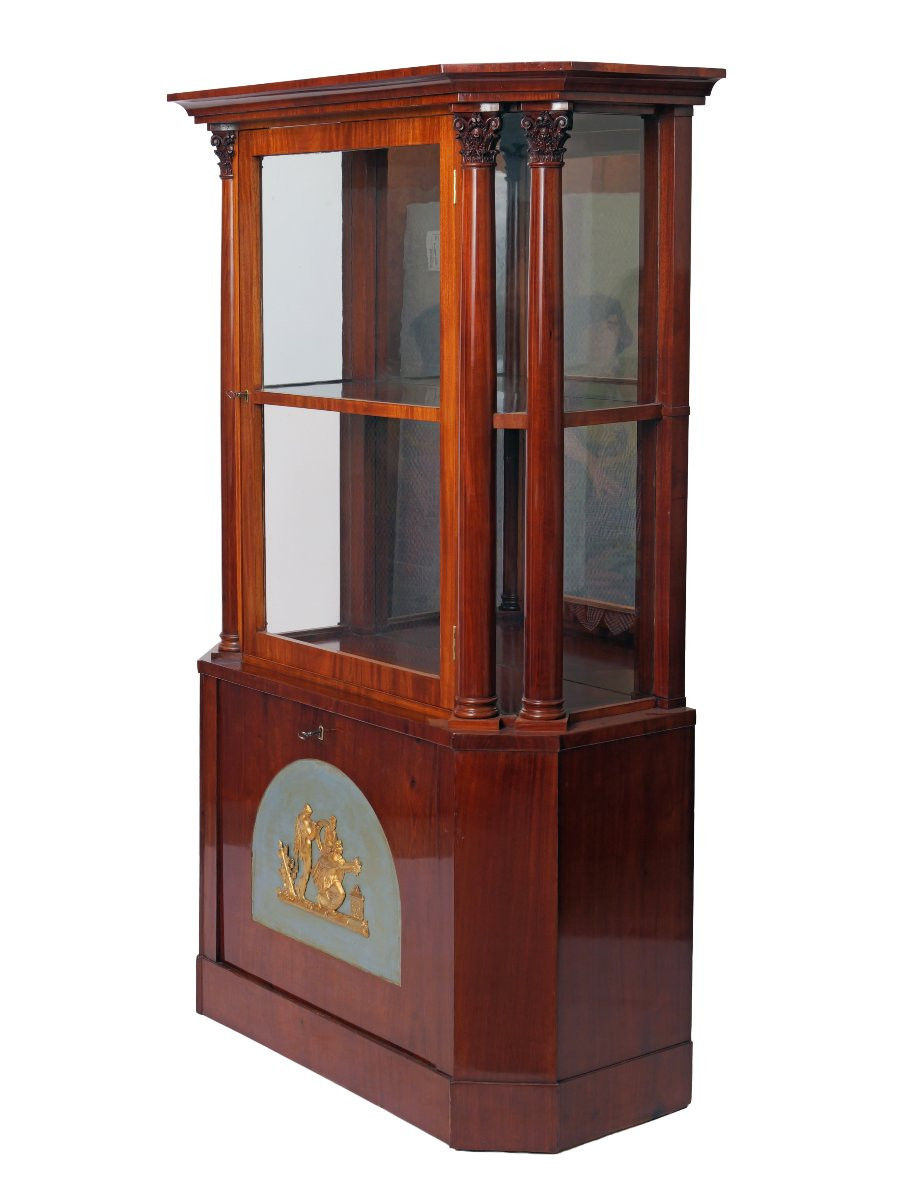
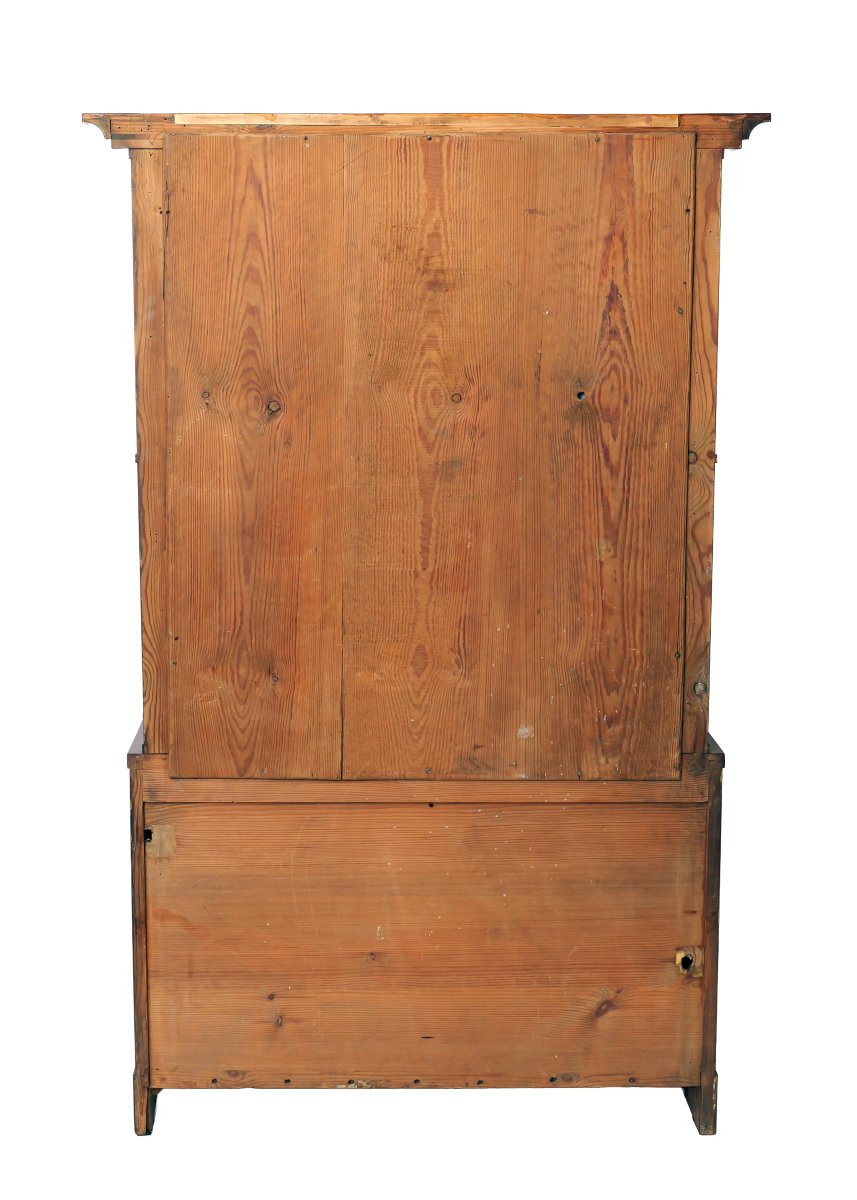
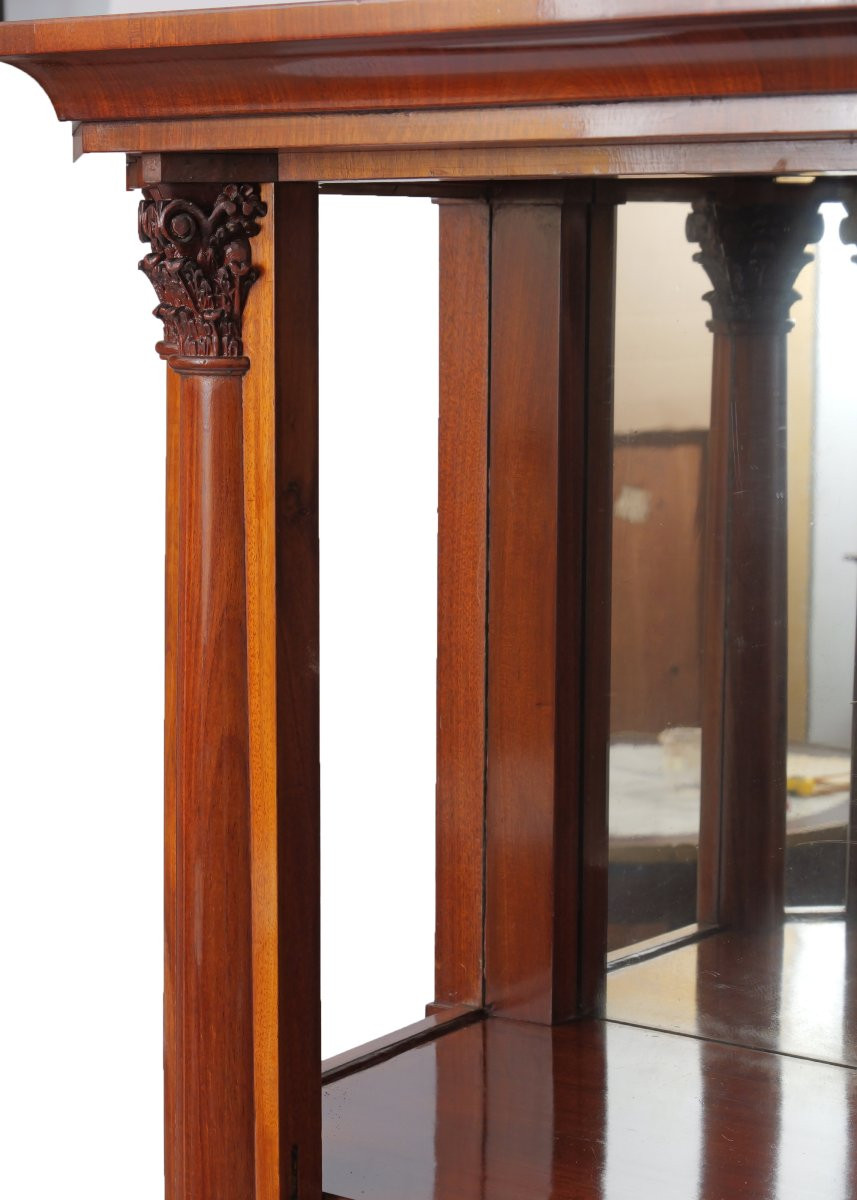
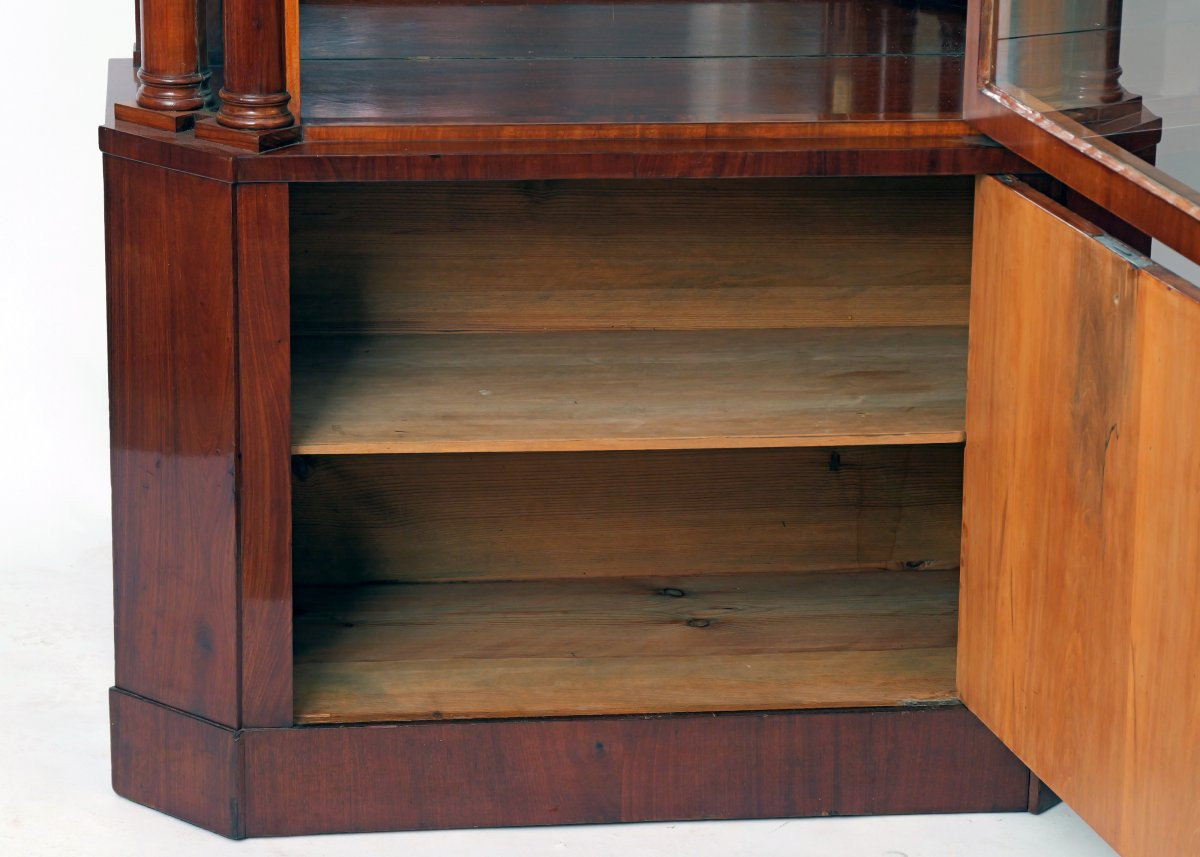
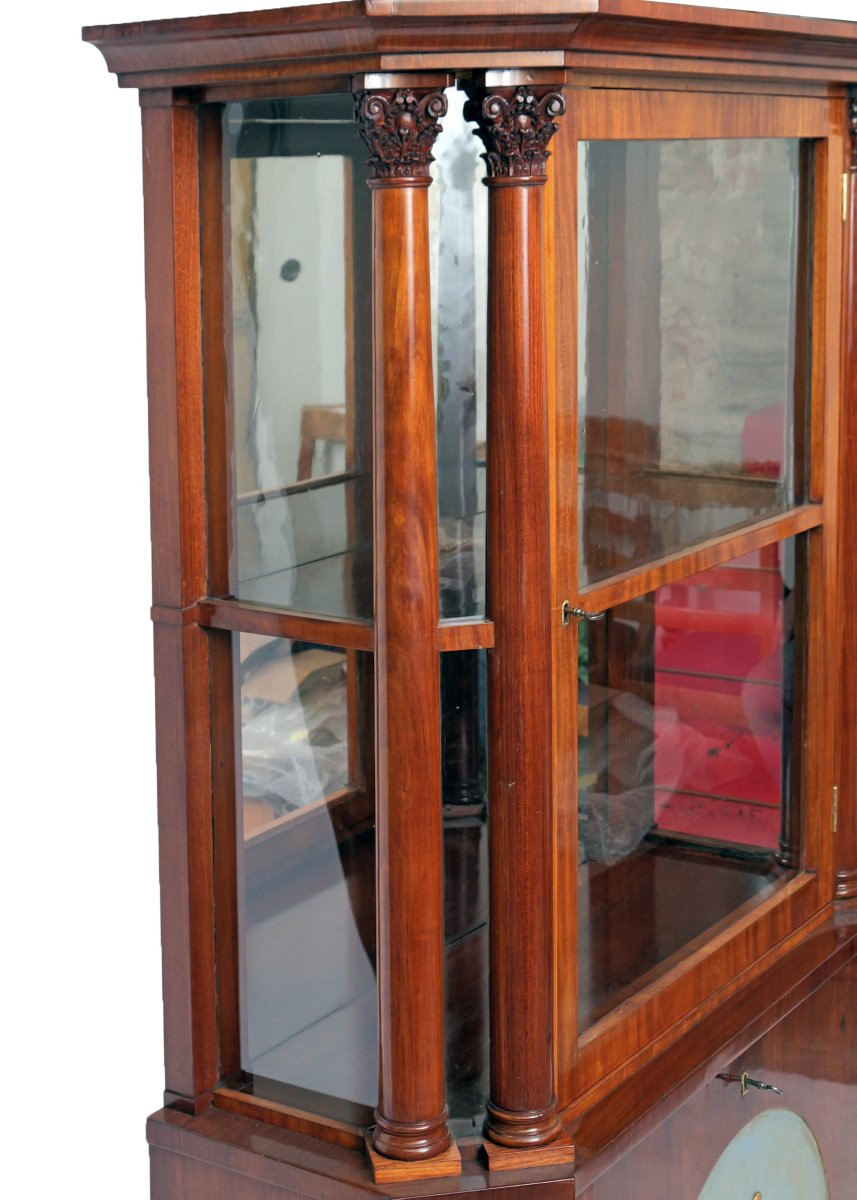
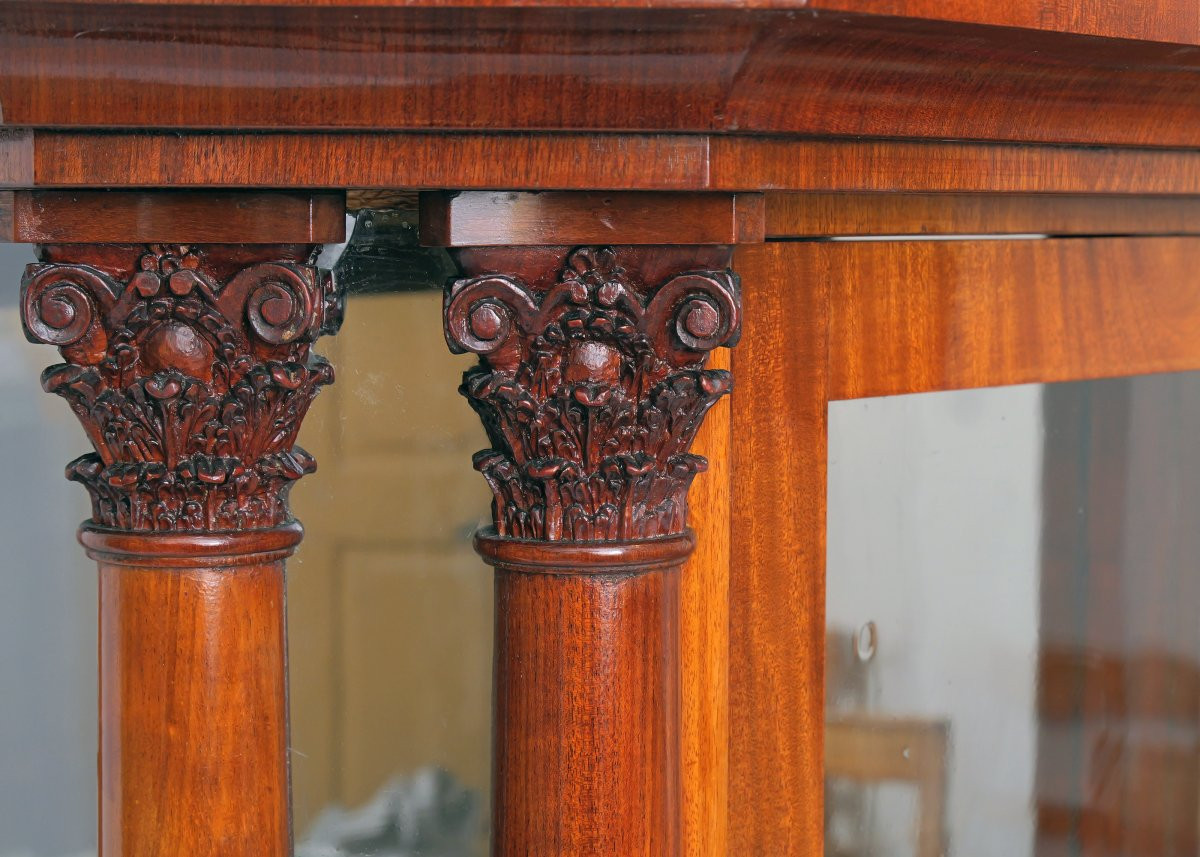
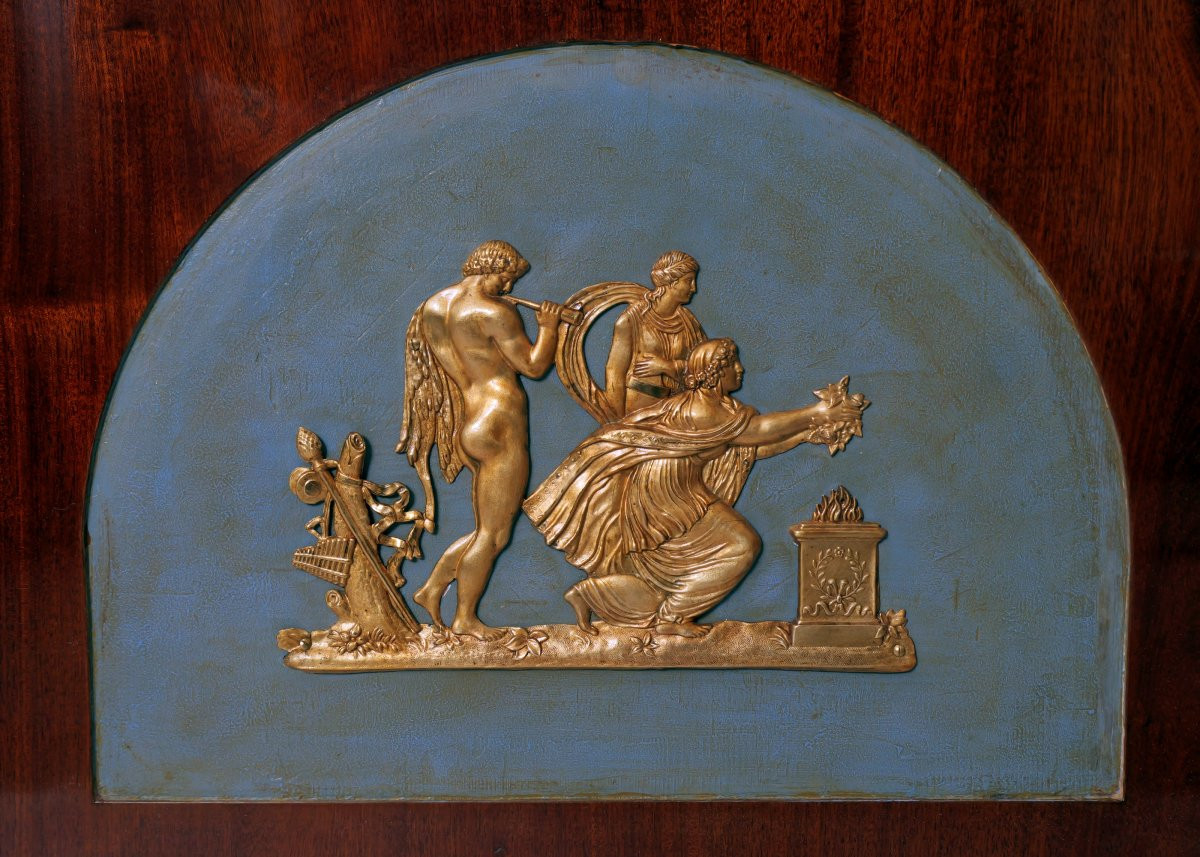
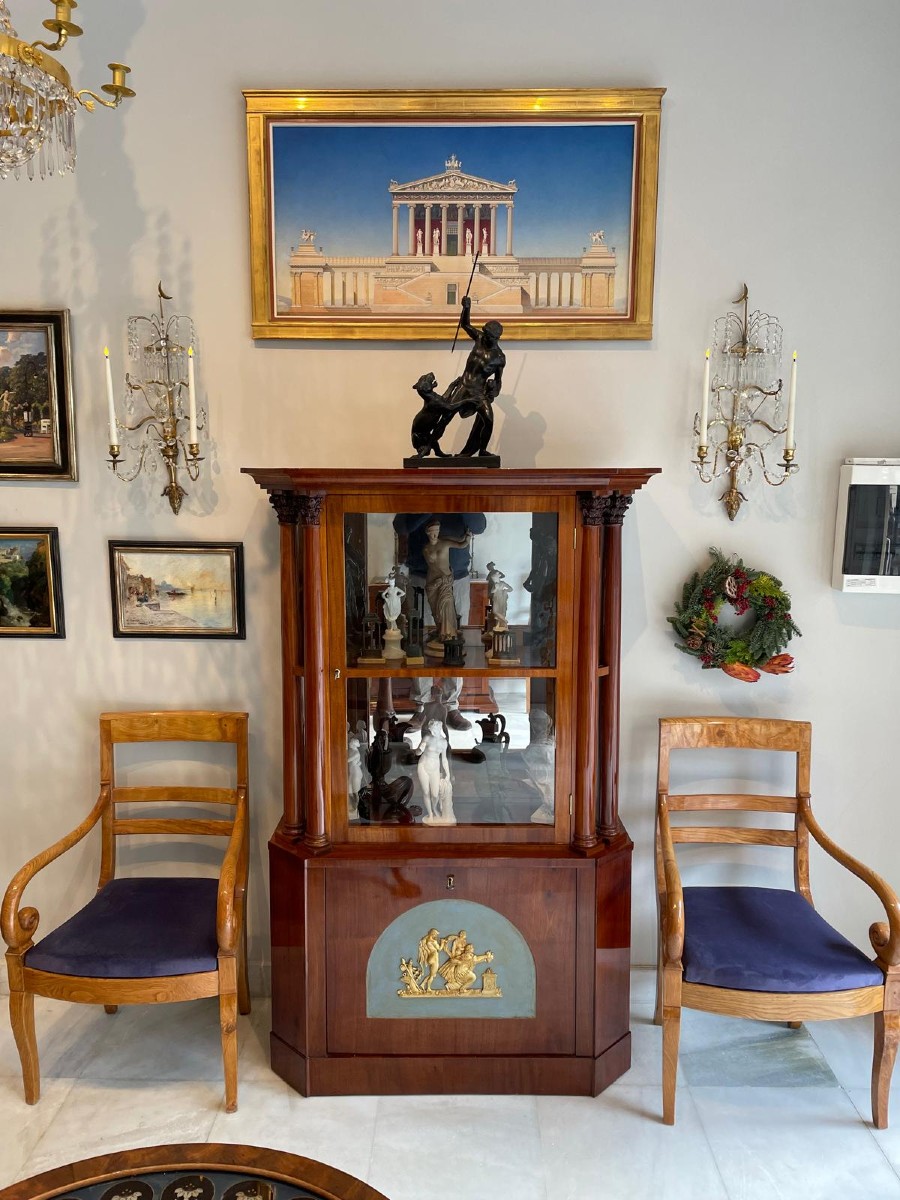
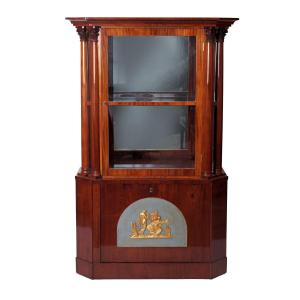


Tall display cabinet made of mahogany wood with a polished finish that highlights the straight, dark grain characteristic of this species. The upper part consists of a glass display case on three sides, with interior shelves and a mirrored back, flanked by four freestanding columns with smooth shafts and carved capitals, which emphasize the verticality of the piece. The top features a molded cornice with several levels. The lower part houses a closed section with a front door decorated with a large semicircular medallion in gilded bronze, applied on a blue background. The piece retains its original structure, with simple hardware and a wooden back with visible antique joints.
Made in Berlin around 1800, the display cabinet is a type of representative furniture intended for displaying porcelain, luxury objects, or scientific pieces, very common among the enlightened Prussian bourgeoisie. The choice of mahogany, a noble material reserved for high-end furniture, and the presence of gilded bronzes indicate a high-quality commission. The mirrored interior multiplies the light and enhances the objects on display, a common solution in specialized workshops in neoclassical Berlin. The hand-carved capitals reveal meticulous workmanship, while the bronze medallion on the front depicts a classically inspired scene, probably cast in a Berlin workshop close to the furniture manufacturer.
Berlin display cabinets from the late 18th and early 19th centuries combine Prussian rigor with the direct influence of French Neoclassicism. This piece shows that duality: on the one hand, the sobriety of straight lines and geometric shapes; on the other, the archaeological ornaments (Corinthian capitals, upper frieze, mythological scene in bronze) that refer to the decorative language of the early Empire. Its clear and monumental composition reflects the courtly taste of Frederick William III and the development of highly skilled local cabinetmaking. Within its typology, it is an outstanding example due to the quality of the mahogany, the carving of the columns, and the exceptional gilded bronze plaque that articulates the entire lower façade.
Explore similar pieces and discover your ideal find:
Vitrines, Display Cabinets