


René Seyssaud (1867-1952) Resting Under The Great Oaks
Artist: René Seyssaud (1867-1952)
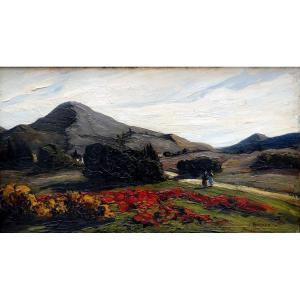
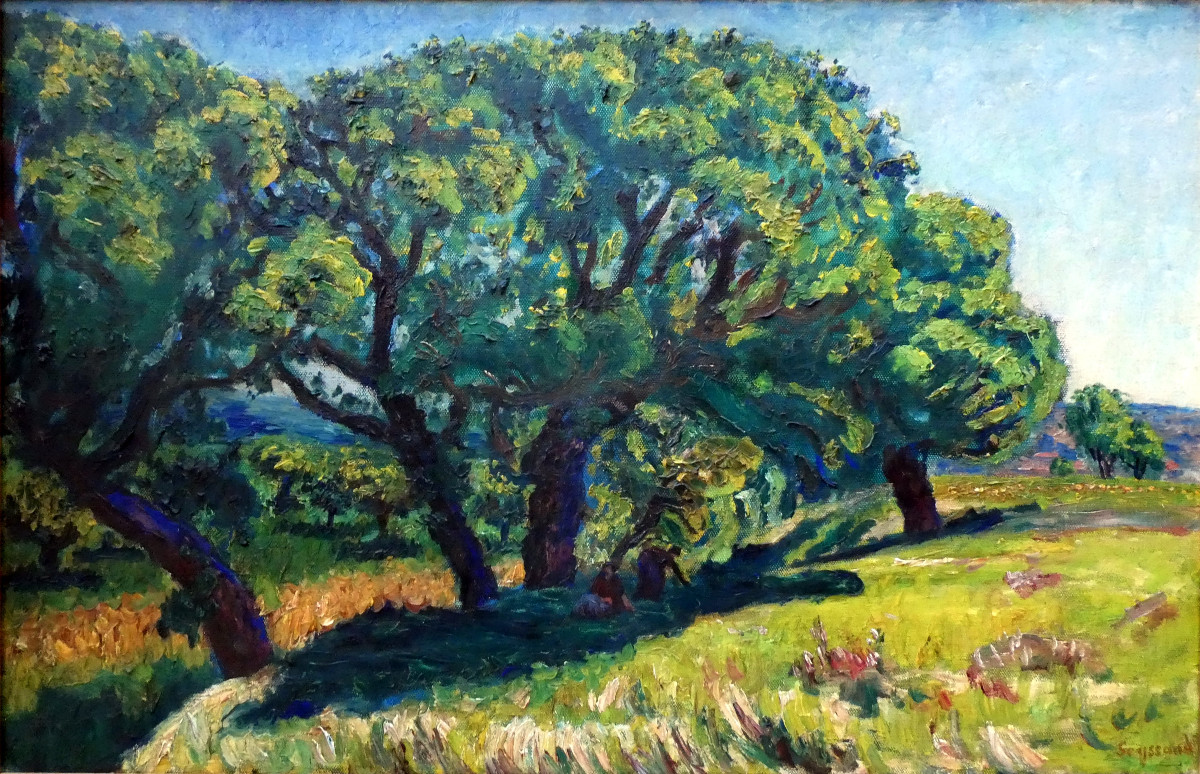
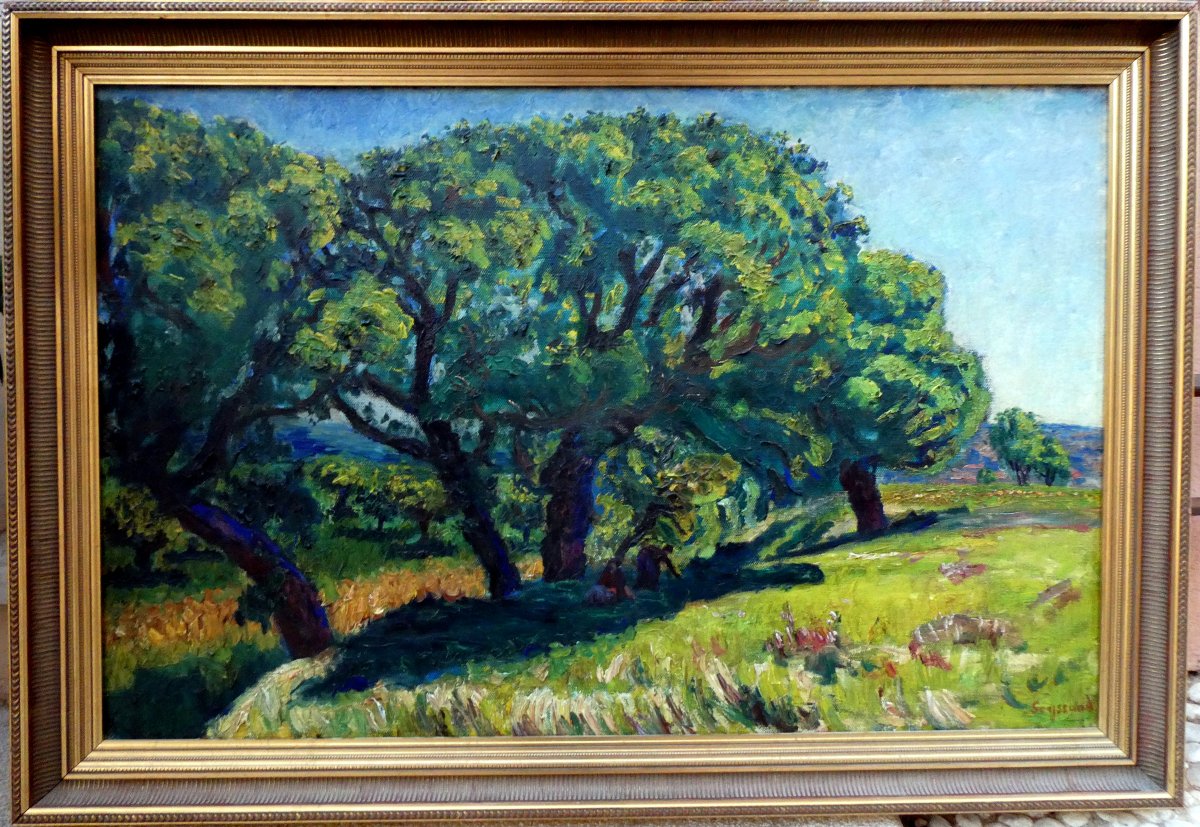
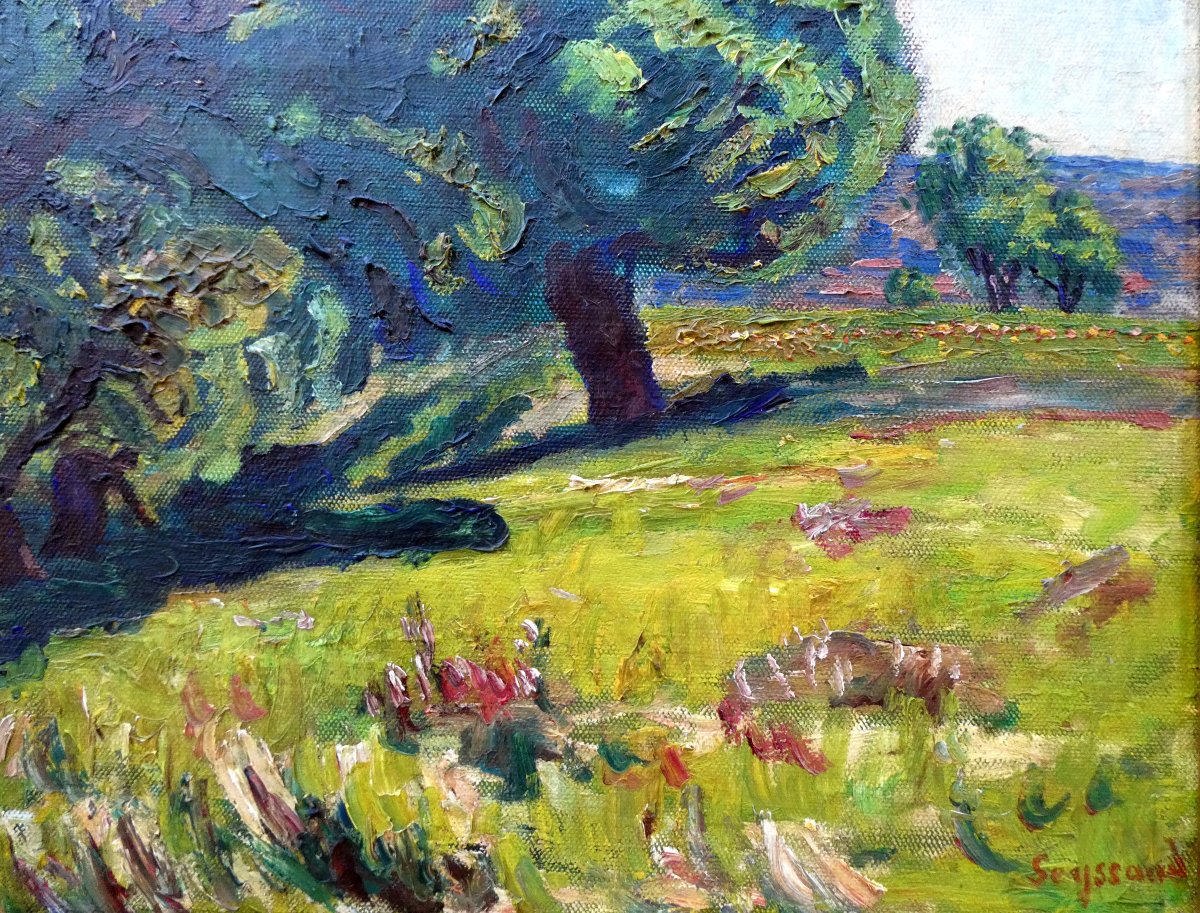
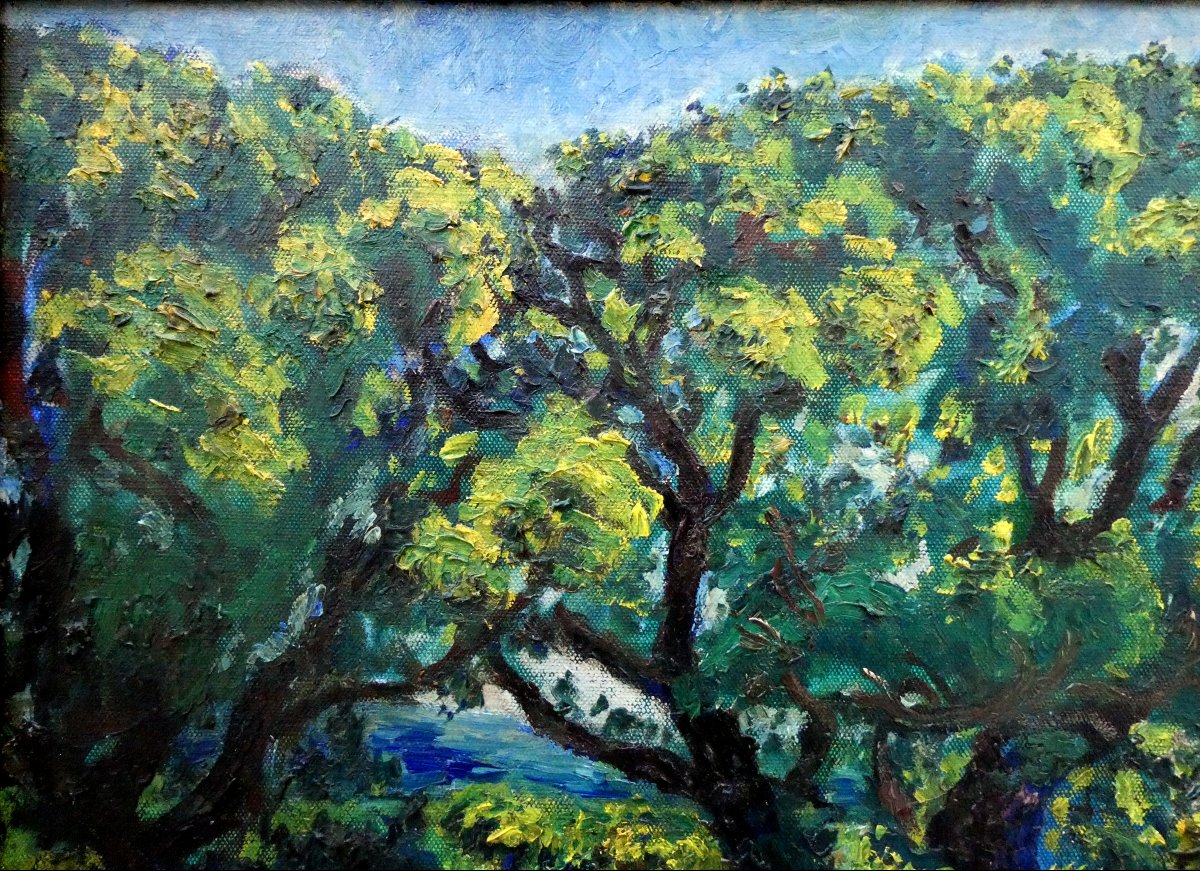
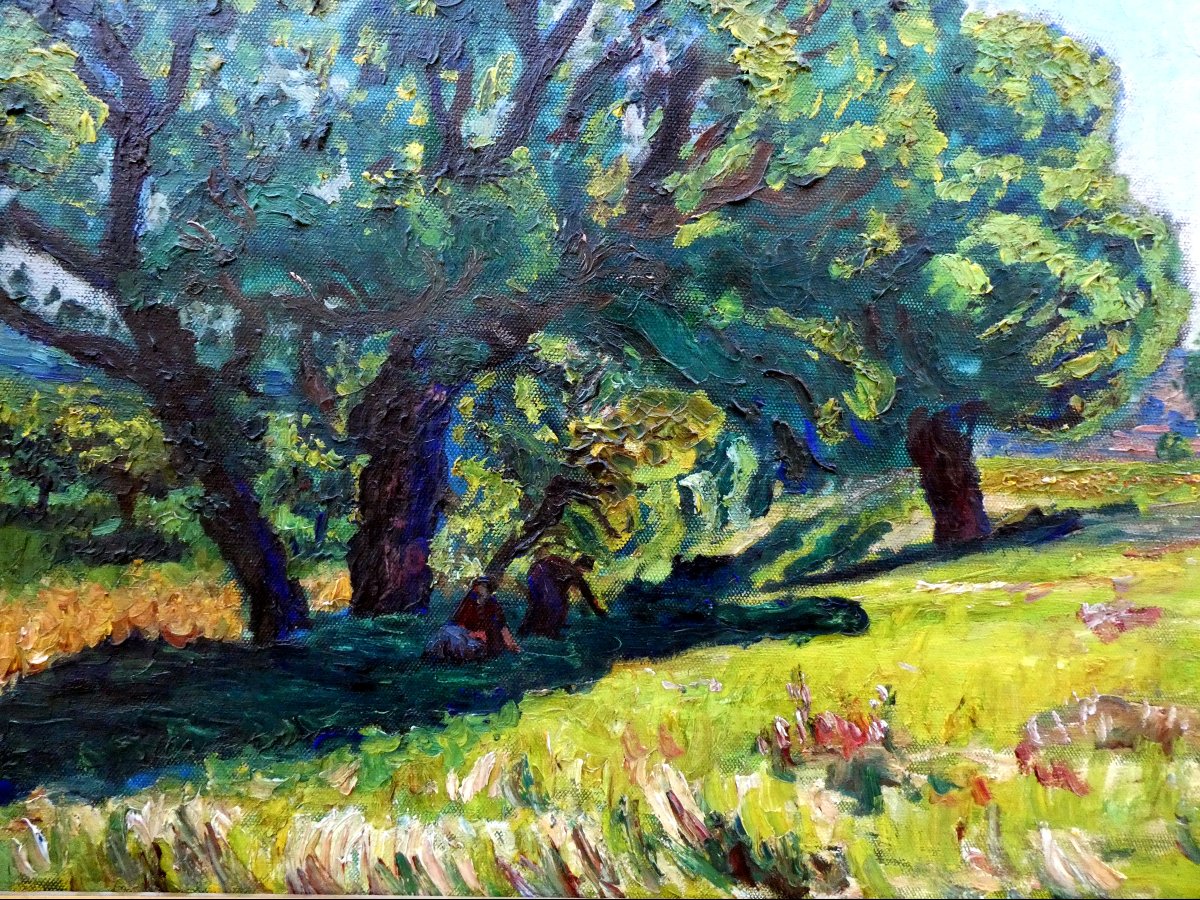
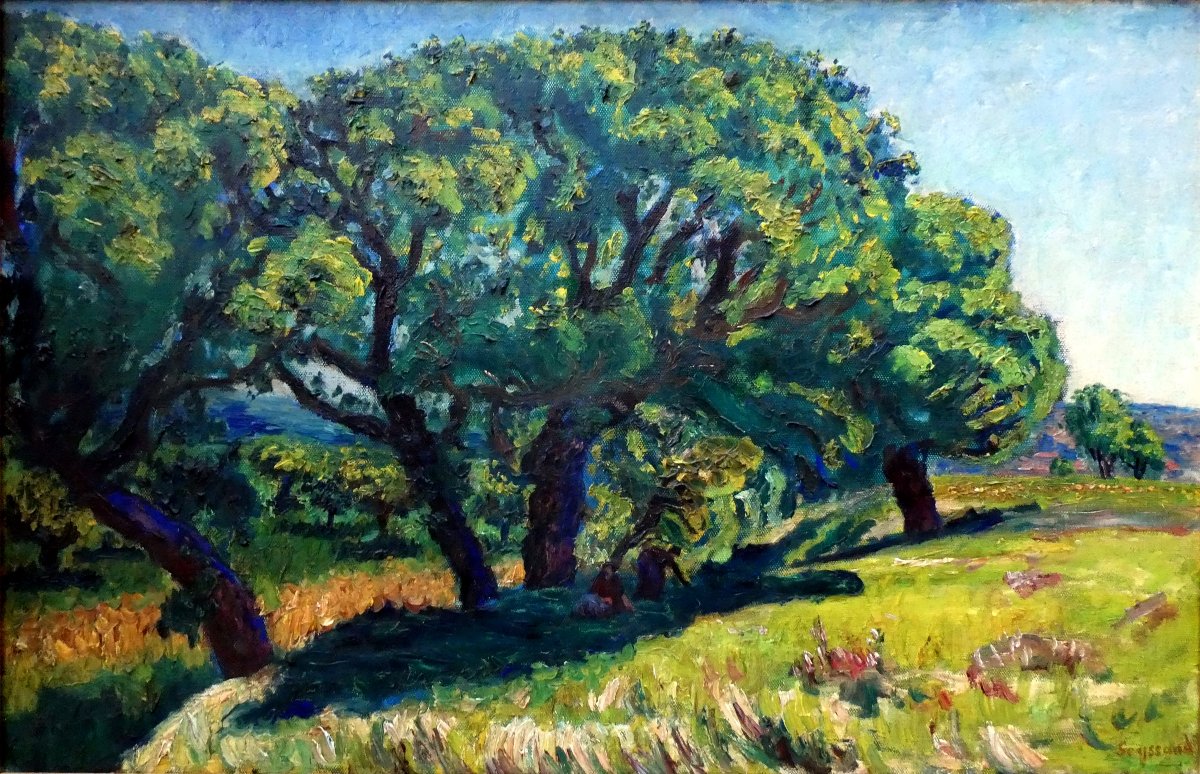
A master colorist and specialist in texture, René Seyssaud presents here a powerful and imposing work: large oak trees in a landscape near Mont Ventoux, most likely in Villes-sur-Auzon, where the artist spent his summers.
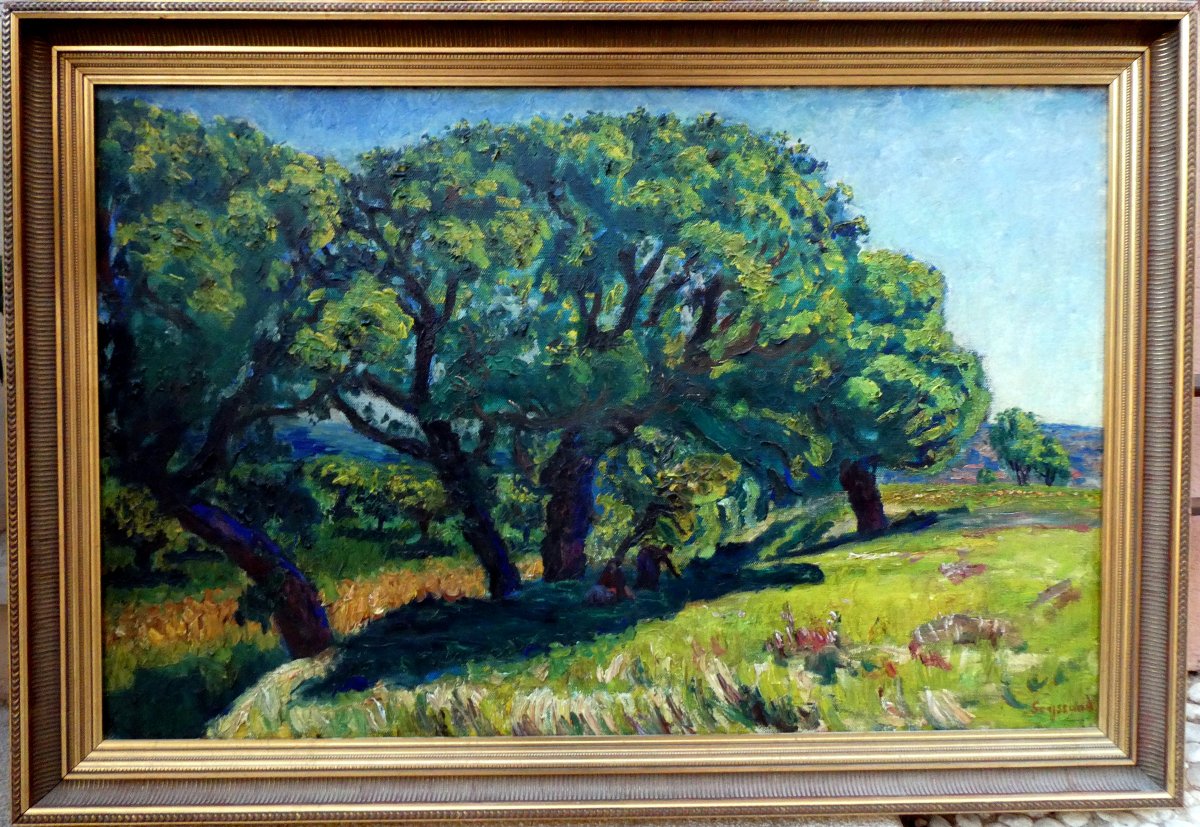
The painting, in its good original condition, is an oil on canvas and is presented in a simple gilt frame with fluting, measuring 79 cm x 114 cm, while the canvas itself measures 65 cm x 100 cm.
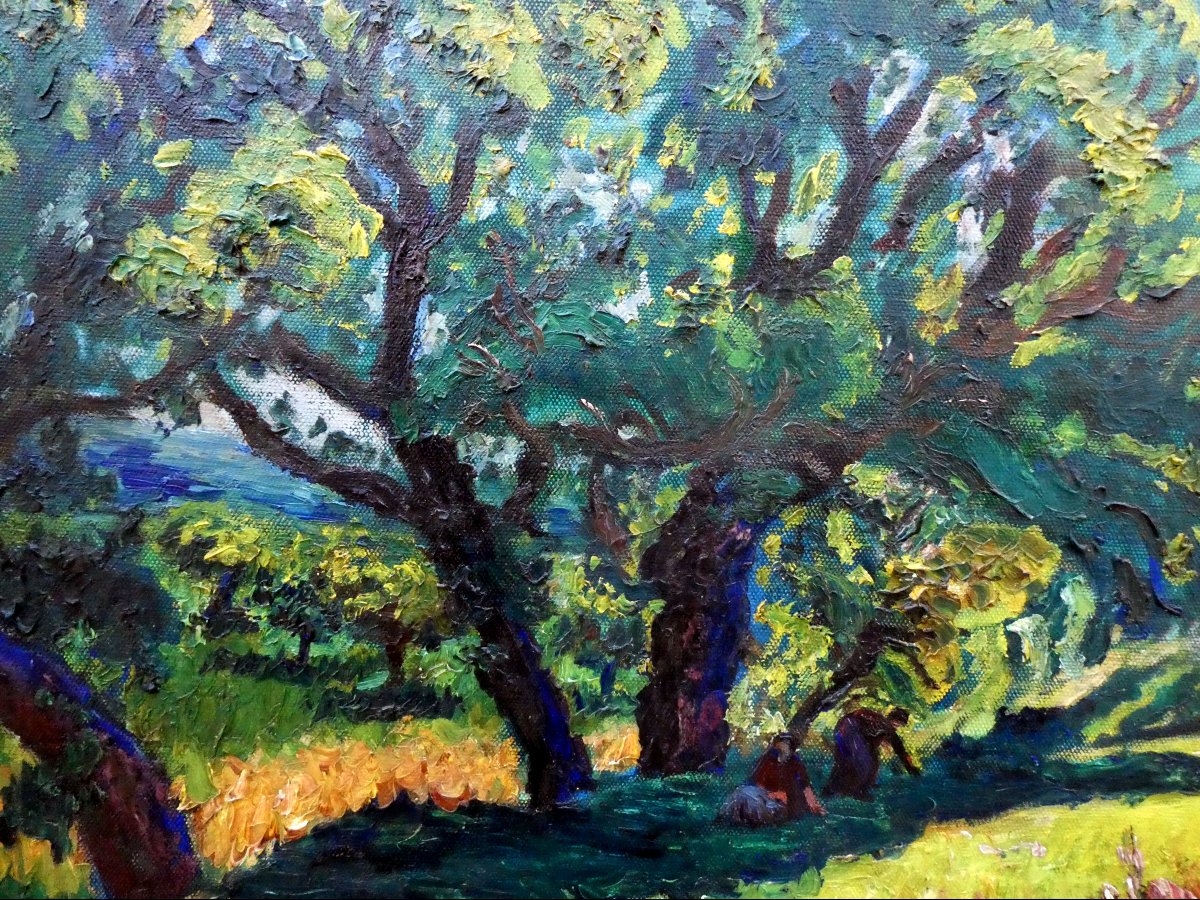
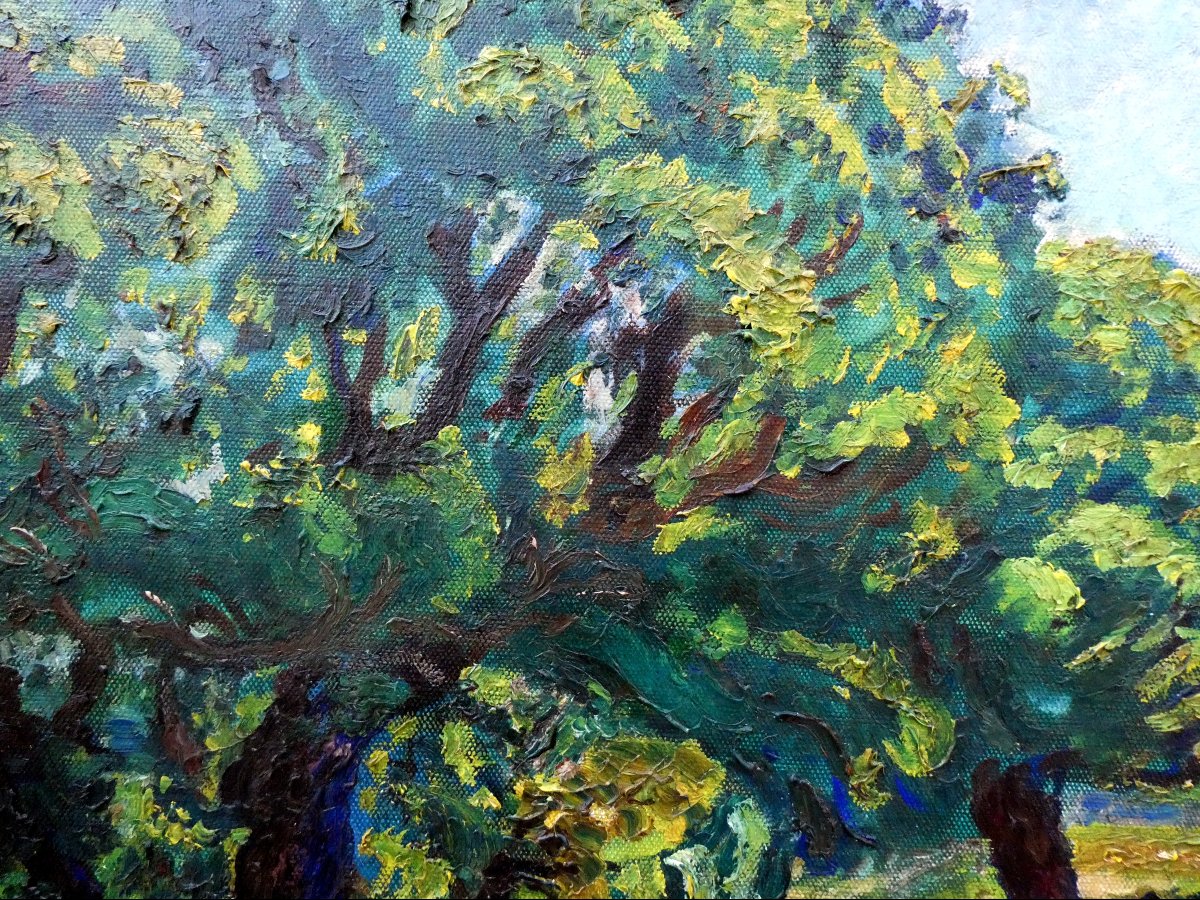
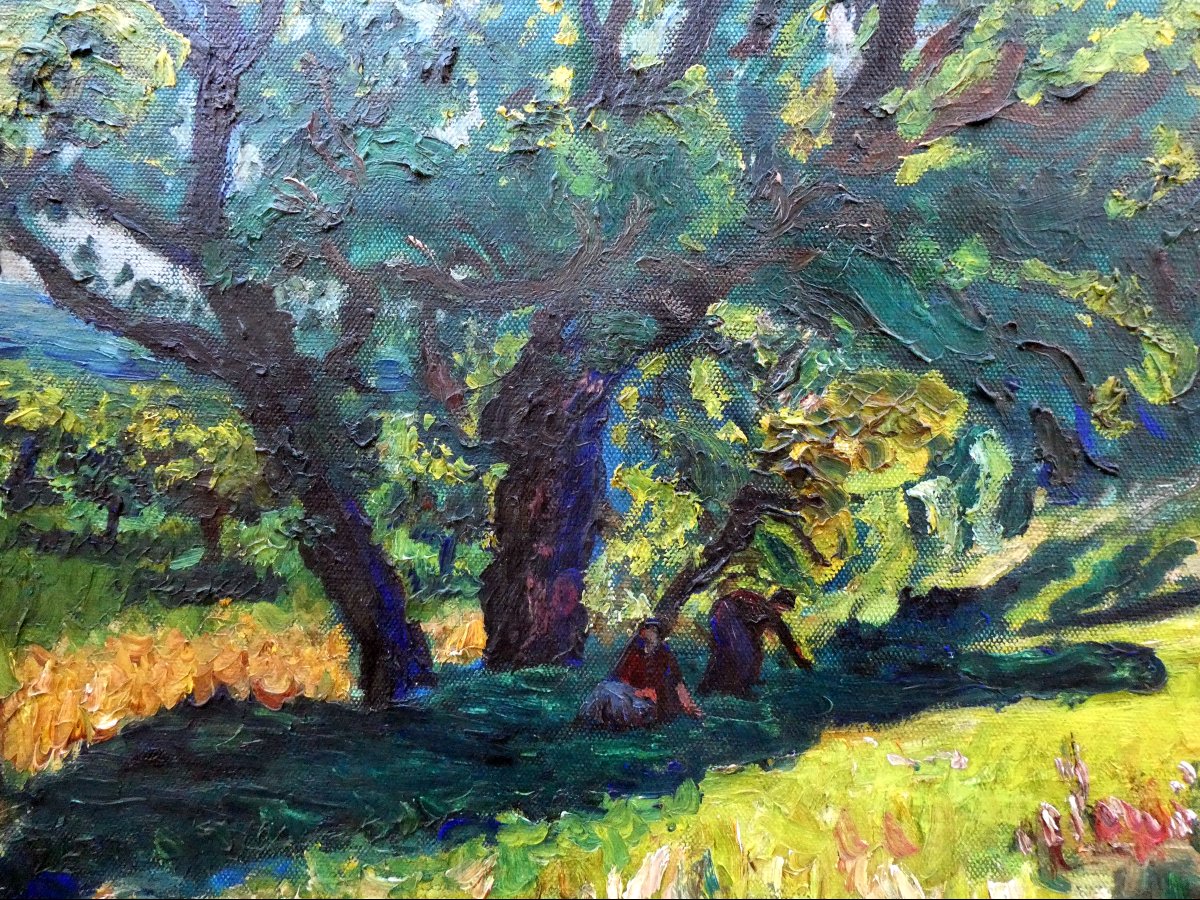
Executed in oil on canvas with a paint application that alternates with the texture of the support, it depicts two peasant women resting in the shade of trees in a springtime landscape.
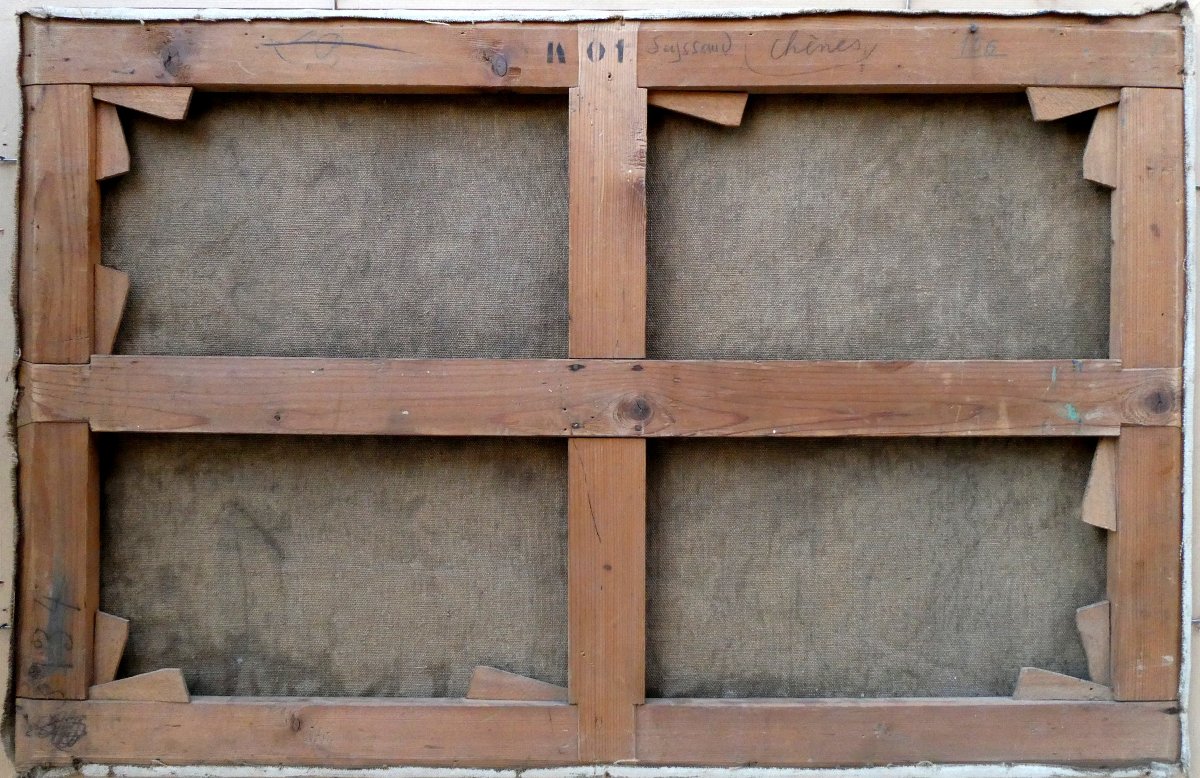
Countersigned, numbered 166, and titled "The Oaks" on the back, it is signed in the lower right corner.
A precursor of Fauvism and a member of the New School of Avignon, Seyssaud submitted works to the Salon des Indépendants and the Salon des Champs de Mars in 1892.
He exhibited at the Salon d'Automne from its inception, at the Parc de Bouteville in 1897, and at Vollard's gallery in 1899.
He achieved all the success he had hoped for. His art provoked the strongest reactions in the press, for it brought, as one critic of the time wrote, "an entirely new note." These, said another, speaking of his canvases, are spontaneous works that owe nothing to anyone and consequently should be appreciated by those who love the courage and energetic candor of a man who has had no master and wants no patron.
Vollard offered Seyssaud a contract, but out of loyalty to his friend and Marseilles art dealer, François Honnorat, he refused. In 1901, he exhibited annually at Bernheim Jeune's gallery.
Bernheim, like Vollard, offered to manage his interests.
Seyssaud preferred to reject this association, however beneficial it might be. After 1911, Seyssaud stopped exhibiting at Bernheim's gallery, choosing instead to exhibit with Rosemberg (1914), Druet (1924, 1927), Printz (1929), Georges Petit (1930), Javal and Boudeaix (1933), and Printz (1933). He exhibited in Marseille in 1905, 1907, 1920, 1921, 1922, 1928, 1947, 1949. In Avignon, Aix-en-Provence, Tunis, etc... In America in 1947. Seyssaud participated in the official exhibitions of Berlin (1903), Amsterdam (1912), Barcelona (1917, 1929), New York (1929), Wiesbaden (1921), Ghent (1922), Stockholm (1923), Geneva (1923, 1942), Turin (1951), Marseille Colonial Exhibition (1922), Paris International Exhibition (1937), Marseille Prefecture (1949), Menton Biennale (1951), Cantini Museum (1954), Zurich (1955), Galliera Museum (1956), Oxford, London, Edinburgh (1957), Aix-en-Provence Festival (1957). His work was acquired by the State for Luxembourg (1903, 1904, 1921, 1927, 1929, 1930). He also acquired works for the Museums of Marseille (1908, 1919), Lyon (1924), Avignon (1920), the Prefecture of Bouches-du-Rhône (1933), the Town Hall of Saint-Chamas (1909), and the National Museum of Modern Art (1957). His work is represented at the Petit Palais, the Museum of Modern Art, the Léon Dierx Museum (Réunion Island), and in Moscow. His works are also found in Dijon, Nîmes, Aix-en-Provence, Arles, Grenoble, Montpellier, Albi, and other cities. He received various medals and awards, including the Gold Medal at the 1937 International Exposition. Paris, and the city of Marseille in 1947. The Grand Prix des Provinces Françaises in 1951, at the Menton Biennale. Seyssaud had been an Officer of the Legion of Honour since 1947. Among the posthumous events were retrospectives at the Musée Calvet (1953), Musée Cantini (1954), Salon d'Automne, Château d'Arbon in Switzerland (1955), and Musée Galliera. His paintings are included in the collections of Gustave Geffroy, Frantz Jourdain, Vollard, Georges Feydeau, Sacha Guitry, Armand Dayot, Lucien Poincaré, Maurice Sarraut, Albert Sarraut, Paulhan, Bernheim, Estaunié, Descaves, Morsolf, Fernand Bouisson, Drouant, André Marie, the Marquis de Biron, the Princess de la Tour d'Auvergne, the Princess de Wagram, etc.
The painting, in its good original condition, is an oil on canvas and is presented in a simple gilt frame with fluting, measuring 79 cm x 114 cm, while the canvas itself measures 65 cm x 100 cm.
Executed in oil on canvas with a paint application that alternates with the texture of the support, it depicts two peasant women resting in the shade of trees in a springtime landscape.
Countersigned, numbered 166, and titled "The Oaks" on the back, it is signed in the lower right corner.
A precursor of Fauvism and a member of the New School of Avignon, Seyssaud submitted works to the Salon des Indépendants and the Salon des Champs de Mars in 1892.
He exhibited at the Salon d'Automne from its inception, at the Parc de Bouteville in 1897, and at Vollard's gallery in 1899.
He achieved all the success he had hoped for. His art provoked the strongest reactions in the press, for it brought, as one critic of the time wrote, "an entirely new note." These, said another, speaking of his canvases, are spontaneous works that owe nothing to anyone and consequently should be appreciated by those who love the courage and energetic candor of a man who has had no master and wants no patron.
Vollard offered Seyssaud a contract, but out of loyalty to his friend and Marseilles art dealer, François Honnorat, he refused. In 1901, he exhibited annually at Bernheim Jeune's gallery.
Bernheim, like Vollard, offered to manage his interests.
Seyssaud preferred to reject this association, however beneficial it might be. After 1911, Seyssaud stopped exhibiting at Bernheim's gallery, choosing instead to exhibit with Rosemberg (1914), Druet (1924, 1927), Printz (1929), Georges Petit (1930), Javal and Boudeaix (1933), and Printz (1933). He exhibited in Marseille in 1905, 1907, 1920, 1921, 1922, 1928, 1947, 1949. In Avignon, Aix-en-Provence, Tunis, etc... In America in 1947. Seyssaud participated in the official exhibitions of Berlin (1903), Amsterdam (1912), Barcelona (1917, 1929), New York (1929), Wiesbaden (1921), Ghent (1922), Stockholm (1923), Geneva (1923, 1942), Turin (1951), Marseille Colonial Exhibition (1922), Paris International Exhibition (1937), Marseille Prefecture (1949), Menton Biennale (1951), Cantini Museum (1954), Zurich (1955), Galliera Museum (1956), Oxford, London, Edinburgh (1957), Aix-en-Provence Festival (1957). His work was acquired by the State for Luxembourg (1903, 1904, 1921, 1927, 1929, 1930). He also acquired works for the Museums of Marseille (1908, 1919), Lyon (1924), Avignon (1920), the Prefecture of Bouches-du-Rhône (1933), the Town Hall of Saint-Chamas (1909), and the National Museum of Modern Art (1957). His work is represented at the Petit Palais, the Museum of Modern Art, the Léon Dierx Museum (Réunion Island), and in Moscow. His works are also found in Dijon, Nîmes, Aix-en-Provence, Arles, Grenoble, Montpellier, Albi, and other cities. He received various medals and awards, including the Gold Medal at the 1937 International Exposition. Paris, and the city of Marseille in 1947. The Grand Prix des Provinces Françaises in 1951, at the Menton Biennale. Seyssaud had been an Officer of the Legion of Honour since 1947. Among the posthumous events were retrospectives at the Musée Calvet (1953), Musée Cantini (1954), Salon d'Automne, Château d'Arbon in Switzerland (1955), and Musée Galliera. His paintings are included in the collections of Gustave Geffroy, Frantz Jourdain, Vollard, Georges Feydeau, Sacha Guitry, Armand Dayot, Lucien Poincaré, Maurice Sarraut, Albert Sarraut, Paulhan, Bernheim, Estaunié, Descaves, Morsolf, Fernand Bouisson, Drouant, André Marie, the Marquis de Biron, the Princess de la Tour d'Auvergne, the Princess de Wagram, etc.
8 000 €
Period: 20th century
Style: Other Style
Condition: Excellent condition
Material: Oil painting
Length: 100 cm
Height: 65 cm
Reference (ID): 1663549
Availability: In stock
Print