THIS OBJECT WAS SOLD
Rare Pair Of Gilt Bronze Candlesticks/flaps For Empress Josephine At The Rohan Palace
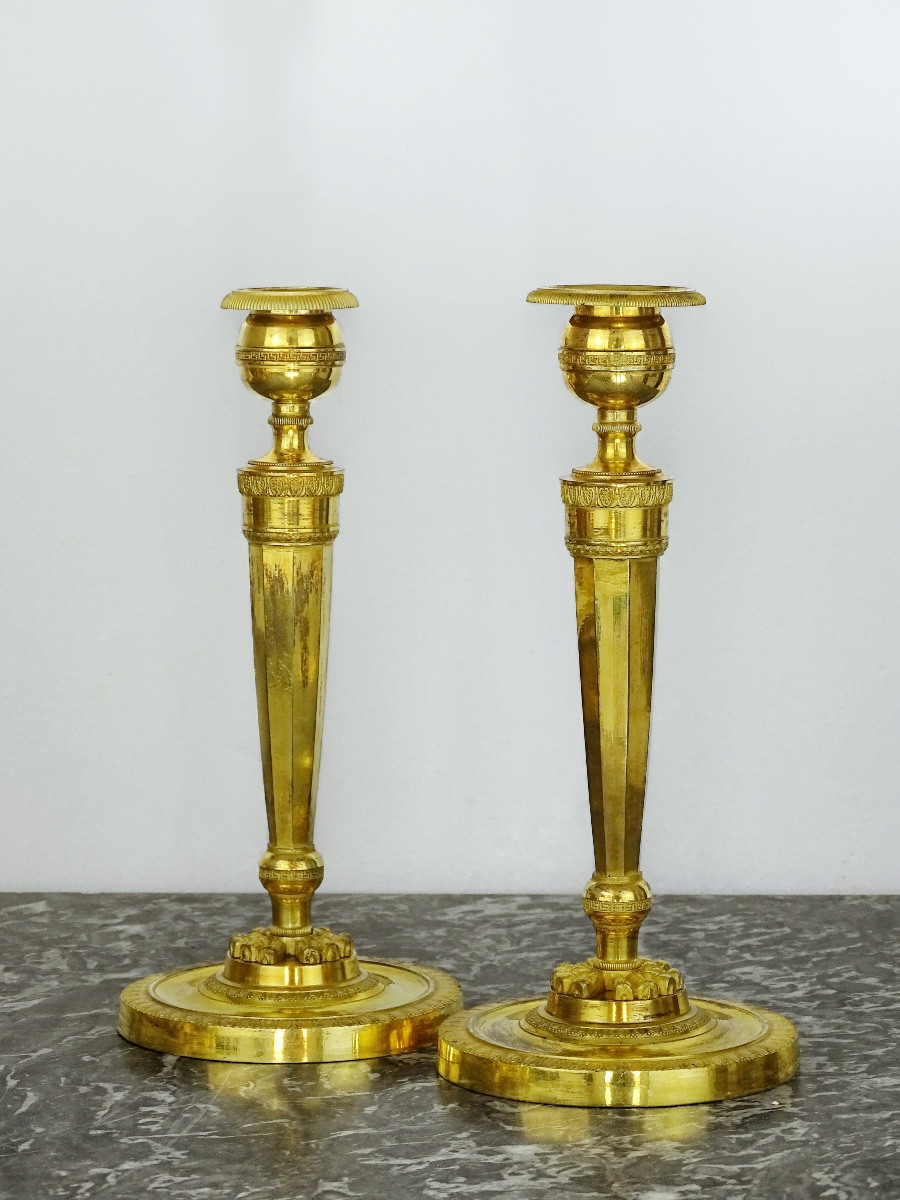


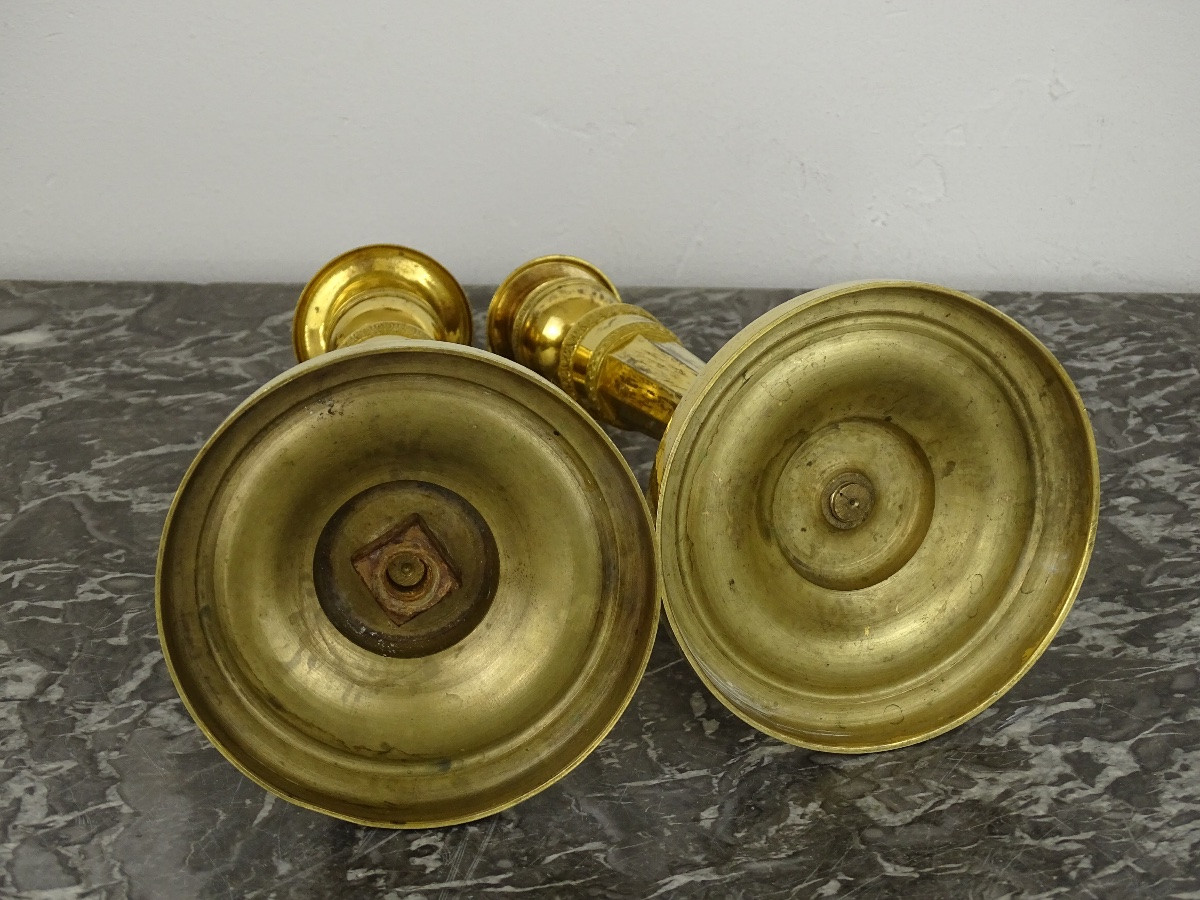
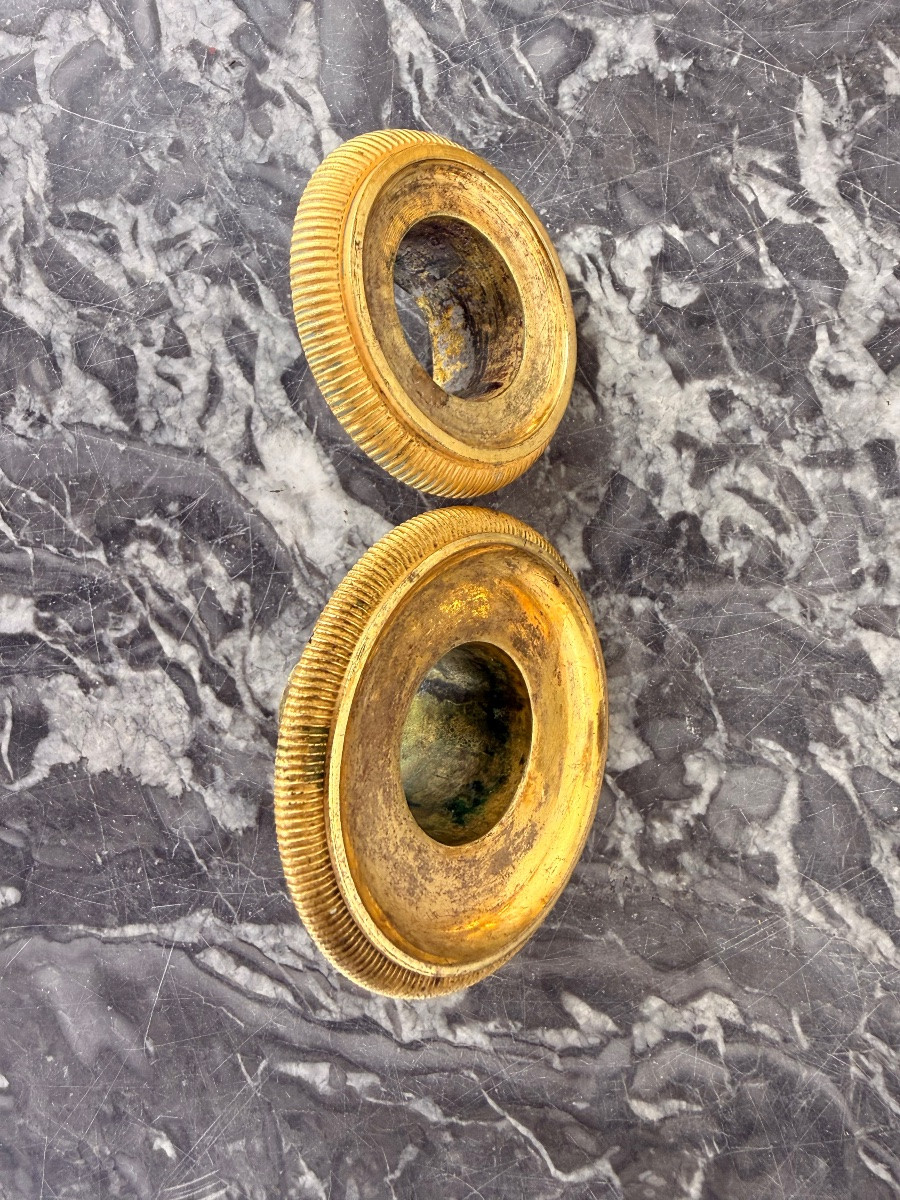


Pair of Empire candlesticks, “Empress’s model,” Paris, circa 1795–1805. This rare pair of mercury-gilt bronze candlesticks belongs to the prestigious “faceted stem with claws” model, one of the most emblematic types of the transition from the Directory to the Empire. This model, with its remarkable architectural rigor, is precisely the one documented in the archives of the Crown Furniture Repository for Empress Josephine’s apartments in the Rohan Palace in Strasbourg, delivered in 1809–1810 by the upholsterer Darrac. Several identical pairs, described as "stem with face and claws chiseled matte gilt", were intended for the Empress's salon and bedroom, before being transferred to the Grand Trianon in the 1830s. The candelabra that we present faithfully reproduce the characteristics of these imperial deliveries: circular base supported by powerful lion's claws, foot decorated with a beaded frieze, faceted shaft of great geometric purity, vase-shaped socket with a strictly neoclassical design. Their slender silhouette, focused on the balance of volumes and the precision of proportions, fits perfectly within the aesthetic defined by Percier and Fontaine, whose models guided the creation of Parisian bronze workers at the time. The quality of the chasing, with its nervous finesse, as well as the mercury gilding in warm tones, testify to a work originating from a great Parisian workshop, attributable to masters such as Claude Galle or André-Antoine Ravrio, both major suppliers to the Imperial Furniture Repository under the First Empire. The pair is complemented by two candle holders: one original, the other antique and perfectly matching, ensuring complete visual harmony when displayed together. In excellent condition, with authentic gilding enhanced by the noble patina of their age, these candlesticks exemplify the most elegant and masterful work produced in Paris at the turn of the 19th century. Distinguished collector's items, immediately recognizable as a model linked to imperial decorative imagery, they will appeal to both art bronze enthusiasts and collectors of historical furniture.
Explore similar pieces and discover your ideal find:
Candlesticks