THIS OBJECT WAS SOLD
Phurbu Tantric Buddhism (vajrayana), Tibet, Late 19th Century.

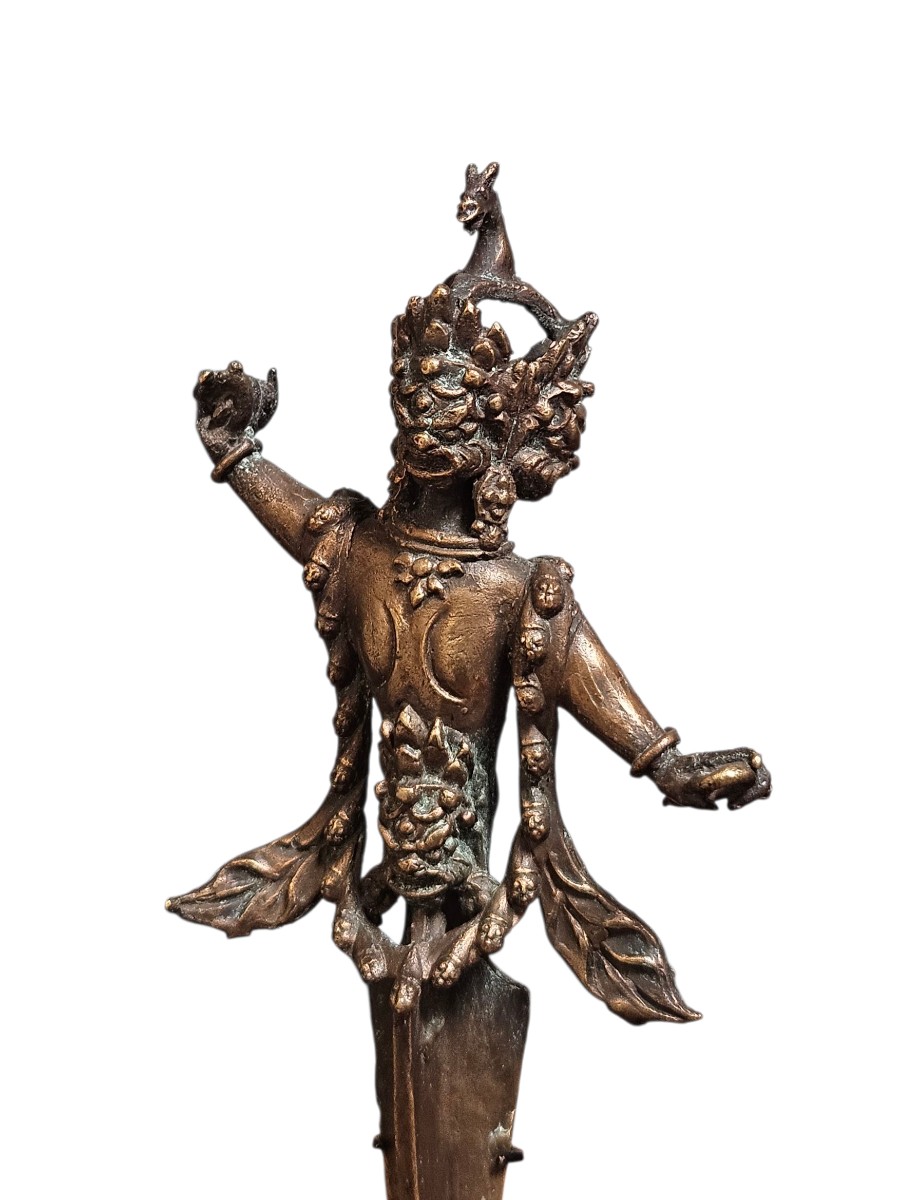
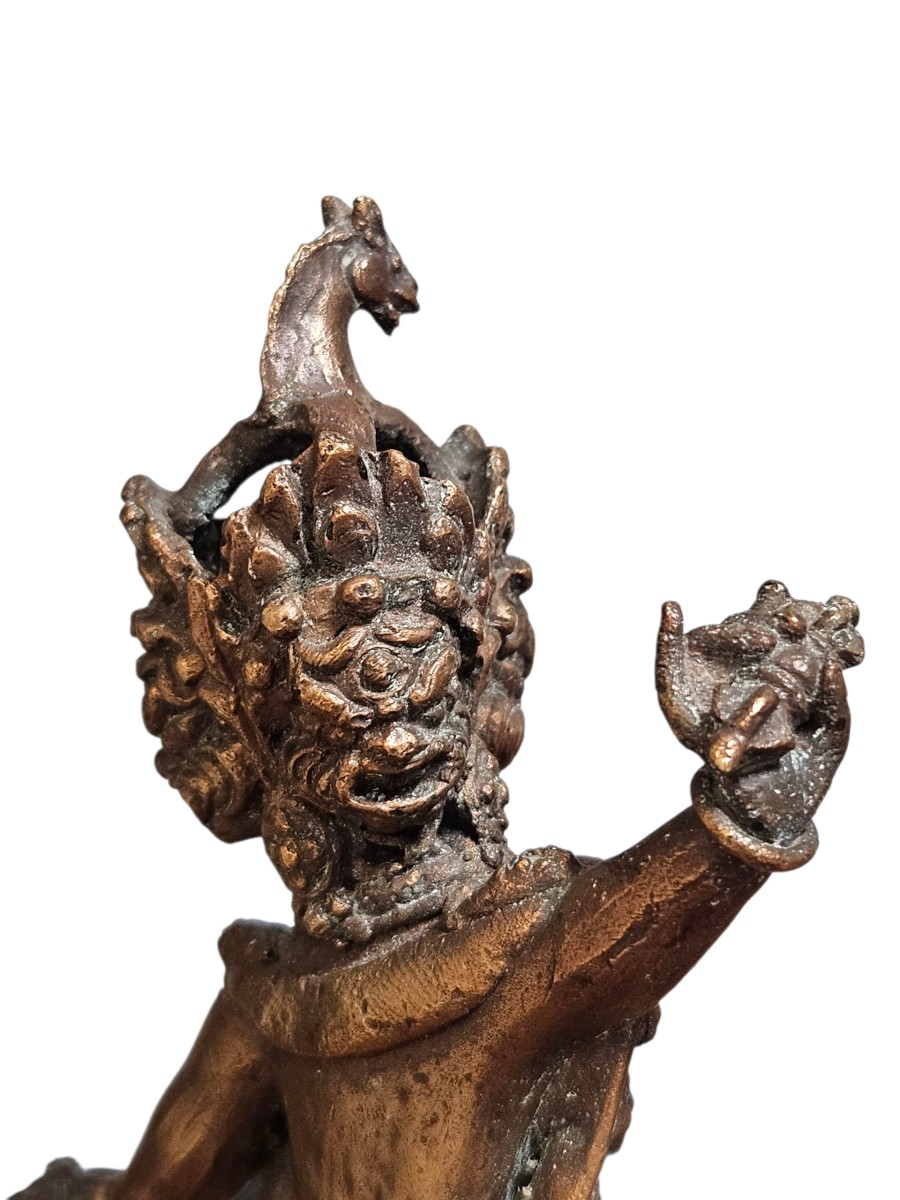
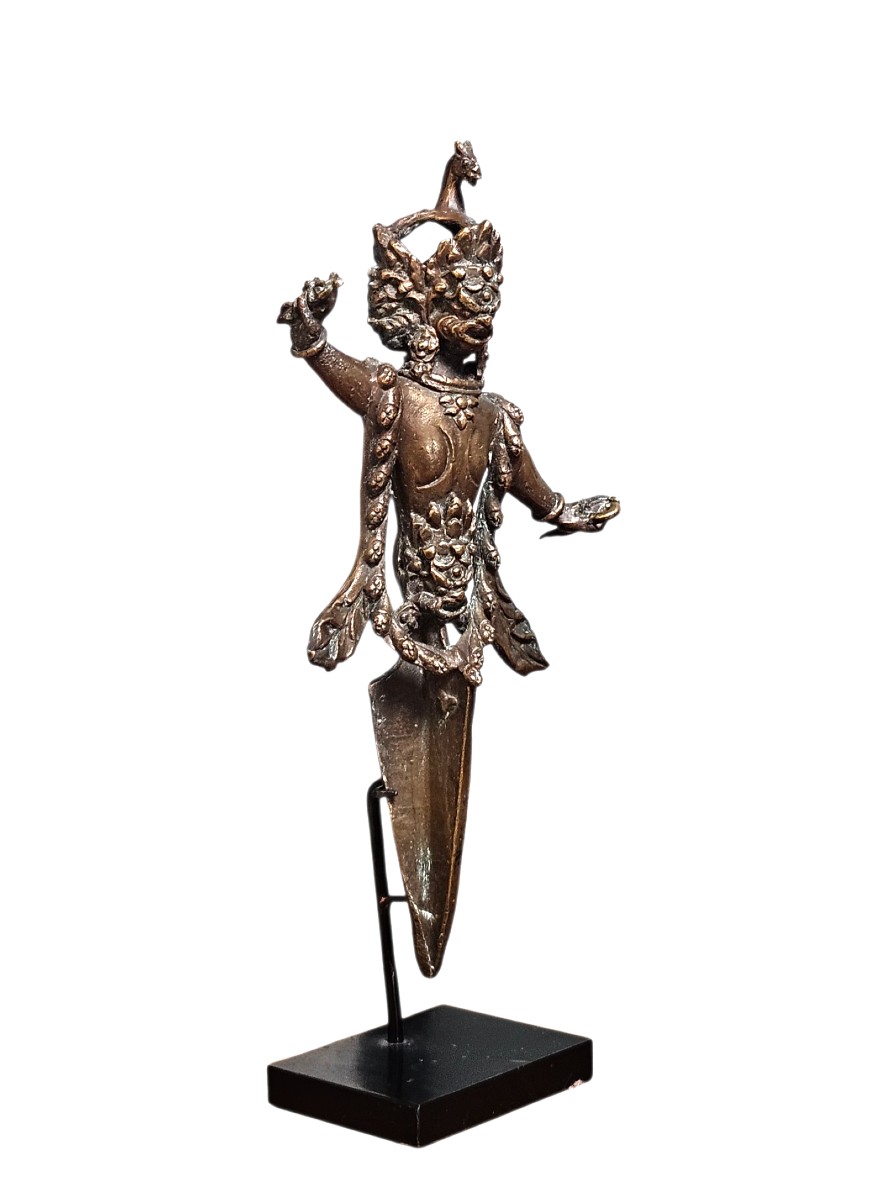
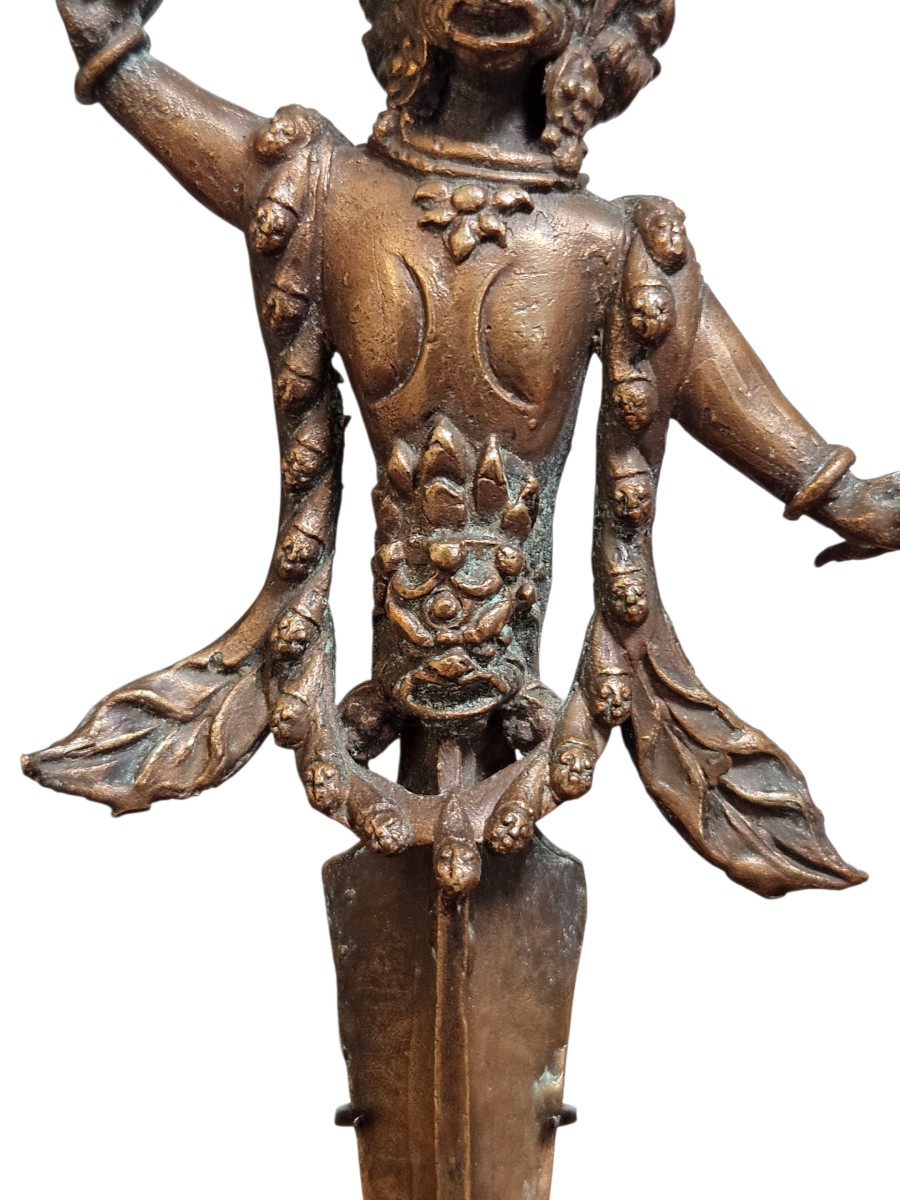
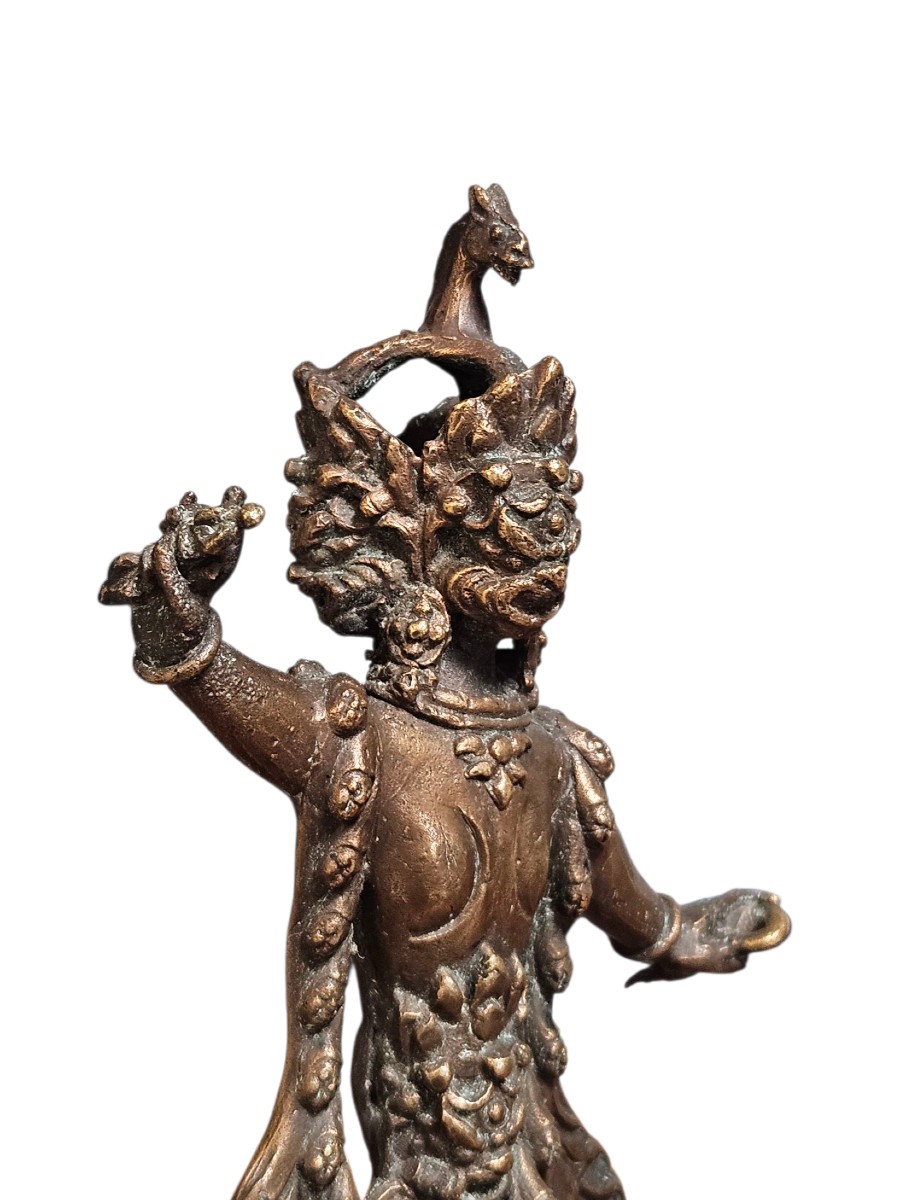

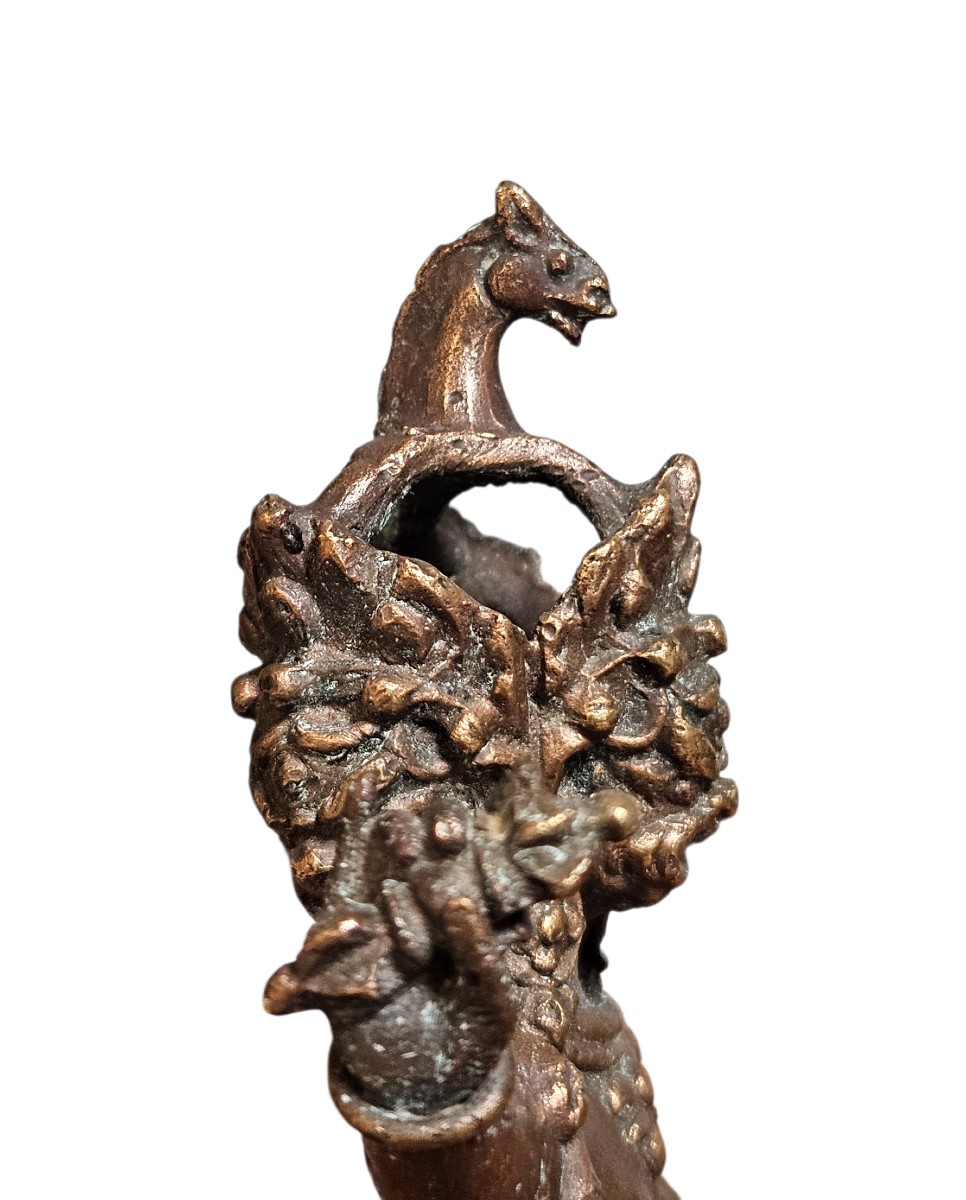
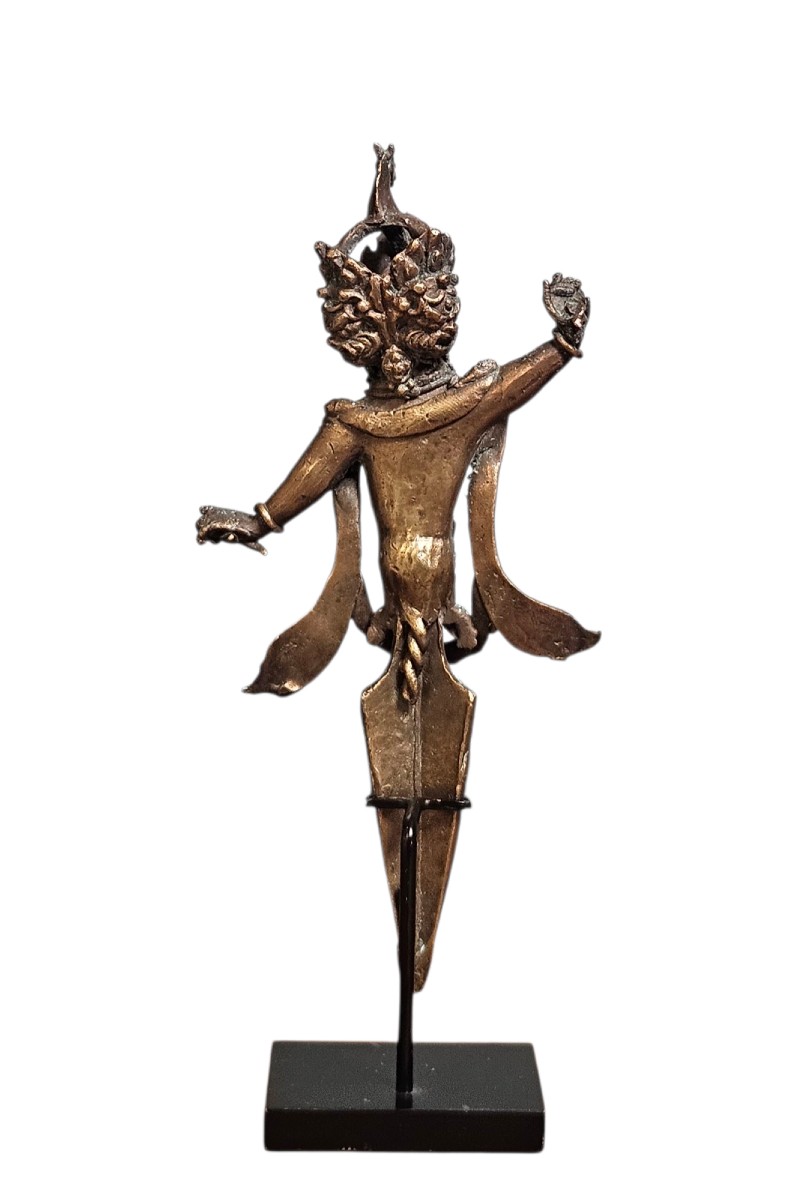

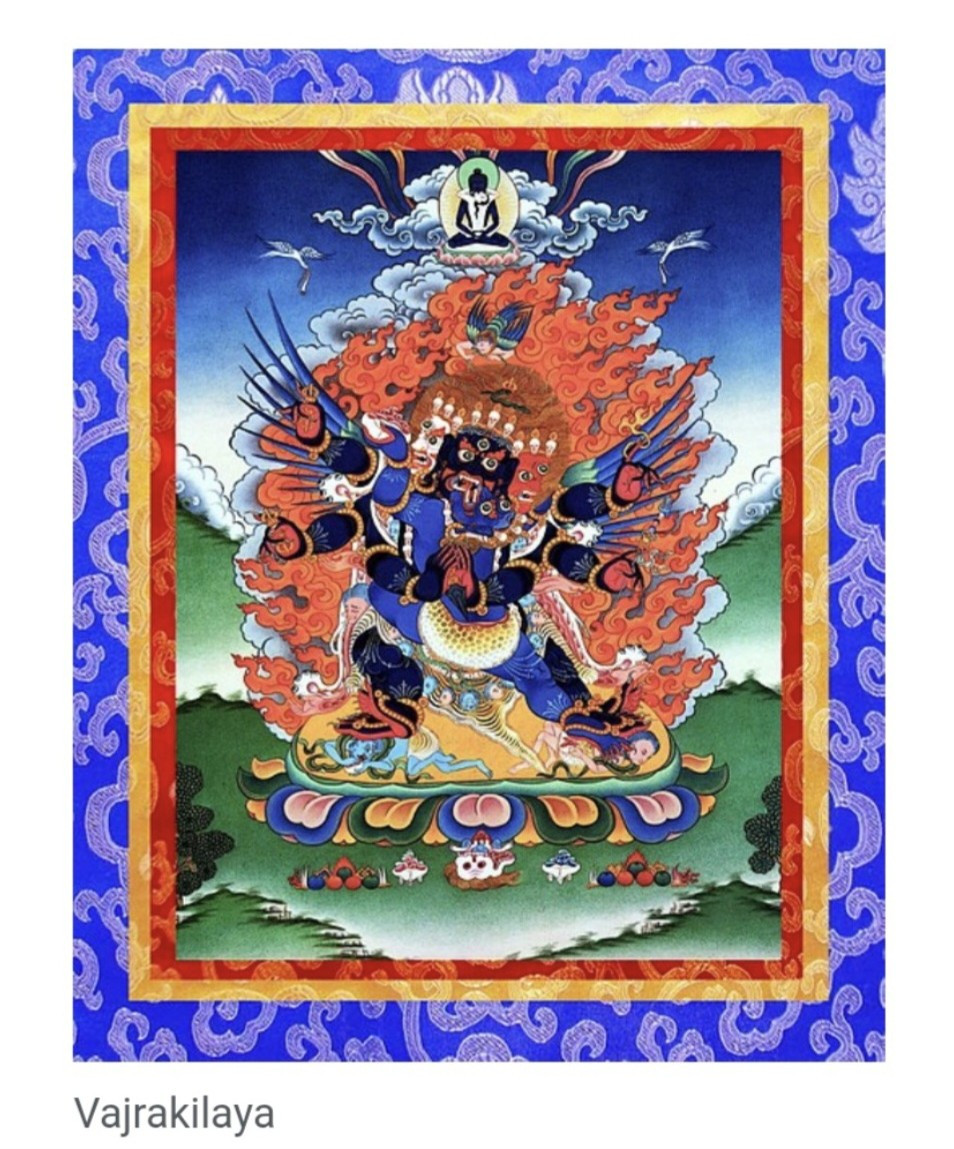


Phurbu depicting Vajrakīla, a wrathful deity with three conjoined heads, surmounted by a stylized horse, Hayagriva, the embodiment of divine breath. The raised ventral face expresses transformative energy. The raised arms hold ritual attributes: the vajra in the right hand and the ghanta bell in the left, complementary symbols of power and knowledge. The body, adorned with garlands and floral motifs, extends into a trilobed blade that narrows towards the tip. Brass, lost-wax casting, old patina from use and signs of age. Tantric Buddhism (Vajrayana), Tibet, late 19th century. Dimensions: 16.5 × 6.8 cm, total height with base 19 cm. "Vajrakīla (or Vajrakilaya), the irascible form of Vajrasattva, embodies the power of divine lightning (vajra) that destroys the obstacles to enlightenment. His triple face dominates the three worlds and triumphs over the three poisons of the mind: ignorance, desire, and anger. The horse Hayagriva, which surmounts him, evokes the speed and strength of spiritual energy. The energy descends along the body to unite with the trilobed blade, a symbol of transformation and the anchoring of beneficial powers at the heart of the world." The phurbu, or kīla, is a ritual dagger used in Tantric Buddhism to channel and immobilize negative forces. It symbolizes the stabilization of cosmic energy and victory over destructive passions. Planted in the ground, on an altar, or on a sacrificial effigy made of dough, it fixes evil and prevents its return. Wooden examples were used for ordinary practices, while metal ones, like this one, were consecrated for major rituals, often handled by lamas. Vajrakīla (or Vajrakilaya), the wrathful form of Vajrasattva, embodies the power of divine lightning (vajra) that destroys obstacles to enlightenment. His triple face dominates the three worlds and triumphs over the three poisons of the mind: ignorance, desire, and anger. The horse Hayagriva, which rides above him, evokes the swiftness and strength of spiritual energy. The energy flows down the body to unite with the blade. trilobed, a symbol of transformation and the fixation of beneficial powers at the heart of the world.
Explore similar pieces and discover your ideal find:
Asian Bronze Sculptures