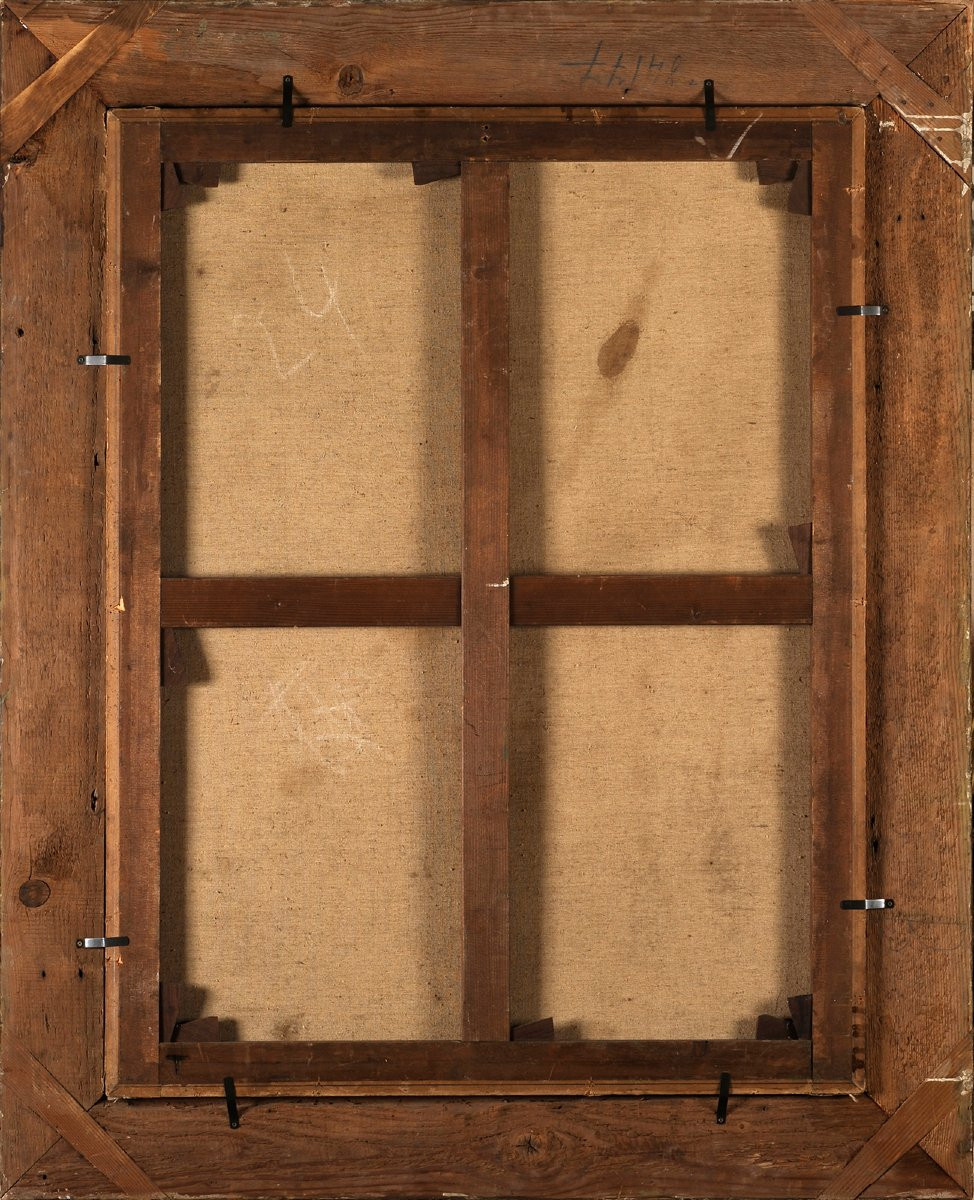


Salome And The Head Of Saint John The Baptist - Italian School, Late 17th Century
Artist: Ecole Italienne Fin Xviie
Italian School, late 17th century
Salome and the Head of Saint John the Baptist
Oil on canvas
H. 109 cm; W. 83 cm
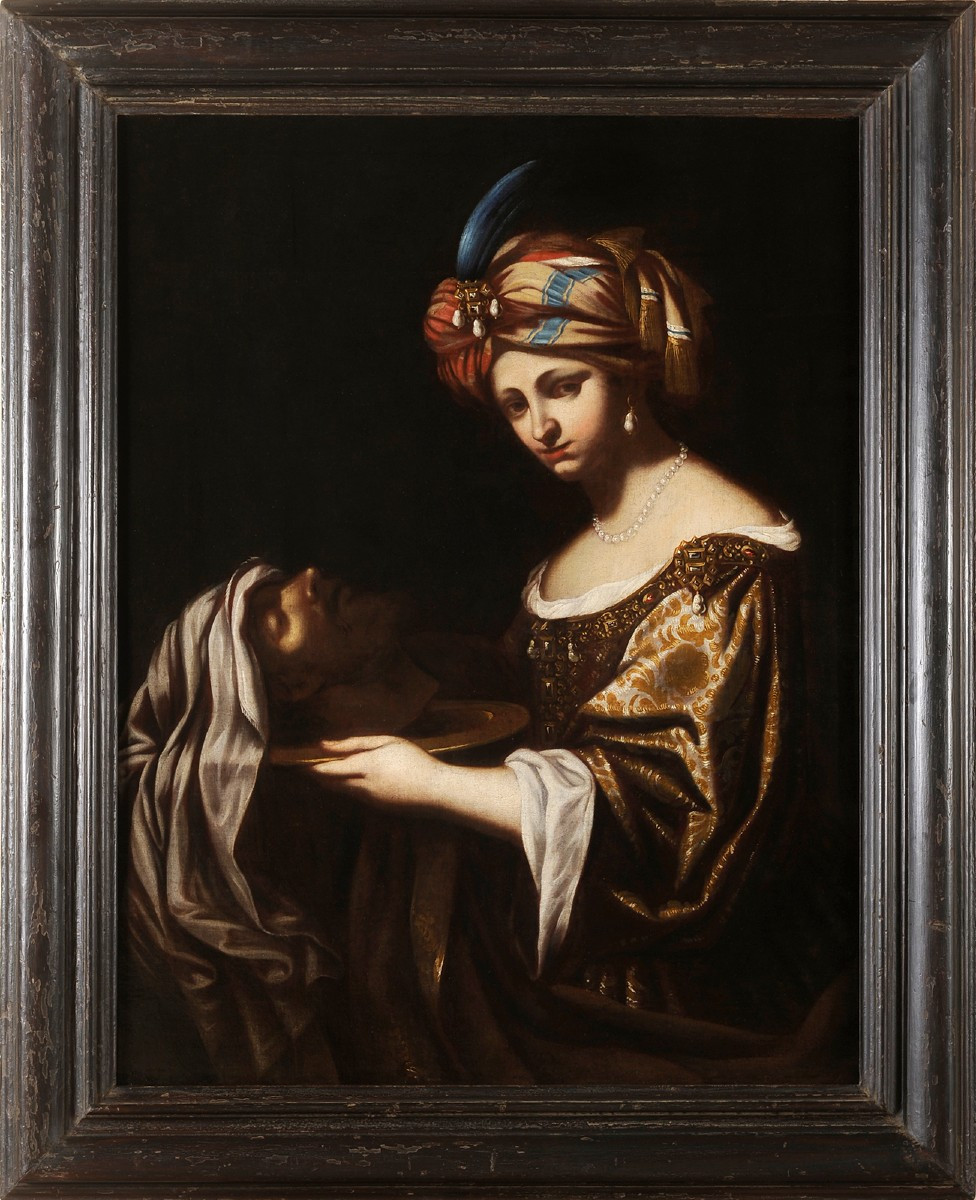
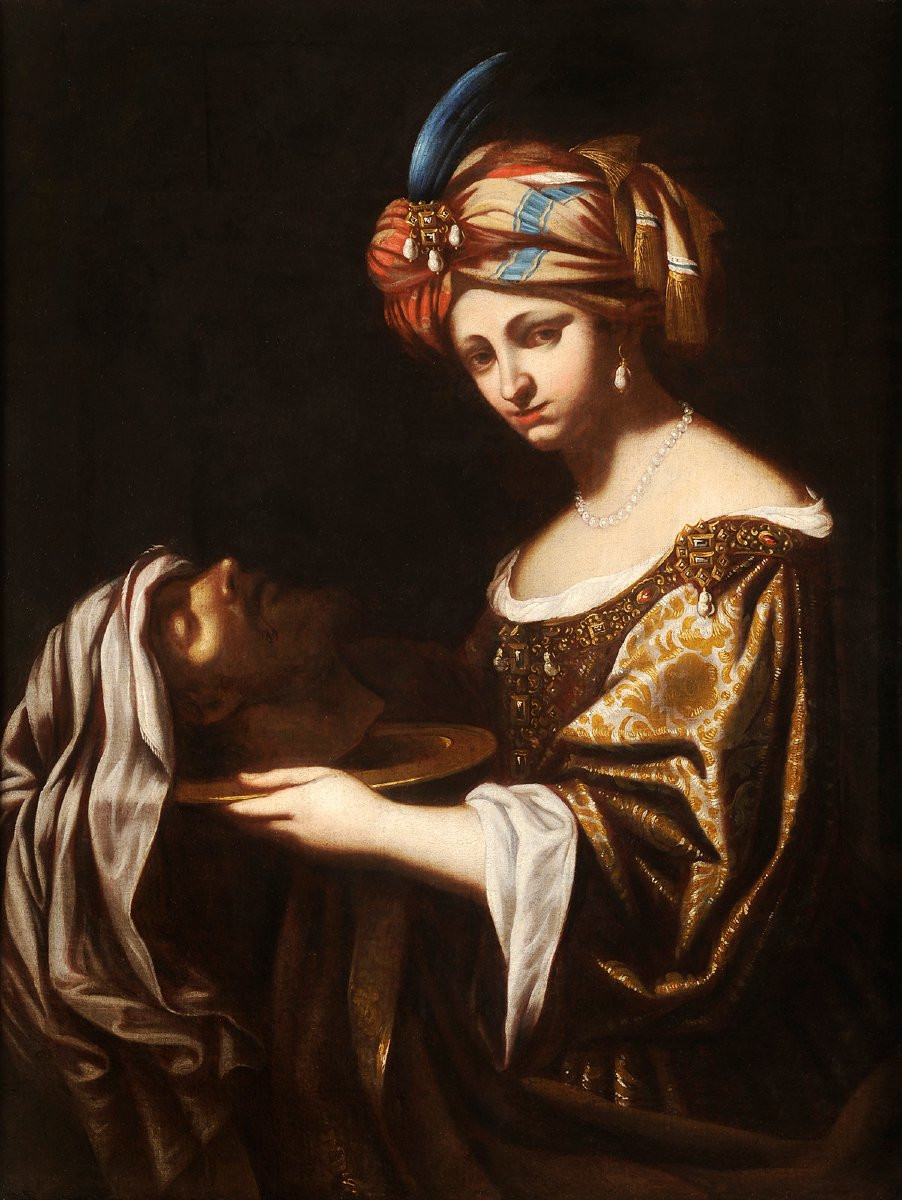
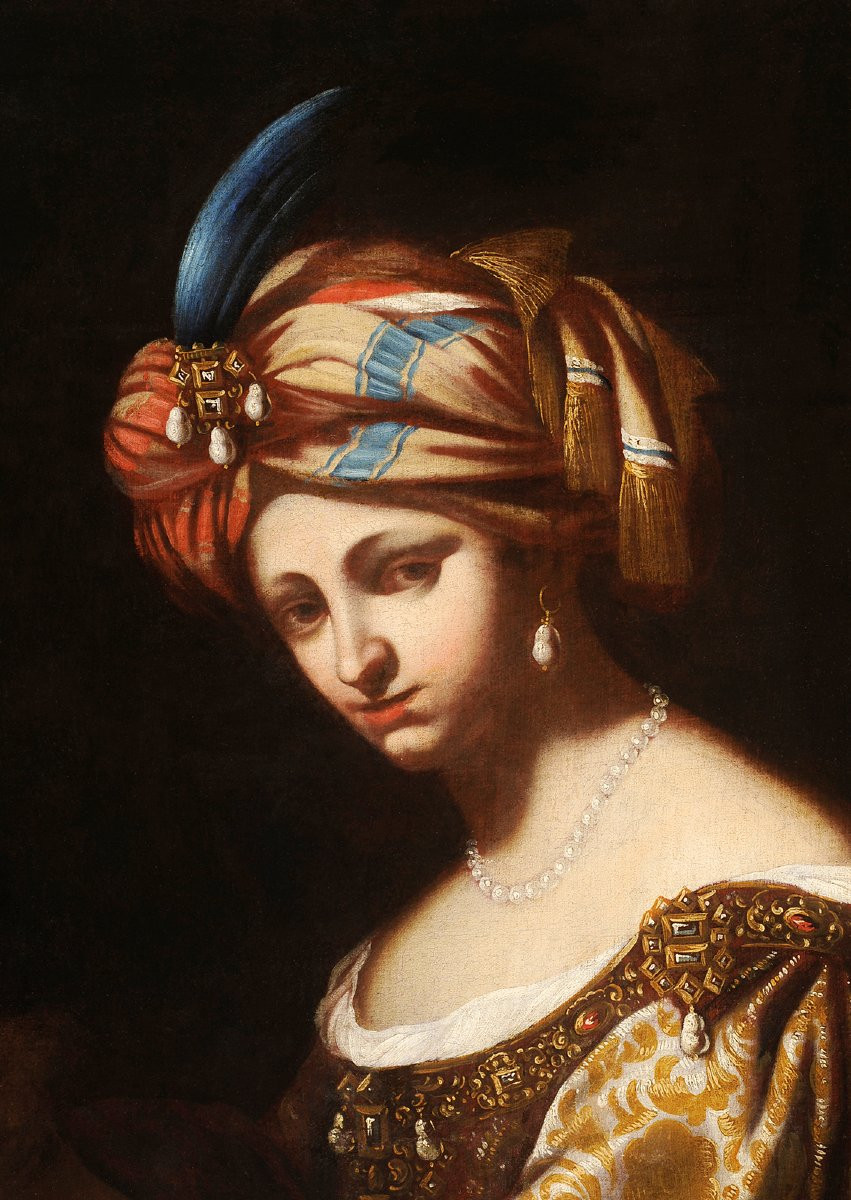
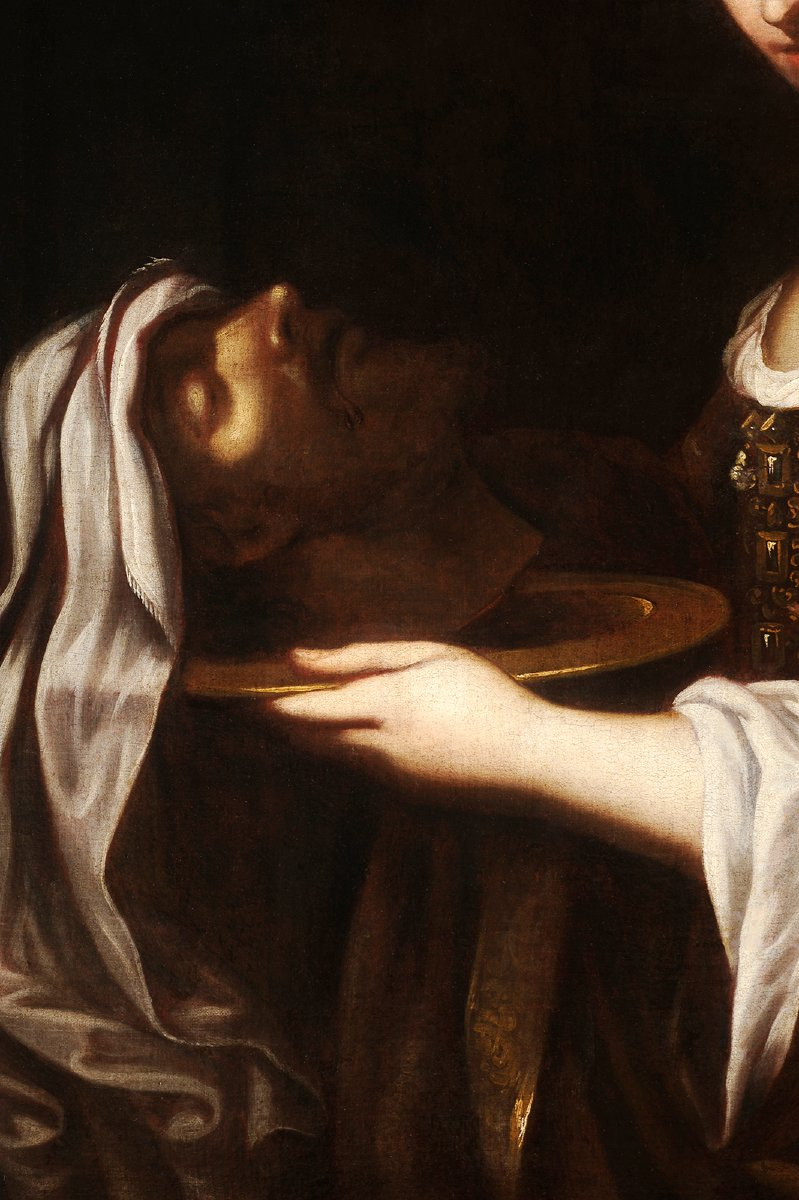
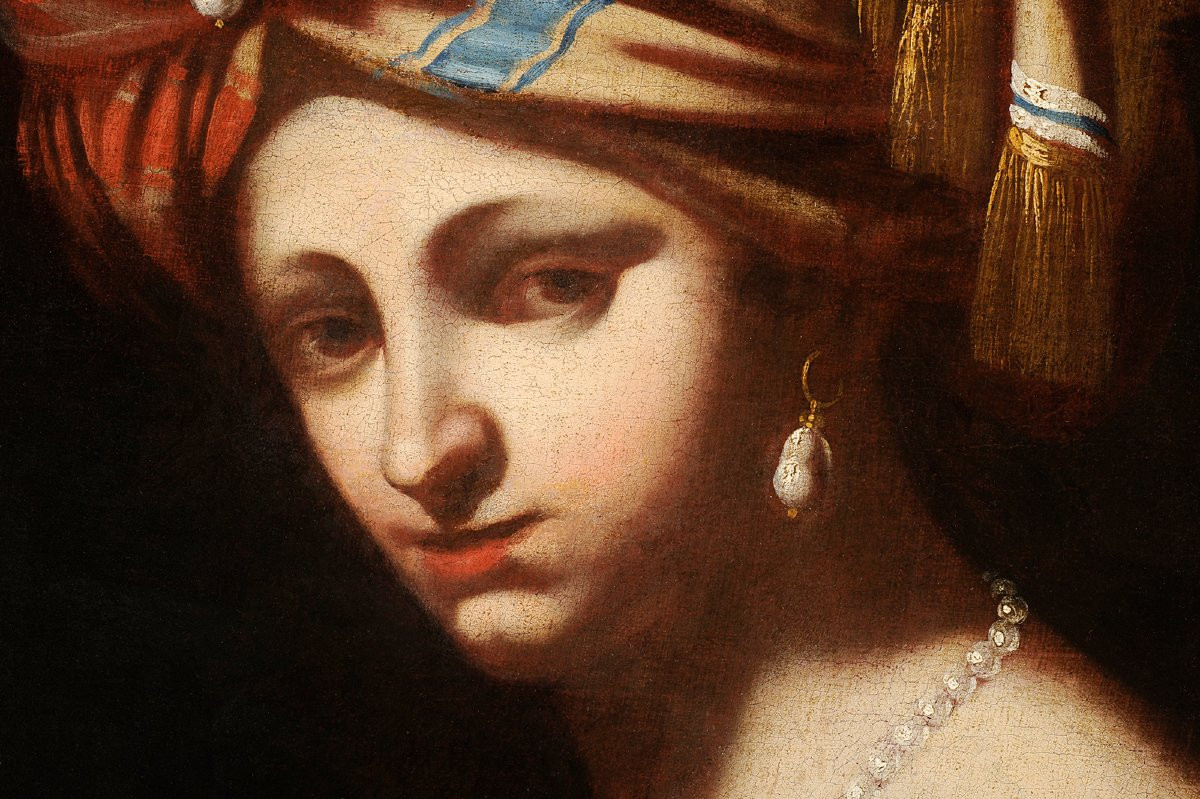
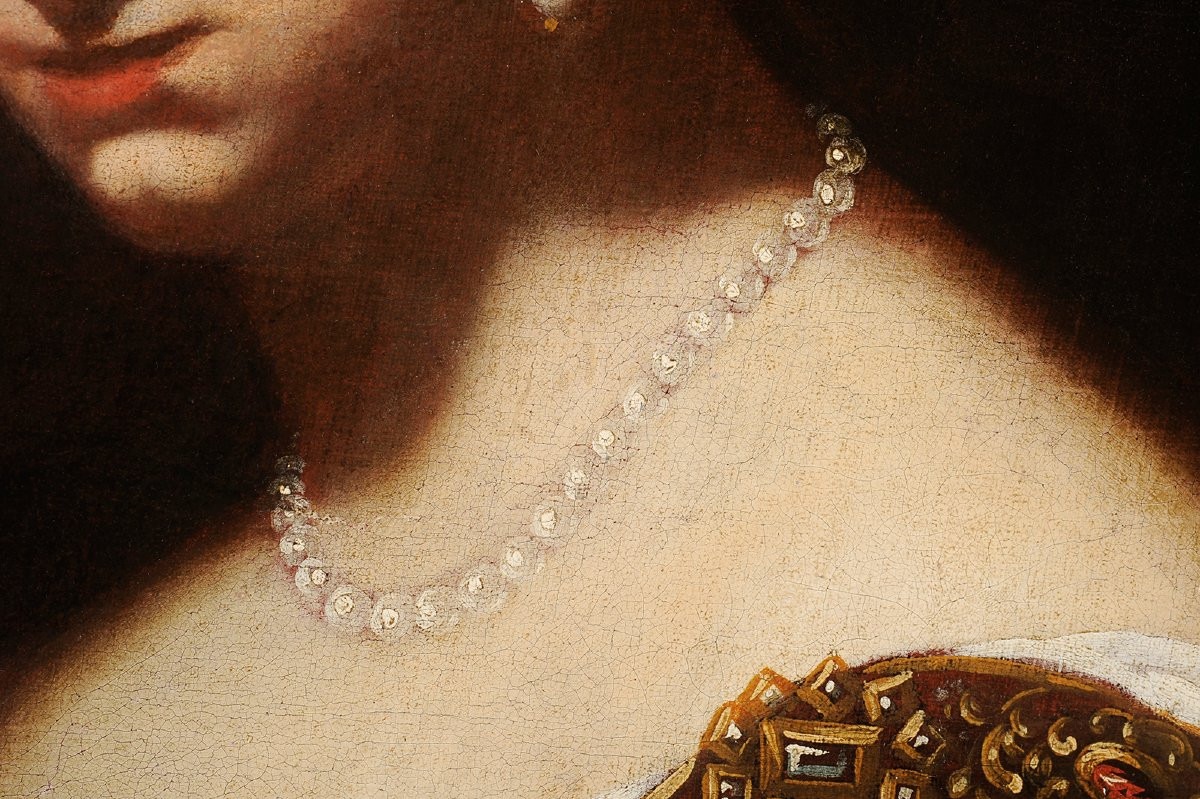
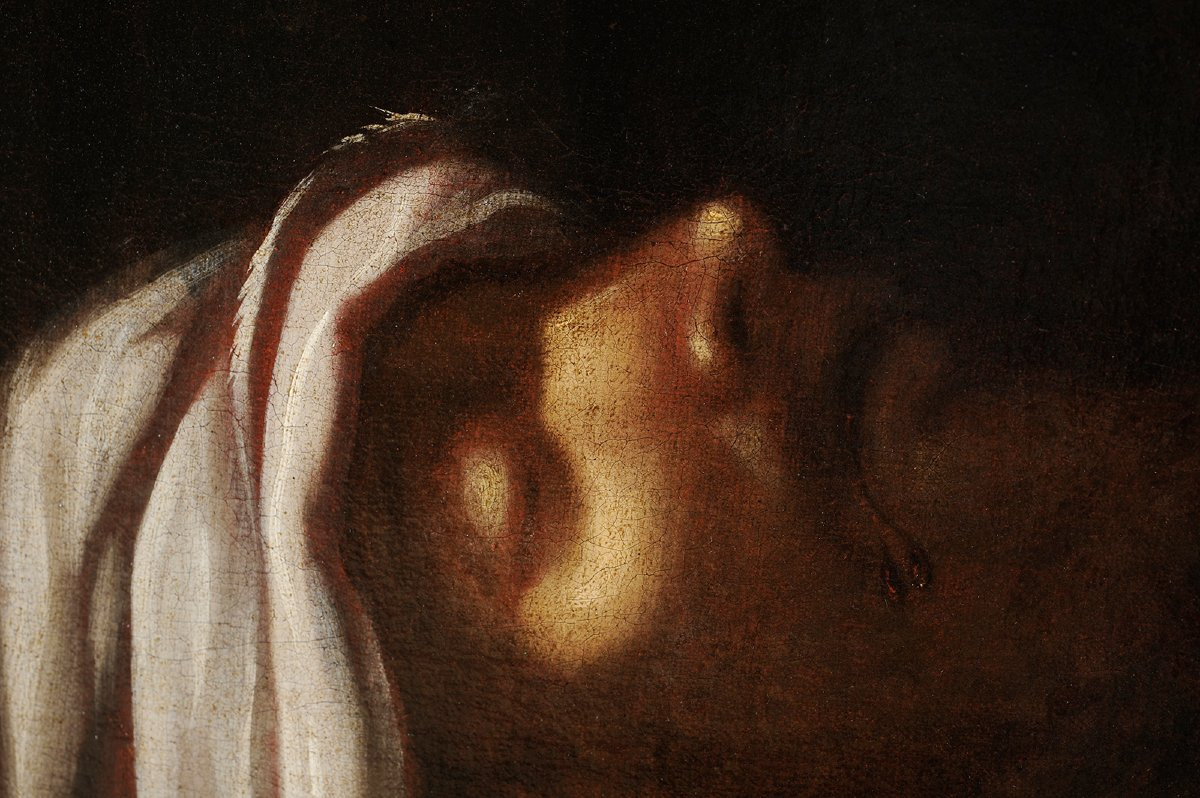
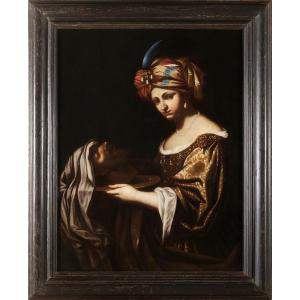
The theme of Salome receiving the head of Saint John the Baptist is one of the most unsettling in Baroque painting, combining beauty and cruelty, eroticism and faith. The biblical episode (Mark 6:17–29) recounts how Salome, daughter of Herodias, obtains from King Herod, seduced by her dance, the head of the prophet John the Baptist, who had condemned the illicit union of her parents. In this late 17th-century work, the scene is treated with the dramatic sensibility characteristic of the late Baroque. The Caravaggesque-inspired light concentrates its brilliance on Salome's face and the saint's head, isolating the protagonists in an atmosphere of silence and tension. The golden sheen underscores the duality of the subject: the youthful beauty of the young woman and the tragedy of martyrdom. Salome, here, is not shown as a mere executioner, but as an ambivalent figure: her hesitant gaze expresses both fascination and remorse. The grace of her posture, the richness of the fabrics, and the restraint of her gesture contrast with the horror of the trophy she presents. This contrast, typical of the Italian Baroque, evokes a moral emotion: the vanity of seduction confronted with the purity of sacrifice. The painter combines naturalism and spirituality in a composition where light becomes the language of faith. The influence of masters such as Guido Cagnacci and Carlo Dolci is evident in the delicacy of the flesh and the simplicity of the setting. Through this dialogue between beauty and death, this Salome illustrates the expressive power of late 17th-century Italian art, where the pathetic and the sacred converge to invite contemplation.
Salome and the Head of Saint John the Baptist
Oil on canvas
H. 109 cm; W. 83 cm
The theme of Salome receiving the head of Saint John the Baptist is one of the most unsettling in Baroque painting, combining beauty and cruelty, eroticism and faith. The biblical episode (Mark 6:17–29) recounts how Salome, daughter of Herodias, obtains from King Herod, seduced by her dance, the head of the prophet John the Baptist, who had condemned the illicit union of her parents. In this late 17th-century work, the scene is treated with the dramatic sensibility characteristic of the late Baroque. The Caravaggesque-inspired light concentrates its brilliance on Salome's face and the saint's head, isolating the protagonists in an atmosphere of silence and tension. The golden sheen underscores the duality of the subject: the youthful beauty of the young woman and the tragedy of martyrdom. Salome, here, is not shown as a mere executioner, but as an ambivalent figure: her hesitant gaze expresses both fascination and remorse. The grace of her posture, the richness of the fabrics, and the restraint of her gesture contrast with the horror of the trophy she presents. This contrast, typical of the Italian Baroque, evokes a moral emotion: the vanity of seduction confronted with the purity of sacrifice. The painter combines naturalism and spirituality in a composition where light becomes the language of faith. The influence of masters such as Guido Cagnacci and Carlo Dolci is evident in the delicacy of the flesh and the simplicity of the setting. Through this dialogue between beauty and death, this Salome illustrates the expressive power of late 17th-century Italian art, where the pathetic and the sacred converge to invite contemplation.
14 500 €
Period: 17th century
Style: Renaissance, Louis 13th
Condition: Perfect condition
Material: Oil painting
Length: 109 cm hors cadre
Width: 83 cm hors cadre
Reference (ID): 1646619
Availability: In stock
Print