THIS OBJECT WAS SOLD
Ptolemaic Mourning Isis In Polychrome Wood — With Certificate Of Authenticity
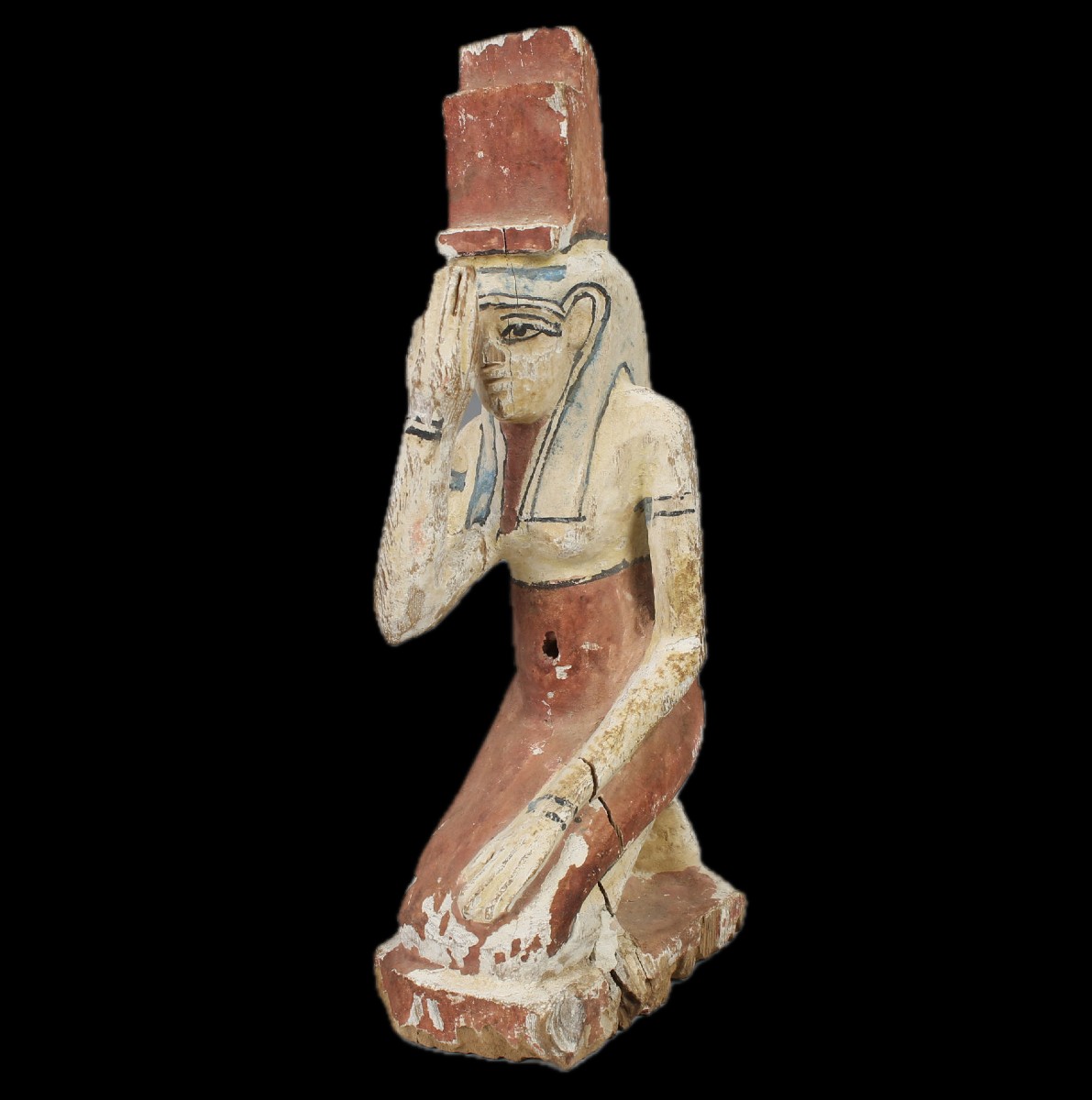
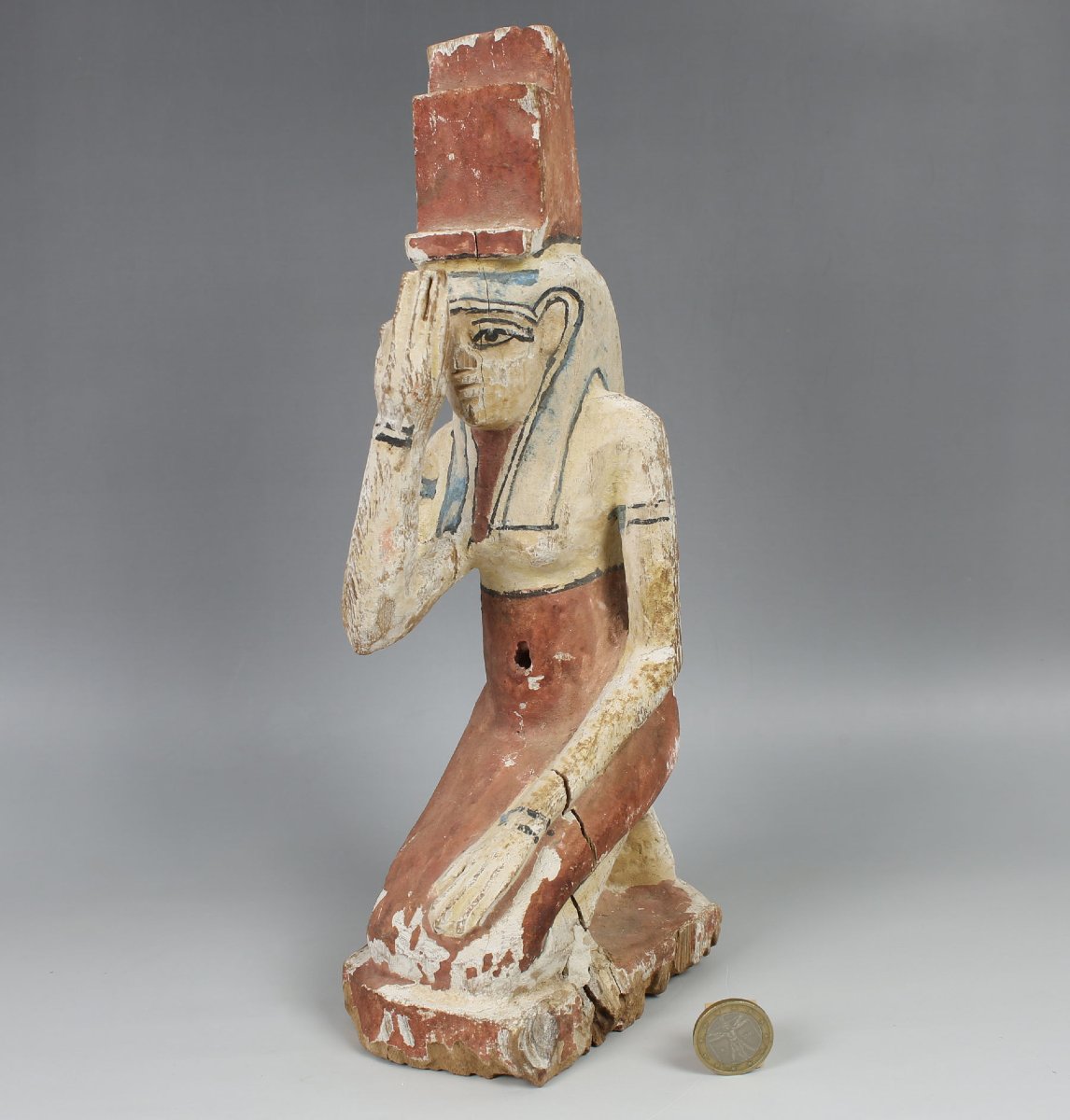
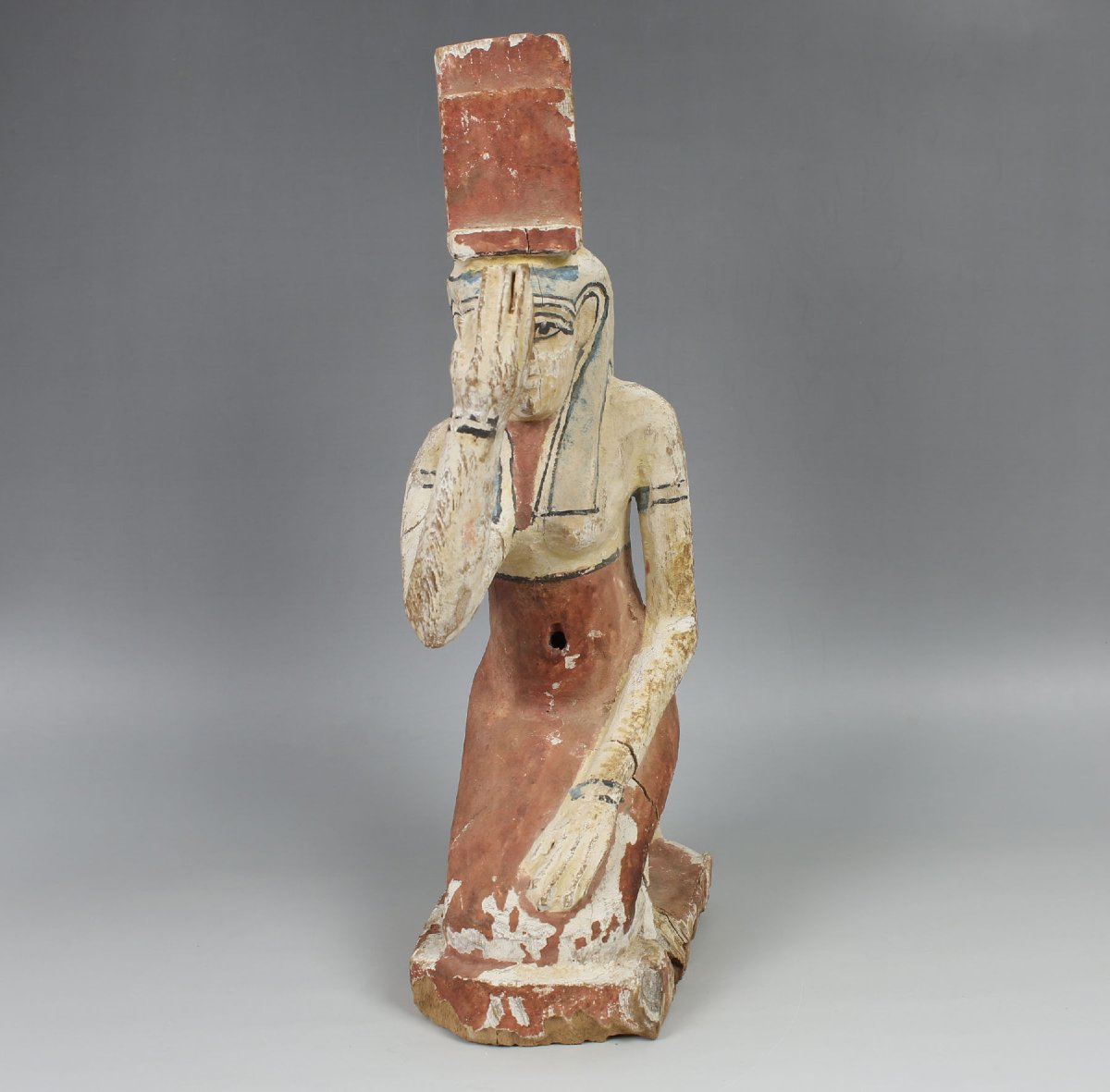
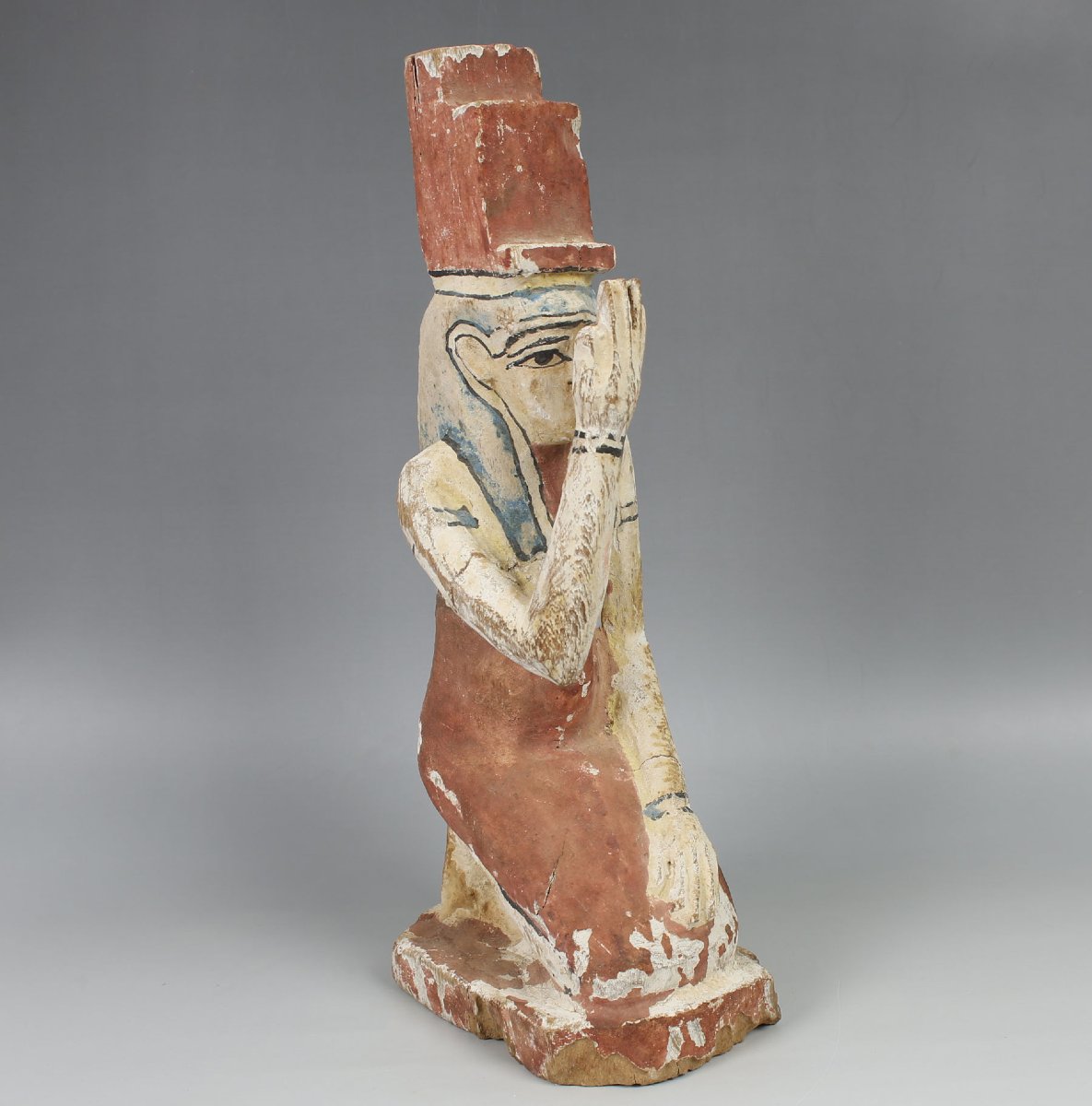
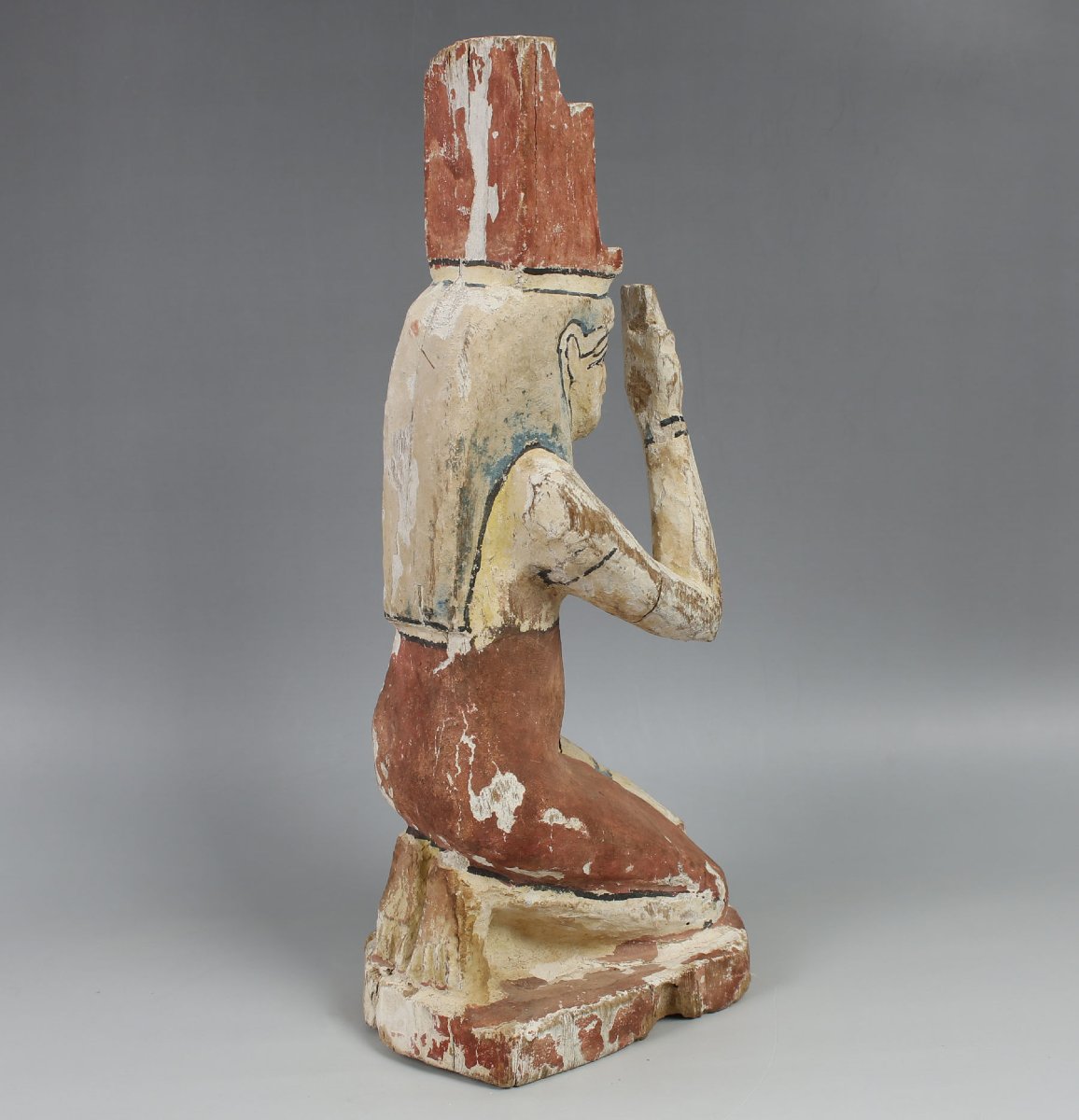
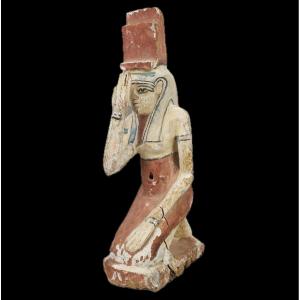


Important votive statuette of Isis in mourning, kneeling, her right hand raised to her face in the ritual gesture of lamentation, her left hand resting flat upon her knee.
Carved in stuccoed wood (gesso) and decorated with a mineral polychromy remarkably preserved in several areas: red-ochre robe, ivory-toned flesh, blue and black highlights on the wig and around the eyes.
She wears a high rectangular headdress resembling the hieroglyph of the throne (aset), the distinctive attribute of the goddess.
The sculpture is executed with confidence and balance: regular nose profile, elongated eye accentuated with a “kohl” line, slender neck, and clear shoulder contours.
A work of great ritual presence, characteristic of the refined art of the Ptolemaic period.
Homogeneous ancient patina with noble archaeological wear:
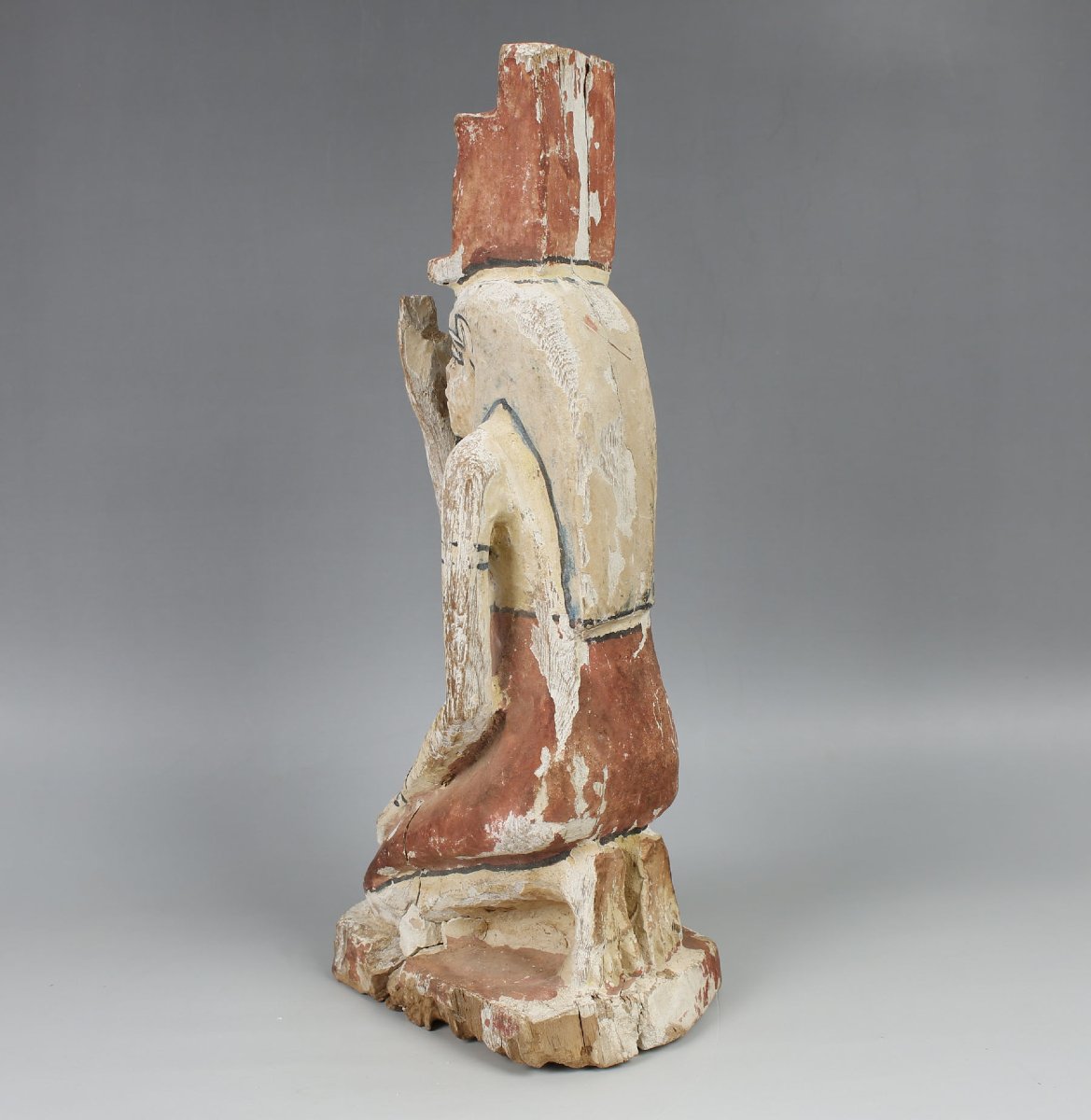
Small chips and losses of gesso on the edges of the base and garment.
Minor flaking on the top of the headdress.
Old shrinkage cracks on the left knee and along the forearm (stable).
Small circular cavity at the center of the torso (ancient dowel or fixing point).
Localized lifting of the paint layer consistent with age.
No modern restoration visible.
Overall, the piece is structurally sound, with authentic archaeological character.
Object: Statuette of kneeling mourning Isis
Culture / Period: Egypt, Ptolemaic Period (4th–1st century B.C.)
Materials: Carved wood, gesso, and mineral pigments (ochres, carbon black, blue)
Dimensions: 305 × 90 × 115 mm
Condition: Good overall preservation; ritual surface wear, ancient wood shrinkage cracks, trimmed headdress top, original fixing hole on torso; structurally stable
Provenance: Former private Dutch collection (JD); acquired in the 2020s from a Dutch antiquarian
Authenticity: Certificate of authenticity included
Under the Ptolemies, Isis became the central figure of the Egyptian pantheon and the focal point of the Khoiak rituals, in which her lamentation ensured the rebirth of Osiris and, symbolically, that of the deceased.
In funerary ensembles and domestic shrines, “mourning Isis” statuettes—often in painted wood—accompanied ritual processions, blending traditional pharaonic iconography (throne sign headdress, tripartite wig) with a naturalistic sensitivity inherited from Hellenism.
These figures thus represent the final synthesis of Egyptian and Greek aesthetic traditions.
Posture: Dynamic kneeling pose on rocky base; right hand covering the eye (codified gesture of mourning); left hand resting on the knee, producing elegant visual balance.
Head & Headdress: Rectangular throne-shaped headdress, now blunted at the top (ancient loss); wig painted with blue-highlighted side panels.
Face: Almond-shaped eyes outlined in black ink, elongated gaze, softly modelled lips.
Polychromy: Deep red-ochre robe with traces of preparatory white along the edges, black decorative lines; fine remnants of Egyptian blue/azurite visible in the recesses of the wig.
Technique: Carved from a single piece of dense-grained wood, coated with gesso and painted; central dowel hole original to manufacture; radial shrinkage cracks naturally patinated and stable.
Integrity: No modern restoration; only minor ancient consolidations of gesso, invisible to the naked eye.
A work of impressive size and devotional presence, emblematic of Isiac piety during the Ptolemaic era.
The harmony of posture, the surviving pigments, and the clear reading of ancient workshop processes (wood–gesso–polychromy) make it a museum-quality reference piece, ideal for a collection dedicated to late Egyptian art or the cult of Isis.
Provenance: Former Dutch private collection (JD); acquired in the 2020s from a Dutch antiquarian.
Verification: Documentary and stylistic examination completed.
Certificate of authenticity: Included.
Explore similar pieces and discover your ideal find:
archeology