



Japanese Satsuma Vase By Gyokuzan, Late Meiji Period With Gilt Moriage Court Figures
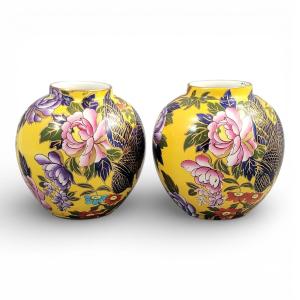
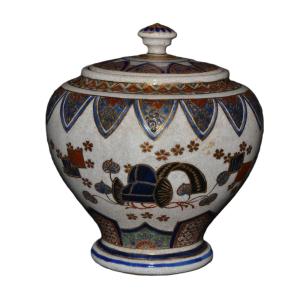
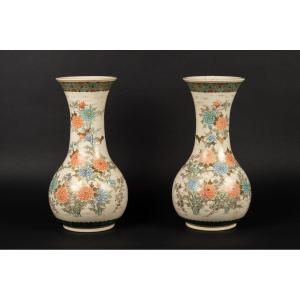
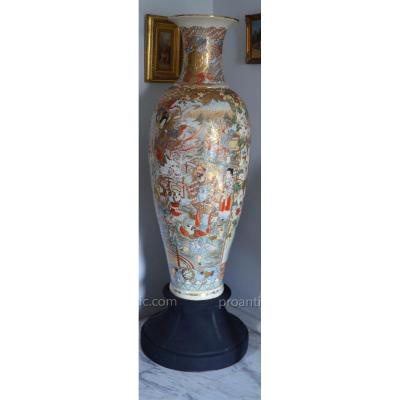
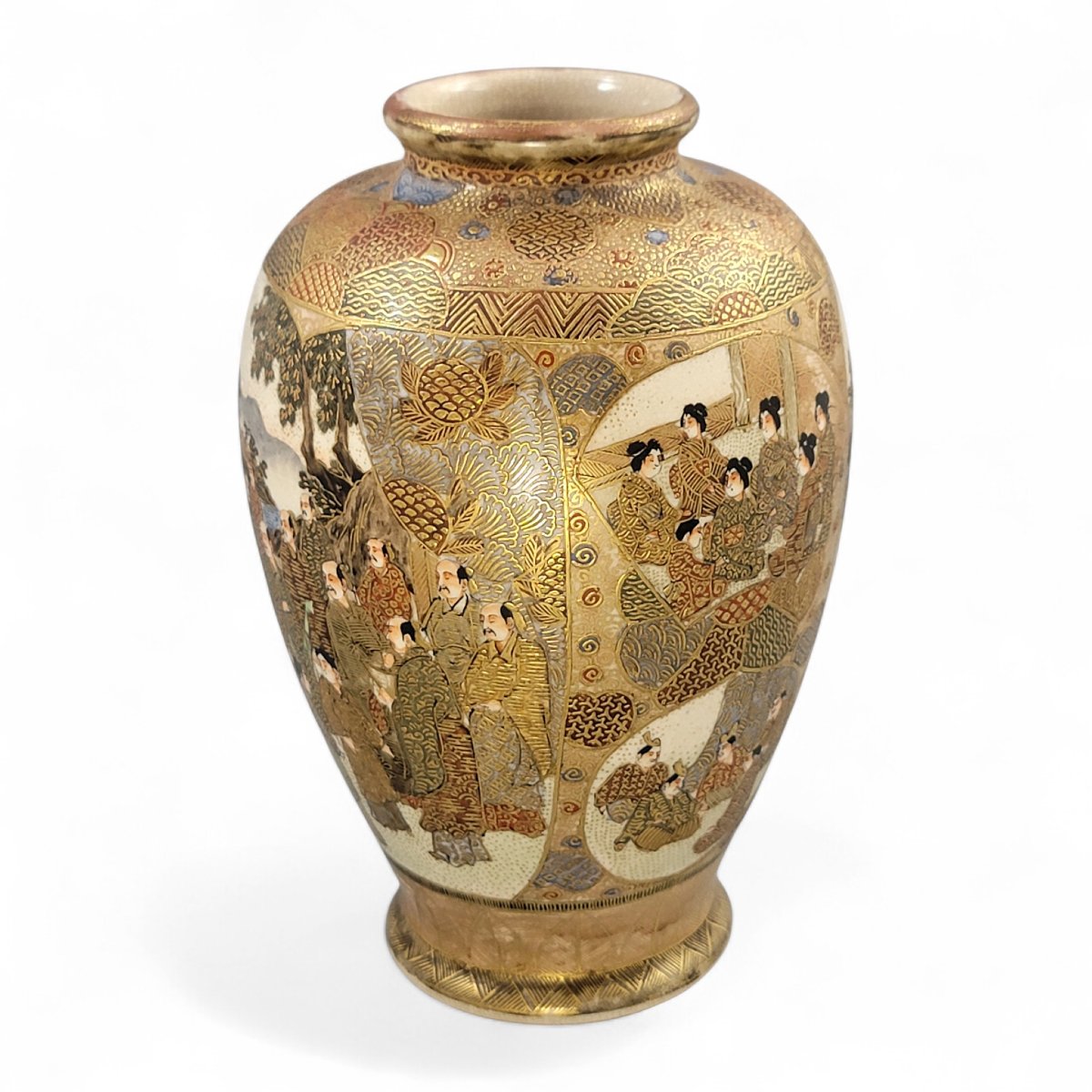
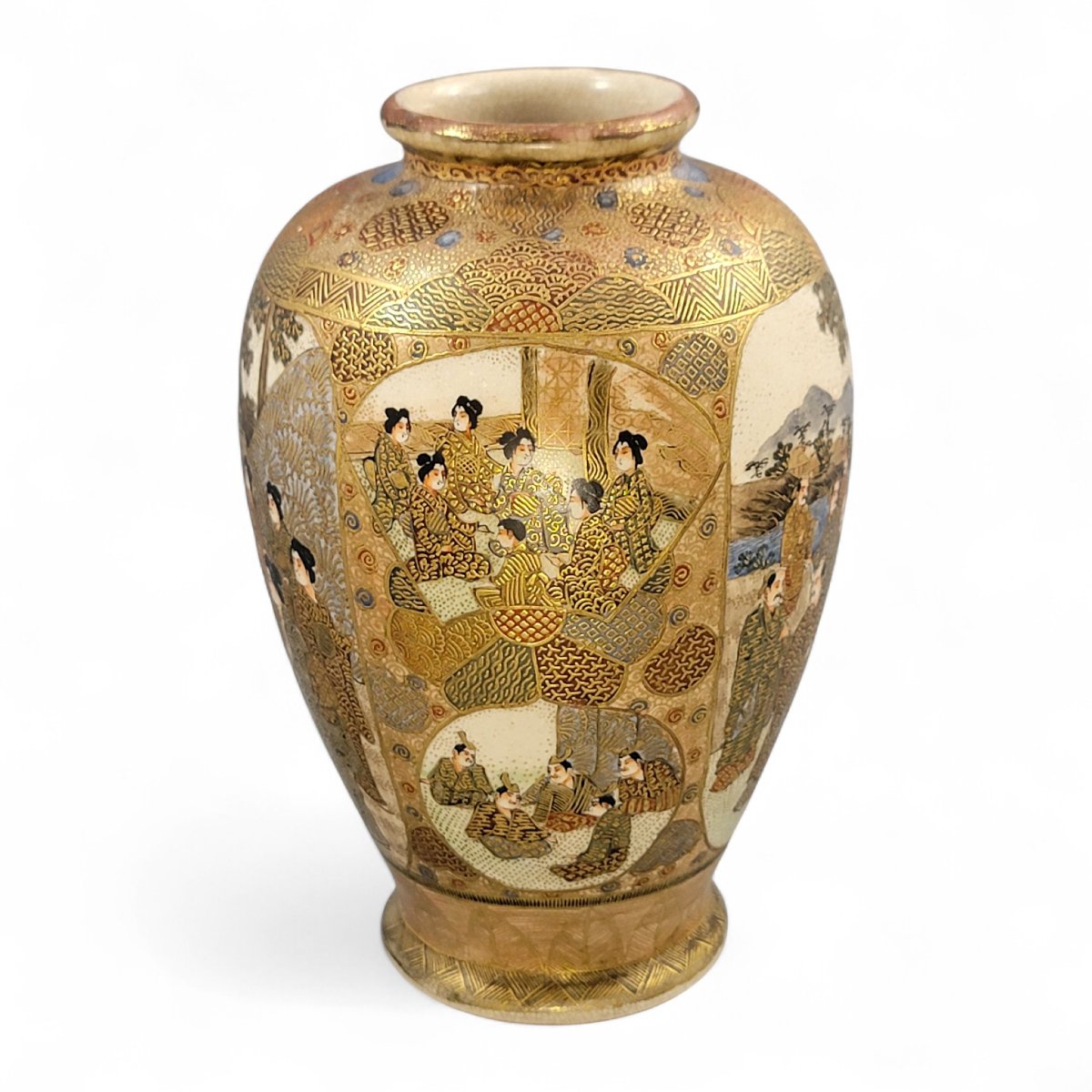
A fine Japanese Satsuma vase by Gyokuzan (studio name of Chin Jukan XII, 1835–1906), dating to the Late Meiji period, c. 1890–1900. The baluster form is decorated with two finely painted oval panels featuring noblemen and court ladies in elegant conversation set before a landscape of pavilions, hills and riverside trees. Each figure is rendered with remarkable attention to detail: expressive faces, layered kimono decoration, and precise posture.
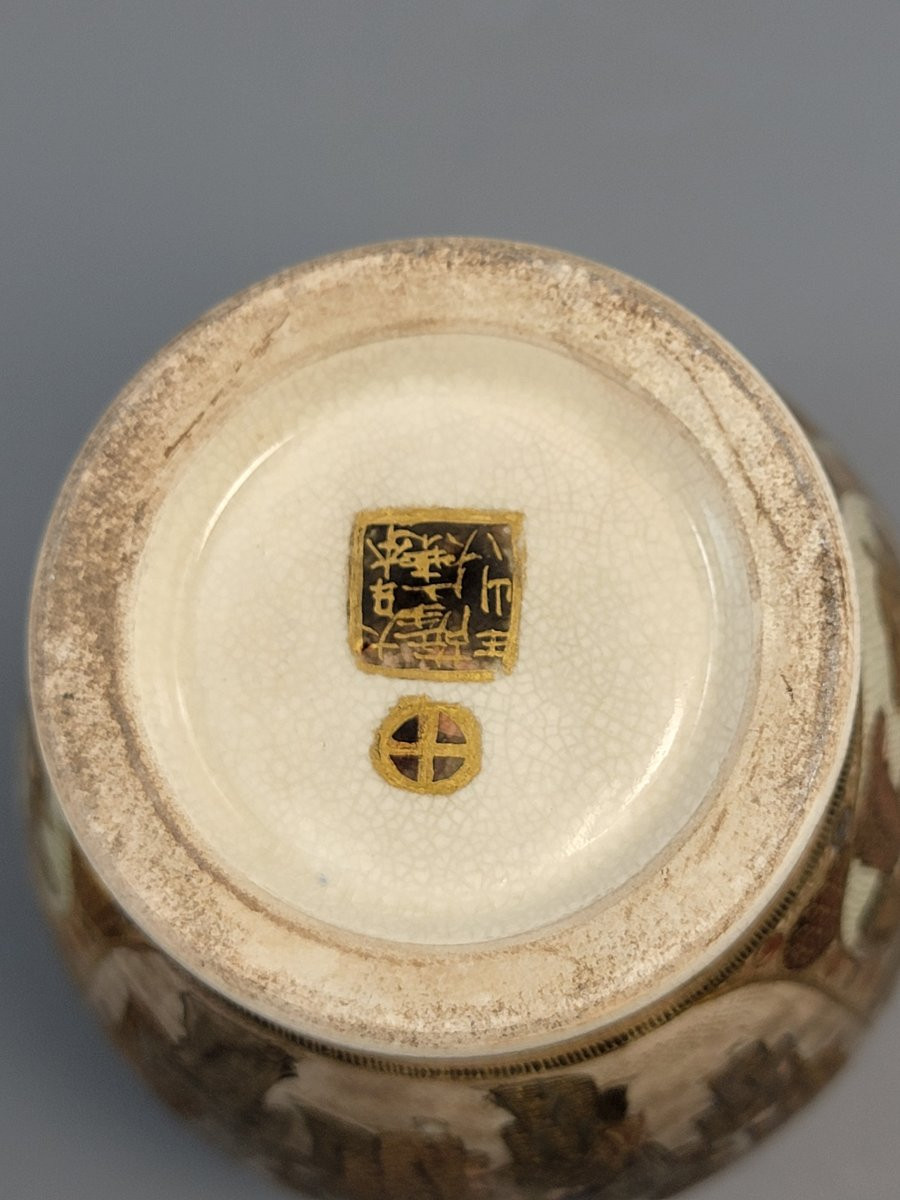
Surrounding the scene is an elaborate ground of raised gilt moriage and richly coloured enamels in gold, red, and blue. Traditional Kyoto patterns enrich the design, including shippo (linked circles symbolising harmony), asanoha (hemp-leaf motif representing strength), and seigaiha (stylised waves symbolising longevity). The vase is finished with a beautifully even ivory crackle glaze, characteristic of high-quality Satsuma ware. The underside bears a gilt cartouche signature 大日本 薩摩 玉山 (Dai Nippon Satsuma Gyokuzan), confirming prestigious origin from this important Meiji workshop and indicating production for the high-end export market.
Historical Background
Gyokuzan (Chin Jukan XII) was a leading figure in the Meiji-period Satsuma industry. Working in Kagoshima, Satsuma Province, he produced finely potted vessels for elite decorators including Yabu Meizan and Gyokushu, whose works were highly sought after by Western collectors. Gyokuzan’s pieces were exhibited at major international expositions between 1873 and 1906, contributing greatly to the worldwide recognition of Japanese ceramics. The Gyokuzan signature was used between 1874 and 1897, placing this vase precisely in the golden age of Satsuma production for export.
Measurements
Height: 15 cm / 5.91″
Diameter: 10 cm / 3.94″
Weight: 346 g
Condition
Excellent antique condition. No chips, cracks or restoration. Minor, light rubbing to the gilding only on raised points. A well-preserved example retaining strong detail.
Shipping & Packaging
• Fully tracked and insured delivery
• Professional packaging with secure protective materials
• Customs documentation supplied where necessary
Period: 19th century
Style: Asian art
Condition: Excellent condition
Material: Earthenware
Diameter: 10 cm
Height: 15 cm
Reference (ID): 1640745
Availability: In stock