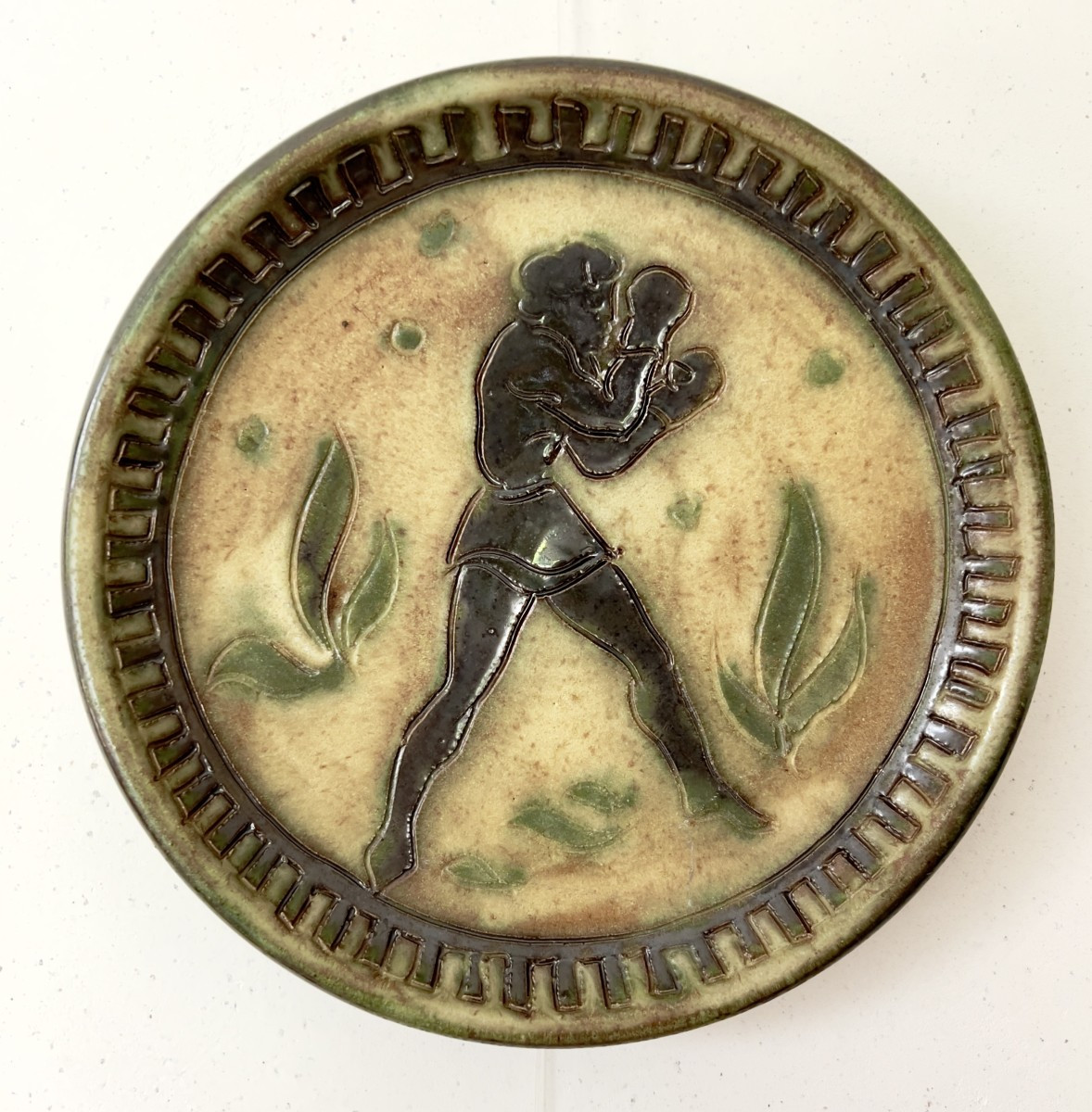
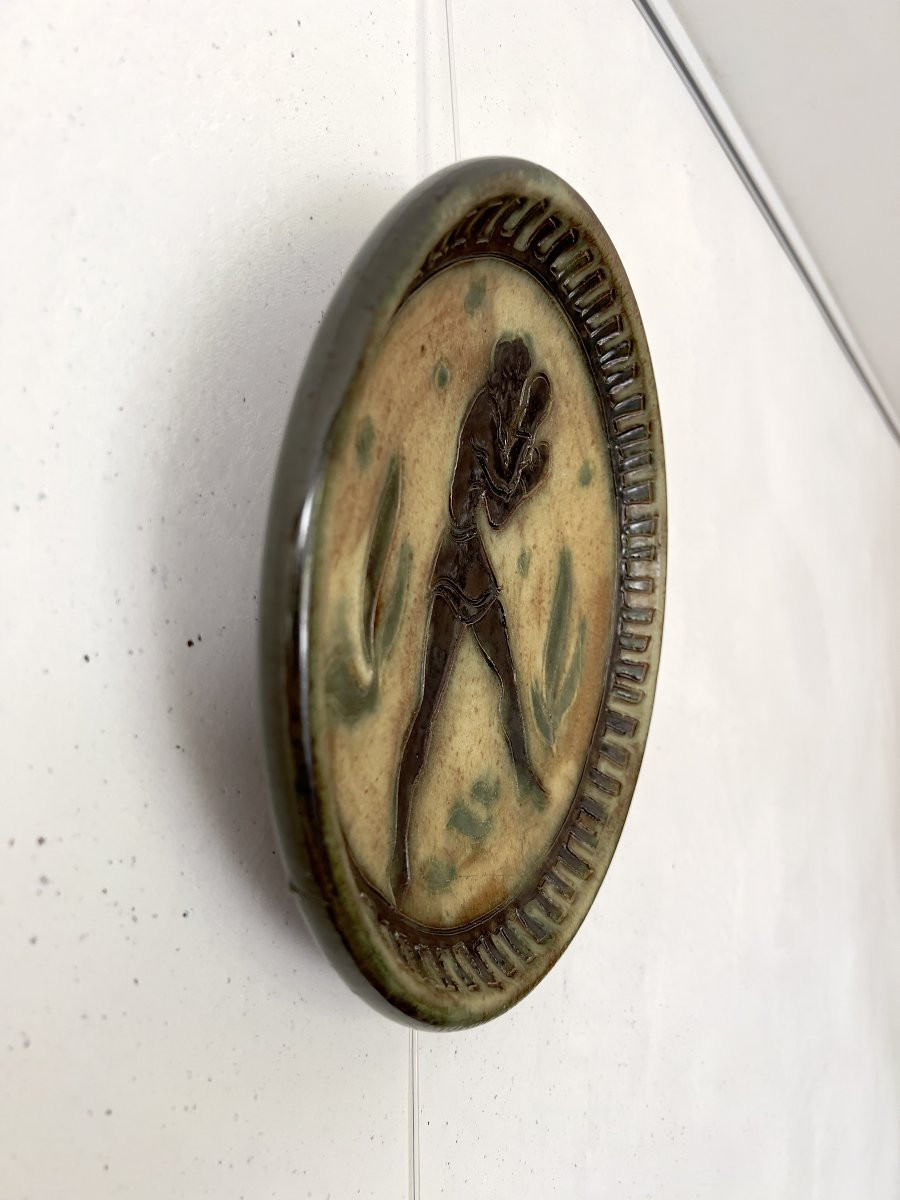


Roger Guerin (1896-1954) Enamelled Ceramic Boxer Dish.
Artist: Roger Guerrin
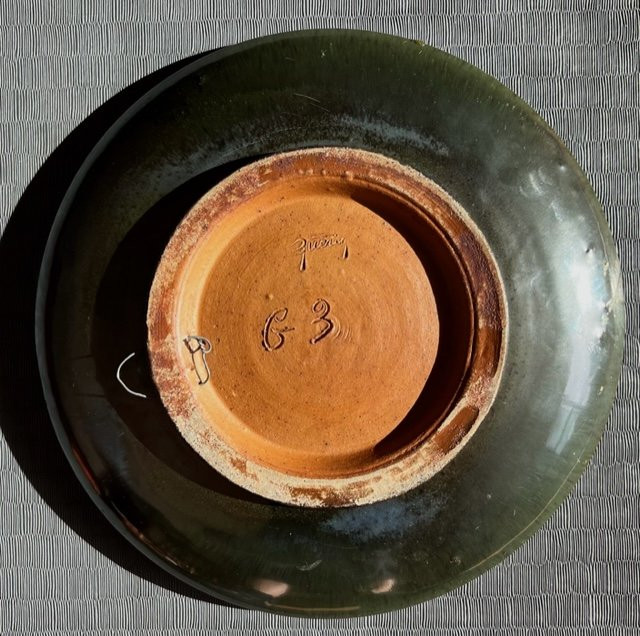
Glazed ceramic boxer dish by Roger GUERIN (1896-1954) signed and numbered on the back.
Roger Guérin was a Belgian ceramist from the Art Deco period, born in 1896 in Jumet and died in 1954 in Bouffioulx. He studied chemistry at the University of Work in Charleroi and followed the courses of Willem Delsaux. He trained on the wheel in the Albert Gilles pottery workshops where he worked alongside Edgard Aubry, and in the Grégoire-Bailleux workshops in Châtelet. He did some internships in Sèvres. In 1918, he joined the workshop of his former professor at the University of Charleroi, Willem Delsaux, the Escarboucle which he had opened in 1911 in Bouffioulx. He married Camille Delsaux, his daughter. His stoneware works are signed R. Guerin. In 1919, the cooperative company Poteries Roger Guerin was founded. His son Jules Guérin was born. In 1929, a name change took place: his company became Société Anonyme des Grès de Bouffioulx, in which he collaborated with several artists. His works were signed Guérin. From 1930 to 1947, he taught at the Ecole Industrielle Commerciale et de Dessin de Châtelet. In 1932, he left the Société des Grès de Bouffioulx to set up his own business. He taught in Brussels at the Institut Supérieur des Arts Décoratifs de de la Cambre. In 1935, the SA was dissolved. In 1938, he created a new company SA Grès de Bouffioulx. After the Second World War, he expanded his business with his son, who turned stoneware and developed industrial and architectural ceramics. In 1951, he created a 3rd SA (Société Anonyme Grès de Bouffioulx). Roger Guérin died in 1954 in Bouffioulx; his wife and son took over the management of the company, which went bankrupt in 1970. Roger Guérin is a big name in Belgian Art Deco ceramics. The majority of his work consists of ball vases and geometric or faceted vases, as well as sculptures. His preferred material is stoneware with a high-fire salt glaze. He began with the Art Nouveau style and then evolved into the Art Deco style. International recognition followed his presence at the International Exhibition of Industrial and Modern Decorative Arts in Paris in 1925. He carried out numerous artistic collaborations with sculptors and ironworkers. Several of his works were acquired by King Albert or are present in several Belgian, Dutch, Italian and American museums.
Roger Guérin was a Belgian ceramist from the Art Deco period, born in 1896 in Jumet and died in 1954 in Bouffioulx. He studied chemistry at the University of Work in Charleroi and followed the courses of Willem Delsaux. He trained on the wheel in the Albert Gilles pottery workshops where he worked alongside Edgard Aubry, and in the Grégoire-Bailleux workshops in Châtelet. He did some internships in Sèvres. In 1918, he joined the workshop of his former professor at the University of Charleroi, Willem Delsaux, the Escarboucle which he had opened in 1911 in Bouffioulx. He married Camille Delsaux, his daughter. His stoneware works are signed R. Guerin. In 1919, the cooperative company Poteries Roger Guerin was founded. His son Jules Guérin was born. In 1929, a name change took place: his company became Société Anonyme des Grès de Bouffioulx, in which he collaborated with several artists. His works were signed Guérin. From 1930 to 1947, he taught at the Ecole Industrielle Commerciale et de Dessin de Châtelet. In 1932, he left the Société des Grès de Bouffioulx to set up his own business. He taught in Brussels at the Institut Supérieur des Arts Décoratifs de de la Cambre. In 1935, the SA was dissolved. In 1938, he created a new company SA Grès de Bouffioulx. After the Second World War, he expanded his business with his son, who turned stoneware and developed industrial and architectural ceramics. In 1951, he created a 3rd SA (Société Anonyme Grès de Bouffioulx). Roger Guérin died in 1954 in Bouffioulx; his wife and son took over the management of the company, which went bankrupt in 1970. Roger Guérin is a big name in Belgian Art Deco ceramics. The majority of his work consists of ball vases and geometric or faceted vases, as well as sculptures. His preferred material is stoneware with a high-fire salt glaze. He began with the Art Nouveau style and then evolved into the Art Deco style. International recognition followed his presence at the International Exhibition of Industrial and Modern Decorative Arts in Paris in 1925. He carried out numerous artistic collaborations with sculptors and ironworkers. Several of his works were acquired by King Albert or are present in several Belgian, Dutch, Italian and American museums.
180 €
Period: 20th century
Style: Other Style
Condition: Excellent condition
Material: Ceramic
Diameter: 26
Reference (ID): 1640179
Availability: In stock
Print