

Chinese Famille Rose Porcelain Vase Canton, Qing Dynasty Guangxu Period (1875 - 1908)
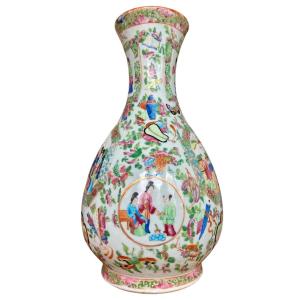
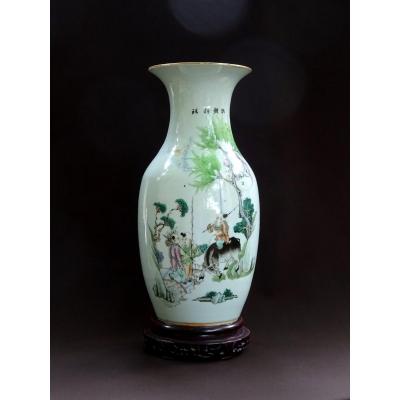
Polychrome enameled porcelain baluster vase - Famille rose - China, Canton - Qing Dynasty - Guangxu period (1875–1908) Hard-paste porcelain, polychrome enamels and gold. Dimensions: height 22.5 cm; diameter 10.5 cm. Restored.
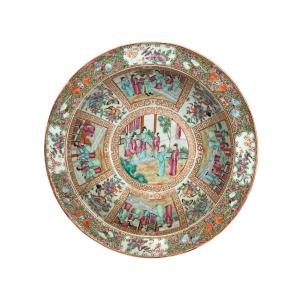
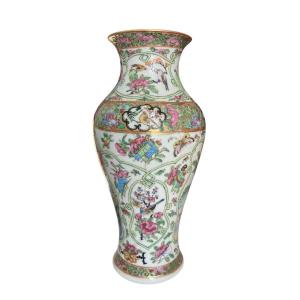
This baluster-shaped vase features a decoration in polychrome enamels known as famille rose, illustrating the finesse and pictorial richness of Cantonese productions of the late 19th century. The body features lively scenes of female figures in ornate interiors, evoking the literary life and leisure activities of a refined elite. These scenes alternate with floral cartouches containing birds, butterflies, fruits and bouquets, symbolic motifs of happiness, beauty and prosperity.
Borders of floral scrolls and green and pink volutes frame the whole, while gilded highlights emphasize the delicacy of the design. The neck and base are decorated with stylized plant friezes, typical of the ornamental taste of the Canton workshops.
Condition: old restoration, visible cracks.
Certificate of authenticity and adapted delivery.
The term famille rose (fencai 粉彩) refers to a palette of enamels that appeared during the reign of the Kangxi Emperor (1662–1722) and was perfected in the 18th century. It is distinguished by the use of an opaque pink enamel based on colloidal gold, which made it possible to obtain a range of soft and nuanced tones, suitable for detailed figurative decorations.
From the 19th century onwards, the workshops of Canton, in the province of Guangdong, became veritable centers of production and decoration of porcelain intended for export. Craftsmen applied enamels to "white" porcelain produced in Jingdezhen, the traditional capital of Chinese ceramics.
These richly decorated, often narrative, vases reflected both the Chinese taste for symbolic compositions and the attraction of Western markets for the exoticism and technical virtuosity of Chinese porcelain.
During the Guangxu period (1875–1908), workshops continued this decorative tradition by combining refinement, chromatic brilliance, and an abundance of floral and animal motifs, emblematic of the late Qing dynasty style.
This baluster-shaped vase features a decoration in polychrome enamels known as famille rose, illustrating the finesse and pictorial richness of Cantonese productions of the late 19th century. The body features lively scenes of female figures in ornate interiors, evoking the literary life and leisure activities of a refined elite. These scenes alternate with floral cartouches containing birds, butterflies, fruits and bouquets, symbolic motifs of happiness, beauty and prosperity.
Borders of floral scrolls and green and pink volutes frame the whole, while gilded highlights emphasize the delicacy of the design. The neck and base are decorated with stylized plant friezes, typical of the ornamental taste of the Canton workshops.
Condition: old restoration, visible cracks.
Certificate of authenticity and adapted delivery.
The term famille rose (fencai 粉彩) refers to a palette of enamels that appeared during the reign of the Kangxi Emperor (1662–1722) and was perfected in the 18th century. It is distinguished by the use of an opaque pink enamel based on colloidal gold, which made it possible to obtain a range of soft and nuanced tones, suitable for detailed figurative decorations.
From the 19th century onwards, the workshops of Canton, in the province of Guangdong, became veritable centers of production and decoration of porcelain intended for export. Craftsmen applied enamels to "white" porcelain produced in Jingdezhen, the traditional capital of Chinese ceramics.
These richly decorated, often narrative, vases reflected both the Chinese taste for symbolic compositions and the attraction of Western markets for the exoticism and technical virtuosity of Chinese porcelain.
During the Guangxu period (1875–1908), workshops continued this decorative tradition by combining refinement, chromatic brilliance, and an abundance of floral and animal motifs, emblematic of the late Qing dynasty style.
90 €
Period: 19th century
Style: Asian art
Condition: Fully restored
Material: Porcelain
Diameter: 10.5
Height: 22.5
Reference (ID): 1637116
Availability: In stock
Print