THIS OBJECT WAS SOLD
Bust Of Mary - Louise Brongniart , Jean - Antoine Houdon (1741-1828) - Marble
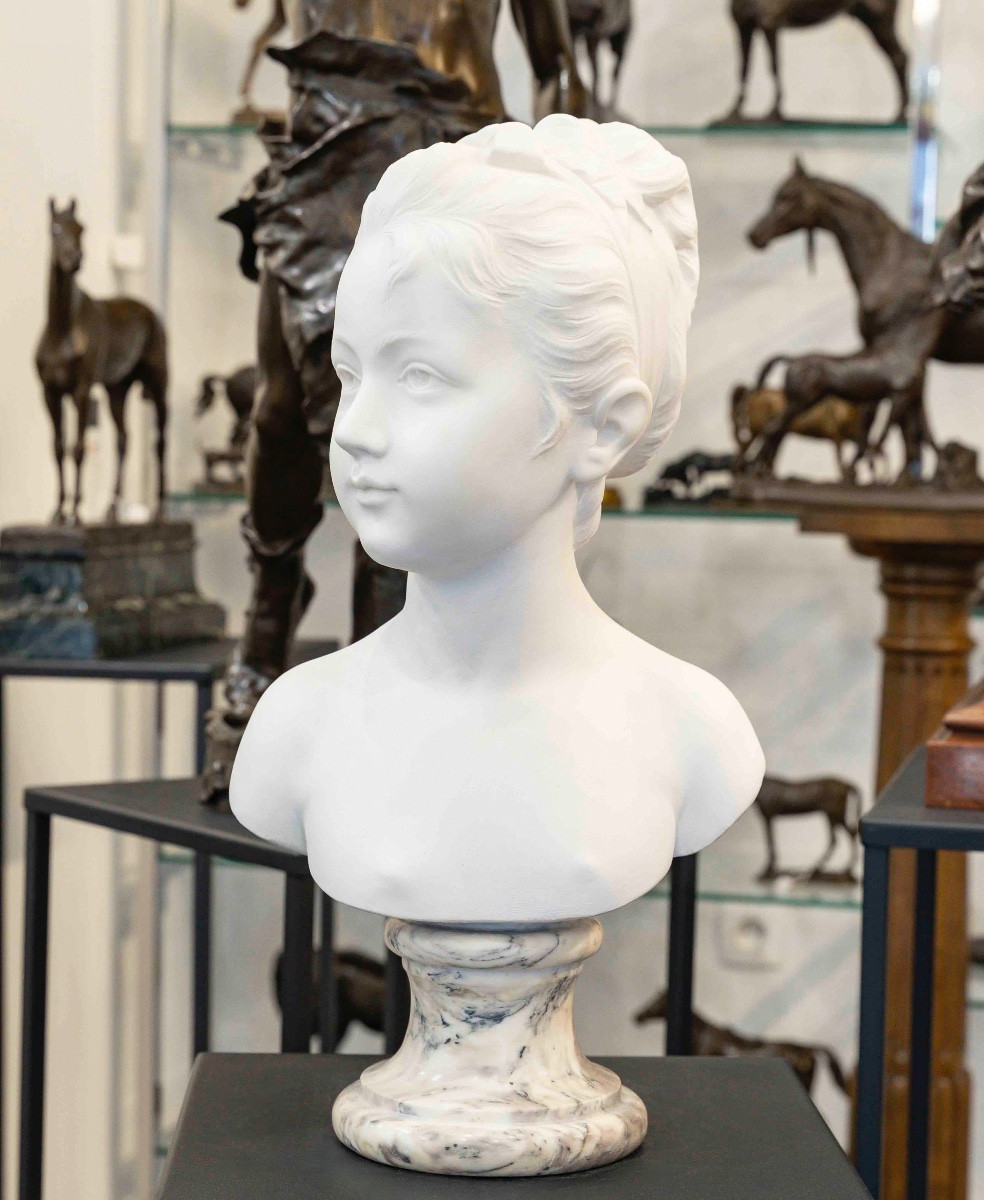


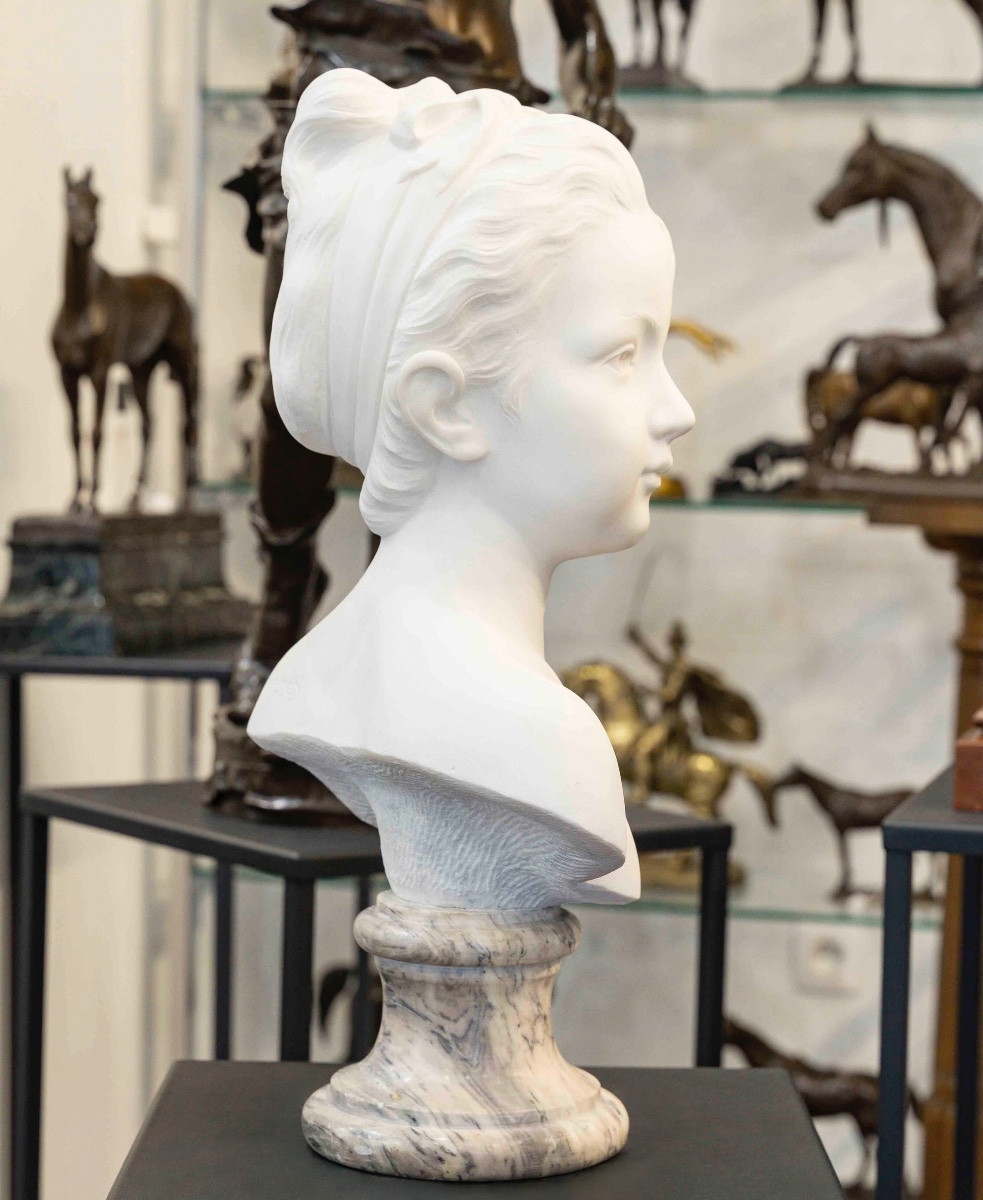
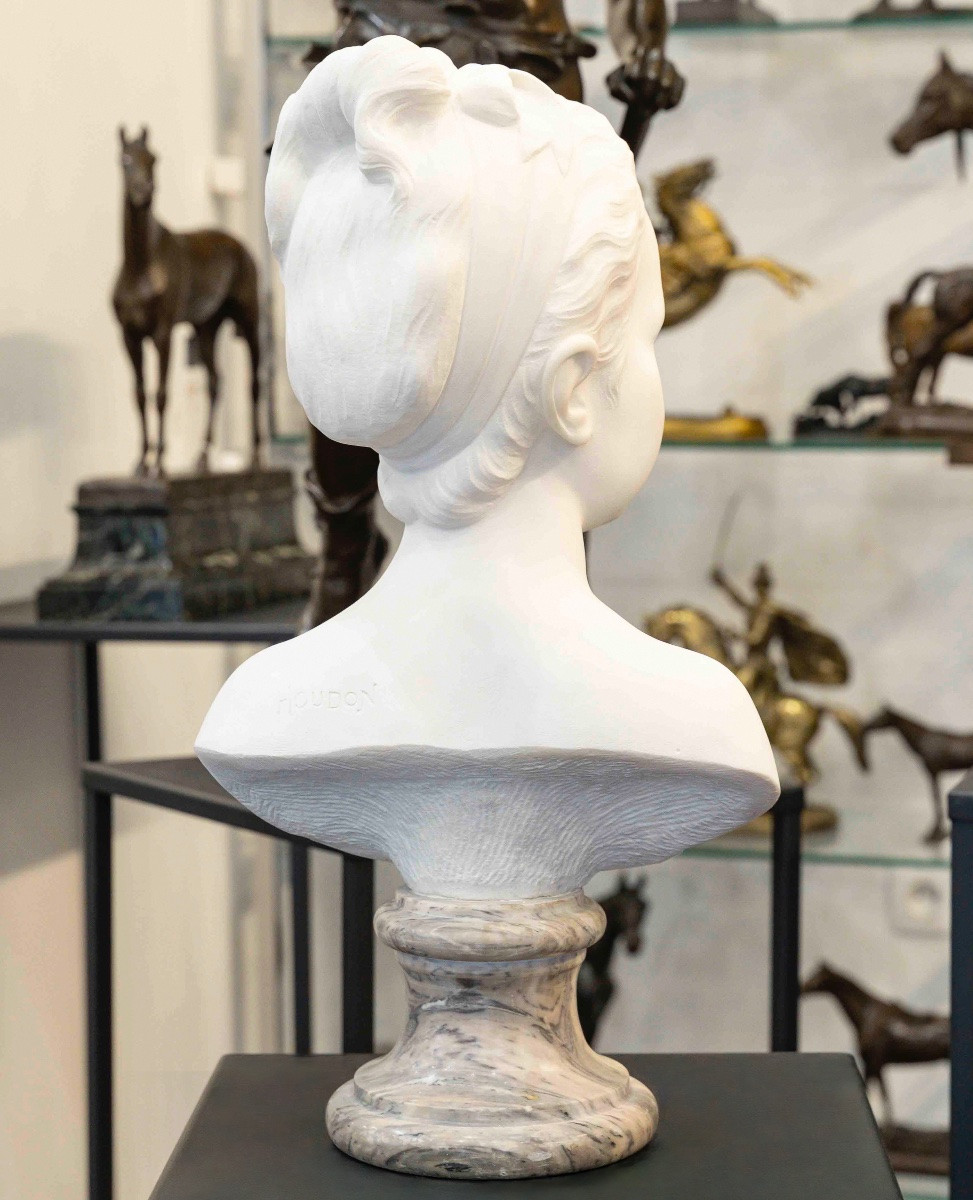
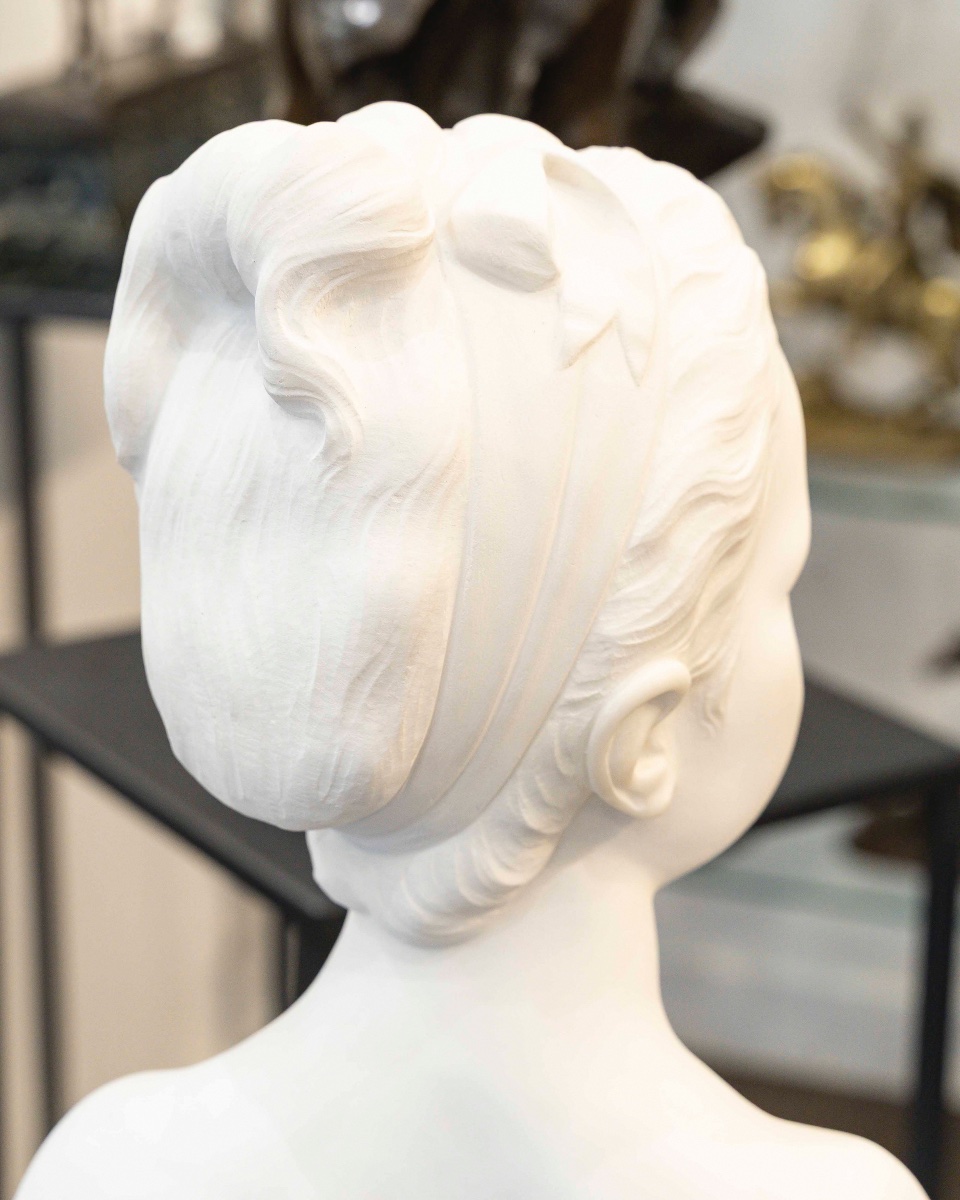
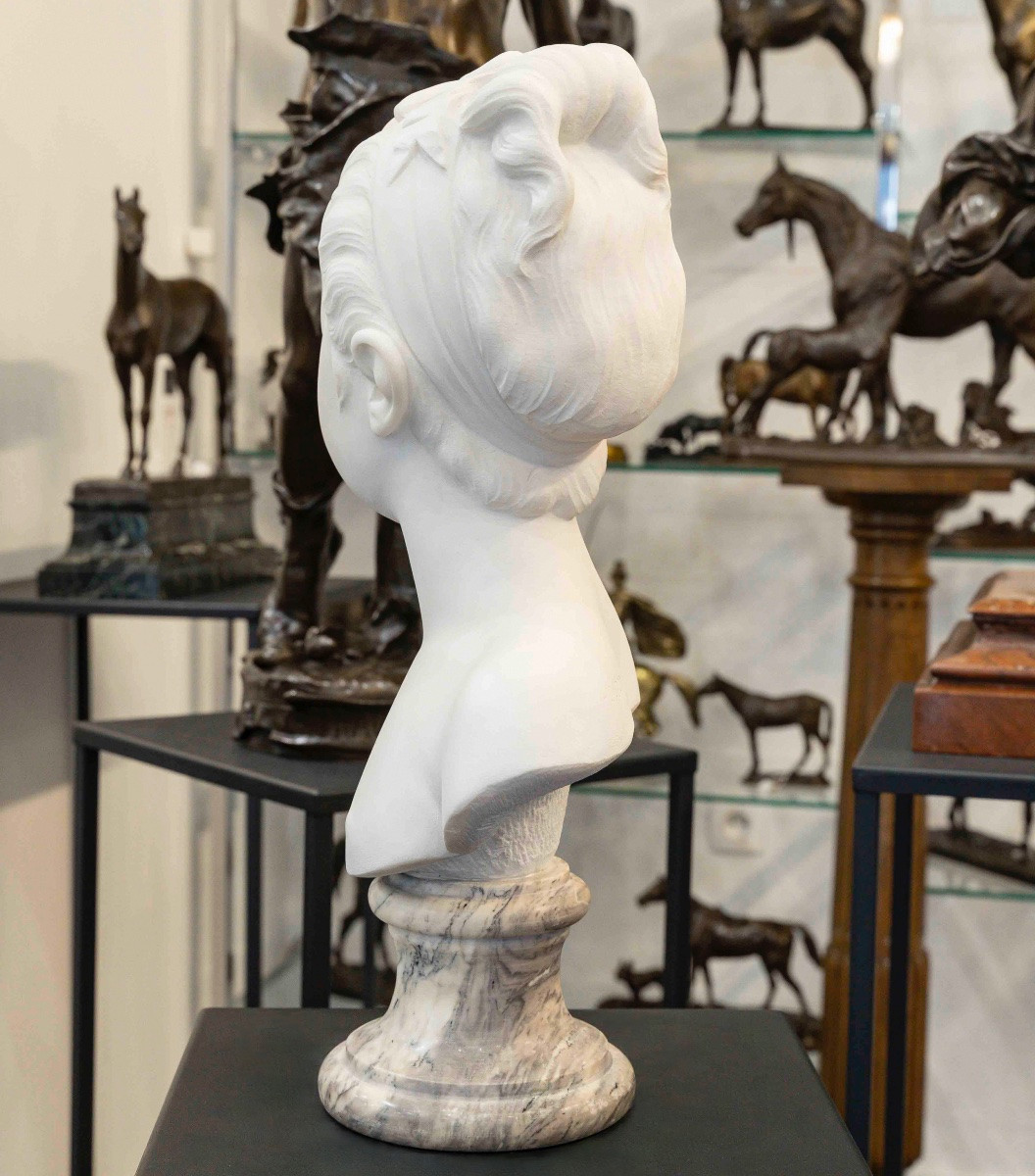

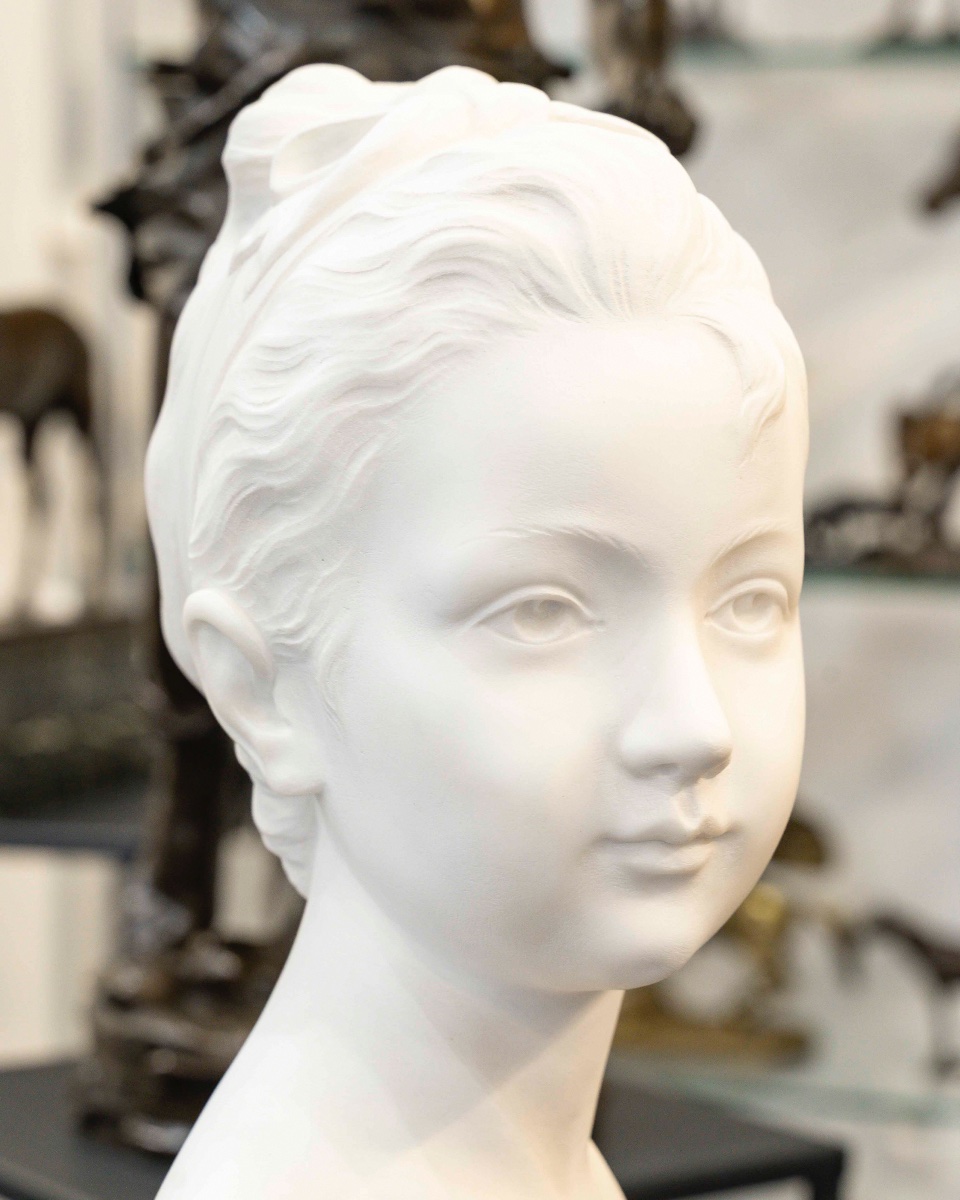
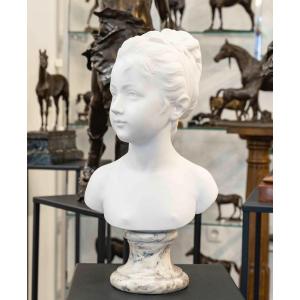


Bust in white Carrara marble , representing a bust of a young girl , "Marie-Louise Brongniart" , after the sculptor Jean-Antoine Houdon .
Through this bust , Houdon demonstrates his marvelous ability to transcribe without sentimentality the freshness of early childhood , of which Louise retains the curves .
Thanks to the rendering of the eyes , Houdon gives this thoughtful air that children sometimes take .
Louise and Alexandre are the children of Alexandre-Théodore Brongniart (1739-1813) , famous architect of the Paris Stock Exchange (Palais Brongniart) .
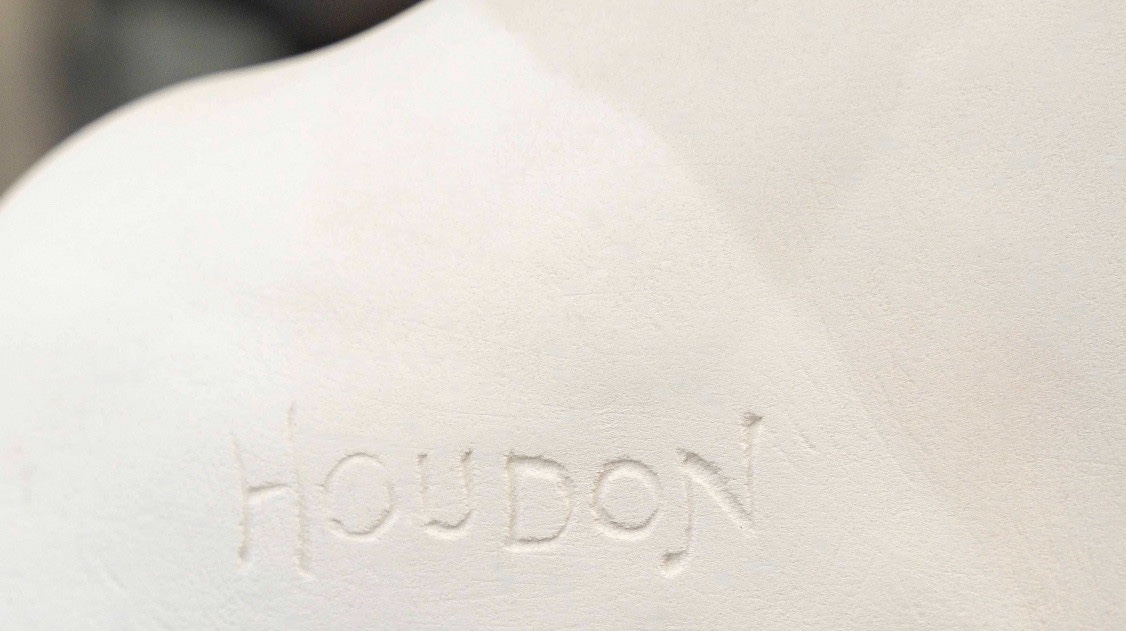
Ancient marble , signed "HOUDON" , on the back of the bust .
Sculpture resting on a marble pedestal .
Period second part of the 19th century .
Very good state of conservation .
Dimensions : 46 x 28 cm
Busts of children , very rare in the 17th century and in the first half of the 18th century , became more and more numerous from the years 1750-1760 . This phenomenon reflects a change in mentality with regard to young age , which is reflected in the publication of "l' Emile" by Jean-Jacques Rousseau in 1762 .
It is also explained by the extension of the sculpted portrait to wider layers of society , but also by the development of "Heads of studies", usually more or less idealized portraits .
Houdon showed an interest in child portraits very early on , as early as his training period in Italy .
He sent a child's head in marble to his first Salon in 1769 .
If it were necessary to prove that one can be an artist of genius by leading a perfectly orderly existence , by fiercely defending one's material interests and by manifesting an opportunism tempered with indifference towards the political events of one's time , the life of Jean Antoine Houdon would suffice to prove it .
The fact that his father held the modest job of janitor at the Royal School for Protected Students undoubtedly facilitated his beginnings : a pupil of the Royal Academy before he was fifteen , a resident of the School for Protected Students (1761 -1764) , then from the French Academy in Rome (1764-1768) , approved at the Royal Academy in 1769 , he was received as a member of the latter in 1777 , on presentation of his Morpheus (Louvre) .
If , in 1793 , he was among the first to spontaneously renounce his title and his academic privileges , he was elected a member of the new Institute in 1795 , and successfully presented his candidacy for the order of the Legion of Honor in 1803 .
Neither his two trips to Germany (1771 and 1773) , nor his trip to the United States (1785) , nor his marriage (1786) , nor even the revolutionary turmoil disturbed his creative activity , the most visible manifestation of which was the regularity with which he exhibited at the Salons : from 1769 to 1795 , he presented a fairly large number of sculptures every two years .
Subsequently , his shipments , which were less considerable , were also less regular and ceased after 1814 .
Through this bust , Houdon demonstrates his marvelous ability to transcribe without sentimentality the freshness of early childhood , of which Louise retains the curves .
Thanks to the rendering of the eyes , Houdon gives this thoughtful air that children sometimes take .
Louise and Alexandre are the children of Alexandre-Théodore Brongniart (1739-1813) , famous architect of the Paris Stock Exchange (Palais Brongniart) .
Ancient marble , signed "HOUDON" , on the back of the bust .
Sculpture resting on a marble pedestal .
Period second part of the 19th century .
Very good state of conservation .
Dimensions : 46 x 28 cm
Busts of children , very rare in the 17th century and in the first half of the 18th century , became more and more numerous from the years 1750-1760 . This phenomenon reflects a change in mentality with regard to young age , which is reflected in the publication of "l' Emile" by Jean-Jacques Rousseau in 1762 .
It is also explained by the extension of the sculpted portrait to wider layers of society , but also by the development of "Heads of studies", usually more or less idealized portraits .
Houdon showed an interest in child portraits very early on , as early as his training period in Italy .
He sent a child's head in marble to his first Salon in 1769 .
If it were necessary to prove that one can be an artist of genius by leading a perfectly orderly existence , by fiercely defending one's material interests and by manifesting an opportunism tempered with indifference towards the political events of one's time , the life of Jean Antoine Houdon would suffice to prove it .
The fact that his father held the modest job of janitor at the Royal School for Protected Students undoubtedly facilitated his beginnings : a pupil of the Royal Academy before he was fifteen , a resident of the School for Protected Students (1761 -1764) , then from the French Academy in Rome (1764-1768) , approved at the Royal Academy in 1769 , he was received as a member of the latter in 1777 , on presentation of his Morpheus (Louvre) .
If , in 1793 , he was among the first to spontaneously renounce his title and his academic privileges , he was elected a member of the new Institute in 1795 , and successfully presented his candidacy for the order of the Legion of Honor in 1803 .
Neither his two trips to Germany (1771 and 1773) , nor his trip to the United States (1785) , nor his marriage (1786) , nor even the revolutionary turmoil disturbed his creative activity , the most visible manifestation of which was the regularity with which he exhibited at the Salons : from 1769 to 1795 , he presented a fairly large number of sculptures every two years .
Subsequently , his shipments , which were less considerable , were also less regular and ceased after 1814 .
Explore similar pieces and discover your ideal find:
Marble & Stone Sculptures