

Attilio Fagioli - Carrara Marble – “meditazione”
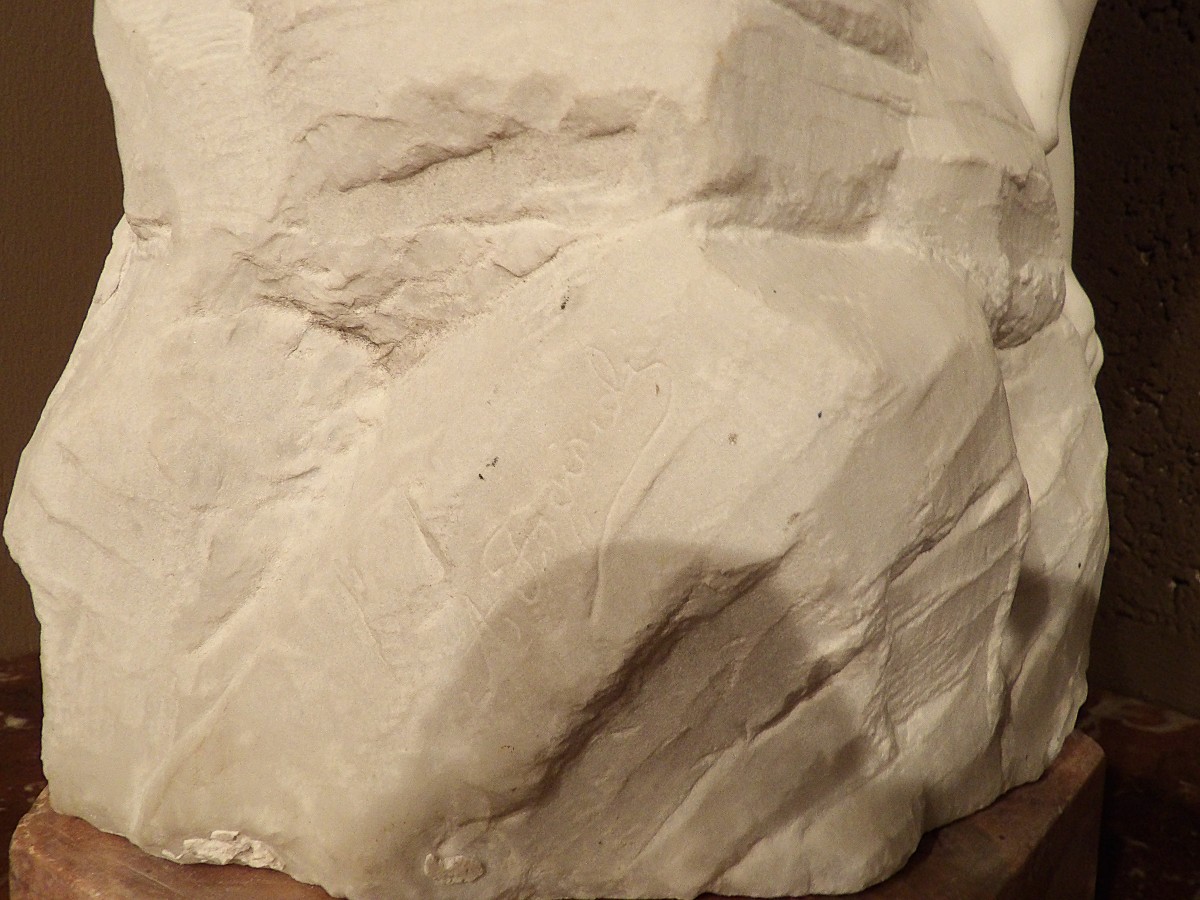
Artist: Attilio Fagioli
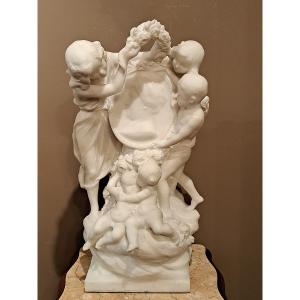
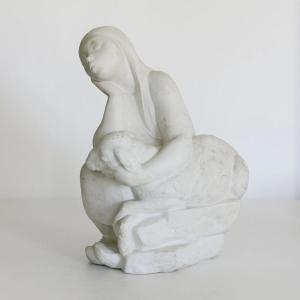
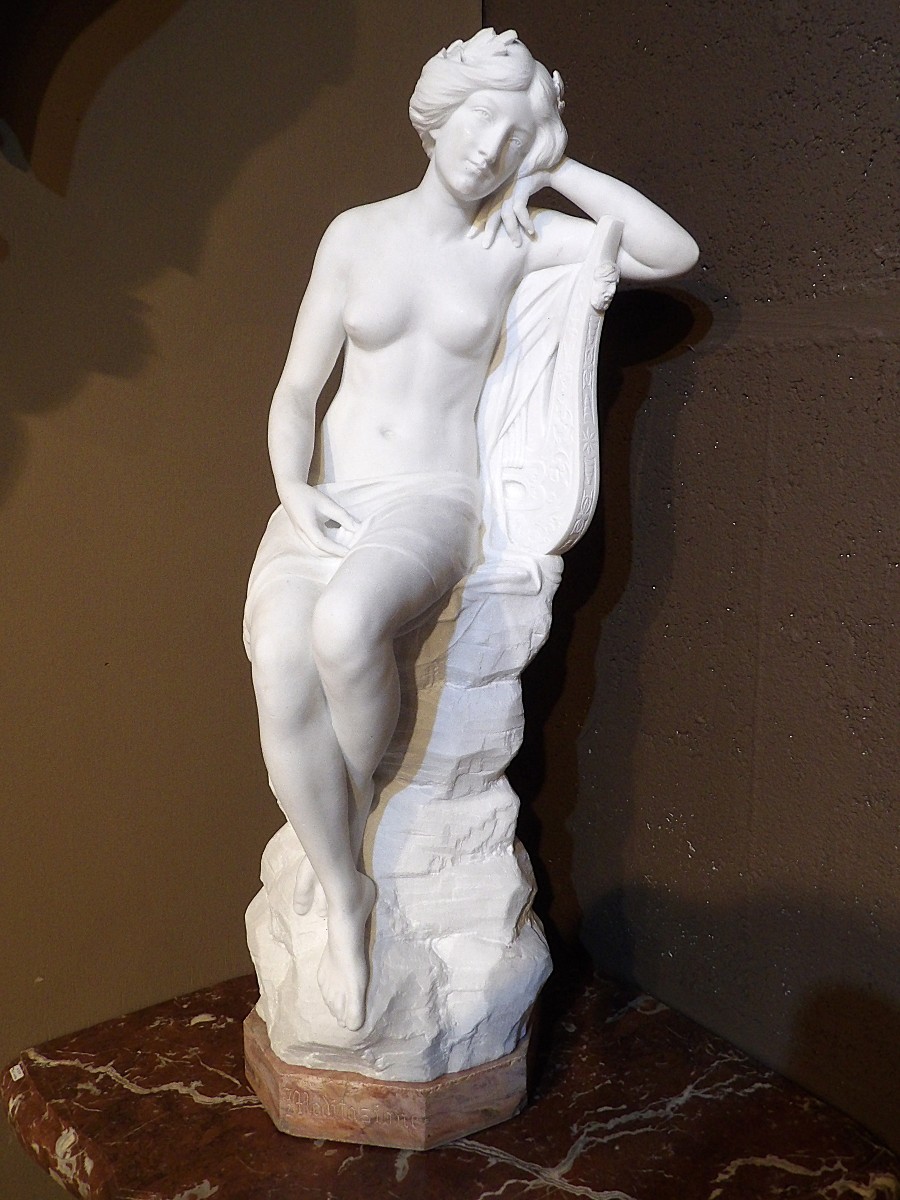
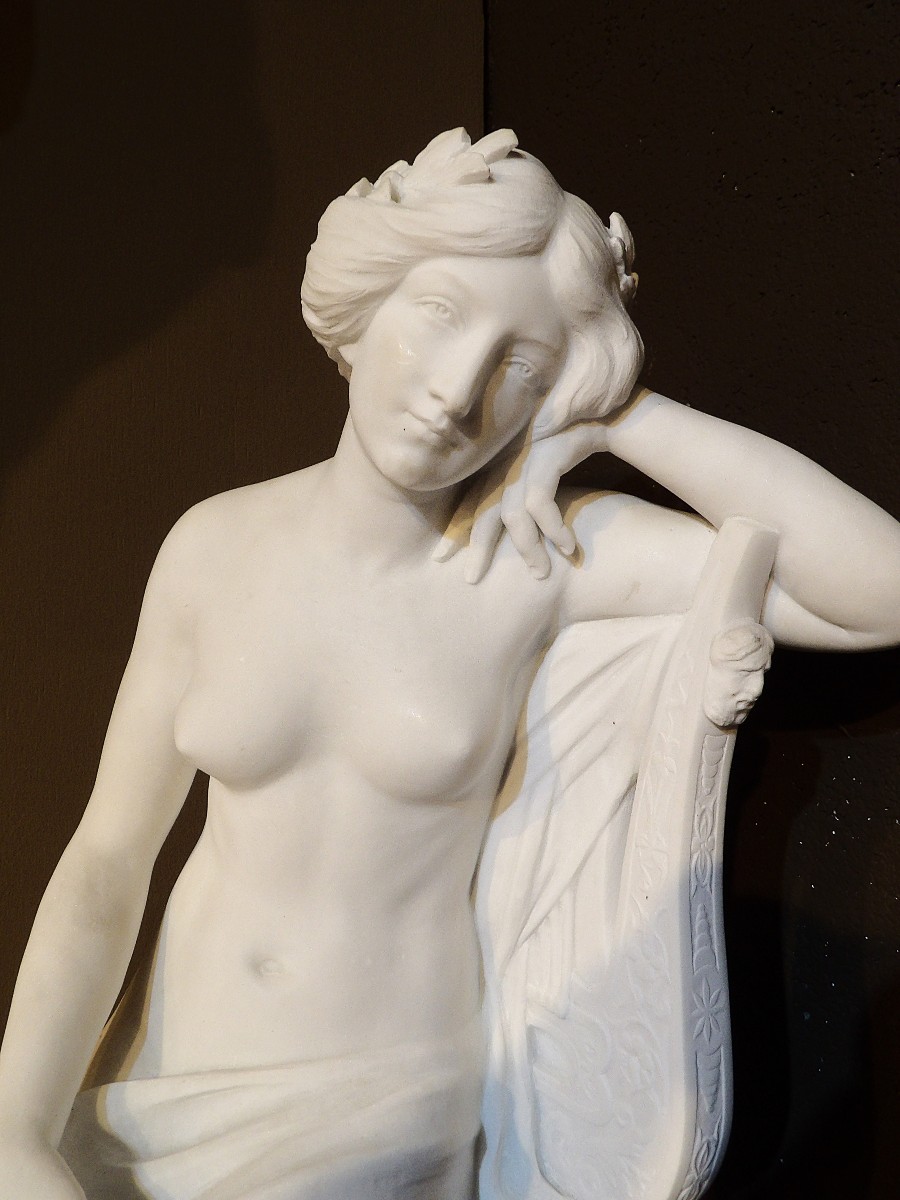
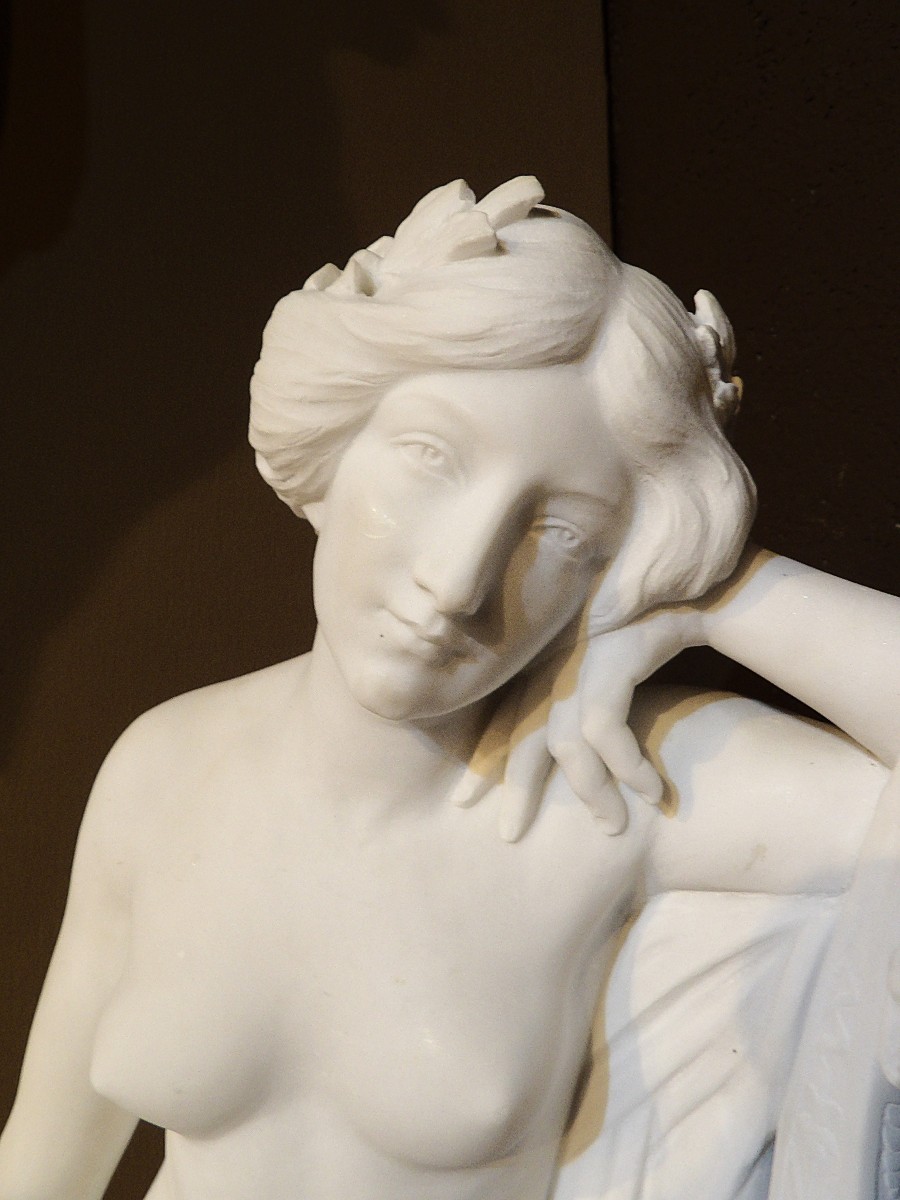
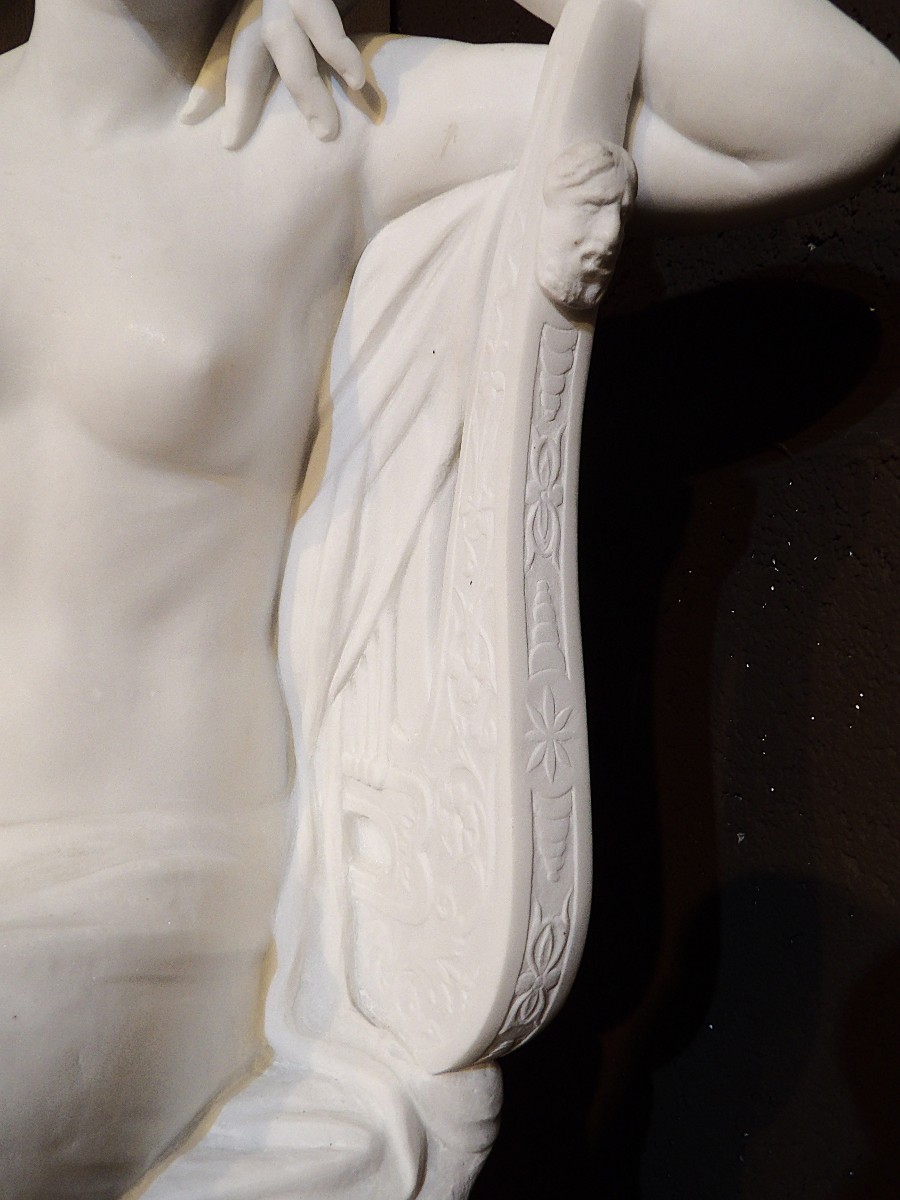
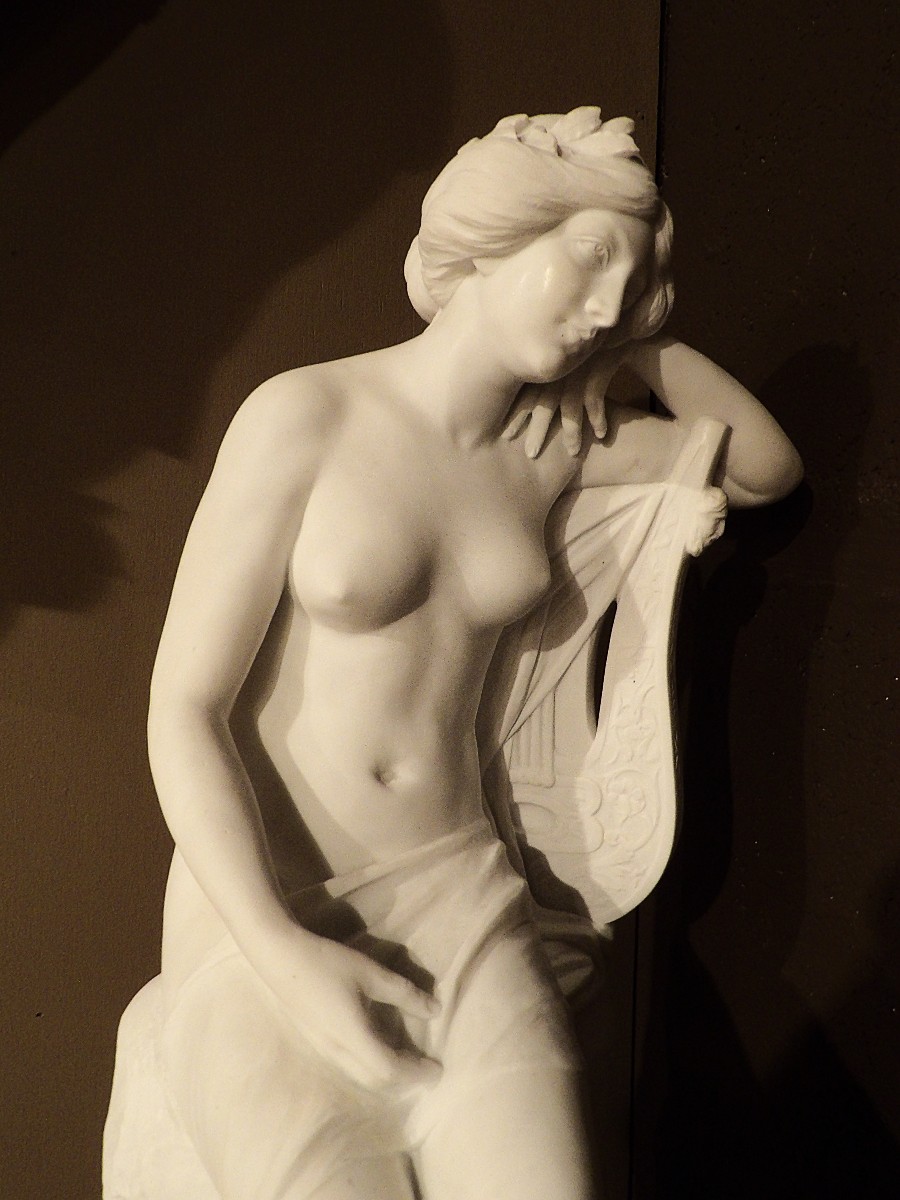
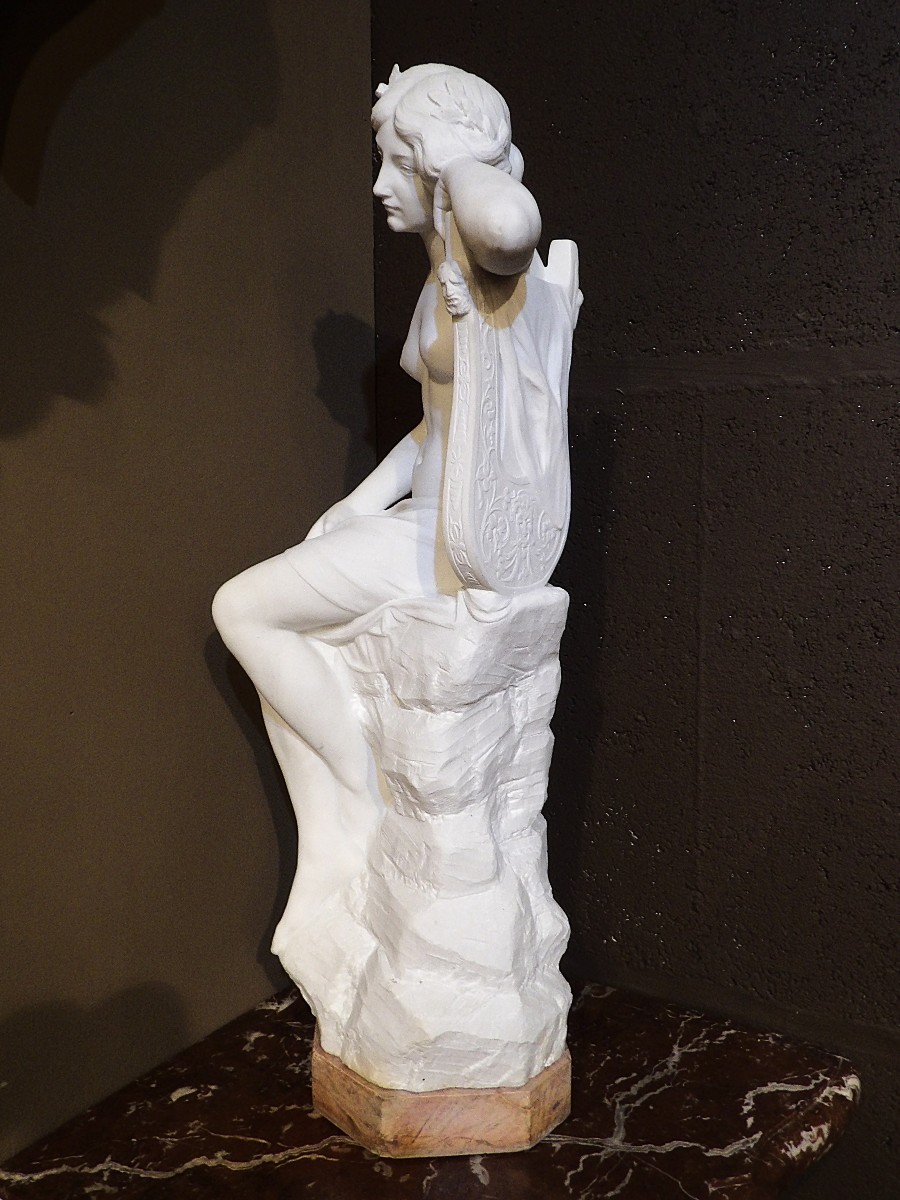
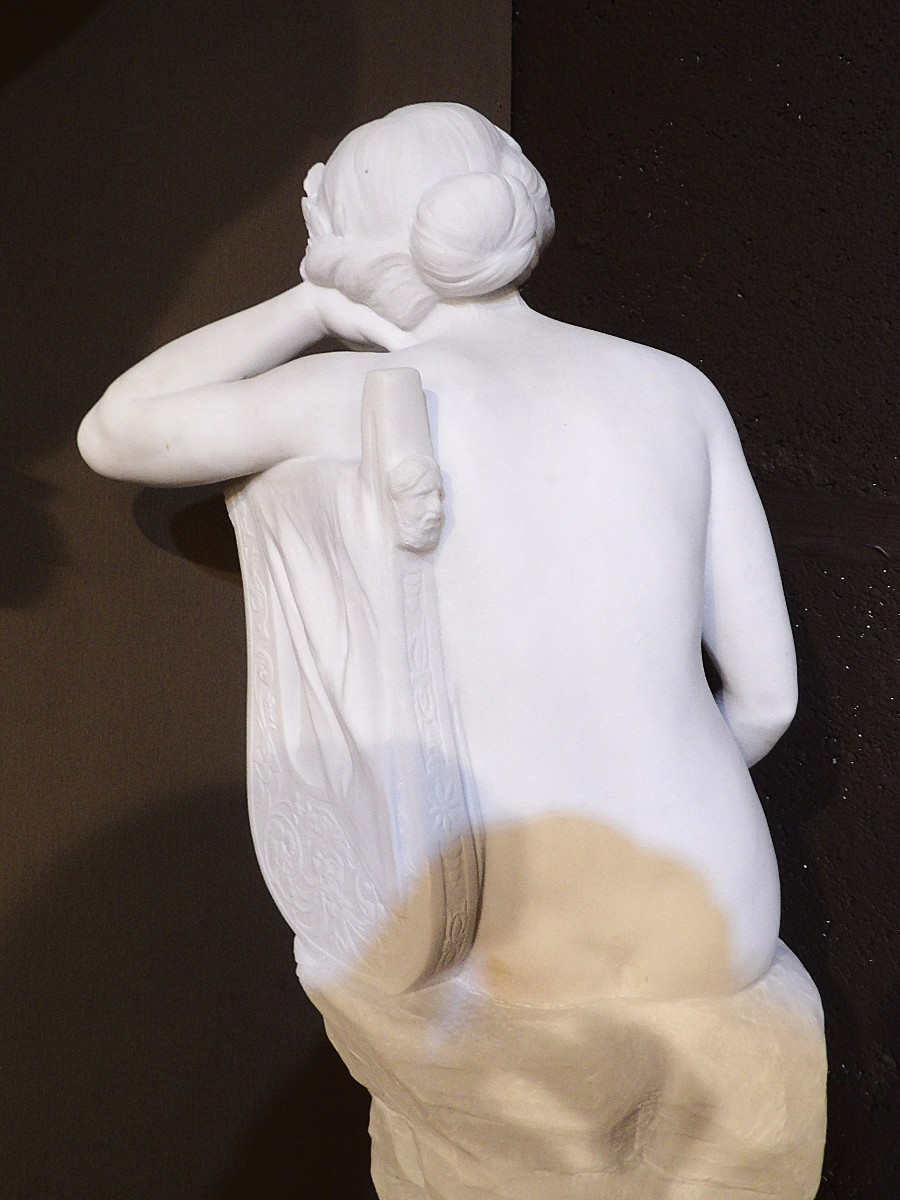
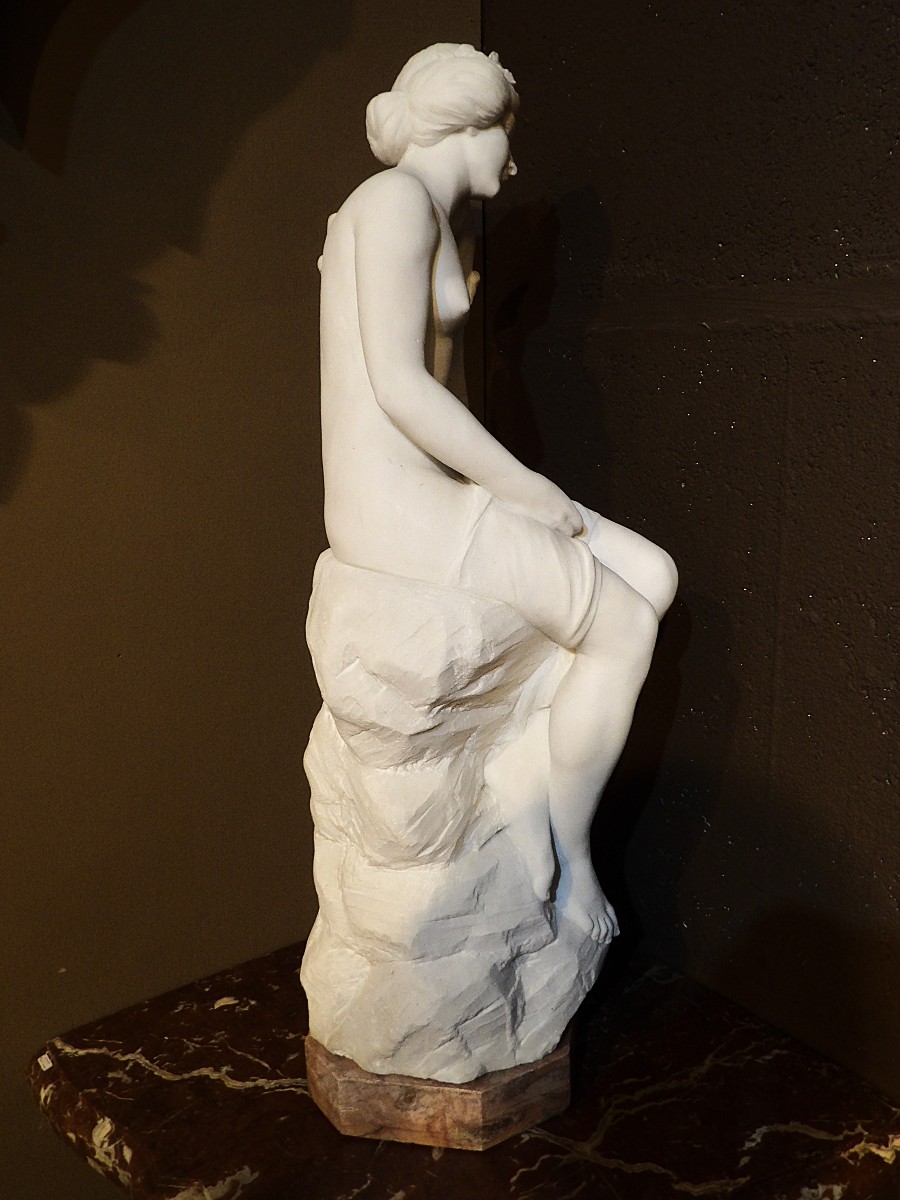
An important Carrara marble sculpture depicting a young woman resting with her harp.
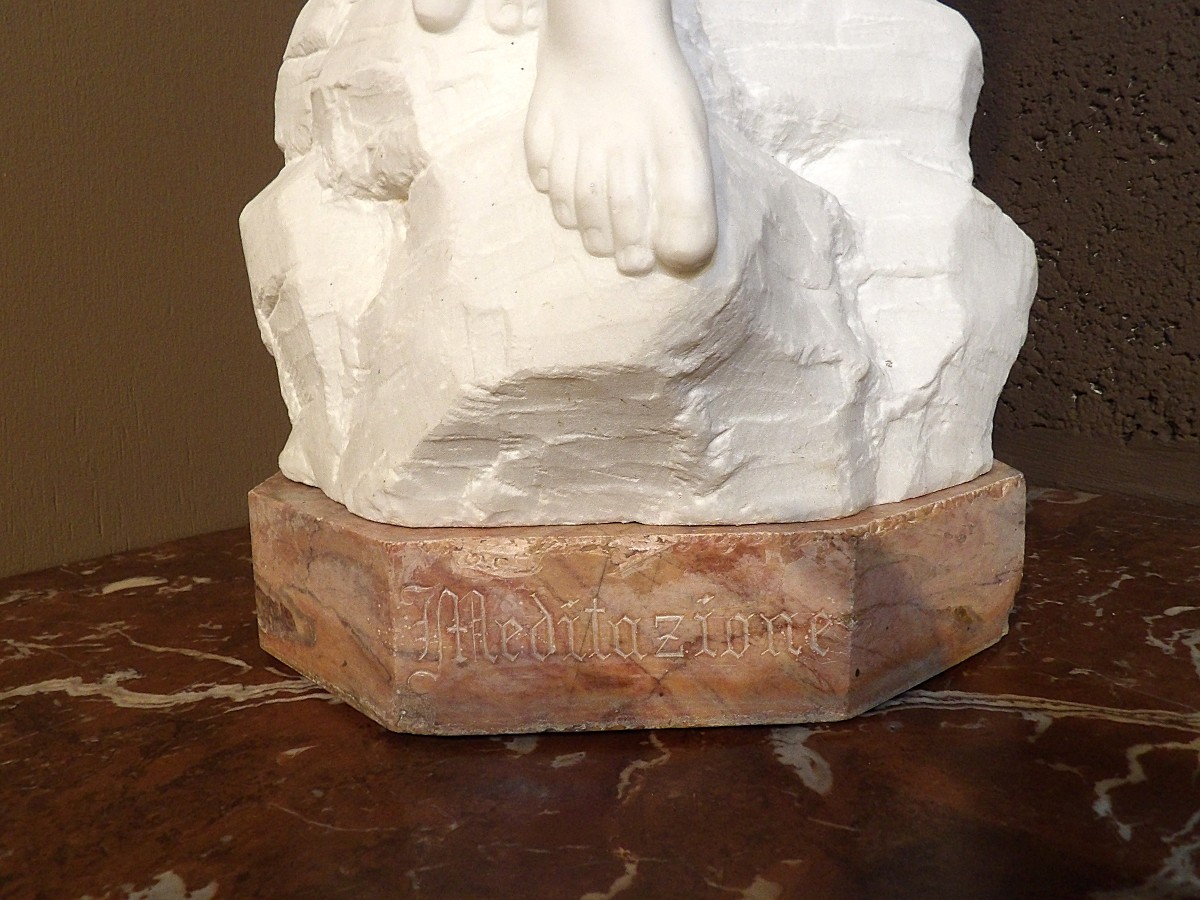
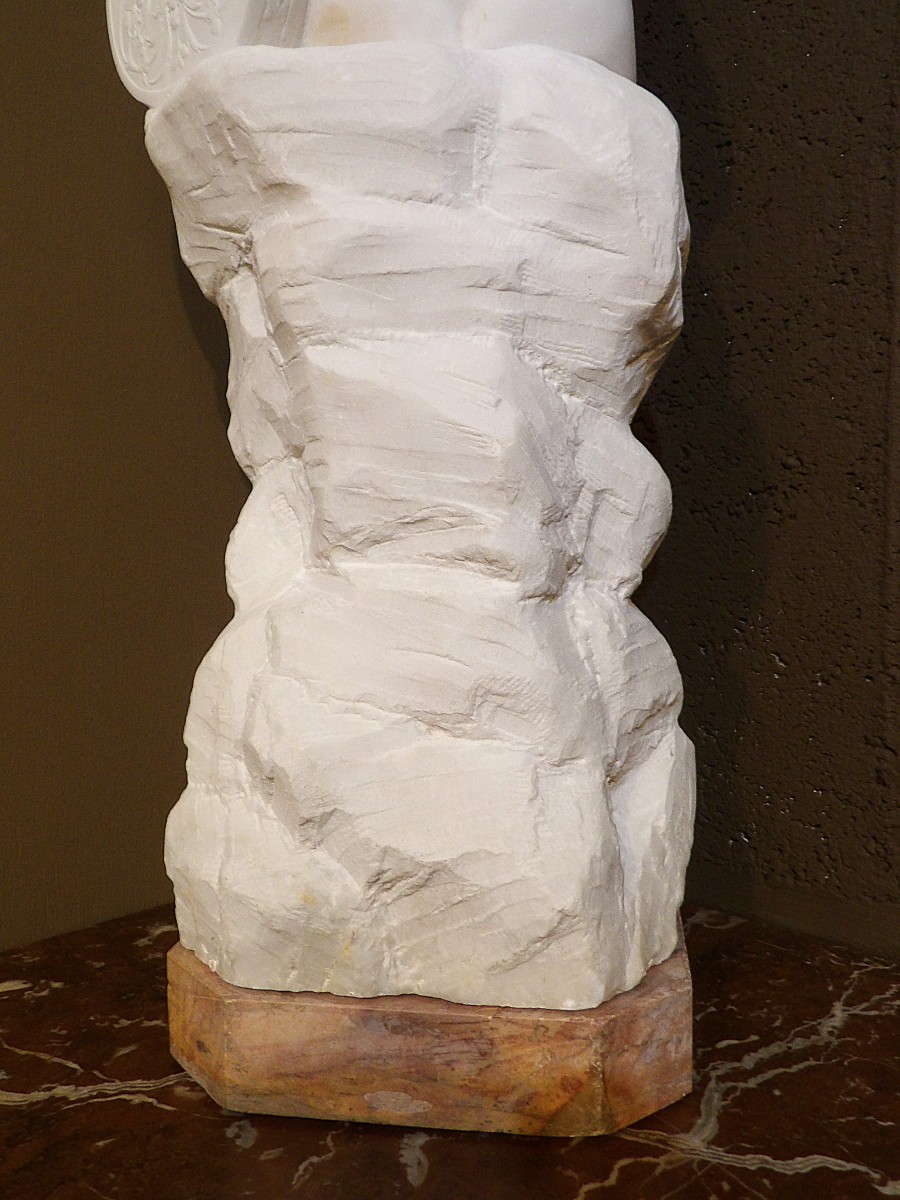
The statue rests on its original marble base, entitled "Meditation."
The quality of the sculpture testifies to the talent of a highly accomplished artist.
Attilio Fagioli was one of those discreet yet essential artists who gave a sculpted voice to Italy at the turn of the 19th and 20th centuries.
Born in 1877 in Bagno a Ripoli, near Florence, he grew up in a region where art was everywhere: in the stone of churches, in public squares, in the legacy of the Renaissance. Early on, he chose sculpture and trained with Florentine masters, heirs to a long figurative tradition. This training profoundly influenced his vision: Fagioli would always remain faithful to the human figure, to the clarity of gesture, to the emotion contained within the body.
At the beginning of the 20th century, he established himself within the Italian artistic landscape, poised between tradition and modernity. Without seeking the radical break of the avant-garde, he renewed classical forms with a more intimate sensibility, attentive to the psychology and dignity of his subjects. He sculpted busts, religious figures, and commemorative monuments, often in bronze or stone, with a restrained yet expressive style.
One of his most significant works is the Monument to the Fallen in Galluzzo, near Florence, dedicated to the dead of the First World War. Like many artists of his generation, Fagioli was deeply affected by the trauma of the conflict: his sculpture expresses collective mourning without excessive heroic emphasis, favoring a quiet and human gravity.
In 1931, he moved to Milan, a more industrial and modern city, where he continued his career until the end of his life. It was there that he created one of his most popular works: the Fontana a Pinocchio, inspired by Carlo Collodi's famous character. This fountain reveals another facet of Fagioli: a sculptor capable of poetry, storytelling, and gentleness, attentive to childhood and the imagination, without ever losing the rigor of his craft.
Attilio Fagioli died in 1966, leaving behind a body of work that is not that of a revolutionary, but of a highly skilled craftsman, deeply rooted in Italian culture. His legacy lies in this fidelity to the human body, to collective memory, and to measured beauty: a sculpture that does not shout, but speaks to those who see it for a long time.
The statue rests on its original marble base, entitled "Meditation."
The quality of the sculpture testifies to the talent of a highly accomplished artist.
Attilio Fagioli was one of those discreet yet essential artists who gave a sculpted voice to Italy at the turn of the 19th and 20th centuries.
Born in 1877 in Bagno a Ripoli, near Florence, he grew up in a region where art was everywhere: in the stone of churches, in public squares, in the legacy of the Renaissance. Early on, he chose sculpture and trained with Florentine masters, heirs to a long figurative tradition. This training profoundly influenced his vision: Fagioli would always remain faithful to the human figure, to the clarity of gesture, to the emotion contained within the body.
At the beginning of the 20th century, he established himself within the Italian artistic landscape, poised between tradition and modernity. Without seeking the radical break of the avant-garde, he renewed classical forms with a more intimate sensibility, attentive to the psychology and dignity of his subjects. He sculpted busts, religious figures, and commemorative monuments, often in bronze or stone, with a restrained yet expressive style.
One of his most significant works is the Monument to the Fallen in Galluzzo, near Florence, dedicated to the dead of the First World War. Like many artists of his generation, Fagioli was deeply affected by the trauma of the conflict: his sculpture expresses collective mourning without excessive heroic emphasis, favoring a quiet and human gravity.
In 1931, he moved to Milan, a more industrial and modern city, where he continued his career until the end of his life. It was there that he created one of his most popular works: the Fontana a Pinocchio, inspired by Carlo Collodi's famous character. This fountain reveals another facet of Fagioli: a sculptor capable of poetry, storytelling, and gentleness, attentive to childhood and the imagination, without ever losing the rigor of his craft.
Attilio Fagioli died in 1966, leaving behind a body of work that is not that of a revolutionary, but of a highly skilled craftsman, deeply rooted in Italian culture. His legacy lies in this fidelity to the human body, to collective memory, and to measured beauty: a sculpture that does not shout, but speaks to those who see it for a long time.
4 800 €
Period: 19th century
Style: Napoleon 3rd
Condition: Perfect condition
Material: Marble
Width: 30 cm
Height: 80 cm
Reference (ID): 1672932
Availability: In stock
Print