THIS OBJECT WAS SOLD
Portable Louis XVI Period Clock Signed De Bon And Barbezat, Attributed To R. Osmond
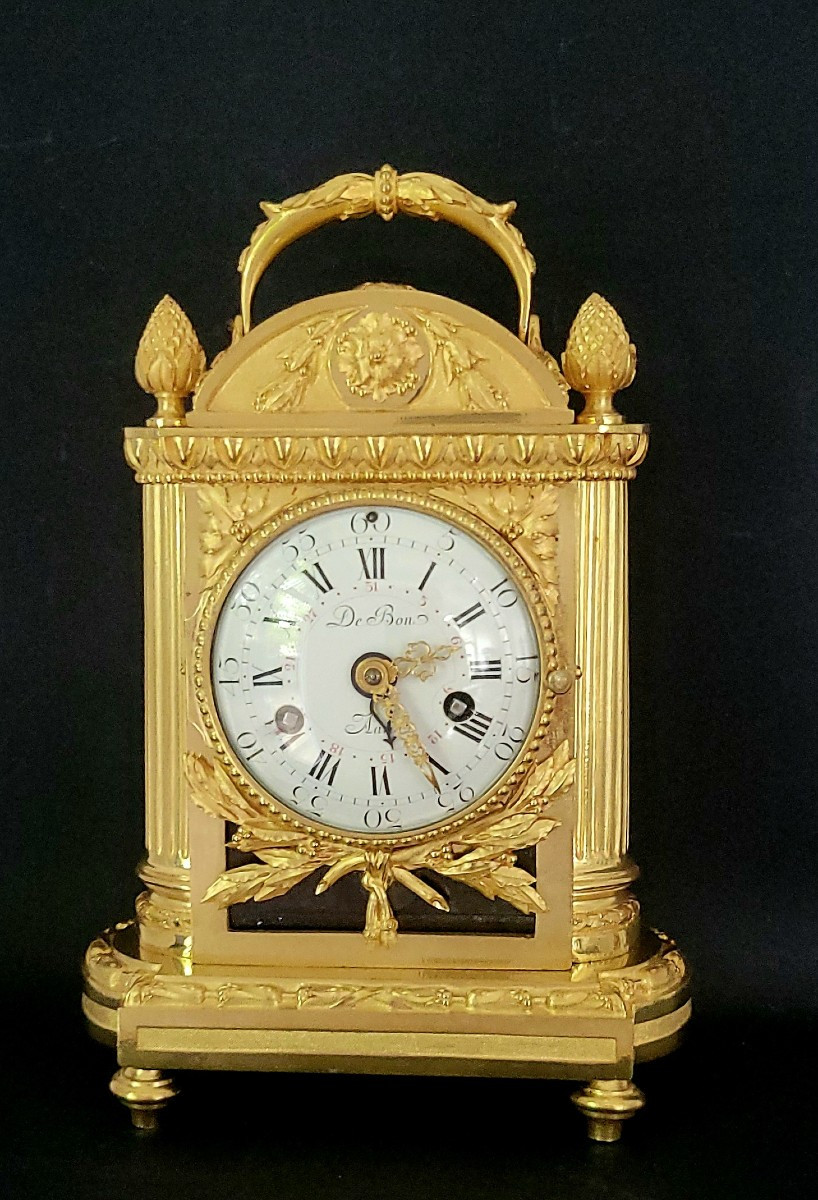
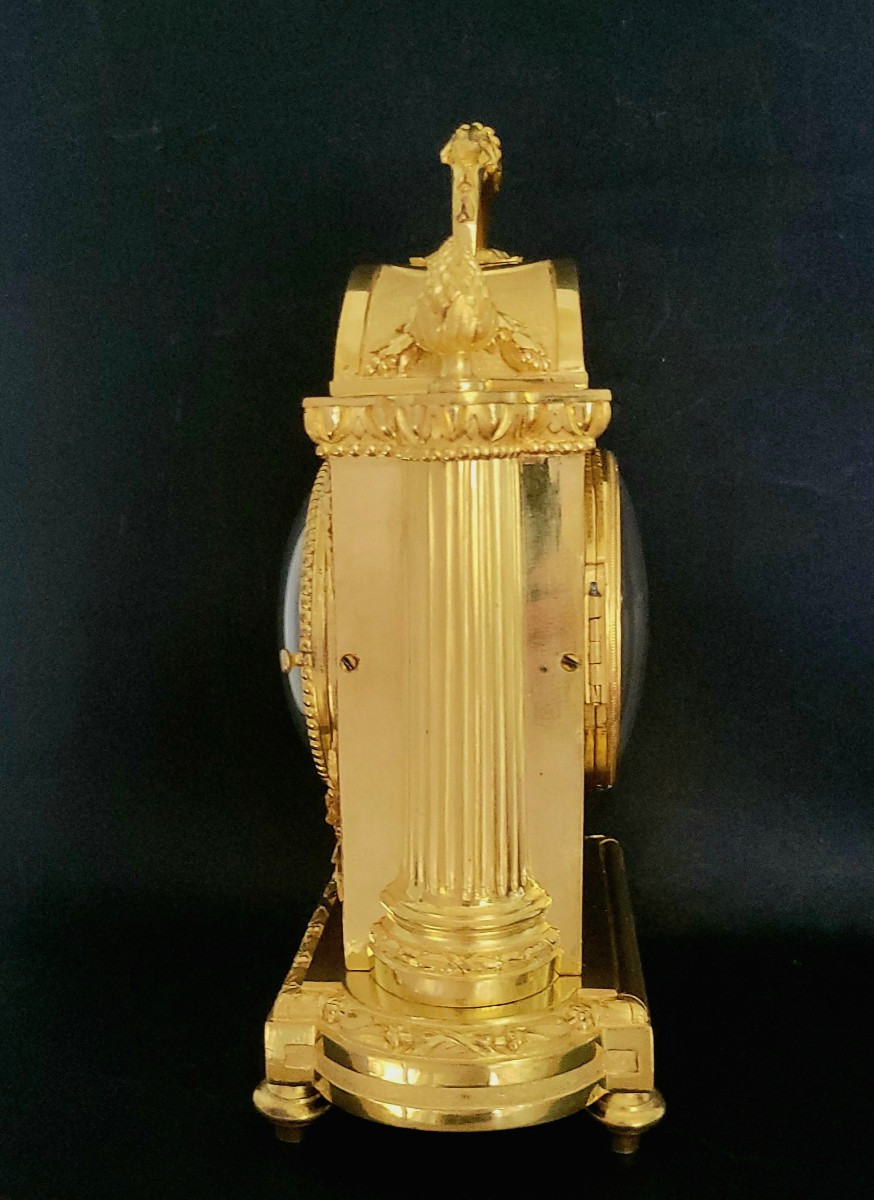
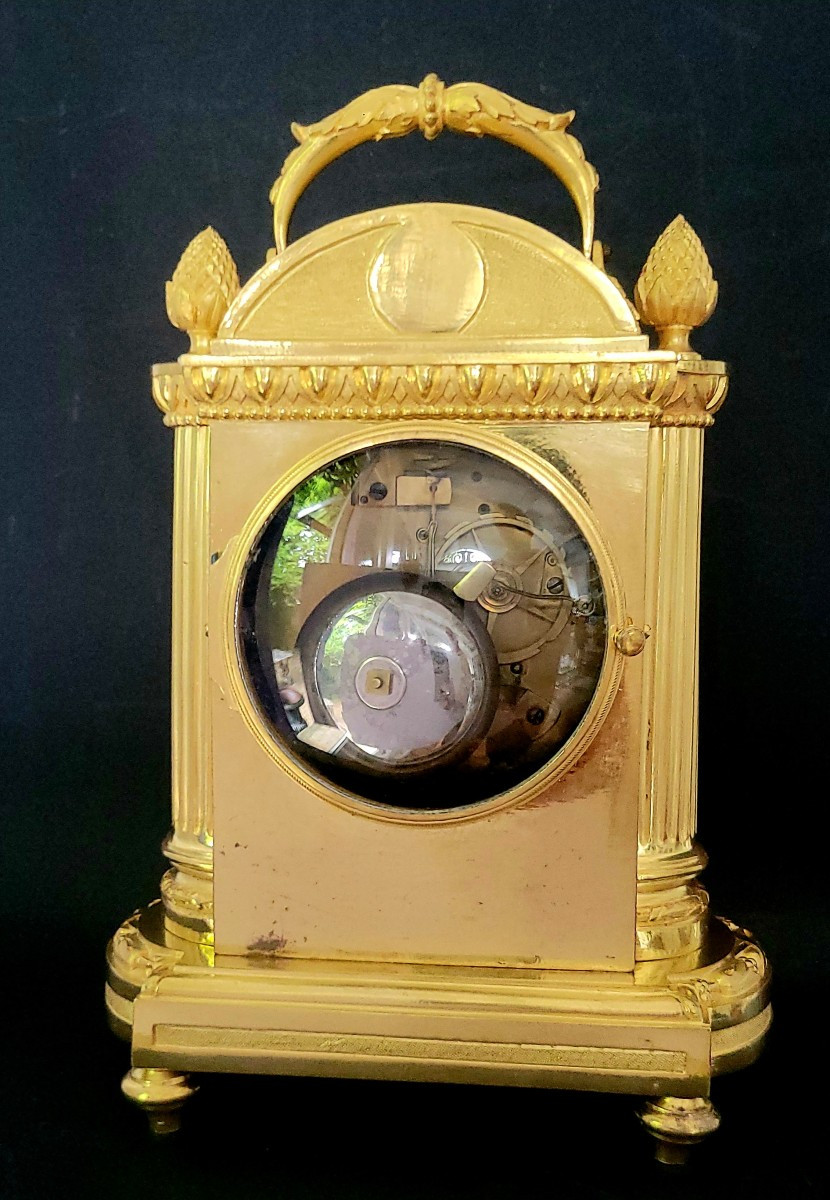



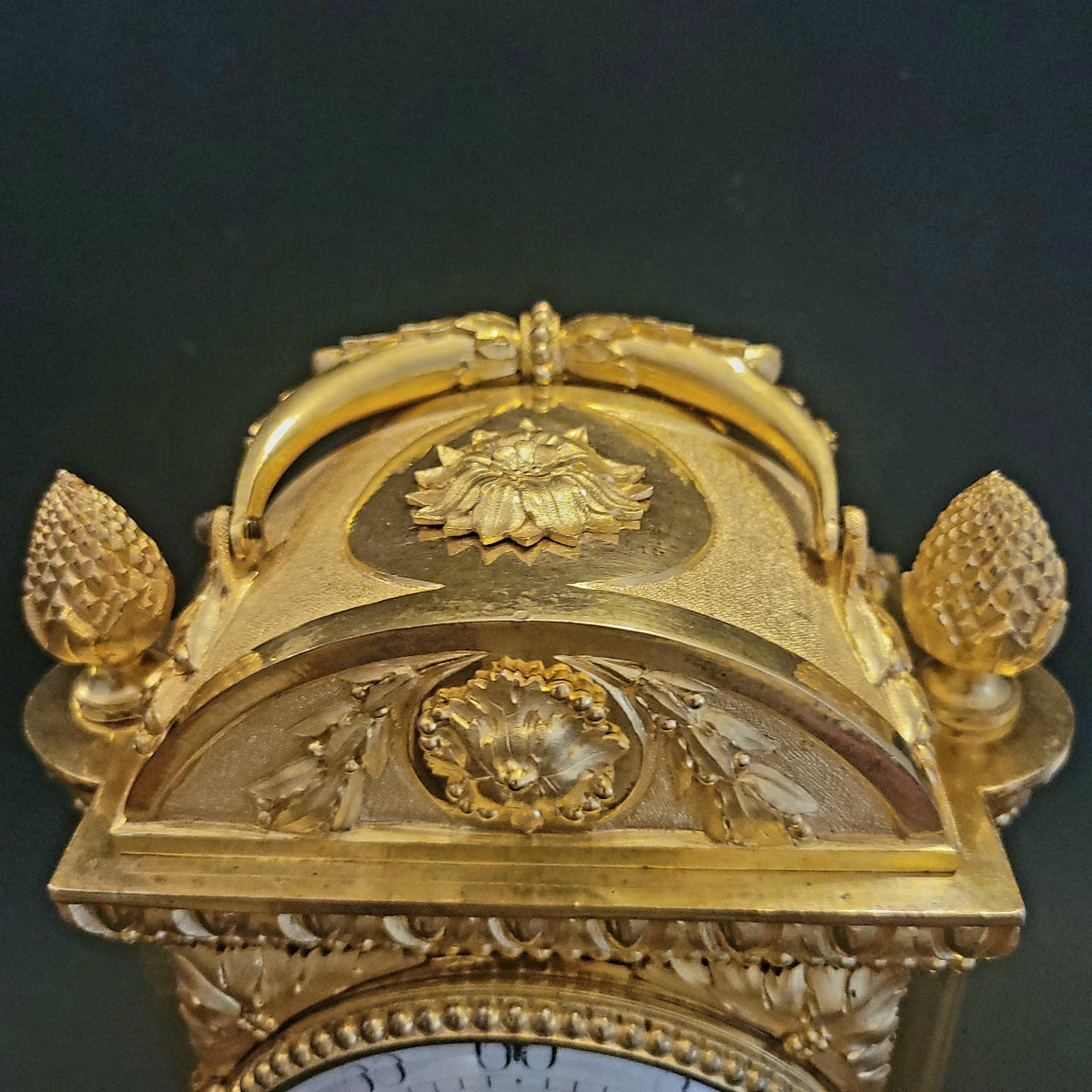
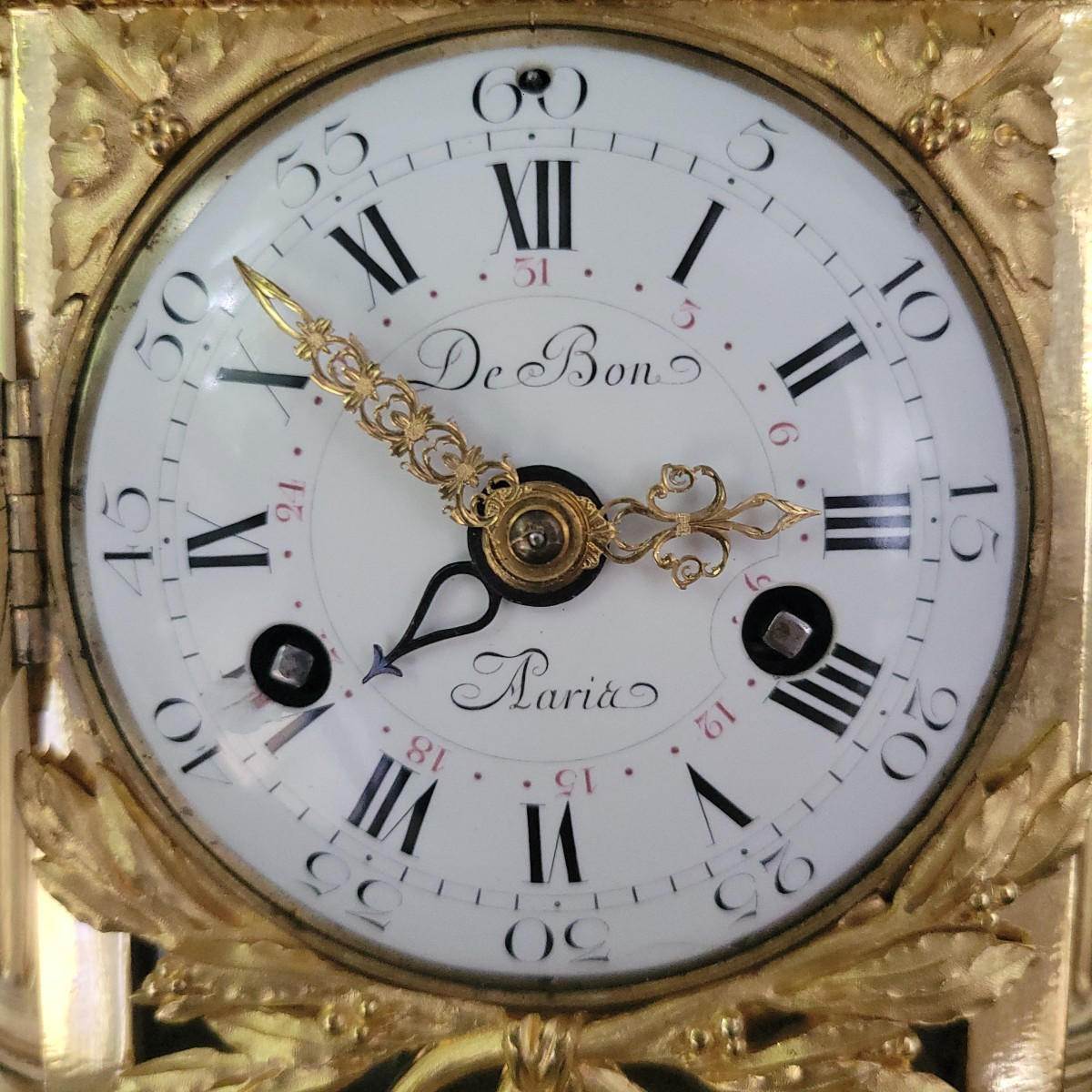

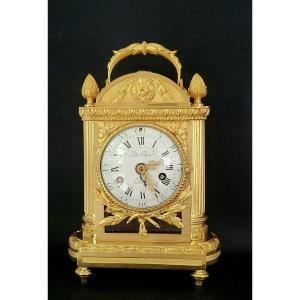


Rare small portable clock in finely chased and mercury-gilded bronze, finished in burnished and matte gold.
The stepped base is decorated with a frieze of foliage and crossed ribbons. The rounded sides are flanked by fluted half-columns supporting the entablature.
The entablature is highlighted with an egg-and-dart frieze and surmounted by pinecones and a rounded pediment featuring rosettes and foliage against a matte background. The leafy handle detaches from the pediment.
The clock rests on four "spool" feet.
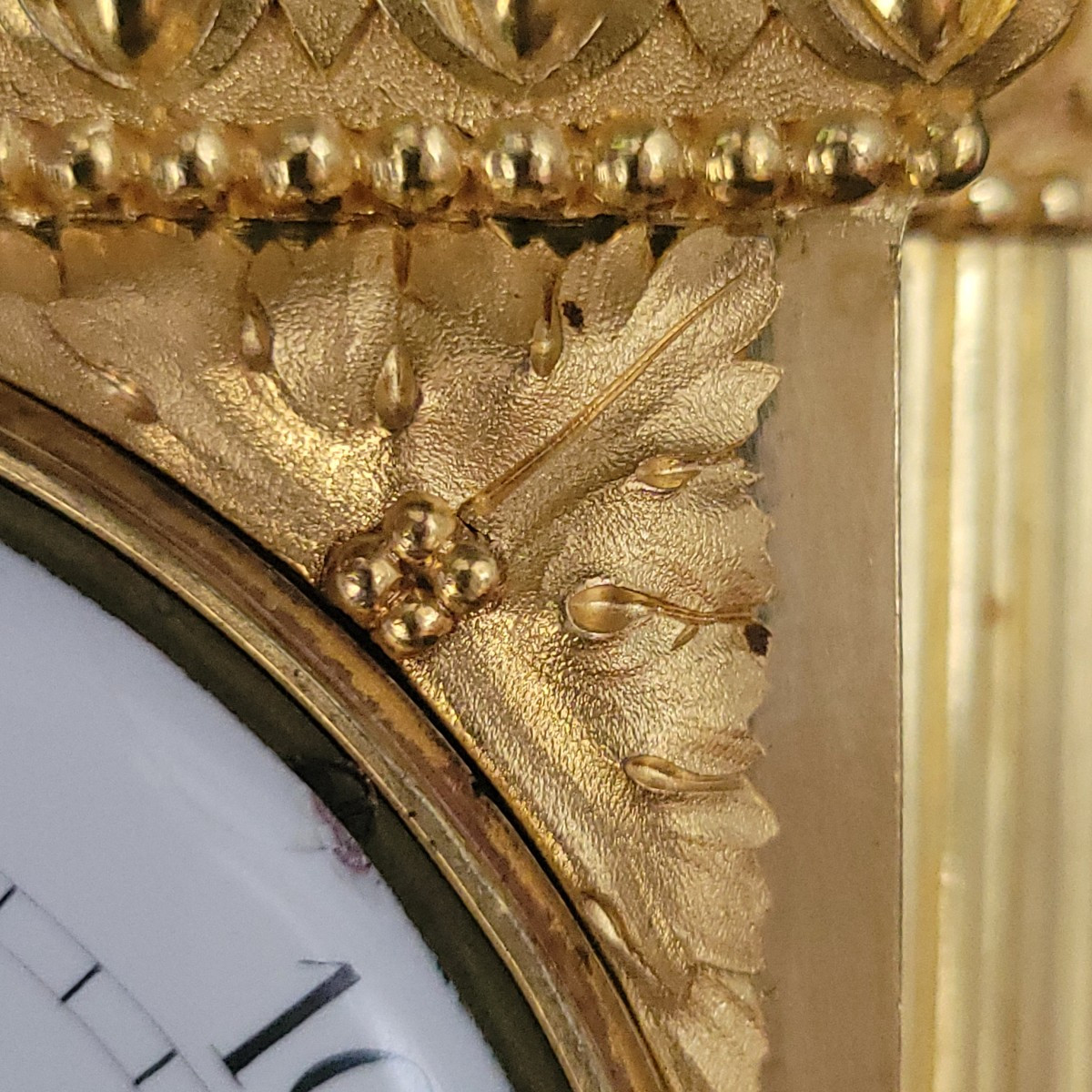
The movement, occupying the central front, is framed by two spandrels and a cascading laurel motif.
The striking movement chimes the hours and half-hours and includes a calendar mechanism.
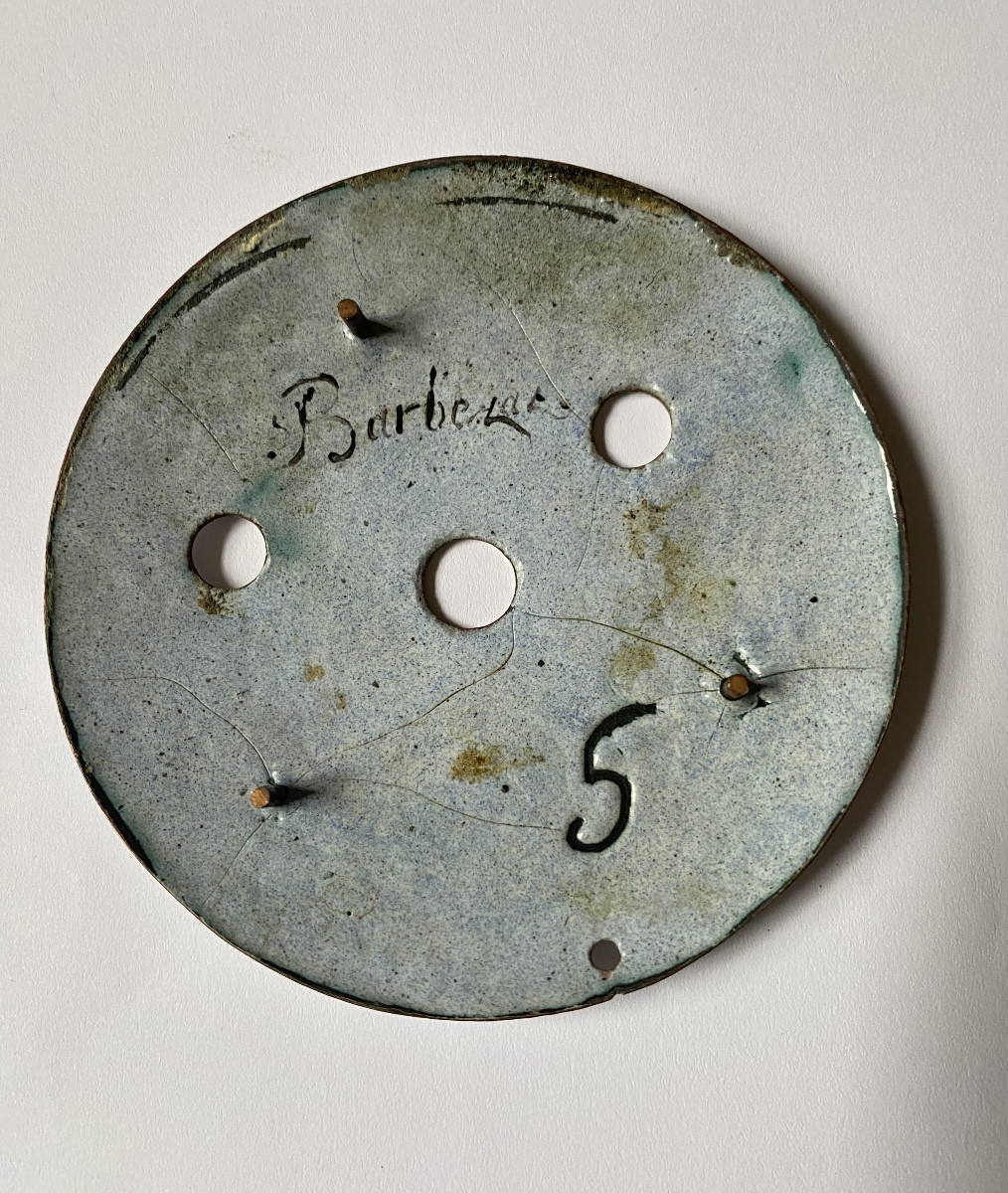
The white enamel dial, signed De Bon Paris, also bears the signature of the enameller Barbezat on the reverse enamel.
The hands are pierced, finely chased and gilded; the calendar hand is blued steel.
Dimensions: Height: 27 cm, Width: 18 cm, Depth: 10 cm
Period: Louis XVI, circa 1775
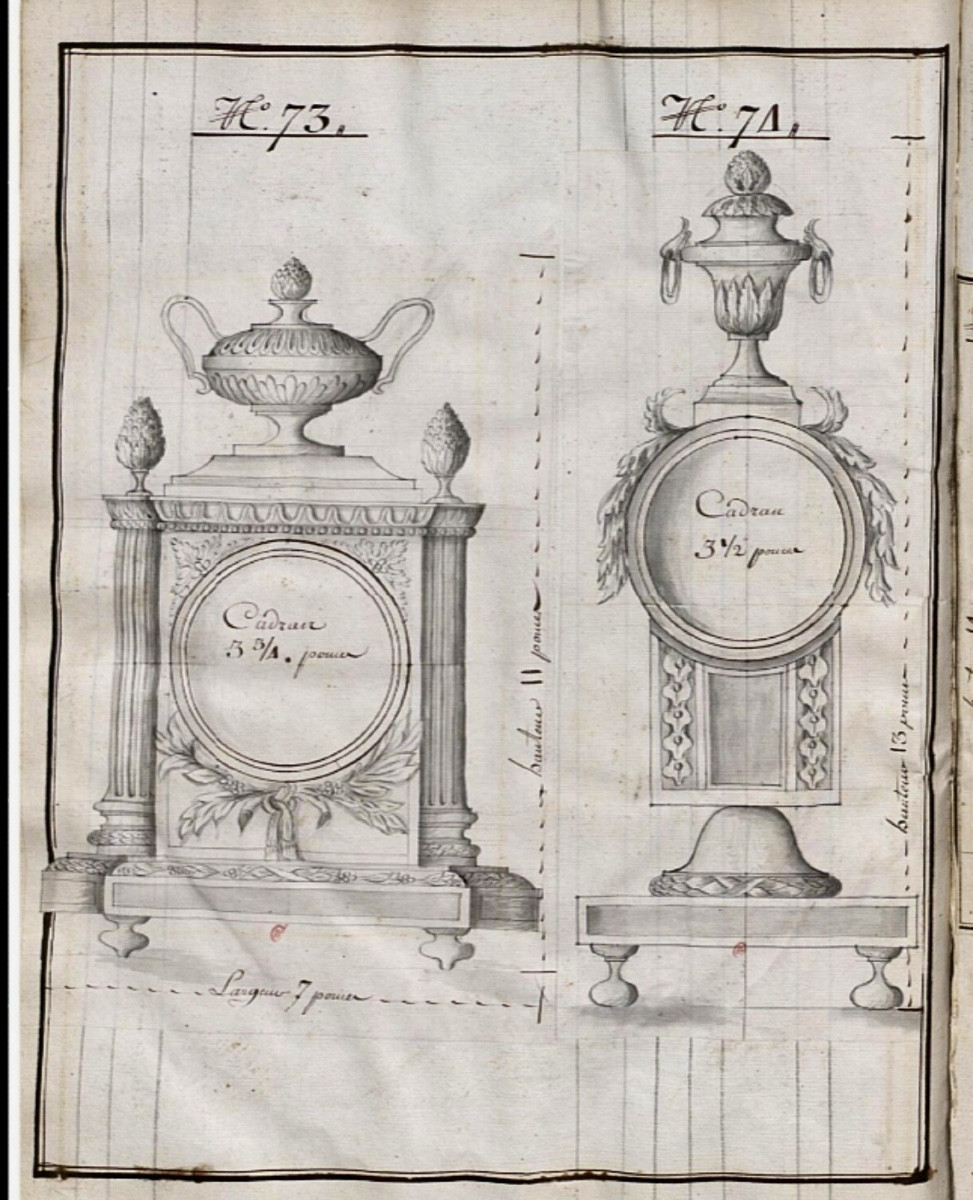
Given the quality of the casting, the chasing, and the gilding—as well as supporting documentation—the bronzes can be confidently attributed to the renowned bronzier Robert Osmond.
The model of this clock is the work of Robert Osmond, whose original drawing is reproduced in the "Recueil de dessins, modèles de pendules," number 73, with a description identifying Osmond as the designer (see photos).
Our clock matches this model, with a variant in the handle's adaptation (such minor variations were common practice at the time).
Condition Report:
The clock is in exceptionally well-preserved condition. It features exquisite chasing and retains its original thick mercury gilding, which shows no signs of wear.
There is a small enamel chip around one of the winding holes on the dial. The hands are original.
The movement is checked, it is in very good working order. Complete pendulum with pendulum, gong and key.
References:
Recueil de dessins, modèles de pendules, authors after F. Vion, R. Osmond, P.A. Foullet. Date of creation: 1775–1780, drawing number 73.
Model reproduced in L’Encyclopédie de la pendule française by Pierre Kjellberg, page 174.
see identical non-transportable clock (without handle): Sotheby's London sale lot 24, sale of April 16, 2024
De Bon: Refers to Jacques De Bon, appointed clockmaker to the Duke of Orléans in 1767, succeeding Antoine Thiout (see Les Ouvriers du Temps by Dominique Augarde).
Elie Barbezat: One of the finest and most renowned enamelers of his time, active particularly between 1768 and 1776. He often signed his name and sometimes the date on the reverse enamel. He worked for the greatest clockmakers of the period, including Robin, Lepaute, Leroy, Imbert, etc.
Robert Osmond: Bronze caster and sculptor, born in 1711 near Saint-Malo in Normandy, died in 1789.
After completing his apprenticeship, he became a master in 1764. A highly regarded bronzier, especially active during the Transitional period, he specialized in bronze clock cases and supplied numerous prominent clockmakers.
Shipping:
Packaging is handled by us; shipping is entrusted to UPS.
For a shipping quote, please provide the destination city and country
Explore similar pieces and discover your ideal find:
Mantel Clocks