



Ceramic And Bronze Bouillotte Lamp Base, Dalpayrat, Late 19th Century
Artist: Pierre-adrien Dalpayrat (1844-1910)
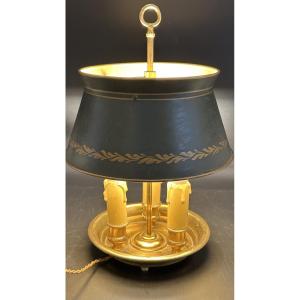
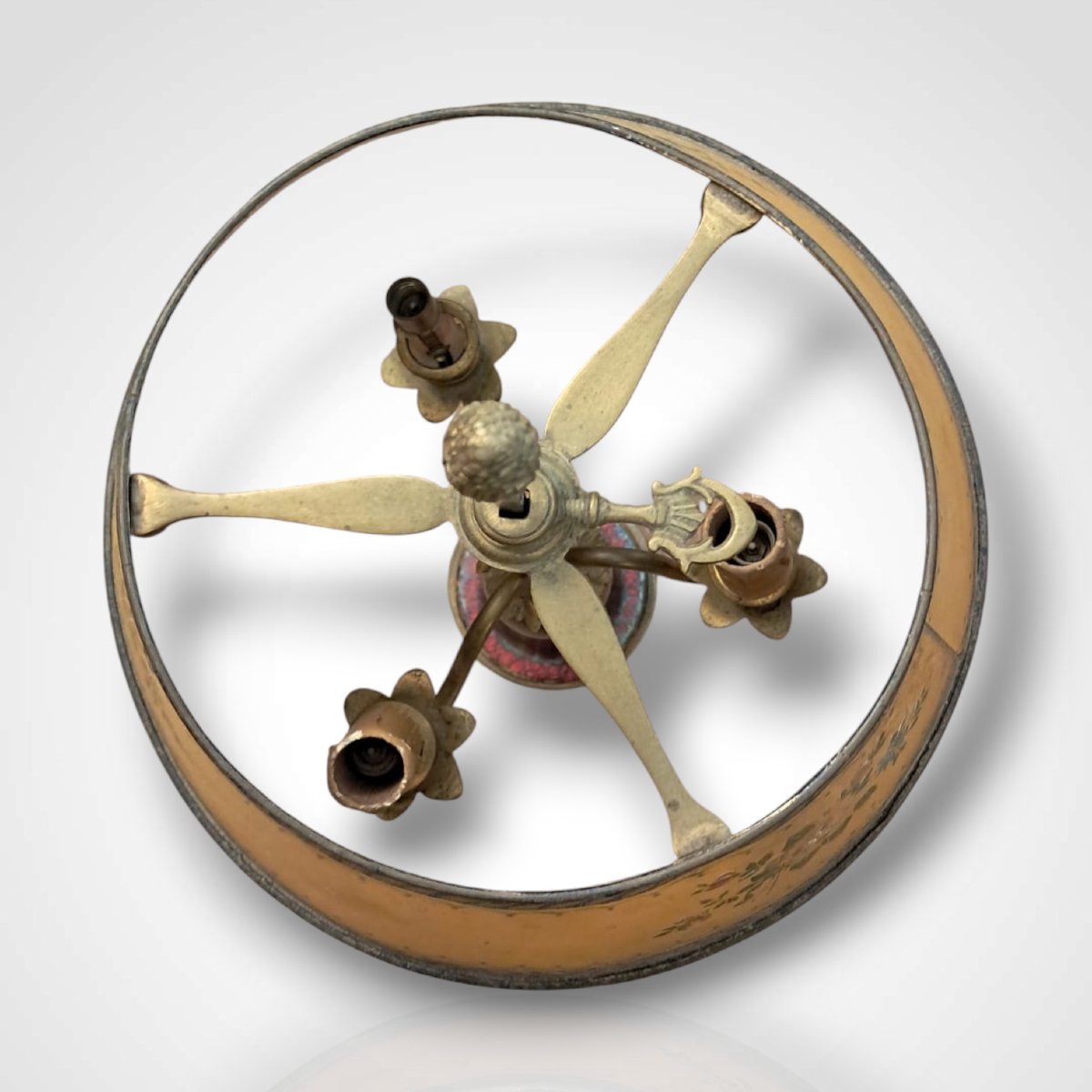
Glazed stoneware lamp base with a bronze mount comprising three light arms and a painted sheet metal lampshade decorated with flowers on a yellow background, adjustable in height. The shaft is a deep red color with touches of blue and yellow. This shade, specific to the ceramist and called “Dalpayrat red”, is characterized by an oxblood red base nuanced with blue, turquoise, purple, green or yellow tones.
Signed “Dalpayrat” and “MADE IN FRANCE” under the base.
Pierre-Adrien Dalpayrat (1844-1910) is a French ceramist from Limoges. Initially trained in his hometown, he then went to work in various workshops in Bordeaux, Valentine and Toulouse before settling in Menton in 1878. In 1889, he established his own workshop in Bourg-la-Reine where he devoted himself to the production of artistic stoneware, in a style influenced by Japonism, and it was three years later that he developed the red shade that would make his reputation, using lead oxides as well as a firing technique with perfectly controlled temperature and duration. Despite a great success at the 1900 Universal Exhibition, where he was awarded a gold medal, then at the Salon du Grand Palais in 1905, Dalpayrat closed his workshop permanently in 1907 due to financial difficulties.
To be re-electrified (holes in the ceramic and bronze mount).
A restoration to be noted in the upper part of the base.
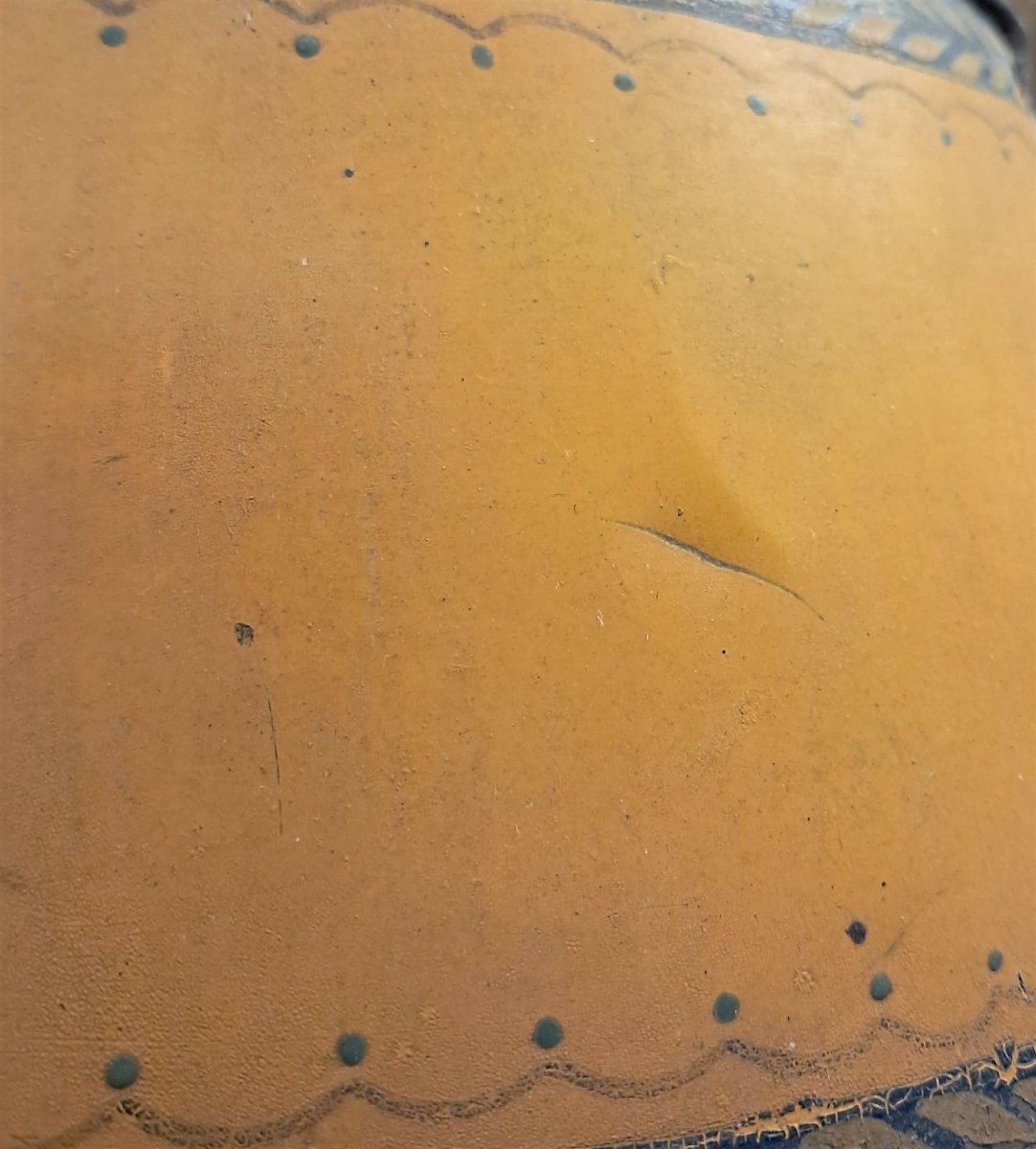
Lampshade decoration partially erased.
A slight dent in the lampshade.
As is.
Late 19th century.
Dimensions:
H: 56 cm
D: 28 cm (lampshade) - 11.5 cm (base)
Signed “Dalpayrat” and “MADE IN FRANCE” under the base.
Pierre-Adrien Dalpayrat (1844-1910) is a French ceramist from Limoges. Initially trained in his hometown, he then went to work in various workshops in Bordeaux, Valentine and Toulouse before settling in Menton in 1878. In 1889, he established his own workshop in Bourg-la-Reine where he devoted himself to the production of artistic stoneware, in a style influenced by Japonism, and it was three years later that he developed the red shade that would make his reputation, using lead oxides as well as a firing technique with perfectly controlled temperature and duration. Despite a great success at the 1900 Universal Exhibition, where he was awarded a gold medal, then at the Salon du Grand Palais in 1905, Dalpayrat closed his workshop permanently in 1907 due to financial difficulties.
To be re-electrified (holes in the ceramic and bronze mount).
A restoration to be noted in the upper part of the base.
Lampshade decoration partially erased.
A slight dent in the lampshade.
As is.
Late 19th century.
Dimensions:
H: 56 cm
D: 28 cm (lampshade) - 11.5 cm (base)
750 €
Period: 19th century
Style: Art Nouveau
Condition: En l'etat
Material: Ceramic
Diameter: 28 cm (abat-jour) - 11,5 cm (base)
Height: 56 cm
Reference (ID): 1627071
Availability: In stock
Print