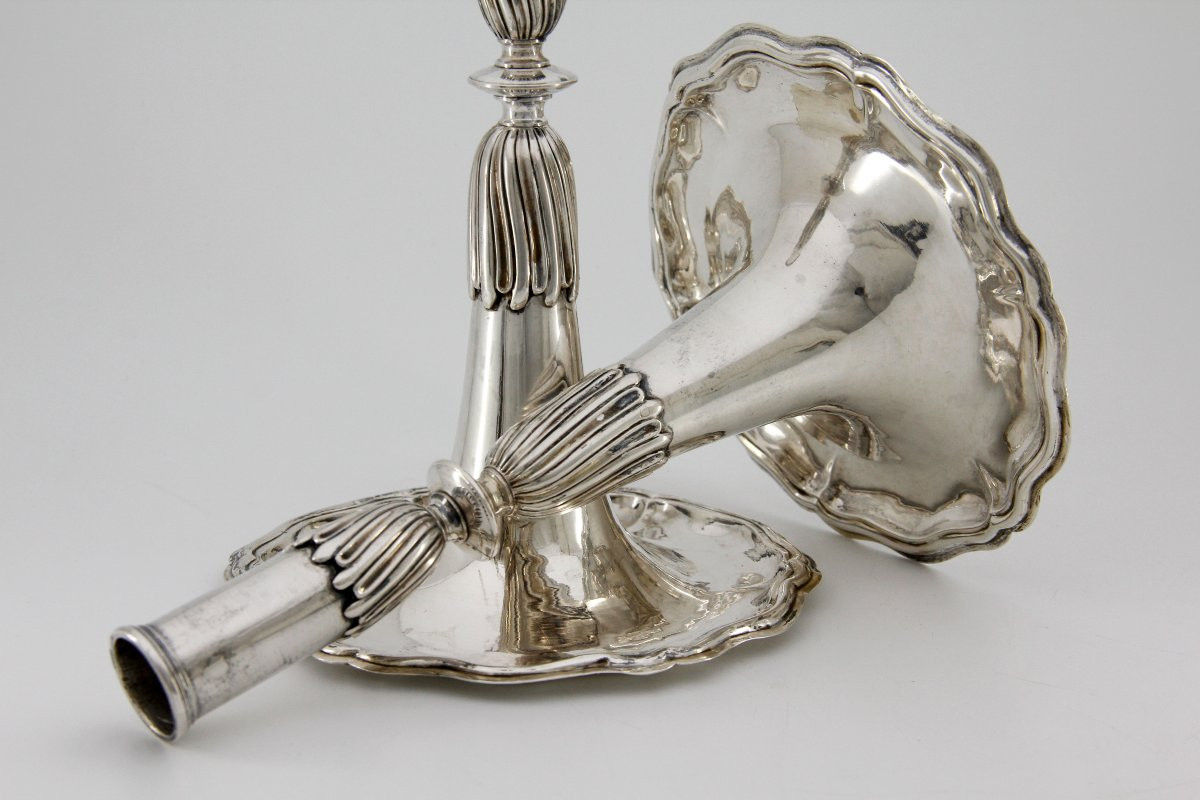


Pair Of Solid Silver Trumpet Candlesticks - Johann Jakob Dulliker, Bern Circa 1760-1780
Artist: Johann Jakob Dulliker (1731-1810)
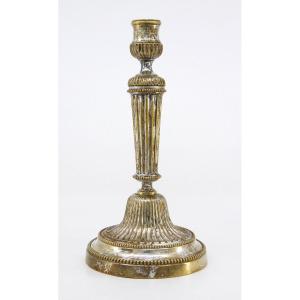
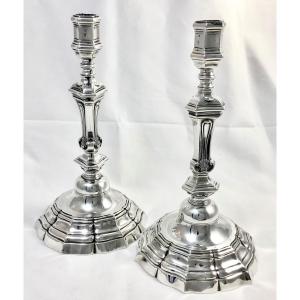
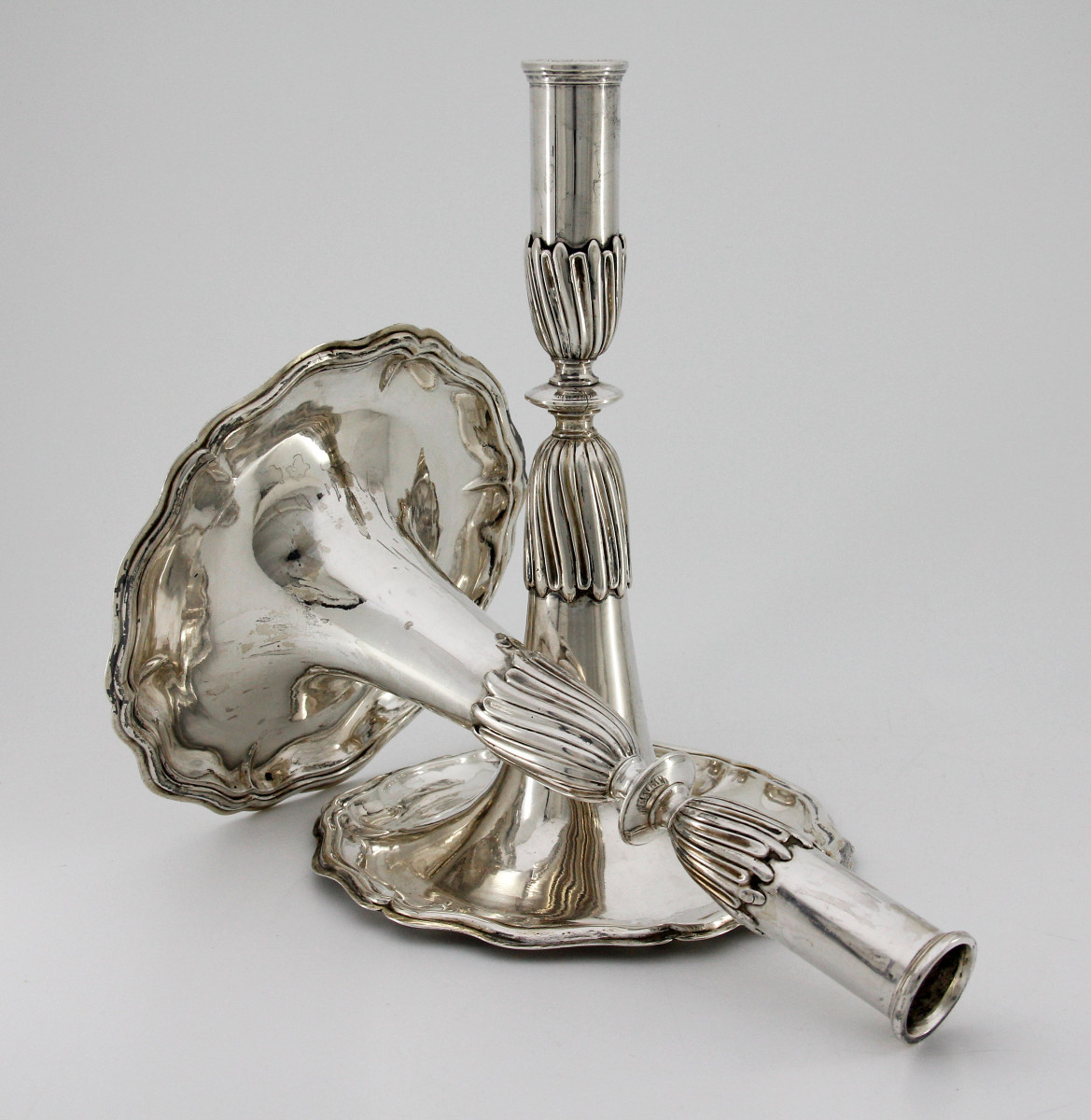
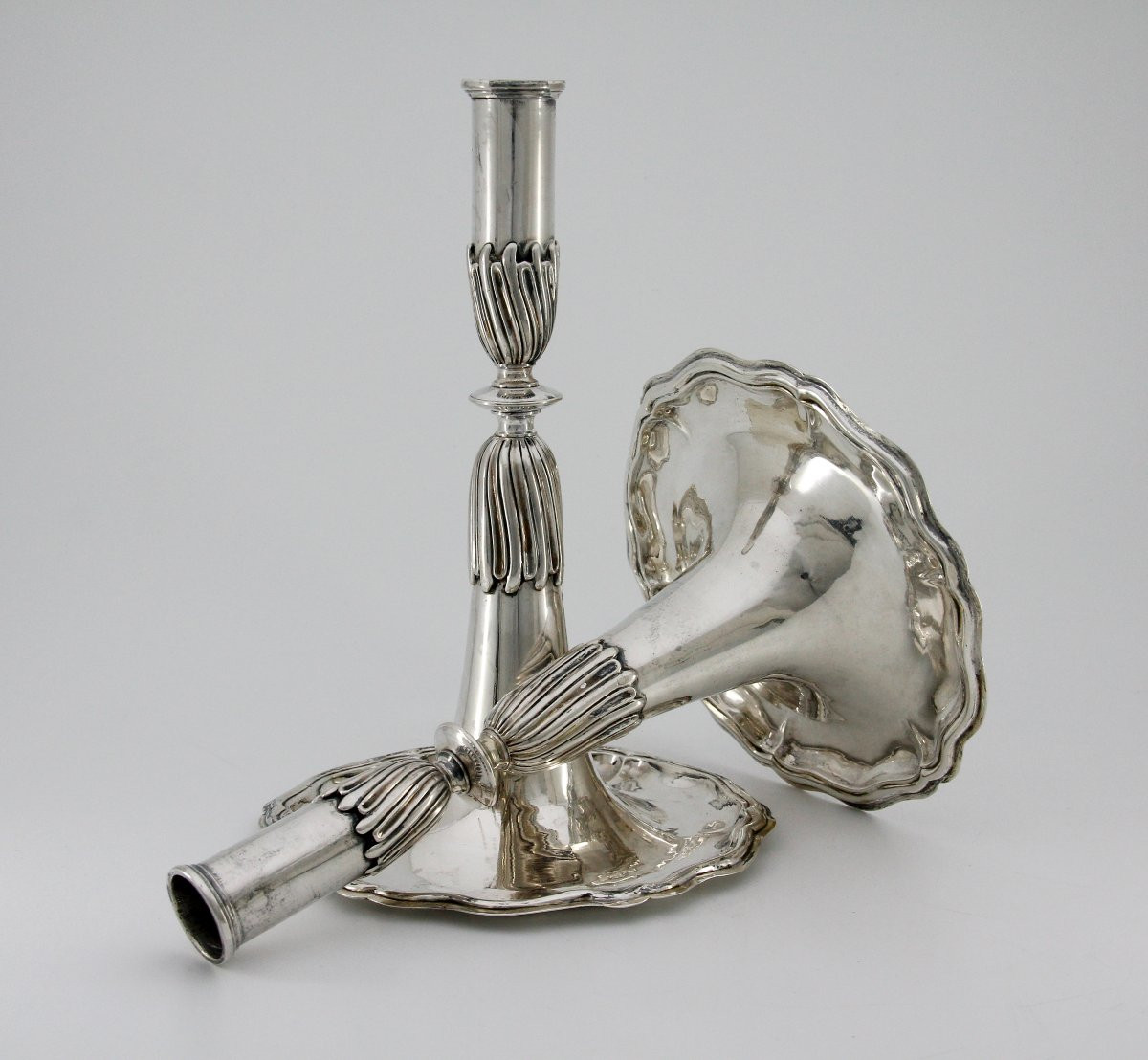
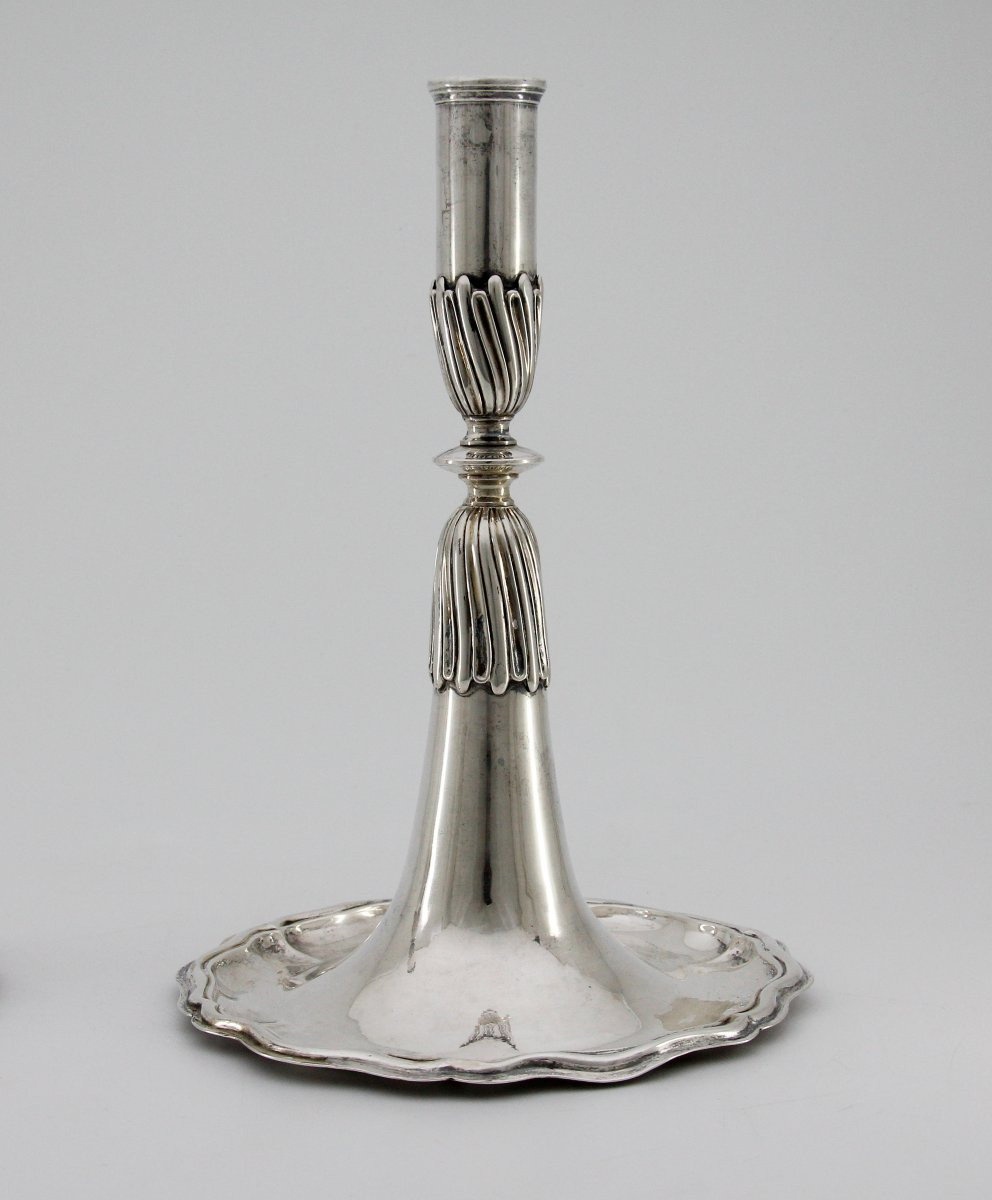
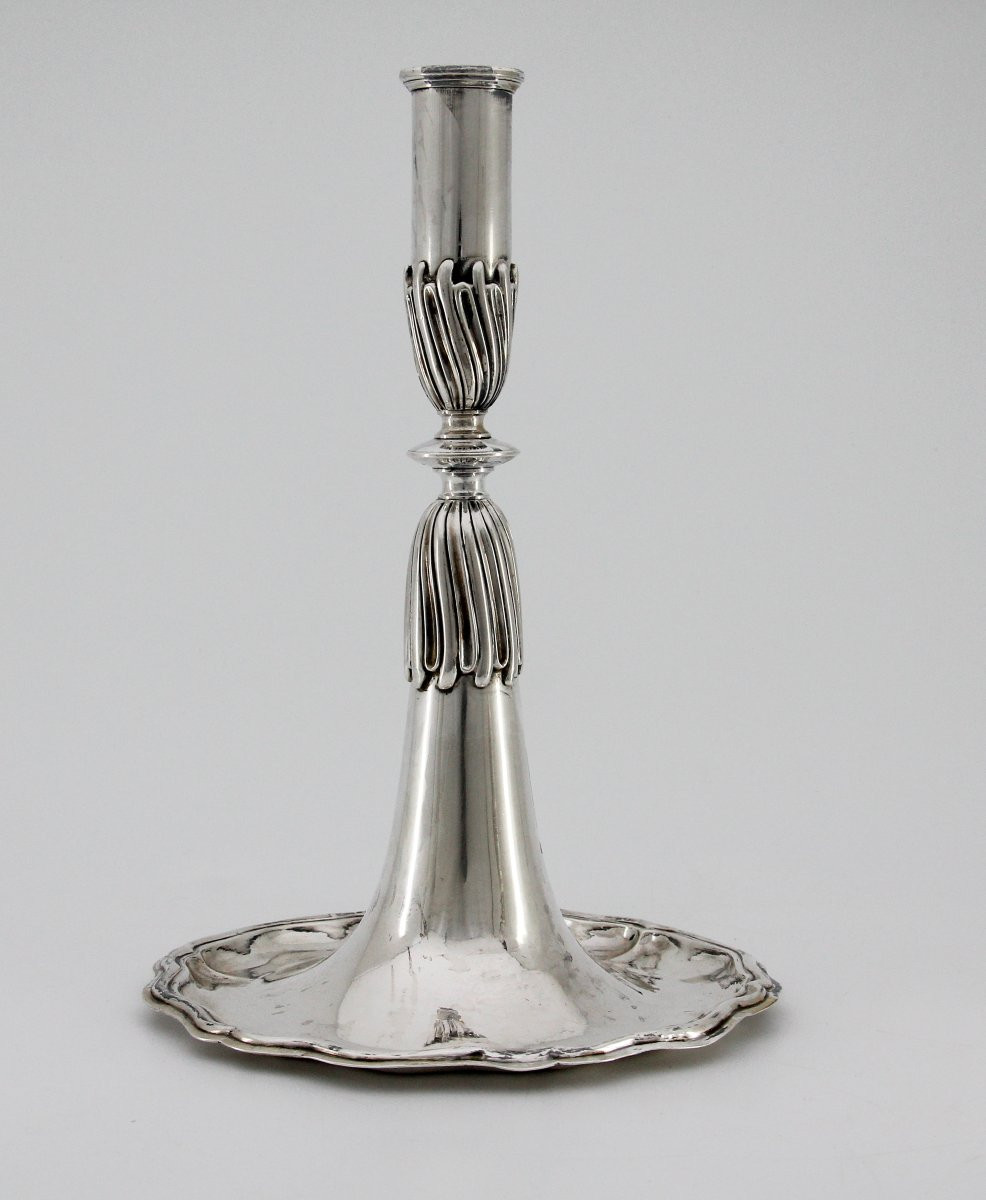
Pair of trumpet candlesticks
Fine silver from France (~960/1000)
Model with round base, with six contours molded with fillets
Goldsmith Johann Jakob Dulliker (1731-1810), active from 1760 to 1800
Bern, around 1760-1780
1st candlestick:
• Total height: ~22 cm
• Base diameter: ~15.2 cm
• Weight: 291 g
2nd candlestick:
• Total height: ~21.5 cm
• Base diameter: ~15.2 cm
• Weight: 266 g
-----
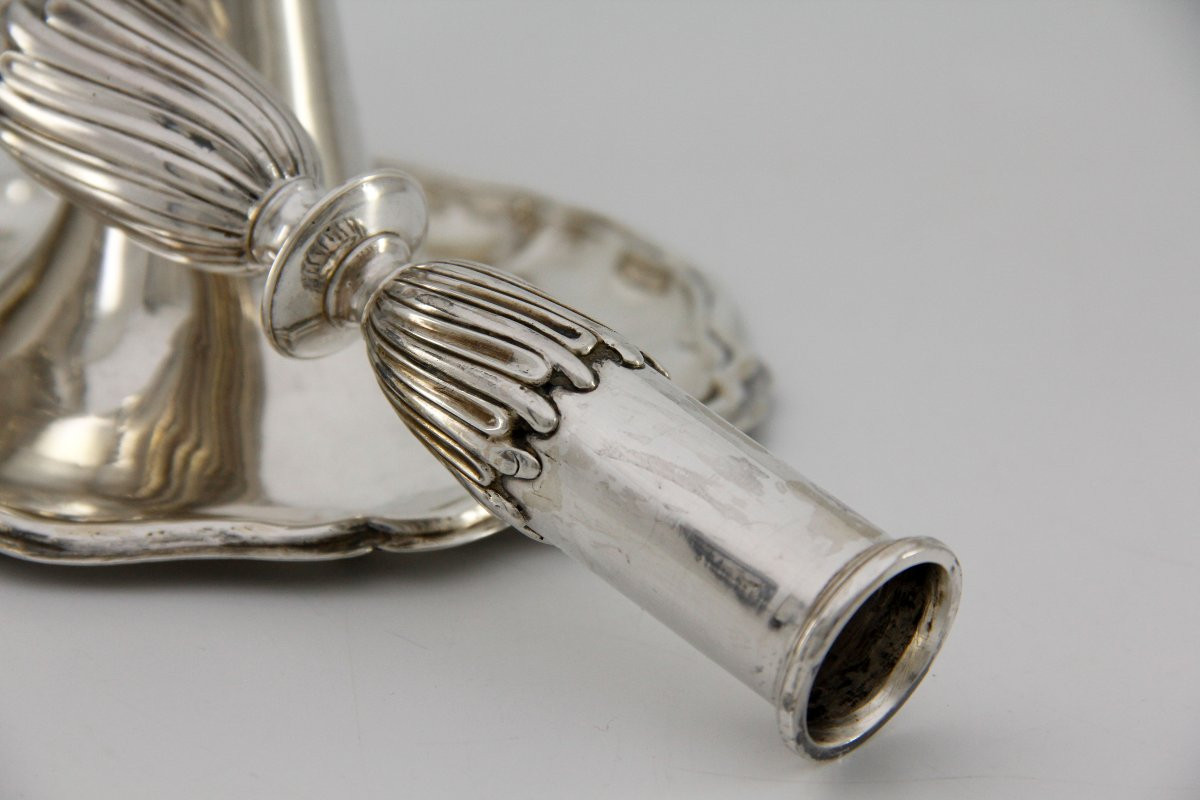
Very good general condition. Micro-shocks and scratches from use.
Without bobeches (although most of the published trumpet torches are fitted with bobeches, it is rarely known whether these are contemporary with the torches or not. From what we have been able to observe, many bobeches are not hallmarked or, if they are indeed from the 18th century, often come from another workshop. Moreover, the very flared and slightly cupped shape of the base of the trumpet torches lends itself perfectly to use without a bobeche, as was very often the case in the 18th century. See for example the painting Le Canard blanc (1753) by Jean-Baptiste Oudry, reproduced in Helft 1980, p.370, where the very beautiful torch by Antoine Bailly is without a bobeche).
-----
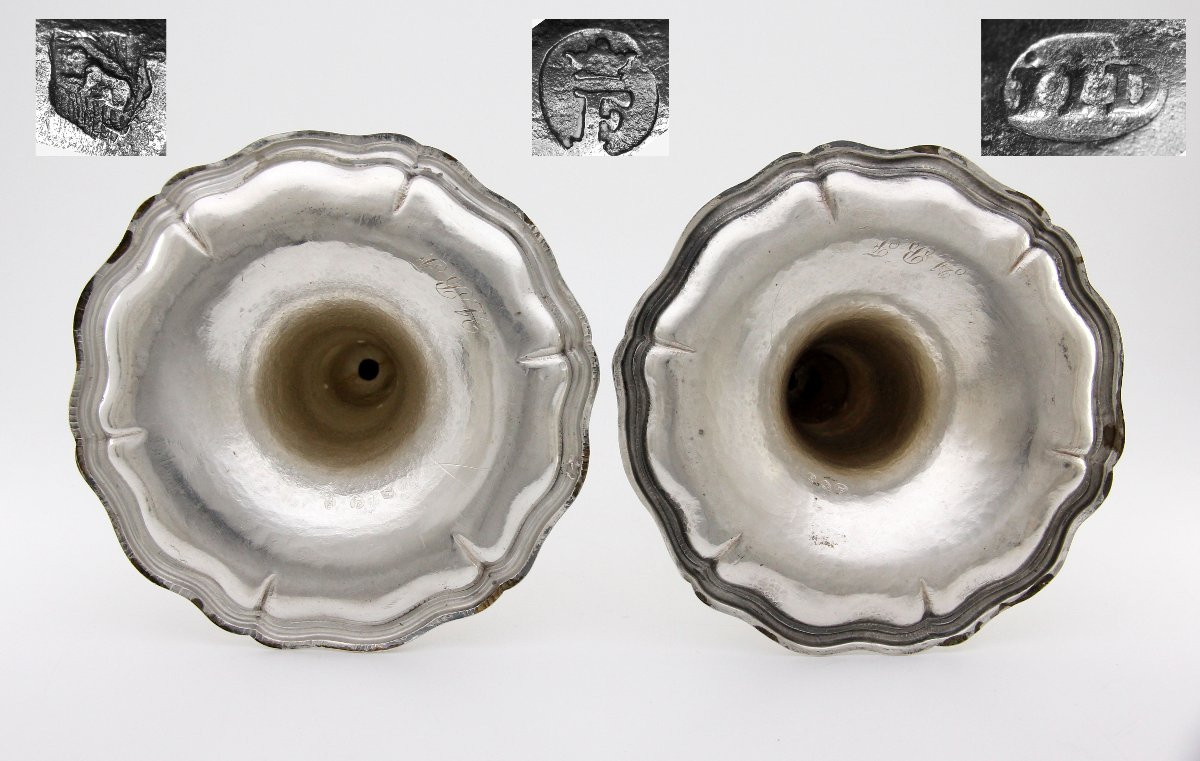
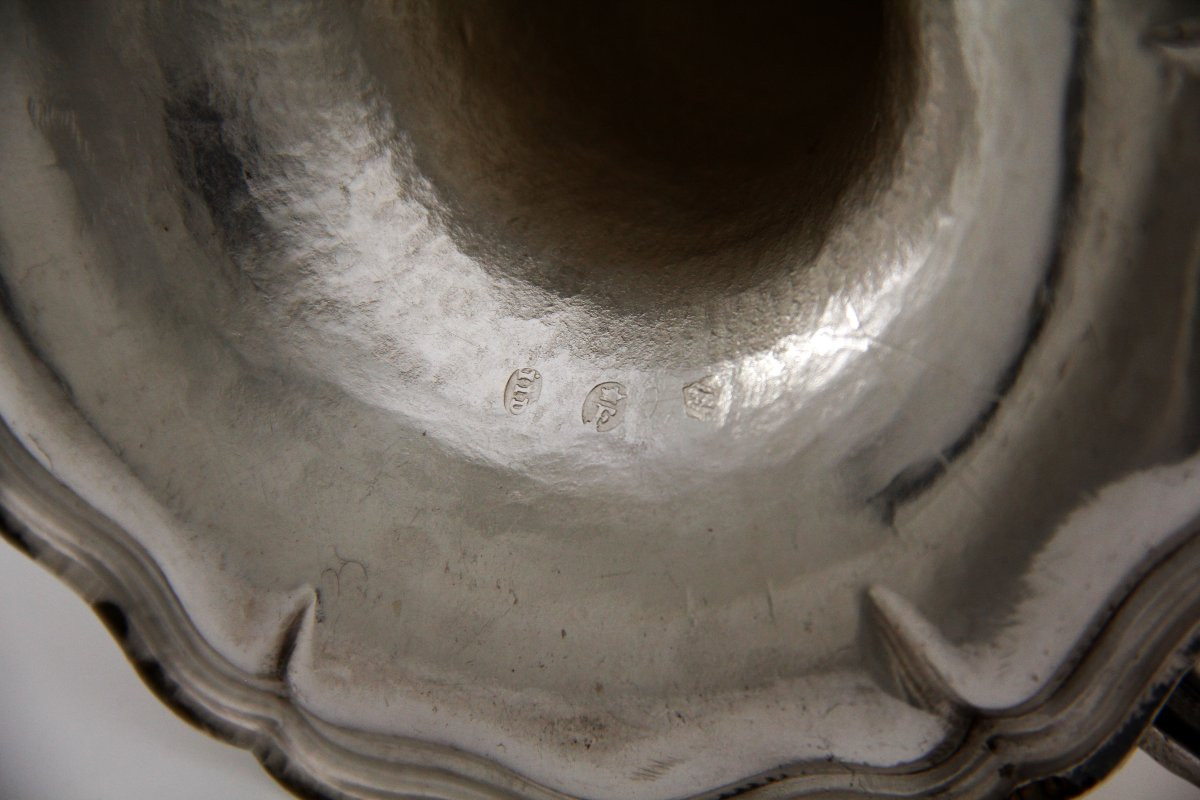
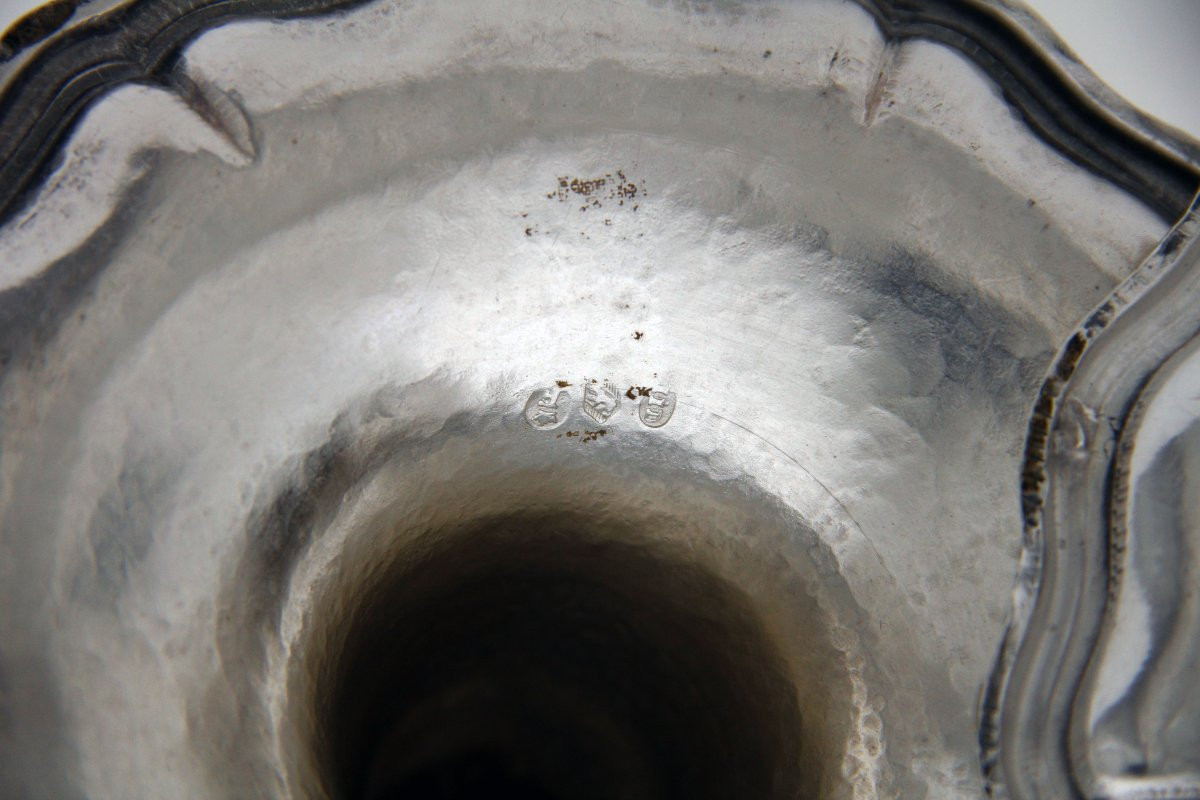
Well hallmarked under the bases:
• Hallmark of Johann Jakob Dulliker (IID)[König-von Dach, n°31 p.449];
• City hallmark (shield with the coat of arms of Bern) [König-von Dach, no. XXI p.447 for the first, no. XXIV p.447 for the second];
• Title hallmark (crowned F) for title of France [König-von Dach, no. 46 p.449 and p.431 note 572 for the discussion on this hallmark].
-----
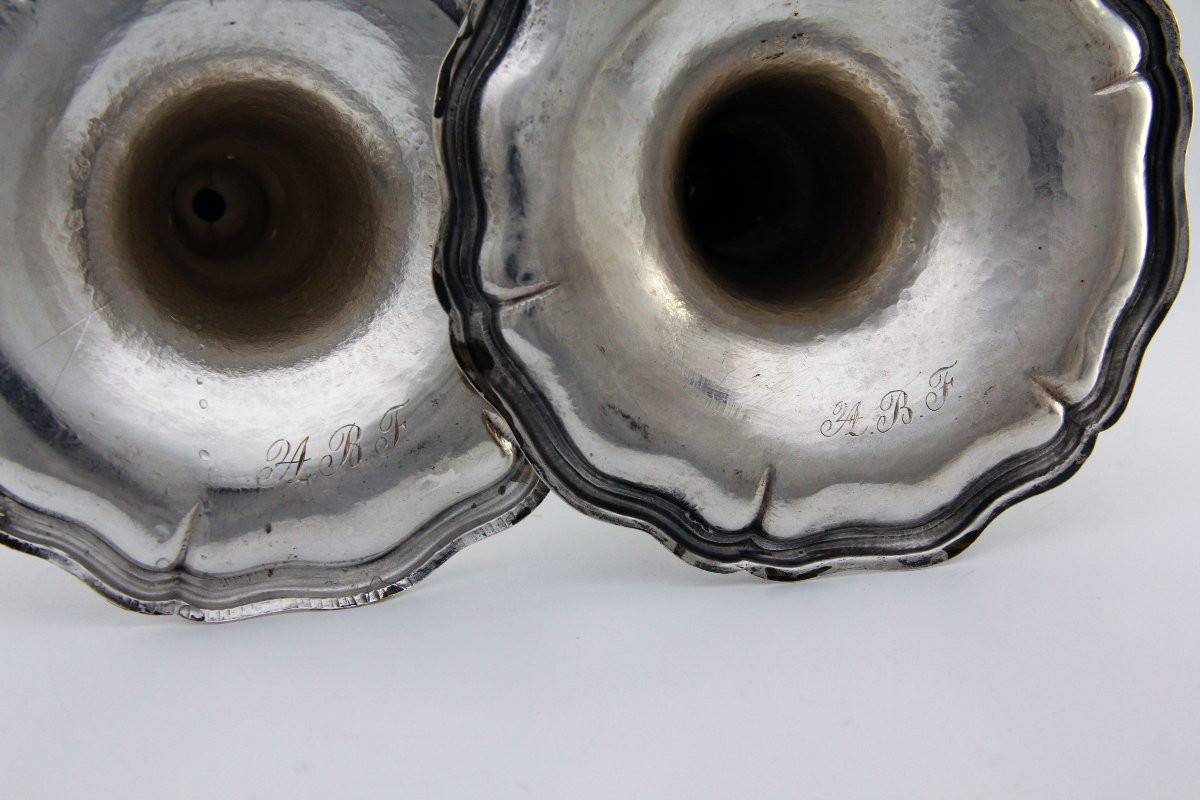
These candlesticks constitute a false pair [0.5 mm and 25 g difference in height and weight; the larger one is probably slightly older (around 1760), judging by the city hallmark]; however, the family mark engraved under the two [ABF] indicates an already old pairing (late 19th - early 20th century), so we offer them together.
-----
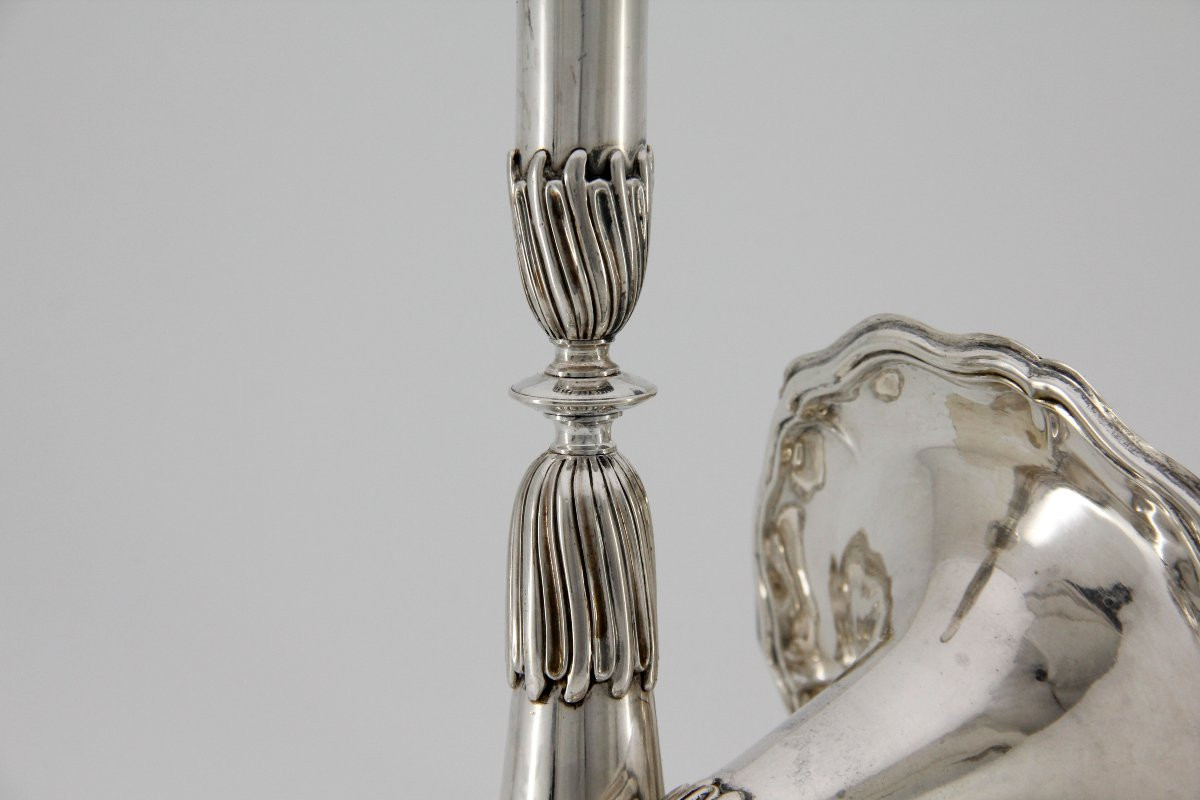
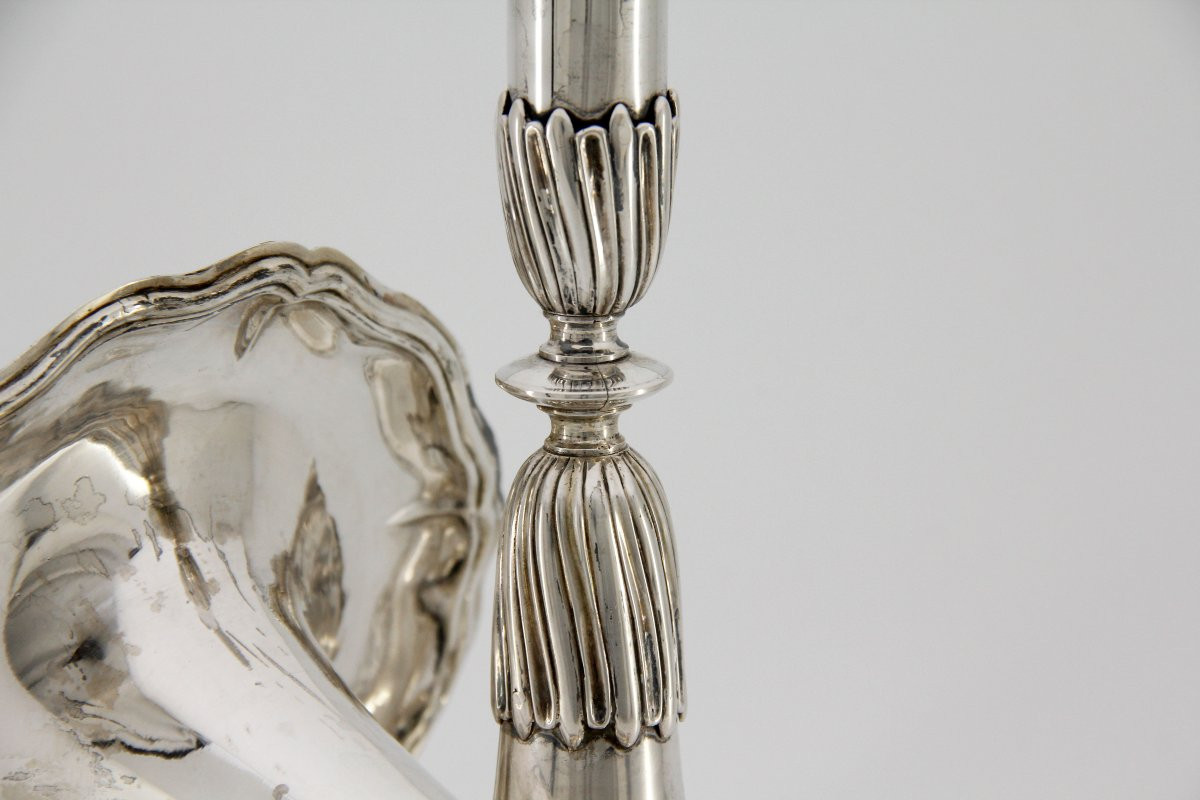
The trumpet torch (the name trumpet torch is attested from 1781) takes its name from the particular shape of its base. It is enriched at mid-height, as its only decoration, with a knot set with flames. This is a specifically Swiss model: the first examples, perhaps inspired by English copper models, were undoubtedly executed in Vevey by Etienne-Marc Giscard, received master in 1732. The first known torch with precise dating is attested in 1753 (commissioned by the Bernese corporation Zu Pfistern to the goldsmith Johannes Hug). If the first models have octagonal feet, the round foot - delicately contoured and molded with fillets, as on our examples - will quickly establish itself as the "classic" foot, undoubtedly under the influence of the Lausanne goldsmith Philibert Potin [Hörack 2007, p.113 sqq.].
The trumpet torch is undoubtedly the most widely produced goldwork object in Lausanne in the years 1750-1780. Johann Jakob Dulliker is one of the few Bernese goldsmiths, along with Johannes Hug, to have produced them in the 18th century. They are also found in Vevey, Lenzburg, Aarau, Basel, Fribourg and Neuchâtel, but they are few in number [Hörack 2007, p. 114]. We know of a pair of trumpet torches with the Sion hallmark, made by the goldsmith François-Joseph Ryss (active from 1759 to 1802), currently in a private collection in Valais.
------
Literature
• Charlotte König-von Dach, R&C, Die Goldschmiedewerkstatt Rehfues in Bern 1808-1866, Galerie Stuker, Bern 1993
• Christian Hörack, L'argenterie lausannoise des XVIIIe et XIXe siècles, Musée historique de Lausanne, 2007
Fine silver from France (~960/1000)
Model with round base, with six contours molded with fillets
Goldsmith Johann Jakob Dulliker (1731-1810), active from 1760 to 1800
Bern, around 1760-1780
1st candlestick:
• Total height: ~22 cm
• Base diameter: ~15.2 cm
• Weight: 291 g
2nd candlestick:
• Total height: ~21.5 cm
• Base diameter: ~15.2 cm
• Weight: 266 g
-----
Very good general condition. Micro-shocks and scratches from use.
Without bobeches (although most of the published trumpet torches are fitted with bobeches, it is rarely known whether these are contemporary with the torches or not. From what we have been able to observe, many bobeches are not hallmarked or, if they are indeed from the 18th century, often come from another workshop. Moreover, the very flared and slightly cupped shape of the base of the trumpet torches lends itself perfectly to use without a bobeche, as was very often the case in the 18th century. See for example the painting Le Canard blanc (1753) by Jean-Baptiste Oudry, reproduced in Helft 1980, p.370, where the very beautiful torch by Antoine Bailly is without a bobeche).
-----
Well hallmarked under the bases:
• Hallmark of Johann Jakob Dulliker (IID)[König-von Dach, n°31 p.449];
• City hallmark (shield with the coat of arms of Bern) [König-von Dach, no. XXI p.447 for the first, no. XXIV p.447 for the second];
• Title hallmark (crowned F) for title of France [König-von Dach, no. 46 p.449 and p.431 note 572 for the discussion on this hallmark].
-----
These candlesticks constitute a false pair [0.5 mm and 25 g difference in height and weight; the larger one is probably slightly older (around 1760), judging by the city hallmark]; however, the family mark engraved under the two [ABF] indicates an already old pairing (late 19th - early 20th century), so we offer them together.
-----
The trumpet torch (the name trumpet torch is attested from 1781) takes its name from the particular shape of its base. It is enriched at mid-height, as its only decoration, with a knot set with flames. This is a specifically Swiss model: the first examples, perhaps inspired by English copper models, were undoubtedly executed in Vevey by Etienne-Marc Giscard, received master in 1732. The first known torch with precise dating is attested in 1753 (commissioned by the Bernese corporation Zu Pfistern to the goldsmith Johannes Hug). If the first models have octagonal feet, the round foot - delicately contoured and molded with fillets, as on our examples - will quickly establish itself as the "classic" foot, undoubtedly under the influence of the Lausanne goldsmith Philibert Potin [Hörack 2007, p.113 sqq.].
The trumpet torch is undoubtedly the most widely produced goldwork object in Lausanne in the years 1750-1780. Johann Jakob Dulliker is one of the few Bernese goldsmiths, along with Johannes Hug, to have produced them in the 18th century. They are also found in Vevey, Lenzburg, Aarau, Basel, Fribourg and Neuchâtel, but they are few in number [Hörack 2007, p. 114]. We know of a pair of trumpet torches with the Sion hallmark, made by the goldsmith François-Joseph Ryss (active from 1759 to 1802), currently in a private collection in Valais.
------
Literature
• Charlotte König-von Dach, R&C, Die Goldschmiedewerkstatt Rehfues in Bern 1808-1866, Galerie Stuker, Bern 1993
• Christian Hörack, L'argenterie lausannoise des XVIIIe et XIXe siècles, Musée historique de Lausanne, 2007
3 450 €
Period: 18th century
Style: Louis 15th - Transition
Condition: Good condition
Material: Sterling silver
Height: ~22
Reference (ID): 1621049
Availability: In stock
Print