THIS OBJECT WAS SOLD
Pierre Bracquemond (1870–1926) Interior Of A Parisian Collector Oil On Canvas Circa 1906


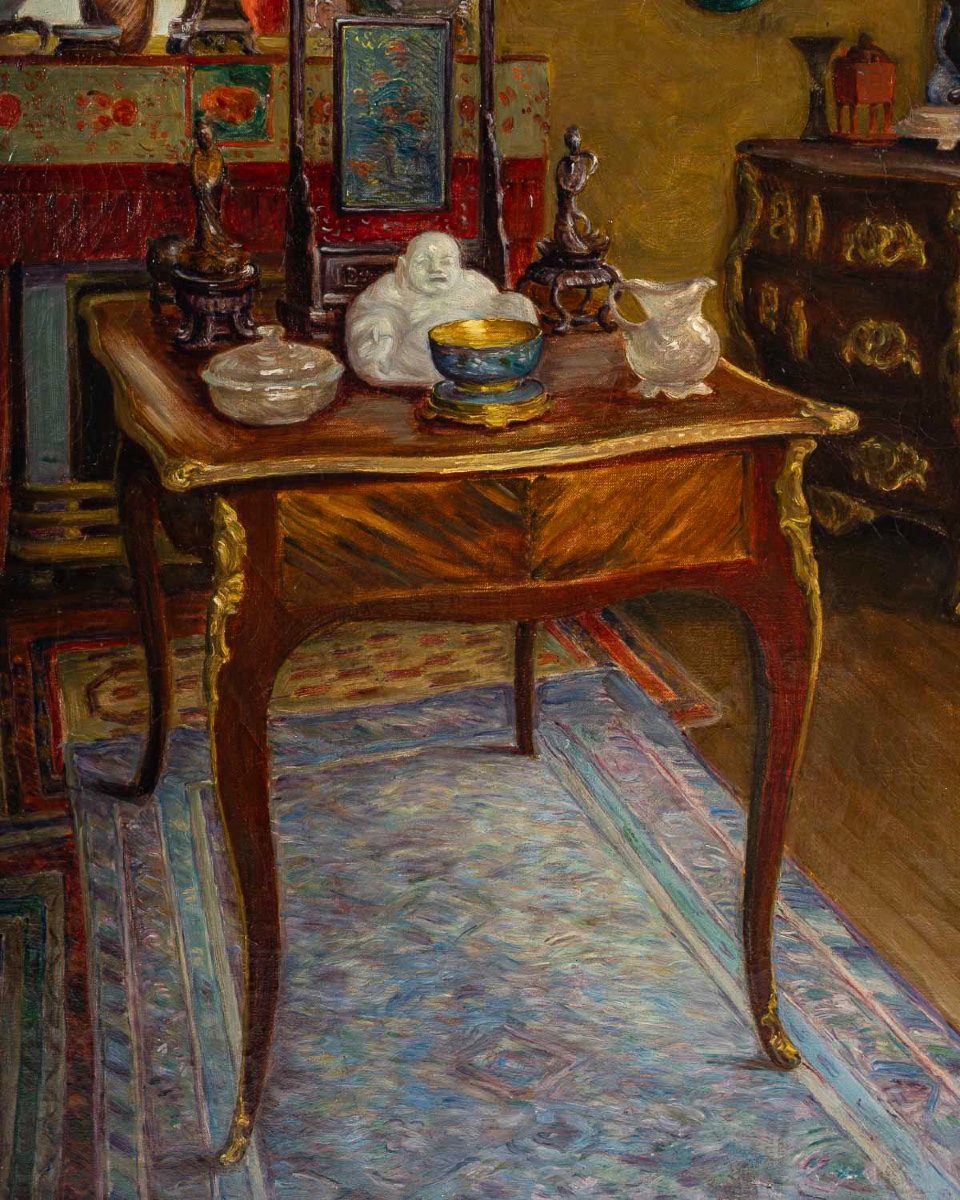


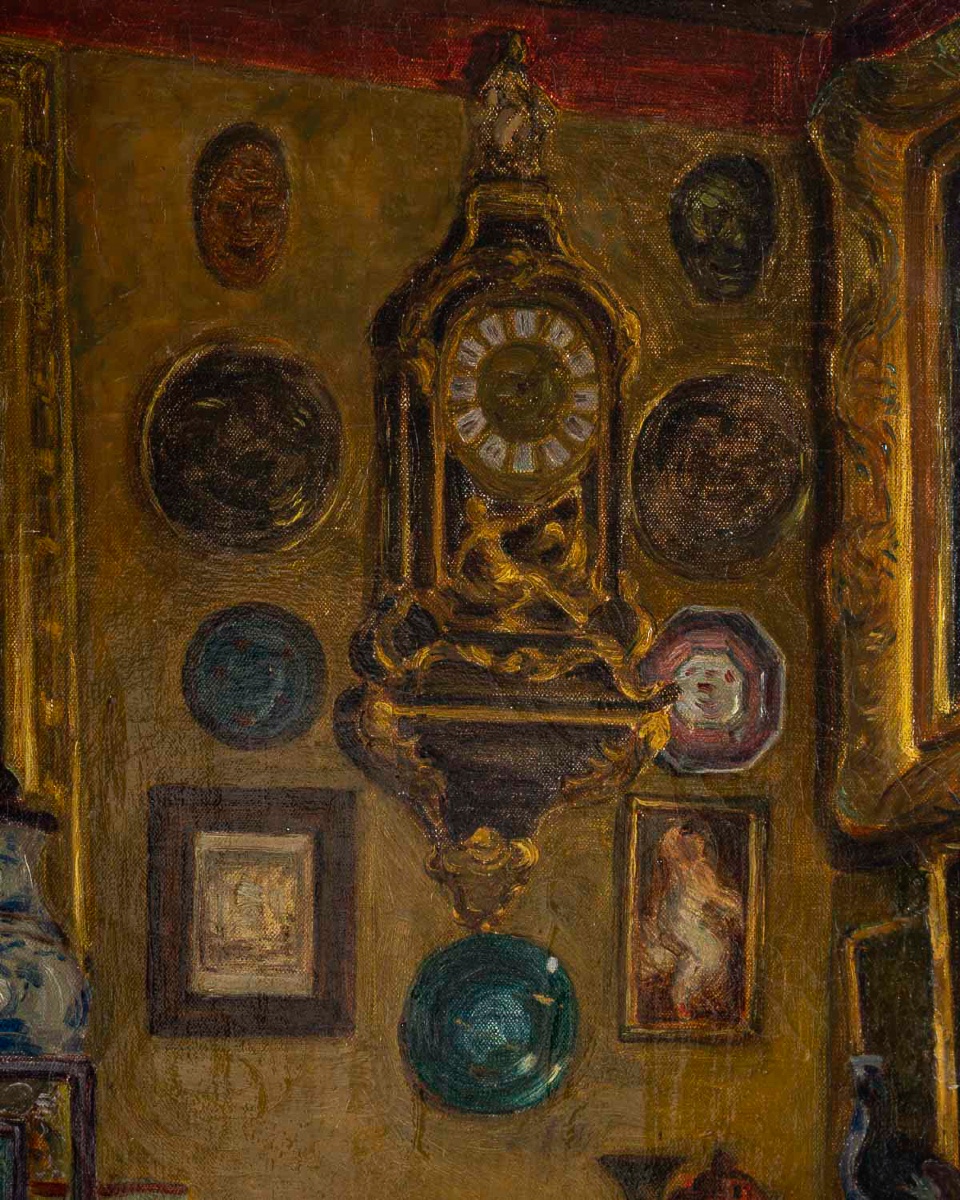
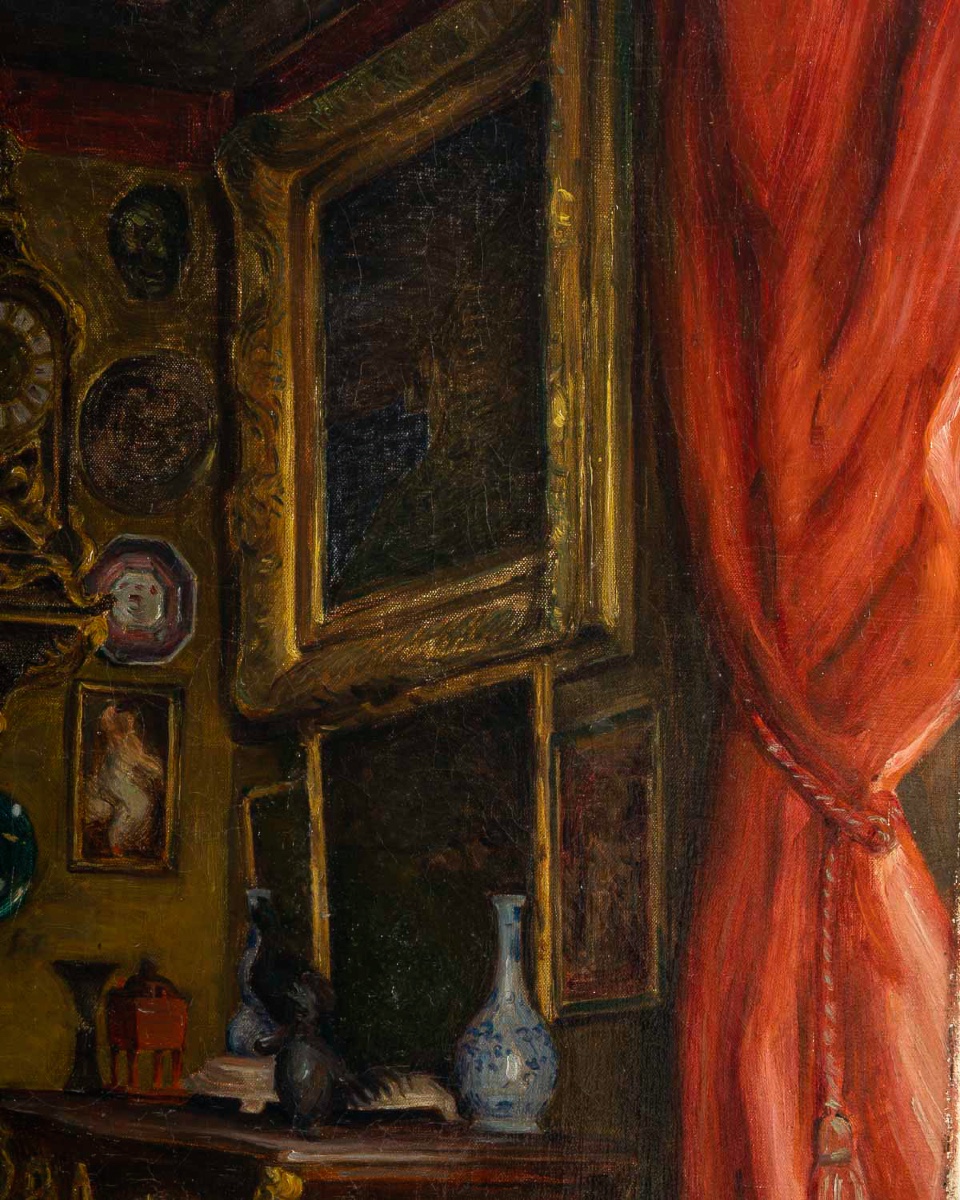




Pierre Bracquemond (1870–1926) Interior of a Parisian Collector Oil on canvas circa 1906
In this fine painting, Pierre Bracquemond presents a captivating view of the interior of a Parisian collector of Asian art at the turn of the 20th century.
Technique and Dimensions:
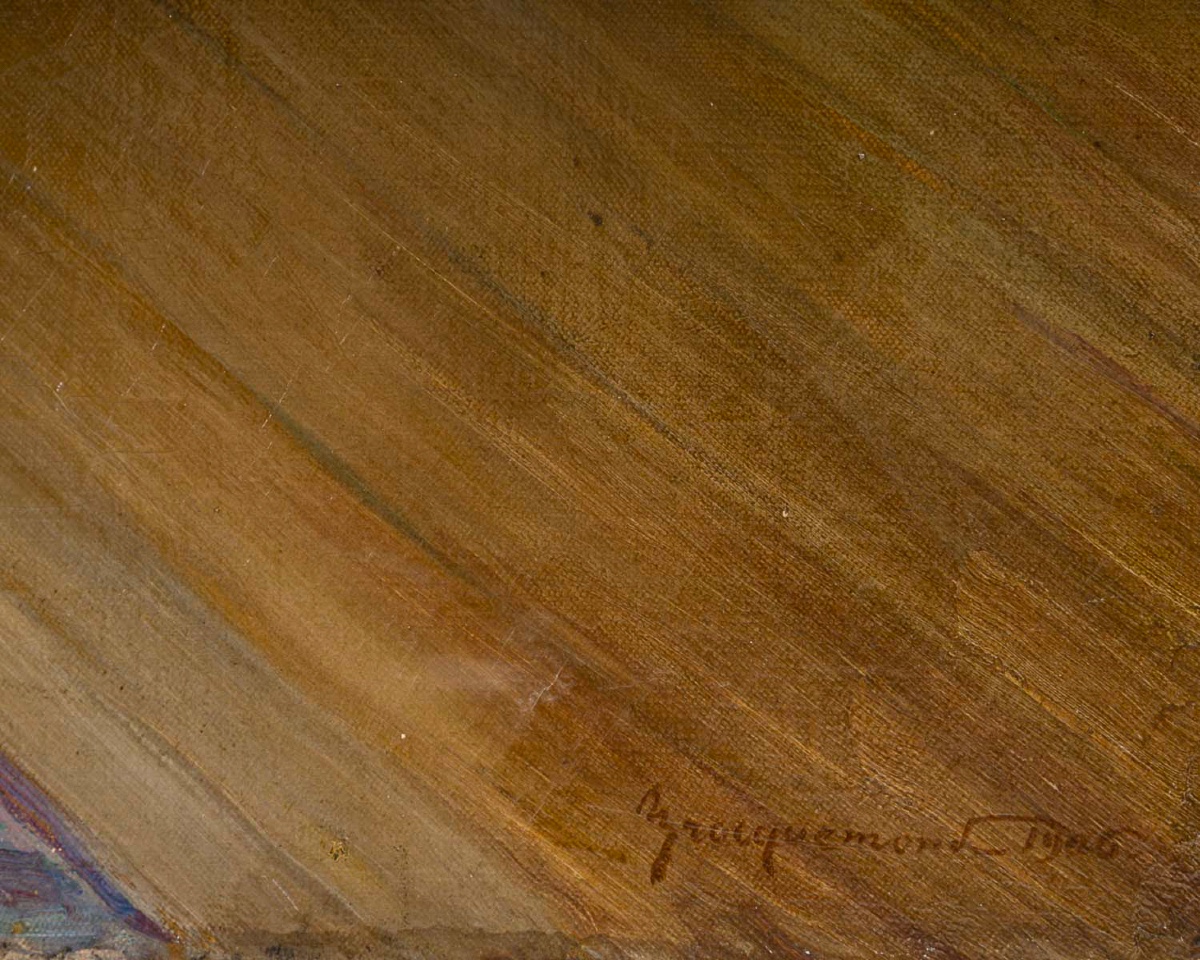
Signed and dated lower right by Pierre Bracquemond (1906).
Unframed: height 42 1/8 in. – width 31 7/8 in.
Condition:
In fine original condition, retaining its original canvas. Offered unframed.
Biography:
Pierre Bracquemond (Paris, 1870–1926): An Artistic Heir Between Tradition and Modernity
Pierre Bracquemond was born in Paris on June 22, 1870, into a prominent artistic family that played a significant role in the 19th-century French art scene. The only child of Félix Bracquemond—a renowned engraver and influential avant-garde figure—and Marie Bracquemond, a celebrated Impressionist painter, he grew up in an environment where art was central.
From a young age, he was introduced to painting by his mother, under whose tutelage he initially trained before developing his own distinctive style. His childhood was enriched by visits from major artistic figures such as Degas, Manet, Rodin, and Gauguin, who frequented the family home in Sèvres. These early encounters with the leading artists of the time deeply shaped his artistic sensibility and approach.
Unlike his well-documented parents, Pierre Bracquemond remained a more elusive figure in art history. He dedicated himself primarily to painting and drawing, exploring a variety of subjects including still lifes, landscapes, and intimate portraits. His work reflects a rich artistic heritage combined with a personal quest for expression. Among his notable pieces are floral compositions such as Wisteria (1912), which demonstrate his technical skill and keen attention to light and detail.
Bracquemond built upon his mother’s teachings while gradually asserting his own artistic identity. He exhibited occasionally and participated in Parisian cultural life, though his contributions were often overshadowed by his parents’ fame—particularly his father’s, whose prominence sometimes eclipsed the recognition due to his mother, Marie. Nevertheless, he carved out his own niche in the art world of his time, with works now held in museums such as the Musée Fabre in Montpellier and the Petit Palais in Paris.
He passed away in Paris on January 29, 1926, leaving behind a body of work that provides valuable insight into the evolution of artistic movements from the late 19th to the early 20th century. Pierre Bracquemond thus embodies the bridge between two generations of artists: the Impressionists, to which his parents belonged, and the emerging trends of the new century. His journey also highlights the familial tensions and dynamics that influenced the artistic creation of the era, as seen in his accounts of the complex relationship between his parents, marked by rivalry and intersecting ambitions.
His Work in Museums:
Musée d’Orsay (Paris): Wisteria (1912).
Musée Fabre (Montpellier): Pierre Painting a Bouquet (a painting by Marie Bracquemond depicting Pierre as a child, often associated with his oeuvre in collections).
Petit Palais (Paris): Portrait of Pierre Bracquemond (by Marie Bracquemond, held in the Parisian collections).
Musée des Beaux-Arts de Rouen: Pierre Bracquemond as a Child (1878, a painting by Marie Bracquemond depicting Pierre, occasionally referenced in collections).
Explore similar pieces and discover your ideal find:
Other Paintings