THIS OBJECT WAS SOLD
Bavaria - Head Of A Winged Cherub. Work From The Baroque Period, Late 17th Or Early 18th Century

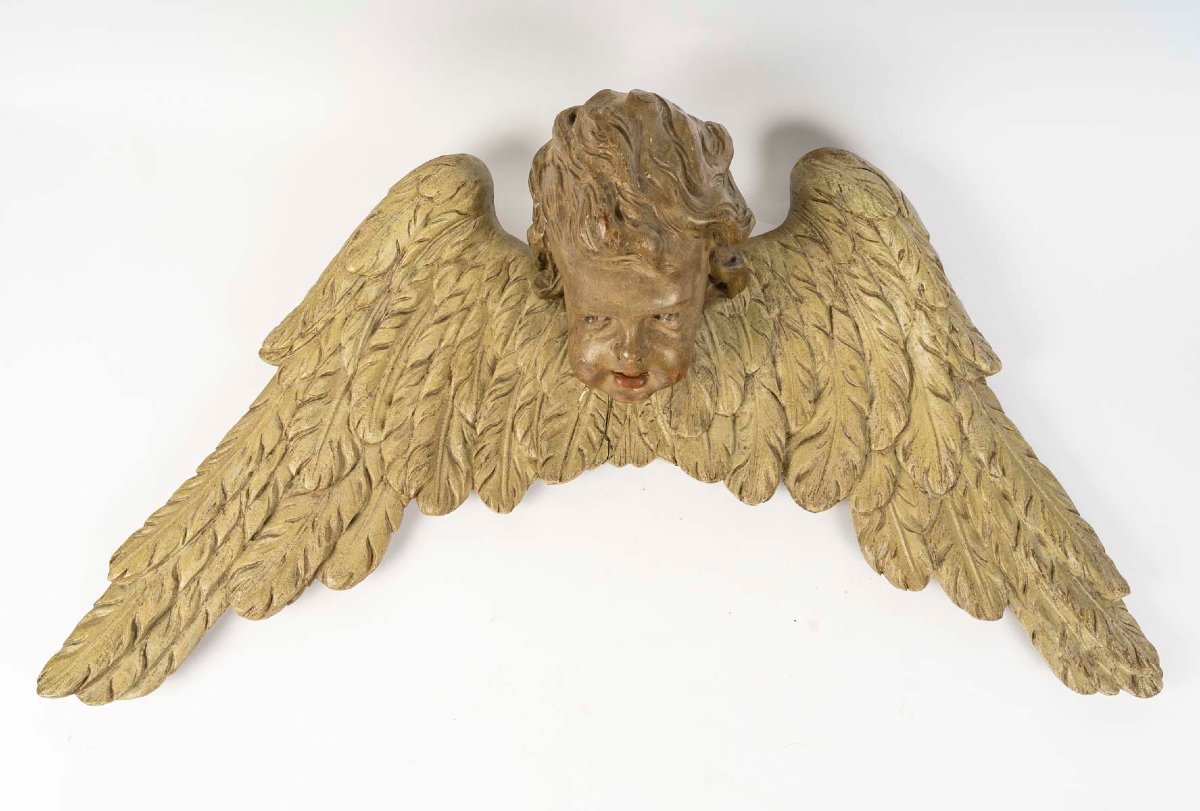
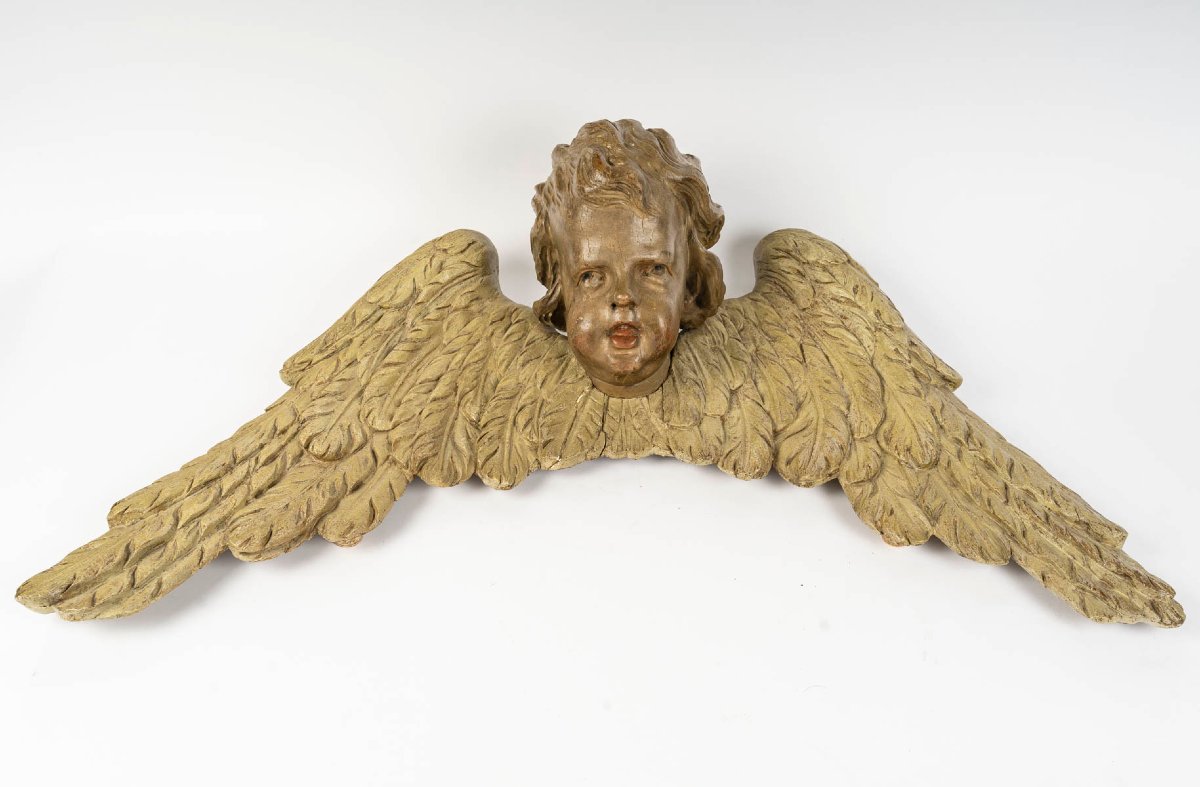
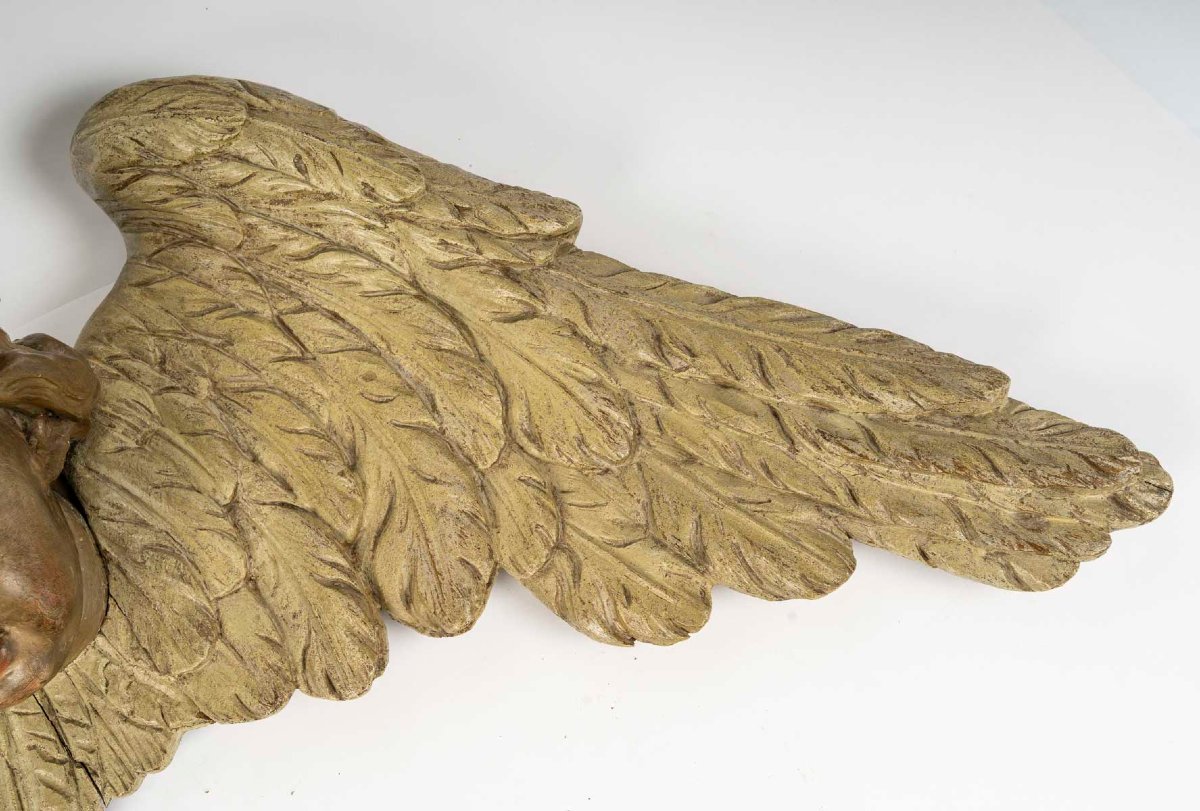
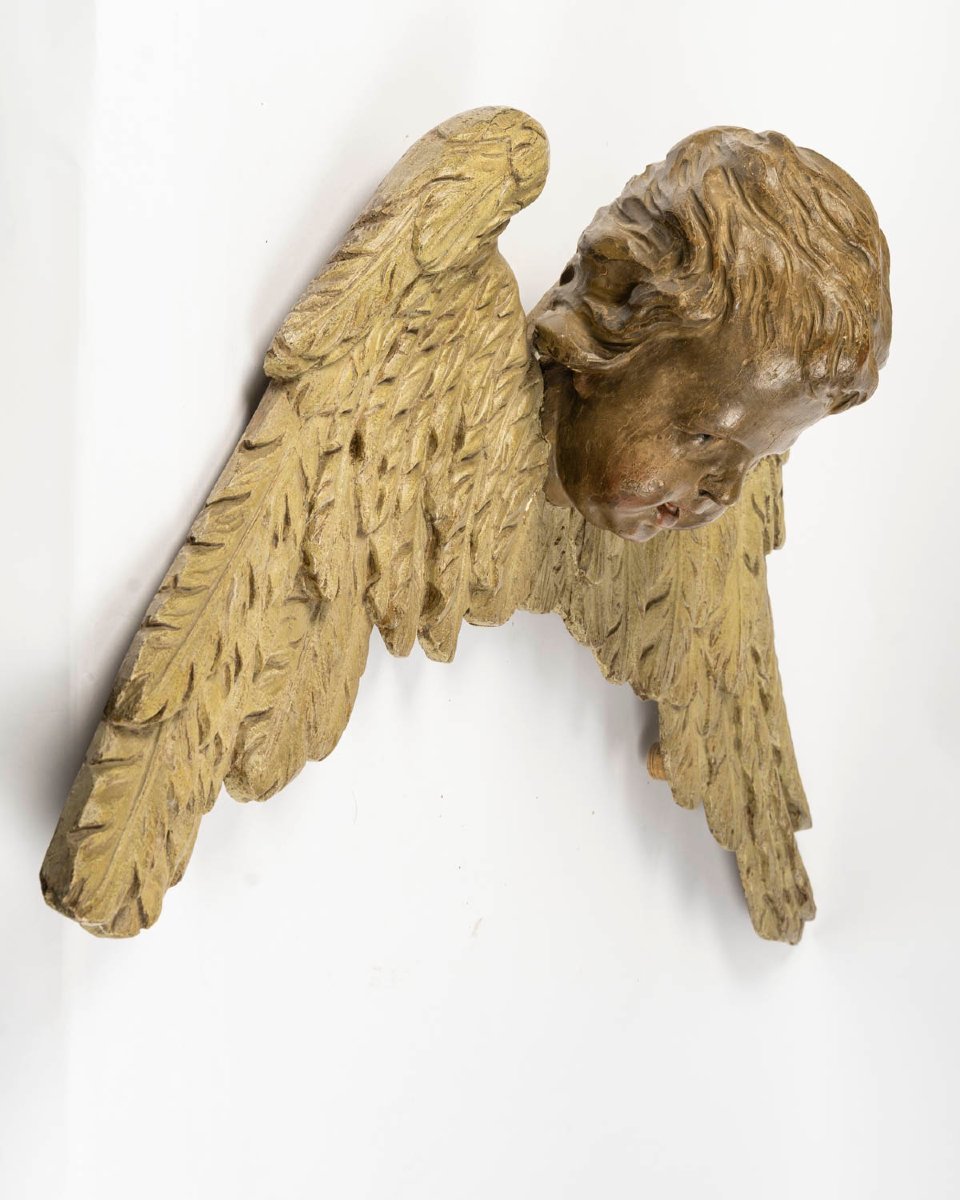
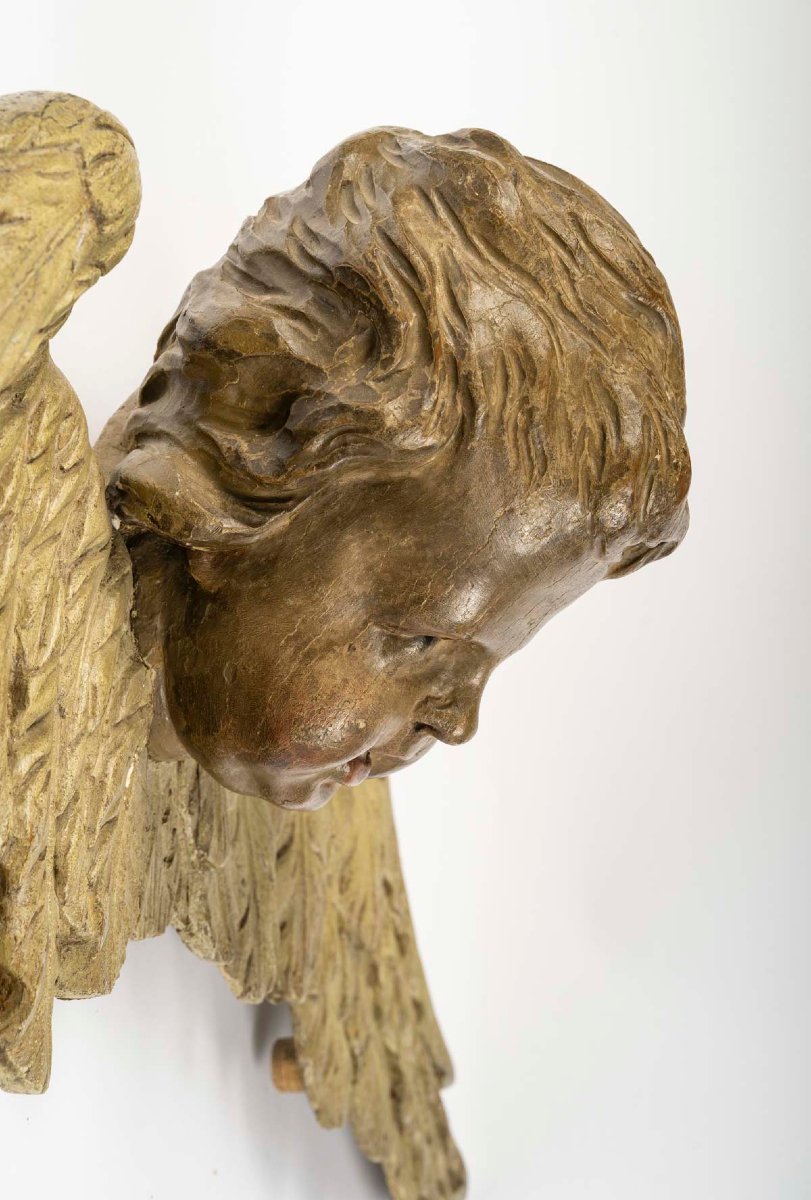
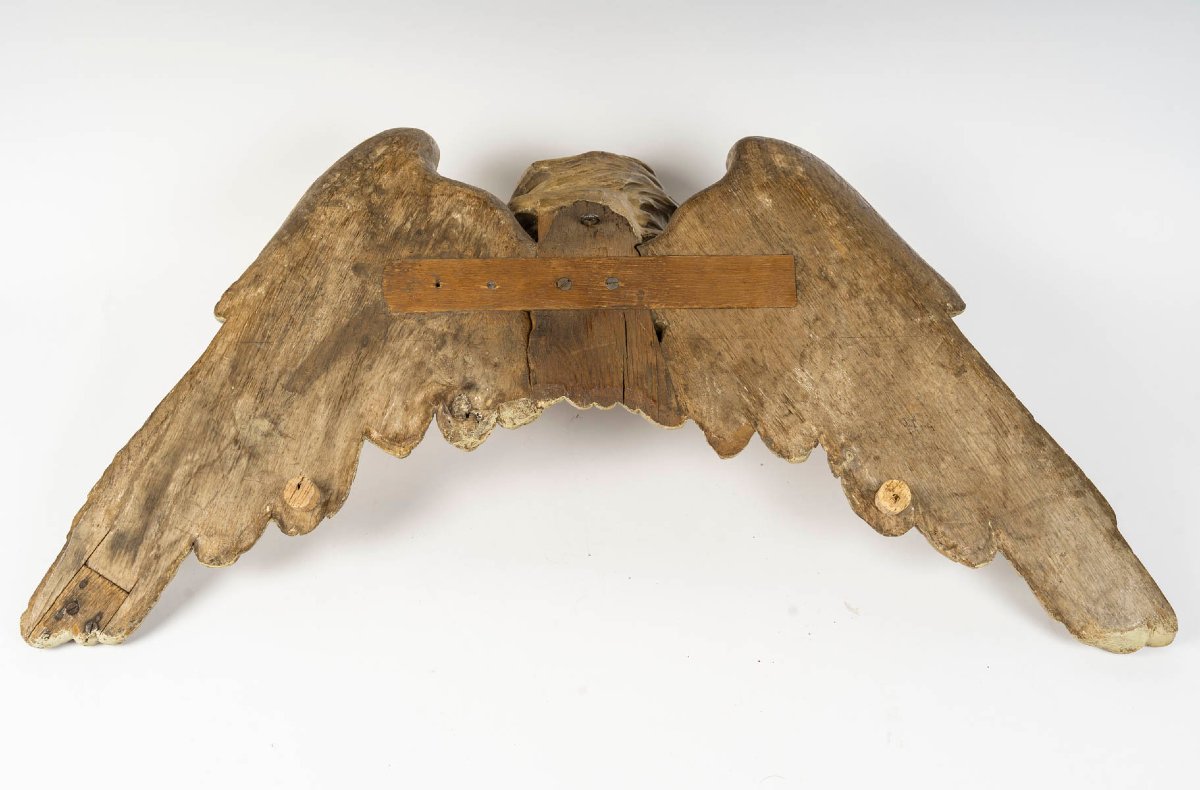



BAVARIA, Germany (South-East) - Remarkable Head of a Cherub with Widely Spread Wings in lime wood carved in the round, polychromed and partially gilded. The face, with smiling childlike features, is subtly polished; the back side is hollowed out or left unfinished. Former crowning element of a set or piece of furniture for liturgical purposes (High altar, church pulpit, etc.) to be linked to the sculptural creations developed by Workshops working in the wake of Giovanni Giuliani (1664-1744) or Ignaz Gunther (1725-1775. Work from the Baroque period from the end of the 17th century - first thirds of the 18th century. THE SMILE OF THE ANGELS With an eminently seductive tenderness, this beautiful and quivering Cherub Head fashioned from a block of poplar wood* invites a caressing, even seraphic, reverie. Sculpted with a firmness that in no way takes away the suave softness of its modeling, subtly polished, it attaches the small features of an adorable toddler. Haloed with thick and playful locks of curly hair, a high forehead surmounting beautifully plump cheeks, a coquettishly hollowed chin with a dimple under a small mouth with full lips individualize this childlike face animated by a delicious inner life. Although of frontal composition, with a vision favoring contemplation - face slightly inclined downwards; gaze, under heavy eyelids, turned towards the heavens -, this Head of Cherub exudes, seen in profile, the same ineffable charm modulated by a laughing childlike expression. It is flanked by a superb pair of amply spread wings with particularly careful treatment. We will note the harmonious as well as brilliant formal contrast established between these, with the veins, hollowed feathers, sculpted with vivacity and the delicately polished surfaces of the face of the cherub. Of unknown provenance, this remarkable Head of Winged Cherub originally intended for the crowning of liturgical ensembles or furniture pieces - high altar, altar, church pulpit - is to be compared, by its aesthetic of an elegant plasticity as by its charming stylistic particularities, to the sculptural creations elaborated by the workshops of the South of Germany working in the Baroque era for or in the wake of the undisputed masters of the genre such as Giovanni Giuliani (1664-1744) or Ignaz Gunther (1725-1775). Detached from its religious context, it will breathe into any interior, by the refinement and even the sophistication of its treatment, this essential note of tender dreaminess located at the edge of Time. * Linden wood: of soft and light nature, of homogeneous appearance, this essence was particularly appreciated by the sculptors and workshops of South and Southwest Germany because, conducive to a very fine rendering and a beautiful polish, it allowed a particularly elegant treatment of the sculpted surfaces. Materials: Poplar wood; traces of Polychromy and gilding. Dimensions: H.: 40 cm; - W: 80 cm. Work from South Germany from the end of the 17th - first half of the 18th century. Baroque period. Good condition. Original polychromy largely preserved.
Explore similar pieces and discover your ideal find:
Christian Art