THIS OBJECT WAS SOLD
17th Century Sumène Wardrobe


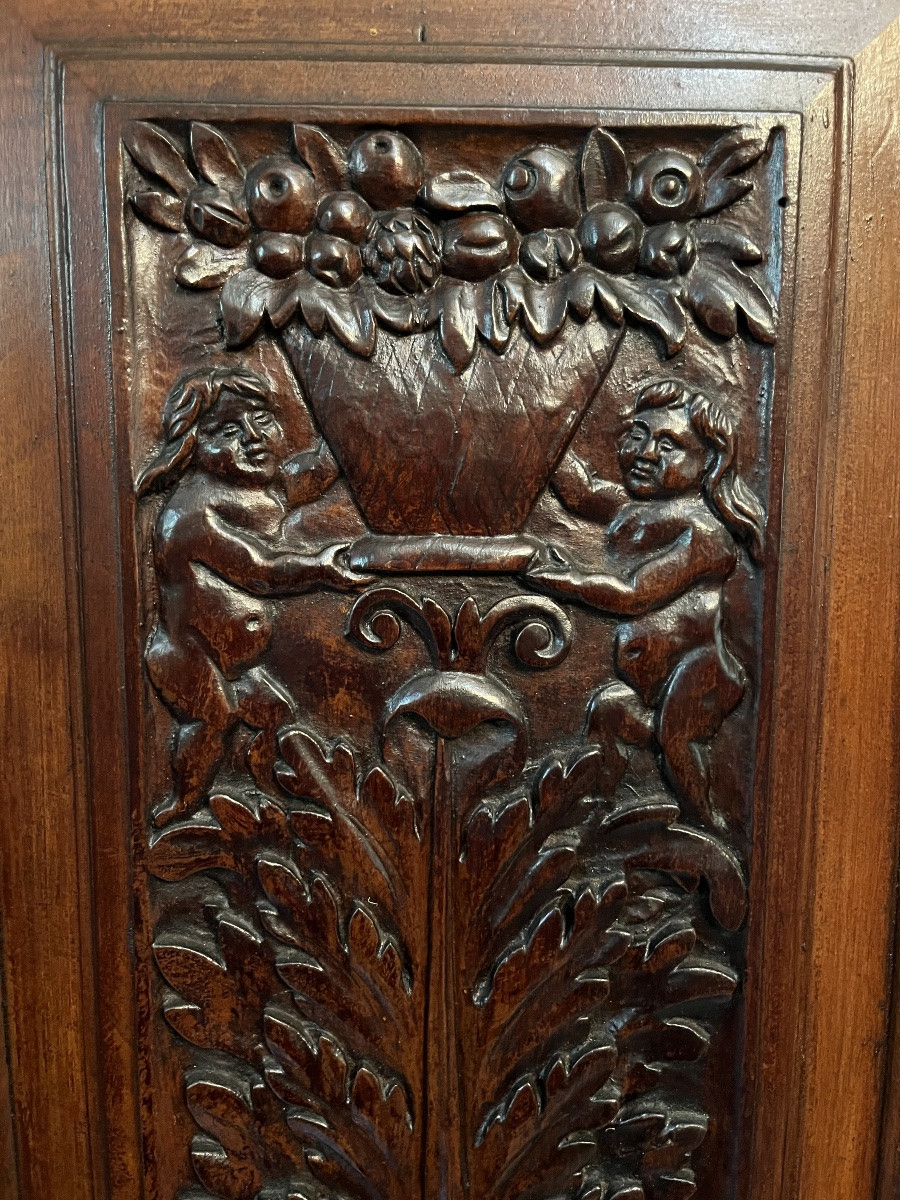

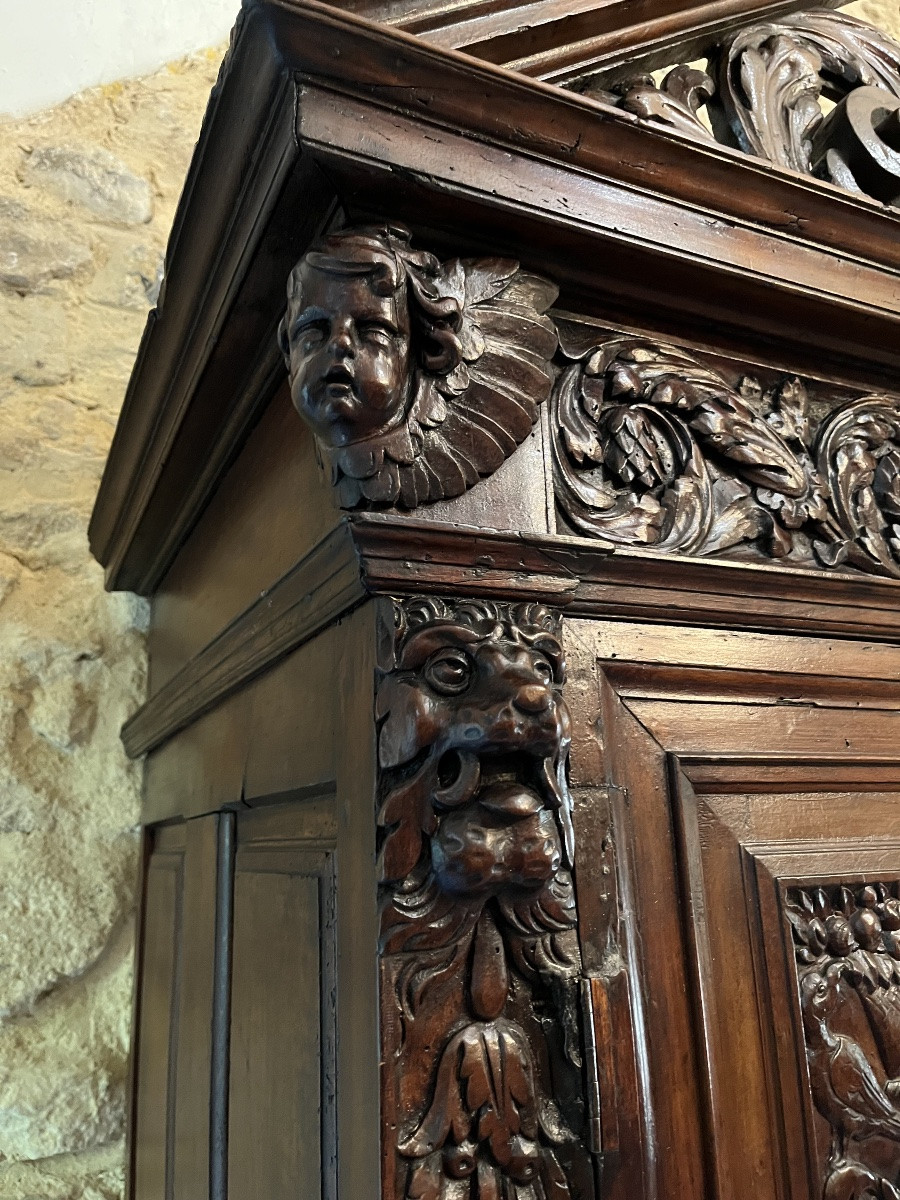

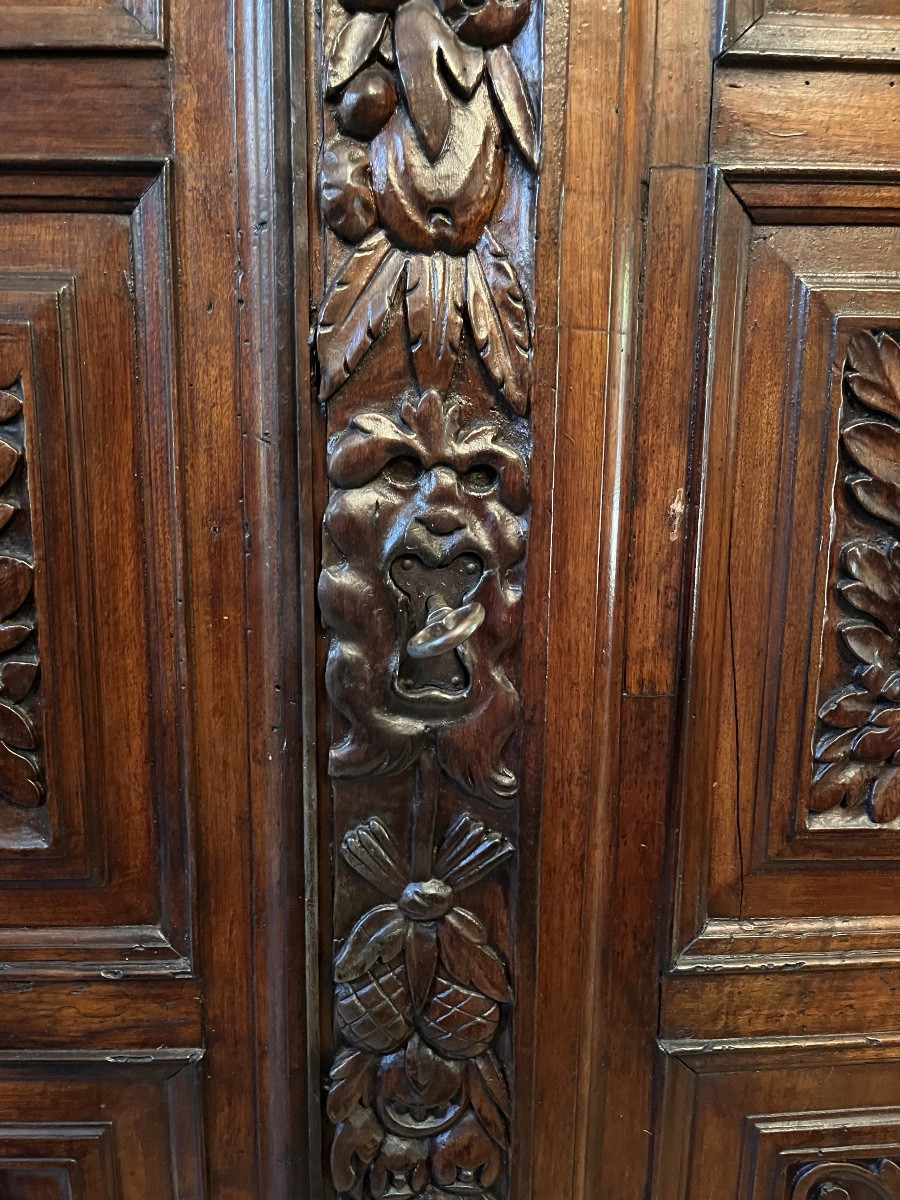

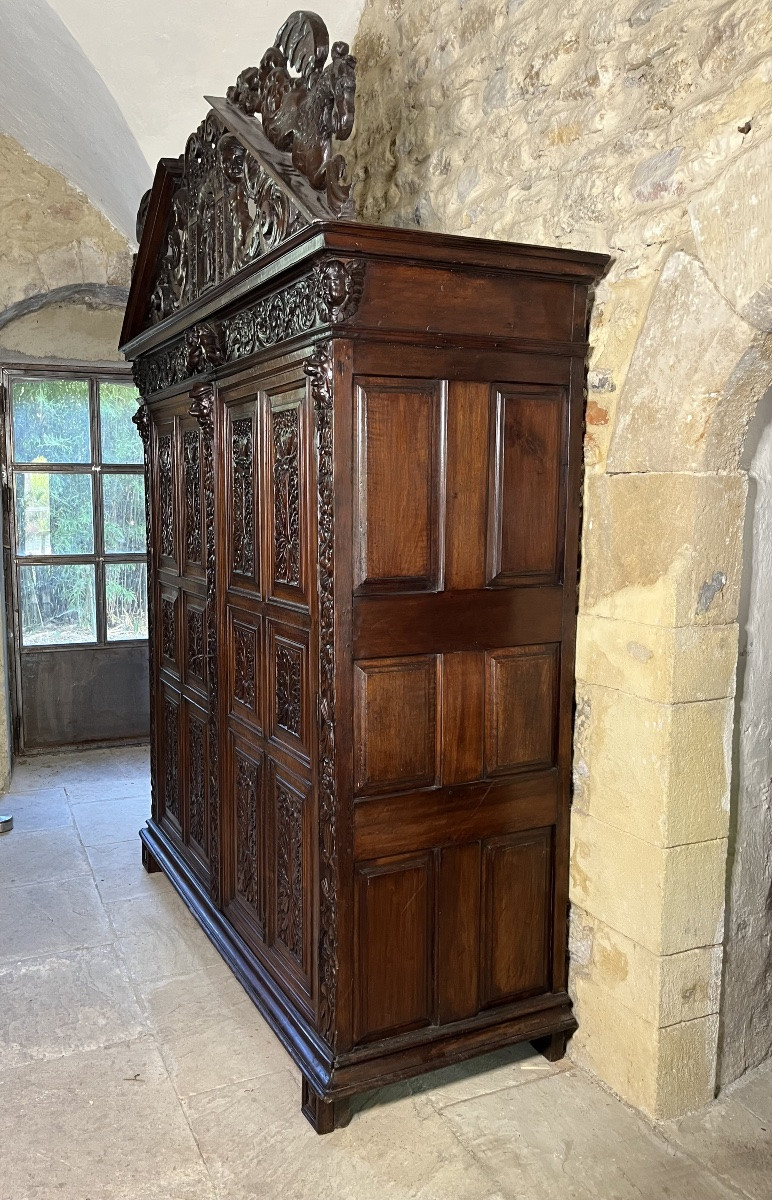
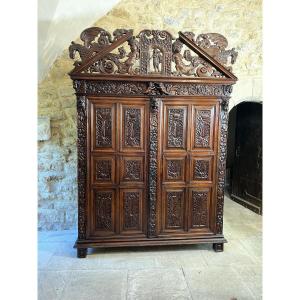


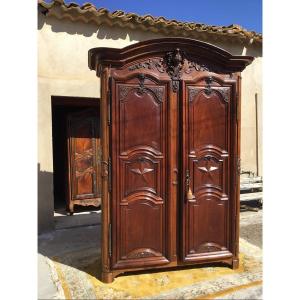
This cabinet is a magnificent example of Sumène's wardrobe, typical of Languedoc (Gard, Cévennes) in the middle of the 17th century.
Description of the cabinet
• Structure: made of solid walnut wood, renowned for its strength and richness of color.
• Decor: richly sculpted, it has molded panels framed by flat columns, with plant motifs (acanthus leaves, rinceaux, stylized flowers).
• Pediment: particularly worked, it consists here of a spectacular ornamentation with mythological and allegorical figures (probably ancient characters and fantastic animals such as dragons or winged horses). We often find in these cabinets a symbolic decorative vocabulary linked to prosperity, protection and fertility.
• Set: the cabinet gives off an impression of power and elegance, reflecting the social status of its owners.
History of Sumène's cabinets
• Origin: Sumène is a village in the Cévennes (Gard) which became, in the 17th century, a center renowned for its carpenters and wood carvers. These artisans produced highly sought-after state cabinets.
• Context: They were often commissioned by bourgeois or Protestant families in the region, who saw them as a sign of wealth and cultural identity.
• Particularity: Unlike simple peasant cabinets, Sumène's were distinguished by their exuberant and symbolic decoration.
• Use: Placed in the main room of the house, they were used to store laundry, clothes and precious objects, but above all played the role of ceremonial furniture.
• Diffusion: Their fame went far beyond the village, and today they are considered as a collection prized by lovers of antique furniture.
In summary, this Sumène wardrobe is much more than a utility cabinet: it is a true masterpiece of Cevenne cabinetmaking, witness to the cultural and artisanal wealth of Languedoc in the 17th century
1. The triangular pediment
• Architectural structure: the pediment is directly reminiscent of ancient Greek and Roman temples.
• Symbolic: it is a reference to greatness, the legacy of Antiquity and sustainability. This reflects the idea of a "monumental" furniture, almost sacred
2. Human characters
• We can distinguish in the center a niche or arcade with a sculpted figure (probably male), framed by characters in round-hump.
• Possible interpretation:
• These figures often recall ancient allegories (gods, heroes, moral virtues such as Justice, Strength, Wisdom). • In the Protestant Cévennes, these symbolic references were sometimes chosen as cultural and scholarly affirmation, rather than religious.
• The human presence at the top of the cabinet underlines the centrality of man and reason, a humanist heritage.
3. Fantastic creatures
• On each side of the pediment, we can see fabulous animals, close to winged dragons or griffins.
• Symbolic:
• The dragon traditionally represents power, but also the enemy to be defeated. When it is controlled or integrated into a decor, it symbolizes the protection of the home.
• The griffin (mixture of eagle and lion) is a guardian, a protector of treasures and the house.
• In this context, these creatures are like guardians of the furniture and what it contains, but also symbolic protectors of the family.
4. Rinceaux and plant motifs
• All around the doors, the panels are decorated with stylized leaves (probably acanthus and vine).
• Acanthe: widespread ancient motif, symbol of eternity and rebirth.
• Vine: symbol of abundance and prosperity.
• The plant set reflects an idea of fertility, family prosperity and continuity.
5. General organization
• Verticality: the columns and pilasters that frame the panels give an architectural air to the cabinet, like a "palace facade".
• Hierarchy: the bottom is utilitarian, but the higher you go up, the more you enter a symbolic and protective register. This corresponds to a logic of "throne" or "domestic altar".
This Sumene's wardrobe can be read as:
• A stately and prestigious furniture, inspired by ancient architecture.
• A cultural manifesto: the craftsman wanted to show not only his technical mastery, but also a belonging to a scholarly and humanist world.
• A protective object: dragons, griffins and allegorical characters are there to watch over the house and its property.
• A symbol of prosperity: foliage, flowers and rinses glorify fertility and abundance.
In a perfect state of conservation with some small repairs of use, key and vintage lock. The shelves were changed in the 19th century, the cabinet comes from a mansion in Montpellier and had to stay in the same family for generations, photo of the cabinet in place in the mansion on request.
Description of the cabinet
• Structure: made of solid walnut wood, renowned for its strength and richness of color.
• Decor: richly sculpted, it has molded panels framed by flat columns, with plant motifs (acanthus leaves, rinceaux, stylized flowers).
• Pediment: particularly worked, it consists here of a spectacular ornamentation with mythological and allegorical figures (probably ancient characters and fantastic animals such as dragons or winged horses). We often find in these cabinets a symbolic decorative vocabulary linked to prosperity, protection and fertility.
• Set: the cabinet gives off an impression of power and elegance, reflecting the social status of its owners.
History of Sumène's cabinets
• Origin: Sumène is a village in the Cévennes (Gard) which became, in the 17th century, a center renowned for its carpenters and wood carvers. These artisans produced highly sought-after state cabinets.
• Context: They were often commissioned by bourgeois or Protestant families in the region, who saw them as a sign of wealth and cultural identity.
• Particularity: Unlike simple peasant cabinets, Sumène's were distinguished by their exuberant and symbolic decoration.
• Use: Placed in the main room of the house, they were used to store laundry, clothes and precious objects, but above all played the role of ceremonial furniture.
• Diffusion: Their fame went far beyond the village, and today they are considered as a collection prized by lovers of antique furniture.
In summary, this Sumène wardrobe is much more than a utility cabinet: it is a true masterpiece of Cevenne cabinetmaking, witness to the cultural and artisanal wealth of Languedoc in the 17th century
1. The triangular pediment
• Architectural structure: the pediment is directly reminiscent of ancient Greek and Roman temples.
• Symbolic: it is a reference to greatness, the legacy of Antiquity and sustainability. This reflects the idea of a "monumental" furniture, almost sacred
2. Human characters
• We can distinguish in the center a niche or arcade with a sculpted figure (probably male), framed by characters in round-hump.
• Possible interpretation:
• These figures often recall ancient allegories (gods, heroes, moral virtues such as Justice, Strength, Wisdom). • In the Protestant Cévennes, these symbolic references were sometimes chosen as cultural and scholarly affirmation, rather than religious.
• The human presence at the top of the cabinet underlines the centrality of man and reason, a humanist heritage.
3. Fantastic creatures
• On each side of the pediment, we can see fabulous animals, close to winged dragons or griffins.
• Symbolic:
• The dragon traditionally represents power, but also the enemy to be defeated. When it is controlled or integrated into a decor, it symbolizes the protection of the home.
• The griffin (mixture of eagle and lion) is a guardian, a protector of treasures and the house.
• In this context, these creatures are like guardians of the furniture and what it contains, but also symbolic protectors of the family.
4. Rinceaux and plant motifs
• All around the doors, the panels are decorated with stylized leaves (probably acanthus and vine).
• Acanthe: widespread ancient motif, symbol of eternity and rebirth.
• Vine: symbol of abundance and prosperity.
• The plant set reflects an idea of fertility, family prosperity and continuity.
5. General organization
• Verticality: the columns and pilasters that frame the panels give an architectural air to the cabinet, like a "palace facade".
• Hierarchy: the bottom is utilitarian, but the higher you go up, the more you enter a symbolic and protective register. This corresponds to a logic of "throne" or "domestic altar".
This Sumene's wardrobe can be read as:
• A stately and prestigious furniture, inspired by ancient architecture.
• A cultural manifesto: the craftsman wanted to show not only his technical mastery, but also a belonging to a scholarly and humanist world.
• A protective object: dragons, griffins and allegorical characters are there to watch over the house and its property.
• A symbol of prosperity: foliage, flowers and rinses glorify fertility and abundance.
In a perfect state of conservation with some small repairs of use, key and vintage lock. The shelves were changed in the 19th century, the cabinet comes from a mansion in Montpellier and had to stay in the same family for generations, photo of the cabinet in place in the mansion on request.
Explore similar pieces and discover your ideal find:
Armoires, Wardrobes