



Crucified Christ, Crucifix Of Sorrow. Carved And Polychromed Wood. Probably German School.
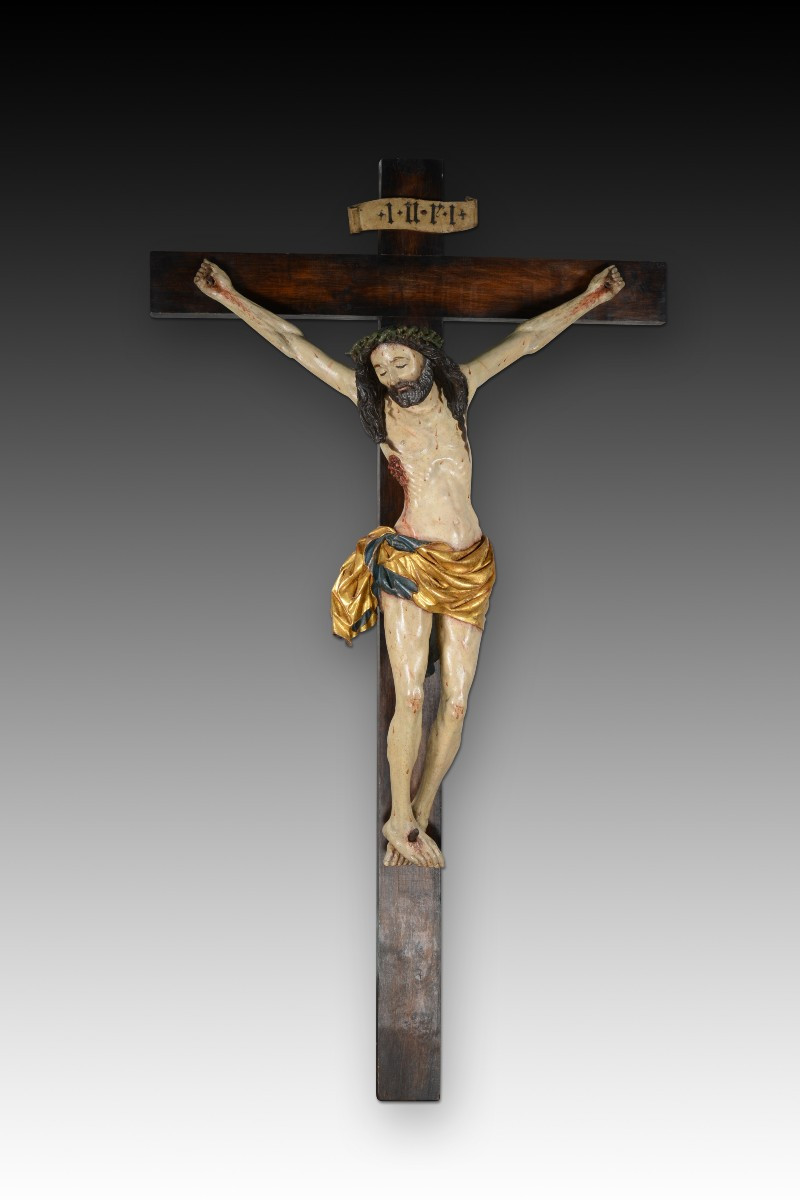
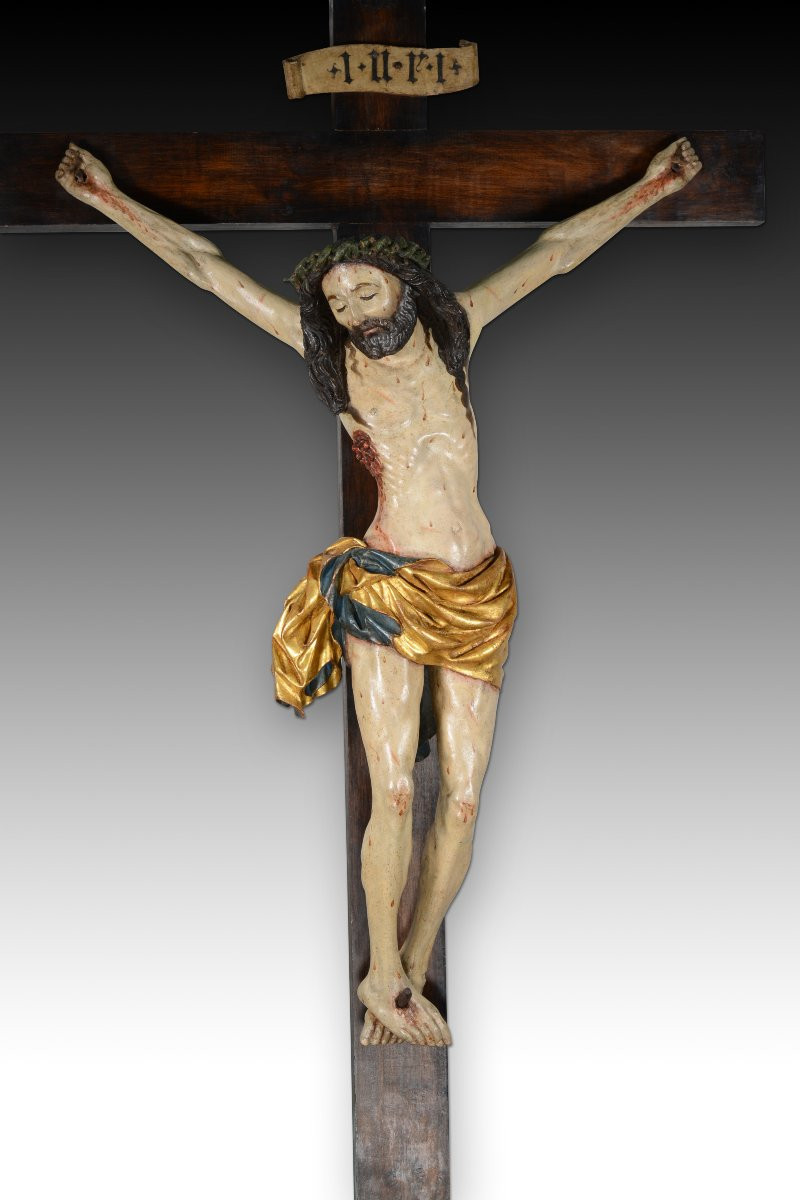
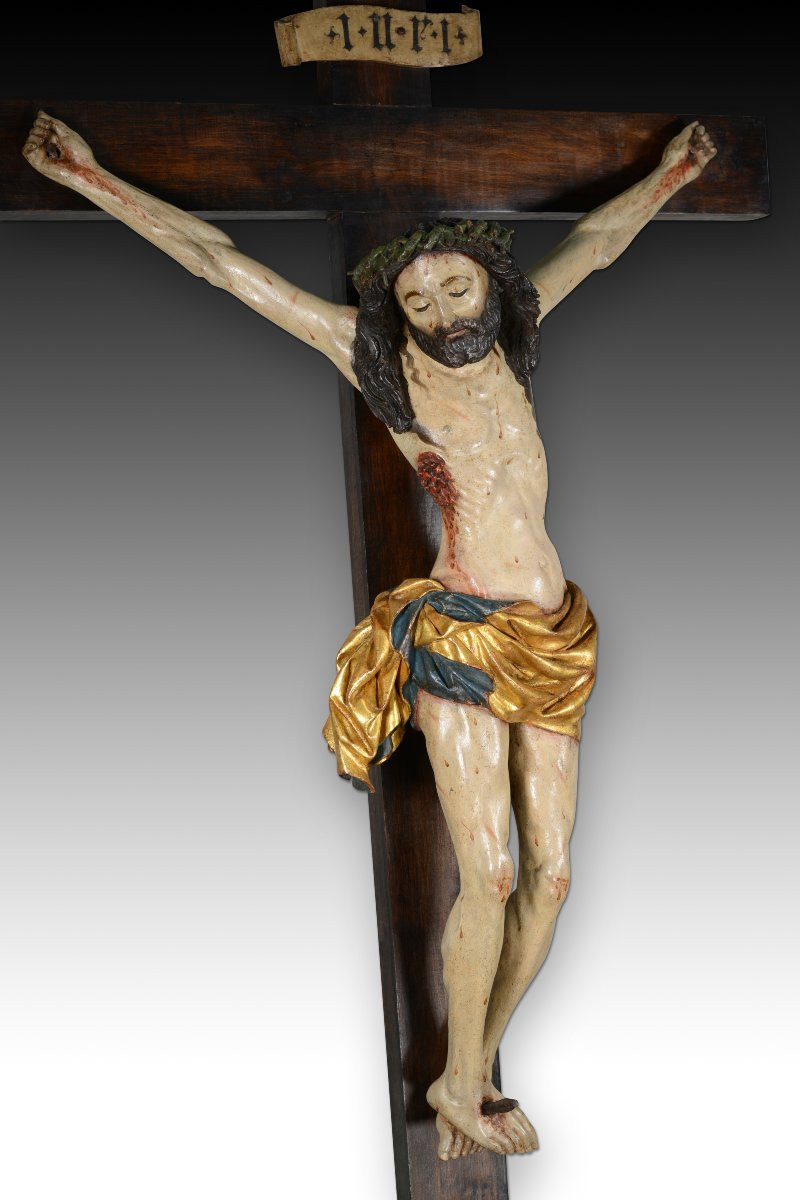
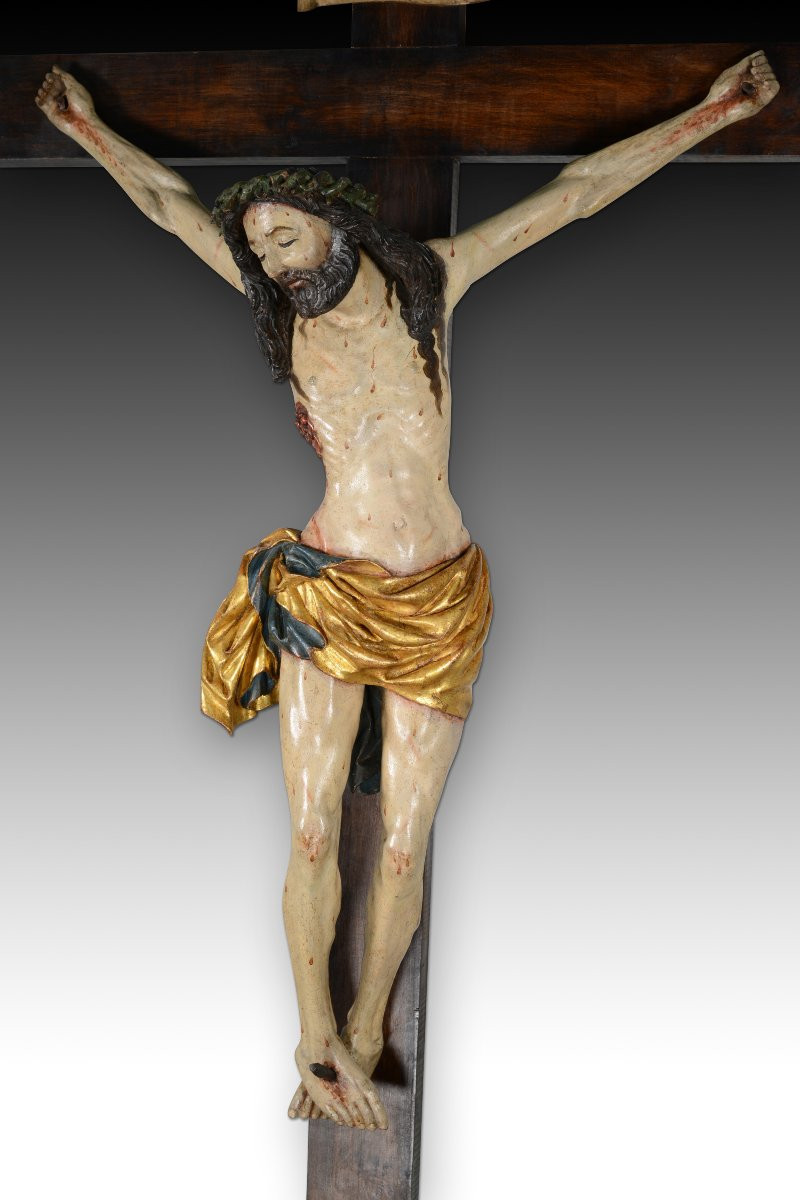
Crucified Christ, Crucifix of Sorrow. Carved and polychrome wood. Probably South German School, 15th century.
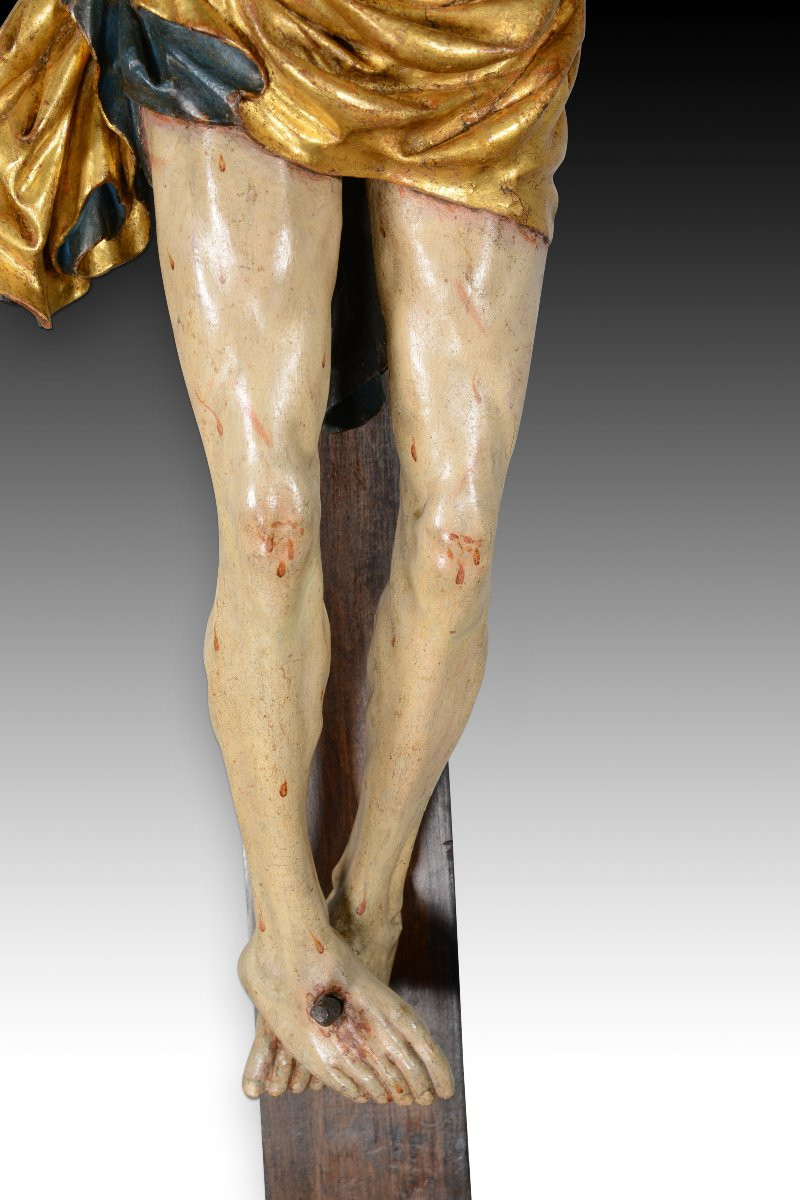
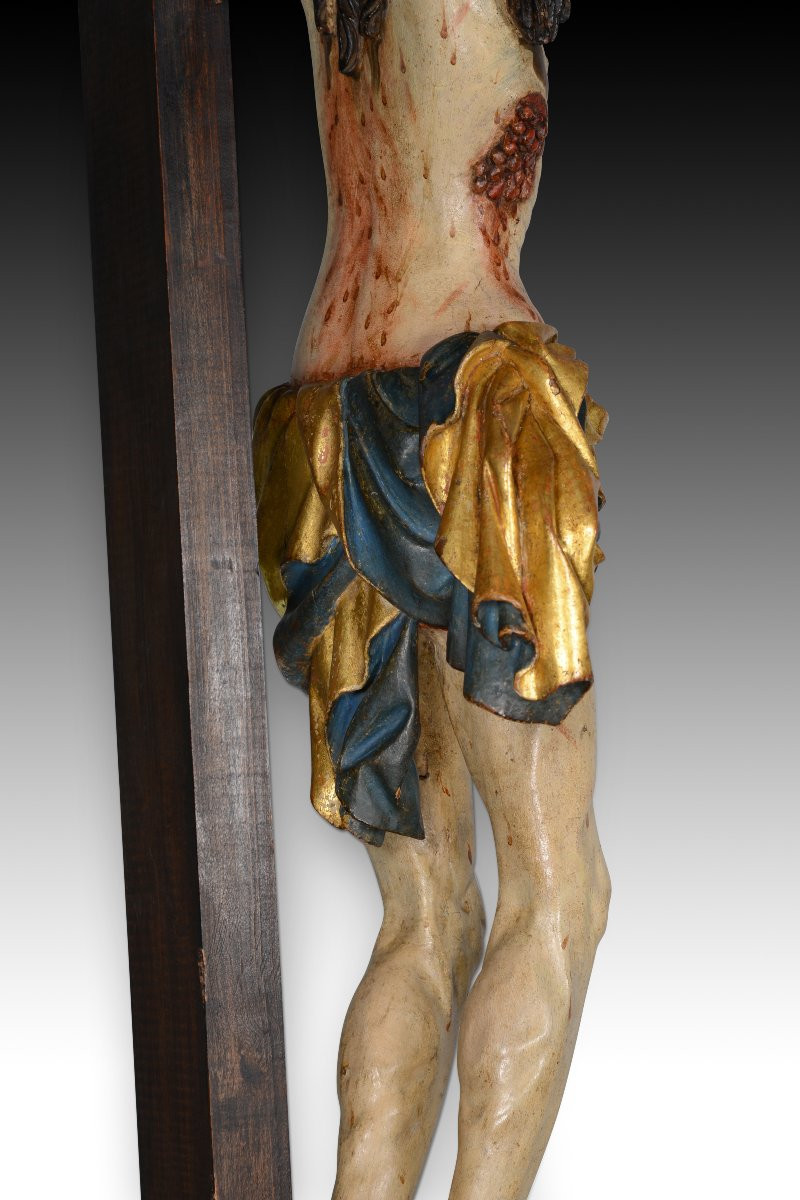
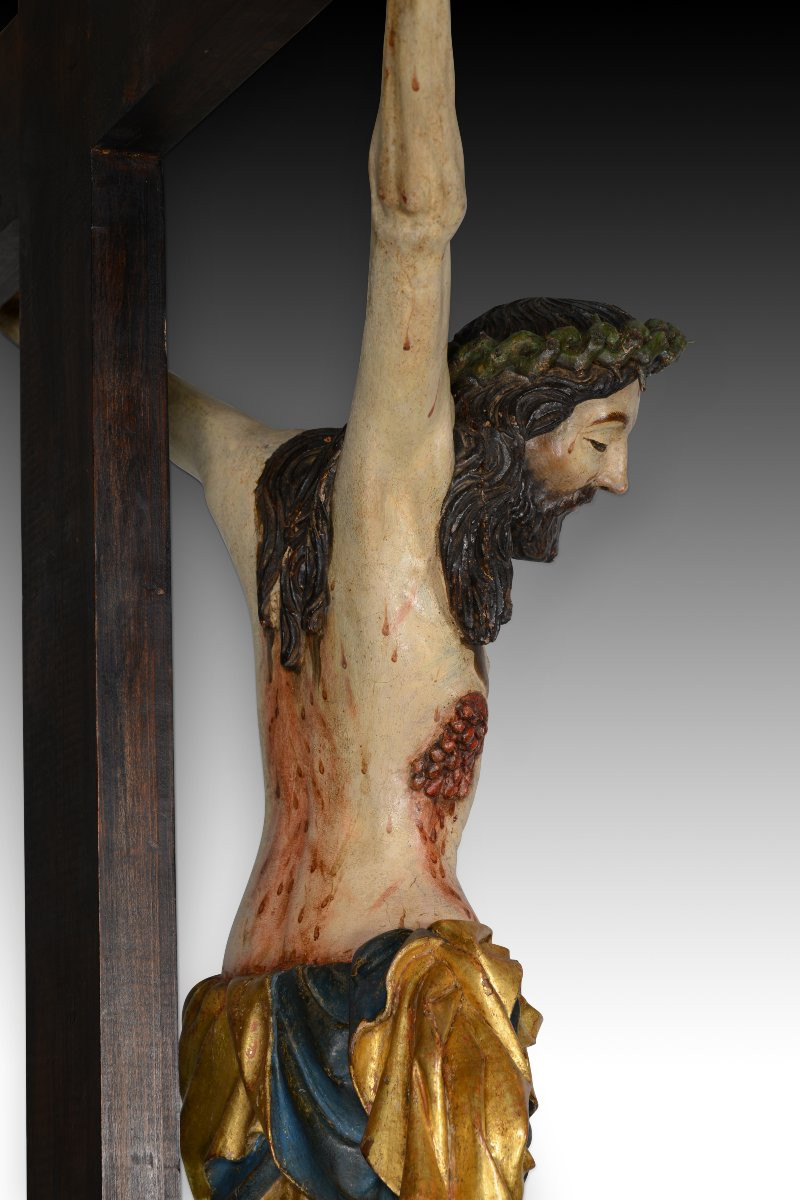
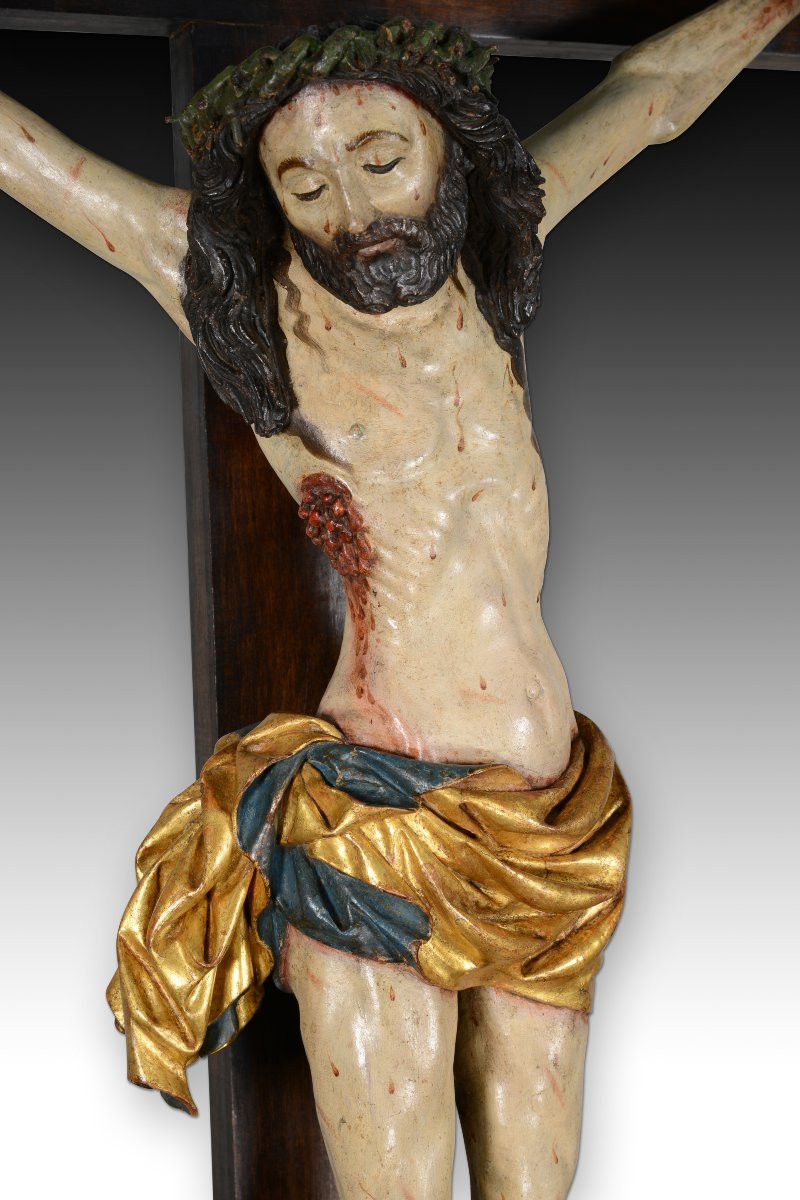
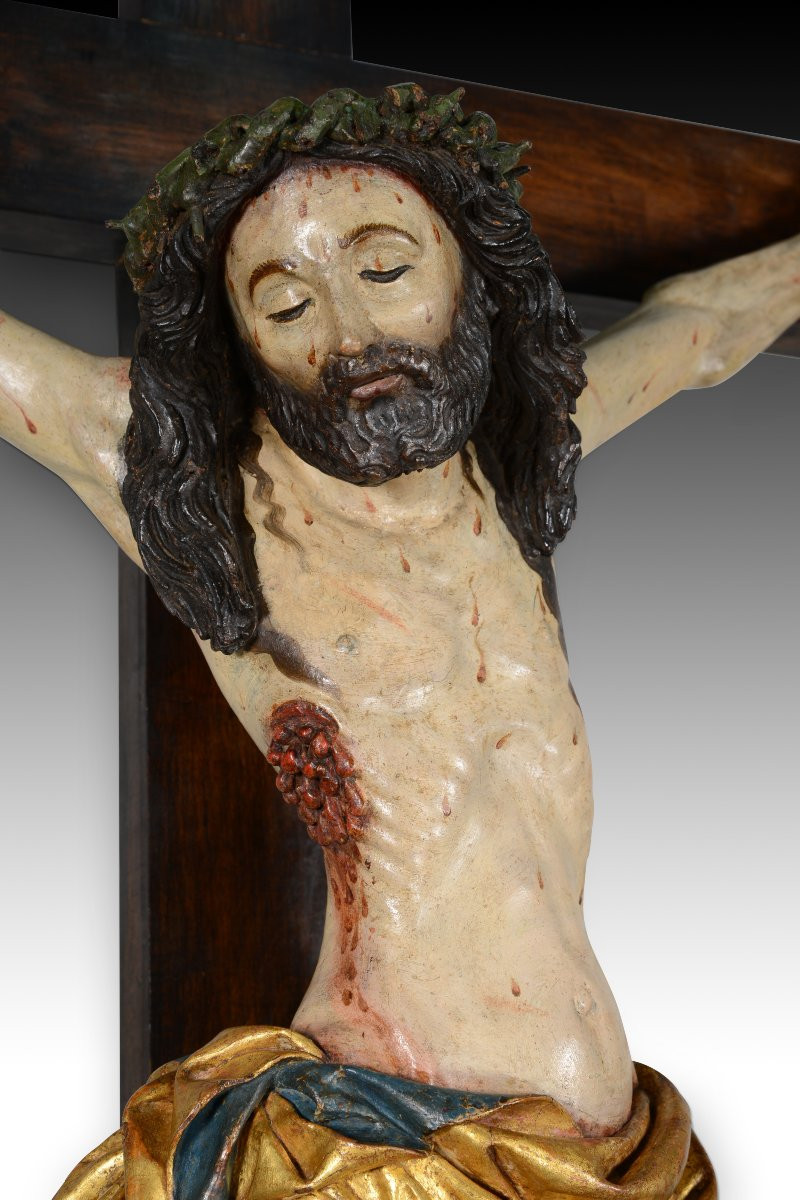
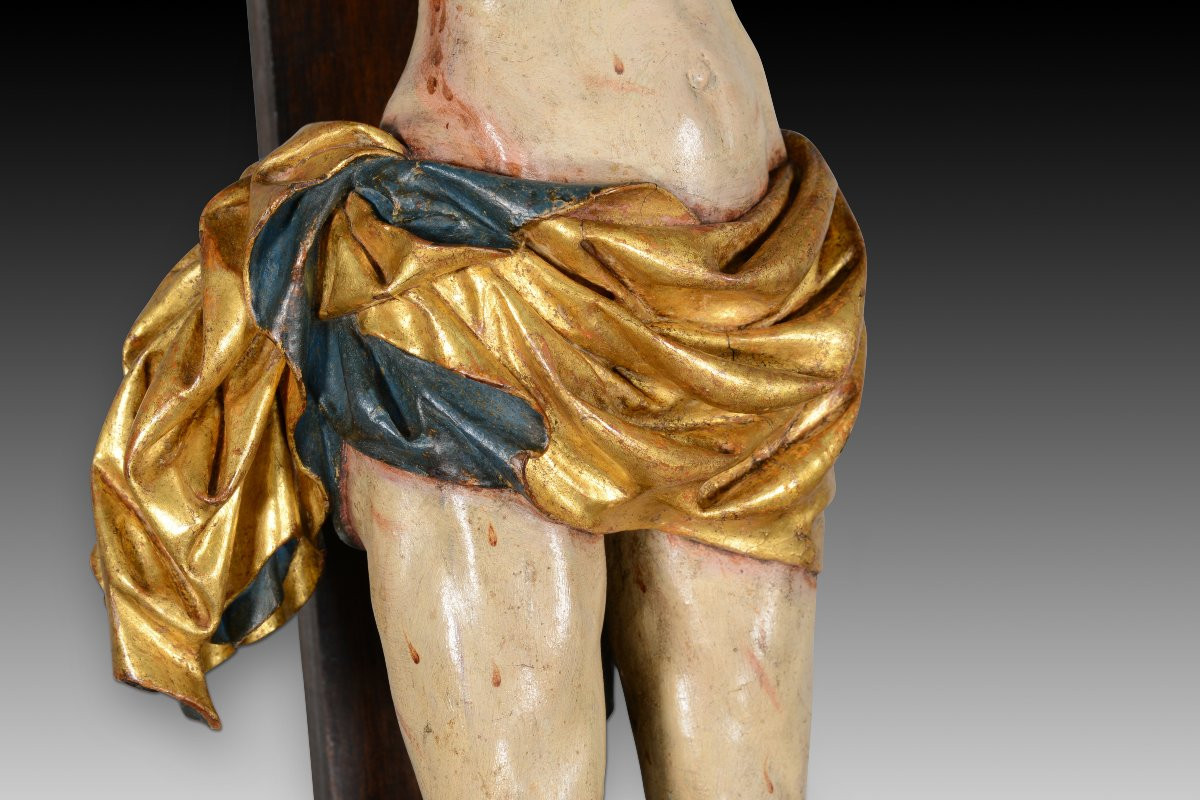
Polychrome and gilded wood sculpture depicting Christ with the crown of thorns, on the cross, already deceased (eyes closed), with the usual INRI phylactery on the upper crossbar of the Latin cross, three nails (note the crossed feet), and a short gilded and polychrome purity cloth or perizonium. In German, the term "Gabelkreuz" or "Gabelkruzifix" ("Painful Crucifix" in English) refers to a particularly expressive type of Gothic crucified Christ (privileging external suffering over other aspects) and which normally presents the cross in the shape of a Y or upsilon (alluding to the Tree of Life), apparently created under the influence of late 13th and early 14th century mysticism (Saint Bridget, etc.) and found in the Rhineland (western Germany) and, through influences and contacts, in the rest of Europe (apparently, some currently consider the origin of the iconography not to be German but Italian). Most sculptures of this type are concentrated in three European regions: the German area, which includes the present-day federal states of North Rhine-Westphalia, Rhineland-Palatinate, Lower Saxony, and central and northern Italy, although they are also found in other enclaves such as Lucera in Puglia, Palermo in Sicily, and Oristiano in Sardinia. Nor should we forget the Spanish examples (generally classified into three categories: those derived from the Holy Christ of Perpignan, the Castilian group, Navarrese images, and Andalusian crucifixes). One of the oldest pieces that follows this typology is the Crucifix Doloroso in the church of Santa Maria del Capitolio in Cologne. In Italy, the one in the church of Santa Maria Novella in Florence is often highlighted. In Spain, there is one in Puente la Reina (Navarra) that is said to have been donated by a German pilgrim in the 14th century; There is another one in the lower choir of the monastery of Santa María de las Huelgas Reales in Burgos, attributed to a Central European workshop or a sculptor influenced by these models in the second half of the 14th century (with a Latin cross). German sculptors who traveled and worked in Europe should also be taken into account.
Dimensions: 76 x 26 x 135 / 62 x 23 x 85 cm
Polychrome and gilded wood sculpture depicting Christ with the crown of thorns, on the cross, already deceased (eyes closed), with the usual INRI phylactery on the upper crossbar of the Latin cross, three nails (note the crossed feet), and a short gilded and polychrome purity cloth or perizonium. In German, the term "Gabelkreuz" or "Gabelkruzifix" ("Painful Crucifix" in English) refers to a particularly expressive type of Gothic crucified Christ (privileging external suffering over other aspects) and which normally presents the cross in the shape of a Y or upsilon (alluding to the Tree of Life), apparently created under the influence of late 13th and early 14th century mysticism (Saint Bridget, etc.) and found in the Rhineland (western Germany) and, through influences and contacts, in the rest of Europe (apparently, some currently consider the origin of the iconography not to be German but Italian). Most sculptures of this type are concentrated in three European regions: the German area, which includes the present-day federal states of North Rhine-Westphalia, Rhineland-Palatinate, Lower Saxony, and central and northern Italy, although they are also found in other enclaves such as Lucera in Puglia, Palermo in Sicily, and Oristiano in Sardinia. Nor should we forget the Spanish examples (generally classified into three categories: those derived from the Holy Christ of Perpignan, the Castilian group, Navarrese images, and Andalusian crucifixes). One of the oldest pieces that follows this typology is the Crucifix Doloroso in the church of Santa Maria del Capitolio in Cologne. In Italy, the one in the church of Santa Maria Novella in Florence is often highlighted. In Spain, there is one in Puente la Reina (Navarra) that is said to have been donated by a German pilgrim in the 14th century; There is another one in the lower choir of the monastery of Santa María de las Huelgas Reales in Burgos, attributed to a Central European workshop or a sculptor influenced by these models in the second half of the 14th century (with a Latin cross). German sculptors who traveled and worked in Europe should also be taken into account.
Dimensions: 76 x 26 x 135 / 62 x 23 x 85 cm
15 000 €
Period: Before 16th century
Style: Other Style
Condition: En l'etat
Material: Painted wood
Width: 76 cm
Height: 135 cm
Depth: 26 cm
Reference (ID): 1610423
Availability: In stock
Print