THIS OBJECT WAS SOLD
Pierced Iron Nanban Tsuba



Over the centuries, many sailors, merchants, and colonial dignitaries crossed the oceans to trade with Asian countries. Cross-cultural influence is an interesting aspect of this period of war and trade. The word "Nanban," or "Namban," can be literally translated as "Western barbarian," a term the Japanese used to refer to traders from Europe and other continents. Tsuba (sword guards) are a typical element of the Japanese sword. Since the beginning of trade, Japanese designs have been influenced by different cultures and religions. In addition to being made in their own country, sword guards were often made in Tonkin, Canton, and even Beijing and Sri Lanka.
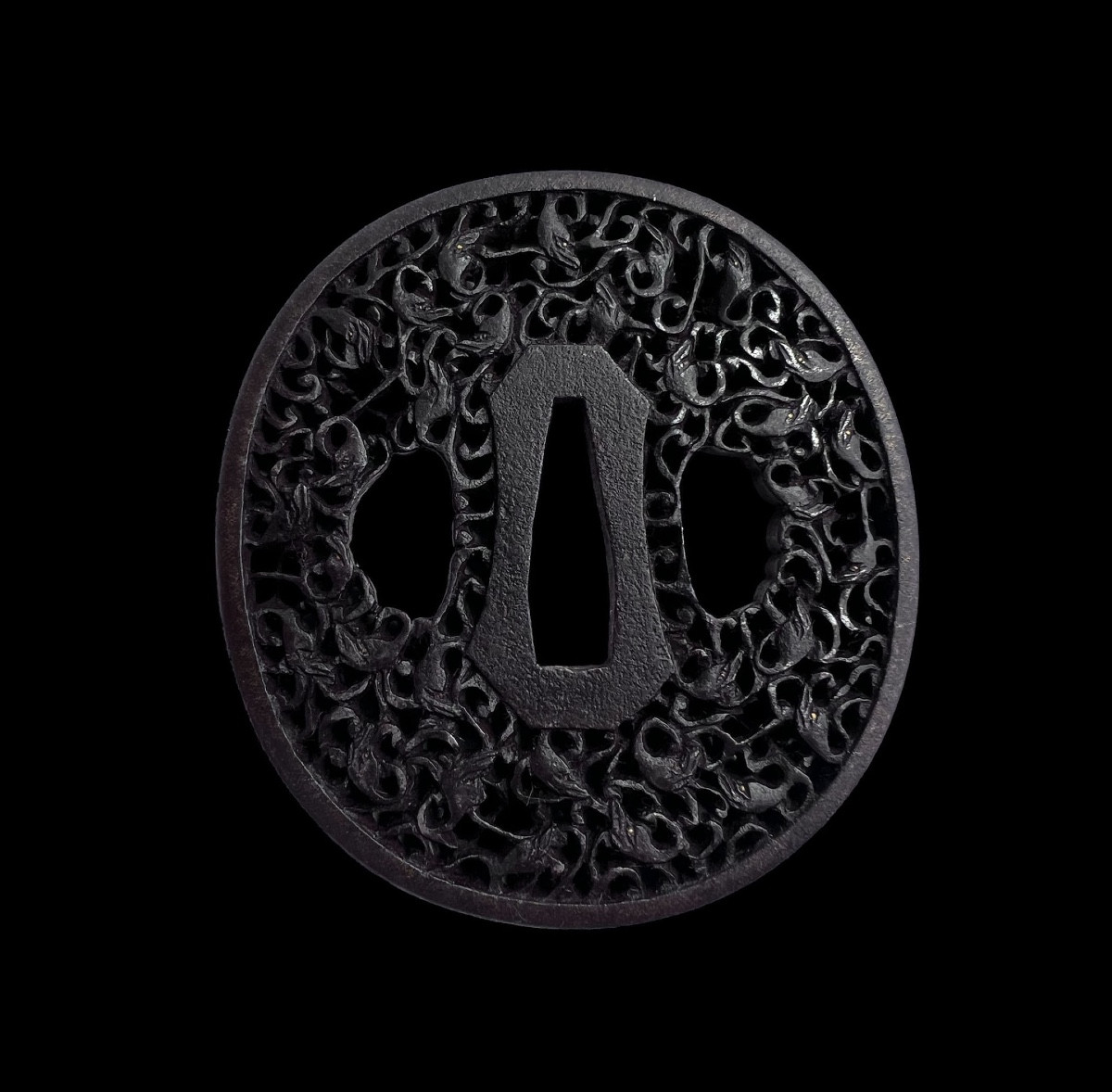
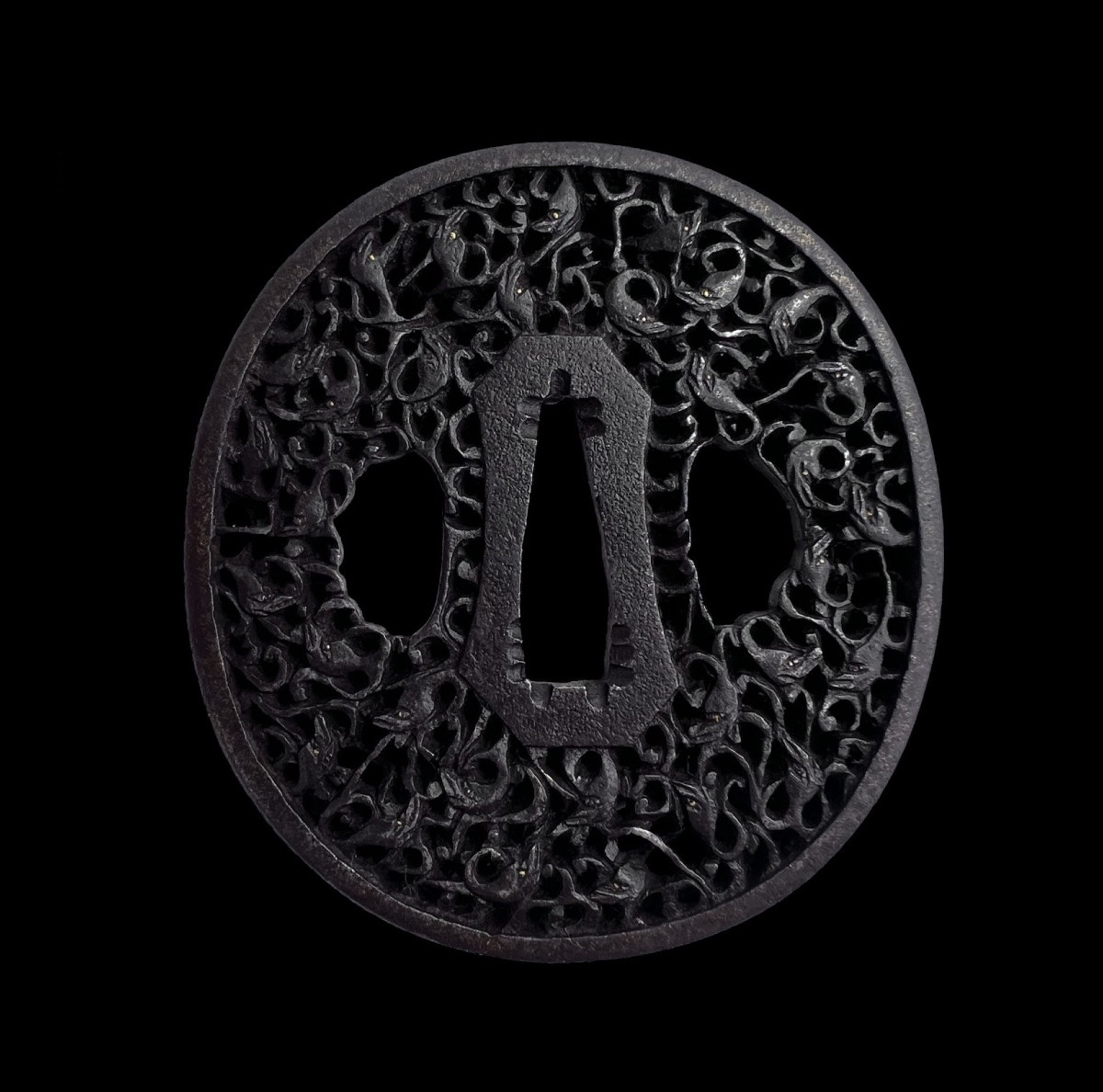
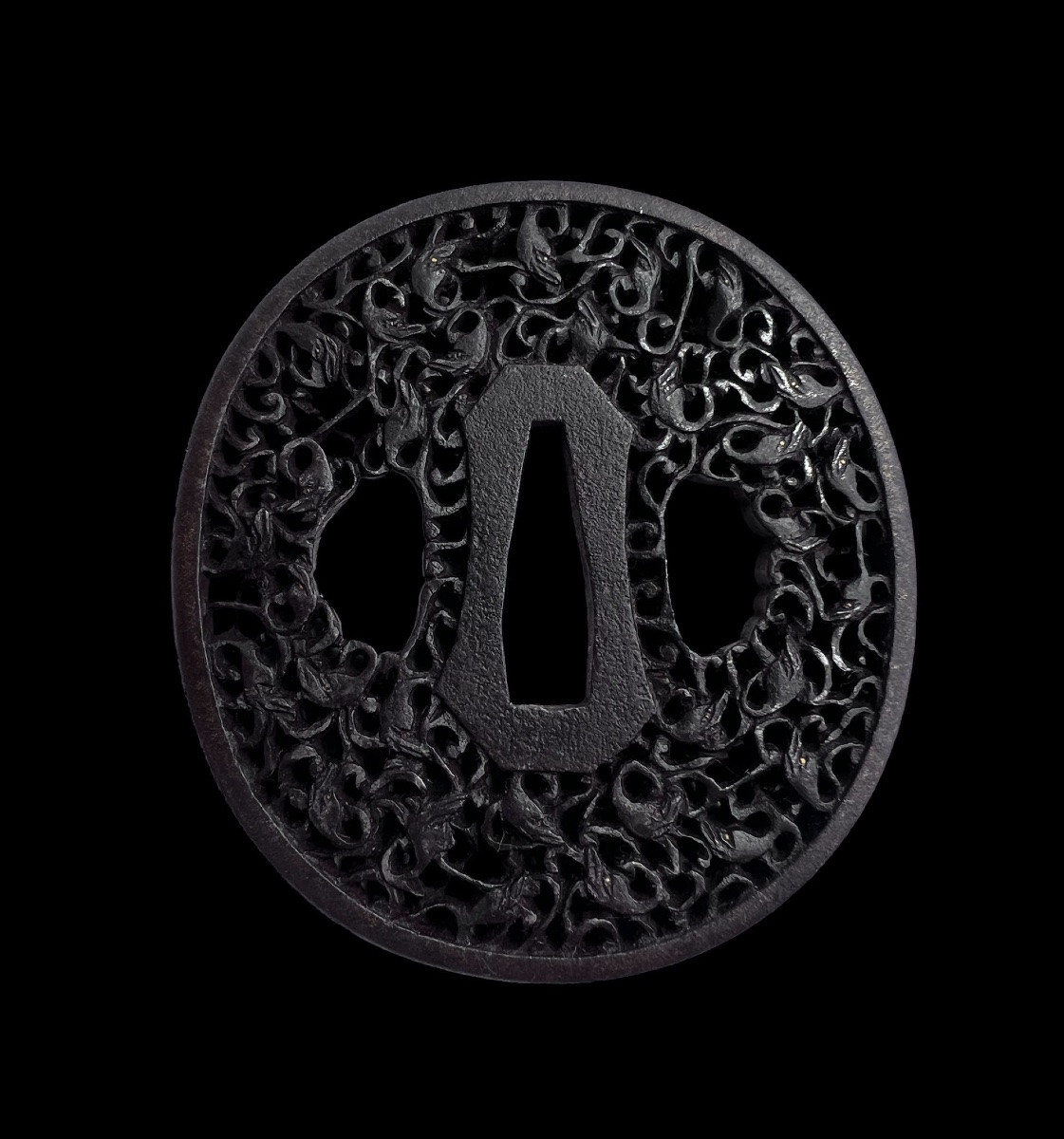
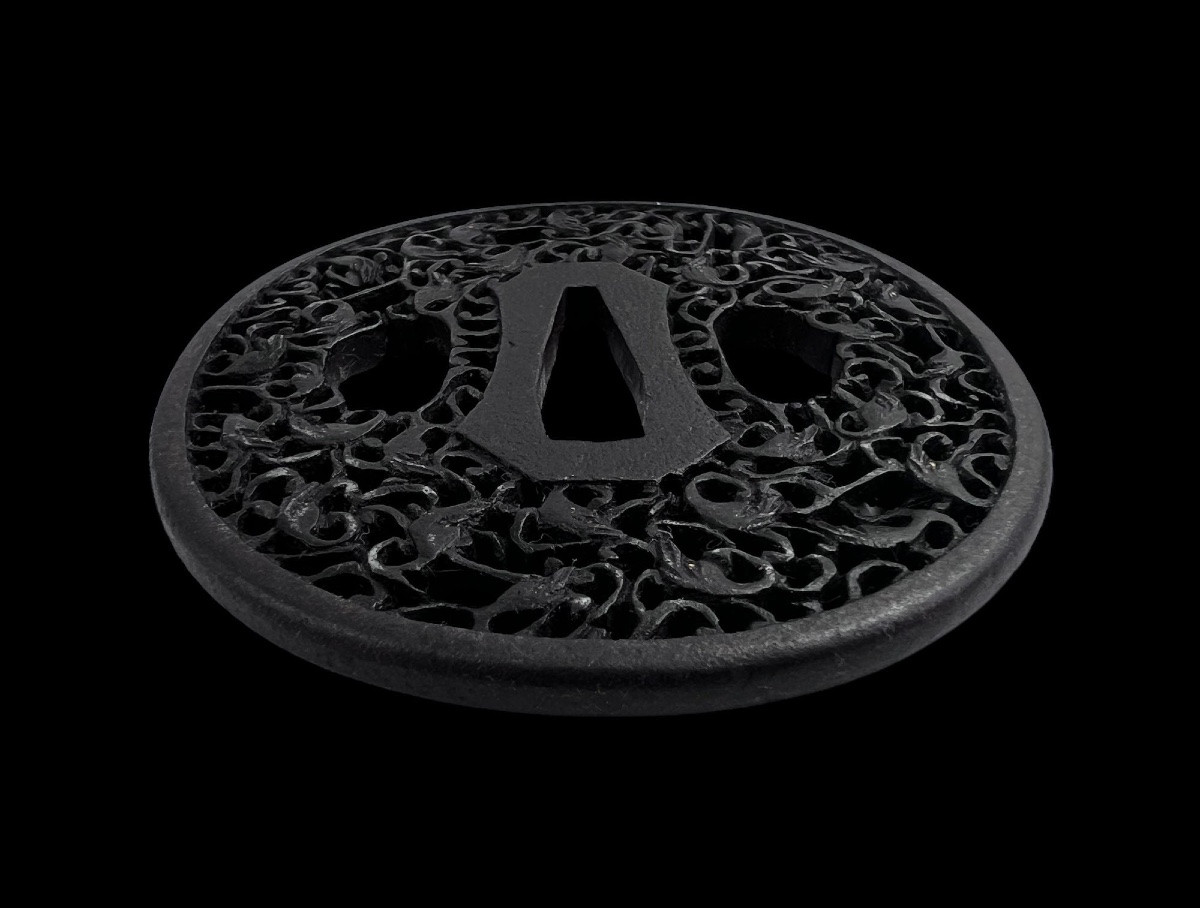
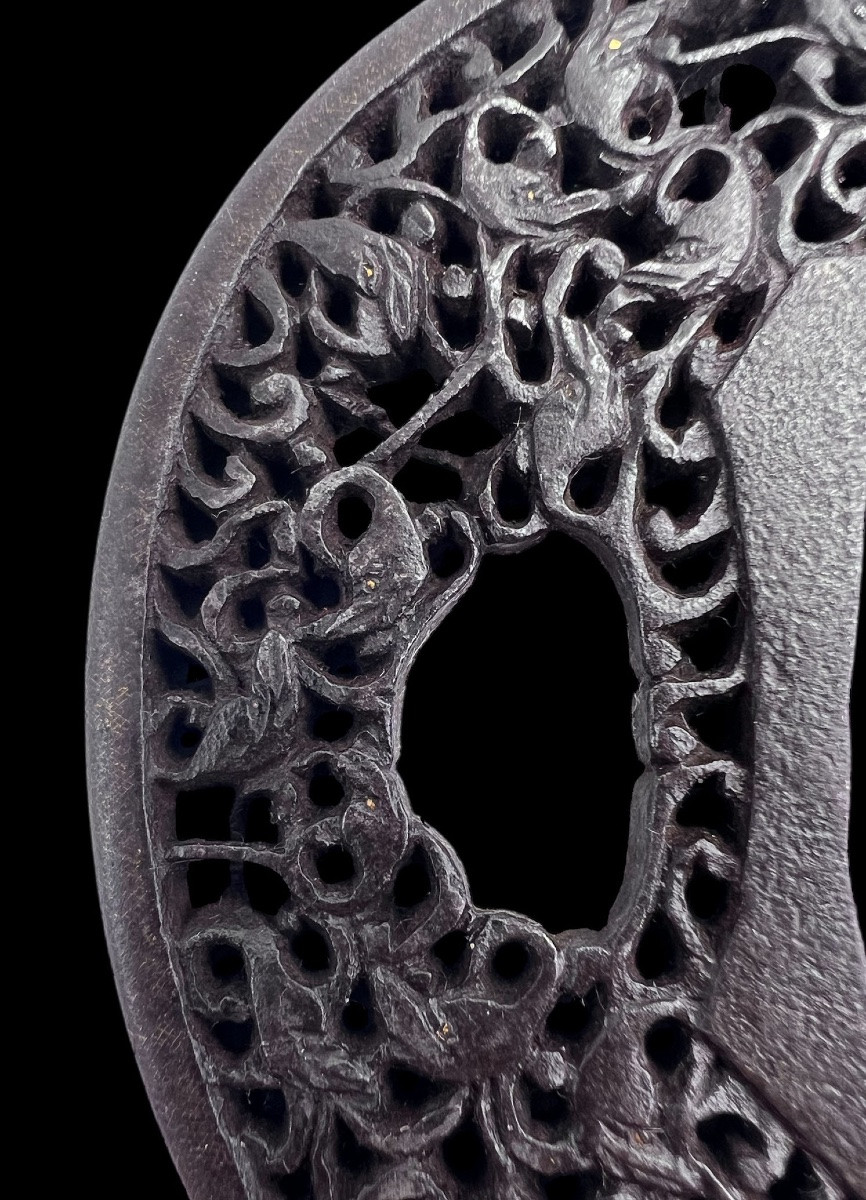
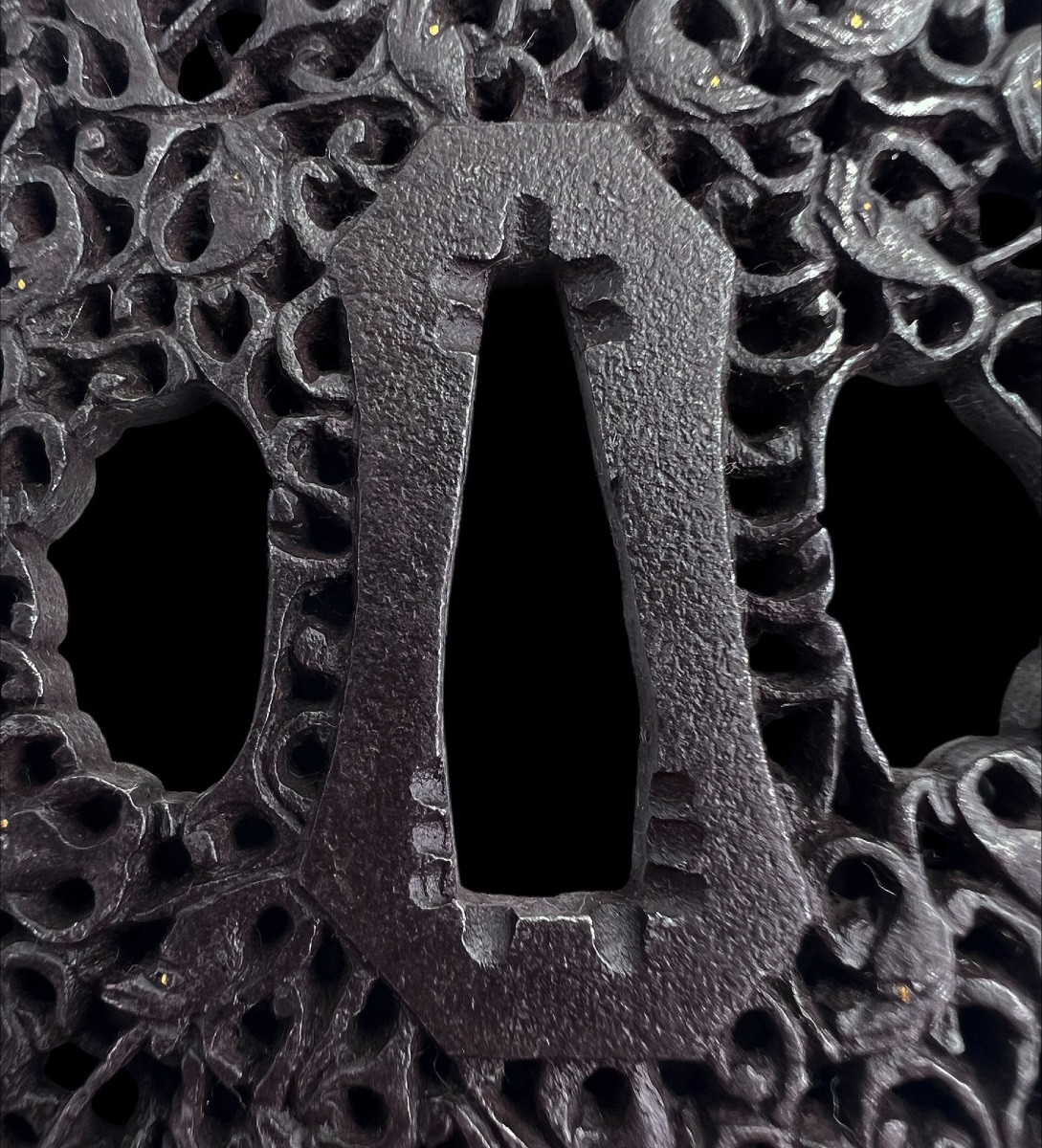
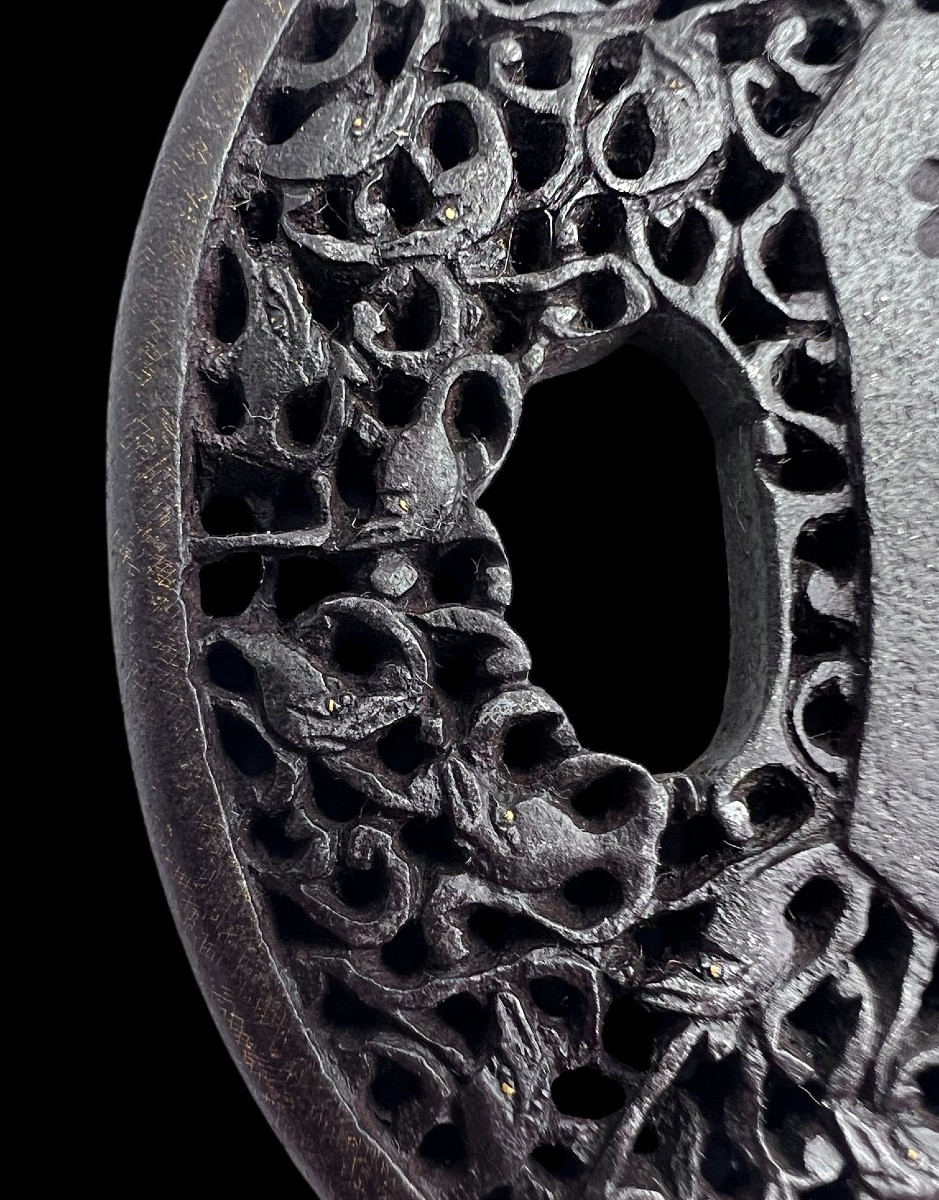
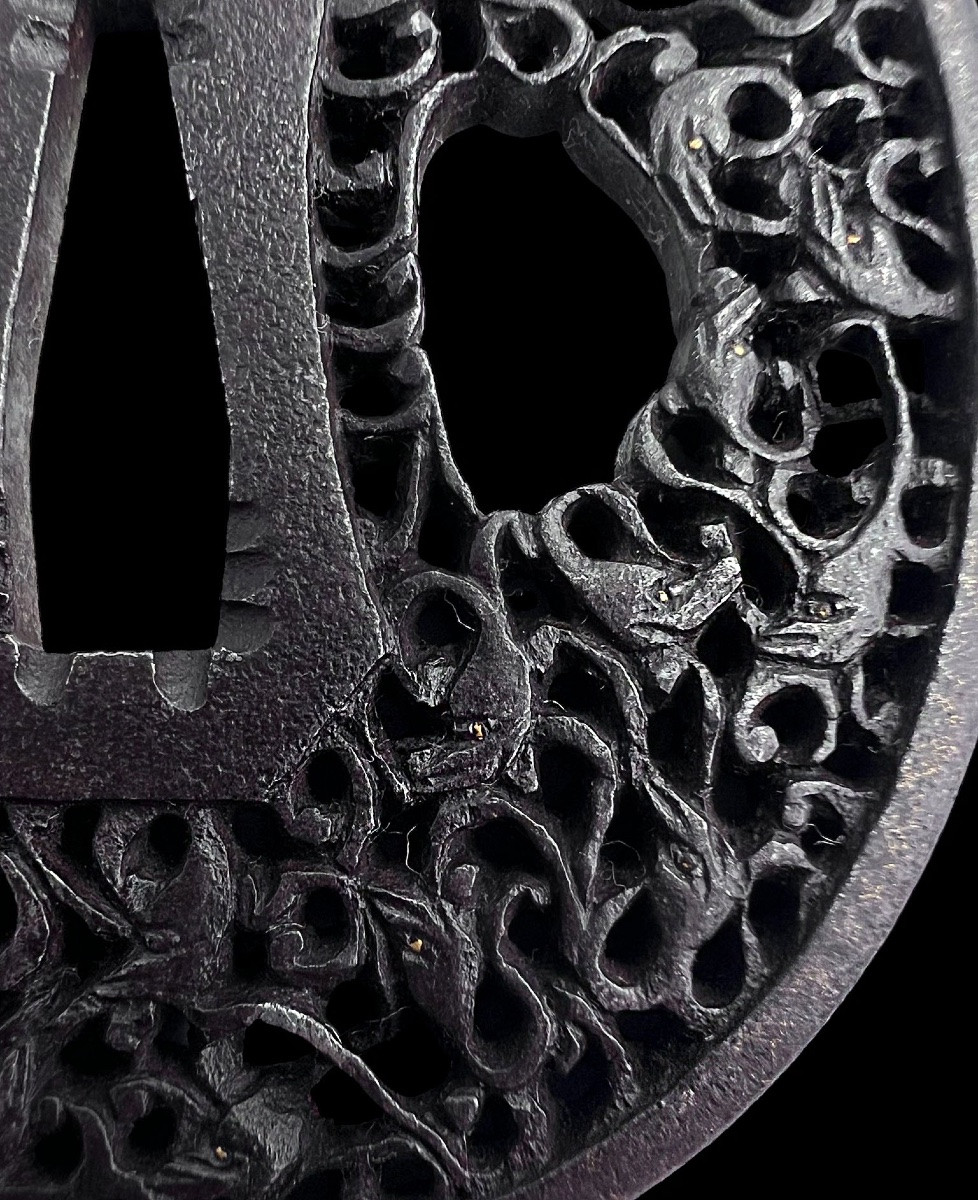
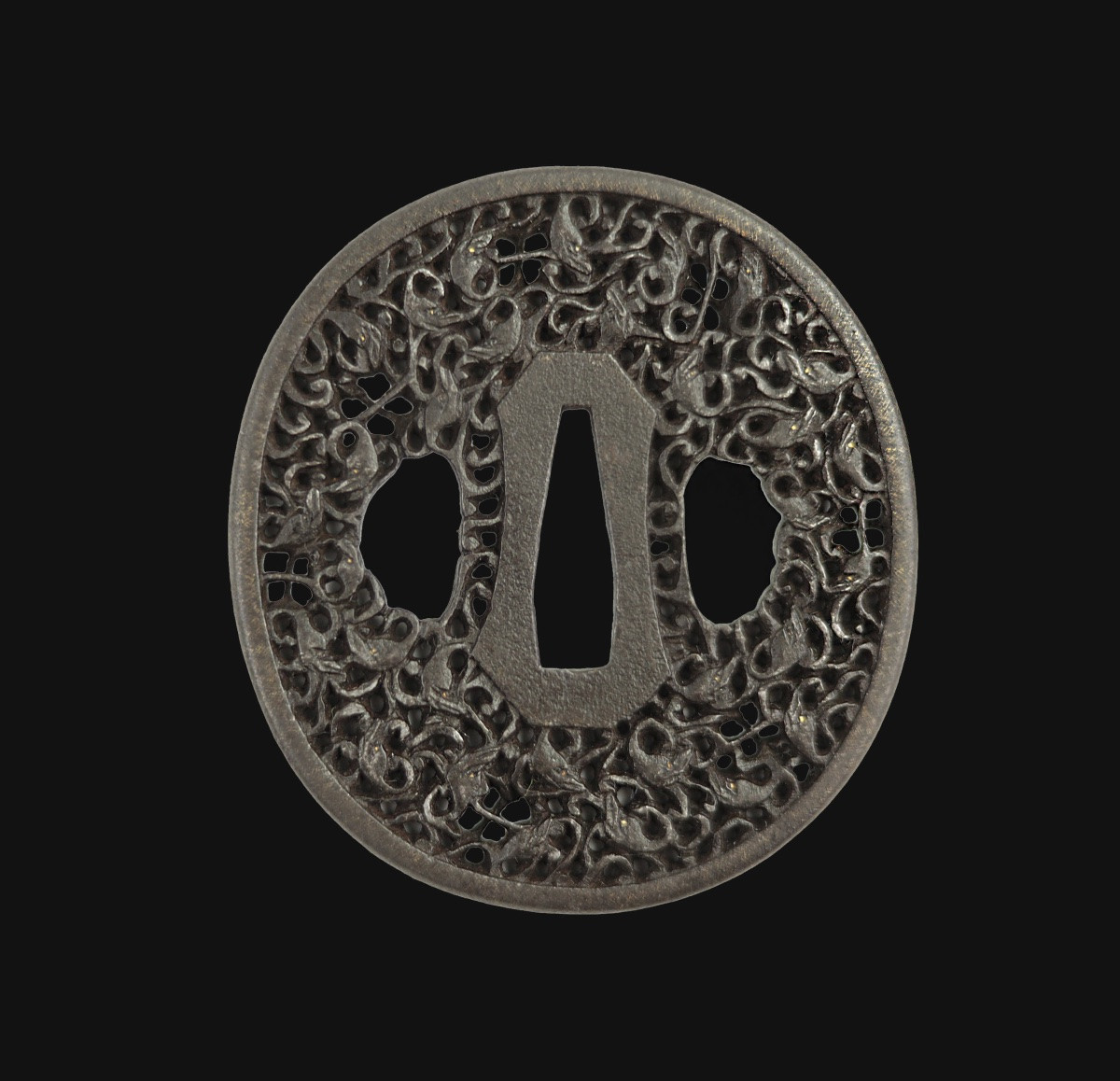
This example: Carved from iron, it features an intertwined pattern of marine animals, probably shrimp or squid, with gold-encrusted eyes. The pattern appears to be inspired by the famous Hizen school, which specialized in gathering a large number of animals in a single tsuba.
Many similar openwork tsuba were made in this region, and later within the Yagami school in the 18th century. This tsuba, with its rounded edge, demonstrates excellent craftsmanship in the typical Chinese style. The kogai and hitsu-ana motifs, present in the initial design, blend harmoniously. It was probably made in the Nagasaki region.
This example: Carved from iron, it features an intertwined pattern of marine animals, probably shrimp or squid, with gold-encrusted eyes. The pattern appears to be inspired by the famous Hizen school, which specialized in gathering a large number of animals in a single tsuba.
Many similar openwork tsuba were made in this region, and later within the Yagami school in the 18th century. This tsuba, with its rounded edge, demonstrates excellent craftsmanship in the typical Chinese style. The kogai and hitsu-ana motifs, present in the initial design, blend harmoniously. It was probably made in the Nagasaki region.
Explore similar pieces and discover your ideal find:
Edged Weapons