THIS OBJECT WAS SOLD
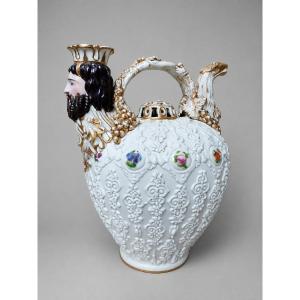
Forget-me-not Gourd-form Porcelain Scent Bottle, Meissen Or Dresden, C.1850
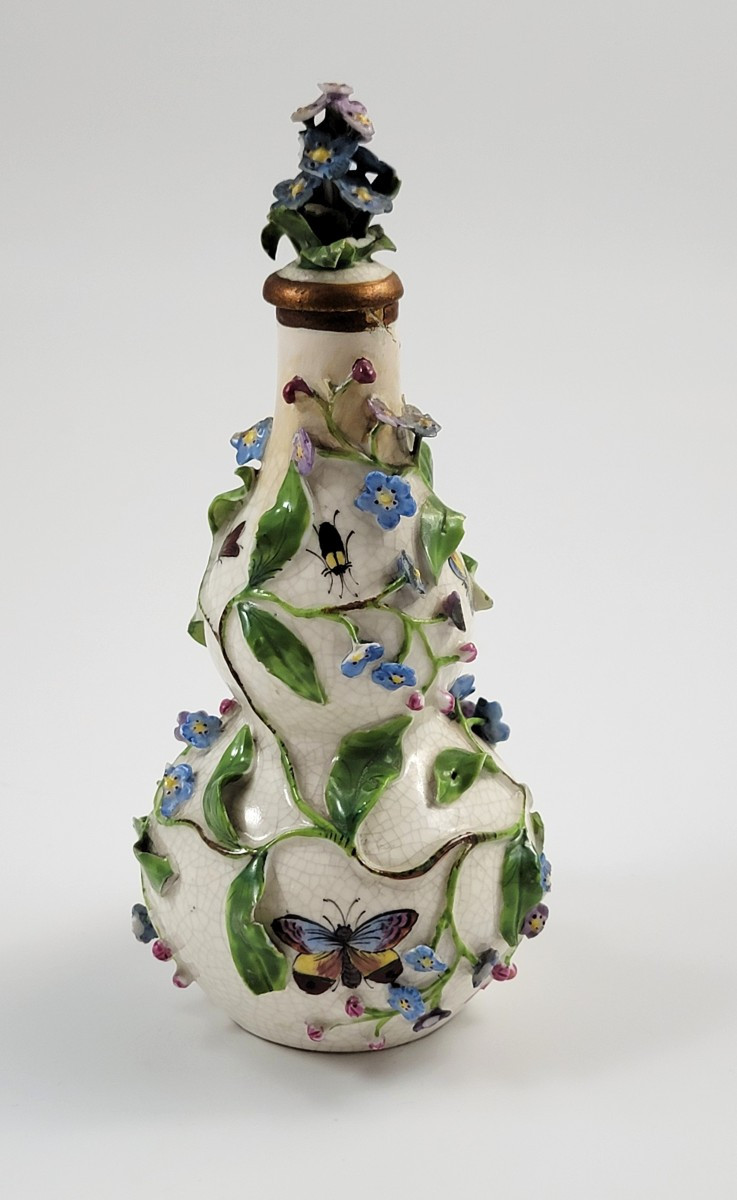
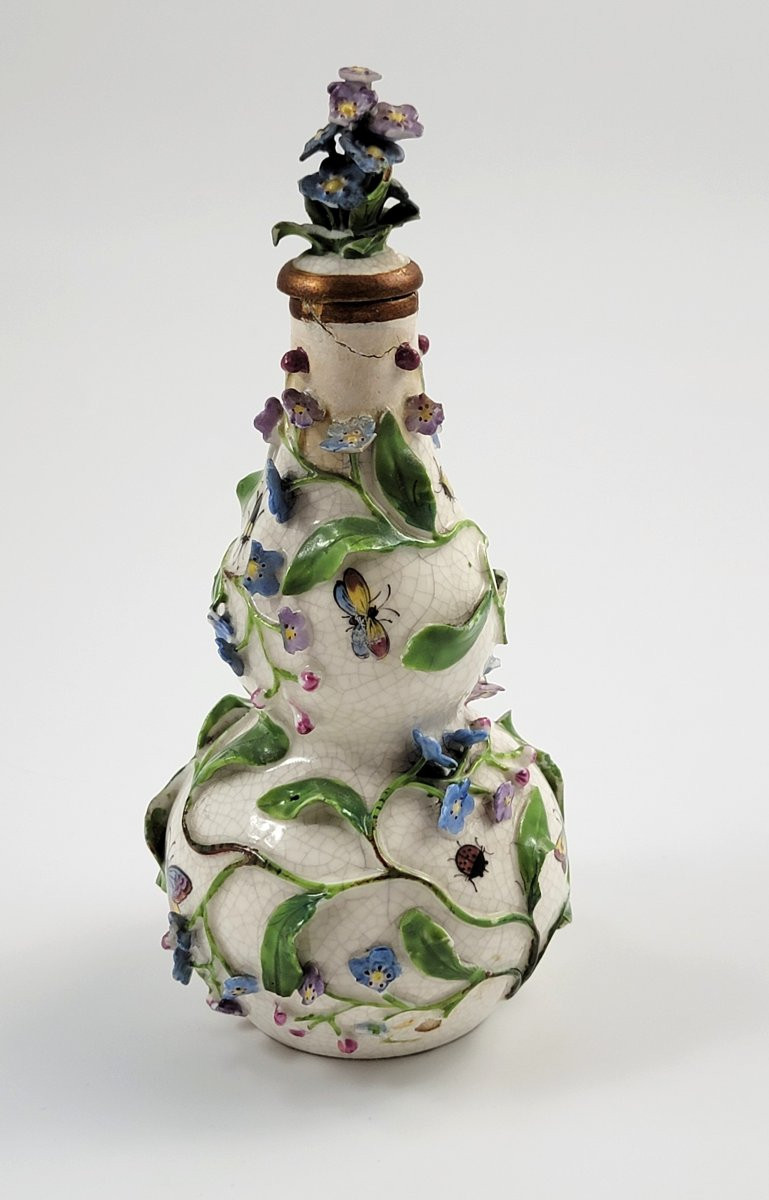
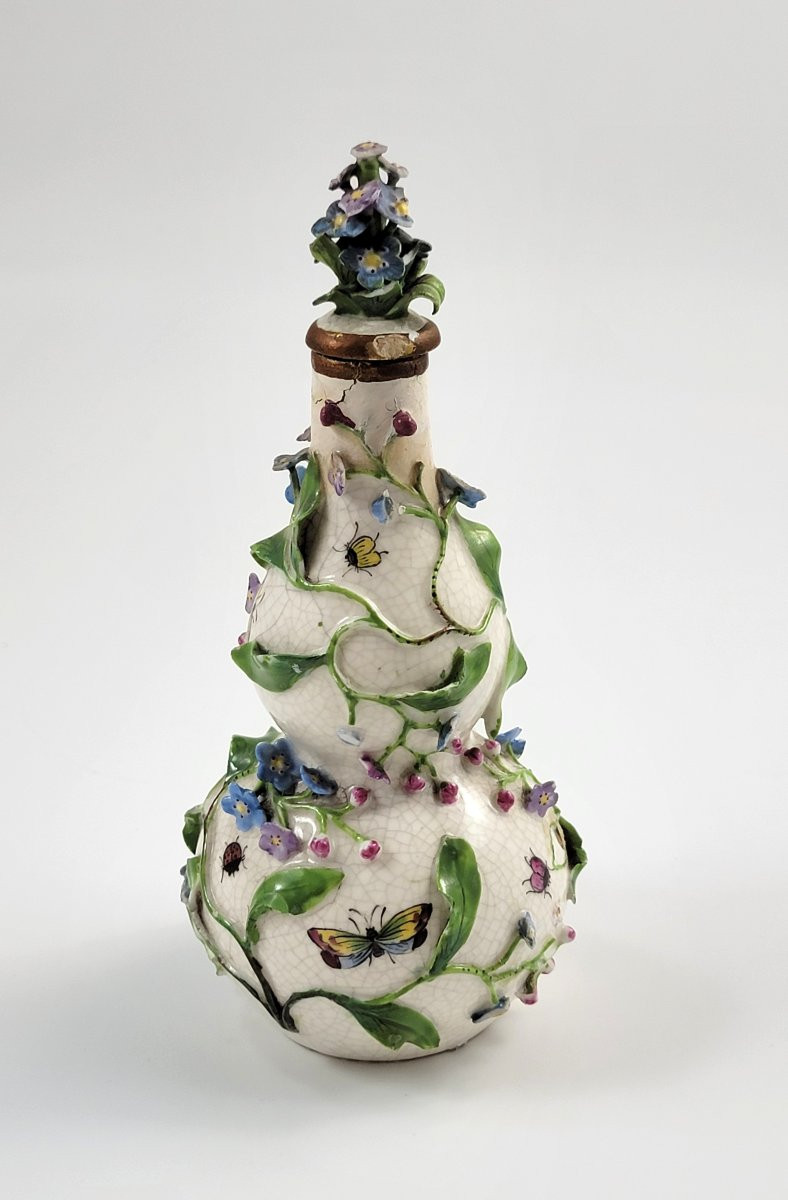


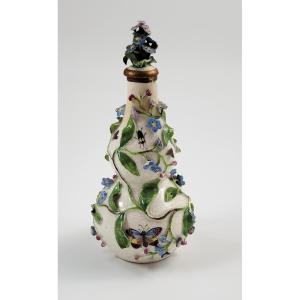


A rare and finely modelled porcelain scent bottle inthe form of a gourd, richly decorated with applied floral vinery, delicateforget-me-not blossoms, and hand-painted garden insects. The creamy glaze withvisible craquelure, together with the naturalistic floral modelling, isstrongly associated with mid-19th-century Meissen production and its Dresdencounterparts. Arecent visual analysis using AI-supported tools suggests, with over 90%confidence, that the piece originates from the Meissen manufactory, c.1850. Asmaller probability (approximately 10%) remains for attribution to a high-endDresden workshop such as Carl Thieme (Potschappel), Richard Klemm, orDonath. The underside bears a later-applied mark “SPF”, placed over an areawhere the original factory mark appears to have been intentionally erased. Thispractice was not uncommon in the 19th century — particularly when objectschanged hands through dealers or were destined for resale abroad. The removalof the original mark, most likely Meissen, and substitution with anotheridentifier was sometimes used to obscure provenance, bypass trade restrictions,or create the appearance of greater rarity. "SPF" may refer to a dealer,restorer, or collector. This is ahighly collectible and decorative example of 19th-century German porcelain art,combining sculptural detail, painterly finesse, and historical intrigue.Condition: Neck reattached with visible exteriorcrack. Small chip to stopper. Losses to applied flowers. One area of the lower body shows enamel lossand chipping to the applied decoration, exposing the underlying ceramic. Thisis consistent with age and fragility of such fine applied work .Otherwise, goodantique condition.Dimensions: Height: 18 cmPlease study the accompanying photographs carefully asthey form an integral part of this description. If you have any questions, wewill be happy to answer them. The item will be shipped with full tracking andinsurance. It is important to note that shipping costs include labour,packaging and postage. EtsyForget-me-notGourd-Form Porcelain Scent Bottle, Meissen or Dresden, c.1850Meissen perfume bottle, antique scent bottle, Dresdenporcelain, 19th century vanity, floral gourd bottle, forget-me-not decor,porcelain perfume flask, collectible German porcelainA rare antique porcelain perfume bottle in the shapeof a gourd, richly decorated with applied floral vinery and painted gardeninsects. The delicate forget-me-not blossoms and creamy glaze with visiblecraquelure are closely associated with Meissen and Dresden porcelain productionof the mid-19th century. A recent visual analysis using AI-assisted tools suggests that the piecewas made around 1850, with over 90% confidence pointing to the Meissenmanufactory. A smaller probability (approximately 10%) remains for high-endDresden workshops such as Carl Thieme (Potschappel), Richard Klemm, orDonath. The underside bears a hand-painted mark “SPF”, placed over a visiblyerased original mark - most likely Meissen. This was a common 19th-centurypractice by dealers, restorers, or exporters seeking to obscure provenance orenhance rarity.Condition: Neck reattached with visible exteriorcrack. Small chip to stopper. Losses to applied flowers. One area of the lowerbody shows enamel loss and chipping to the applied decoration, exposing theunderlying ceramic. This is consistent with age and fragility of such fineapplied work .Otherwise good antique condition.Height: 18 cmPlease study the accompanying photographscarefully as they form an integral part of this description. If you have anyquestions, we will be happy to answer them. The item will be shipped with fulltracking and insurance.
Explore similar pieces and discover your ideal find:
Porcelain Vases and Decorative Objects