THIS OBJECT WAS SOLD
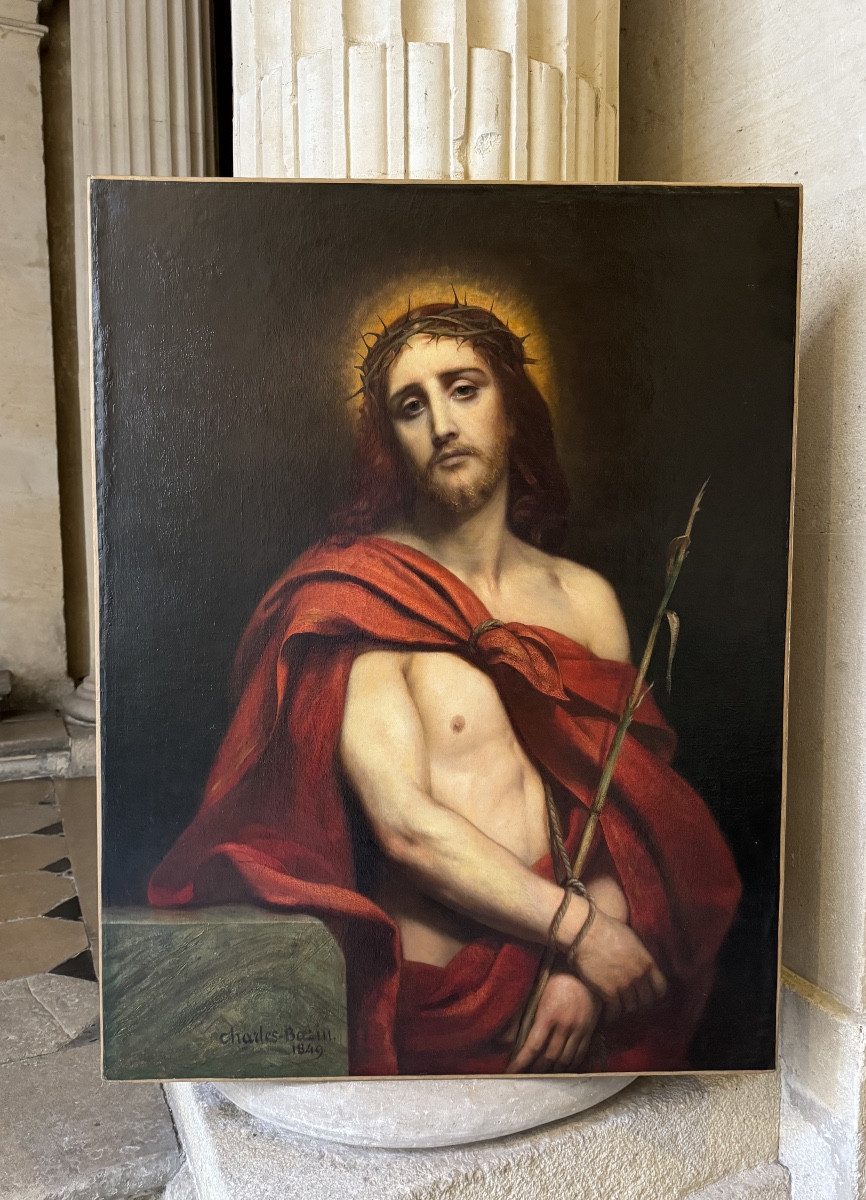
Christ On The Reed, Charles Bazin 1849



Christ with a Reed,
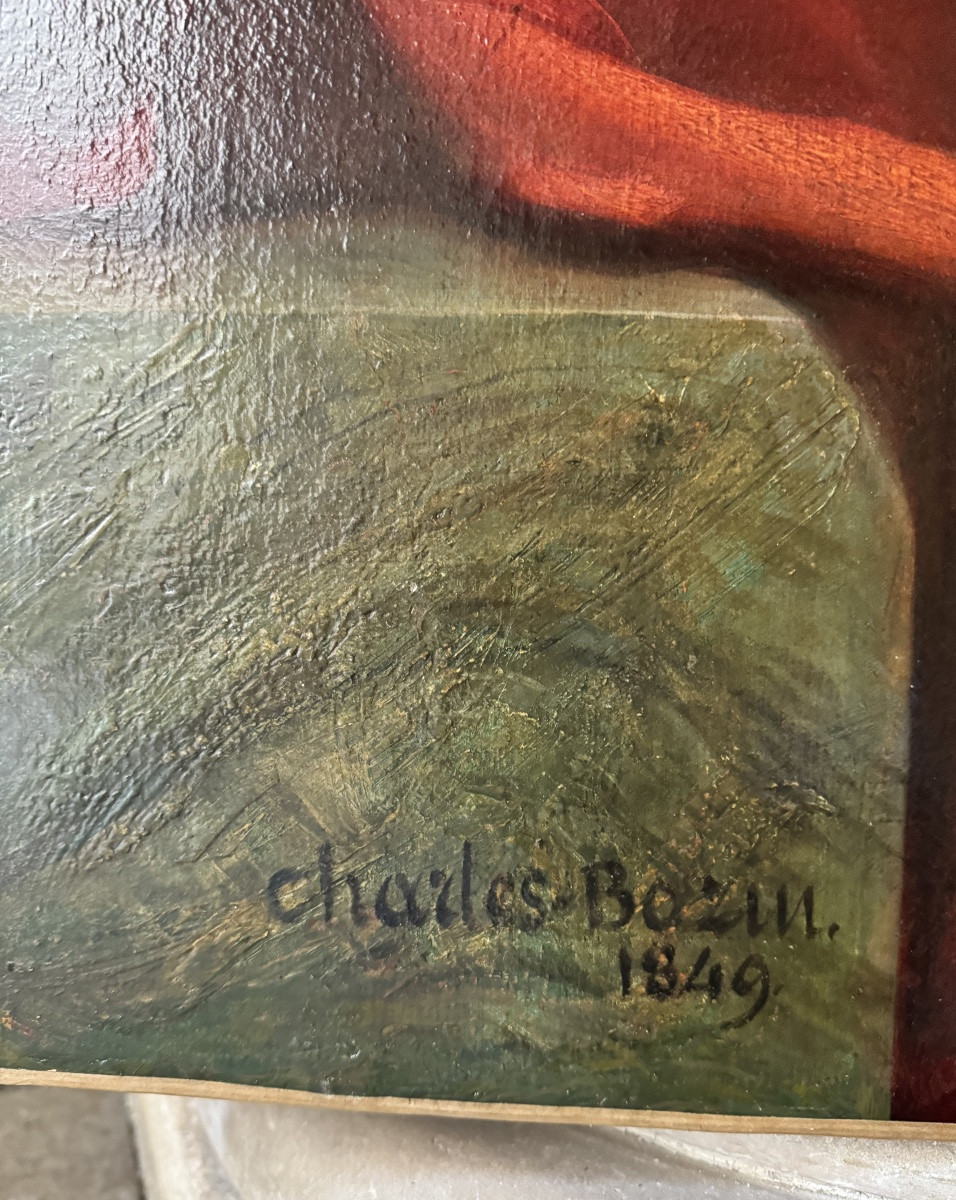
Oil on canvas, signed and dated lower left: Charles Bazin / 1849
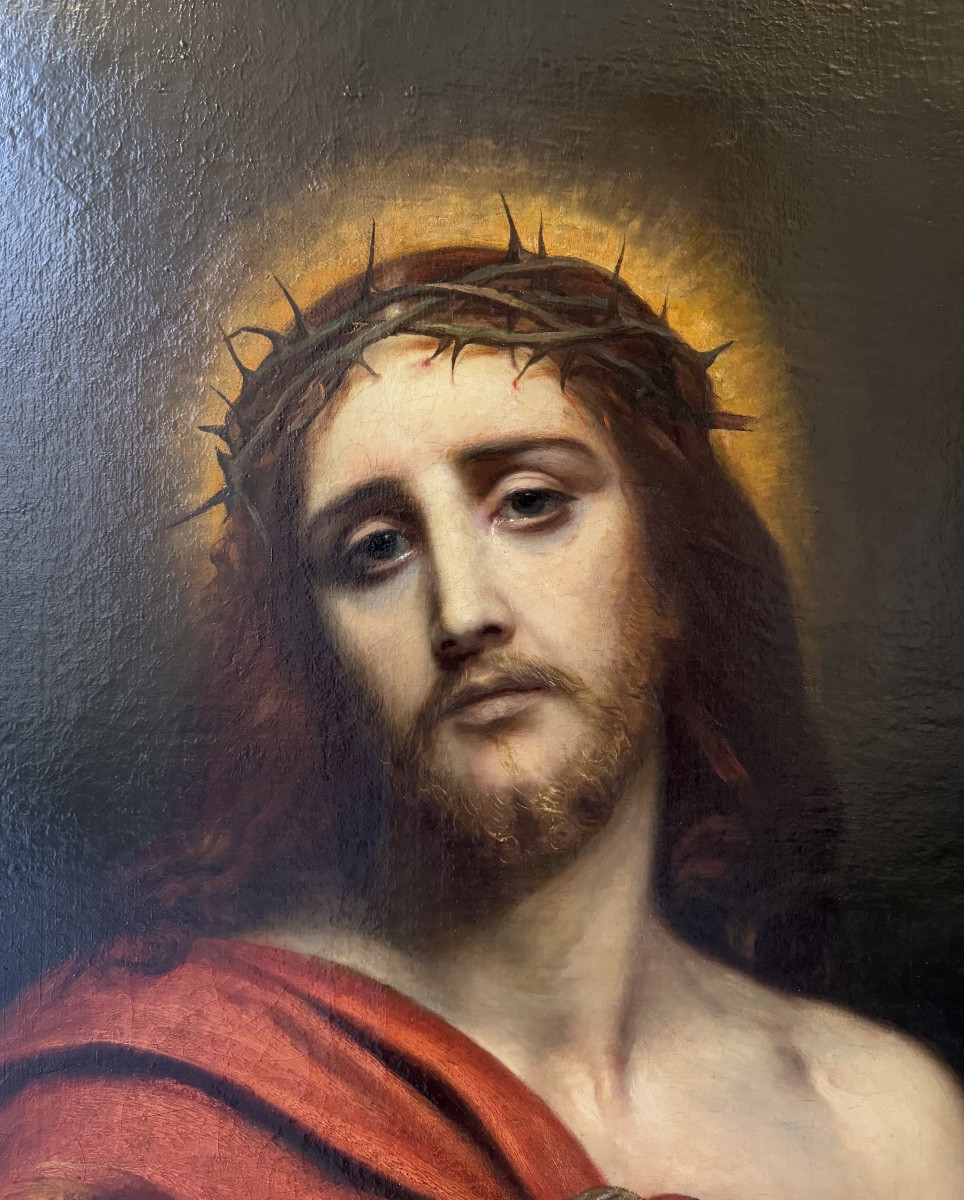
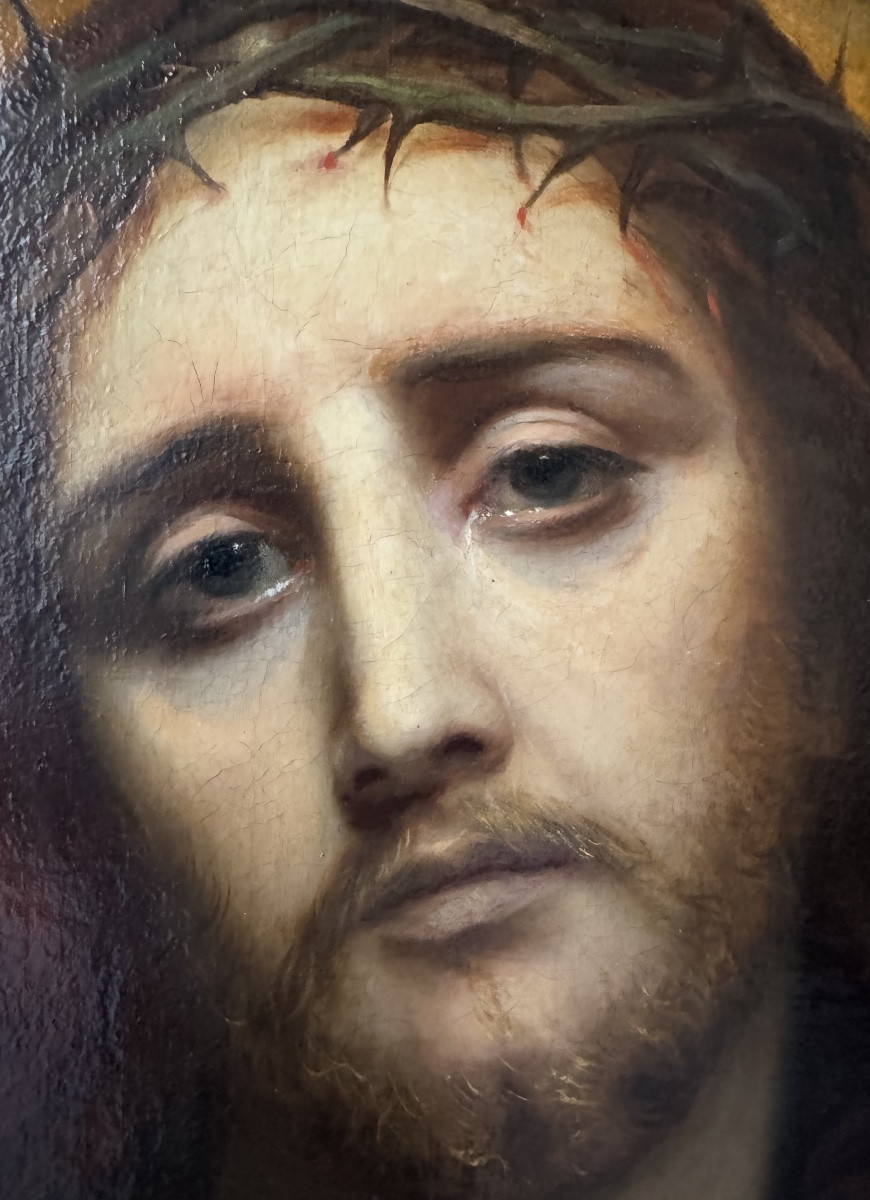
Born in 1802, Charles Bazin was a painter and engraver trained in the great French academic tradition. A pupil of Jean-Baptiste Regnault, he was a descendant of the great neoclassical masters, but like other religious artists of the July Monarchy and the Second Empire, he incorporated into his work a measured romantic sensibility, very marked by a taste for the sacred, softness of line and clarity of composition. Bazin is best known for his official portraits, his engraved reproductions of old masters, and a smaller but very careful body of religious paintings, of which this Christ with a Reed is a perfect example. He exhibited at the Salon from 1827, and several of his works were noted by the critics of the time. At a time when French religious art oscillated between the academic rigor inherited from David and the spiritual expressiveness inspired by Christian Romanticism (Delacroix, Ary Scheffer, Flandrin), Bazin occupied a middle position, deeply respectful of classical canons, while allowing a tenderness to shine through in the treatment of faces, which is particularly true in the face of Christ with eyes delicately wet with tears.
He died in 1859, leaving a body of work that was modest in number but significant in the religious pictorial tradition of his century.
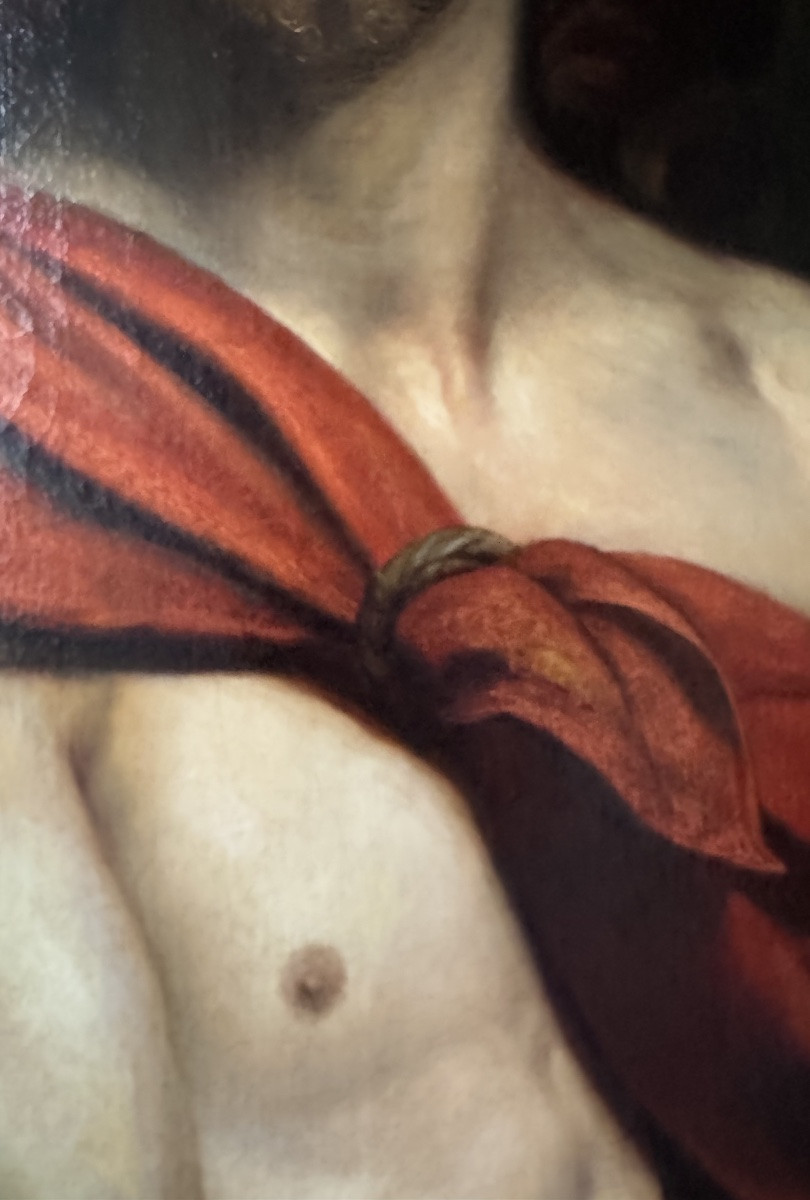
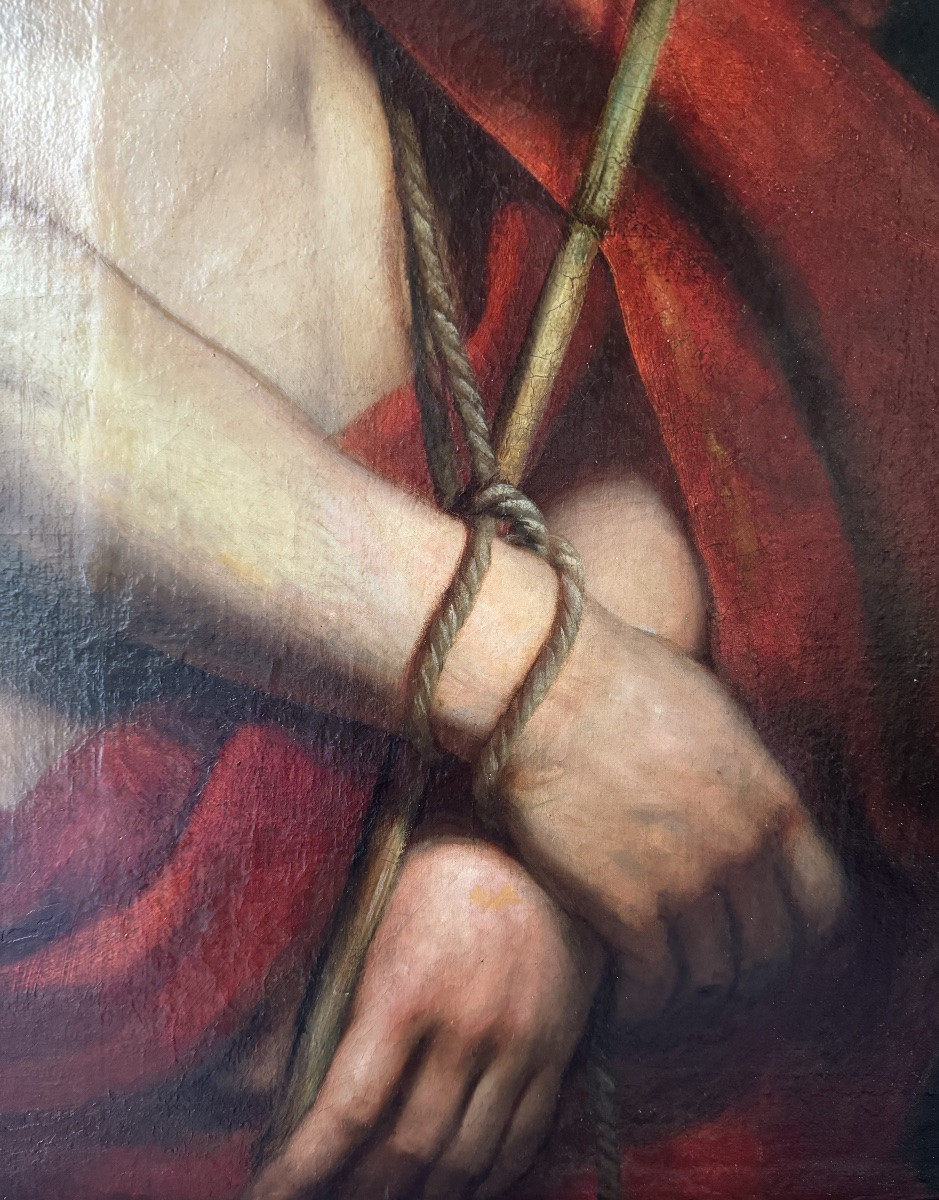
This Christ with a Reed from 1849 shows the Savior in a moment of sorrow and resignation. Crowned with thorns, dressed in the red cloak of derision, he holds a reed in one hand, his wrists bound by a rope. The gaze is directed towards the spectator, imbued with great gentleness, far from the violent tragedy of certain Baroque representations. The lighting - a golden halo of light around the head, melted into a dark background - evokes transcendence, while the flesh, the drapery and the hands are treated in a naturalistic manner. The palette is limited but refined: deep reds, golden ochres, milky skin tones, muted greens.
The painting is silent, meditative, typical of private commissions from the bourgeoisie or the clergy on the eve of the Second Empire. In 1849, France was in the midst of political (Second Republic) and spiritual restructuring: we were witnessing a Catholic revival, driven in particular by religious romanticism and a return to the great subjects of the Passion. Painters like Hippolyte Flandrin, Henri Lehmann, and Louis Janmot offered a sacred art stripped of the bombast of the 18th century.
Charles Bazin fully subscribed to this movement, with an academic but not sensitive manner, accessible to the sensibilities of the time. This work, dated 1849, could perfectly have been intended for a private chapel, a bourgeois Catholic salon, or an ecclesiastical institution.
Oil on canvas, signed and dated lower left: Charles Bazin / 1849
Born in 1802, Charles Bazin was a painter and engraver trained in the great French academic tradition. A pupil of Jean-Baptiste Regnault, he was a descendant of the great neoclassical masters, but like other religious artists of the July Monarchy and the Second Empire, he incorporated into his work a measured romantic sensibility, very marked by a taste for the sacred, softness of line and clarity of composition. Bazin is best known for his official portraits, his engraved reproductions of old masters, and a smaller but very careful body of religious paintings, of which this Christ with a Reed is a perfect example. He exhibited at the Salon from 1827, and several of his works were noted by the critics of the time. At a time when French religious art oscillated between the academic rigor inherited from David and the spiritual expressiveness inspired by Christian Romanticism (Delacroix, Ary Scheffer, Flandrin), Bazin occupied a middle position, deeply respectful of classical canons, while allowing a tenderness to shine through in the treatment of faces, which is particularly true in the face of Christ with eyes delicately wet with tears.
He died in 1859, leaving a body of work that was modest in number but significant in the religious pictorial tradition of his century.
This Christ with a Reed from 1849 shows the Savior in a moment of sorrow and resignation. Crowned with thorns, dressed in the red cloak of derision, he holds a reed in one hand, his wrists bound by a rope. The gaze is directed towards the spectator, imbued with great gentleness, far from the violent tragedy of certain Baroque representations. The lighting - a golden halo of light around the head, melted into a dark background - evokes transcendence, while the flesh, the drapery and the hands are treated in a naturalistic manner. The palette is limited but refined: deep reds, golden ochres, milky skin tones, muted greens.
The painting is silent, meditative, typical of private commissions from the bourgeoisie or the clergy on the eve of the Second Empire. In 1849, France was in the midst of political (Second Republic) and spiritual restructuring: we were witnessing a Catholic revival, driven in particular by religious romanticism and a return to the great subjects of the Passion. Painters like Hippolyte Flandrin, Henri Lehmann, and Louis Janmot offered a sacred art stripped of the bombast of the 18th century.
Charles Bazin fully subscribed to this movement, with an academic but not sensitive manner, accessible to the sensibilities of the time. This work, dated 1849, could perfectly have been intended for a private chapel, a bourgeois Catholic salon, or an ecclesiastical institution.
Explore similar pieces and discover your ideal find:
religious paintings