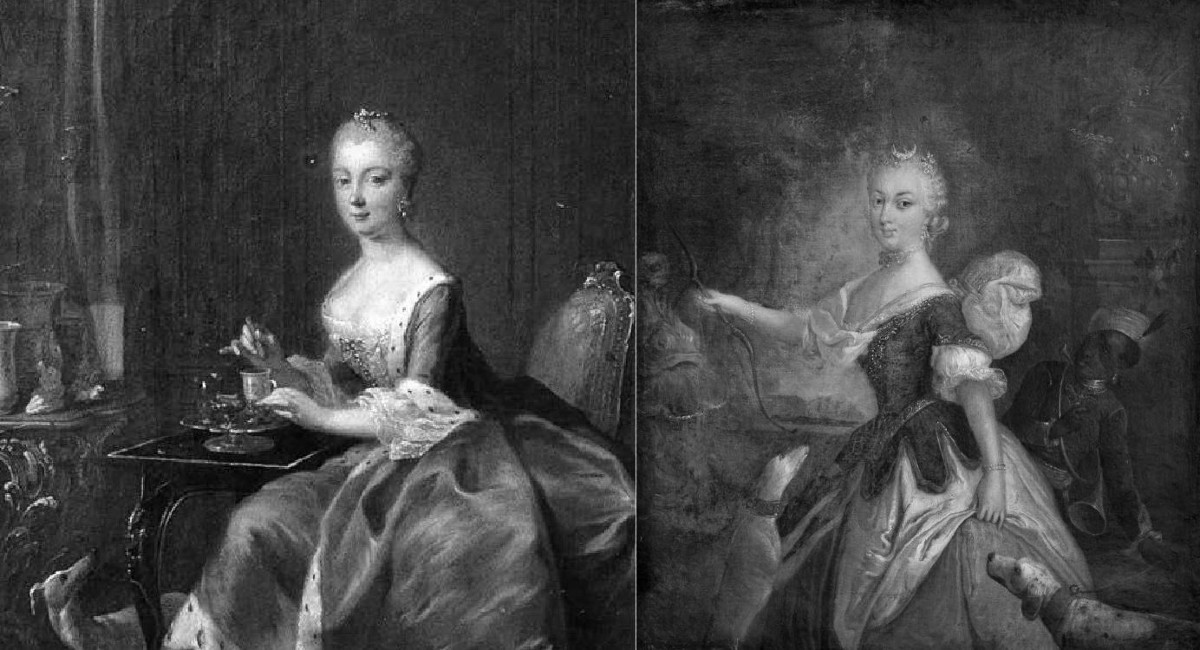


Antoines Pesne, Attrib. To Portrait Of Wilhelmine, Princess Of Prussia, As Diana
Artist: Antoine Pesne, Attribué à
ANTOINES PESNE, attrib. to
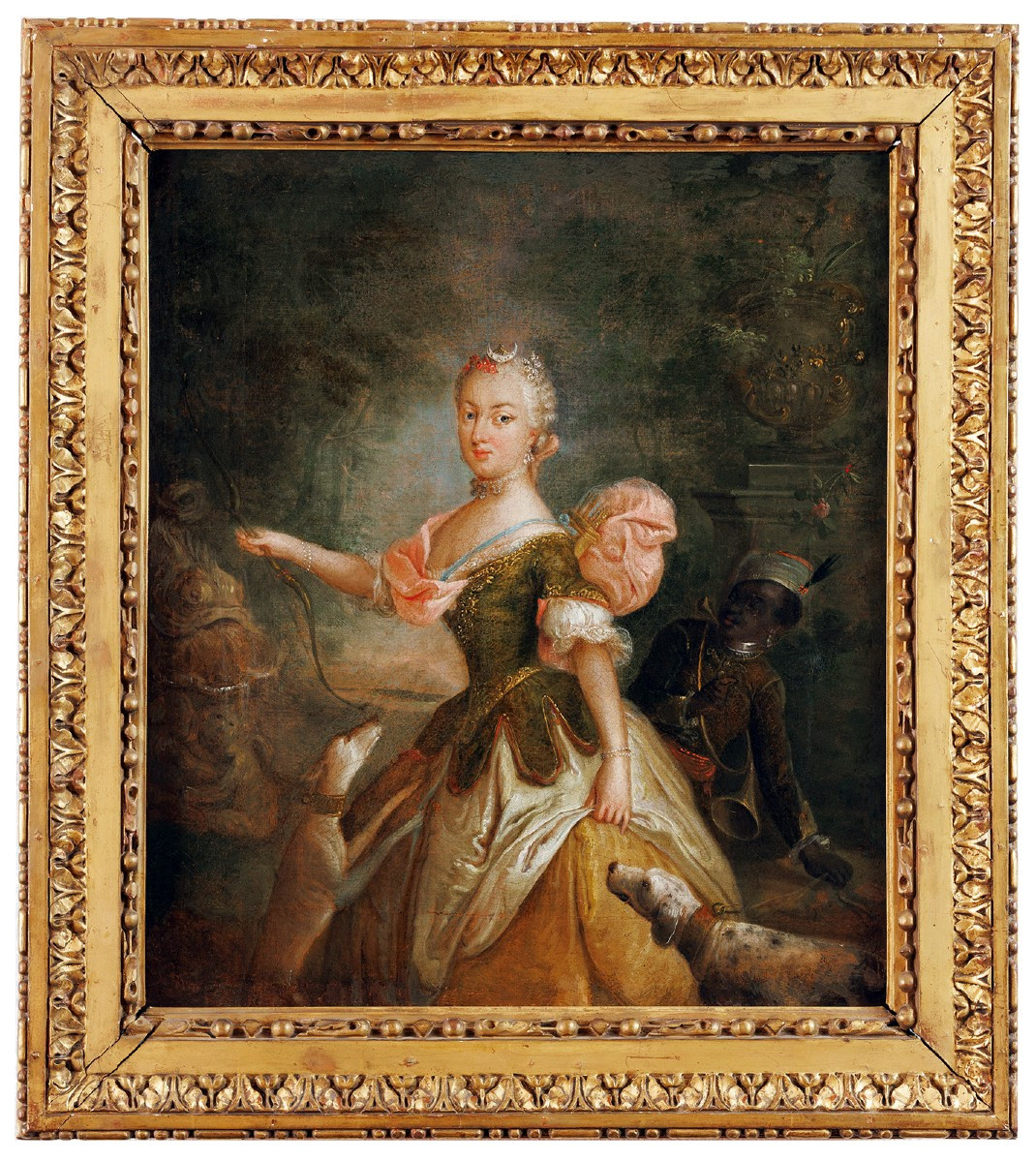
PORTRAIT OF WILHELMINE OF HESSE-KASSEL, PRINCESS OF PRUSSIA, AS DIANA
Antoine Pesne
Paris, 1683 – Berlin, 1757
Oil on canvas, signed “W.” on the dog’s collar
39 × 46 cm / 15.4 × 18.1 inches, with frame 54 × 61 cm / 21.3 × 24 inches
PROVENANCE
France, private collection
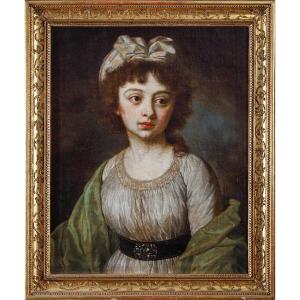
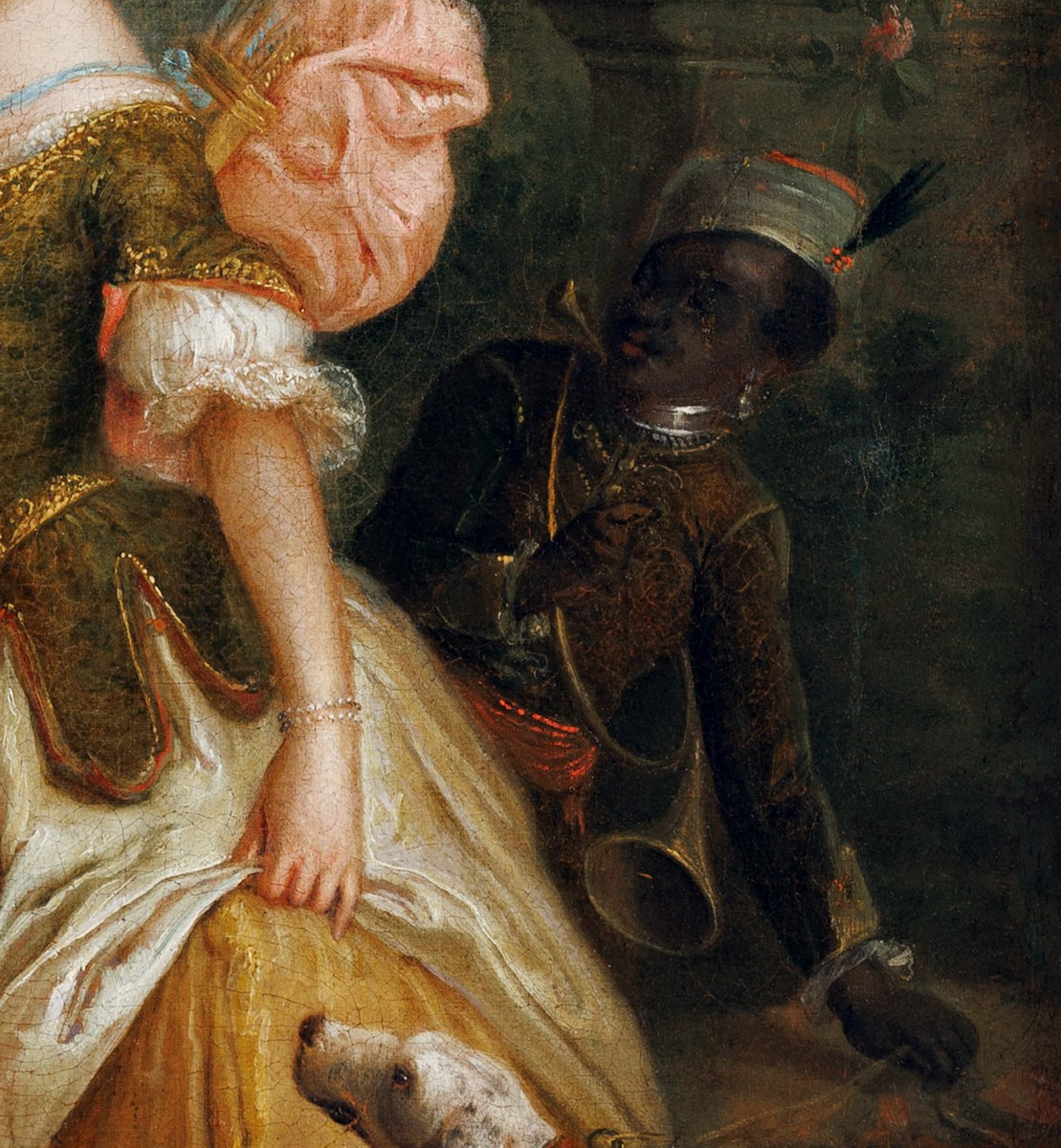
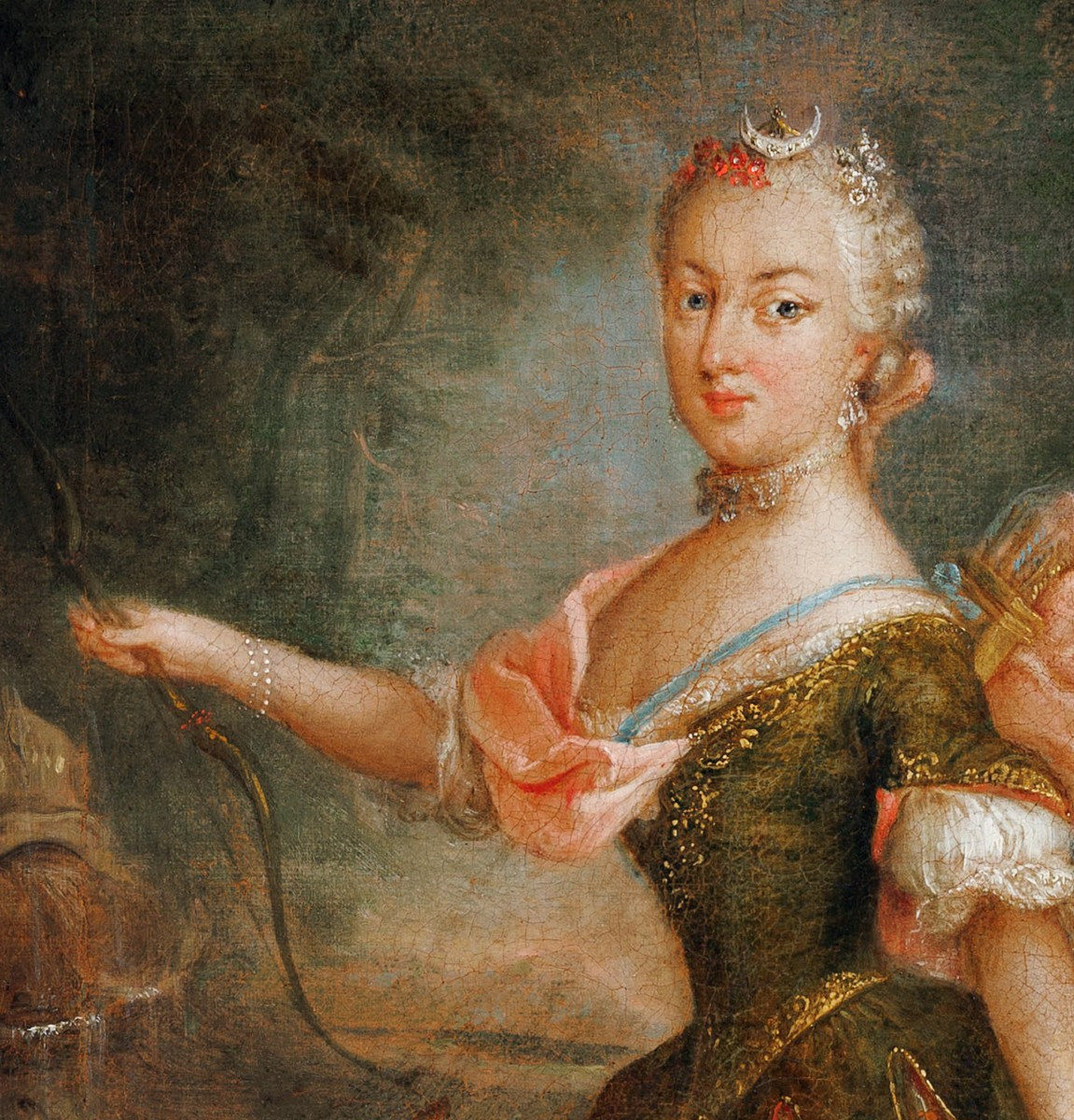
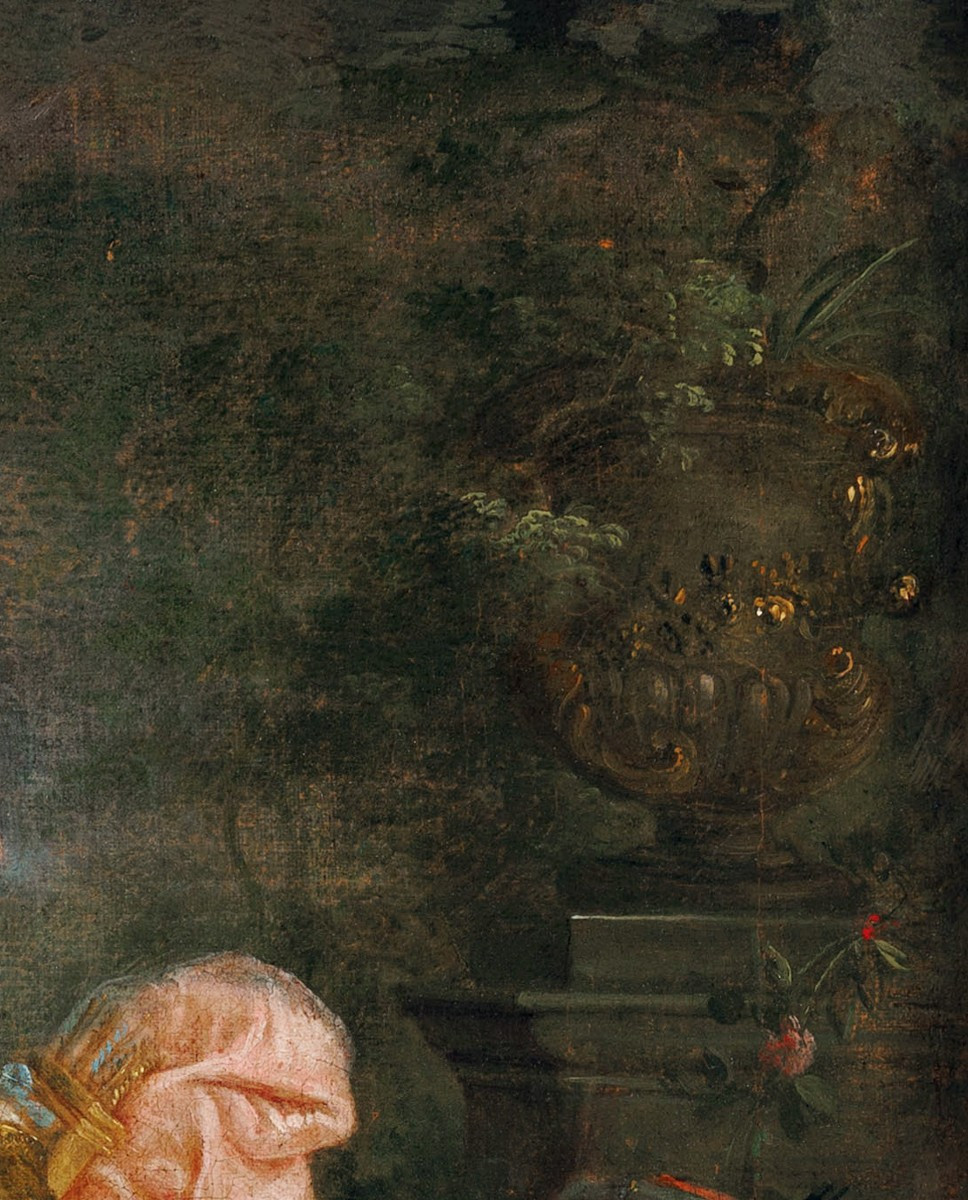
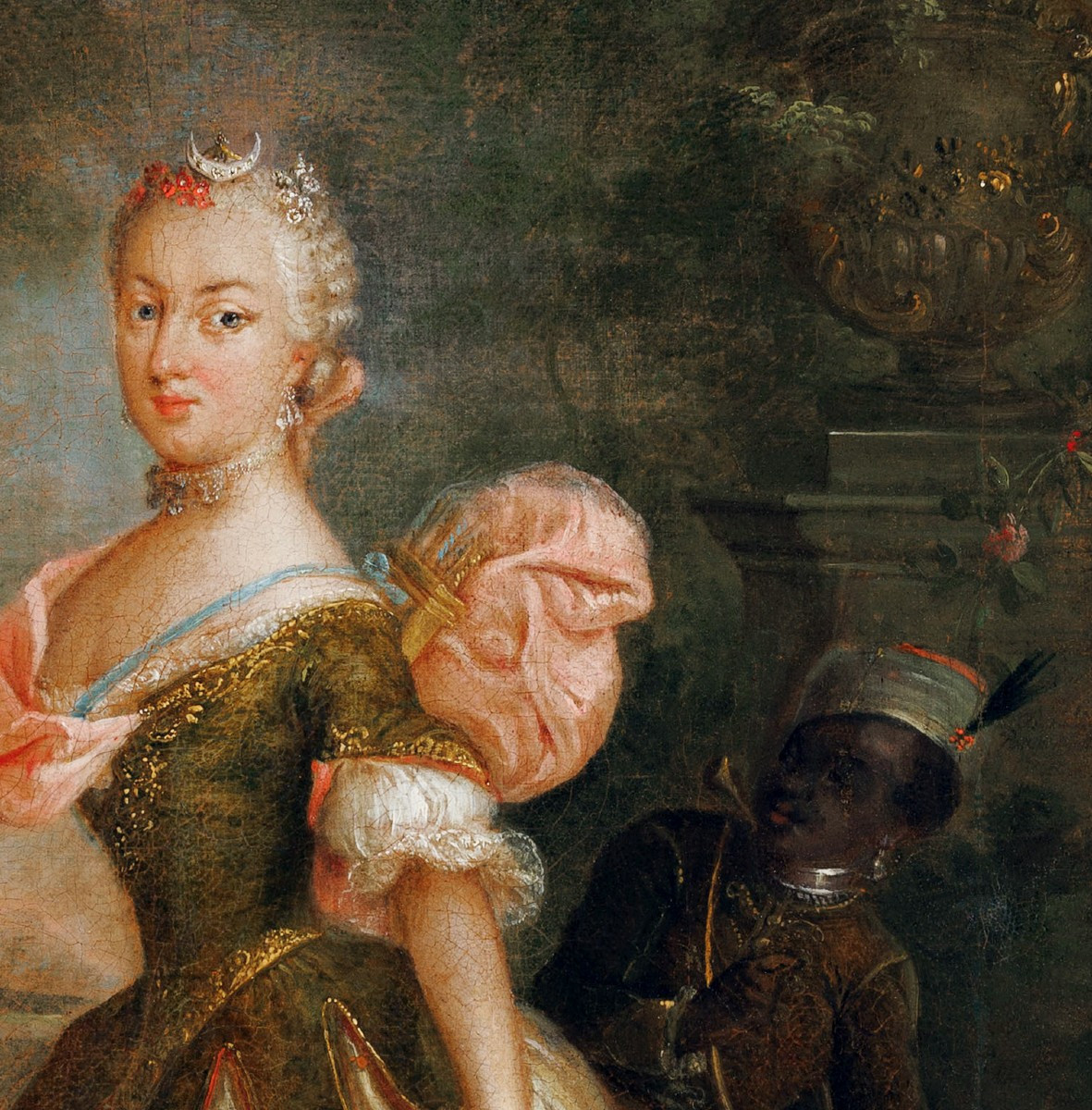
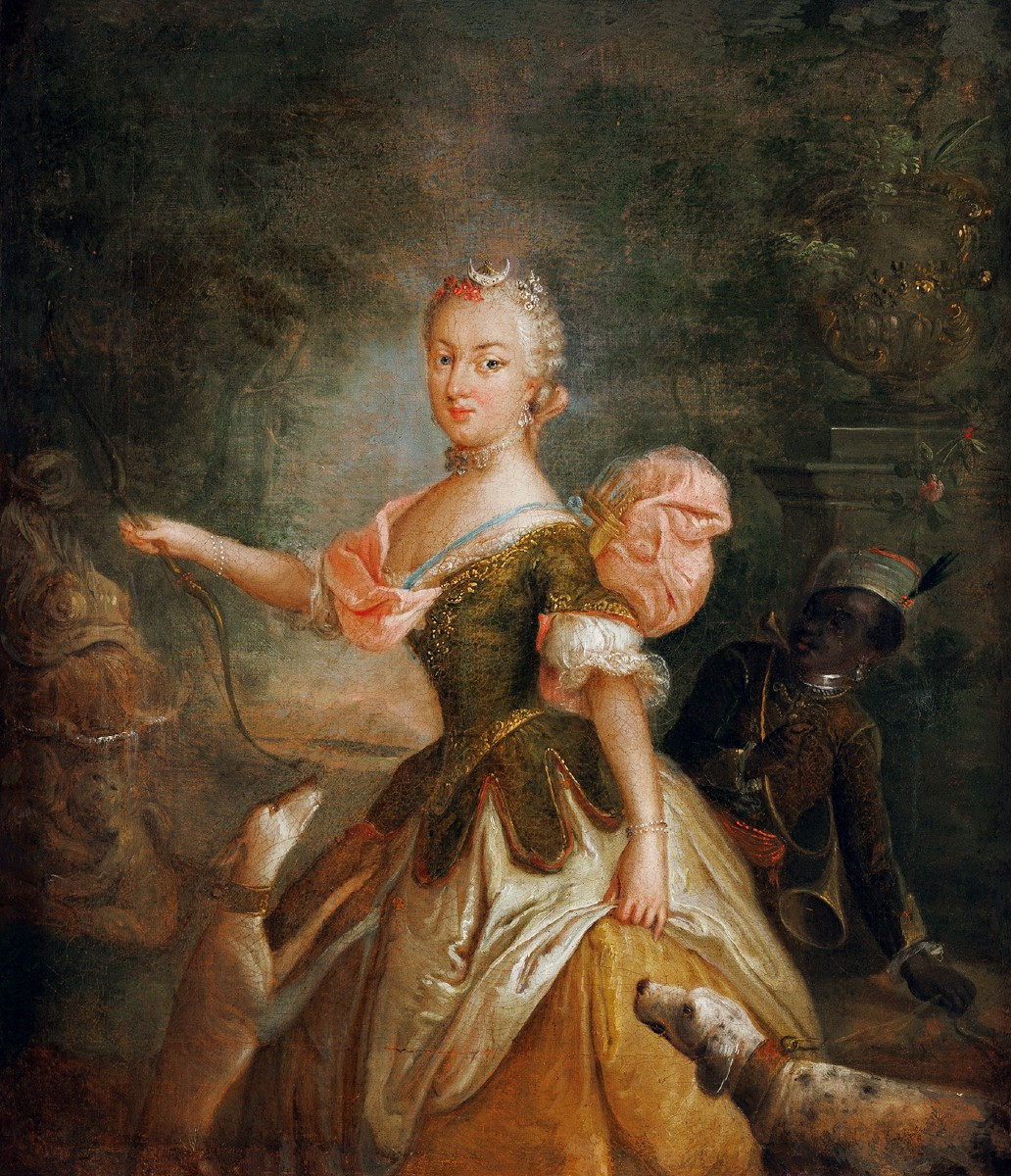
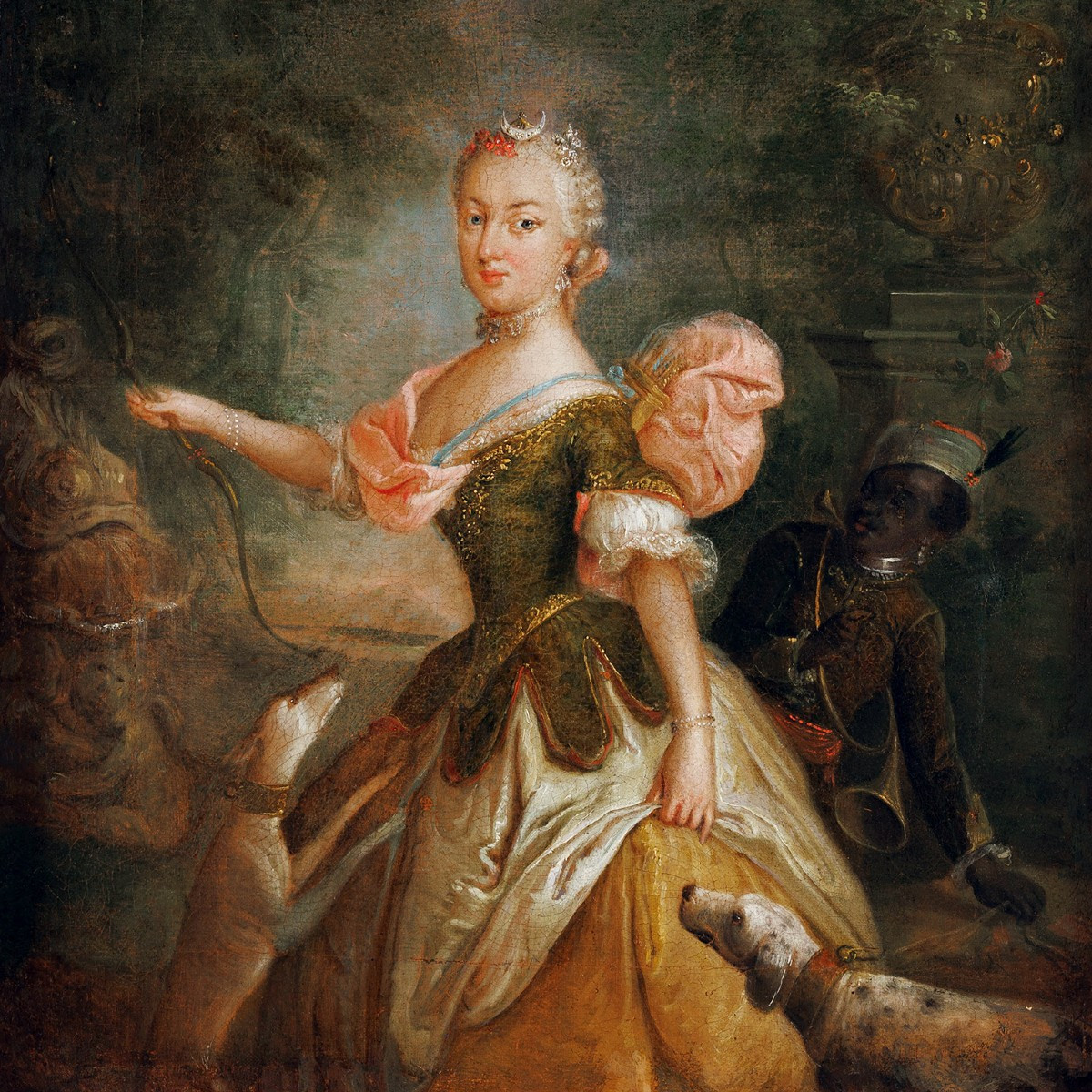
This small but refined portrait, attributed to Antoine Pesne, displays striking stylistic and compositional affinities with the large portraits the artist executed in Berlin, representing members of the Prussian aristocracy and the royal family. The sitter, identified as Wilhelmine of Hesse-Kassel (1726–1808), Princess of Prussia, appears in the guise of Diana, goddess of the hunt — a motif recurrent in Pesne’s allegorical portraits of court ladies.
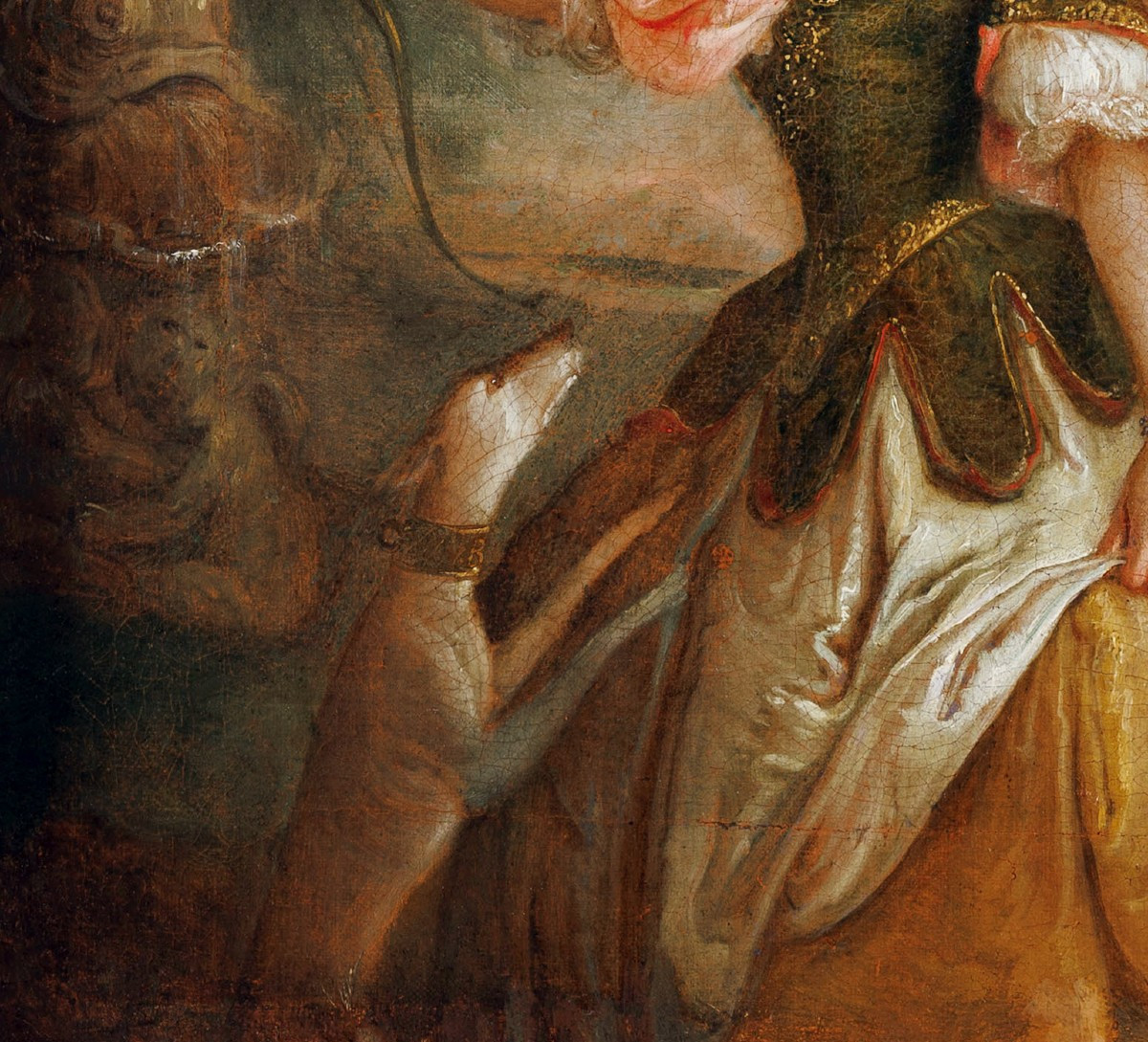
The identification rests on two elements. First, the iconography of Wilhelmine is well known, notably from Johann Heinrich Tischbein’s portrait showing her with a cup of chocolate and her beloved dog, painted around 1752–1755 — a work that once caused confusion in attribution. Second, the letter “W” visible on the dog’s collar in the present painting provides a direct hint at the sitter’s name.
In contrast to her husband’s aversion to hunting, Prince Henry of Prussia (1726–1802), Wilhelmine is here portrayed with her favourite dog, embodying independence and vitality under the guise of Diana. The work was likely painted soon after her marriage in 1752, a moment of ceremonial visibility at the Prussian court.
Wilhelmine, daughter of Prince Maximilian of Hesse-Kassel (brother of Landgrave Wilhelm VIII and of King Frederick of Sweden), and Princess Friederike Charlotte of Hesse-Darmstadt, was celebrated in her youth for her charm and beauty. She met Prince Henry during his stay in Kassel in 1751; their marriage, solemnised at Charlottenburg Palace on 25 June 1752, gave the young couple their own courtly household, divided between Rheinsberg Palace and Berlin.
Although the union remained childless and emotionally distant — Prince Henry being known for his attachment to his male entourage — Wilhelmine maintained her dignity and cultural presence at court. After their separation, she resided in her palace on Unter den Linden, now part of the Humboldt University. Remarkably, during Napoleon’s occupation of Berlin in 1806, the eighty-year-old princess remained in the city, one of the few members of the royal family who did not flee.
From an iconographic point of view, portraying a princess as Diana was traditionally a pre-marital allegory of purity and chastity. In this case, however, the symbolism acquires an intriguing duality: Wilhelmine, bound in an unconsummated marriage to a homosexual prince, reclaims the figure of Diana not as a symbol of virgin innocence but as an emblem of autonomy and inner strength.
Painted with Pesne’s characteristic elegance — luminous flesh tones, precise textures, and a delicate interplay of light — this portrait encapsulates the sophisticated spirit of Frederician Rococo, in which mythological imagery, dynastic representation, and psychological nuance meet within the refined court culture of eighteenth-century Berlin.
PORTRAIT OF WILHELMINE OF HESSE-KASSEL, PRINCESS OF PRUSSIA, AS DIANA
Antoine Pesne
Paris, 1683 – Berlin, 1757
Oil on canvas, signed “W.” on the dog’s collar
39 × 46 cm / 15.4 × 18.1 inches, with frame 54 × 61 cm / 21.3 × 24 inches
PROVENANCE
France, private collection
This small but refined portrait, attributed to Antoine Pesne, displays striking stylistic and compositional affinities with the large portraits the artist executed in Berlin, representing members of the Prussian aristocracy and the royal family. The sitter, identified as Wilhelmine of Hesse-Kassel (1726–1808), Princess of Prussia, appears in the guise of Diana, goddess of the hunt — a motif recurrent in Pesne’s allegorical portraits of court ladies.
The identification rests on two elements. First, the iconography of Wilhelmine is well known, notably from Johann Heinrich Tischbein’s portrait showing her with a cup of chocolate and her beloved dog, painted around 1752–1755 — a work that once caused confusion in attribution. Second, the letter “W” visible on the dog’s collar in the present painting provides a direct hint at the sitter’s name.
In contrast to her husband’s aversion to hunting, Prince Henry of Prussia (1726–1802), Wilhelmine is here portrayed with her favourite dog, embodying independence and vitality under the guise of Diana. The work was likely painted soon after her marriage in 1752, a moment of ceremonial visibility at the Prussian court.
Wilhelmine, daughter of Prince Maximilian of Hesse-Kassel (brother of Landgrave Wilhelm VIII and of King Frederick of Sweden), and Princess Friederike Charlotte of Hesse-Darmstadt, was celebrated in her youth for her charm and beauty. She met Prince Henry during his stay in Kassel in 1751; their marriage, solemnised at Charlottenburg Palace on 25 June 1752, gave the young couple their own courtly household, divided between Rheinsberg Palace and Berlin.
Although the union remained childless and emotionally distant — Prince Henry being known for his attachment to his male entourage — Wilhelmine maintained her dignity and cultural presence at court. After their separation, she resided in her palace on Unter den Linden, now part of the Humboldt University. Remarkably, during Napoleon’s occupation of Berlin in 1806, the eighty-year-old princess remained in the city, one of the few members of the royal family who did not flee.
From an iconographic point of view, portraying a princess as Diana was traditionally a pre-marital allegory of purity and chastity. In this case, however, the symbolism acquires an intriguing duality: Wilhelmine, bound in an unconsummated marriage to a homosexual prince, reclaims the figure of Diana not as a symbol of virgin innocence but as an emblem of autonomy and inner strength.
Painted with Pesne’s characteristic elegance — luminous flesh tones, precise textures, and a delicate interplay of light — this portrait encapsulates the sophisticated spirit of Frederician Rococo, in which mythological imagery, dynastic representation, and psychological nuance meet within the refined court culture of eighteenth-century Berlin.
3 500 €
Period: 18th century
Style: Louis 15th - Transition
Condition: Good condition
Material: Oil painting
Length: 39 cm
Height: 46 cm
Reference (ID): 1535796
Availability: In stock
Print