THIS OBJECT WAS SOLD
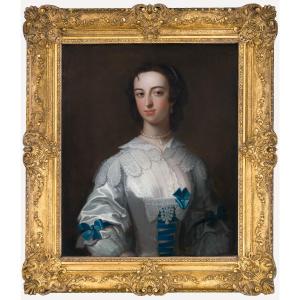
Portrait Of A Lady In A Blue Dress & Red Cloak C.1695, Oil On Canvas Painting
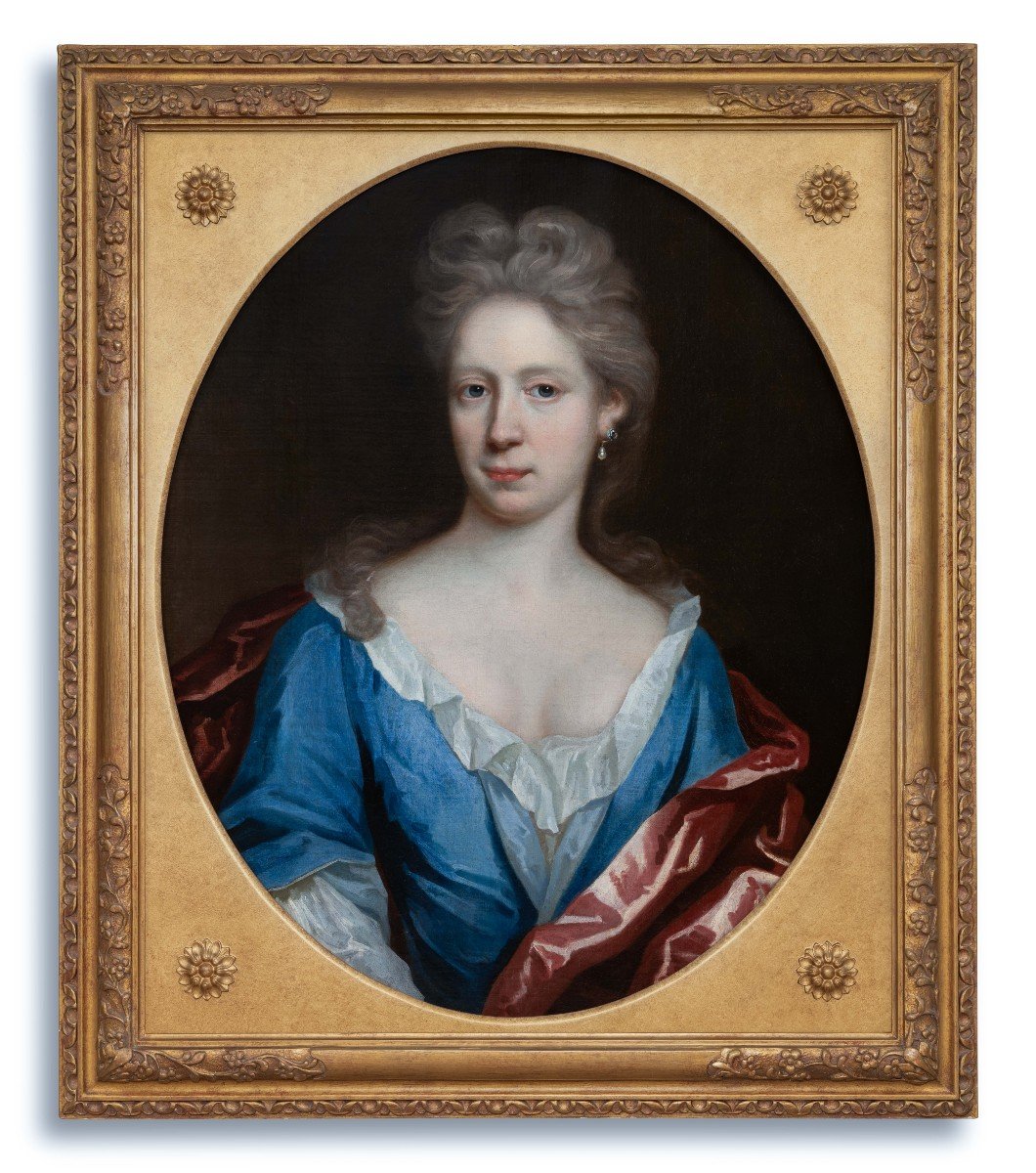


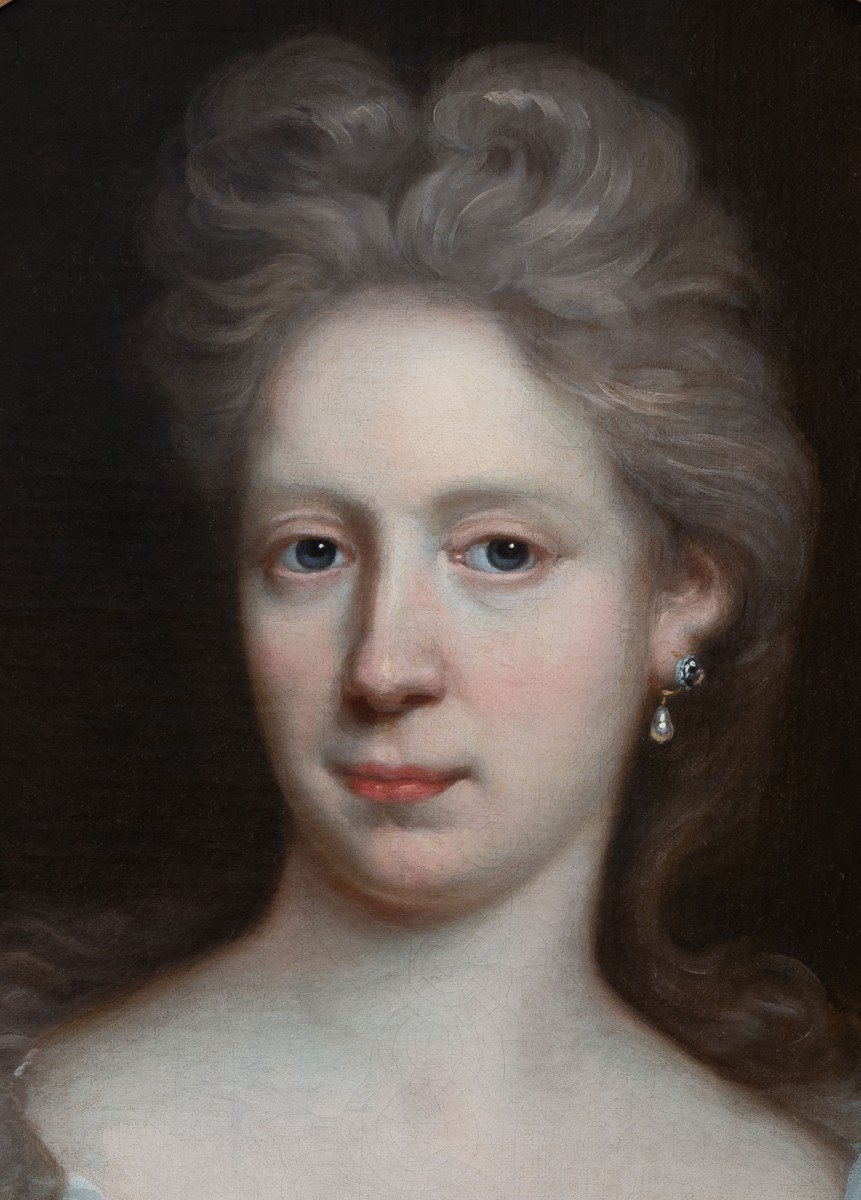
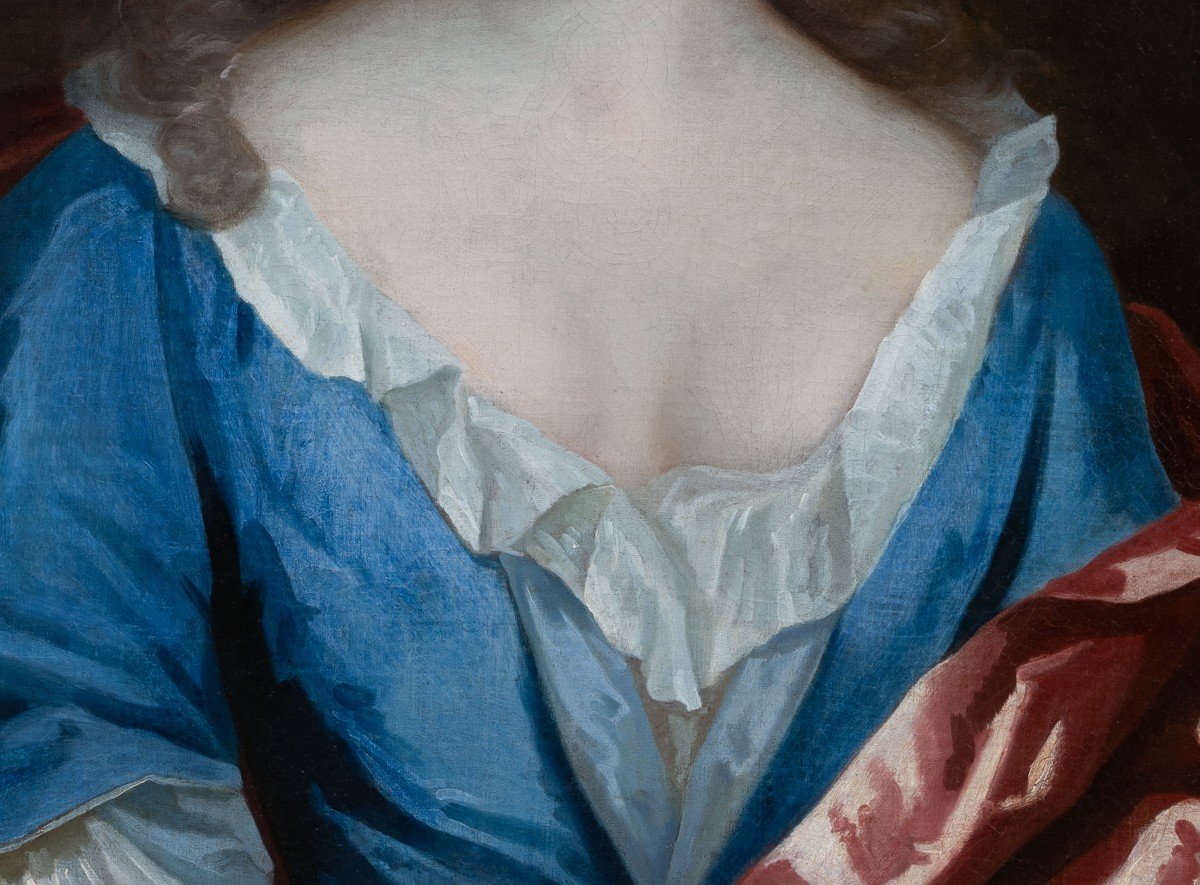
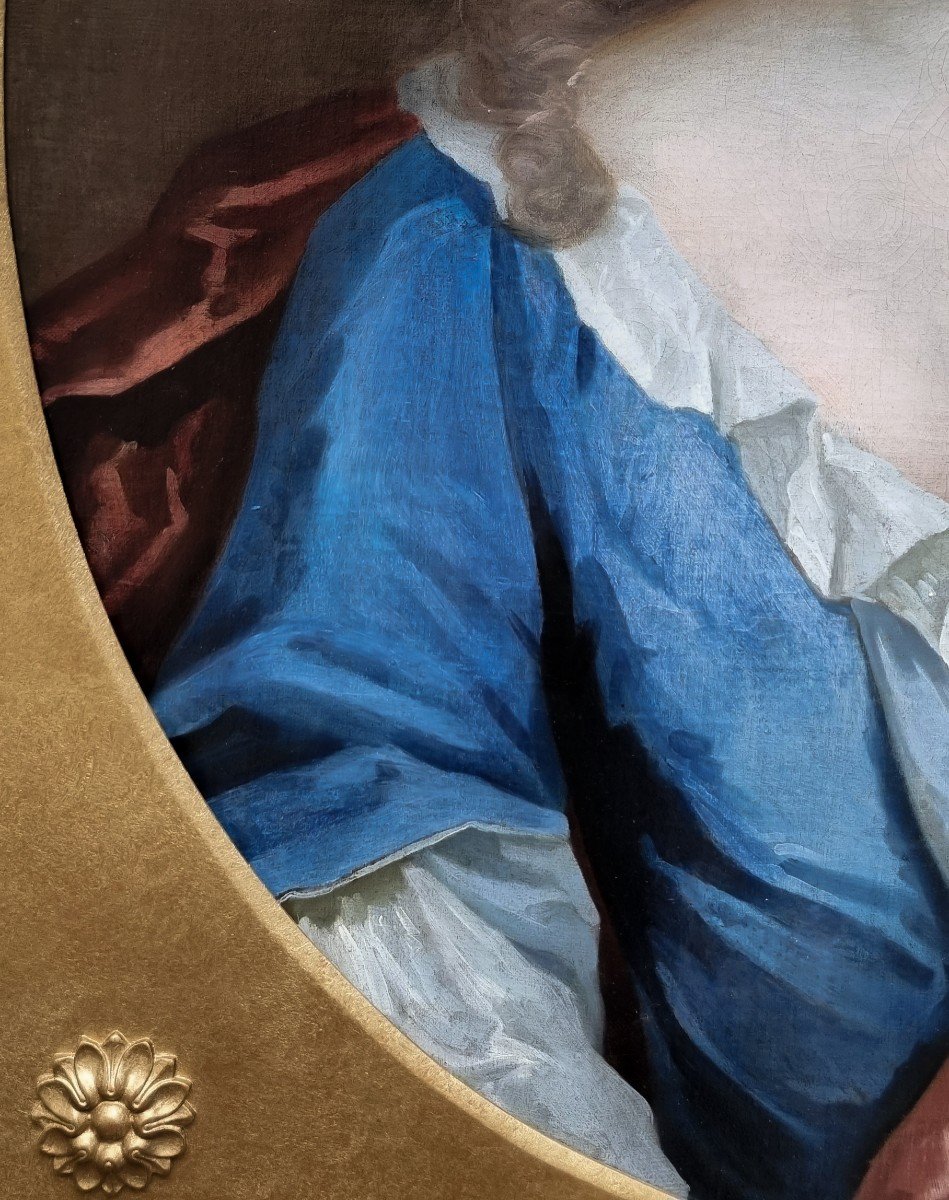

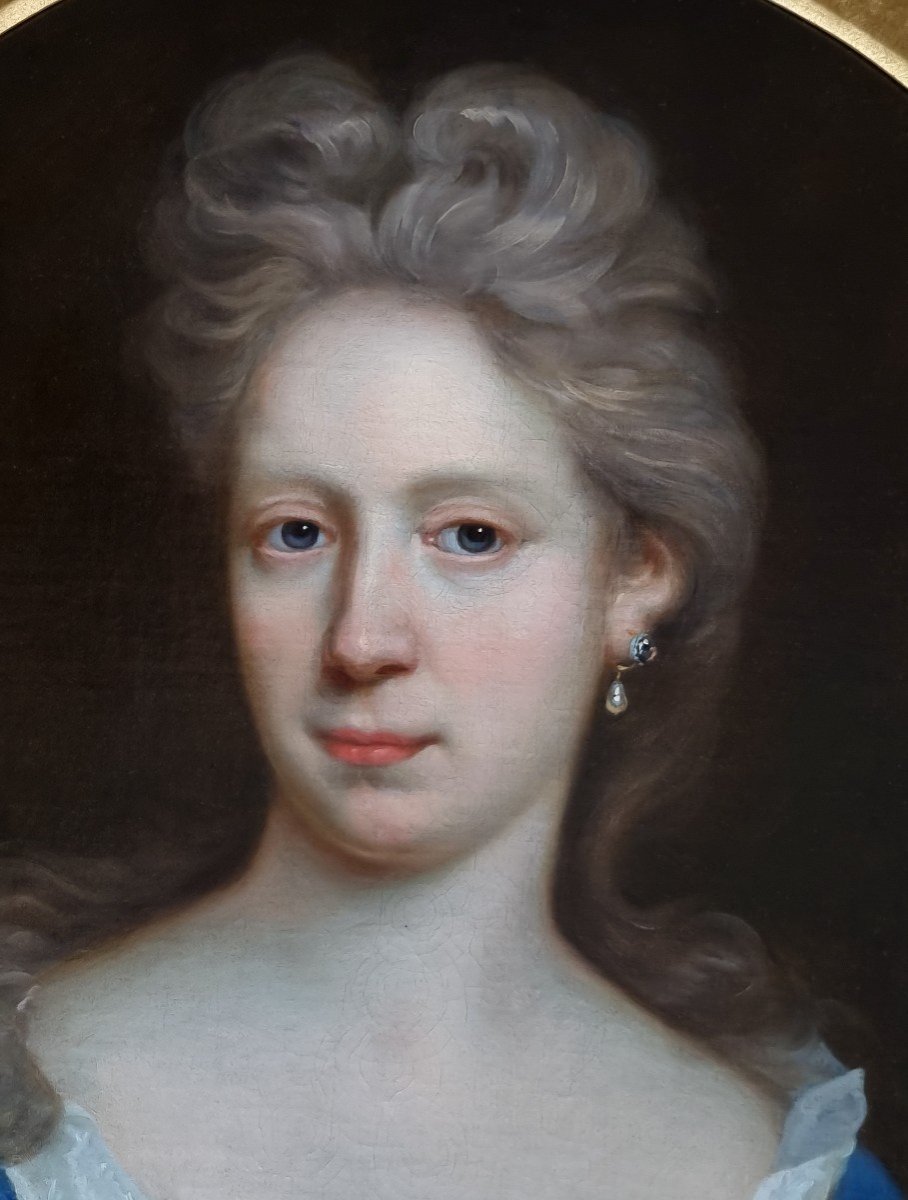


The sitter is elegantly attired in a blue silk dress over a white frilled chemise and a striking crimson mantle. The artist, Thomas Murray, can be described as one of the most successful and talented during the last part of the seventeenth century. It is not surprising that Murray painted the portraits of King William III, Queen Mary, Queen Ann as well as several other high-ranking individuals. The influence of Sir Godfrey Kneller is evident and even expected considering the importance of Kneller, and even though the formula employed for head and shoulders portraits of woman during the period is similar, Murray’s work is distinguishable by a refined and elegant manner, a smooth overall feel, and often, distinctive eyes. Murray is known to have employed not only the same pattern as our portrait but the three distinctive colours (blue, white, red) many times.
Thomas Murray was born in Scotland but moved to London to study with a member of the De Critz family. Later he was a pupil of the English portraitist John Riley (1646-1691), who was court painter to King William III and Queen Mary, and was practising as a painter on his own in the 1680s. In 1691 he took over Riley’s studio when that artist died in 1691 and he established a very successful practice.
The Rev, James Dalloway accounted that Murray “was remarkable for his personal beauty and for the elegance of his manner” and he was also noted to have been hard working, courteous and popular with his customers. His portraiture retains an individual style and easily recognised but his earlier work is similar to John Closterman, who was a fellow pupil, and many consider this period to be his finest.
Murray invested wisely in property and when he died in 1735, he left around £40,000. He had no children and he bequeathed his money to a nephew with instructions that his monument, with a bust, should be erected in Westminster Abbey, provided that it did not cost too much – but his nephew decided that it was indeed “too expensive” and the plan did not proceed. He is buried in St. Paul's, Covent Garden.
Murray’s work is represented in many British country houses and private collections, the National Portrait Gallery London, Royal Society and Middle Temple in London, and in the Uffizi Gallery in Florence.
A good example of 17th century British portraiture.
Measurements: Height 90cm, Width 77cm framed (Height 35.5”, Width 30.75” framed
www.titanfineart.com
Thomas Murray was born in Scotland but moved to London to study with a member of the De Critz family. Later he was a pupil of the English portraitist John Riley (1646-1691), who was court painter to King William III and Queen Mary, and was practising as a painter on his own in the 1680s. In 1691 he took over Riley’s studio when that artist died in 1691 and he established a very successful practice.
The Rev, James Dalloway accounted that Murray “was remarkable for his personal beauty and for the elegance of his manner” and he was also noted to have been hard working, courteous and popular with his customers. His portraiture retains an individual style and easily recognised but his earlier work is similar to John Closterman, who was a fellow pupil, and many consider this period to be his finest.
Murray invested wisely in property and when he died in 1735, he left around £40,000. He had no children and he bequeathed his money to a nephew with instructions that his monument, with a bust, should be erected in Westminster Abbey, provided that it did not cost too much – but his nephew decided that it was indeed “too expensive” and the plan did not proceed. He is buried in St. Paul's, Covent Garden.
Murray’s work is represented in many British country houses and private collections, the National Portrait Gallery London, Royal Society and Middle Temple in London, and in the Uffizi Gallery in Florence.
A good example of 17th century British portraiture.
Measurements: Height 90cm, Width 77cm framed (Height 35.5”, Width 30.75” framed
www.titanfineart.com
Explore similar pieces and discover your ideal find:
Portraits