THIS OBJECT WAS SOLD
Satsuma, Earthenware Tea Set, Japan, C. 1890
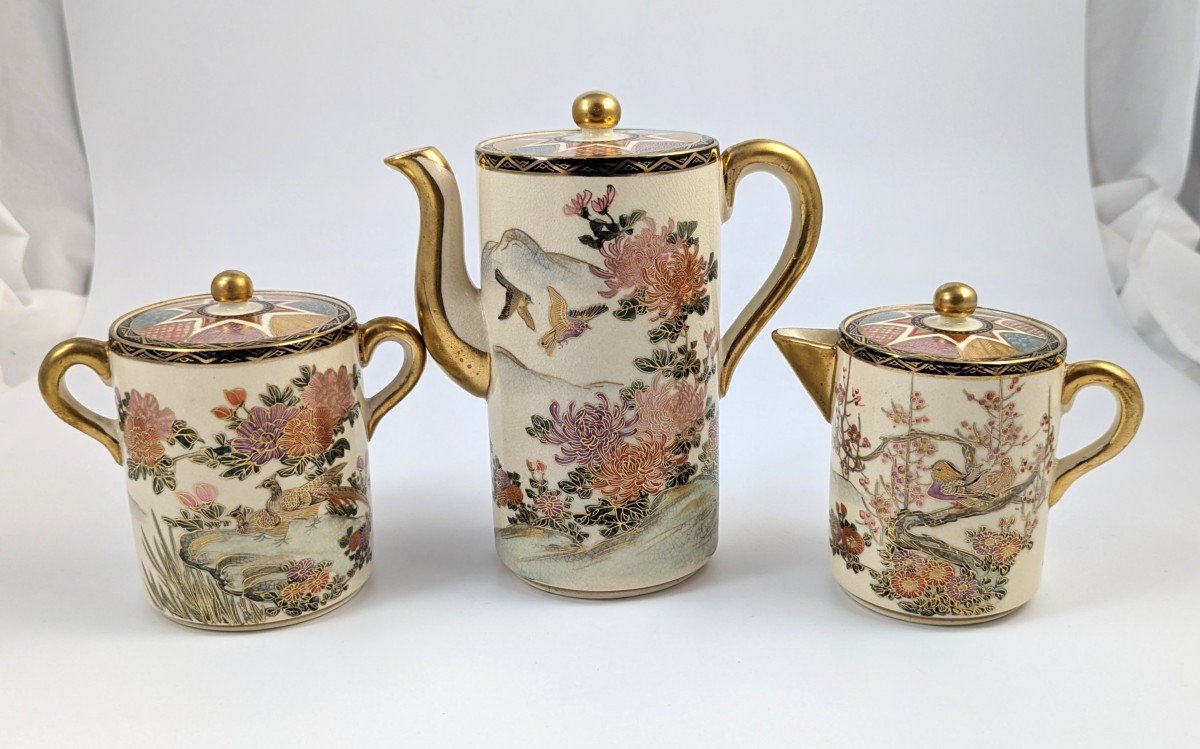
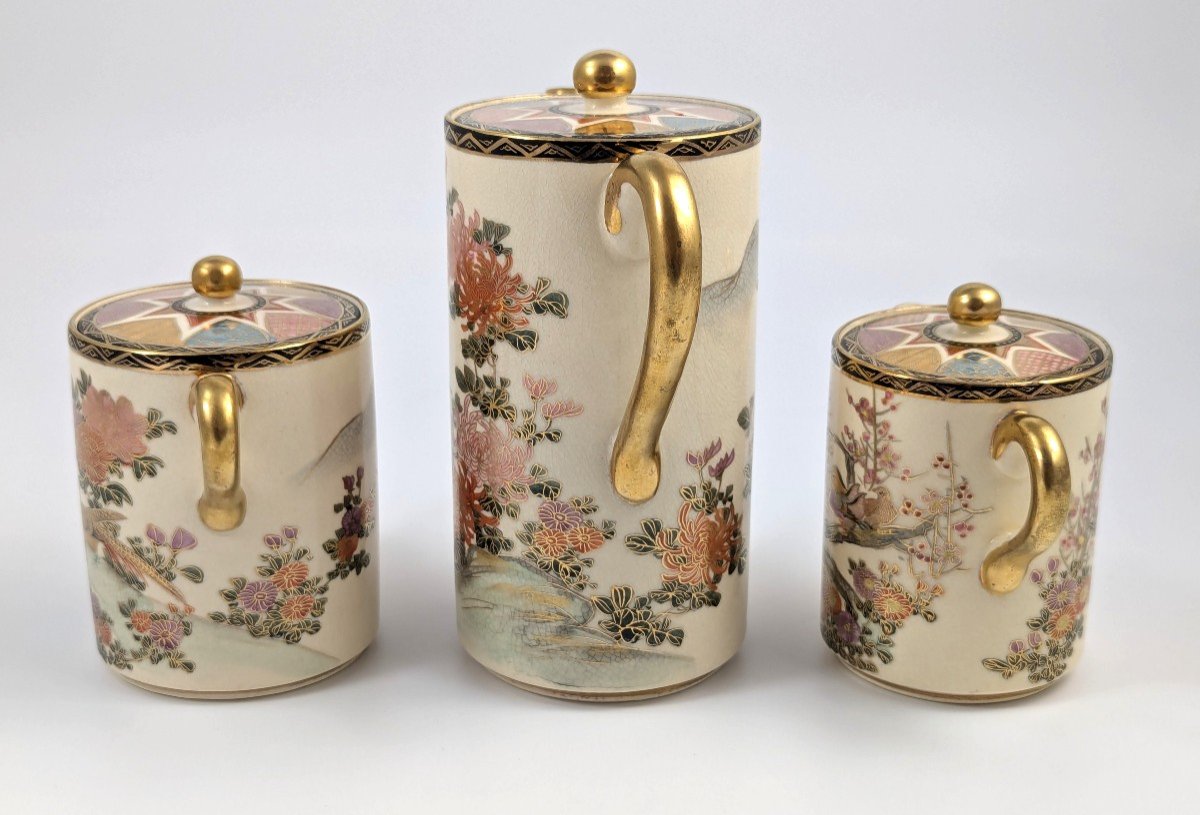





Antique hand-painted earthenware tea set, created in Kyoto, Japan, during the mid-Meiji period. The set includes one teapot with a cover, a milk jug with a cover, and a sugar bowl with a cover and two handles. The pieces are decorated with hand-painted flowers, such as chrysanthemums and cherry blossoms, set against a backdrop of mountains. The handles, spout, and edges feature gold detailing, while the covers showcase intricate geometric patterns in subtle colors. All cover finials are gilded.
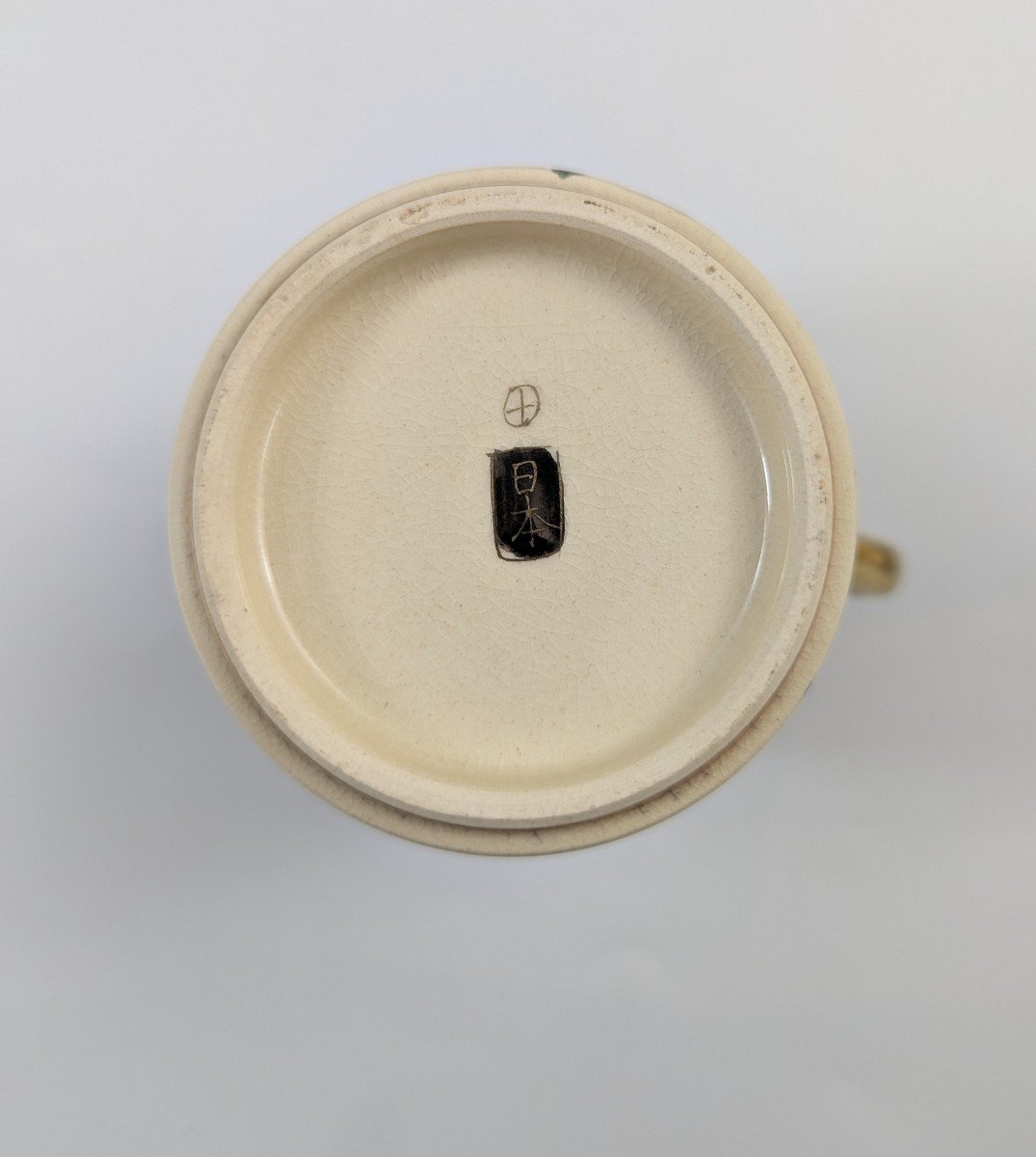
A key feature of Satsuma ware is its crackled glaze, achieved through special firing techniques. This glaze creates tiny, delicate cracks on the surface. The pieces are signed on the underside in gold with the Shimazu crest, indicating their origin from the Satsuma region and signifying the patronage of the powerful Shimazu family, who historically ruled the area. The mark also contains the characters 日本 (Nihon), meaning "Japan," indicating that the pieces were made for export.
During the Meiji period (1868-1912), Satsuma ware gained widespread popularity both in Japan and internationally, thanks to government efforts to promote Japanese goods abroad. The pieces exported during this time were often decorated with lavish gold and silver and featured traditional Japanese motifs, such as cherry blossoms and chrysanthemums. Today, Satsuma ware is still produced in Kagoshima Prefecture and other parts of Japan, remaining highly prized for its intricate designs and rich history. Modern interpretations continue to incorporate both traditional and contemporary themes.Teapot - height: 17 cm, width: 16 cm, depth: 8.5 cm, weight: 565 grams
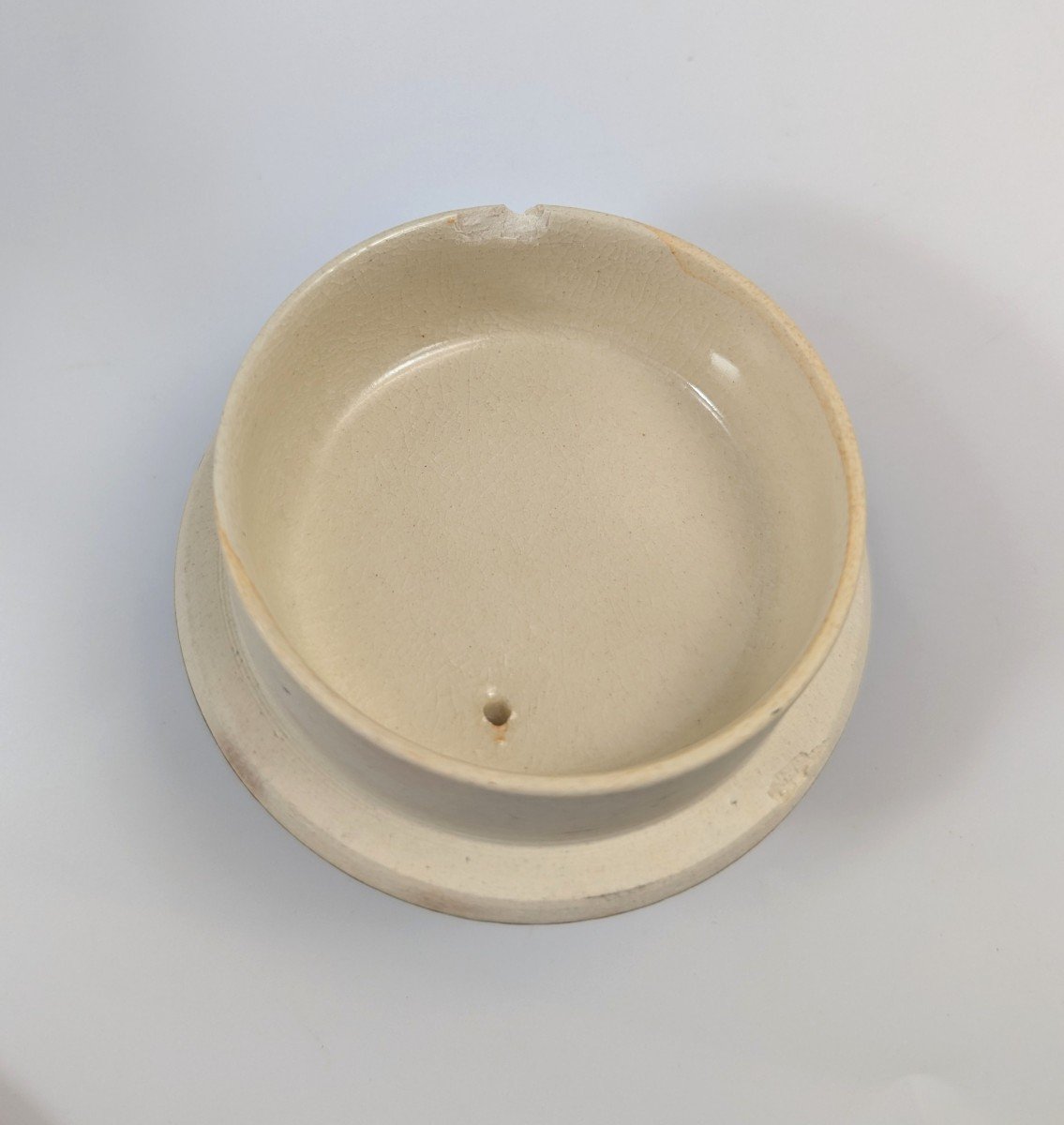
Condition: Two chip on the cover (see photo); it is not visible when the lid is closed. Minimal, barely noticeable loss of gilding on the spout and handle. Otherwise, excellent condition.
Milk Jug - height: 10.5 cm, width: 13 cm, depth: 7.5 cm, weight: 237 grams
Condition: Slight loss of gilding on the spout and handle. Otherwise, excellent antique condition.
Sugar Bowl - height: 11.5 cm, width: 13 cm, depth: 8 cm, weight: 316 grams
Condition: No visible signs of wear. Excellent antique condition.
Please study the accompanying photographs carefully, as they form an integral part of this description. If you have any questions, we will be happy to answer them.
The item will be shipped with full tracking and insurance. Please note that shipping costs include labor, packaging, and postage.
A key feature of Satsuma ware is its crackled glaze, achieved through special firing techniques. This glaze creates tiny, delicate cracks on the surface. The pieces are signed on the underside in gold with the Shimazu crest, indicating their origin from the Satsuma region and signifying the patronage of the powerful Shimazu family, who historically ruled the area. The mark also contains the characters 日本 (Nihon), meaning "Japan," indicating that the pieces were made for export.
During the Meiji period (1868-1912), Satsuma ware gained widespread popularity both in Japan and internationally, thanks to government efforts to promote Japanese goods abroad. The pieces exported during this time were often decorated with lavish gold and silver and featured traditional Japanese motifs, such as cherry blossoms and chrysanthemums. Today, Satsuma ware is still produced in Kagoshima Prefecture and other parts of Japan, remaining highly prized for its intricate designs and rich history. Modern interpretations continue to incorporate both traditional and contemporary themes.
The item will be shipped with full tracking and insurance. Please note that shipping costs include labor, packaging, and postage.
Explore similar pieces and discover your ideal find:
Faience Plates & Dinnerware