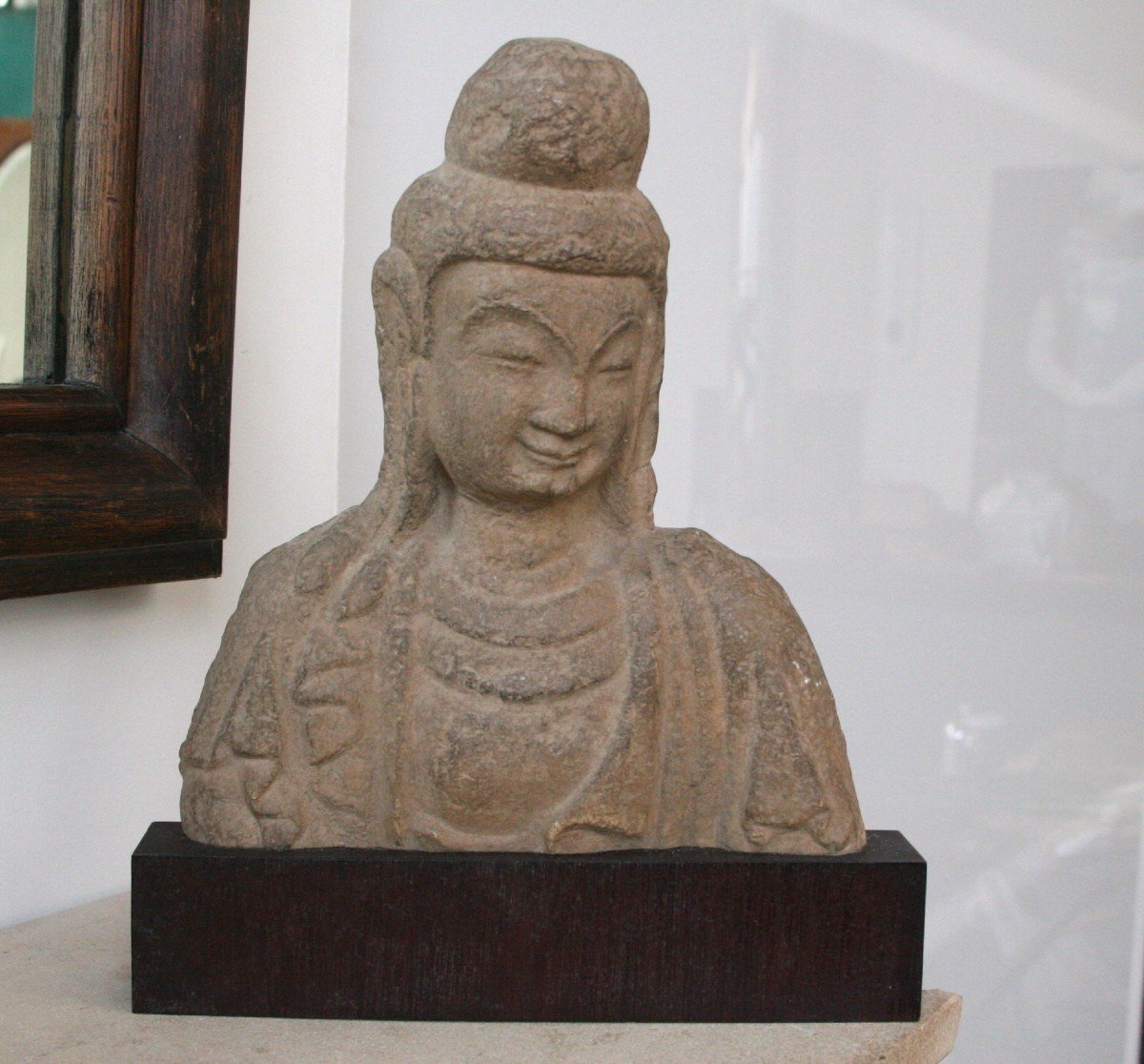




Bodhisattva, Playing The Zither (guqin), Cast, After A Sculpture In The Guimet Museum, Paris
Artist: Chine Du Nord, Grottes De Yungang, Shanxi, Dynastie Des Wei Du Nord (386-534), Vi E Siècle
Bodhisattva playing the zither (qin), Northern China, Guimet Museum, Paris.
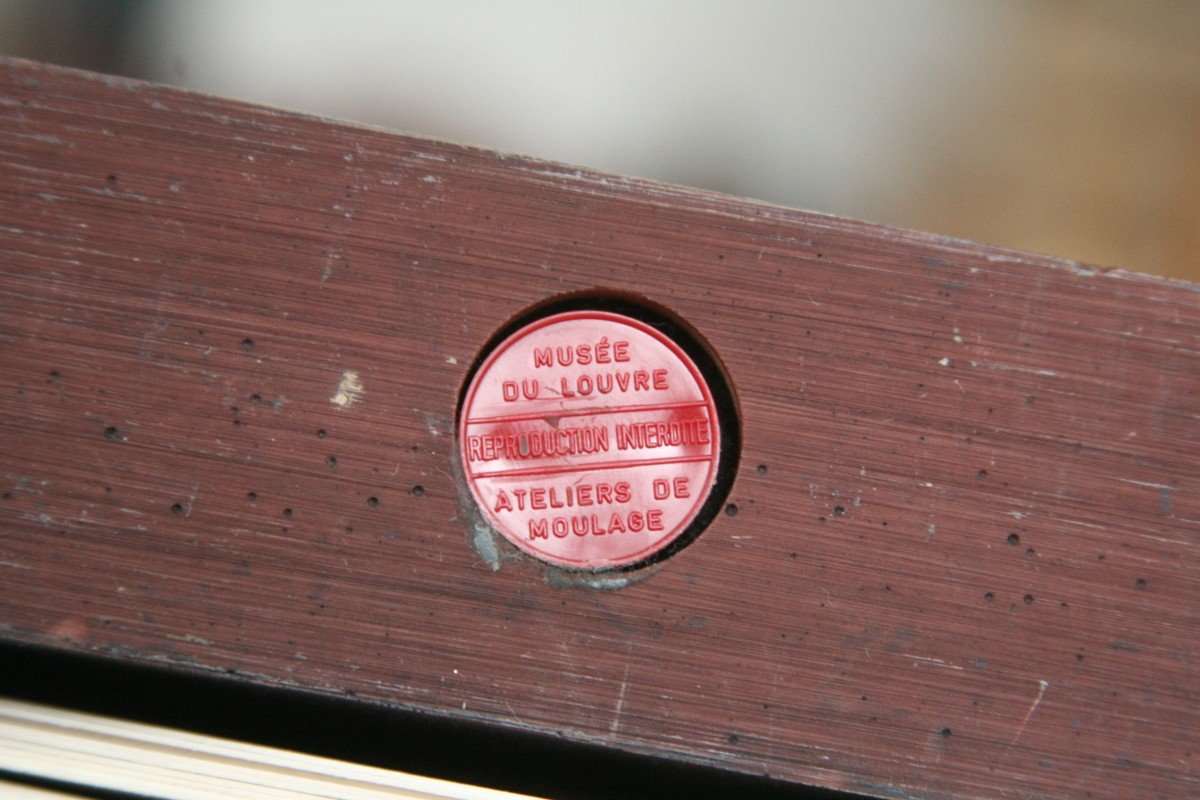
A cast realised at the shop of the Louvre Museum (1968).
Material: composite: stone imitation on a resin base.
Dimensions: L 26cm h 32cm p 8cm
Based on the stone bas-relief found in the Yungang caves of Northern China, Shanxi, Northern Wei Dynasty (386-534), 6th century.
Conservation place of the original: Paris, Musée national des Arts asiatiques - Guimet.
"This bust is that of a seated musician playing the k'in, one of the oldest musical instruments in China. Under the influence of India, where Buddhism originated, Chinese sculpture, starting in the 6th century experienced one of its most beautiful phases: the motifs, the symbols, the ritual gestures and Buddhist attributes from India were assimilated, modified, adapted to Chinese aesthetics and the result was a succession of profoundly Chinese styles that would perpetuate themselves for three centuries. Faces with mystical smiles, elongated forms, treatment of clothing that concealed the bodies under folds with linear lines, it is the expression of an era of intense spirituality."
From: ateliersartmuseesnationaux
A cast realised at the shop of the Louvre Museum (1968).
Material: composite: stone imitation on a resin base.
Dimensions: L 26cm h 32cm p 8cm
Based on the stone bas-relief found in the Yungang caves of Northern China, Shanxi, Northern Wei Dynasty (386-534), 6th century.
Conservation place of the original: Paris, Musée national des Arts asiatiques - Guimet.
"This bust is that of a seated musician playing the k'in, one of the oldest musical instruments in China. Under the influence of India, where Buddhism originated, Chinese sculpture, starting in the 6th century experienced one of its most beautiful phases: the motifs, the symbols, the ritual gestures and Buddhist attributes from India were assimilated, modified, adapted to Chinese aesthetics and the result was a succession of profoundly Chinese styles that would perpetuate themselves for three centuries. Faces with mystical smiles, elongated forms, treatment of clothing that concealed the bodies under folds with linear lines, it is the expression of an era of intense spirituality."
From: ateliersartmuseesnationaux
180 €
Period: 20th century
Style: Asian art
Condition: Excellent condition
Material: Other
Length: 26cm
Height: 32cm
Depth: 8cm
Reference (ID): 1462701
Availability: In stock
Print