THIS OBJECT WAS SOLD
Early 17th Cty Spanish Wooden Marquetry Cabinet




Very interesting and nice CABINET IN WOODEN MARQUETRY,
Spain, early 17th century
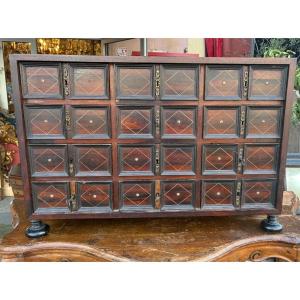
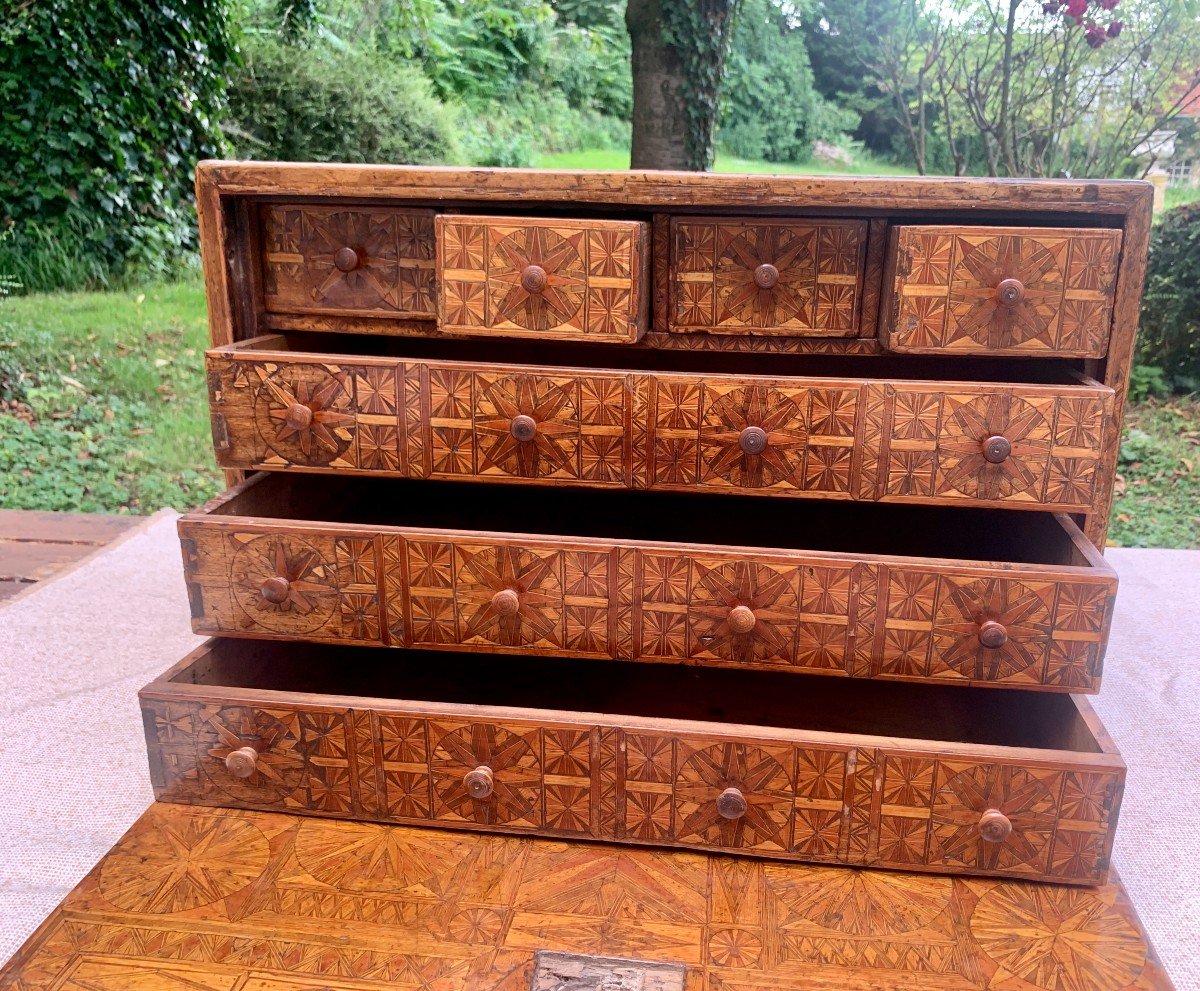
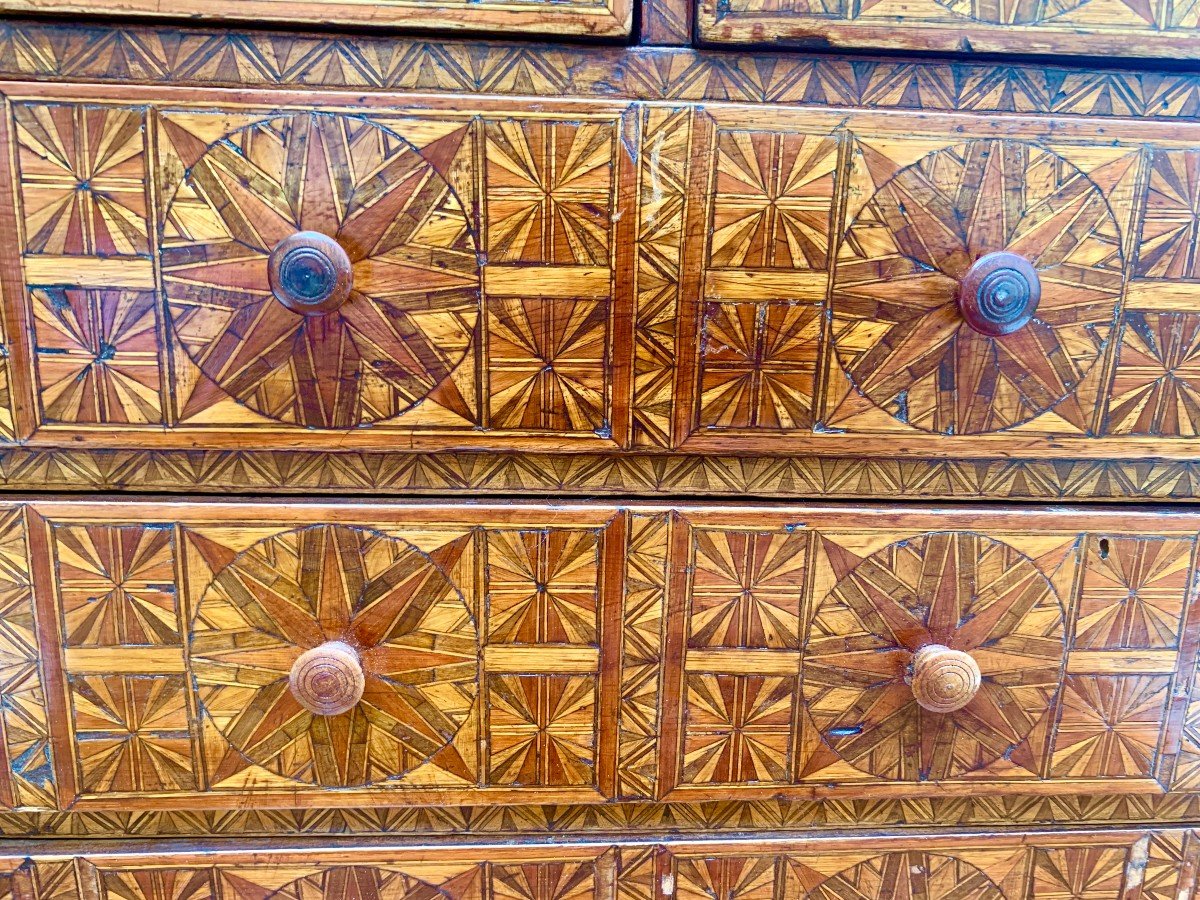
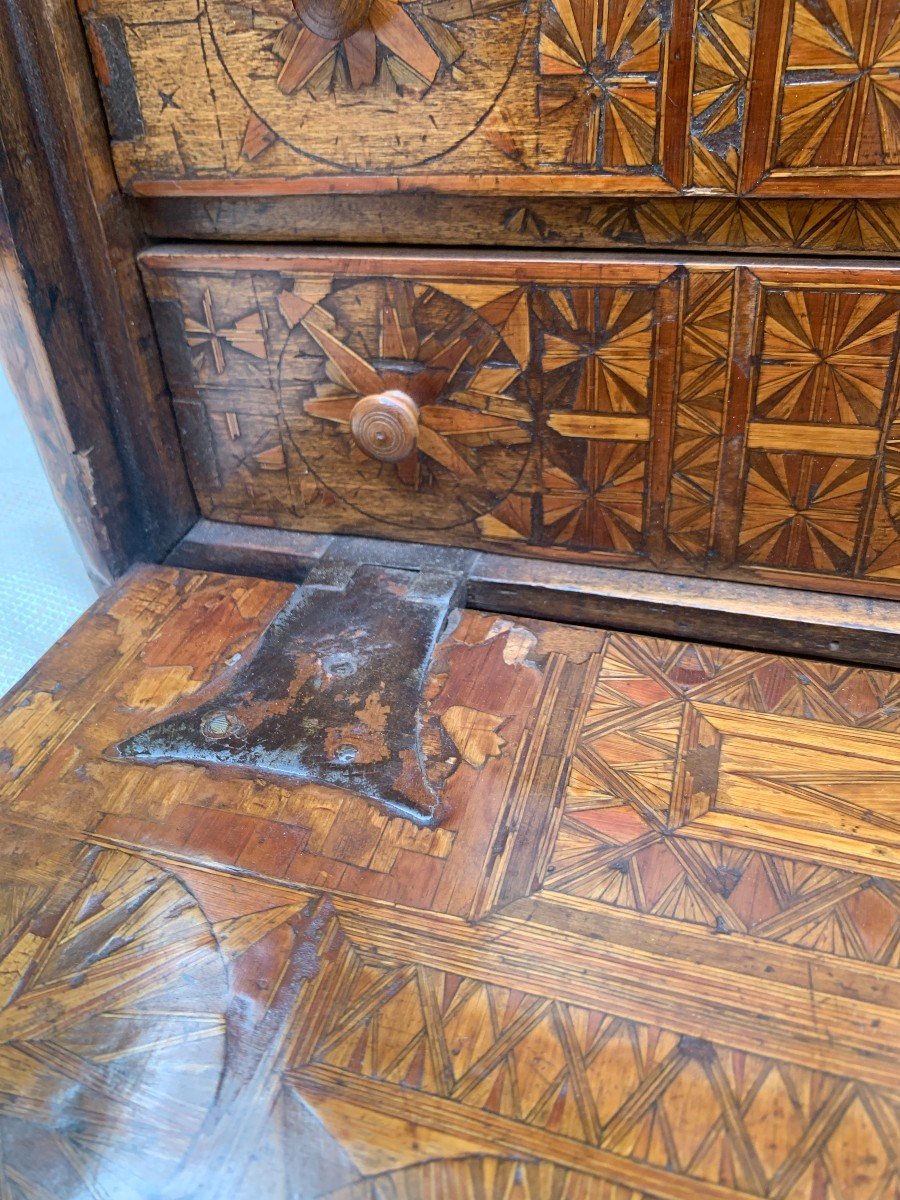
The ceremonial cabinet opens with 4 horizontal rows of drawers. If the upper level has 4 individual drawers, the 3 lower rows each only open with a false drawer across the entire width of the piece of furniture. The fronts of these drawers are richly decorated with fine marquetry creating repeated radiating patterns, centered around small turned wooden buttons?
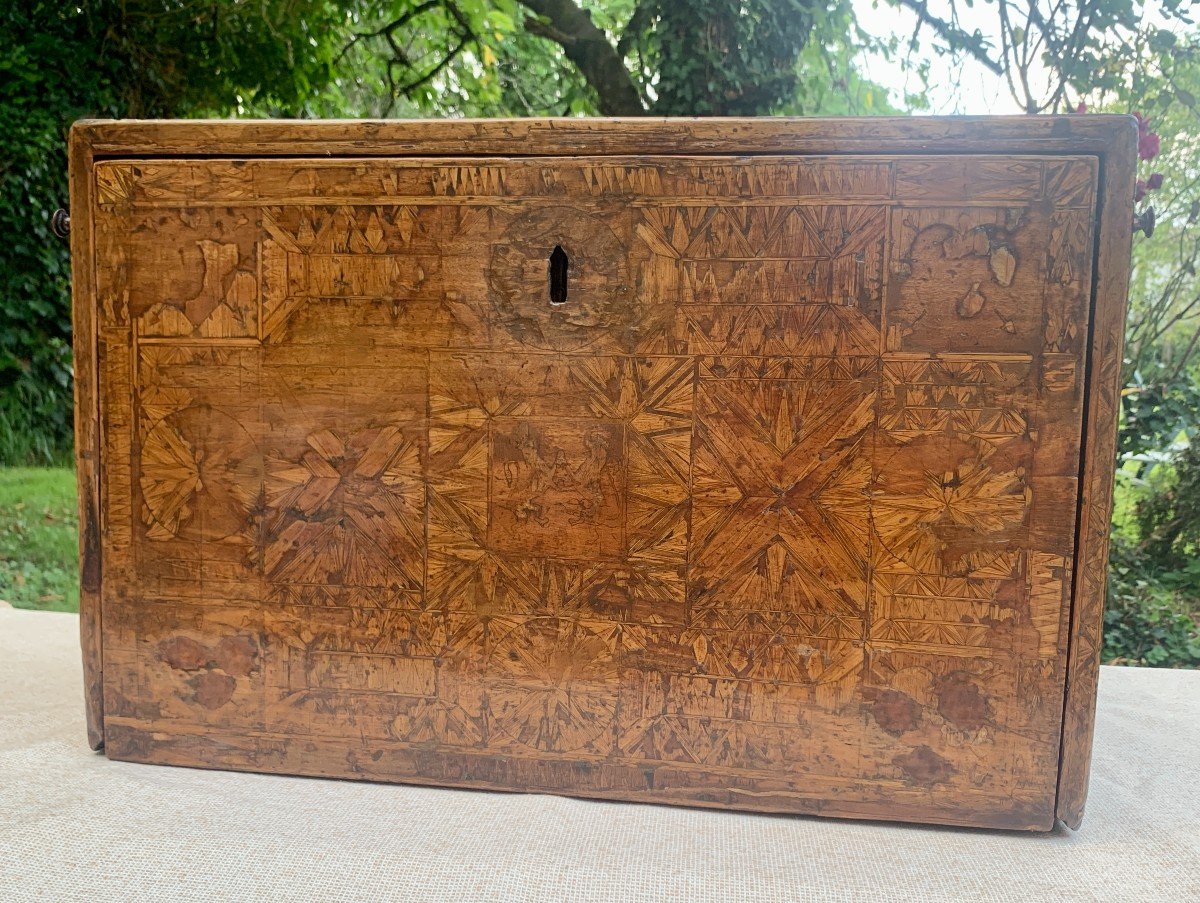
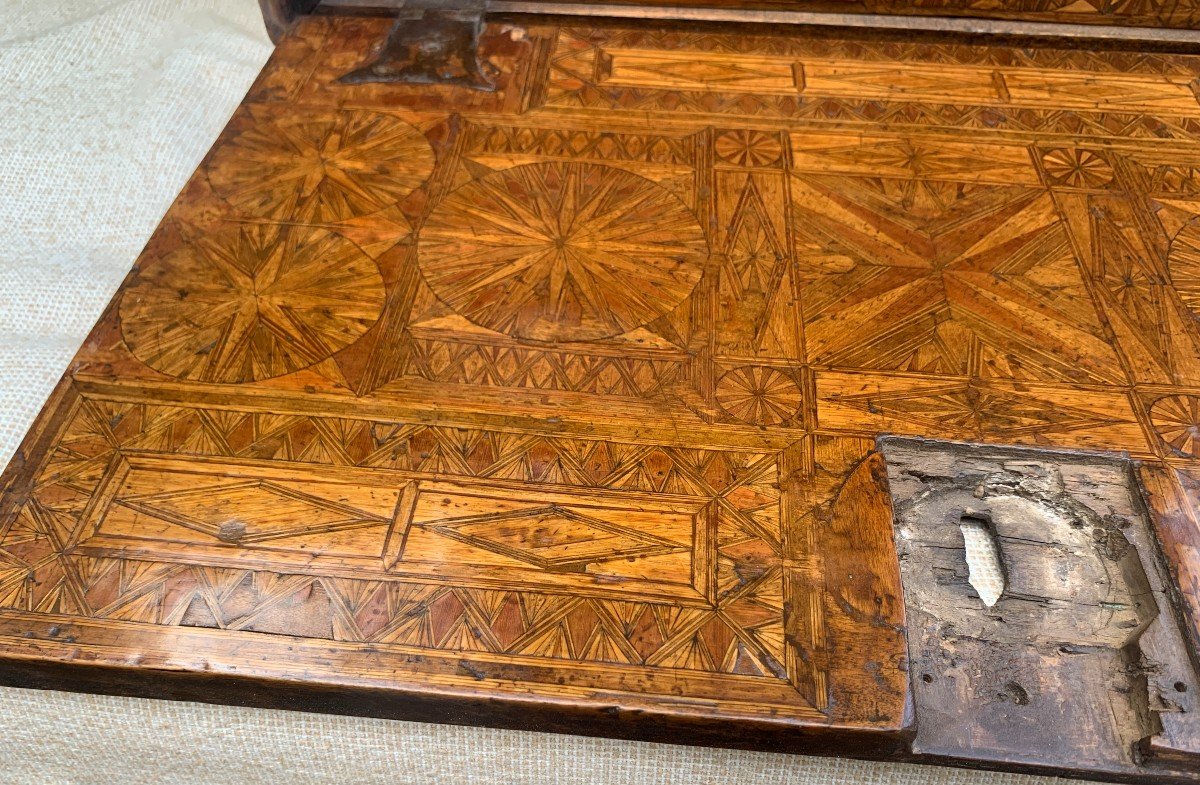
The cabinet closes with its original flap but the door is missing its flat lock and its openwork circular lock entry (certainly in iron, or bronze). This flap can be locked in the closed position by 2 small turned wooden pins (seeming to be from the 17th century) arranged on the top of the side of the cabinet and in the edges of the door.
It would be interesting to find a period lock entry of this type to replace the missing one, while the reserve provided for the lock could easily be blocked by a small panel of patinated wood.
The exterior part of the door (visible when the cabinet is closed) can graphically be subdivided into 3 horizontal rows of 5 square reserves, decorated in turn with radiant and / or geometric modifications. The 4 squares in the corners, whose marquetry has been worn down by centuries of successive sanding to the point of almost making its motif disappear, represent hearts pierced each time by 2 crossed arrows. This iconography perhaps suggests a destination for a wedding gift?
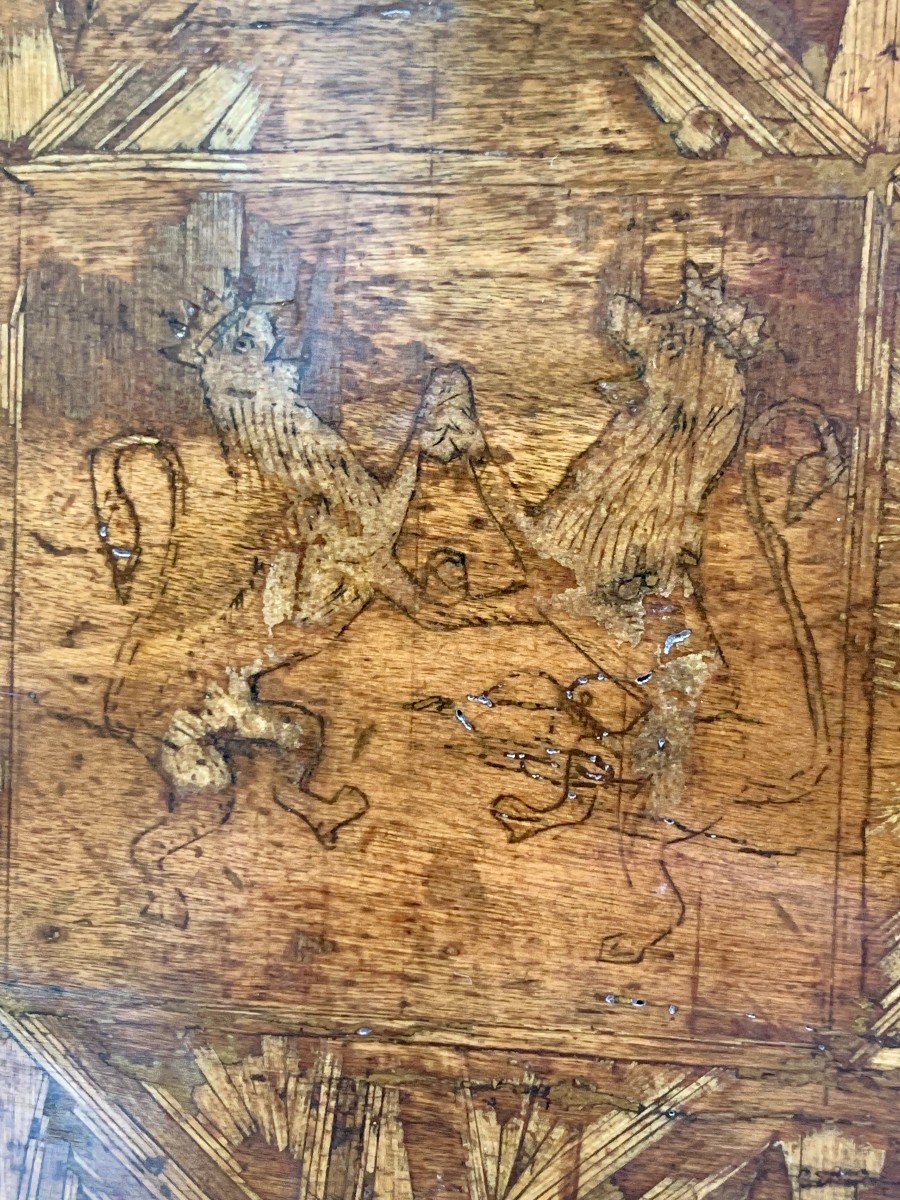
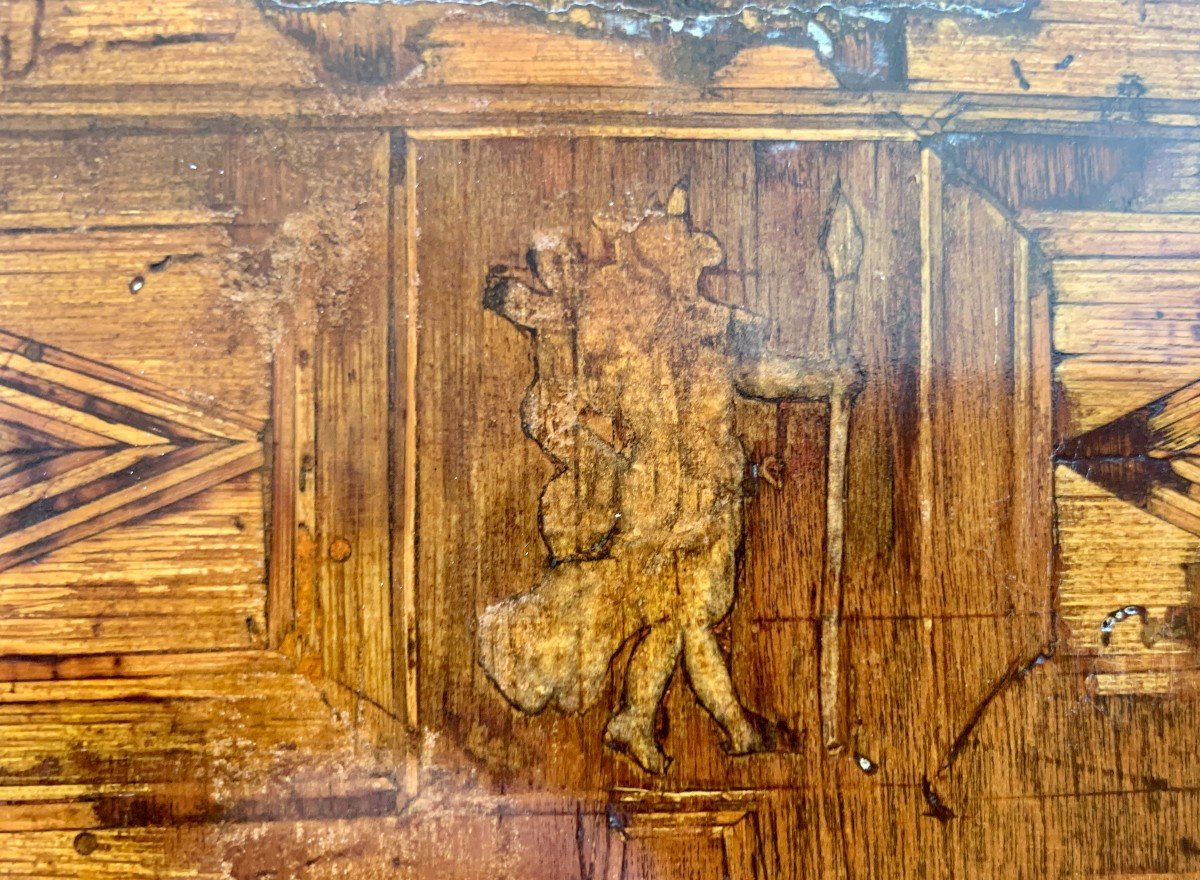
On other square parts, we can see silhouettes of 2 lions standing and facing each other, or silhouettes of armed soldiers turning around, holding a lance,...
The top of the cabinet has no marquetry and reveals a solid wood panel with a very beautiful old patina - suggesting that the current state of the top has been the same for a long time, certainly since 17th century. If the top was marquetry, it seems to be its original panel
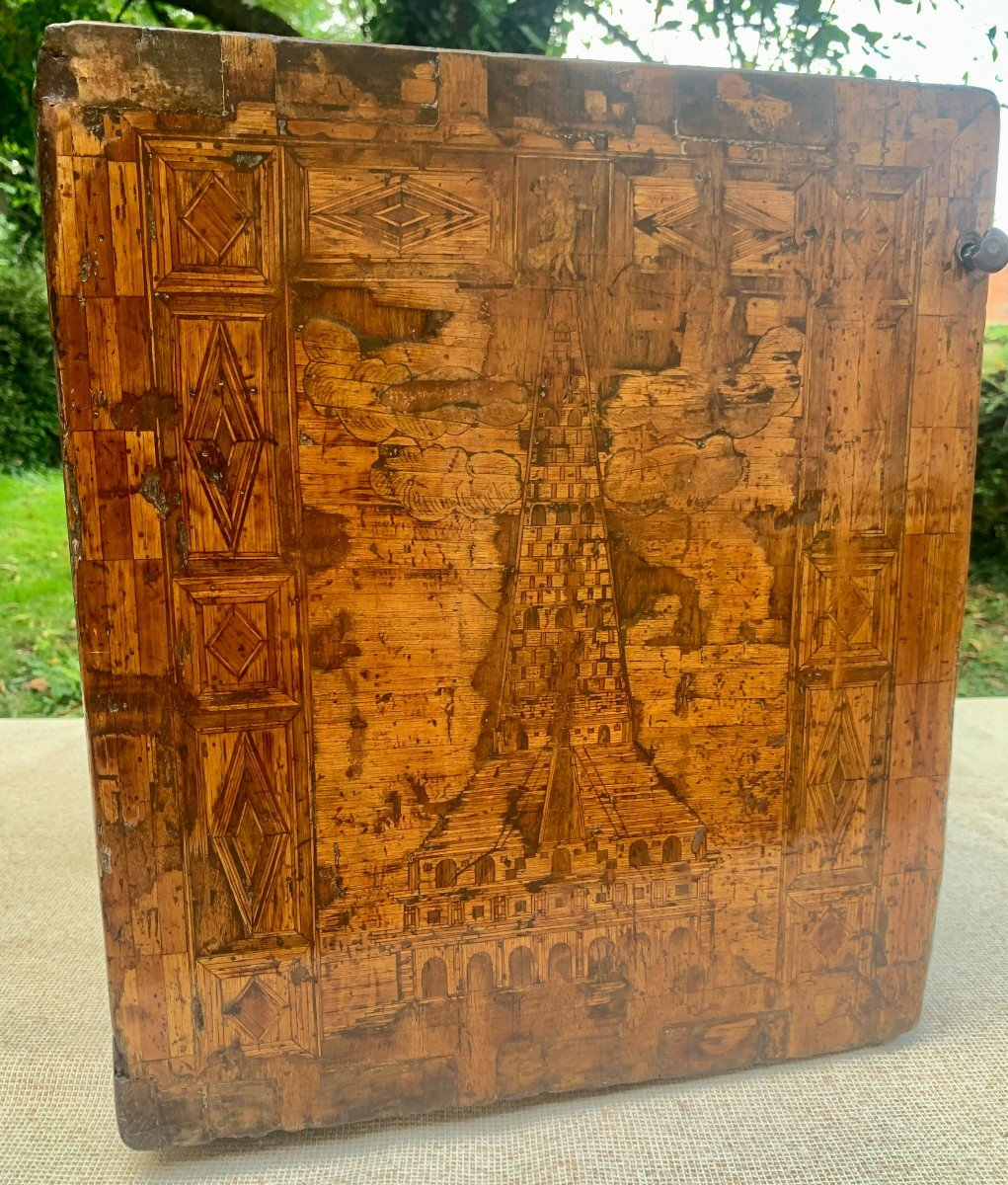
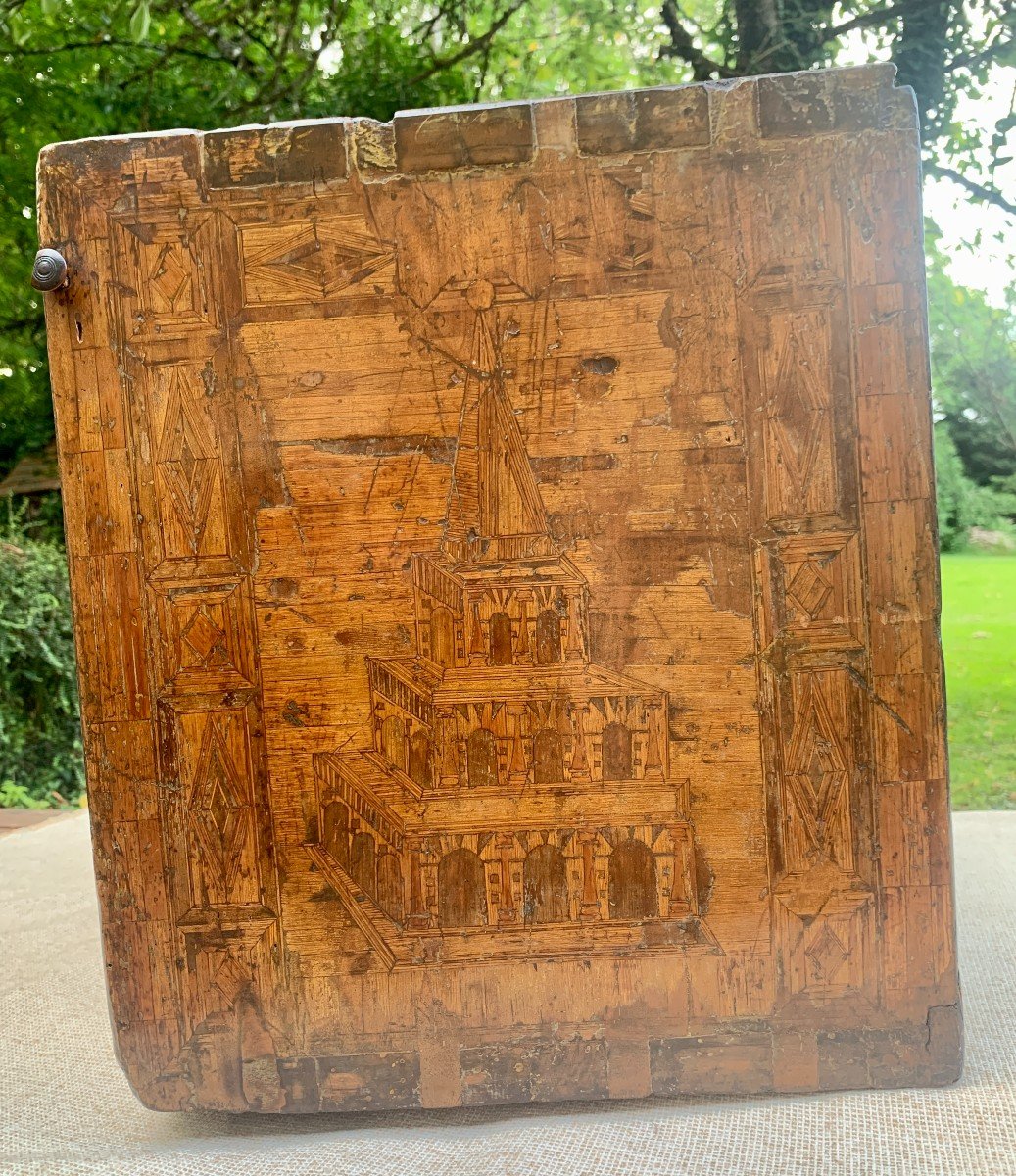
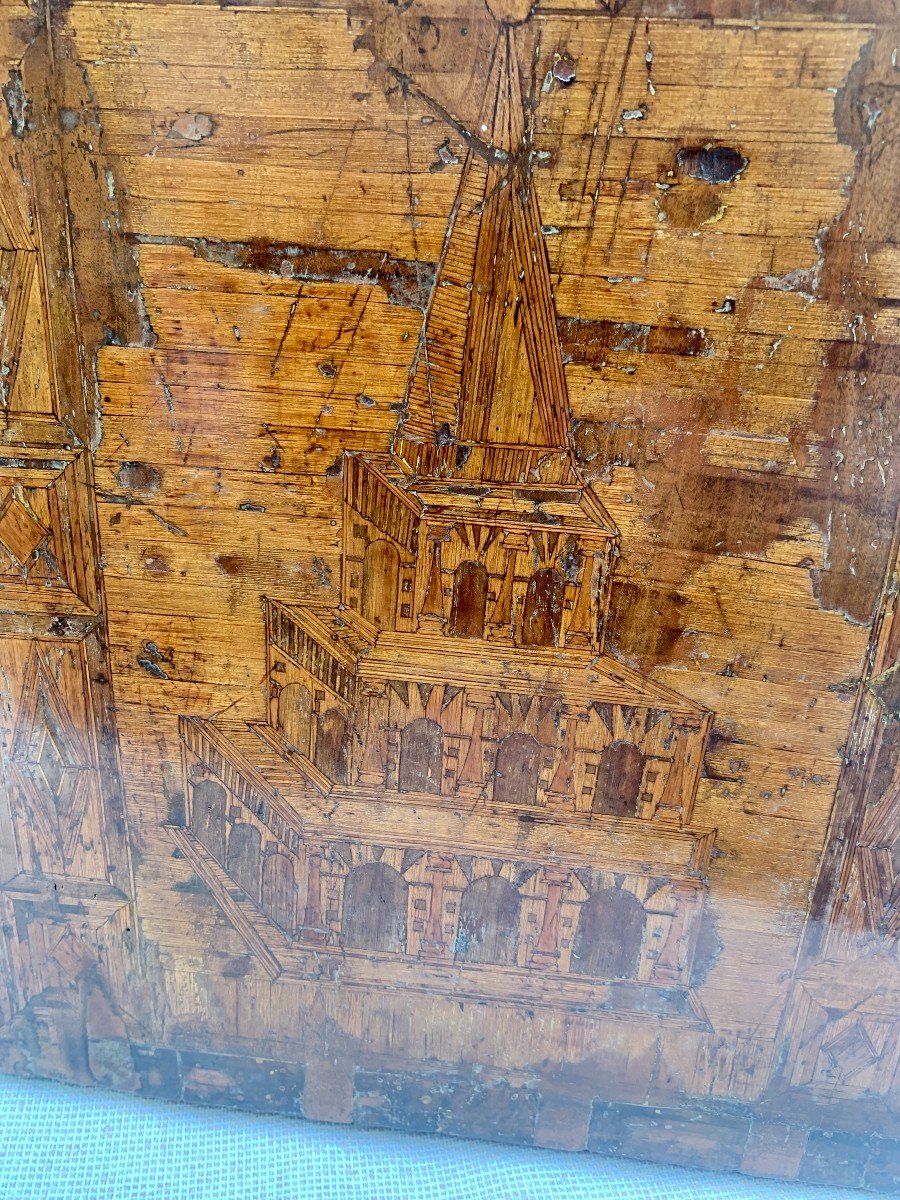
while the 2 sides of the cabinet depict architectural monuments such as pagodas or obelisks, in frontal view on the left and in perspective on the right.
The entire cabinet has been completely and formerly restored; A perfectly satin varnish has certainly prevented the marquetry from deteriorating further, while creating a very beautiful overall homogeneity of the different parts.
Dimensions
59cm width *
38cm height *
approx 33,5cm depth
Superb cabinet awaiting finally only end of a very nice restoration by appropriate old lock entry - and possibly a lock
Spain, early 17th century
The ceremonial cabinet opens with 4 horizontal rows of drawers. If the upper level has 4 individual drawers, the 3 lower rows each only open with a false drawer across the entire width of the piece of furniture. The fronts of these drawers are richly decorated with fine marquetry creating repeated radiating patterns, centered around small turned wooden buttons?
The cabinet closes with its original flap but the door is missing its flat lock and its openwork circular lock entry (certainly in iron, or bronze). This flap can be locked in the closed position by 2 small turned wooden pins (seeming to be from the 17th century) arranged on the top of the side of the cabinet and in the edges of the door.
It would be interesting to find a period lock entry of this type to replace the missing one, while the reserve provided for the lock could easily be blocked by a small panel of patinated wood.
The exterior part of the door (visible when the cabinet is closed) can graphically be subdivided into 3 horizontal rows of 5 square reserves, decorated in turn with radiant and / or geometric modifications. The 4 squares in the corners, whose marquetry has been worn down by centuries of successive sanding to the point of almost making its motif disappear, represent hearts pierced each time by 2 crossed arrows. This iconography perhaps suggests a destination for a wedding gift?
On other square parts, we can see silhouettes of 2 lions standing and facing each other, or silhouettes of armed soldiers turning around, holding a lance,...
The top of the cabinet has no marquetry and reveals a solid wood panel with a very beautiful old patina - suggesting that the current state of the top has been the same for a long time, certainly since 17th century. If the top was marquetry, it seems to be its original panel
while the 2 sides of the cabinet depict architectural monuments such as pagodas or obelisks, in frontal view on the left and in perspective on the right.
The entire cabinet has been completely and formerly restored; A perfectly satin varnish has certainly prevented the marquetry from deteriorating further, while creating a very beautiful overall homogeneity of the different parts.
Dimensions
59cm width *
38cm height *
approx 33,5cm depth
Superb cabinet awaiting finally only end of a very nice restoration by appropriate old lock entry - and possibly a lock
Explore similar pieces and discover your ideal find:
cabinets