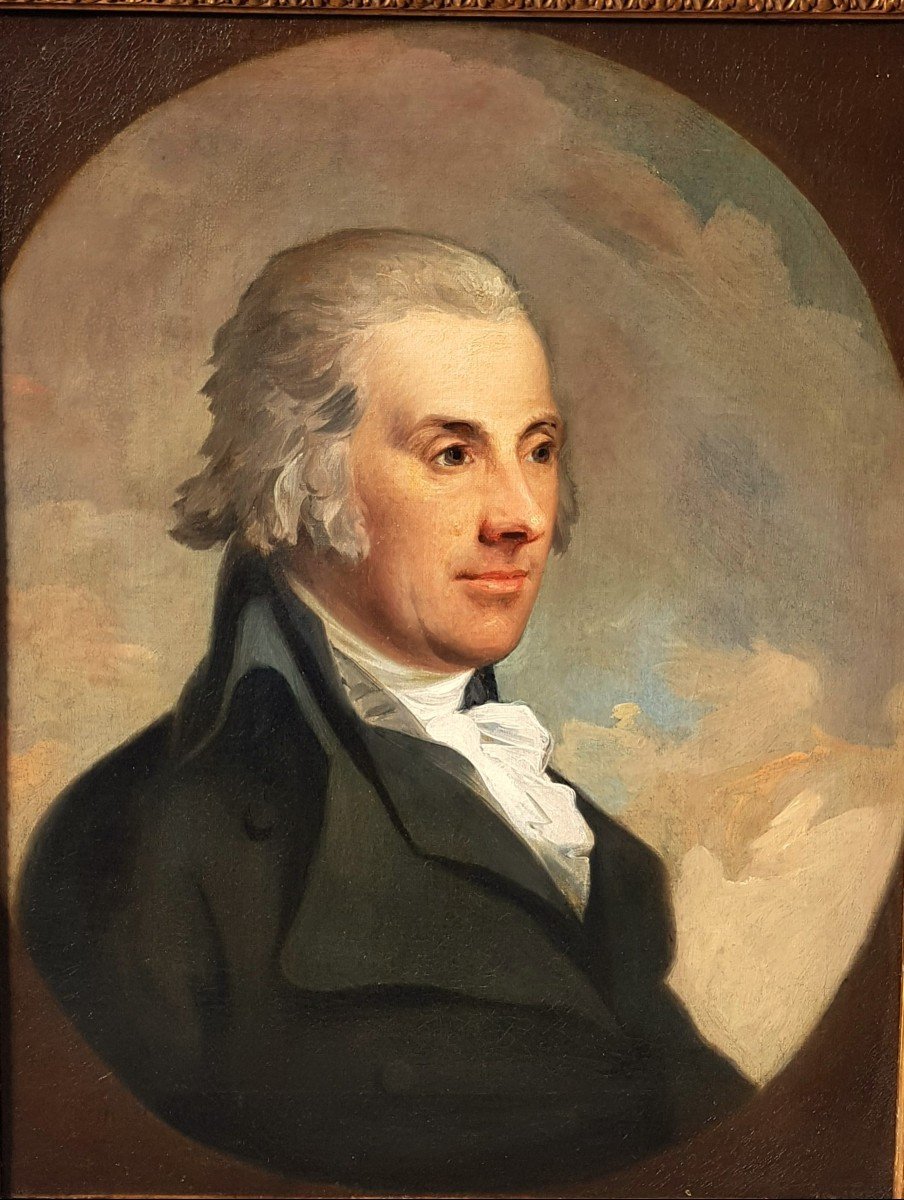


Anton Hickel (1745-1798) Portrait Of Edward James Eliot
Artist: Anton Hickel (1745-1798)
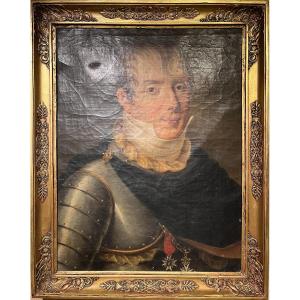
Anton Hickel (1745-1798) Portrait of Edward James Eliot, 1794, oil on canvas, 60 x 50 cm, signed and dated 1794 lower left. On the back old label identifying the model. Dimensions with frame: 80 x 67 cm.
Anton Hickel is an Austrian painter born in Bohemia. After his studies at the Academy of Fine Arts in Vienna, he worked as a painter under the direction of his brother, Joseph Hickel, painter at the Court of Vienna. From 1779, he traveled around Europe, he painted in Germany in Munich, Mainz and Manheim. In 1785 he stayed in Switzerland, then became the official painter of the court of Joseph II, Holy Roman Emperor. He settled in France in 1786 where he painted the portraits of Queen Marie-Antoinette as well as the Princess of Lamballe. In 1789, during the Revolution, he emigrated to England where he became a very fashionable portrait painter. He then produced his famous painting representing The House of Commons.
Works in the Museums of Vienna, National Portrait Gallery in London, Basel, Munich...
The model was born in Cornwall, the son of Edward Craggs-Eliot (1727–1804), a politician created Baron Eliot in 1784. He went to Pembroke College, Cambridge, in 1775, becoming friends with the future Prime Minister, William Pitt the Younger, and received a Master of Arts degree in 1780.[1] He was elected Member of Parliament for St Germans, Cornwall, in 1780 and for Liskeard in 1784. He soon became Minister of the Treasury in 1782 and a member of Pitt's government from 1783, appointed King's Attorney at the Exchequer in 1785. He married Harriot Pitt, the younger daughter of William Pitt the Elder and sister of Pitt the Younger, in 1785. A year later, five days after the birth of their only child, a daughter named Harriot Hester, Eliot's wife died in childbirth. Eliot never recovered from the grief of losing his wife. After Harriot's death, Eliot settled in Broomfield, near Clapham, where he came into contact with the Clapham Sect, evangelical reformers whose cause he championed. He had been a friend of William Wilberforce for some years, and the two had accompanied Pitt to France. He now lived near Wilberforce and other influential members of the group known as "the Saints." He began to take an active part in advocating for their causes, including the abolition of slavery, prison reform, and the relief of people in distress, the Proclamation Society, and Bishop Porteus's Sunday Observance Bill. He actively lobbied the Clapham sect in Parliament and acted as a mediator between Wilberforce and Pitt in their campaigns. In 1793, after resigning from the Treasury for health reasons, Eliot was appointed Assistant Commissioner for Indian Affairs. He became a shareholder in the British East India Company and was slated to become Governor-General of Bengal. However, he suffered from a chronic stomach ailment that prevented him from assuming his duties. He died at Port Eliot on 17 September 1797 and was buried at St Germans on 26 September 1797. Some sources give the date of his death as 3 October 1797 [2]. He had remained close to Pitt and Wilberforce, both of whom mourned his passing. His brother John succeeded their father to the barony and was created Earl of St Germans in 1815.
Anton Hickel is an Austrian painter born in Bohemia. After his studies at the Academy of Fine Arts in Vienna, he worked as a painter under the direction of his brother, Joseph Hickel, painter at the Court of Vienna. From 1779, he traveled around Europe, he painted in Germany in Munich, Mainz and Manheim. In 1785 he stayed in Switzerland, then became the official painter of the court of Joseph II, Holy Roman Emperor. He settled in France in 1786 where he painted the portraits of Queen Marie-Antoinette as well as the Princess of Lamballe. In 1789, during the Revolution, he emigrated to England where he became a very fashionable portrait painter. He then produced his famous painting representing The House of Commons.
Works in the Museums of Vienna, National Portrait Gallery in London, Basel, Munich...
The model was born in Cornwall, the son of Edward Craggs-Eliot (1727–1804), a politician created Baron Eliot in 1784. He went to Pembroke College, Cambridge, in 1775, becoming friends with the future Prime Minister, William Pitt the Younger, and received a Master of Arts degree in 1780.[1] He was elected Member of Parliament for St Germans, Cornwall, in 1780 and for Liskeard in 1784. He soon became Minister of the Treasury in 1782 and a member of Pitt's government from 1783, appointed King's Attorney at the Exchequer in 1785. He married Harriot Pitt, the younger daughter of William Pitt the Elder and sister of Pitt the Younger, in 1785. A year later, five days after the birth of their only child, a daughter named Harriot Hester, Eliot's wife died in childbirth. Eliot never recovered from the grief of losing his wife. After Harriot's death, Eliot settled in Broomfield, near Clapham, where he came into contact with the Clapham Sect, evangelical reformers whose cause he championed. He had been a friend of William Wilberforce for some years, and the two had accompanied Pitt to France. He now lived near Wilberforce and other influential members of the group known as "the Saints." He began to take an active part in advocating for their causes, including the abolition of slavery, prison reform, and the relief of people in distress, the Proclamation Society, and Bishop Porteus's Sunday Observance Bill. He actively lobbied the Clapham sect in Parliament and acted as a mediator between Wilberforce and Pitt in their campaigns. In 1793, after resigning from the Treasury for health reasons, Eliot was appointed Assistant Commissioner for Indian Affairs. He became a shareholder in the British East India Company and was slated to become Governor-General of Bengal. However, he suffered from a chronic stomach ailment that prevented him from assuming his duties. He died at Port Eliot on 17 September 1797 and was buried at St Germans on 26 September 1797. Some sources give the date of his death as 3 October 1797 [2]. He had remained close to Pitt and Wilberforce, both of whom mourned his passing. His brother John succeeded their father to the barony and was created Earl of St Germans in 1815.
3 200 €
Period: 18th century
Style: Other Style
Condition: Excellent condition
Material: Oil painting
Width: 50
Height: 60
Reference (ID): 1419656
Availability: In stock
Print