THIS OBJECT WAS SOLD
Théodore Deck (1823-1891) Pair Of “bleu Deck” Lamps Circa 1870


Théodore DECK (1823-1891)
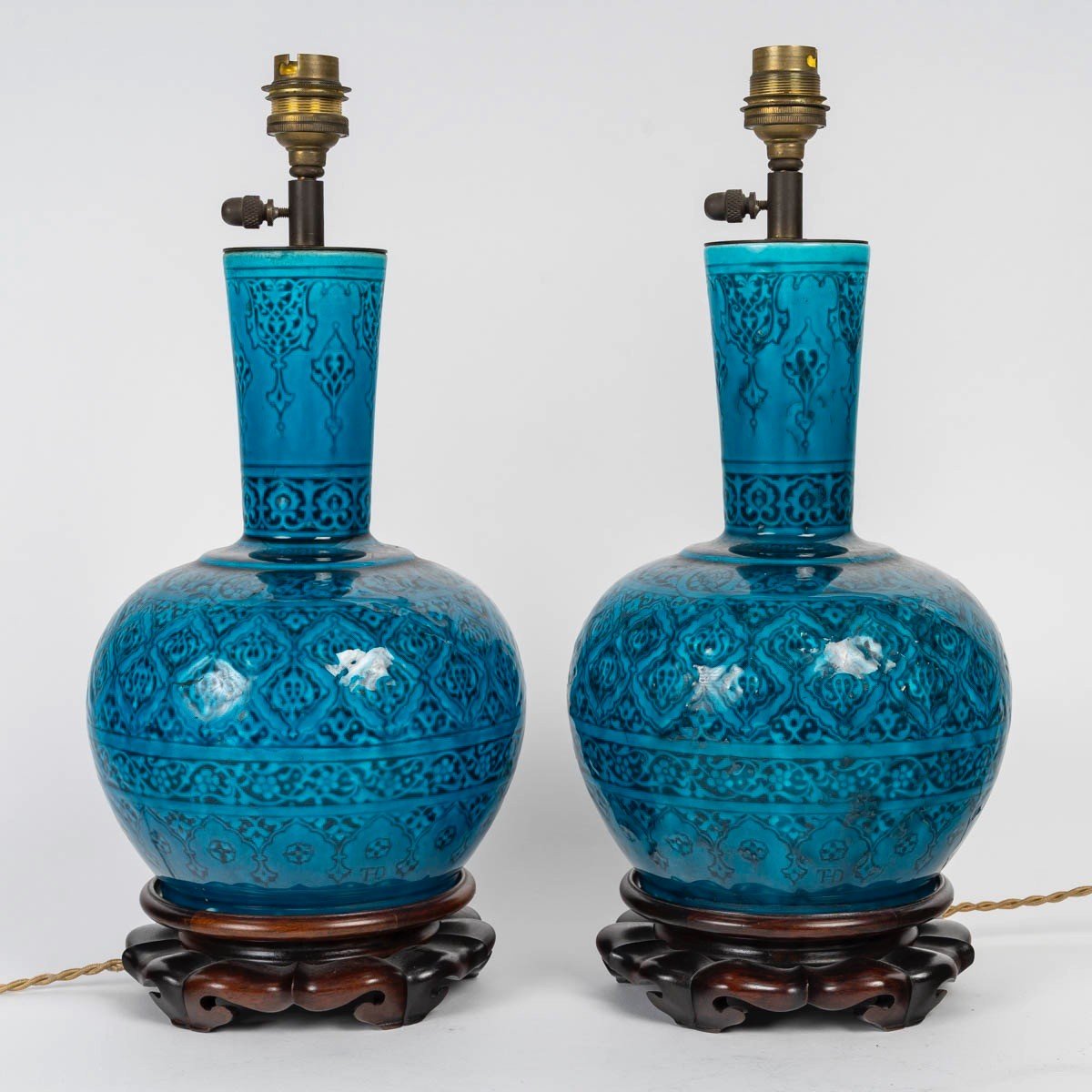
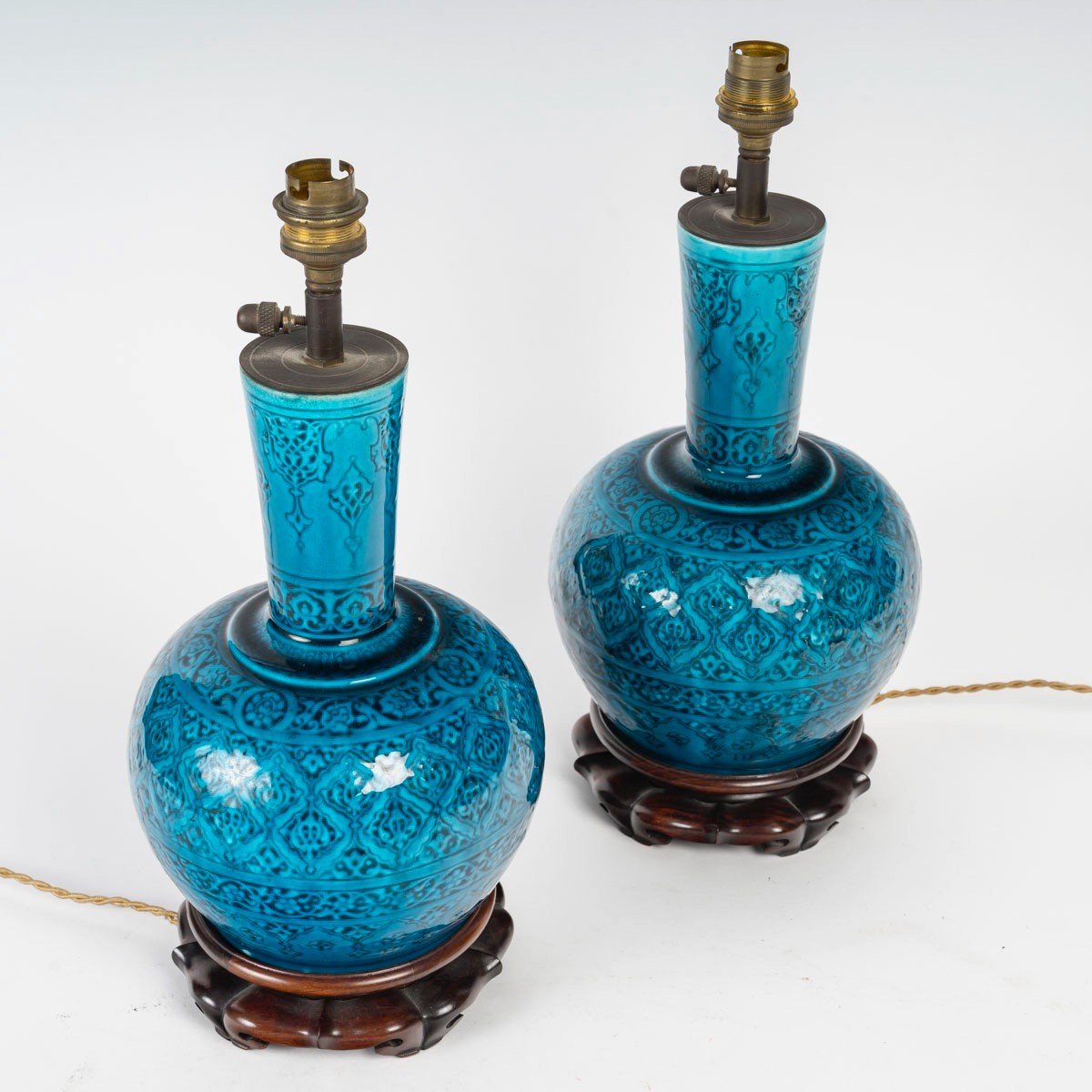
Pair of “Blue Deck” Lamps circa 1870
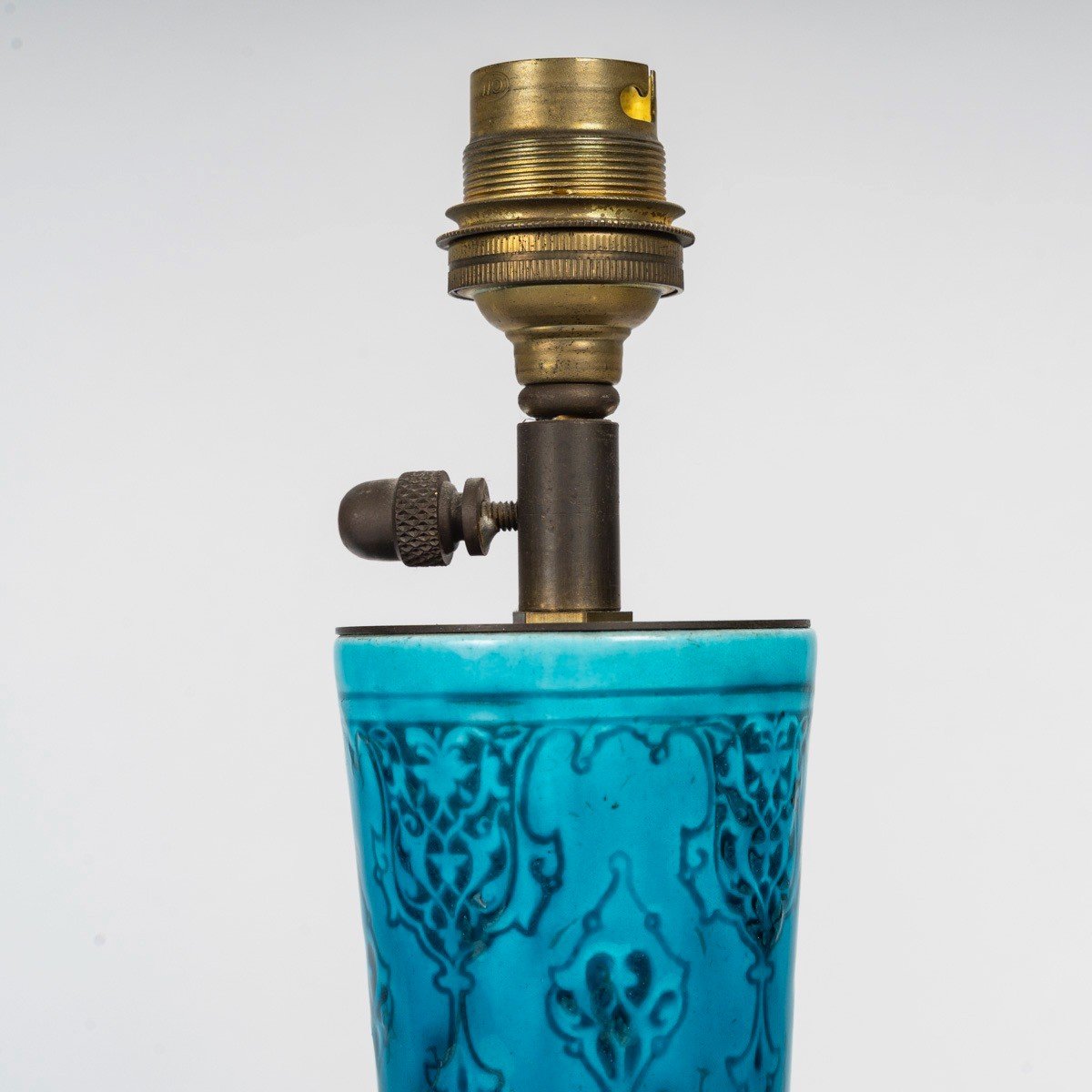
Pair of vases mounted in lamps
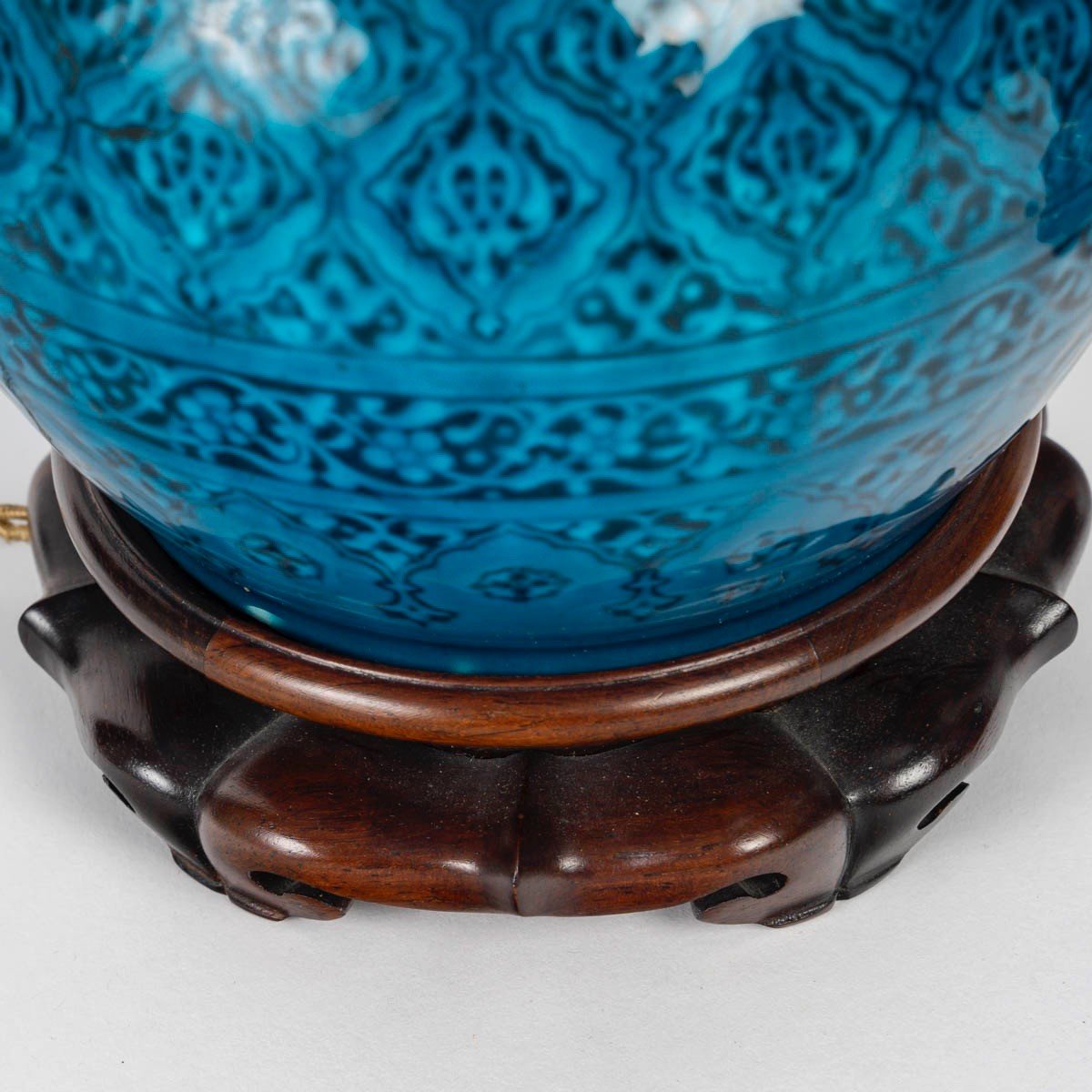
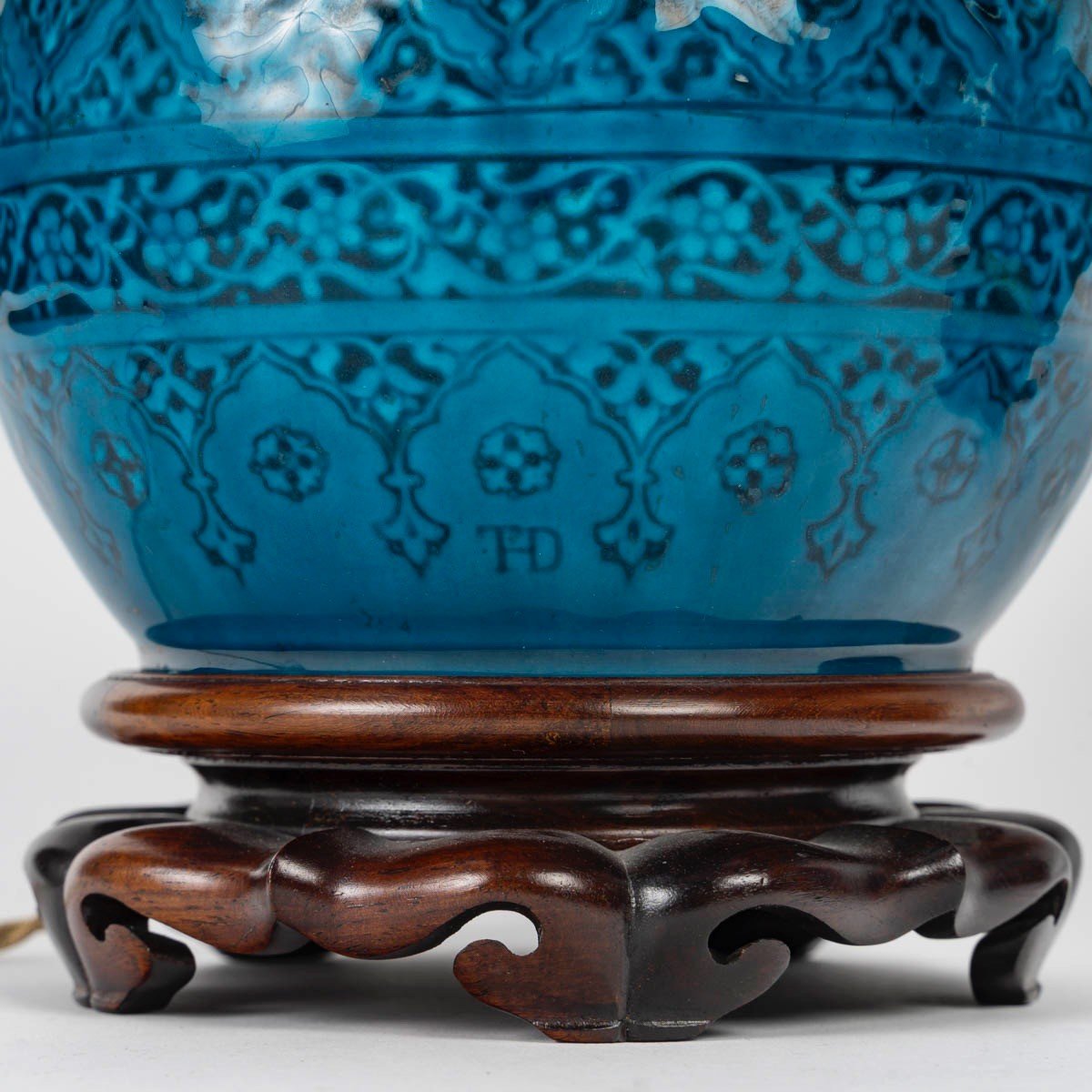
Oval body and flared right neck in turquoise “blue Deck-turquoise” enameled faience
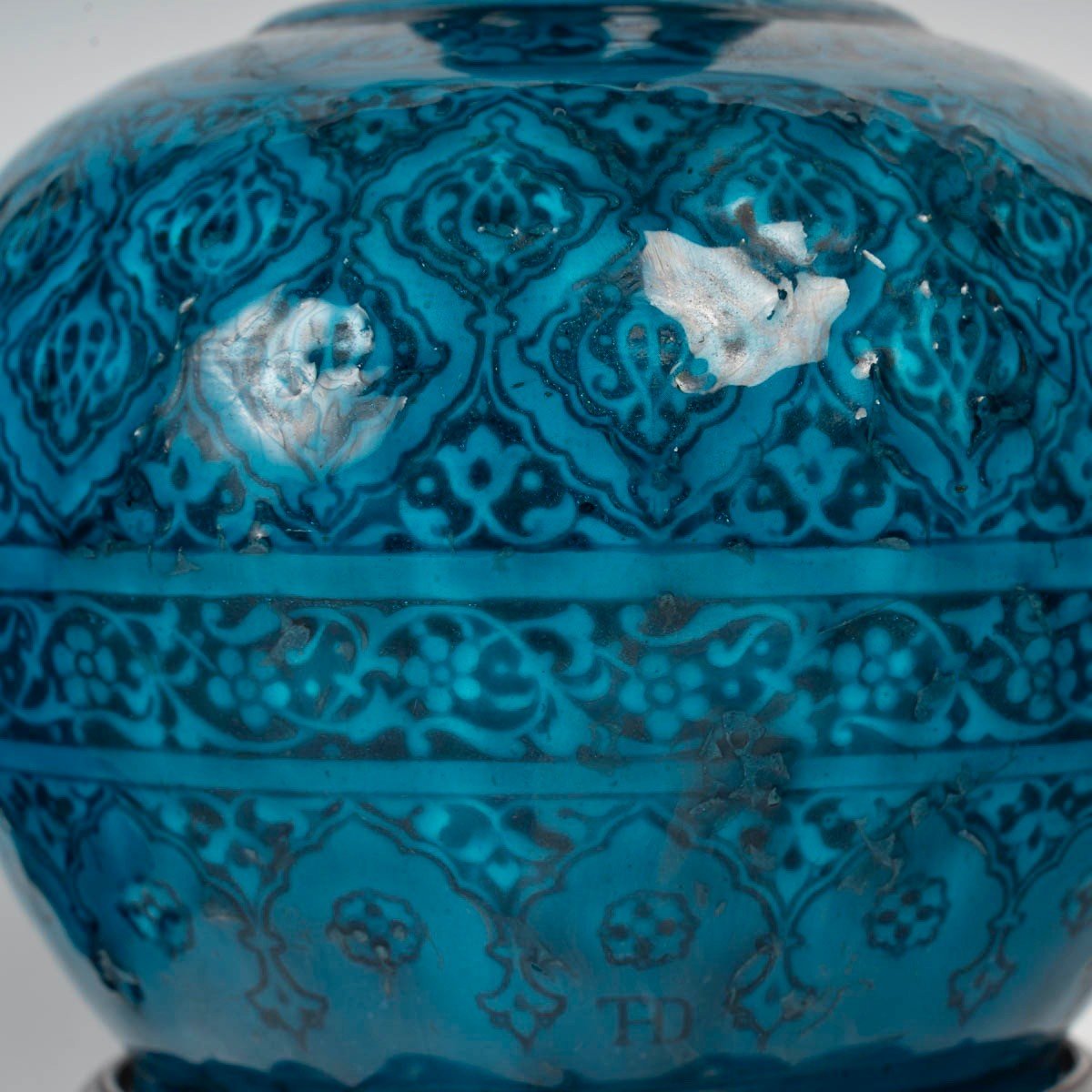
Oriental decor of floral motifs and stylized foliage
Archaic Asian Style Base.
Monogrammed THD on both vases bodies
Circa 1870-1875
Total High 35 cm
Renowned ceramist, Théodore Deck, born in Guebwiller in 1823, apprenticed in Strasbourg in the Hügelin pottery. After an initiatory stay throughout Europe, he arrived in Paris in 1847. It was in 1861 that he made his first public appearance at the Salon des Arts et de l'Industrie in Paris, where he won a silver medal for his exhibited works. Recognized since that time, Deck is deeply influenced by the artistic trend of the moment: Orientalism. He then uses with great precision the Oriental naturalistic motifs. Emile Reiber (1826-1893), who worked at Christofle as chief draughtsman, also made sketches for Deck. His fame won by long works is imposed at the Universal Exhibitions in which he participates: in Vienna in 1873, where he leaves all his rivals behind; in Paris in 1878, where he obtains the grand prize for portraits with a gold background. The "Gazette des Beaux-Arts" (Paris, 1874, Vol. XXXV, p. 310) reported that "Mr Deck, the master of the masters, is the purest glory of French ceramics." His life is a succession of achievements whose goal is to improve the technology of earthenware. Thus, it improves the rendering of colors, among which is a novelty, a turquoise blue commonly called «Deck Blue». Theodore Deck is talented and knows it. However, he does not keep his art to himself, he shares it with other artists and launches young talents without fortune. It illustrates the revival of ceramic art in the second half of the 19th century. All his methods are made public and disseminated in a book on earthenware. His recognized genius, promoted to the rank of Officer of the Legion of Honor, he was appointed in 1887 administrator of the manufacture of Sèvres.
Pair of “Blue Deck” Lamps circa 1870
Pair of vases mounted in lamps
Oval body and flared right neck in turquoise “blue Deck-turquoise” enameled faience
Oriental decor of floral motifs and stylized foliage
Archaic Asian Style Base.
Monogrammed THD on both vases bodies
Circa 1870-1875
Total High 35 cm
Renowned ceramist, Théodore Deck, born in Guebwiller in 1823, apprenticed in Strasbourg in the Hügelin pottery. After an initiatory stay throughout Europe, he arrived in Paris in 1847. It was in 1861 that he made his first public appearance at the Salon des Arts et de l'Industrie in Paris, where he won a silver medal for his exhibited works. Recognized since that time, Deck is deeply influenced by the artistic trend of the moment: Orientalism. He then uses with great precision the Oriental naturalistic motifs. Emile Reiber (1826-1893), who worked at Christofle as chief draughtsman, also made sketches for Deck. His fame won by long works is imposed at the Universal Exhibitions in which he participates: in Vienna in 1873, where he leaves all his rivals behind; in Paris in 1878, where he obtains the grand prize for portraits with a gold background. The "Gazette des Beaux-Arts" (Paris, 1874, Vol. XXXV, p. 310) reported that "Mr Deck, the master of the masters, is the purest glory of French ceramics." His life is a succession of achievements whose goal is to improve the technology of earthenware. Thus, it improves the rendering of colors, among which is a novelty, a turquoise blue commonly called «Deck Blue». Theodore Deck is talented and knows it. However, he does not keep his art to himself, he shares it with other artists and launches young talents without fortune. It illustrates the revival of ceramic art in the second half of the 19th century. All his methods are made public and disseminated in a book on earthenware. His recognized genius, promoted to the rank of Officer of the Legion of Honor, he was appointed in 1887 administrator of the manufacture of Sèvres.
Explore similar pieces and discover your ideal find:
other ceramics