

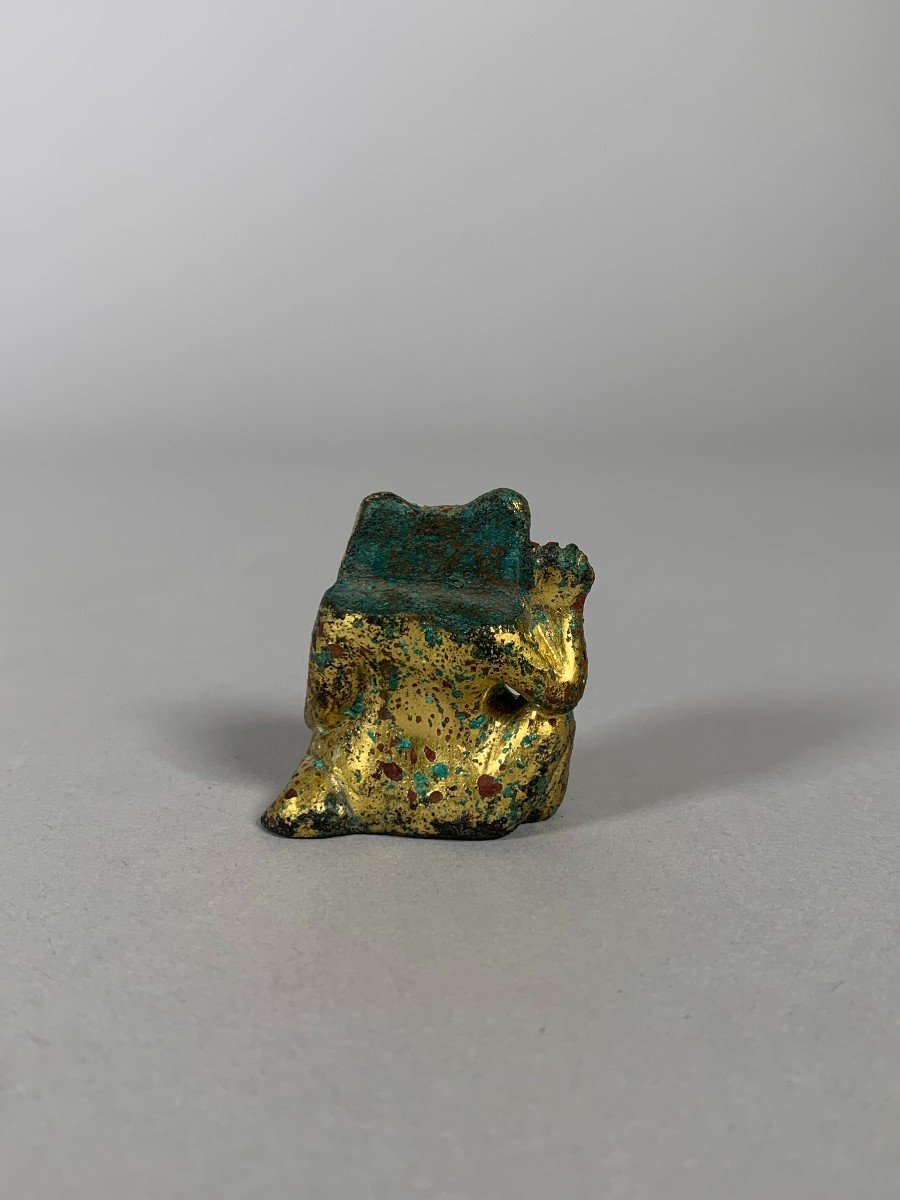
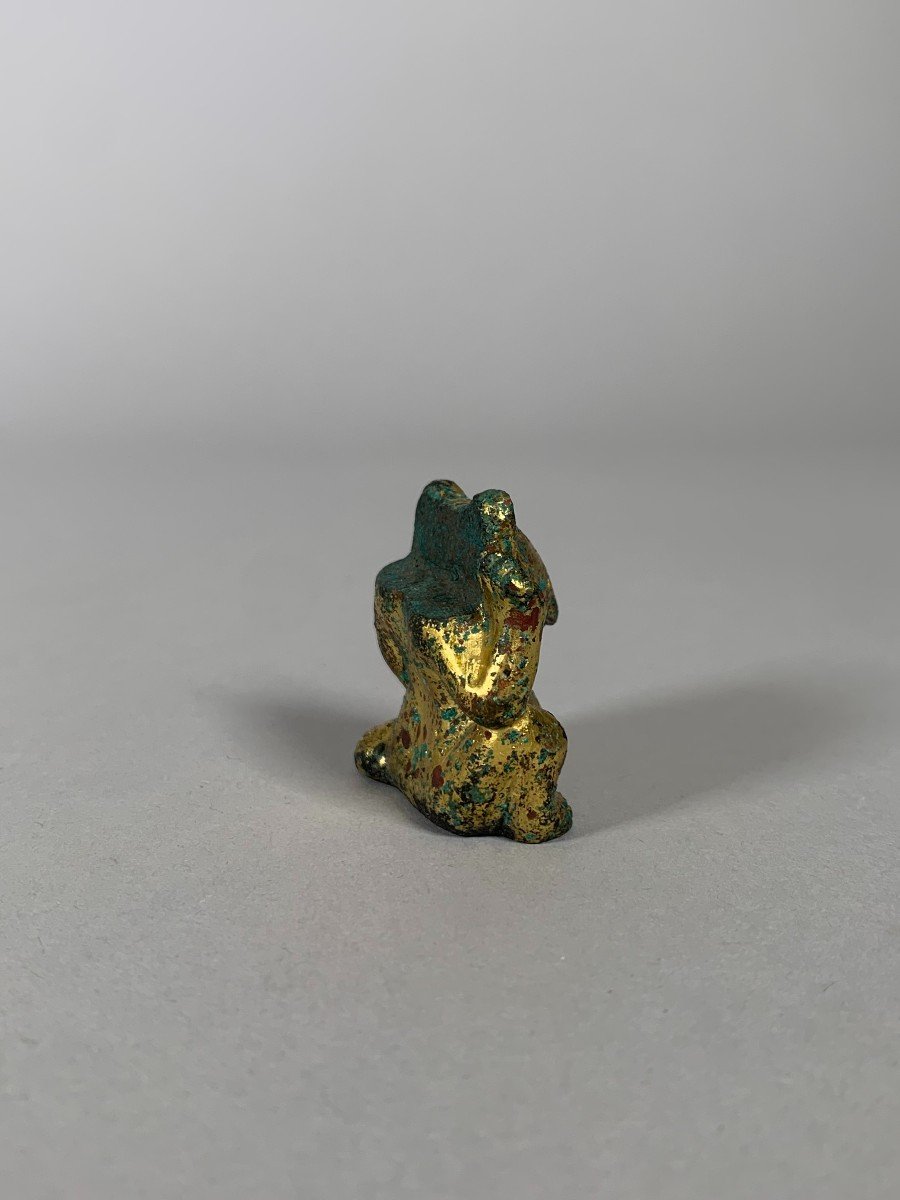

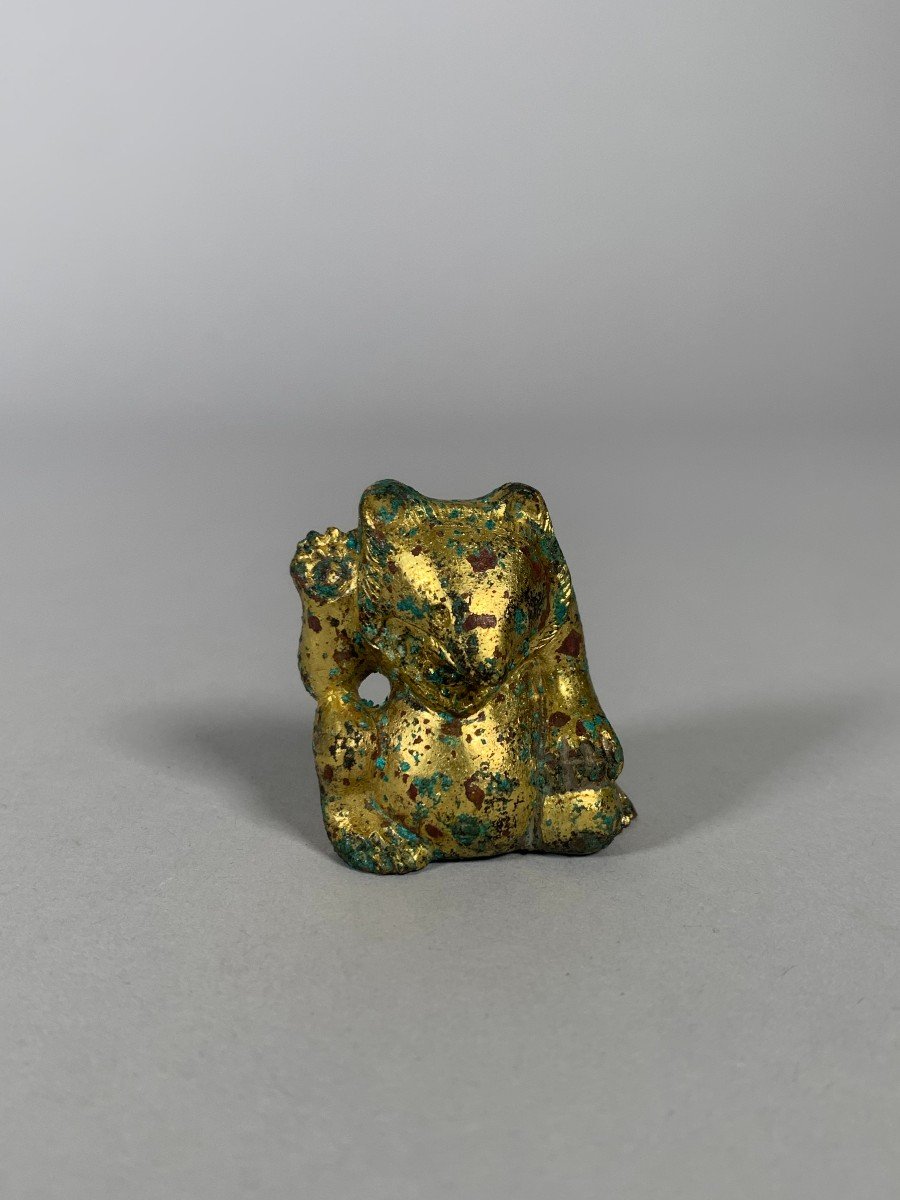


Ornamental Bronze Sculpture Han Dynasty 206 Bc-220 Ac Gilded Bronze Bear Archeology China
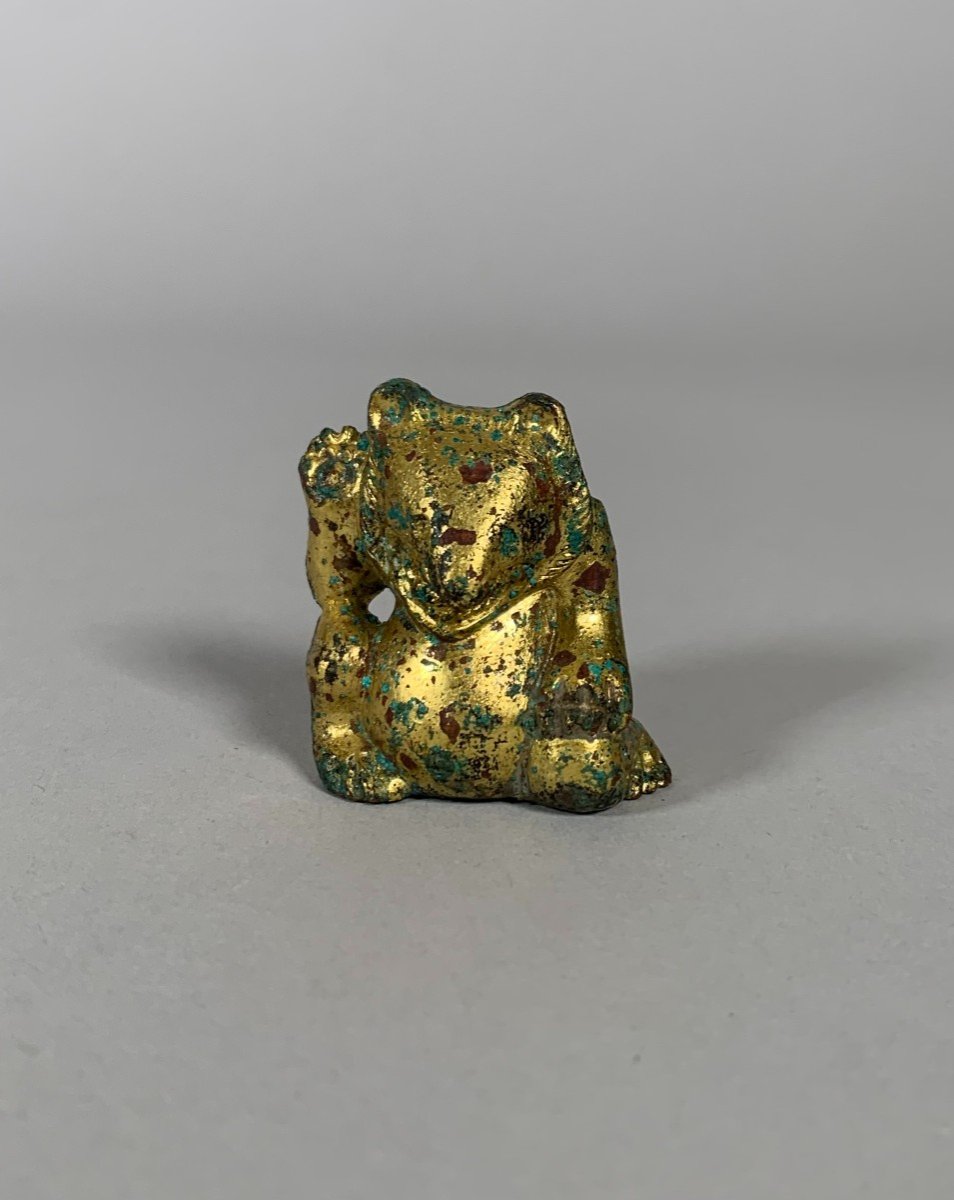
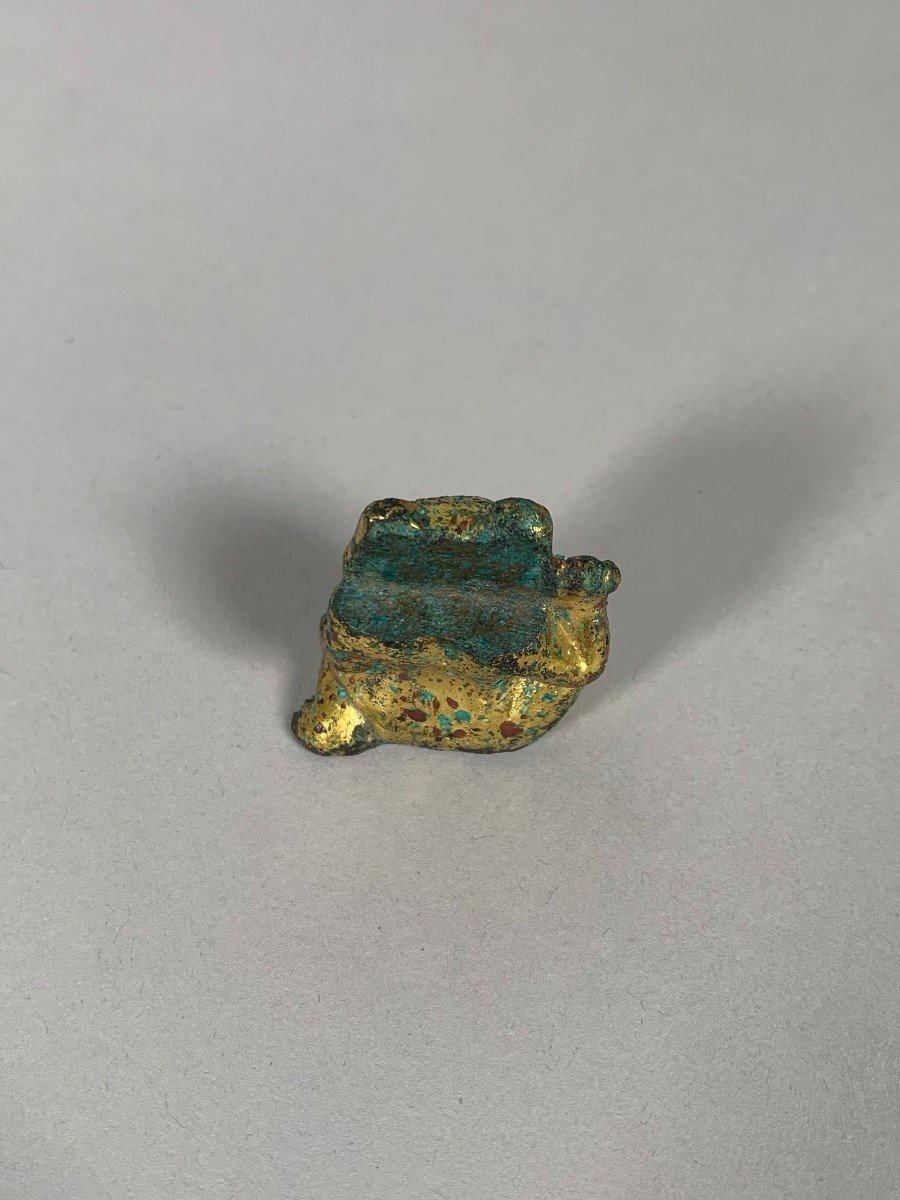
Exceptional ornamental bronze sculpture HAN dynasty 206 BC-220 AC Represents a bear in gilded bronze Hollow cast iron, entirely in the round, and finely executed, in the shape of a bear crouching on its knees, its clawed paws resting on the knee right and left paw raised, head tilted to the left with jaws open, lips pulled back in a fierce display of well-articulated teeth, tongue sticking out of the mouth. , eyes wide, the body delicately incised to illustrate the thick fur of the beast. Associated with immortality, the figure of the bear is a characteristic element of the decorative vocabulary used in funerary furniture from the Han period. The appearance of this pattern corresponds to the reign of Emperor Han Wudi (140-87 BC). From this time, this animal motif is attached to the support function, as evidenced by the famous tripod cauldron with bear-shaped feet found in the tomb of Prince Liu Sheng discovered in Mancheng in 1968. We know that, under In the Han Dynasty, animal-shaped tubular fittings, like this one, were used as legs for the legs of small furniture and containers. This particular example stands out among similar props for the way the craftsmen managed to capture the proportions of the ferocious beast's body, the articulation of the arms and claws. This accessory is a fine example of the central place of naturalistic animal forms in Han visual culture, where representations of bears, symbols of strength, enjoyed such popularity that it was never equaled in subsequent eras. Beyond gilded bronze accessories, bears are also seen in Han art as built-in supports for bronze, lacquer, and ceramic vessels, as sculptural cast bronze mat weights, in cast ceramic tiles, in textiles and as carved figures in jade and hard stone. The gilding is very well preserved Dimensions 4 x 4 x 2 cm Comes from a private French collection Under the base, a collection number is written in pen (easily erasable)
see comparable models https://www.bonhams.com/auction/26224/lot/303/two-gilt-bronze-bear-form-supports-han-dynasty-2/#! https://www.bonhams.com/auction/22950/lot/2004/a-gilt-bronze-support-fitting-han-dynasty/ https://www.christies.com/en/lot/lot-3045609 https://www.christies.com/en/lot/lot-3045609 ://www.christies.com/en/lot/lot-6487706
see comparable models https://www.bonhams.com/auction/26224/lot/303/two-gilt-bronze-bear-form-supports-han-dynasty-2/#! https://www.bonhams.com/auction/22950/lot/2004/a-gilt-bronze-support-fitting-han-dynasty/ https://www.christies.com/en/lot/lot-3045609 https://www.christies.com/en/lot/lot-3045609 ://www.christies.com/en/lot/lot-6487706
3 000 €
Period: Before 16th century
Style: Asian art
Condition: Excellent condition
Material: Bronze
Reference (ID): 1383566
Availability: In stock
Print