THIS OBJECT WAS SOLD
Dionysiac Cantharus From The Trésor De Bernay

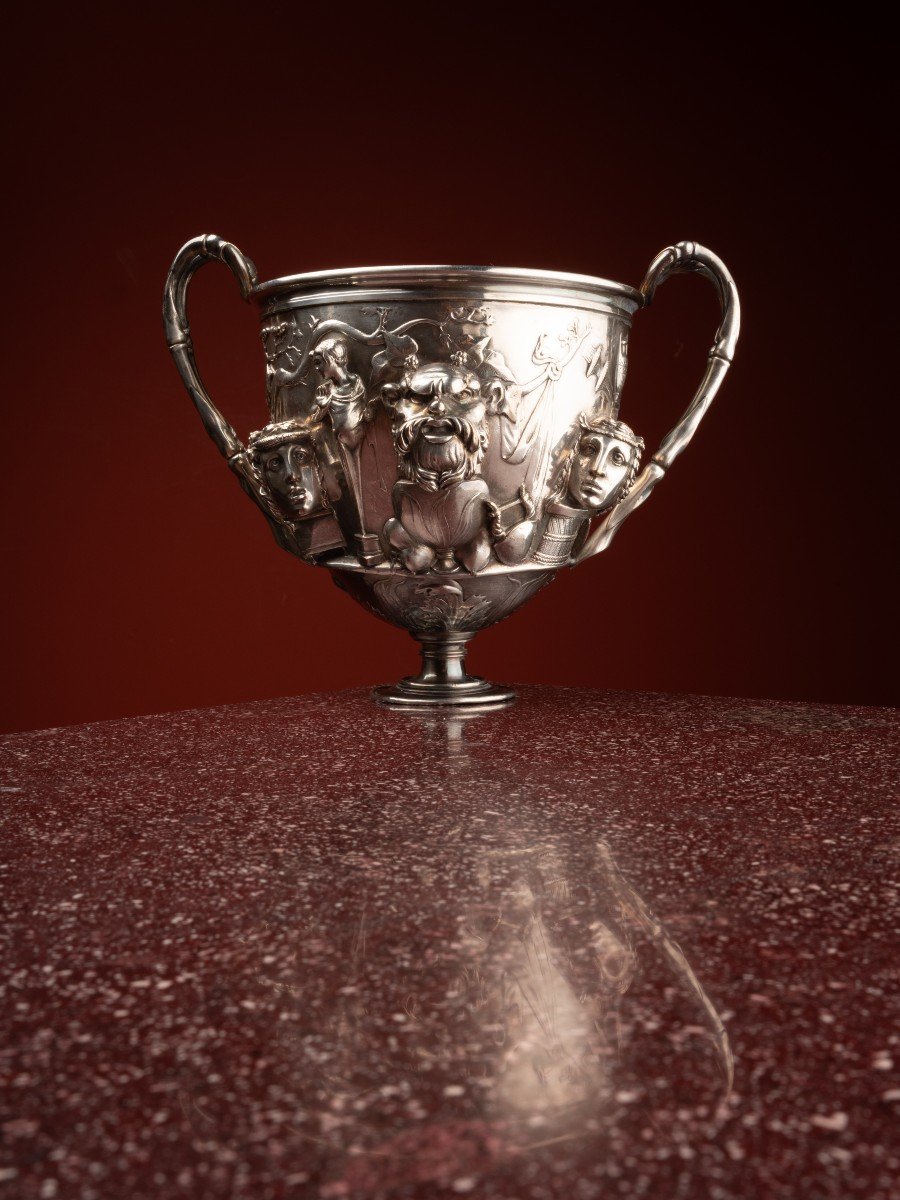


Bacchic or Dionysiac Cantharus from the Trésor de Bernay.
Silver-plated metal.
France.
1850.
h. 5,9 in. ; d. 7,6 in.
On 21 March 1830, Prosper Taurin, a farmer from Le Villeret [in Normandy], ploughed for the first time a field he had just bought, 300 meters south of his house, and which is shown in the Berthouville land register as No. 17, section F. He noticed, not without some frustration, that the arable soil was strewn with small debris of tiles, stucco, shards and even worked stones, when suddenly his plough hit violently an underlying obstacle. [...] These were intact or mutilated vases, handles and feet loosened, shapeless and soiled debris of clay, made of a blackish, shiny and fragile metal, which, on examination, appeared to be decidedly silver.
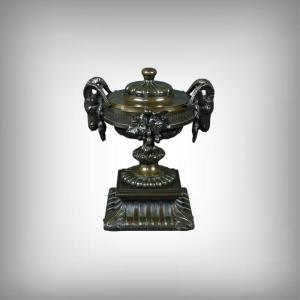
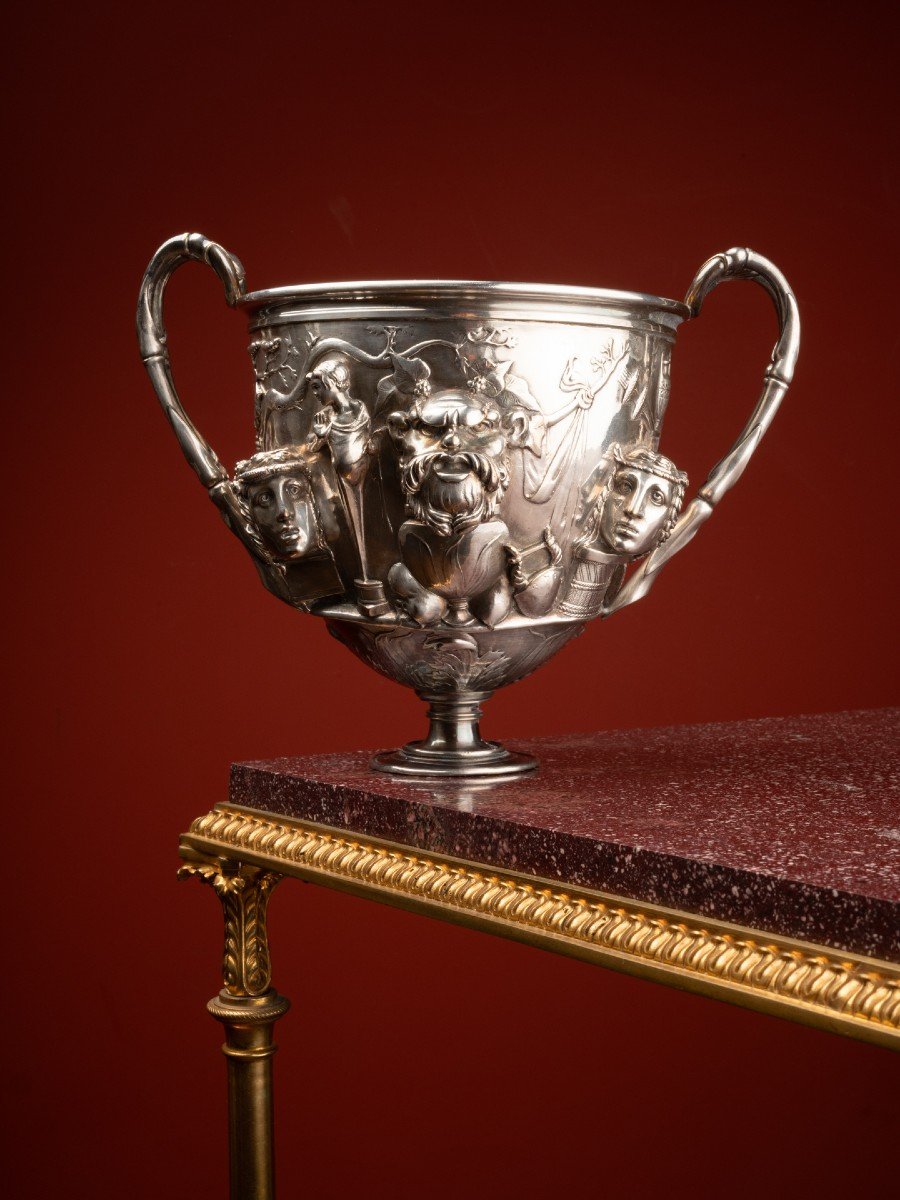
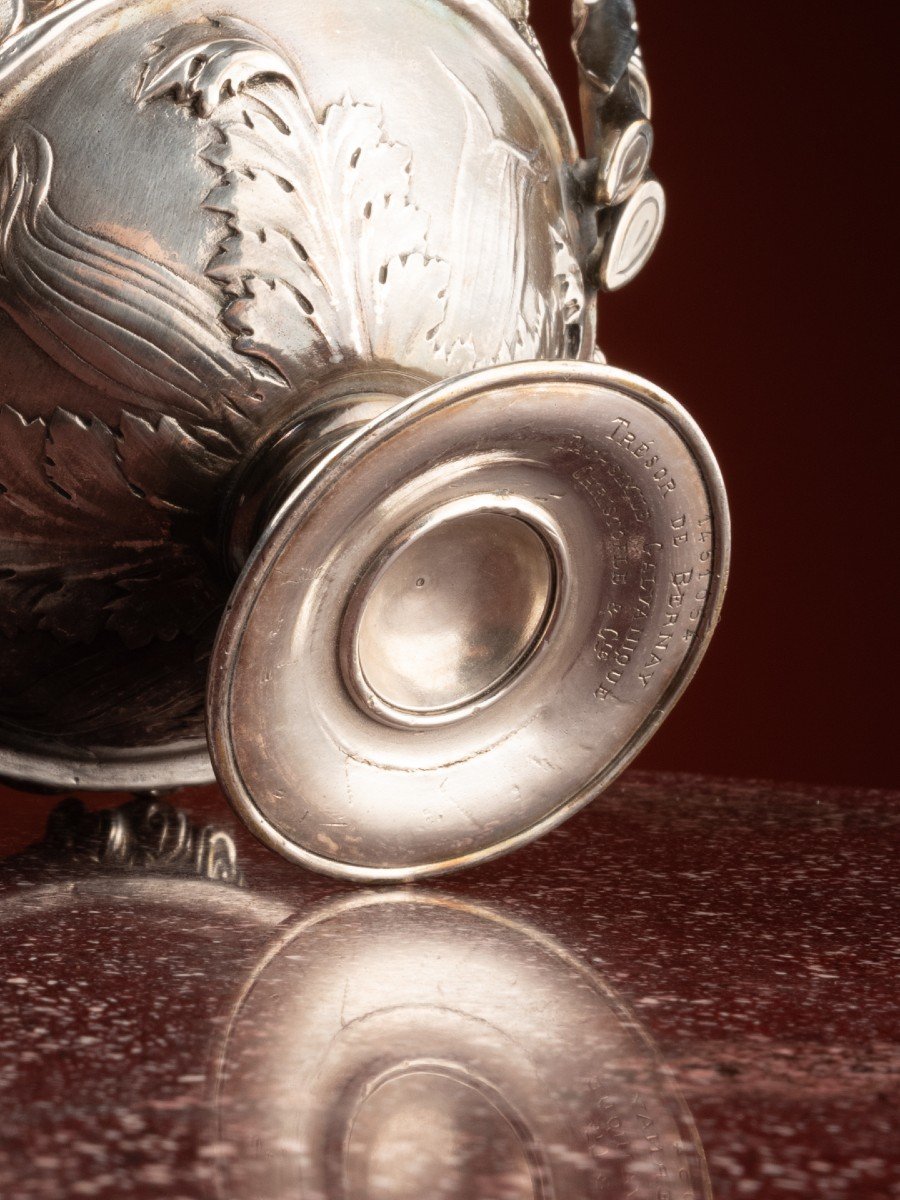
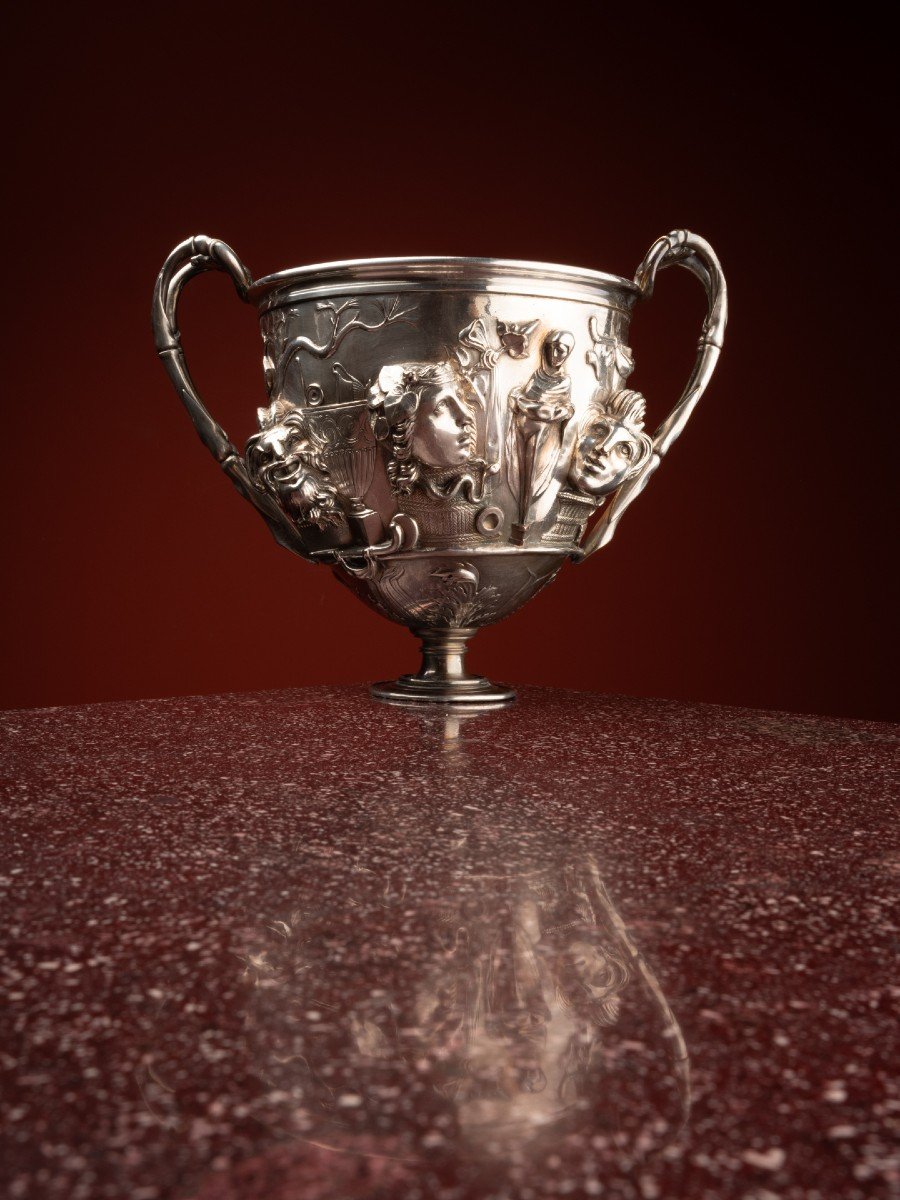
This cantharus, named after his bacchic “Masks", is a galvanoplastic facsimile conceived by Christofle & Cie in 1850, based on one of the precious objects in the Trésor de Bernay, discovered in 1830 near Berthouville. Canthara were drinking vessels, those Eratosthenes said were the most beautiful of all vases and the most convenient for drinking.
Above a bas-relief of foliage, this cantharus decorated with foliage, masks of satyrs, bacchantes, young and old, hermaphrodite priapes arranged symmetrically, among vases, a thyrsus, pedum, cymbalum, baskets, pampers, and other bacchic objects, all under the branches of a dried yew tree and a dried oak.
Some of the objects of the Trésor seem to have been made locally, probably for the sanctuary dedicated to Mercury under which they were buried in the 3rd century. Others were of Roman origin, sometimes passed through heirloom and then donated by Roman elites locted in Gaul, including a certain Quintus Domitius Tutus, to whom the original of this cantharus belonged, as we know from an inscription revealed in 1916.
As the series of the Trésor de Bernay largely predates Ernest Babelon's publication of the dedication to Quintus Domitius Tutus, traced with a dotted line below the lip of the vase, the latter is not visible here. The mutilated parts on the original, kept in the Cabinet des Médailles of the Banque National de France, are corrected on the edition by Christofle.
Sources
Edmond Pottier, in Dictionnaire des Antiquités grecques et romaines, Paris, 1887.
Henry Havard, Histoire de l’orfèvrerie française, Paris, 1896.
Ernest Babelon, Le Trésor d’argenterie de Berthouville, près Bernay, Paris, 1916.
Kenneth Lapatin (ed.), The Berthouville Silver Treasure and Roman Luxury, Los Angeles, 2014.
Silver-plated metal.
France.
1850.
h. 5,9 in. ; d. 7,6 in.
On 21 March 1830, Prosper Taurin, a farmer from Le Villeret [in Normandy], ploughed for the first time a field he had just bought, 300 meters south of his house, and which is shown in the Berthouville land register as No. 17, section F. He noticed, not without some frustration, that the arable soil was strewn with small debris of tiles, stucco, shards and even worked stones, when suddenly his plough hit violently an underlying obstacle. [...] These were intact or mutilated vases, handles and feet loosened, shapeless and soiled debris of clay, made of a blackish, shiny and fragile metal, which, on examination, appeared to be decidedly silver.
This cantharus, named after his bacchic “Masks", is a galvanoplastic facsimile conceived by Christofle & Cie in 1850, based on one of the precious objects in the Trésor de Bernay, discovered in 1830 near Berthouville. Canthara were drinking vessels, those Eratosthenes said were the most beautiful of all vases and the most convenient for drinking.
Above a bas-relief of foliage, this cantharus decorated with foliage, masks of satyrs, bacchantes, young and old, hermaphrodite priapes arranged symmetrically, among vases, a thyrsus, pedum, cymbalum, baskets, pampers, and other bacchic objects, all under the branches of a dried yew tree and a dried oak.
Some of the objects of the Trésor seem to have been made locally, probably for the sanctuary dedicated to Mercury under which they were buried in the 3rd century. Others were of Roman origin, sometimes passed through heirloom and then donated by Roman elites locted in Gaul, including a certain Quintus Domitius Tutus, to whom the original of this cantharus belonged, as we know from an inscription revealed in 1916.
As the series of the Trésor de Bernay largely predates Ernest Babelon's publication of the dedication to Quintus Domitius Tutus, traced with a dotted line below the lip of the vase, the latter is not visible here. The mutilated parts on the original, kept in the Cabinet des Médailles of the Banque National de France, are corrected on the edition by Christofle.
Sources
Edmond Pottier, in Dictionnaire des Antiquités grecques et romaines, Paris, 1887.
Henry Havard, Histoire de l’orfèvrerie française, Paris, 1896.
Ernest Babelon, Le Trésor d’argenterie de Berthouville, près Bernay, Paris, 1916.
Kenneth Lapatin (ed.), The Berthouville Silver Treasure and Roman Luxury, Los Angeles, 2014.
Explore similar pieces and discover your ideal find:
Footed Bowls, Urns, Cassolettes