THIS OBJECT WAS SOLD
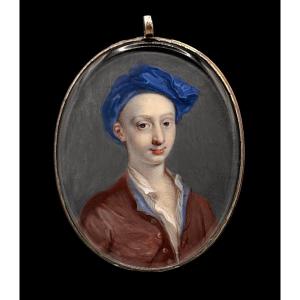
Oil On Panel From The 17th Century Portrait Of A Young Man C.1670
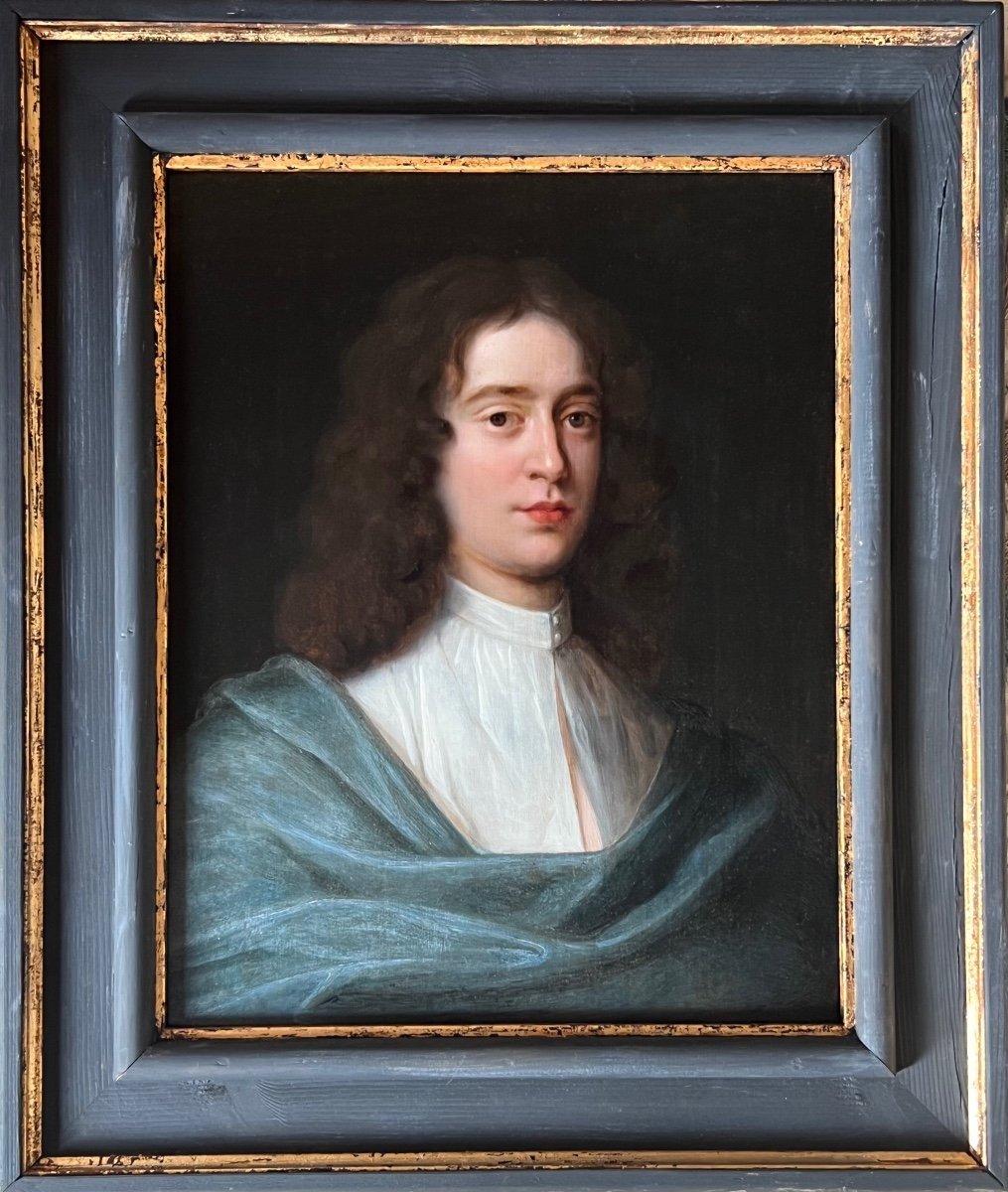
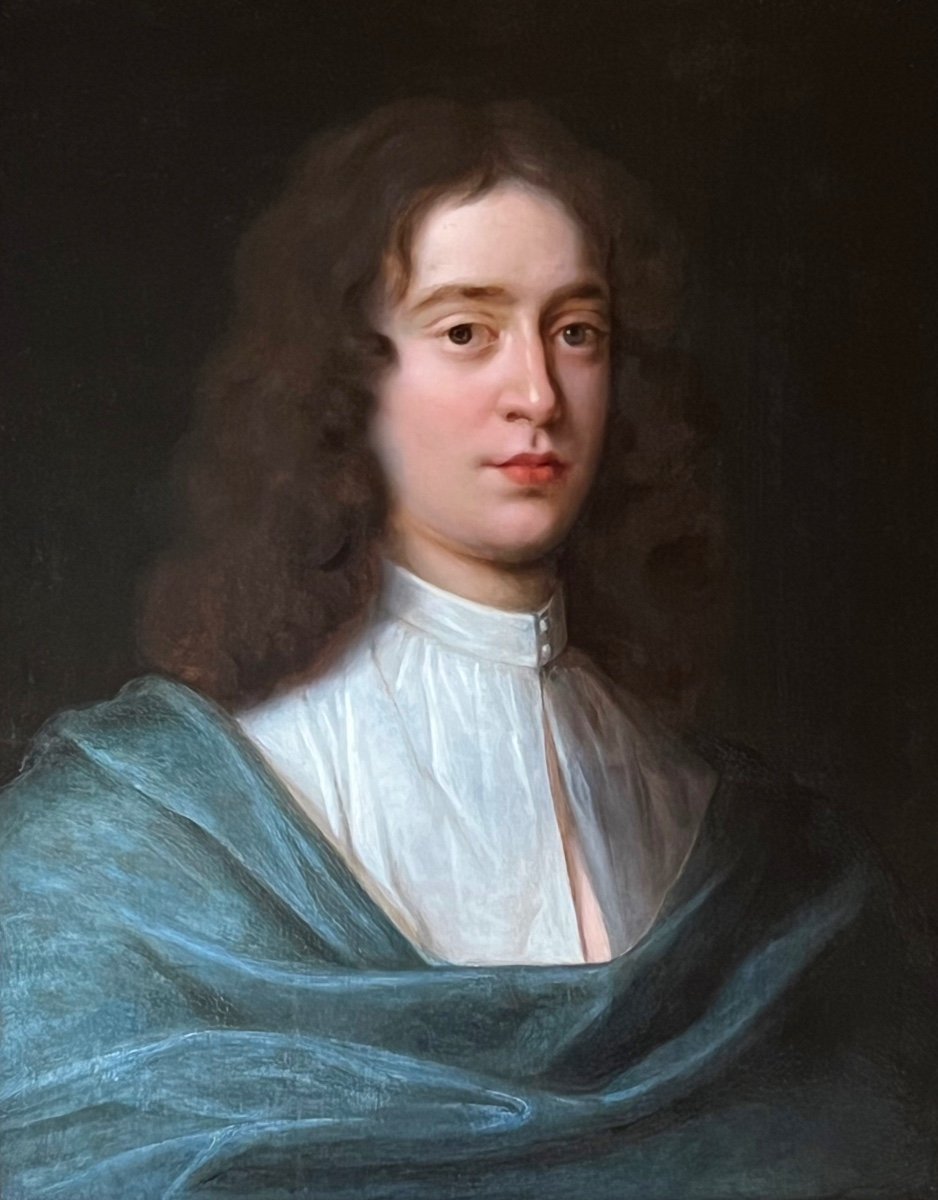
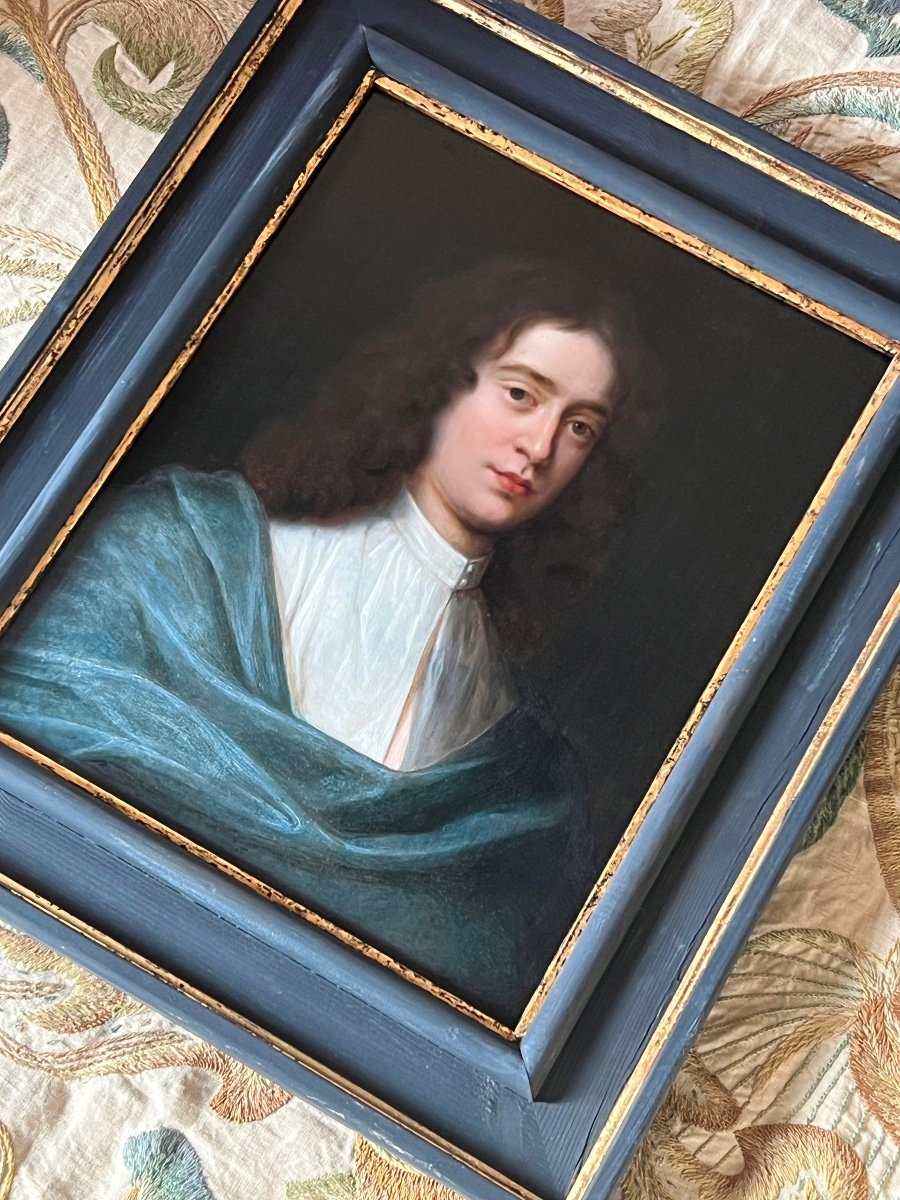
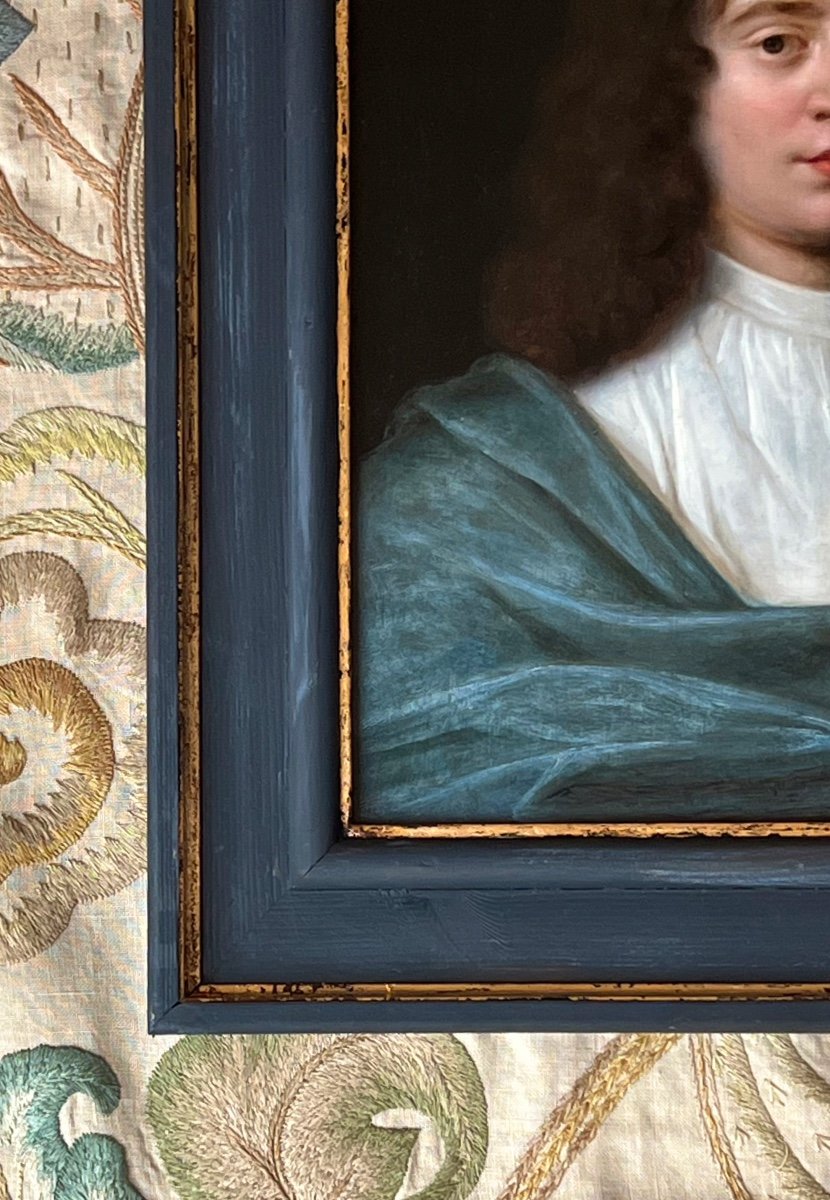
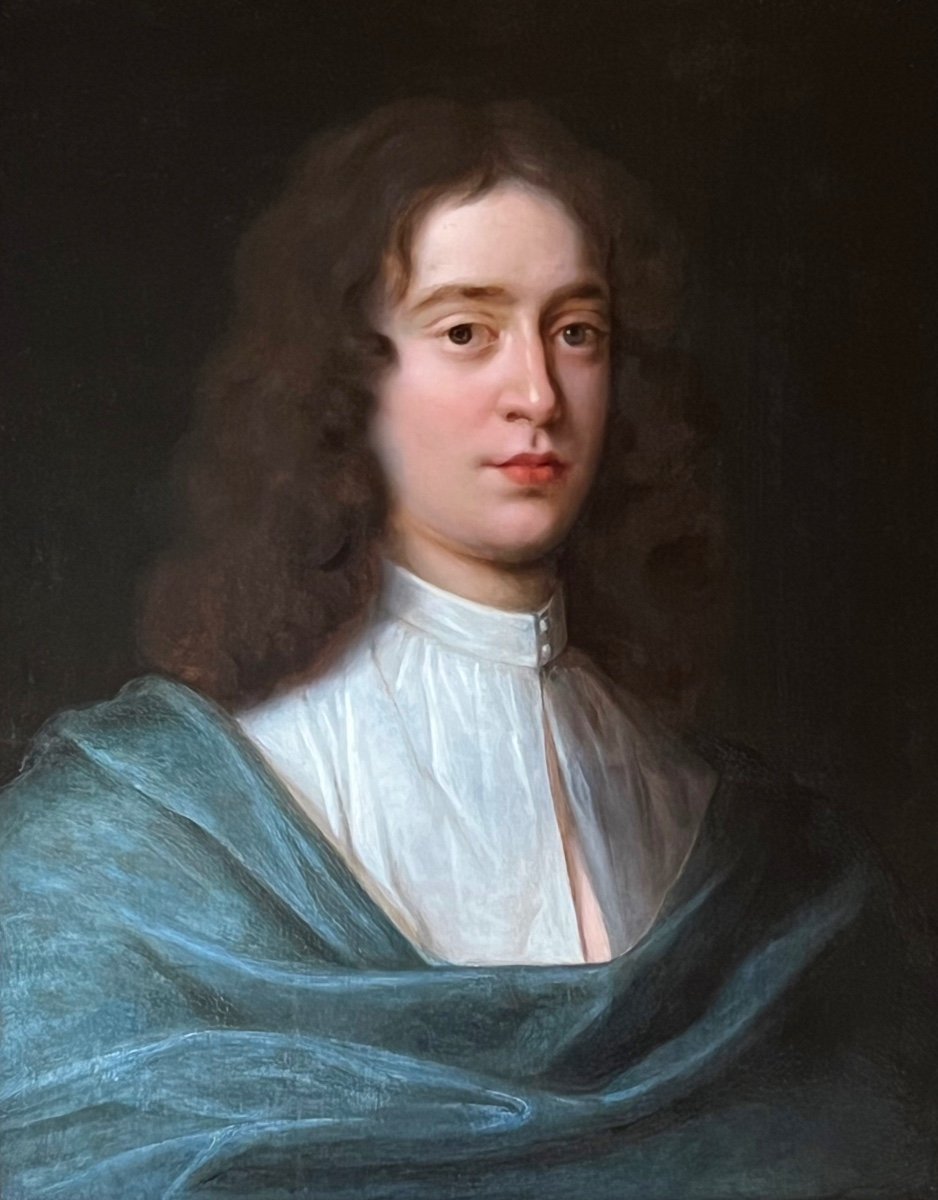
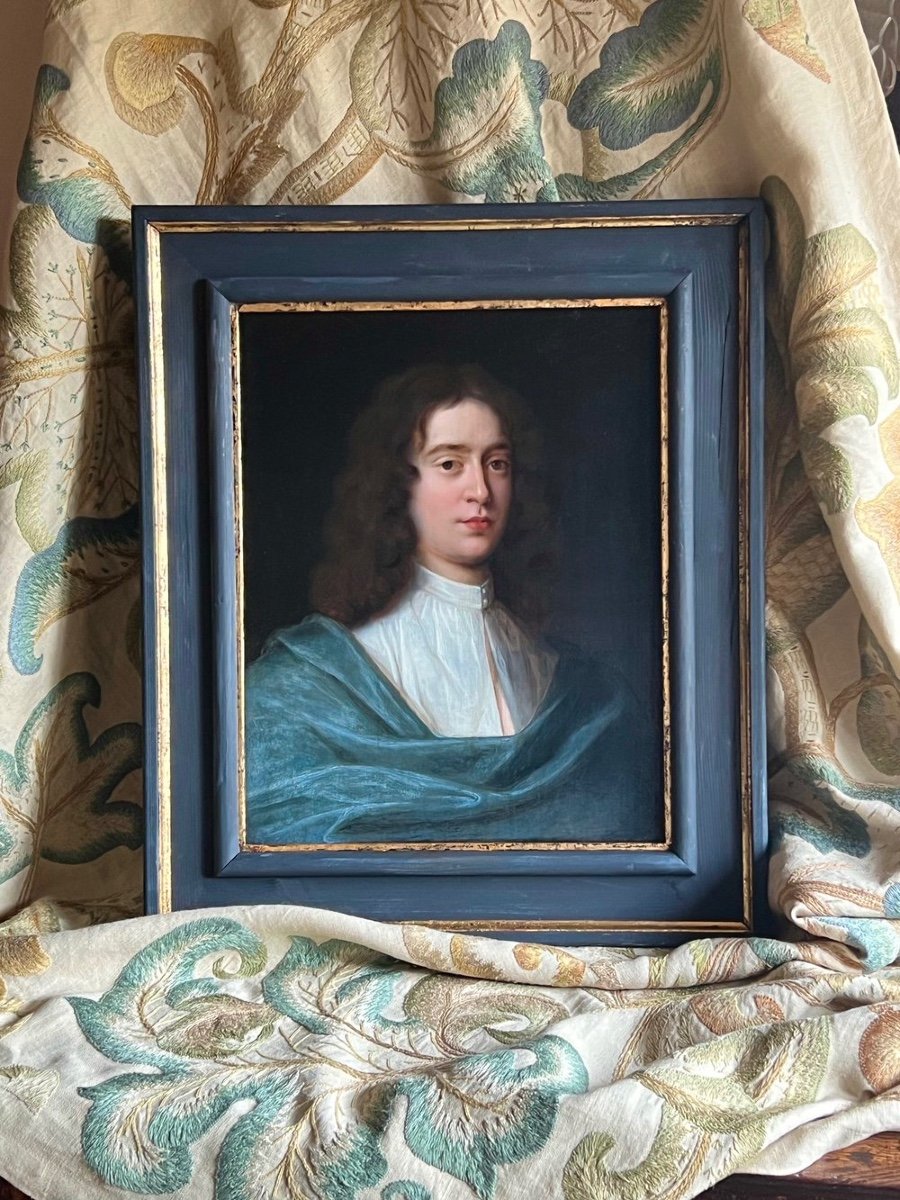


Fine and intimate oil on panel portrait of a young gentleman circa 1670 Attributed to Théodore Rousel With his smooth skin and wide eyes, this striking subject presents the masculine ideal of beauty associated with the second half of the 17th century. He has heavy oval eyes and cupid's arched lips as well as the slightly heavy jaw are seen in both male and female portraits of this era. The elegant model is shown at mid-length wearing a white linen shirt and blue silk coat with her curly brown hair falling naturalistically around her shoulders. Linen came in several degrees of fineness and was worn close to one's skin to provide a washable layer. It was customary to want to flaunt its snow-whiteness – and the expensive, labor-intensive process that kept it freshly laundered and clean. It is the interplay between the rich silk and satin garments and the linen underneath that creates such a pleasing contrast of texture and color in this portrait. It was fashionable in the second half of the 17th century to depict men in "little robes" (in a kind of dressing gown called a "banyan"), but it is very unusual to see a man depicted in just his shirt, like this. would have been considered underwear. The telltale flash of white flesh on the front of the model's chest further confirms that he is deliciously "undressed." This fine, jewel-like work is clearly an intimate piece that was made for a close companion (it may even be a smaller riccordo/momento of a larger work). Like us, they would have appreciated the sense of dressing/undressing and draping that this work gives. portrait the semi-timeless air popularized by the paintings of Van Dyck and his great admirer Lely. THÉODORE ROUSEL (1614-1689) Alias: Théodore Rousel; Théodore Rousseel; Théodore Roussel; Theodore Russell. Born in London, his father, Nicasius, was a goldsmith and jeweler, who left Bruges for England around 1573 and settled in St. Anne's Parish, Blackfriars, London; his second wife, Theodore's mother, was the sister of Cornelis Jonson van Ceulen. The Russells were related to the Gheeraerts, de Critz and Oliver families. Theodore's son Anthony Russell, who provided George Vertue with information on 17th-century artists, said that Theodore had studied under Jonson and van Dyck, had been employed by patrons such as the 3rd Earl of Essex and the 1st Earl of Holland, and “was a lover of ease and his bottle. Provenance: New England private collection. Label on verso indicating that the painting was sold at the Stowe House sale and designating the sitter as the 2nd Duke of Buckingham. I am very grateful to Jacqui Ansell, Senior Lecturer at Christie's Education for the detailed information and analysis she provided on fashion and costume. Higher resolution images on request. Worldwide shipping available. Board: 14.5" x 12" / 40 cm x 30 cm. Framed: 20.75" x 17.75" / 53 cm x 45 cm
Explore similar pieces and discover your ideal find:
Portraits