THIS OBJECT WAS SOLD
19th Century French Japonisme Gilt Bronze And Enamel Centrepiece, Barbedienne And Thesmar
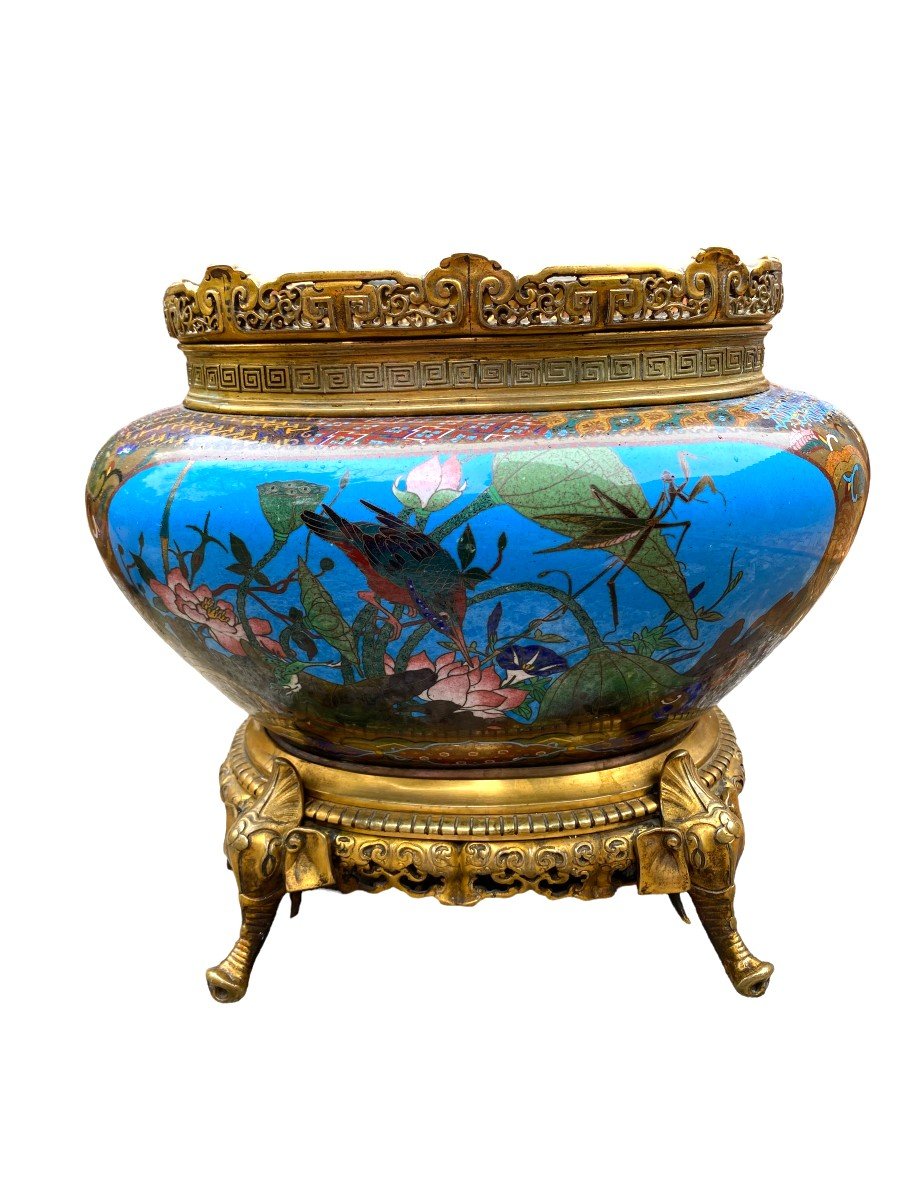
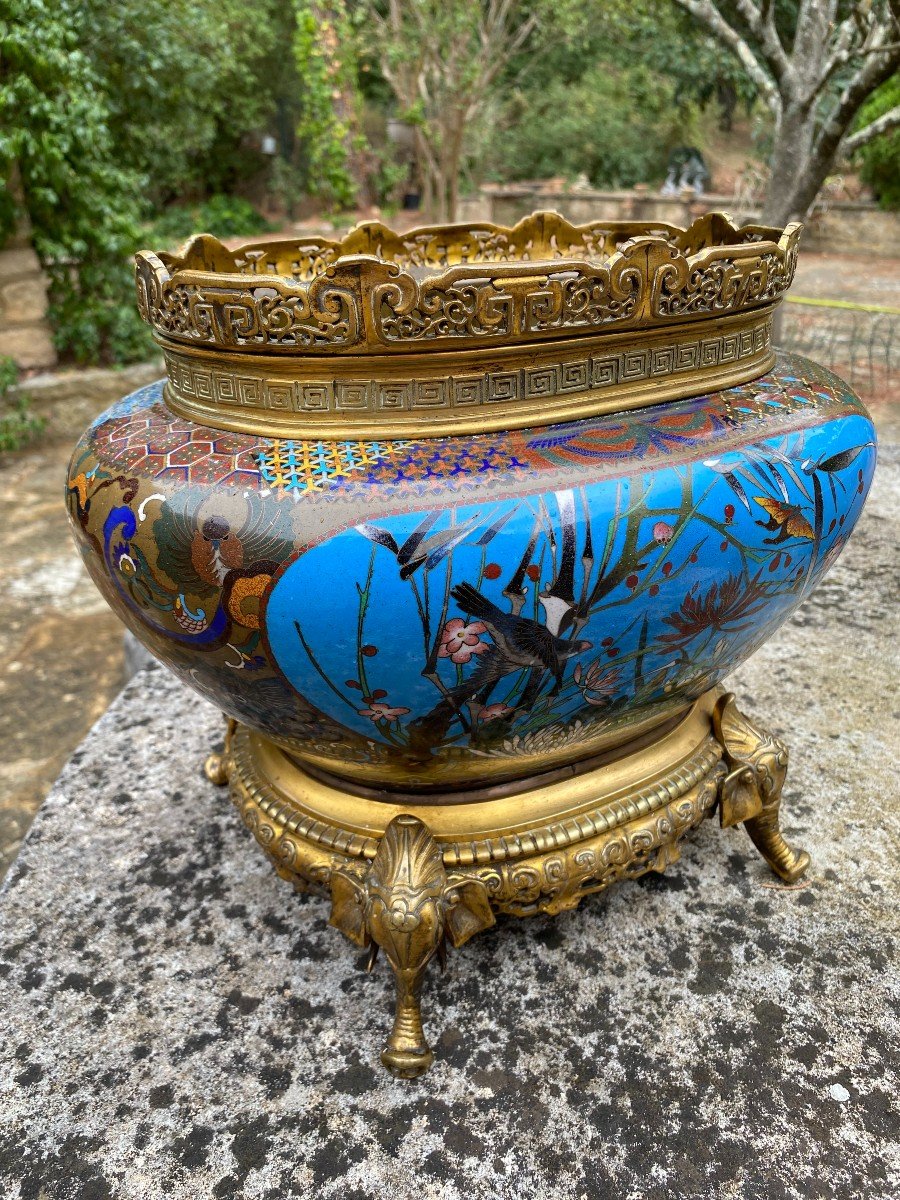

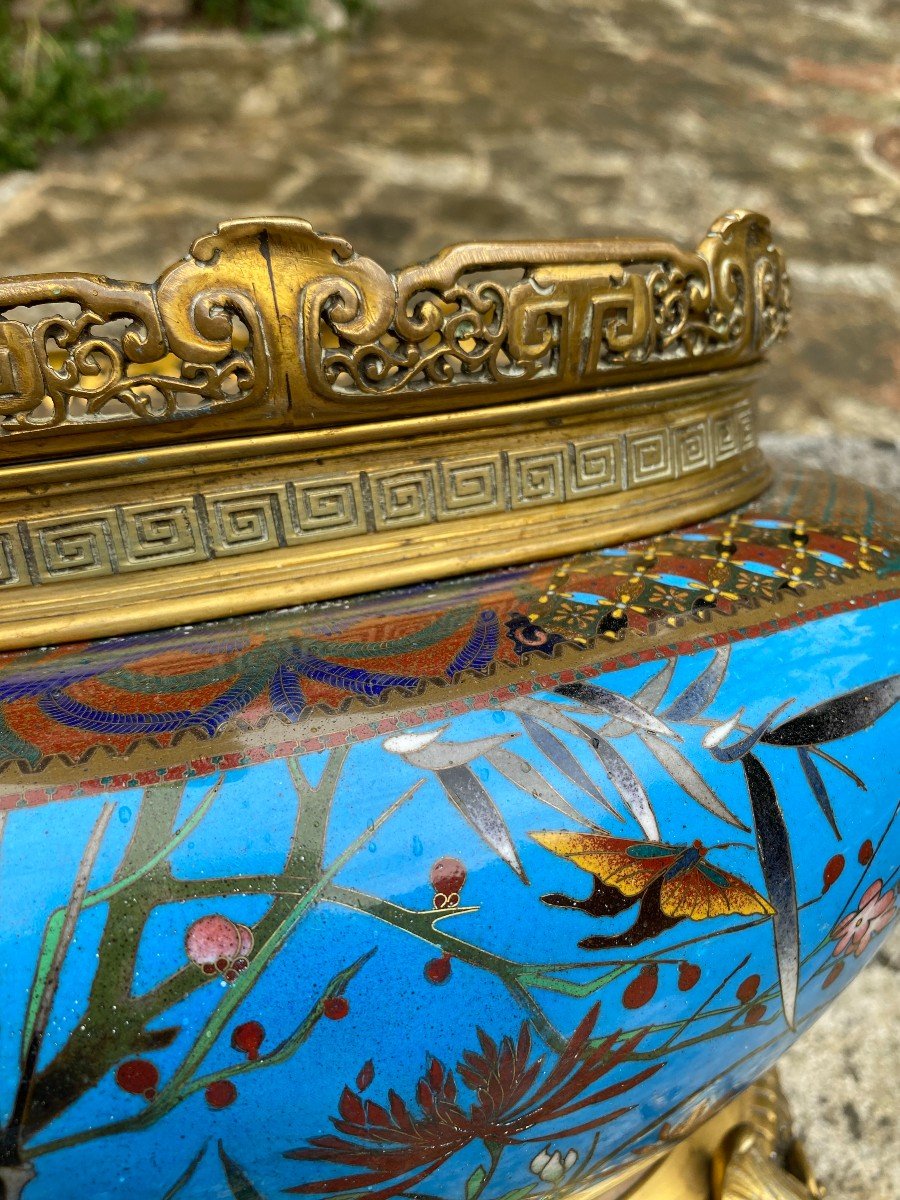
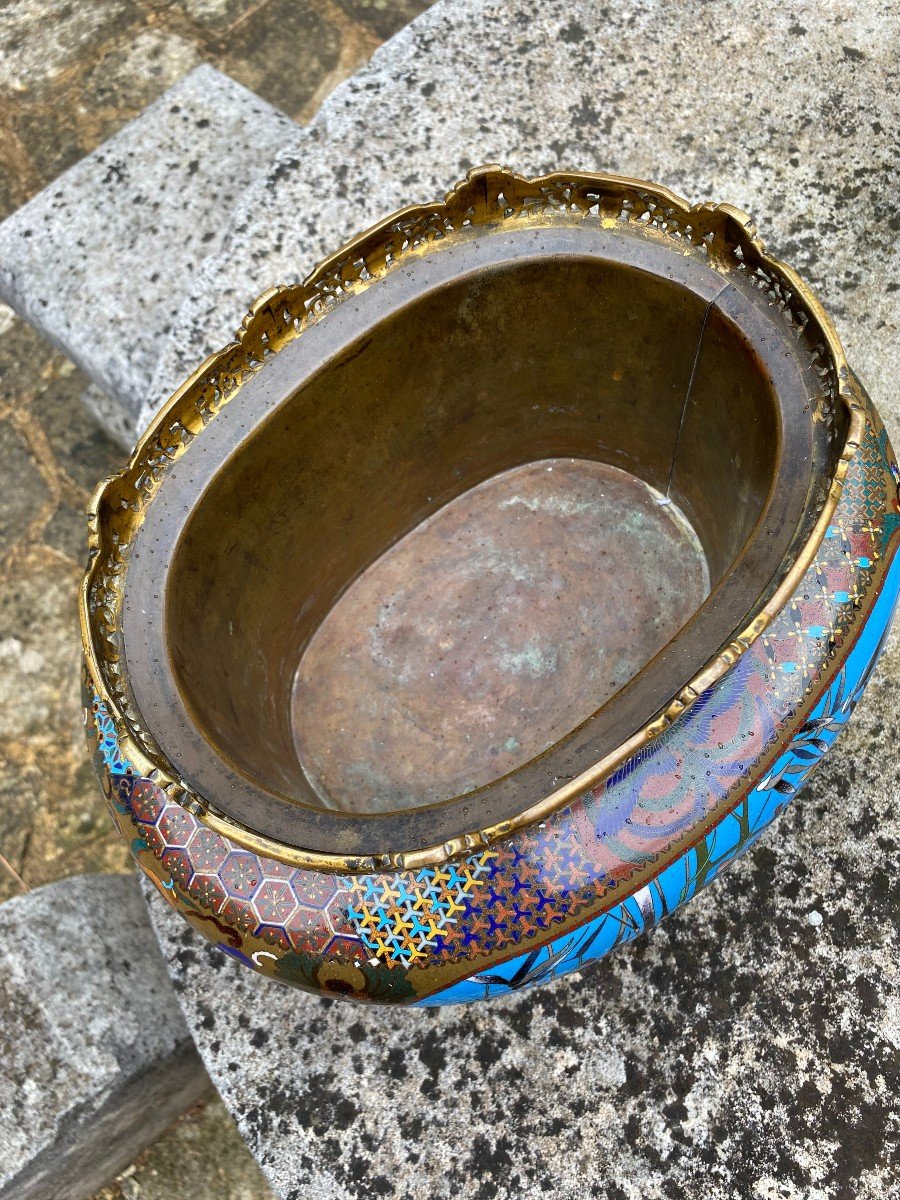
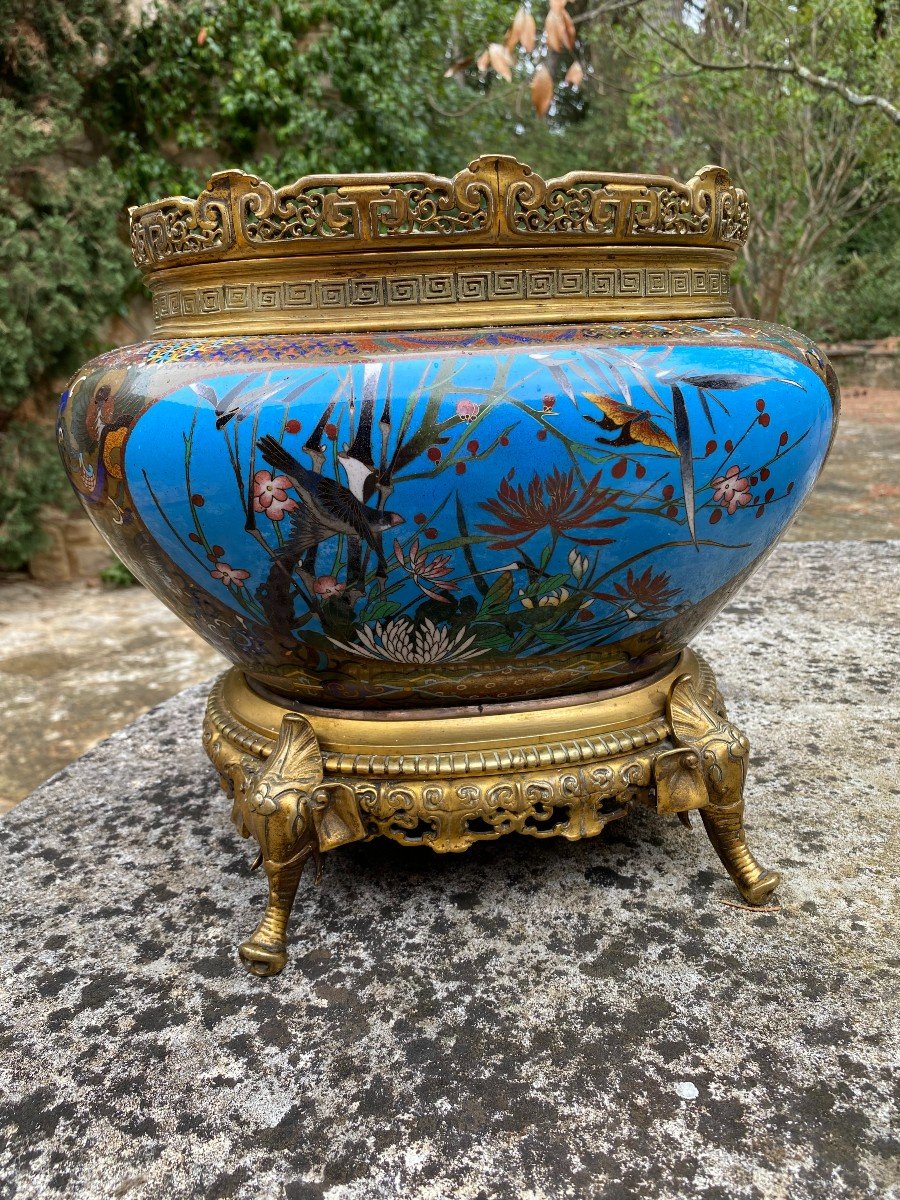
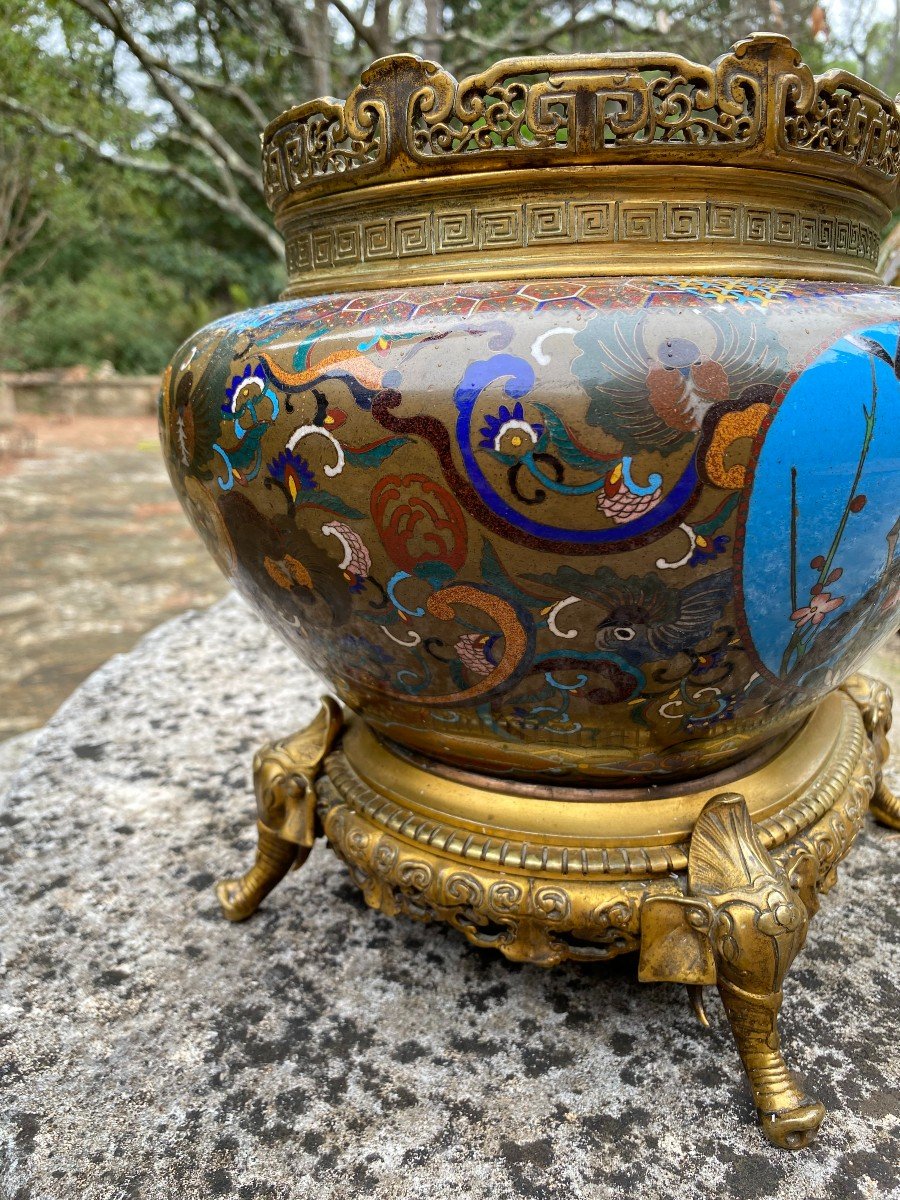
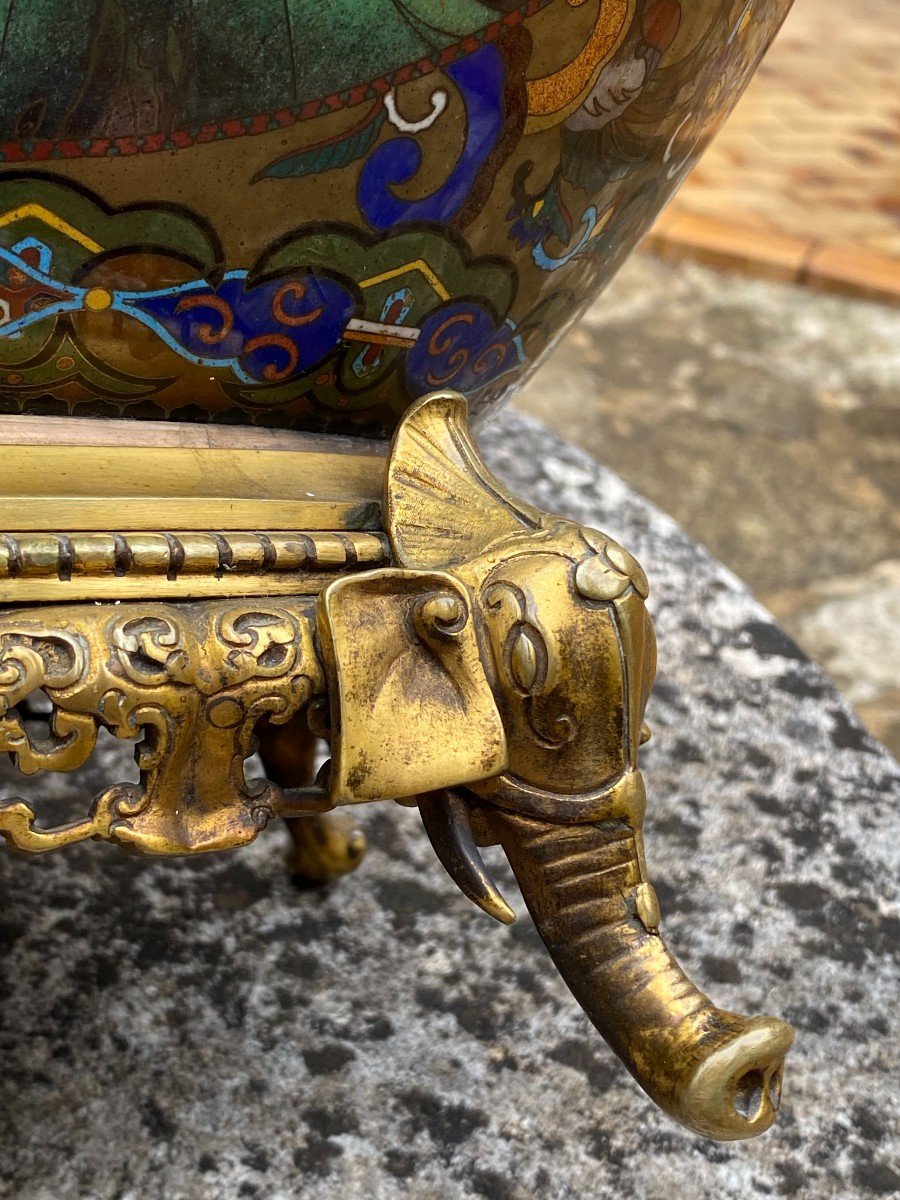
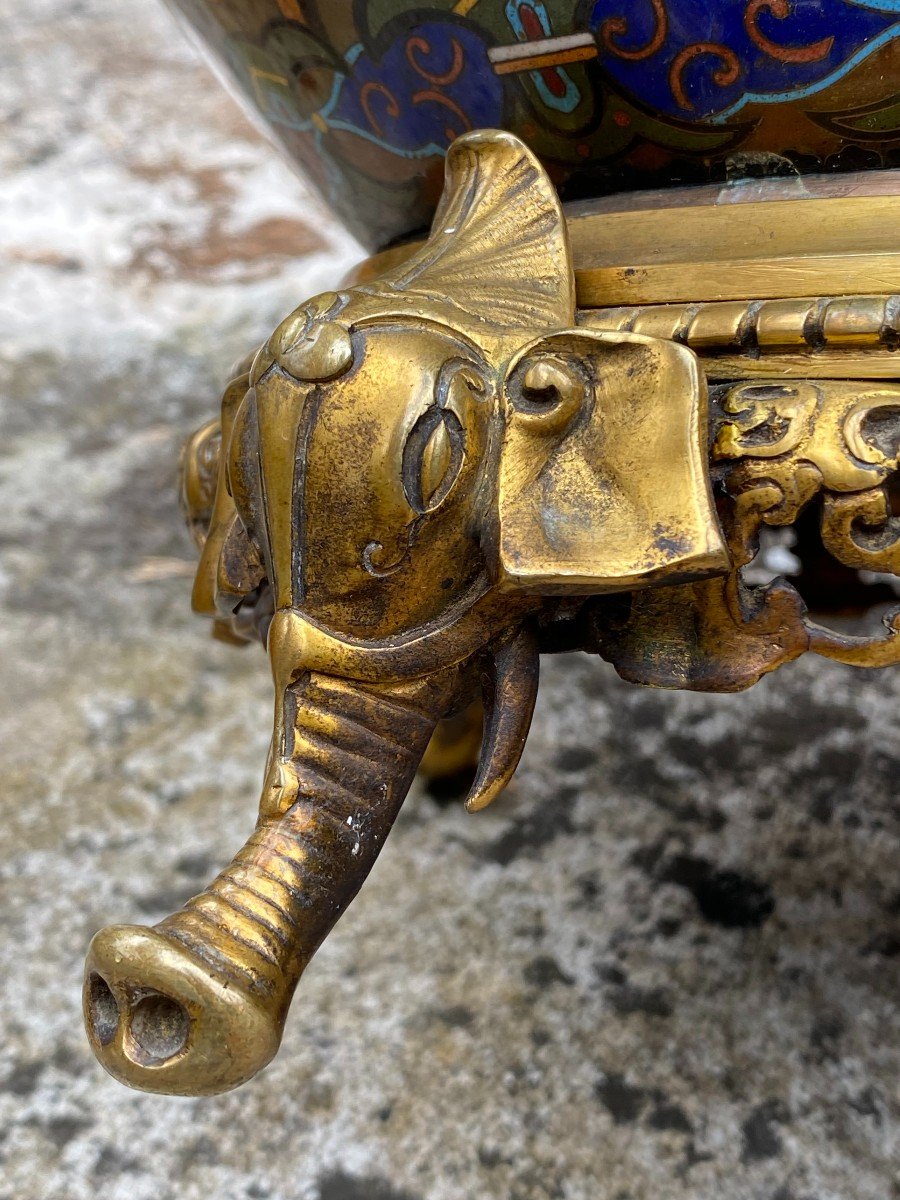
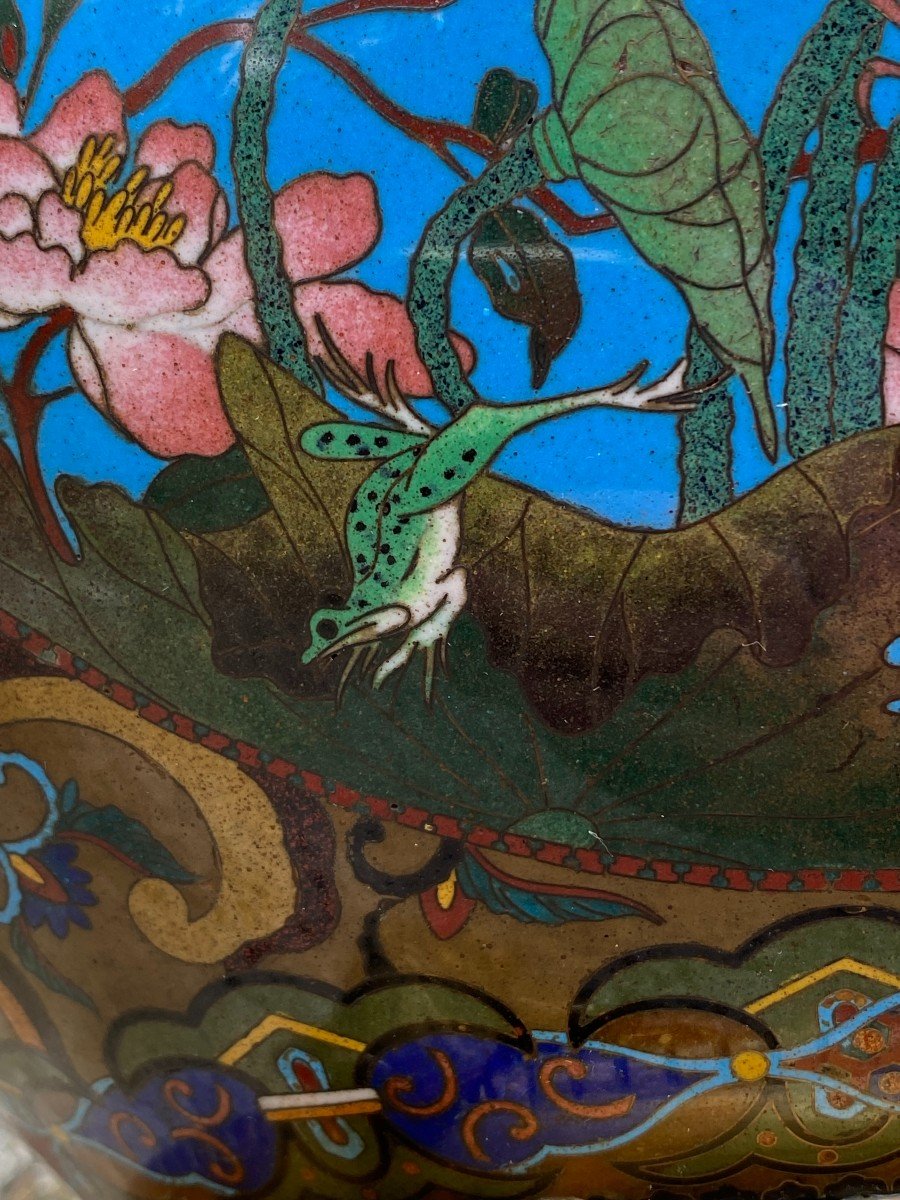
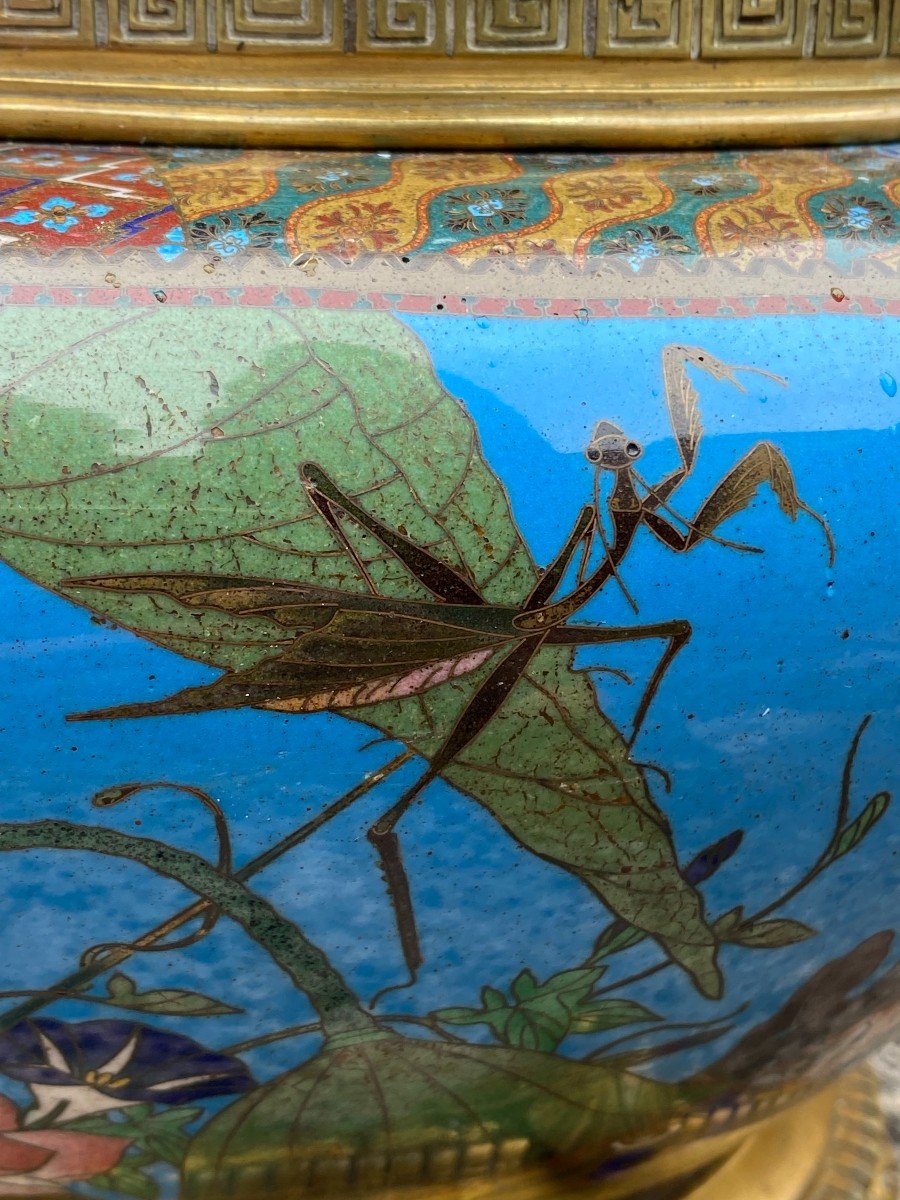
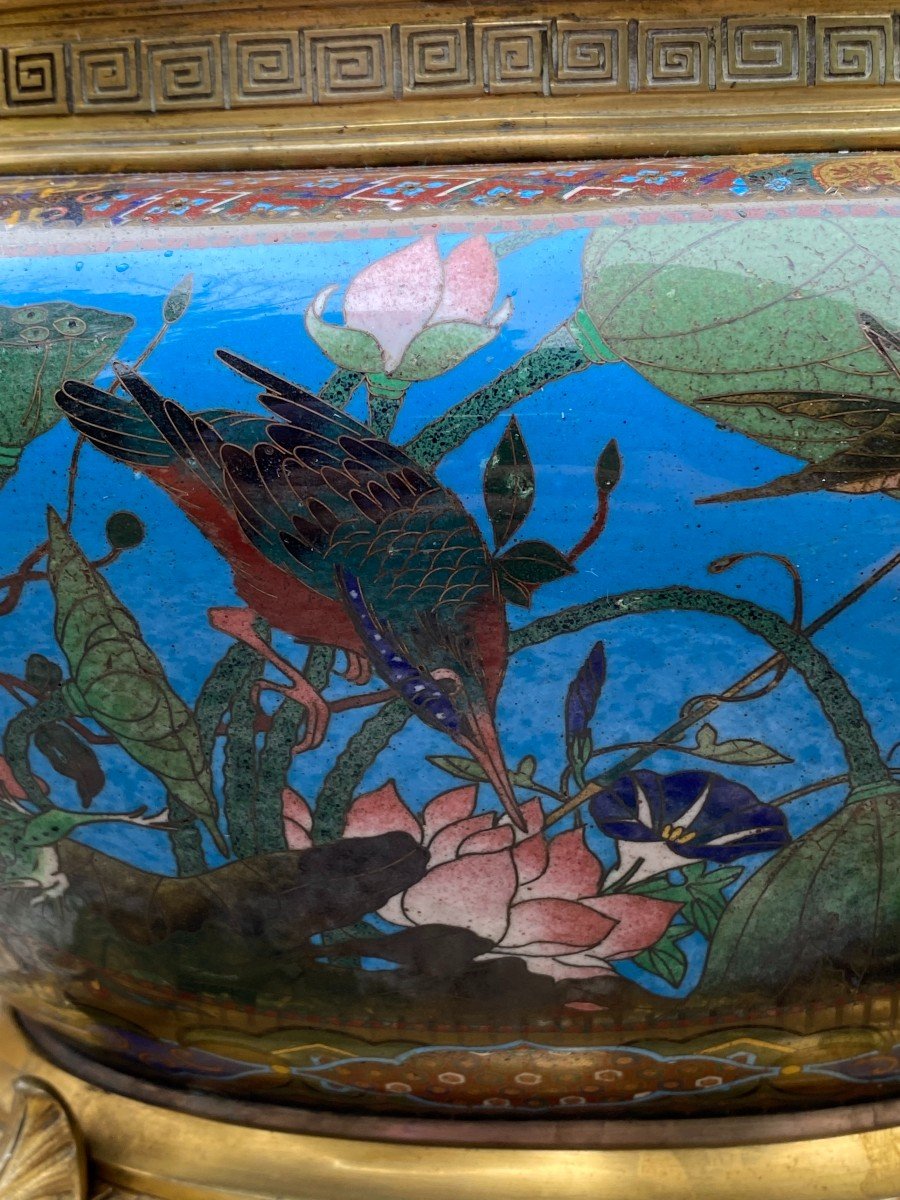
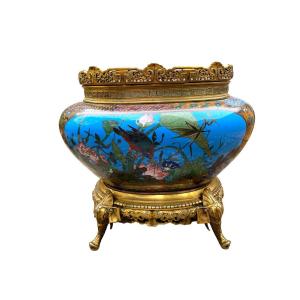


Attributed to Barbedienne and André-Fernand Thesmar, Paris surmounted by an openwork gallery, the enamel jardiniere finely decorated with birds in foliage, a butterfly, a frog and a praying mantis, on elephants head feet, in the style of Barbedienne and Thesmar
Size: 29 cm high, 33 cm long, 26 cm wide
Ferdinand Barbedienne (1810-1892) began his career in Paris as a wallpaper representative, in 1838 he went into partnership with Achille Collas and founded the company A. Collas & Barbedienne. They produced and marketed reduced copies of many sculpted works from European museums, according to the formula invented by Achille Collas.
Following the example of the metal enamelling workshop of the Manufacture de Sèvres, which operated from 1845 to 1872, Ferdinand Barbedienne, a great collector of cloisonné enamels from the Far East, introduced enamel very early on in his manufacture of Objets d'Art; "champlevé" enamels from the end of the 1850s, enamels painted "in the manner of Limoges", and cloisonné enamels of Far Eastern influence at the beginning of the 1870s. And after a few trials with independent enamellers, Barbedienne secured the exclusive collaboration of remarkable enamel artists such as Alfred Serre for the special workshop of painted enamels (before 1872) or Fernand Thesmar for that of cloisonné enamels (from 1872).
The technique used by Ferdinand Barbedienne is distinguished by its level of complexity. A mesh representing the pattern is melted, then the enamel powder is introduced into the gaps thus formed before firing the object. The enamel colour gradients obtained by Barbedienne are a real feat.
These objects made a great impression at the Universal Exhibition in London in 1862. The quality of the casting, chasing and patina, specific to Barbedienne's technique, meant that the founder's signature gradually gained in importance. The foundry was promoted to the rank of Commander of the Legion of Honour on 7 July 1874.
Size: 29 cm high, 33 cm long, 26 cm wide
Ferdinand Barbedienne (1810-1892) began his career in Paris as a wallpaper representative, in 1838 he went into partnership with Achille Collas and founded the company A. Collas & Barbedienne. They produced and marketed reduced copies of many sculpted works from European museums, according to the formula invented by Achille Collas.
Following the example of the metal enamelling workshop of the Manufacture de Sèvres, which operated from 1845 to 1872, Ferdinand Barbedienne, a great collector of cloisonné enamels from the Far East, introduced enamel very early on in his manufacture of Objets d'Art; "champlevé" enamels from the end of the 1850s, enamels painted "in the manner of Limoges", and cloisonné enamels of Far Eastern influence at the beginning of the 1870s. And after a few trials with independent enamellers, Barbedienne secured the exclusive collaboration of remarkable enamel artists such as Alfred Serre for the special workshop of painted enamels (before 1872) or Fernand Thesmar for that of cloisonné enamels (from 1872).
The technique used by Ferdinand Barbedienne is distinguished by its level of complexity. A mesh representing the pattern is melted, then the enamel powder is introduced into the gaps thus formed before firing the object. The enamel colour gradients obtained by Barbedienne are a real feat.
These objects made a great impression at the Universal Exhibition in London in 1862. The quality of the casting, chasing and patina, specific to Barbedienne's technique, meant that the founder's signature gradually gained in importance. The foundry was promoted to the rank of Commander of the Legion of Honour on 7 July 1874.
Explore similar pieces and discover your ideal find:
Planters, Cachepots