THIS OBJECT WAS SOLD
Milanese Cabinet Ebony And Paesina
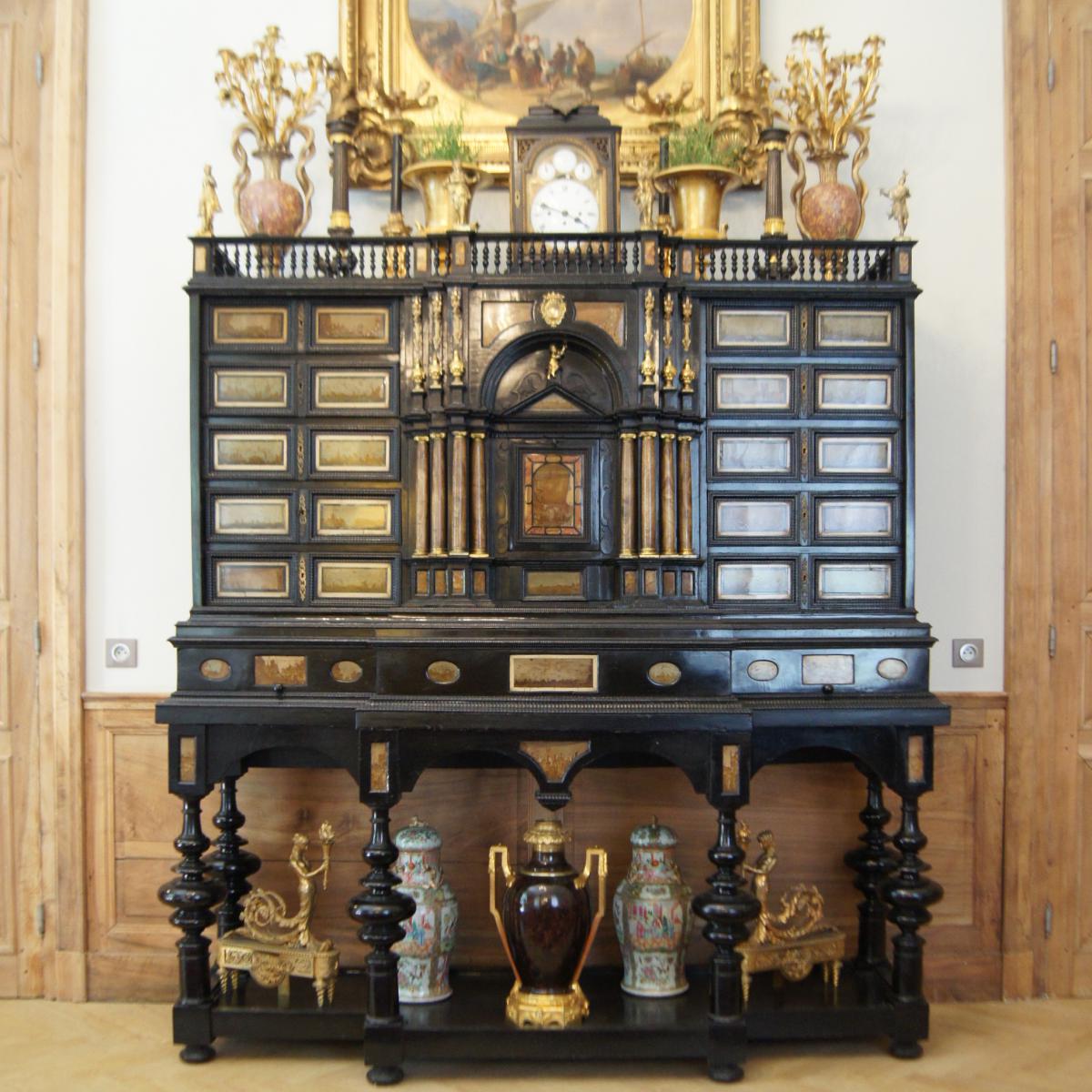
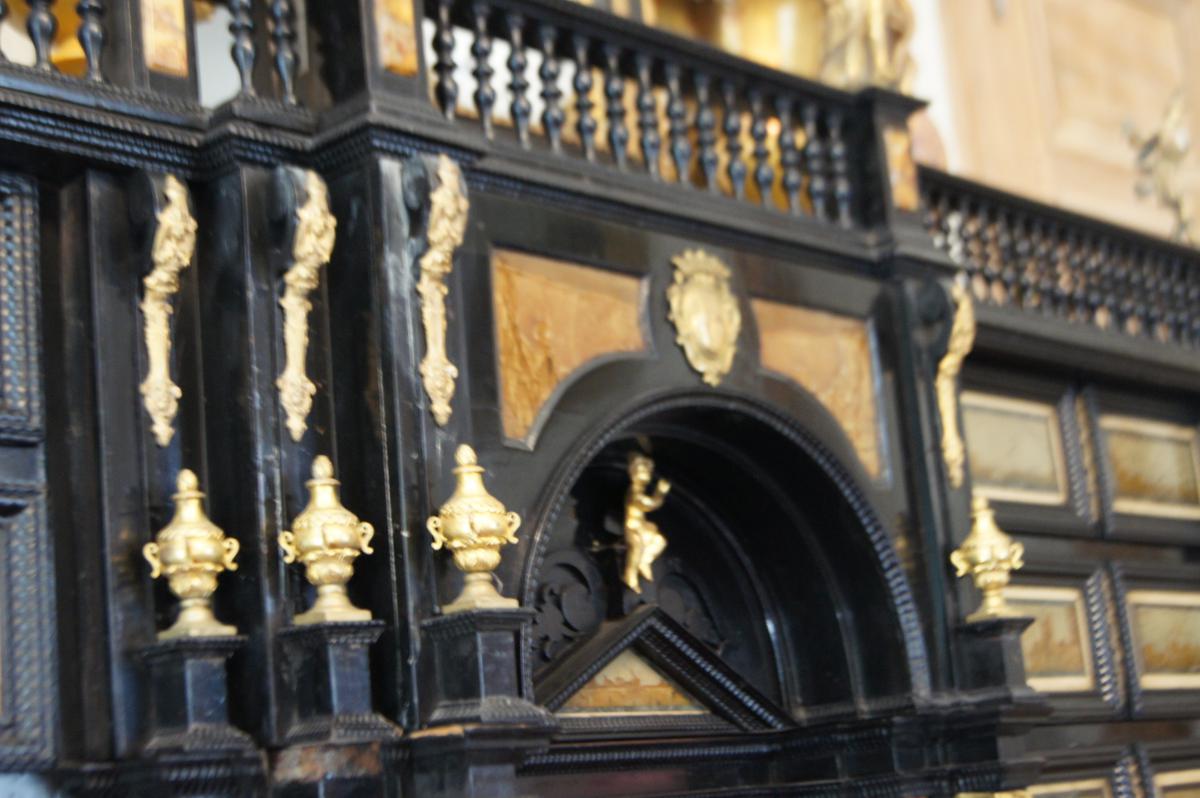
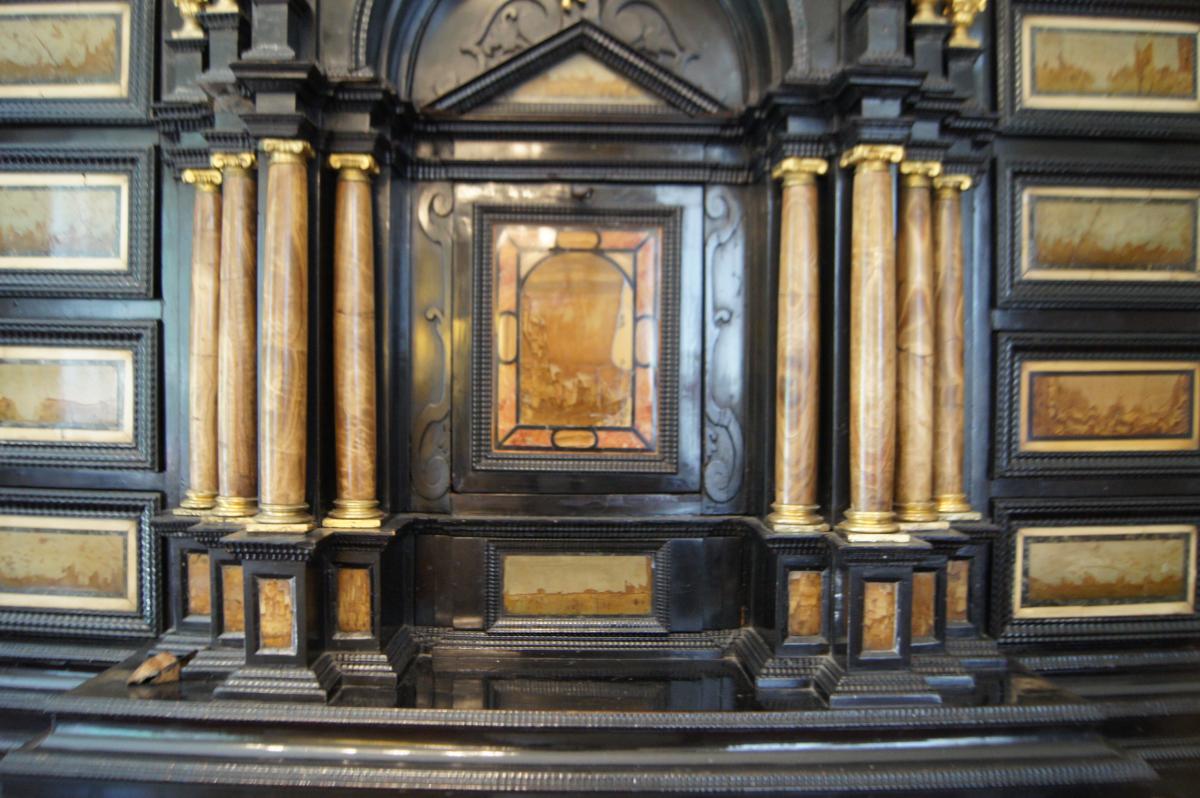
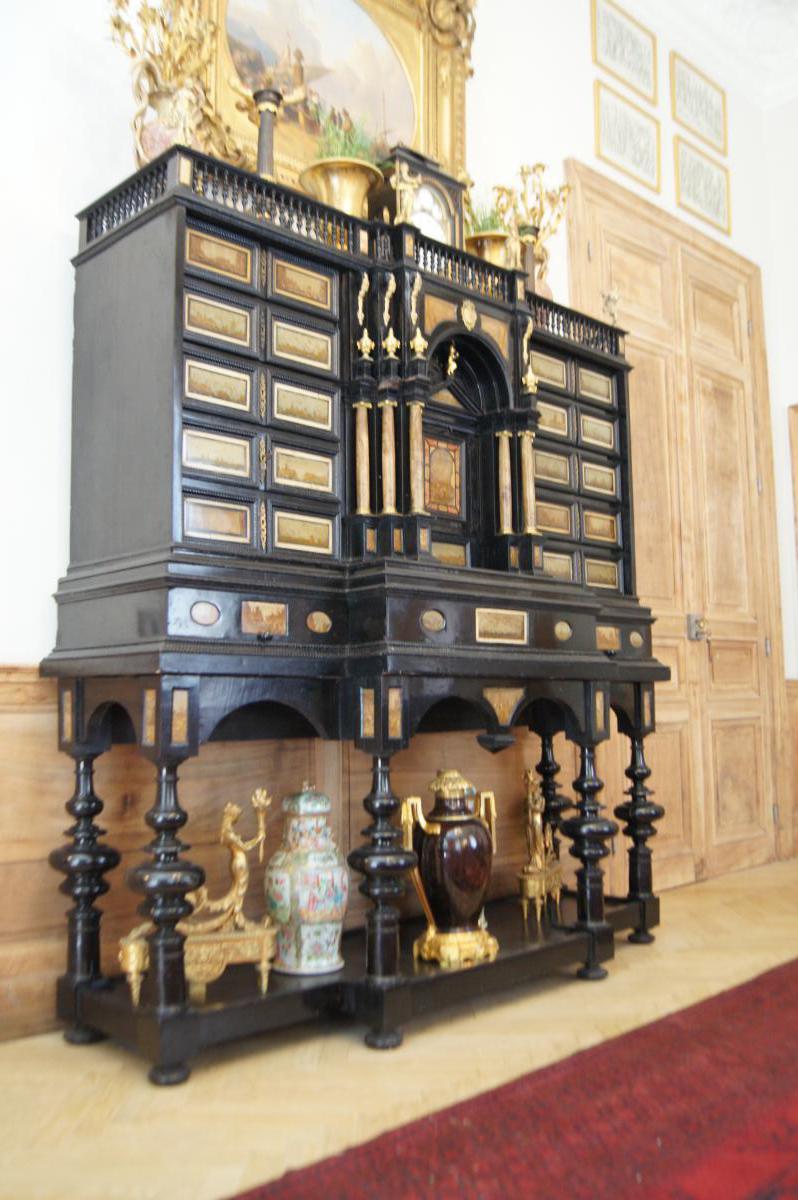
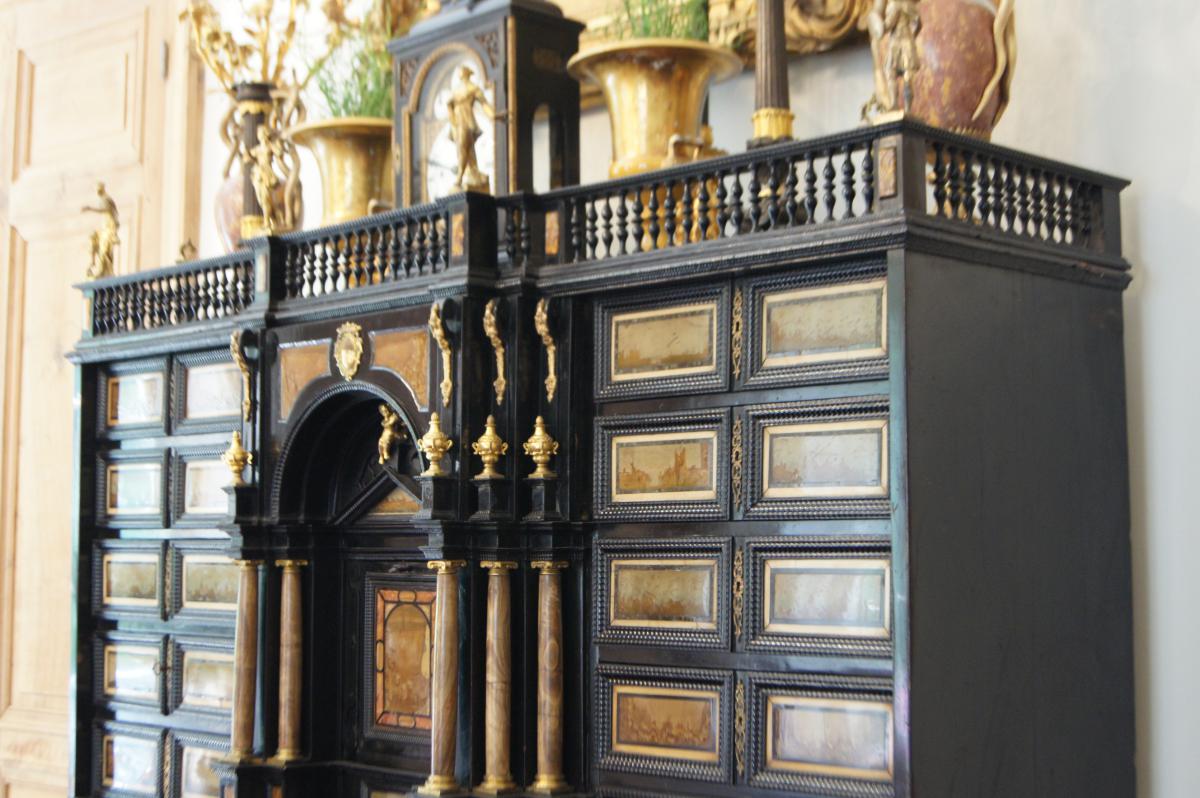
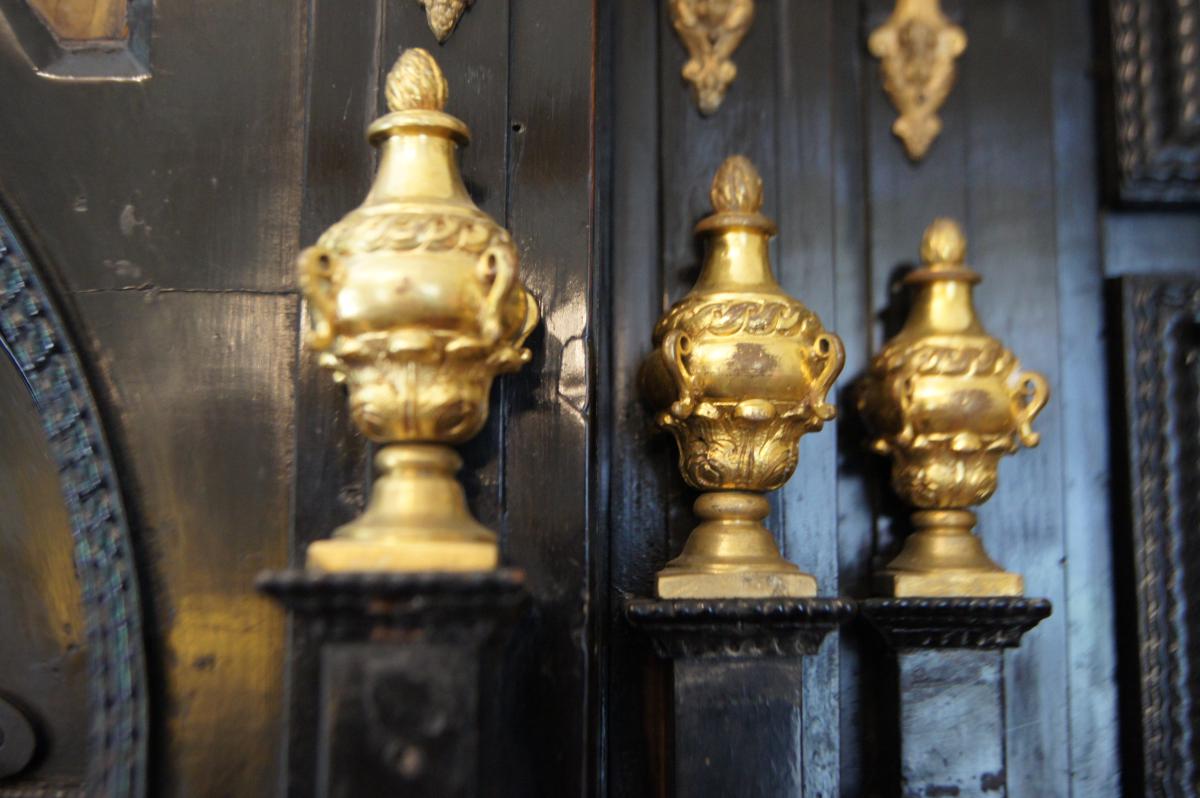
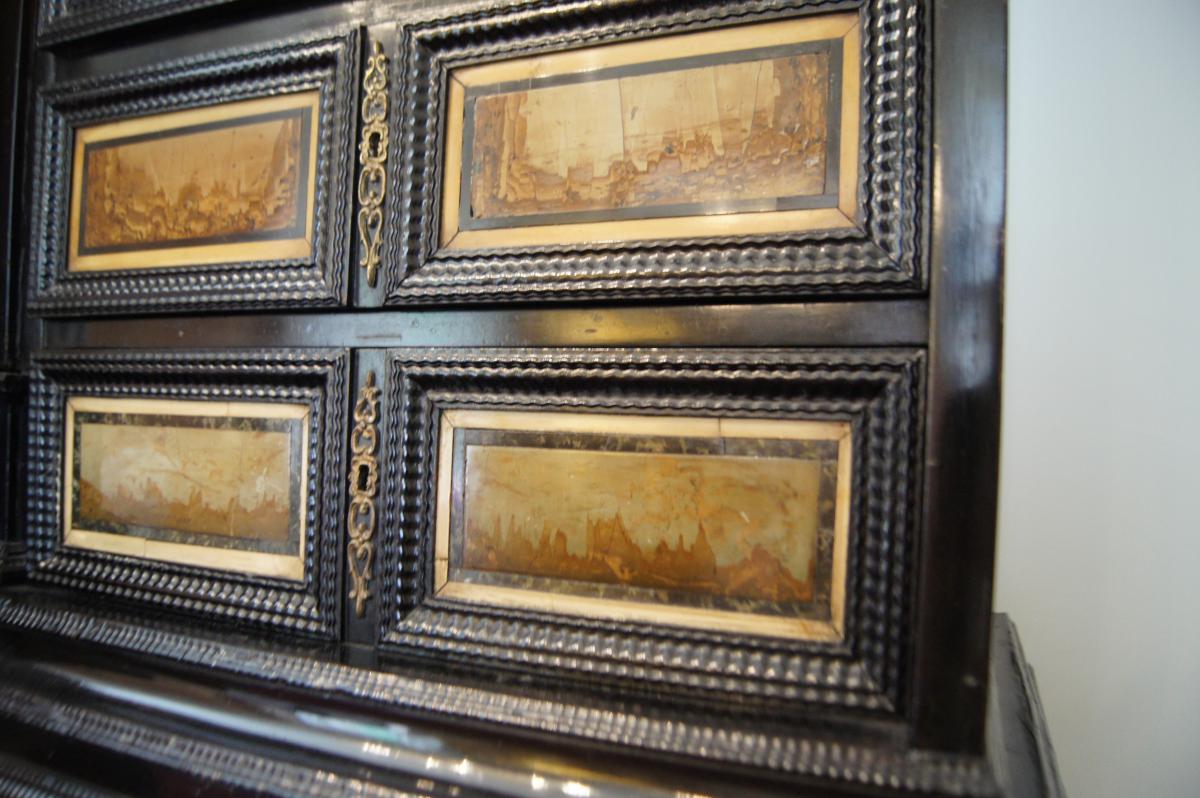
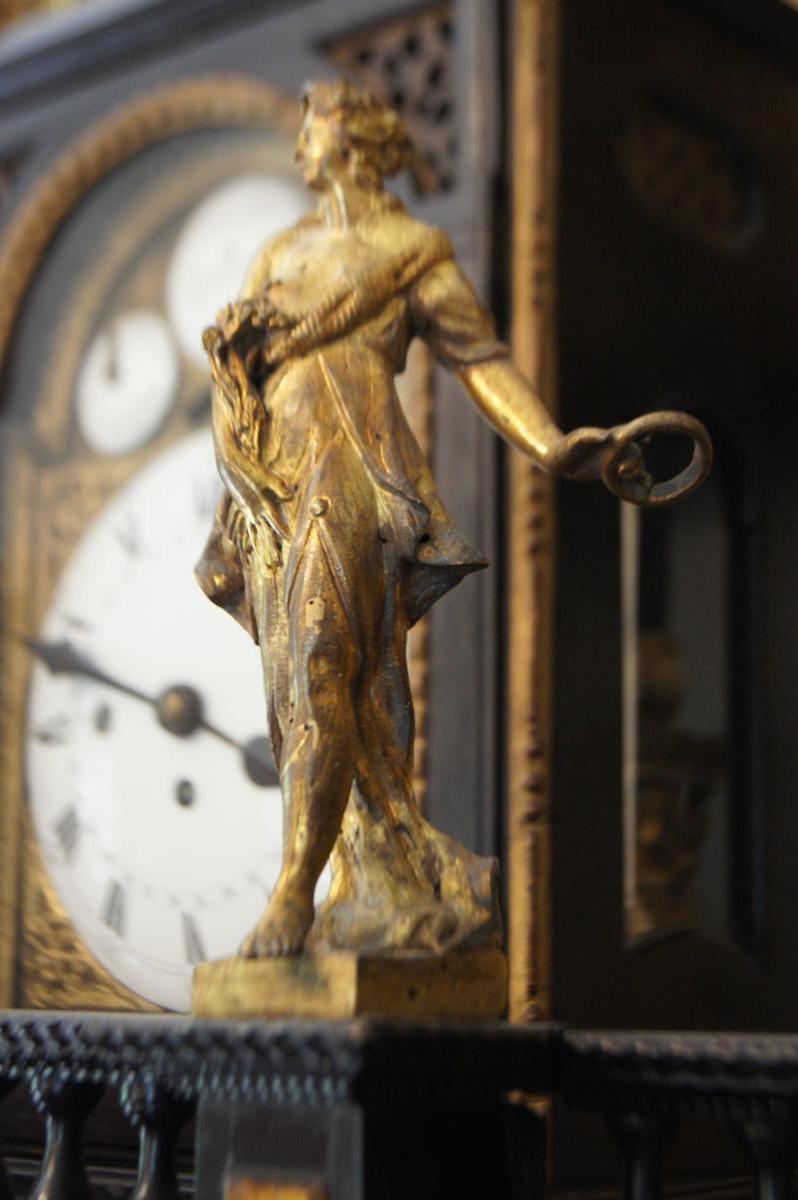
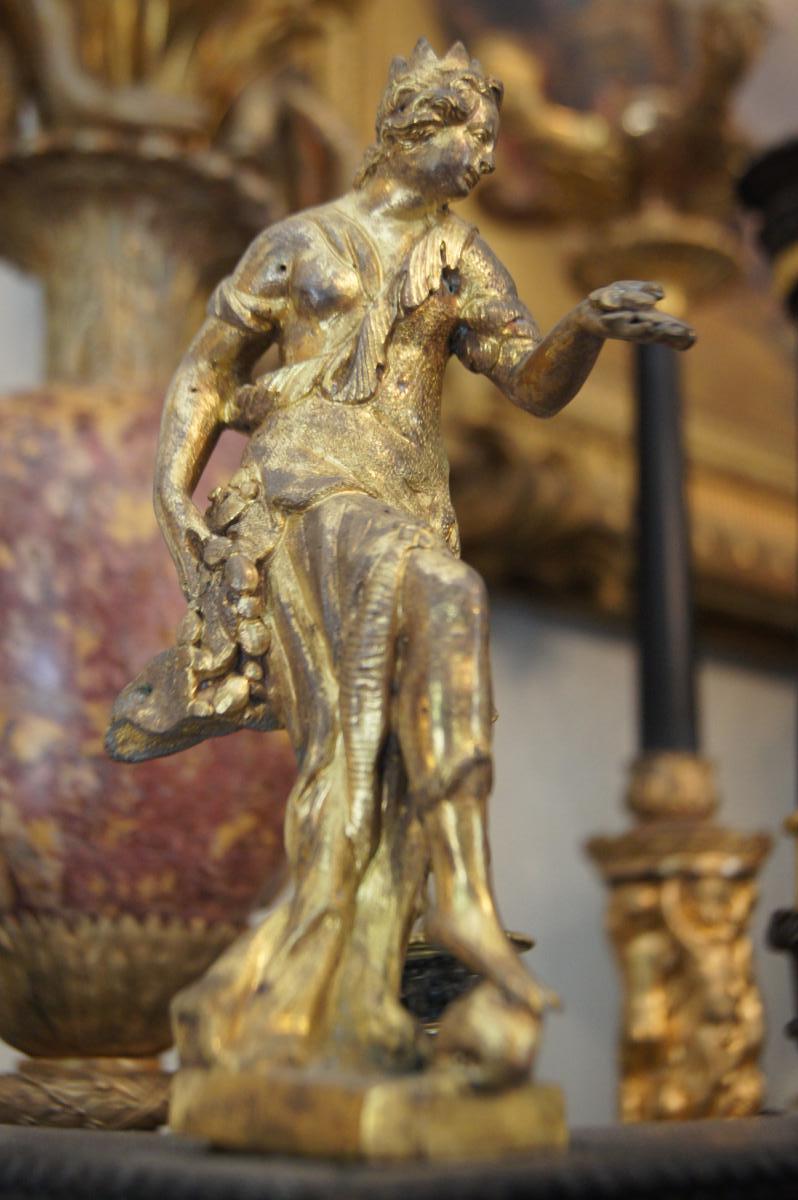
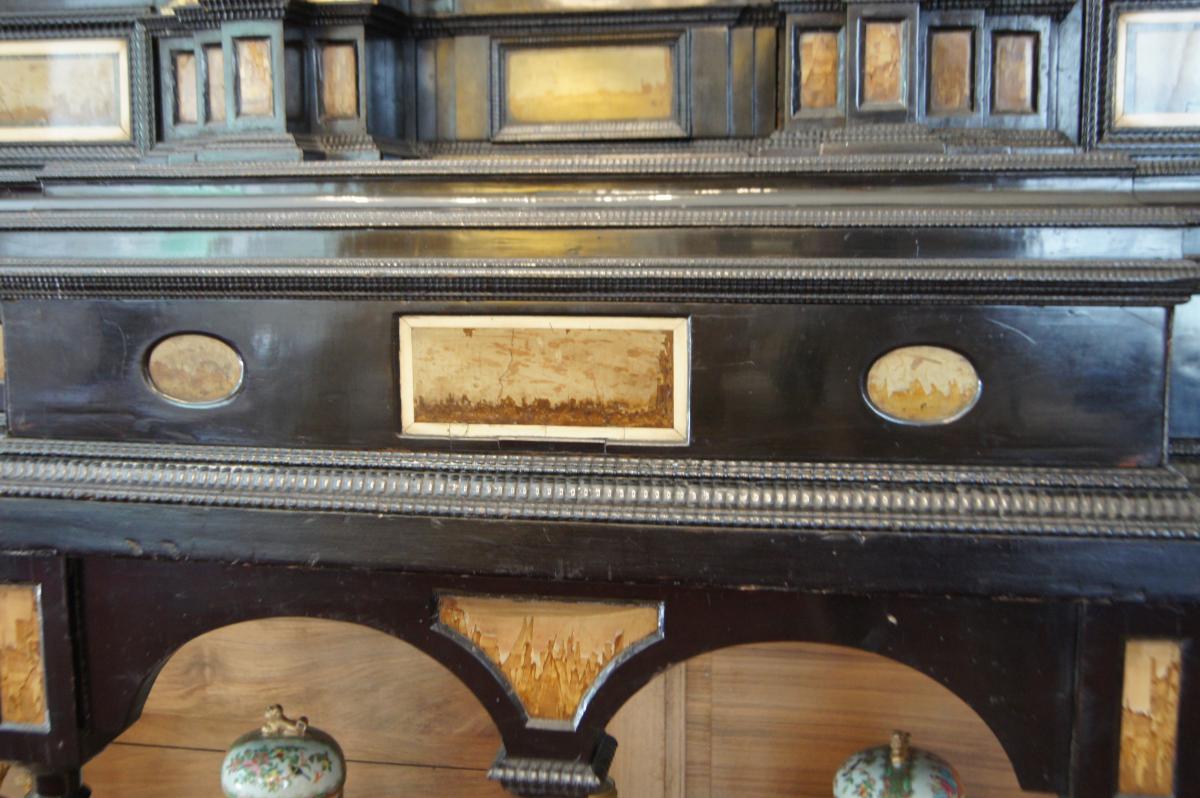
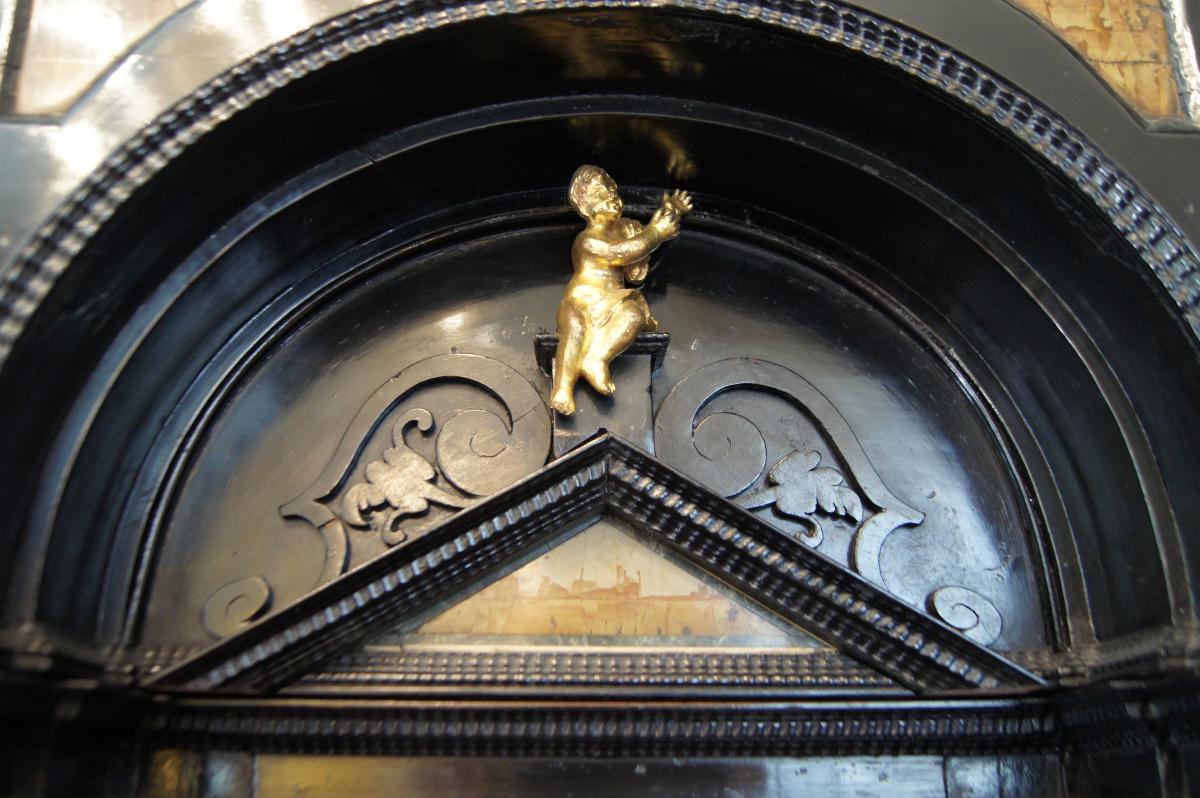
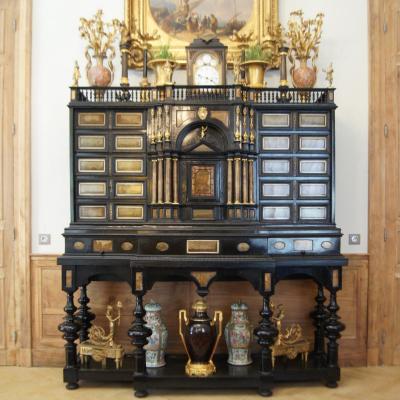
Milan impressive ebony cabinet, decorated with paesine plates and gilt bronze, seventeenth century Dimensions H 222 x W 195 x D 75 cm
Opening with 10 drawers, 2 drawers at the extremity of the upper part of his belt, a secret, safe silverware Crest of the family descending from ALERAMI descendants of the MONTFERAT family
4 subjects ormolu representing the generosity, war
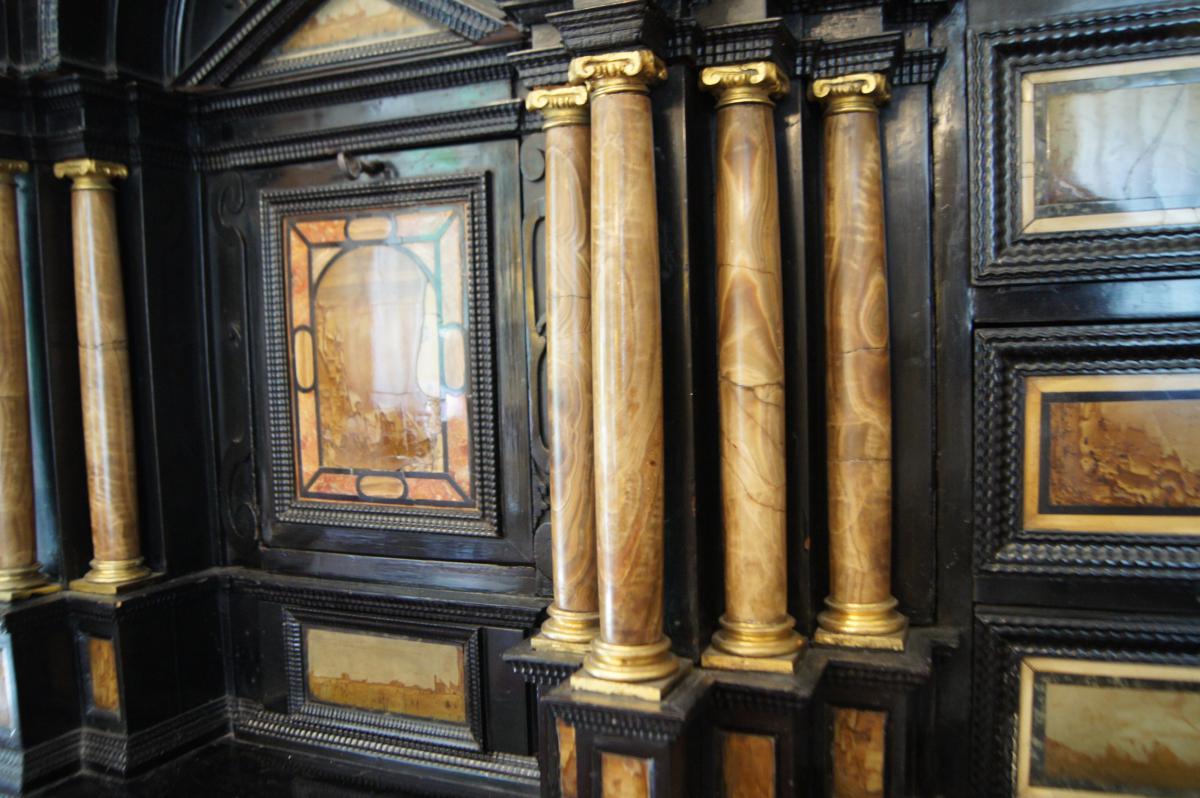
The paesina, "pictorial stones" or "figured stones", which appear to be true works of art, representative or abstract. "Paesine" (Italian plural word, "PAESINA" in the singular, near "paesaggio" landscape) or "stone-aux-huts" or "stone-landscapes", also called "marble-ruins", "marbles of Tuscany" or "marbles of Florence" from deposits in the Florence area. The paésine, variety of limestone marl Eocene (early Tertiary), was formed as a result of sedimentation and tectonic movements that split the layers or strata (from a few centimeters to 2 meters) when Creation of the Apennines, the contribution of oxides (iron or manganese) by infiltration of water rich in mineral salts and the healing of flaws by calcite crystallization. Sawn and polished, successive tranches with different designs for each section, the paésines ruiniform evoke landscapes. The green, blue or gray suggest the sky and the sea, the brown veins houses, castles, towers, dungeons and ramparts, churches and villages in ruins or shores, cliffs and caves. Paesina, arouse interest in the Renaissance cabinets of curiosities lovers. In the sixteenth and seventeenth centuries, the marbles of
Florence are subject to significant trade. Rudolf II (1552-1612) has his residence in Prague a "cabinet Wonderland" adorned with these stones. In 1617 Philipp Hainhofer, Augsburg dealer specialized in this trade, provides Philippe II, Duke of Pomerania in 1632 to Gustavus Adolphus of Sweden.
Welcome to Chenal & Gaubert Antiques www.chenalgaubert.com
Opening with 10 drawers, 2 drawers at the extremity of the upper part of his belt, a secret, safe silverware Crest of the family descending from ALERAMI descendants of the MONTFERAT family
4 subjects ormolu representing the generosity, war
The paesina, "pictorial stones" or "figured stones", which appear to be true works of art, representative or abstract. "Paesine" (Italian plural word, "PAESINA" in the singular, near "paesaggio" landscape) or "stone-aux-huts" or "stone-landscapes", also called "marble-ruins", "marbles of Tuscany" or "marbles of Florence" from deposits in the Florence area. The paésine, variety of limestone marl Eocene (early Tertiary), was formed as a result of sedimentation and tectonic movements that split the layers or strata (from a few centimeters to 2 meters) when Creation of the Apennines, the contribution of oxides (iron or manganese) by infiltration of water rich in mineral salts and the healing of flaws by calcite crystallization. Sawn and polished, successive tranches with different designs for each section, the paésines ruiniform evoke landscapes. The green, blue or gray suggest the sky and the sea, the brown veins houses, castles, towers, dungeons and ramparts, churches and villages in ruins or shores, cliffs and caves. Paesina, arouse interest in the Renaissance cabinets of curiosities lovers. In the sixteenth and seventeenth centuries, the marbles of
Florence are subject to significant trade. Rudolf II (1552-1612) has his residence in Prague a "cabinet Wonderland" adorned with these stones. In 1617 Philipp Hainhofer, Augsburg dealer specialized in this trade, provides Philippe II, Duke of Pomerania in 1632 to Gustavus Adolphus of Sweden.
Welcome to Chenal & Gaubert Antiques www.chenalgaubert.com
Explore similar pieces and discover your ideal find:
cabinets