THIS OBJECT WAS SOLD
Haute Epoque, 13th Cty Gilded Bronze Medieval Crowned Christ









Haute Epoque
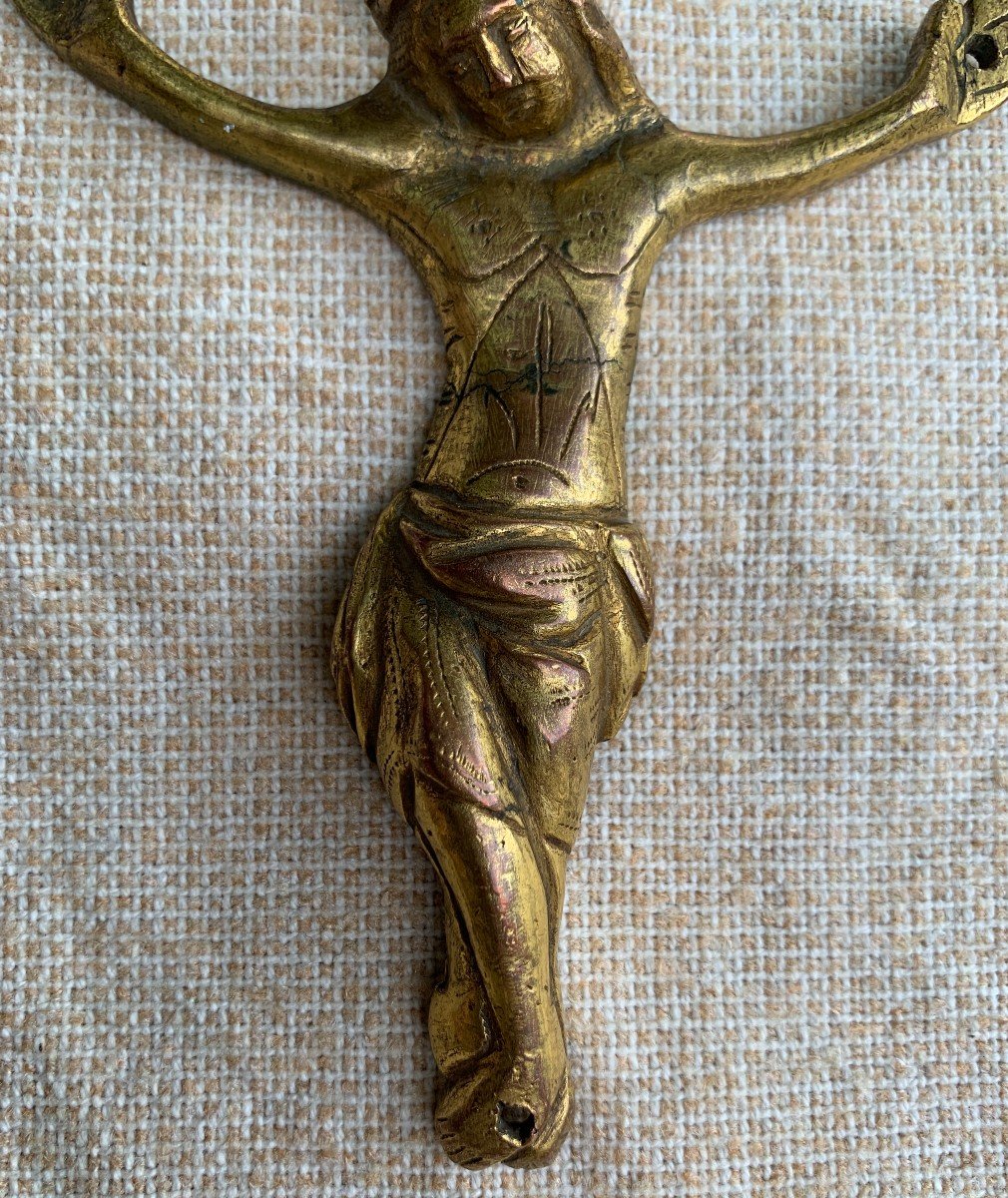
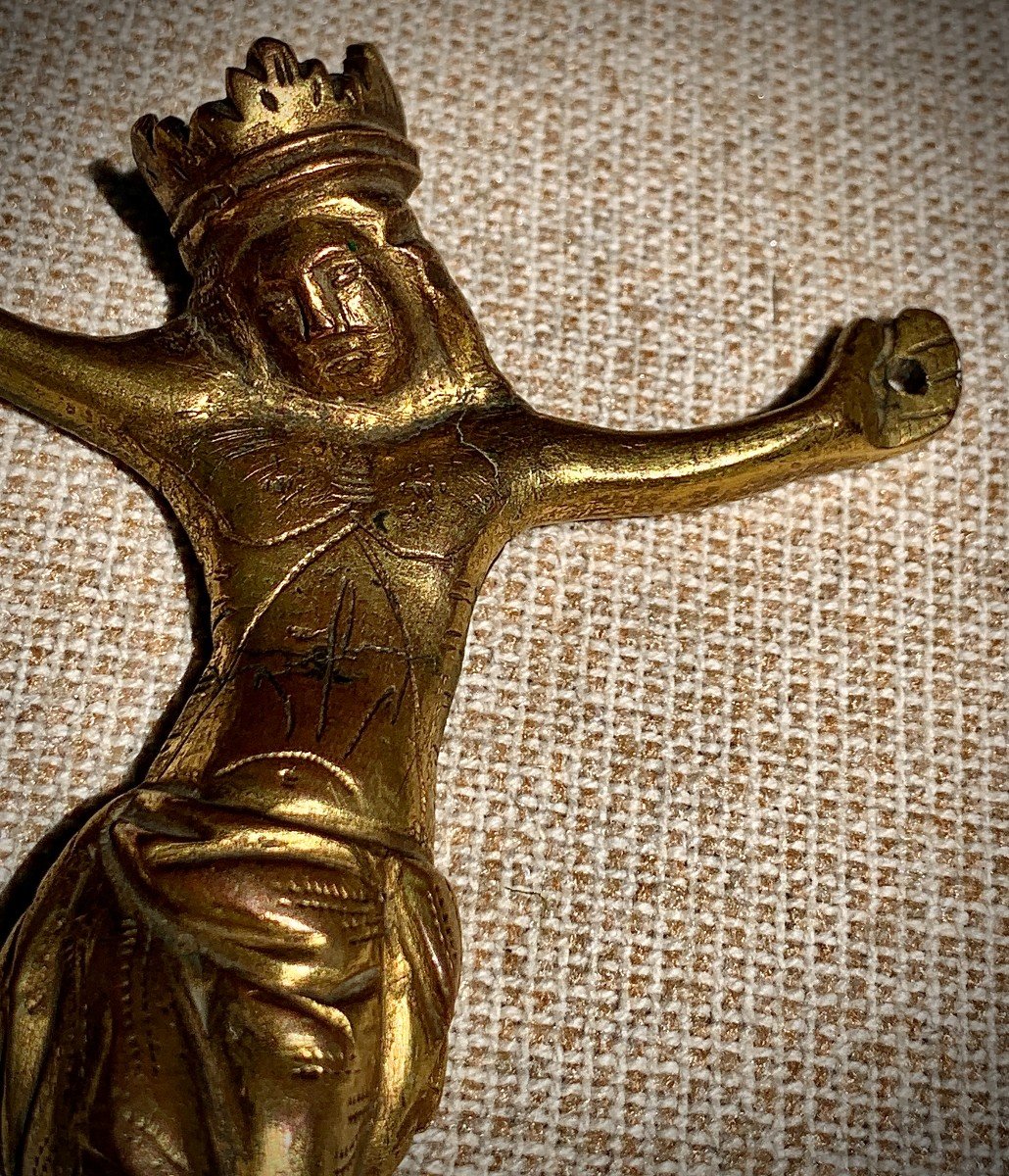
Nice and rare medieval (13th cty) chiseled gilded copper Christ.
This devotional sculpture depicts the crowned body of Christ on his cross – although it is not preserved.
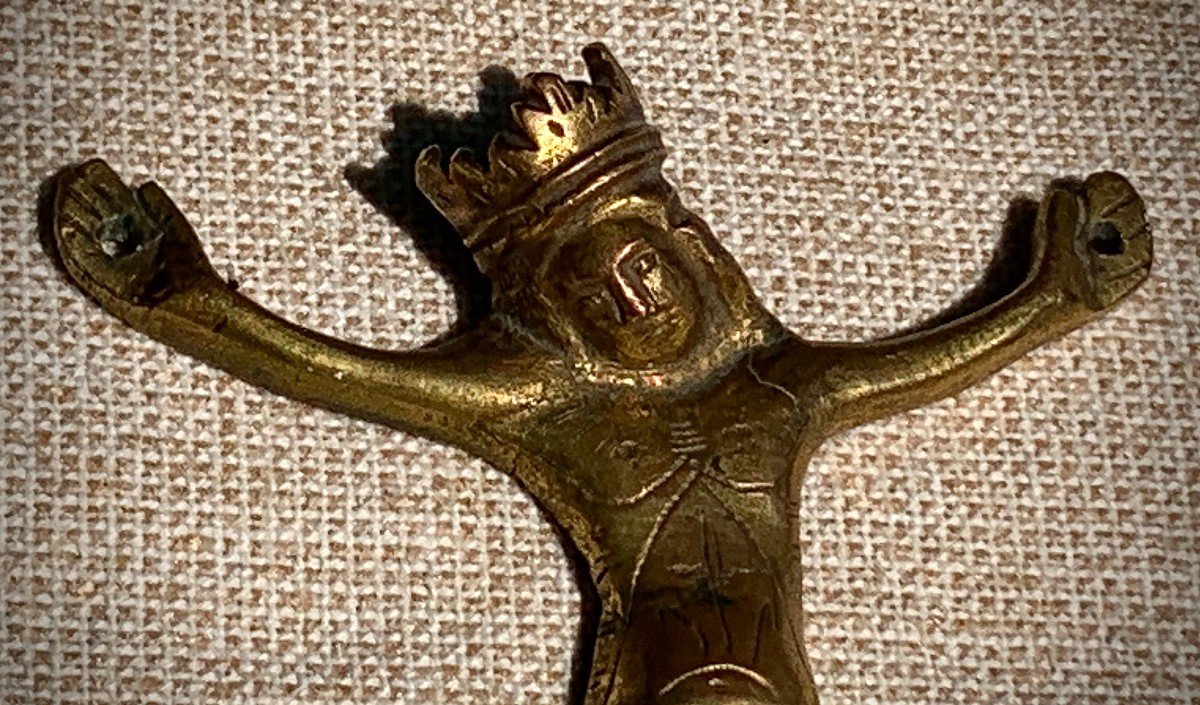
It depicts triumphant Christ, as he is awakened, and crowned as King of Heaven. His arms are open. The 3 holes, in the hands and that of the feet and the fact that it is hollow, show that it was nailed to a cross (procession?), its typology is usual in the Middle Ages and especially also in the Gothic period.
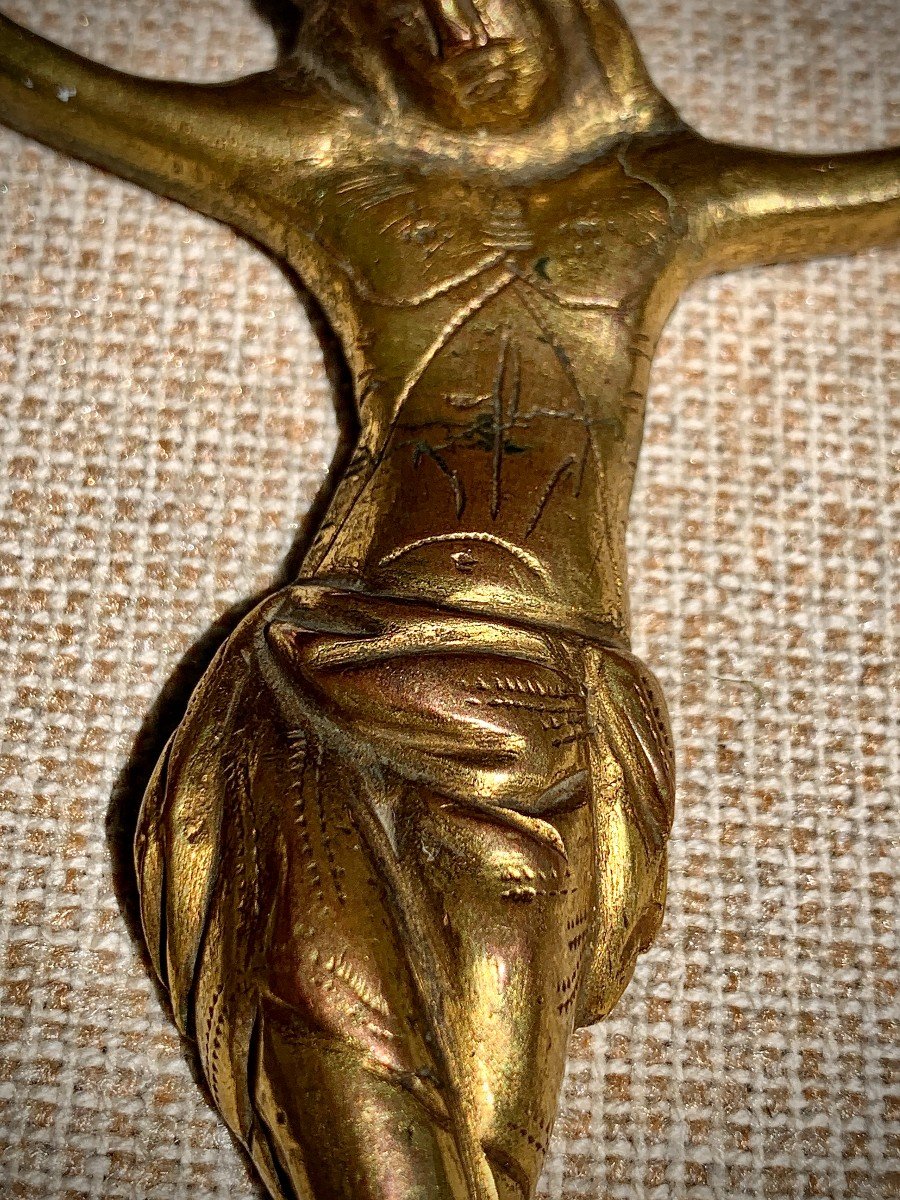
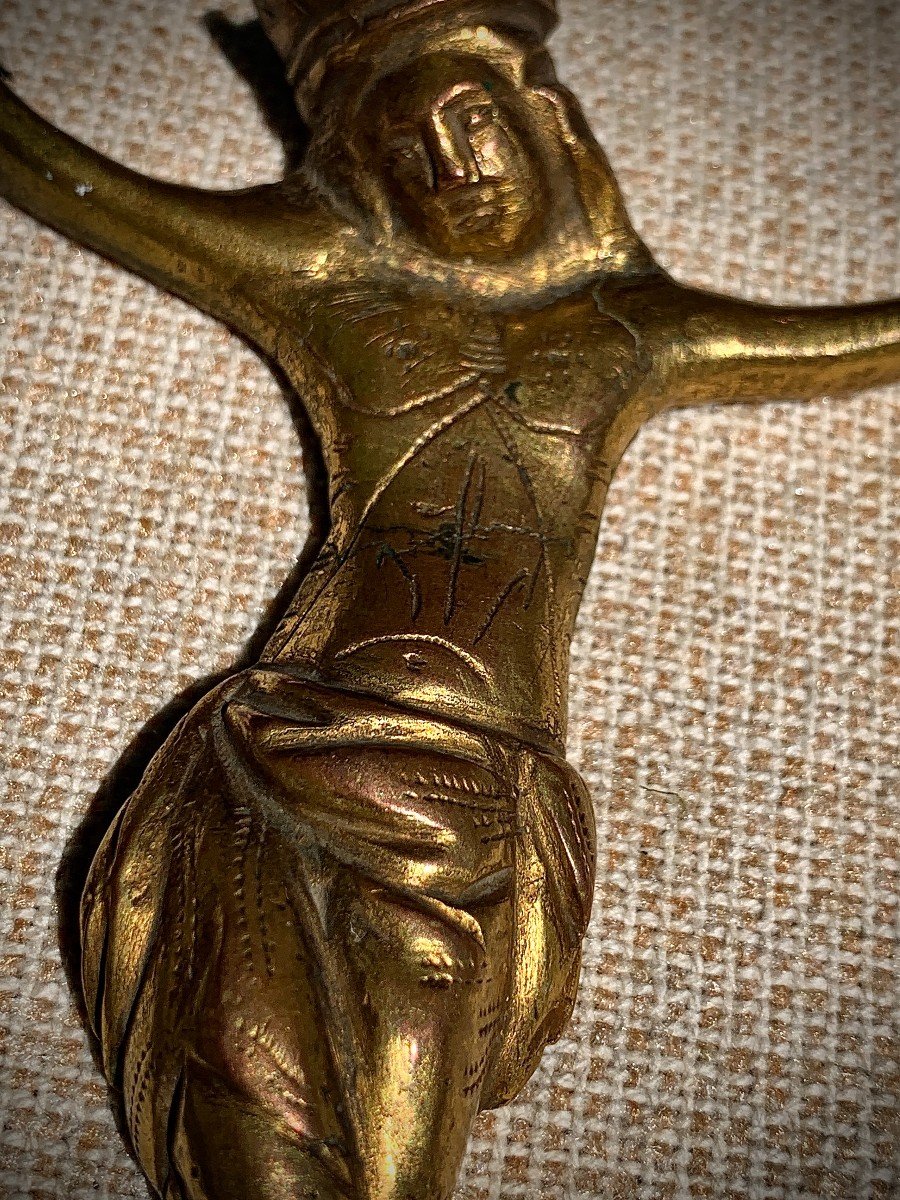
This wall copper Christ is partially gilded (wear). The crowned head is tilted towards the right shoulder, the perizonium or "purity textile" is tied on side with lateral fall, the legs are flexed and the feet superimposed in external rotation.
The crown is open, of Carolingian tradition.
All these stylistic elements attest to a dating from the end of 13th century
The bent position of 2 legs with one coming over the other refers rather to the first half of the 14th century, while the type of open crown, from Carolingian tradition rather from the second half of 13th century.
The hollow piece on its reverse is stamped and chiseled: the lines of carving mark the anatomy of Jesus.
Condition:
Small copper/brass parts, same rawmaterial as Christ, have been welded to reinforce certain weaknesses of the structure (cracks or thin cracks lightly visible on the front size) and seem perfectly original to me.
normal wear / uses of gilding covering copper of Christ.
The face, the shape of the arms and feet frequently used in this period, show their success and the almost systematic use of similar prototypes, making the pieces more accessible to the market.
Nice expression of this pretty High Period collector's item, of a typology referring to representations of Christ still clearly medieval.
Possible origin of the Limousin workshops
Sizes approx 13 high* 11cm large and * 1.5cm thickness
Bibliography
"Bronzegeräte des Mittelalters 5, Romanische Bronze Kruzifixe", by Peter BLOCH, 1/1/1992 Deutscher Verlag fûr Kunstwissenschaft
Nice and rare medieval (13th cty) chiseled gilded copper Christ.
This devotional sculpture depicts the crowned body of Christ on his cross – although it is not preserved.
It depicts triumphant Christ, as he is awakened, and crowned as King of Heaven. His arms are open. The 3 holes, in the hands and that of the feet and the fact that it is hollow, show that it was nailed to a cross (procession?), its typology is usual in the Middle Ages and especially also in the Gothic period.
This wall copper Christ is partially gilded (wear). The crowned head is tilted towards the right shoulder, the perizonium or "purity textile" is tied on side with lateral fall, the legs are flexed and the feet superimposed in external rotation.
The crown is open, of Carolingian tradition.
All these stylistic elements attest to a dating from the end of 13th century
The bent position of 2 legs with one coming over the other refers rather to the first half of the 14th century, while the type of open crown, from Carolingian tradition rather from the second half of 13th century.
The hollow piece on its reverse is stamped and chiseled: the lines of carving mark the anatomy of Jesus.
Condition:
Small copper/brass parts, same rawmaterial as Christ, have been welded to reinforce certain weaknesses of the structure (cracks or thin cracks lightly visible on the front size) and seem perfectly original to me.
normal wear / uses of gilding covering copper of Christ.
The face, the shape of the arms and feet frequently used in this period, show their success and the almost systematic use of similar prototypes, making the pieces more accessible to the market.
Nice expression of this pretty High Period collector's item, of a typology referring to representations of Christ still clearly medieval.
Possible origin of the Limousin workshops
Sizes approx 13 high* 11cm large and * 1.5cm thickness
Bibliography
"Bronzegeräte des Mittelalters 5, Romanische Bronze Kruzifixe", by Peter BLOCH, 1/1/1992 Deutscher Verlag fûr Kunstwissenschaft
Explore similar pieces and discover your ideal find:
Christian Art