THIS OBJECT WAS SOLD
Large Persian Carpet Keshan Circa 1960 390x275


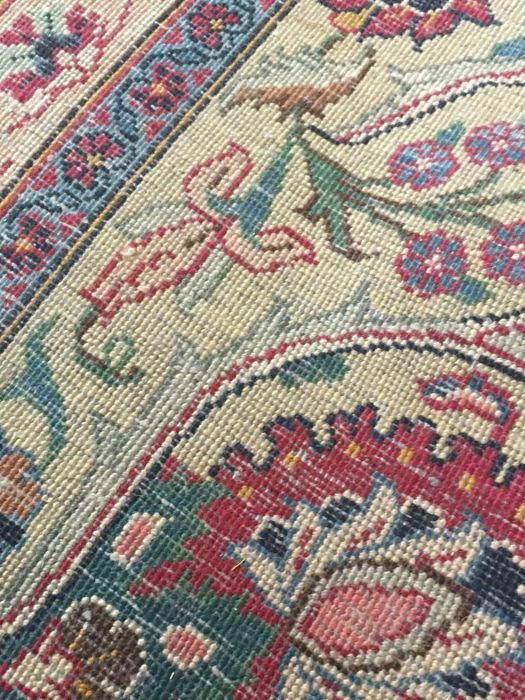


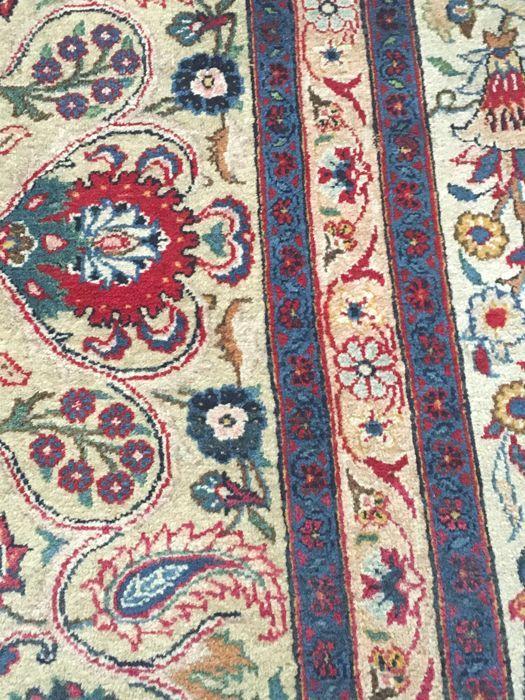


Entirely hand-knotted, pure wool, vegetable dyes, size: 3.90mX2.75m Kashan rugs are among the best in Iran thanks to the quality of their wool, their extremely tight knotting and the beauty of the colors and drawings. Handicrafts stopped in Kashan between the Afghan invasion (1722) and the end of the 19th century. The relaunch of carpet production was made with high quality single wool carpets. The earliest copies of this cover are called Kashan Motashemi, presumably after the name of a craftsman. The back is almost always decorated with a central medallion which ends at the top and bottom with two floral wreaths. Flowers and foliage intertwine on the rest of the background. The border is most often decorated with the herati motif for the central band and rosettes for the secondary bands. Some copies are with subjects and knotted in silk. The background of Kashans is often brick red or dark blue in color. A carpet with a blue background often has a red medallion and borders and vice versa. The panj row (“five colors”) is tied only with wool of five colors. The background is generally ivory and the patterns are in various shades of beige, gray and azure blue. Kashan (Persian: كاشان), also spelled Kashan in French, is a city in Iran located between Tehran and Isfahan. In the Middle Ages, the city was renowned for its ceramic workshops. Indeed, the name of the city finds its origin in the Persian name designating the ceramic tile, kashi. Kashan is the first of the great oases that lie along the road between Qom and Kerman in the deserts of central Iran and its appeal is mainly due to the contrast between the vastnesses of the deserts and the greenery of the well-kept oases. In the 11th century, Sultan Malik Shah I of the Seljuk dynasty had a fortress built there, the walls of which are still visible today in the center of the city.
Explore similar pieces and discover your ideal find:
Rugs, Carpets