THIS OBJECT WAS SOLD
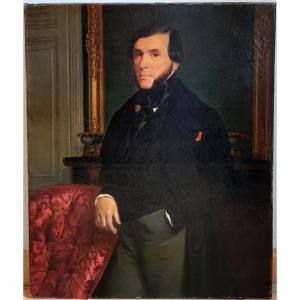
Joseph Vivien, Attributed To (1657-1734) Portrait Of A Man
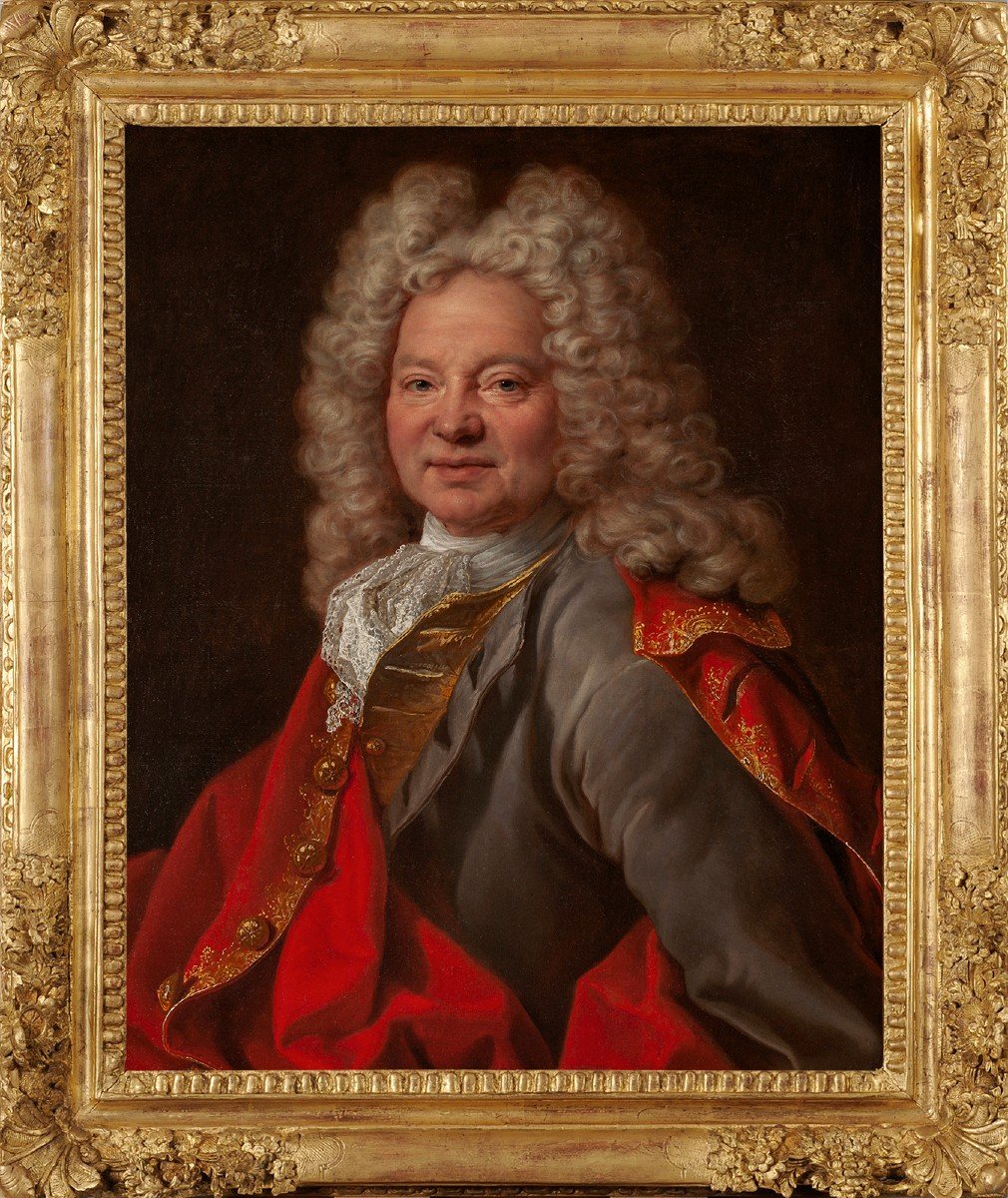






Joseph VIVIEN, attributed to
(Lyon 1657 - Bonn 1734)
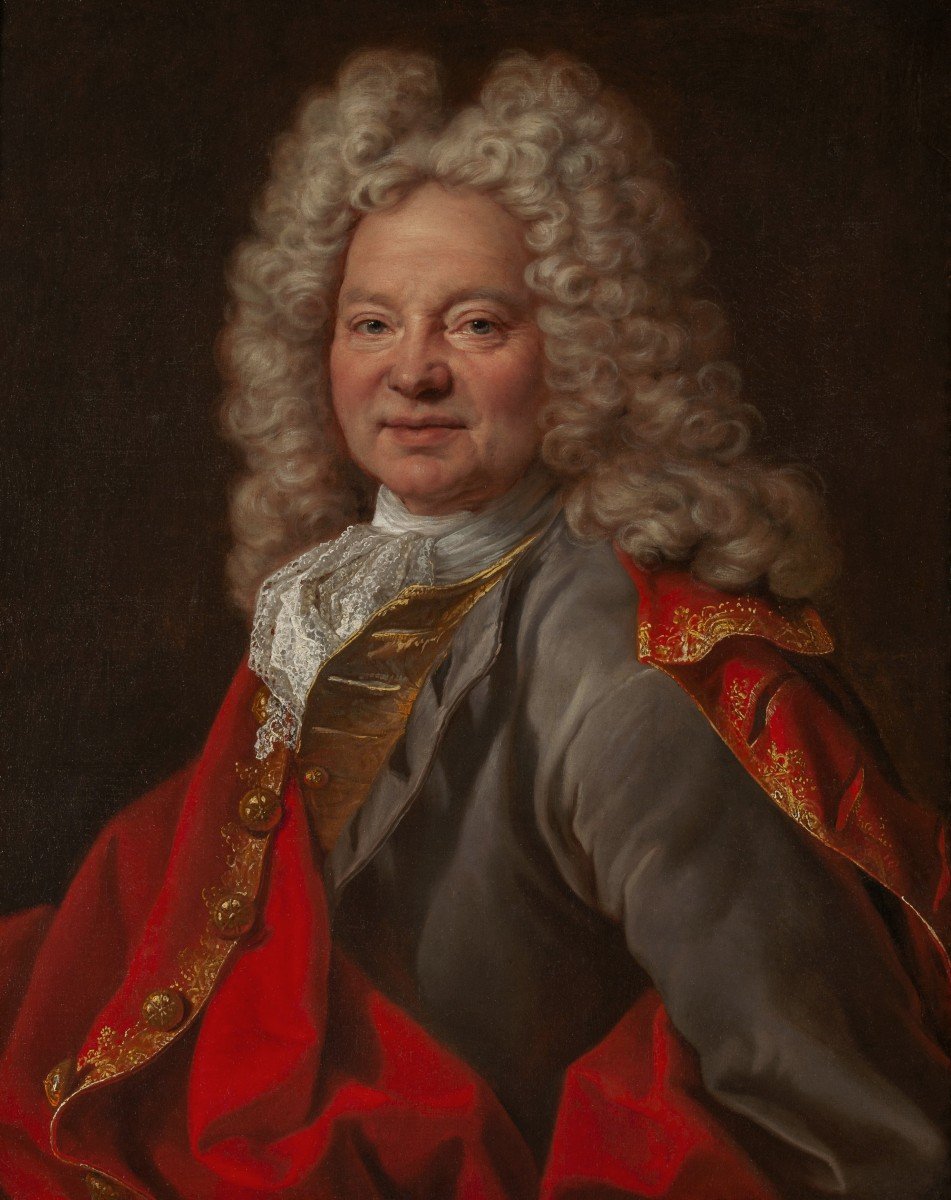
Portrait of a man
Oil on canvas
H. 81 cm; L. 65 cm
Circa 1710
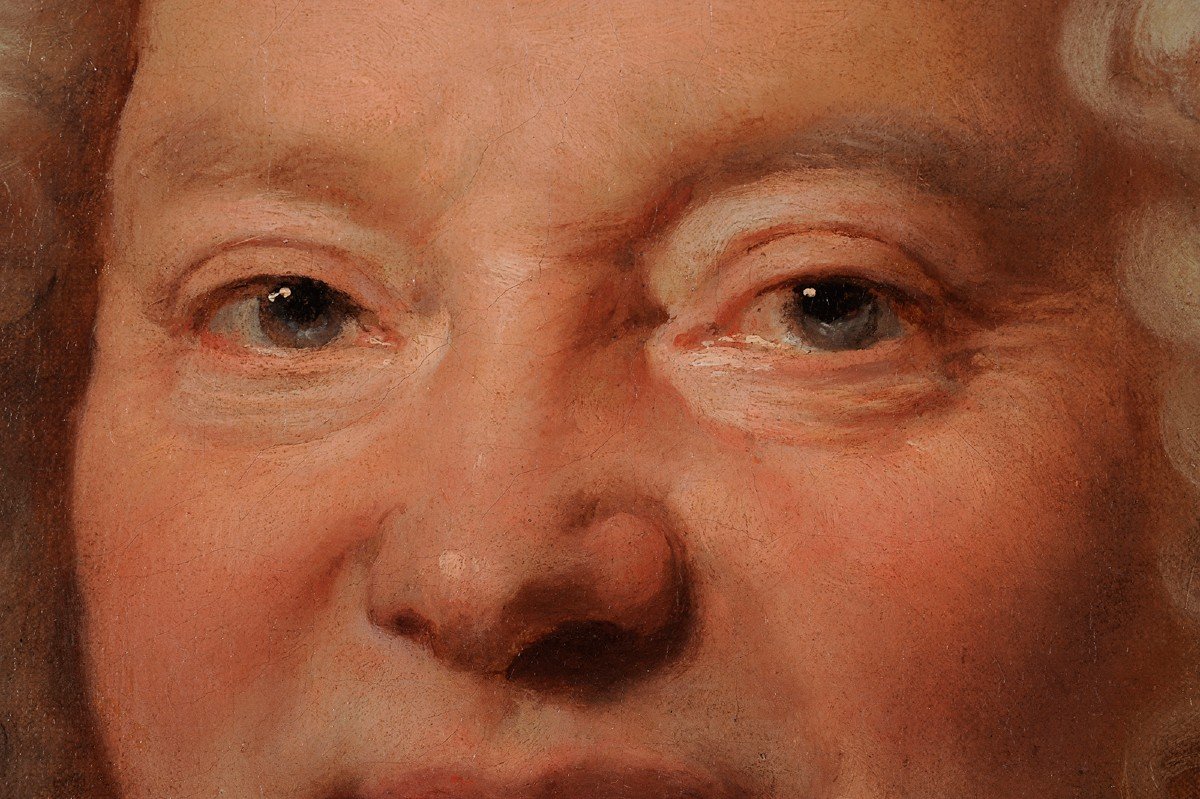
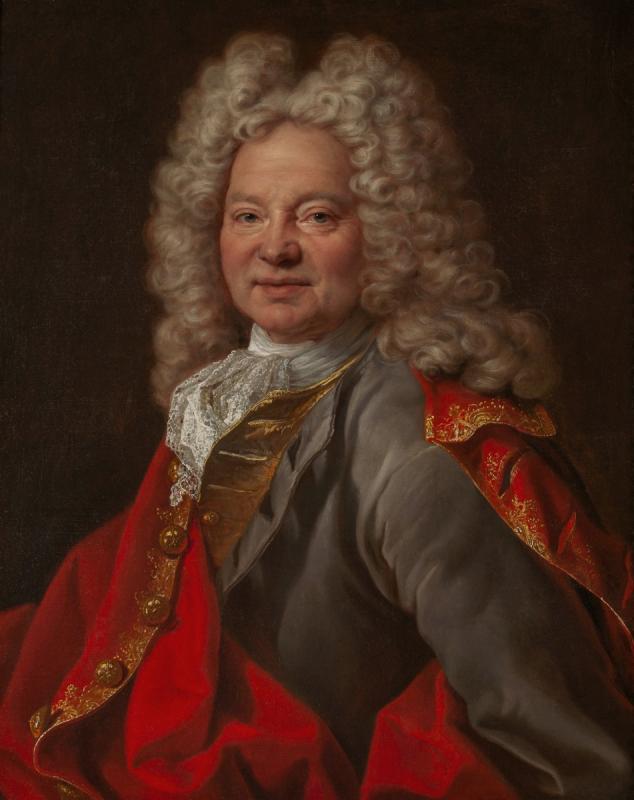
Representative of the golden age of French portraiture at the very beginning of the 17th century, our attractive and challenging painting nonetheless retains its share of mystery. There was a time attributed to Nicolas de Largillière, and until this day a Rigaud cartel was carried on its frame. From the first he possesses elegance, and from the master from Perpignan grandeur and nobility. It could also recall, only in the clothing and in the pose, the portraits of youth of Jean-Baptiste Oudry (who formed in the workshop of Largillière in the years 1708/1712). Beyond the harmonious and rare combination of colors of the coat, we must admire the particularly illusionistic rendering of the flesh, which one could almost imagine being able to grind!
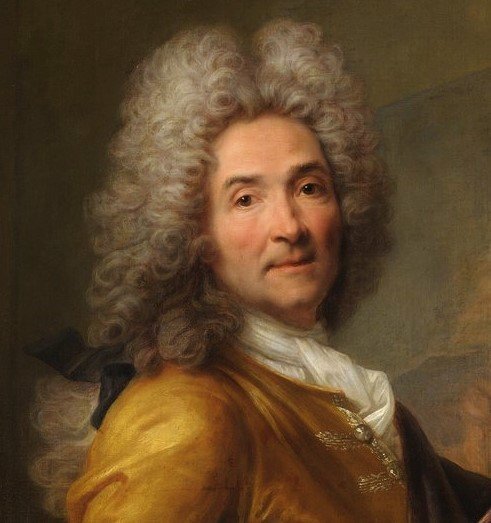
It is a portrait of a young canon kept at the Caen museum which until recently made us lean towards a possible attribution to Jean-Baptiste Jouvenet: the same insistent and penetrating gaze, eyes half-closed. Insufficiently convinced, however, by this unique example, we re-analyzed the effigies of Joseph Vivien, of which our portrait had seemed to us from the start to have characteristics, to find there, among others, the following common points, which acts of oils or pastels: - A real complicity, mainly in the gaze, between the models and the spectator. - An uncompromising, very realistic and subtle treatment of the flesh and its signs of aging. - Special treatment for the eye area, especially the lower eyelids. - A tie very often tied in the same way, with a touch in the collar that seems identical. - Little shiny fabrics, even if Vivien is quite adept at bright colors, with relatively summary, round and supple folds.
Mainly known as a pastellist (he was nicknamed at the time the Van Dyck of pastel), Joseph Vivien also produced many oil portraits. Trained at the Royal Academy, he had started with history painting, obtaining the second Prix de Rome in 1678, before, perhaps on the advice of Lebrun, to specialize in portraiture and to be received at the 'Academy in 1701. Very much in demand by the French State, he also worked for foreign courts, and was notably appointed by Maximilien-Emmanuel of Bavaria as his first painter.
As for our model, it remains unknown to this day. A financier, a wealthy merchant, or perhaps a powerful gentleman, he presents a mixture of benevolent good manliness and mischief that makes his personality difficult to pin down.
(Lyon 1657 - Bonn 1734)
Portrait of a man
Oil on canvas
H. 81 cm; L. 65 cm
Circa 1710
Representative of the golden age of French portraiture at the very beginning of the 17th century, our attractive and challenging painting nonetheless retains its share of mystery. There was a time attributed to Nicolas de Largillière, and until this day a Rigaud cartel was carried on its frame. From the first he possesses elegance, and from the master from Perpignan grandeur and nobility. It could also recall, only in the clothing and in the pose, the portraits of youth of Jean-Baptiste Oudry (who formed in the workshop of Largillière in the years 1708/1712). Beyond the harmonious and rare combination of colors of the coat, we must admire the particularly illusionistic rendering of the flesh, which one could almost imagine being able to grind!
It is a portrait of a young canon kept at the Caen museum which until recently made us lean towards a possible attribution to Jean-Baptiste Jouvenet: the same insistent and penetrating gaze, eyes half-closed. Insufficiently convinced, however, by this unique example, we re-analyzed the effigies of Joseph Vivien, of which our portrait had seemed to us from the start to have characteristics, to find there, among others, the following common points, which acts of oils or pastels: - A real complicity, mainly in the gaze, between the models and the spectator. - An uncompromising, very realistic and subtle treatment of the flesh and its signs of aging. - Special treatment for the eye area, especially the lower eyelids. - A tie very often tied in the same way, with a touch in the collar that seems identical. - Little shiny fabrics, even if Vivien is quite adept at bright colors, with relatively summary, round and supple folds.
Mainly known as a pastellist (he was nicknamed at the time the Van Dyck of pastel), Joseph Vivien also produced many oil portraits. Trained at the Royal Academy, he had started with history painting, obtaining the second Prix de Rome in 1678, before, perhaps on the advice of Lebrun, to specialize in portraiture and to be received at the 'Academy in 1701. Very much in demand by the French State, he also worked for foreign courts, and was notably appointed by Maximilien-Emmanuel of Bavaria as his first painter.
As for our model, it remains unknown to this day. A financier, a wealthy merchant, or perhaps a powerful gentleman, he presents a mixture of benevolent good manliness and mischief that makes his personality difficult to pin down.
Explore similar pieces and discover your ideal find:
Portraits